
Review · LONDON
Roman Ruins to Blitz Bombings: A Walking Tour of London’s Fiery History
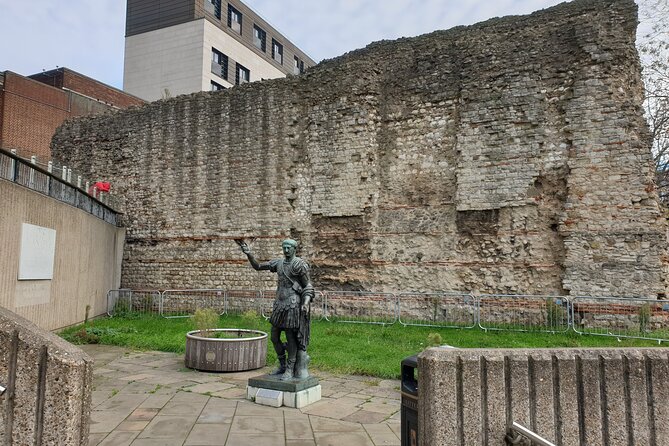
London has a long memory. This two-hour walk links Roman traces, medieval power, the Great Fire of 1666, and wartime destruction in one compact route through the City of London. I like the way it connects famous landmarks with less obvious details, and I like the small group size, capped at 15 people. The main drawback is simple: this is a long walking tour, and it may not suit anyone with mobility problems.
You pay $27.78 per person for the guided walk, with entry fees not included at several stops. The value depends on how much you enjoy context and storytelling, since the route is less about entering attractions and more about understanding how London was built, burned, rebuilt, and damaged again. Guide Tom receives especially warm praise for his clear explanations, energy, and useful suggestions for places to see after the walk.
Key points to know before you book
- Seven major stops in about two hours: The route takes in the Tower of London, St. Dunstan in the East, the Monument, London Stone, the Bank of England Museum, Guildhall, and St. Paul’s Cathedral.
- A history walk with a clear theme: You move from Roman London and medieval power to the Great Fire and the Blitz, rather than hearing disconnected facts about famous buildings.
- Small groups make questions easier: The maximum group size is 15, so you should have a better chance to hear the guide and ask about details along the way.
- Several attractions are viewed without included admission: Tickets are not included for the Tower of London, the Monument, Bank of England Museum, Guildhall, and St. Paul’s Cathedral.
- The finish is handy for food and transport: The tour ends outside Ye Olde Cheshire Cheese on Fleet Street, not far from Blackfriars Station.
- Plan for steady walking: The route is described as an extremely long walking tour, so comfortable shoes and realistic expectations about stamina matter.
Why this London walk works as a history lesson
The best feature here is the route itself. London’s past can feel scattered across busy streets, modern offices, churches, monuments, and underground remains. This walk gives those places a common thread.
You begin near the Tower of London, a symbol of royal authority and confinement. From there, the route moves toward the remains of a church damaged during the Second World War, then to the monument marking the Great Fire. Later stops bring in ancient legends, financial power, medieval civic government, and Christopher Wren’s cathedral.
That sequence helps you see London as a city repeatedly reshaped by disaster and rebuilding. You are not just ticking off sights. You are being shown how one period sits on top of another.
I also like the scale. Two hours is long enough to move beyond the standard postcard view, but short enough to fit into a full day of sightseeing. The 15-person limit should help keep the walk more personal than a large coach tour. You can ask a question without shouting across a crowd, and a good guide can adjust the pace or add a detail when the group shows interest.
Tom is singled out for his storytelling, enthusiasm, and ability to make ordinary streets feel worth noticing. He is also praised for answering questions and suggesting additional places to visit afterward. If Tom leads your departure, his style appears to suit people who want history explained in a friendly, direct way rather than delivered as a lecture.
More History Walking Tours in London
- London: Historic Pubs of Central London Walking Tour
★ 4.9 · 1,065 reviews - London: Soho Music and Historic Pubs Walking Tour
★ 4.9 · 836 reviews - Royal Historic Pubs Walking Guided Tour in London
★ 5.0 · 803 reviews
Starting at the Tower of London
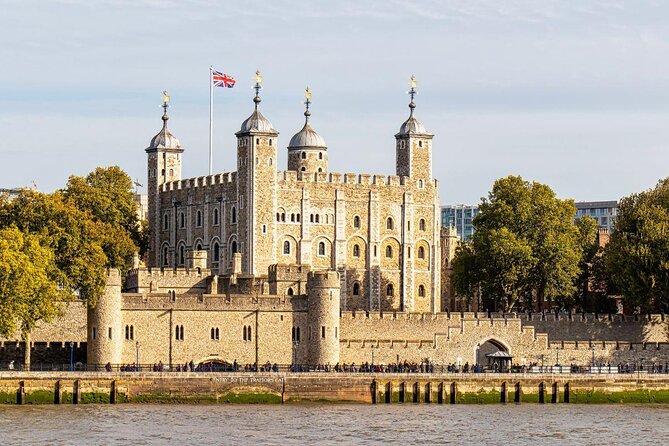
The meeting point is 38 Trinity Square, London EC3N 4DJ. That places you near the Tower of London, a fitting place to begin a walk about power, violence, and change.
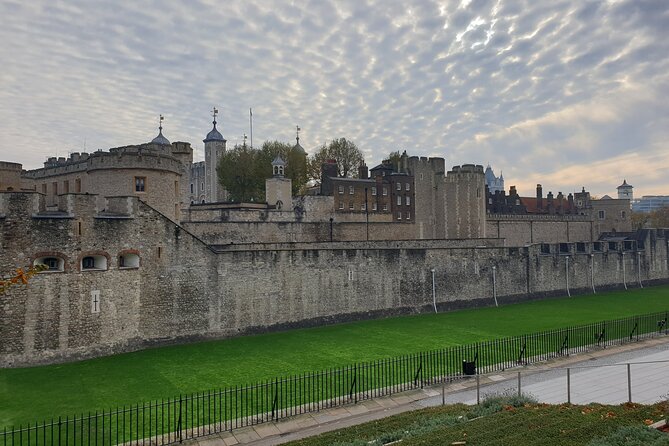
The Tower is described as Europe’s oldest surviving royal palace. Even if you do not enter, its presence gives the opening of the tour real weight. This is where royal life, imprisonment, ceremony, and national memory meet. The stop is listed as about five minutes, so do not expect a full visit to the complex.
Admission to the Tower is not included. That is important when you plan your day. If you want to tour the interior, you will need to arrange a separate ticket and allow much more time than this walking experience provides.
For me, the opening works best as an introduction rather than a replacement for a Tower visit. You get the setting and historical frame, then continue into the City of London instead of spending the whole morning inside one attraction.
St. Dunstan in the East and the scars of war
St. Dunstan in the East offers one of the tour’s most striking contrasts. It is a medieval church whose remains were destroyed during the Second World War and later became a garden.
The stop is free and lasts about five minutes. That short time may be enough to take in the unusual meeting of old stone and planted space, but you should not expect a long pause. The church remains give the walk a direct connection to the Blitz, when parts of London were badly damaged.
This stop adds something the Tower cannot. The Tower represents a preserved monument, while St. Dunstan in the East shows a place that was not fully rebuilt. You see how destruction can leave behind a different kind of historical site, one shaped by absence as much as survival.
The tour title promises a journey from Roman ruins to Blitz bombings, and this is where the wartime side becomes especially clear. It also helps break up the grander civic and royal sights with a place that feels quieter and more reflective.
The Monument and London’s Great Fire
The Monument to the Great Fire of London marks the disaster of 1666, when a major fire destroyed much of the city. The tour allows about five minutes here, and admission is not included.
You should think of this as a focused explanation stop, not a climb or extended visit. The value comes from hearing how the fire changed London and seeing the physical marker that commemorates it.
The Monument also gives the walk a useful turning point. Before it, you have considered royal power and wartime destruction. Here, you shift to a city-changing catastrophe from the seventeenth century. London’s story becomes one of repeated rebuilding, not a straight march from old to new.
If you have already seen the Monument on your own, a guide can still give the column a purpose within the larger route. That is one reason I prefer themed walks to simply collecting landmarks. The same building can mean more when you understand how it fits with the streets before and after it.
More History Walking Tours in the UK
- Private Group: Historical Pub Walking Tour of London
★ 5.0 · 660 reviews - London: Royal Historic Pubs Walking Tour
★ 5.0 · 536 reviews - Historic Pub Walking Tour of London
★ 5.0 · 484 reviews - London: Medieval History Walking Tour from The Tower
★ 4.9 · 318 reviews
London Stone and the city’s old legends
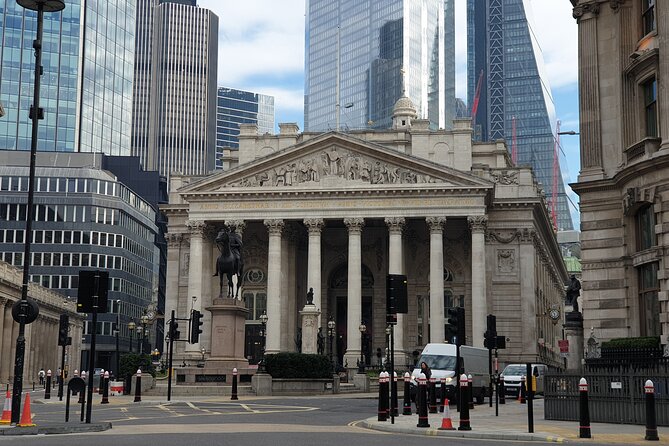
London Stone is a small object with large claims attached to it. The stop focuses on legends connected with the stone, and admission is free.
This is the kind of place you might pass without noticing if you were walking alone. It gives the tour a change of scale. After the major monuments of royal and national importance, you get a reminder that London’s identity also rests on objects with stories that have grown over time.
The wording around London Stone points to legends rather than settled fact, which is useful. A good guide can explain the difference between what is documented and what has been handed down. That kind of distinction keeps the tour lively without asking you to accept every old story as proven history.
The five-minute timing means the stop will be brief. Still, it may be one of the most memorable because it asks you to pay attention to something small and easy to miss.
The Bank of England and the machinery of money
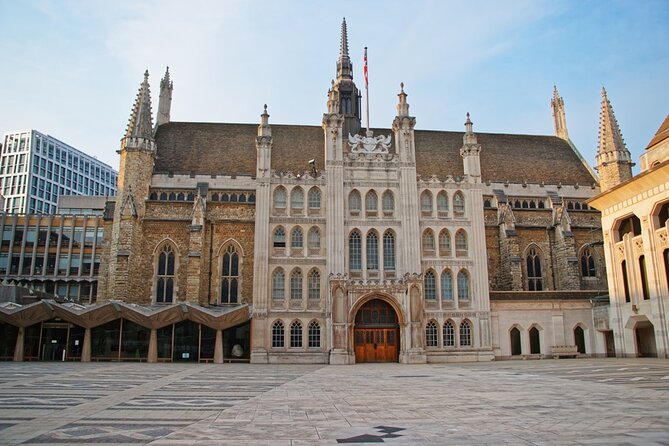
The Bank of England Museum brings the walk into the world of finance and national institutions. The Bank of England is the United Kingdom’s central bank, so this stop shows another form of power in the City.
Admission is not included. The tour lists about five minutes here, which suggests that you should not plan on exploring the museum during the walk unless you arrange a separate visit afterward.
I see this stop as valuable because it widens the story. London’s past is not only palaces, churches, battles, and fires. Money, banking, and civic authority have also shaped the City’s streets and buildings.
If financial history is not your favorite subject, the guide’s approach will matter. Tom is praised for keeping information engaging and not overwhelming people with too many facts. That is a useful quality here, where a short explanation can make an imposing institution easier to understand.
Guildhall and medieval civic London
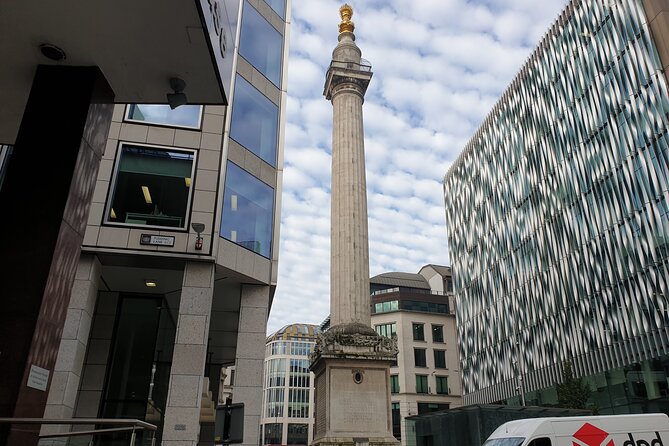
Guildhall is a fifteenth-century hall and the home of the Corporation of London. It brings the route back to medieval civic life, but from a different angle than the Tower.
The Tower represents the Crown. Guildhall represents the City and its own government. Seeing both in one walk helps you understand that London has long had several centers of authority, not just one royal seat.
The stop is listed as about five minutes, and admission is not included. If you want to explore inside, treat that as a separate plan. The walk’s purpose is to introduce the site and place it in London’s wider story.
This is also where the tour’s focus on ordinary streets becomes useful. You learn to look beyond the most famous facades and notice buildings tied to local government, trade, and civic life. Those details can change how you walk through the City later in your trip.
St. Paul’s Cathedral and the walk to Fleet Street
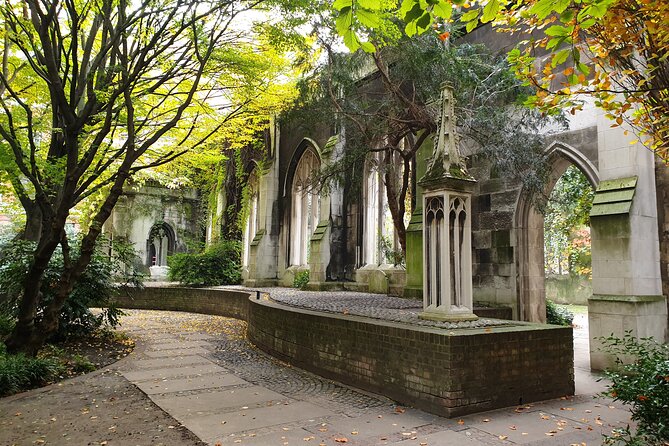
The final listed sight is St. Paul’s Cathedral, Christopher Wren’s seventeenth-century cathedral. It is an appropriate ending because Wren’s work is closely tied to the rebuilding of London after the Great Fire.
Admission is not included, and the stop is listed as about five minutes. That is enough for a guide to explain the cathedral’s place in the city, but not enough for a proper interior visit. If you want to see the inside, schedule it separately and do not assume this walk includes entry.
The cathedral also gives the route a strong visual finish. You have moved from the Tower through war-damaged church ruins, the Great Fire monument, civic buildings, and financial institutions. St. Paul’s ties those chapters to the rebuilt city.
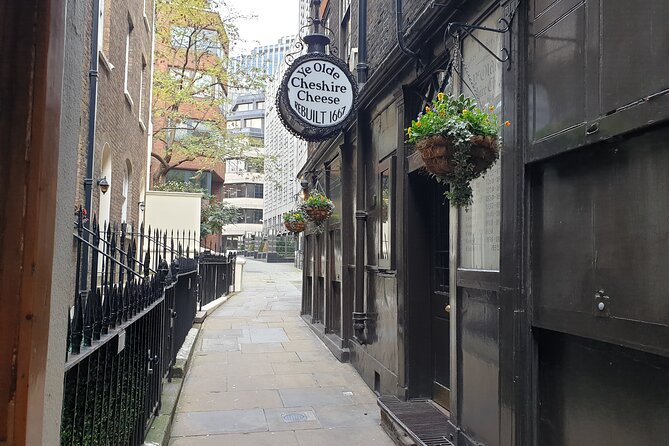
The official endpoint is outside Ye Olde Cheshire Cheese at 145 Fleet Street, EC4A 2BP, not far from Blackfriars Station. This makes the end practical. You can continue exploring Fleet Street, find a meal, or use the nearby station to move on.
What $27.78 gets you
At $27.78, this is a reasonably priced guided introduction to central London. You are paying for about two hours of interpretation and route planning, not for attraction admission, transport, food, or a private guide.
The value is strongest if you are new to the City of London or if you have walked past its buildings without knowing what they mean. A guide can connect the Roman, medieval, seventeenth-century, and twentieth-century layers faster than you could through random sightseeing.
The price is less attractive if your main goal is to enter the Tower, climb the Monument, visit the Bank of England Museum, explore Guildhall, or tour St. Paul’s Cathedral. Those experiences require separate admission where applicable, and this walk gives each location only a short stop.
I would treat the tour as a framework for the rest of your London visit. It can help you decide which sights deserve a longer return visit. That makes the fee worthwhile for history fans who want orientation and context before exploring independently.
Walking demands, group size, and practical planning
The tour lasts approximately two hours and has a maximum of 15 people. The small group is a real advantage in a city where pavement space can be tight and street noise can make explanations hard to hear.
Still, do not read small group as easy walking. One direct account describes it as an extremely long walking tour and advises against it for people with mobility issues. The supplied details do not give a total distance, number of stairs, or rest schedule, so you should ask the provider if those points affect your plans.
Wear comfortable shoes and arrive ready to keep moving. Since the tour runs through central London, you will be walking between stops rather than simply standing at one attraction.
The experience is offered in English. Most people can participate, and service animals are allowed. It is near public transportation, with the start near the Tower of London and the finish near Blackfriars Station.
You receive confirmation when booking, and the activity can be canceled for a full refund up to 24 hours before the start time. Changes or cancellations inside that window are not accepted for a refund.
Who should take this tour?
I would recommend it to:
- History fans who want London’s major events placed in one connected story.
- First-time visitors who want a useful orientation to the City of London.
- People who enjoy churches, monuments, civic buildings, and old legends.
- Independent sightseers who want ideas for places to revisit afterward.
- Visitors who prefer a small group and the chance to ask questions.
I would hesitate to recommend it to anyone who cannot comfortably walk for two hours. I would also choose a different plan if you want long interior visits, since several stops have only five minutes allocated and entry fees are not included.
The tour also suits curious walkers more than people seeking a dramatic theatrical performance. Its strongest qualities are clear explanation, personal attention, and the way it makes overlooked places meaningful.
Should you book Roman Ruins to Blitz Bombings?
Book it if you want to understand how London changed through fire, war, royal rule, civic government, and rebuilding. The route covers a lot in two hours, and the $27.78 fee is fair for a small-group introduction led by an engaging guide.
I would especially choose it early in a London visit. You can use the walk to mark places for later, longer visits, including the Tower, the Bank of England Museum, Guildhall, and St. Paul’s Cathedral.
Skip it if mobility is a concern or if you want to spend substantial time inside each attraction. For everyone else, this is a focused, good-value way to see central London with more meaning than a simple stroll from landmark to landmark.
FAQ
How long does the walking tour last?
The tour lasts approximately two hours.
How much does the experience cost?
The listed price is $27.78 per person.
What language is the tour offered in?
The tour is offered in English.
How many people can join the group?
The maximum group size is 15 travelers.
Where does the tour start?
The meeting point is 38 Trinity Square, London EC3N 4DJ, UK.
Where does the tour end?
The tour ends outside Ye Olde Cheshire Cheese at 145 Fleet Street, London EC4A 2BP, near Blackfriars Station.
Are admission tickets included?
The tour itself is included, but admission is not included at the Tower of London, the Monument to the Great Fire of London, the Bank of England Museum, Guildhall, or St. Paul’s Cathedral.
Is the tour suitable for people with mobility issues?
Most people can participate, but the walk is described as extremely long and may not suit anyone with mobility issues.
Can I cancel for a full refund?
Yes. You can cancel at least 24 hours before the local start time for a full refund. Cancellations or changes made less than 24 hours before the start time are not accepted for a refund.
More Archaeological Site Tours in London
- Discover the Ancient Ruins of Pompeii: Day Trip from Rome
★ 3.5 · 2,247 reviews - Ancient Olympia: Archaeological Site and Museum Entry Ticket
★ 4.3 · 555 reviews - Cusco: Historical Guided City Tour with 4 Inca Ruins
★ 4.5 · 99 reviews - Ancient Chacchoben Mayan Ruins & Mayan Experience from Costa Maya
★ 5.0 · 96 reviews
More WWII and D-Day Tours in London
- Vienna: World War II Historical Walking Tour
★ 4.8 · 1,772 reviews - Zagreb: City & History Walking Tour & WW2 Tunnels
★ 4.9 · 1,202 reviews - Pearl Harbor History Remembered Tour from Ko Olina
★ 5.0 · 1,009 reviews - Hiroshima Peace (Heiwa) Walking Tour at World Heritage Sites
★ 5.0 · 872 reviews
Just added around London
- White Cliffs of Dover & Historic Canterbury Day Tour from London★ 4.5 · 373 reviews
- The Authentic London Food and History Tour★ 5.0 · 53 reviews
- The Beatles Magical History Black Taxi Tour London★ 5.0 · 51 reviews
- Private Tour of London’s Historic Pubs★ 5.0 · 55 reviews
- Private Landmark Photoshoot★ 5.0 · 27 reviews
- Historical City of London Private Sightseeing Day Tour★ 5.0 · 41 reviews
- Private Guided Tour of Windsor Castle PLUS and History★ 5.0 · 29 reviews
- London Witches and History Walking Tour★ 5.0 · 113 reviews
Archaeological Site Tours, compared.

Discover the Ancient Ruins of Pompeii: Day Trip from Rome
Read our review →
Ancient Olympia: Archaeological Site and Museum Entry Ticket
Read our review →
Cusco: Historical Guided City Tour with 4 Inca Ruins
Read our review →
Ancient Chacchoben Mayan Ruins & Mayan Experience from Costa Maya
Read our review →
Ancient Syracuse: private guided tour of the Neapolis archaeological park
Read our review →
Coba Private Tour – Ancient Ruins & Refreshing Cenote Swim
Read our review →
Alanya: Ancient Ruins & Hidden Coves of Gazipaşa w/ Cave
Read our review →
Buggy Tour in Ancient Ruins and Temples around Athens-SOUNIO Poseidon Temple
Read our review →Browse the lists this tour appears in