
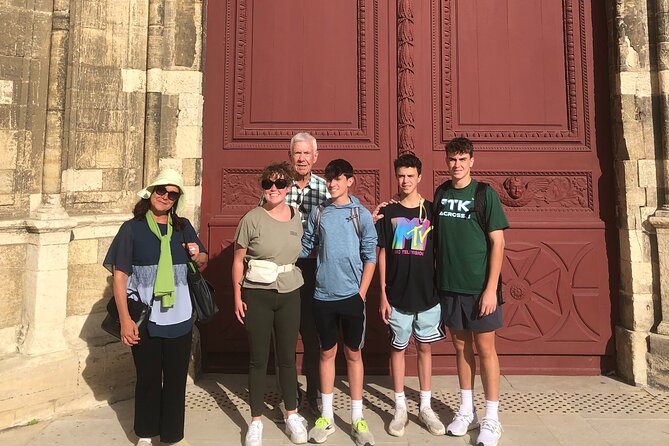
Review · BAYEUX
Private Walking Guided Tour of Historic Bayeux English or French
Bayeux rewards a closer look. This private two-hour walk turns a compact Norman town into a readable story, from the river Aure and medieval trades to William the Conqueror, the French Revolution, and the liberation of 1944. I especially like the private format, which lets your guide adjust the pace and answer your questions, and the local viewpoint offered by guides such as Christele and Marie-Noëlle. The main drawback is that the tour is mostly spent standing outdoors, and the Bayeux Tapestry Museum is closed until October 2027.
You pay $119.83 for up to four people, which works out to about $30 per person for a full group. That is fair value if you want context instead of simply passing old buildings. Just plan ahead for limited toilet access, changing weather, and a possible crowd around the cathedral or town center. This is best taken early in your stay, before you explore Bayeux on your own.
Key points at a glance
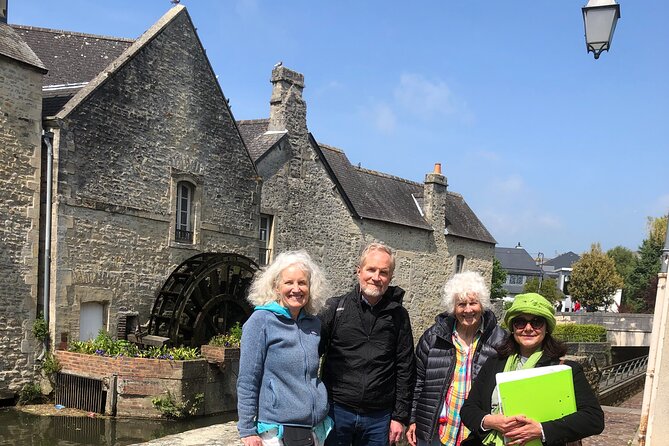
- More than 20 points of interest: The walk covers far more than the eight main locations listed, with stories about buildings, language, customs, and notable figures.
- A strong local perspective: Guides such as Christele and Marie-Noëlle connect Bayeux’s past with its present-day streets, shops, residents, and traditions.
- The Bayeux embroidery explained outdoors: With the museum closed until October 2027, your guide supplies the background, characters, methods, and political events behind the famous work.
- A private group of up to four: You can ask questions freely and request changes based on age, mobility, or interests.
- A useful blend of eras: Medieval history, cathedral architecture, the French Revolution, and the liberation of Bayeux all fit into one compact walk.
- Good value for a small group: At $119.83 total, the price is strongest when shared by three or four people.
Why Bayeux makes a good walking-tour town
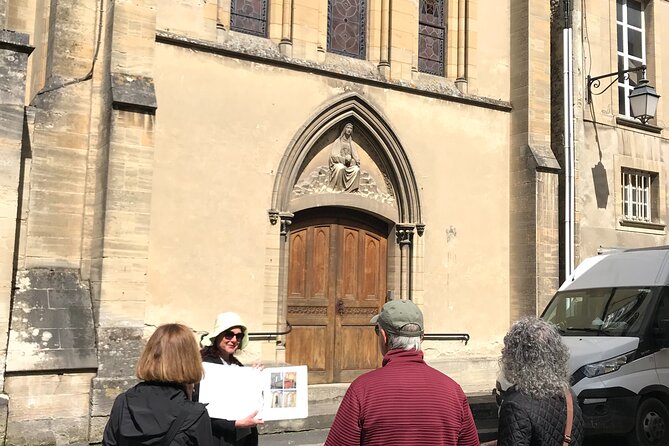
Bayeux is small enough to explore on foot, but its story is not small. In a short distance, you move from Roman remains to medieval religious power, from Norman conquest to modern French identity, and then to the events of June 1944.
That mix can be hard to sort out alone. An old stone wall may belong to a Roman defensive structure, while a nearby street name points to a medieval trade. The cathedral has its own long building story, and the Liberation Square recalls a very different moment in French history. A guide gives these pieces an order.
I like the way this tour uses ordinary streets as teaching tools. You are not rushed from one major monument to another. Instead, the guide pauses to explain why a lane follows the river, why a tree carries a political name, or how a town survived and adapted through centuries of change.
The private setup matters here. If your group wants more architecture, less military history, or extra attention to daily life, you can say so. One piece of advice: ask questions as you go. The guide welcomes them, and the route can be adjusted to your interests.
More History Walking Tours in France
- Paris: Dark History and Ghostly Guided Walking Tour
★ 4.7 · 1,000 reviews - Vieux Lyon Cultural & Historical Walking Guided Tour (English)
★ 5.0 · 942 reviews - Strasbourg: Guided Historical Neighborhoods Walking Tour
★ 4.9 · 275 reviews
Starting near the Bayeux Tourist Office
The usual meeting point is the Bayeux Tourist Office at 3 Rue Saint-Jean. A walking pickup may be arranged from some hotels or other accommodations, but this is not vehicle transportation. You meet the guide on foot, and the route changes as needed to suit that starting point.
The tour lasts about two hours. It ends near the center of Bayeux, close to the main shopping street or the cathedral, usually at or near À La Reine Mathilde on Rue Saint-Martin. The final location can change if you arrange a different walking pickup.
Bring a phone number that works in France, and save the provider’s number in case you have trouble finding the meeting point. This matters most if you are arranging pickup away from the tourist office.
The guides are bilingual and can conduct the tour in English or French. The English is clear, according to the available feedback, and guides make an effort to speak loudly enough in poor weather. That is useful in a walking tour where wind, traffic, and street noise can interfere.
Rue des Teinturiers and the river Aure
One of the most appealing early stops is Rue des Teinturiers. Here, the river Aure becomes part of the story rather than just a pretty waterway.
Your guide explains medieval trades such as tanning and dyeing, along with the role the river played in those activities. This is the kind of detail you can easily miss while photographing old houses. The street becomes evidence of how people worked, cleaned, traded, and used natural resources.
I like this stop because it brings Bayeux down to the level of daily life. Kings and bishops matter, but so do the craftspeople who made the town function. If you are especially interested in ordinary residents, ask for more stories about them. One piece of feedback suggests that some visitors wanted more attention to common people and recent centuries, rather than only famous figures and medieval events.
The Augustines and the story of the famous embroidery
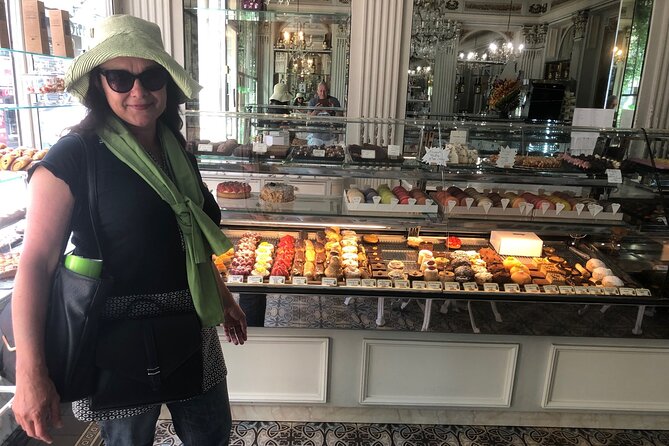
At Allée des Augustines, the tour shifts toward religious and international history. You learn how the Augustine sisters affected the Bayeux community, including the story of one sister whose work left a mark in what is now Canada.
This is also where the guide points out the location of the Bayeux Tapestry. The famous 11th-century embroidery tells the story of the Battle of Hastings and William the Conqueror’s rise to the English throne. The guide explains the people and events shown in the scenes, helping you understand why the work is more than a long medieval picture.
The word tapestry can be misleading, since the object is an embroidered historical narrative rather than a woven wall hanging. Your guide also discusses how it was made and why it remains so important. That extra context is valuable if you plan to see it in person later.
There is one major date-sensitive issue. The Bayeux Tapestry Museum is closed until October 2027 for a new building project. The walking tour does not include museum admission, and your guide cannot replace the experience of seeing the embroidery at close range. Still, the outdoor explanation gives you a useful framework for a future visit.
More Private History Tours in France
- Paris City of Fashion History Private Guided Walking Tour
★ 5.0 · 221 reviews - History of Paris City Center w/ Notre Dame Semi-Private 12ppl Max
★ 5.0 · 194 reviews - Strasbourg: Private Walking Tour of the Historical Center
★ 4.2 · 107 reviews - Private Guided History tour of Lourdes
★ 5.0 · 64 reviews
The Roman castrum and new glasswork
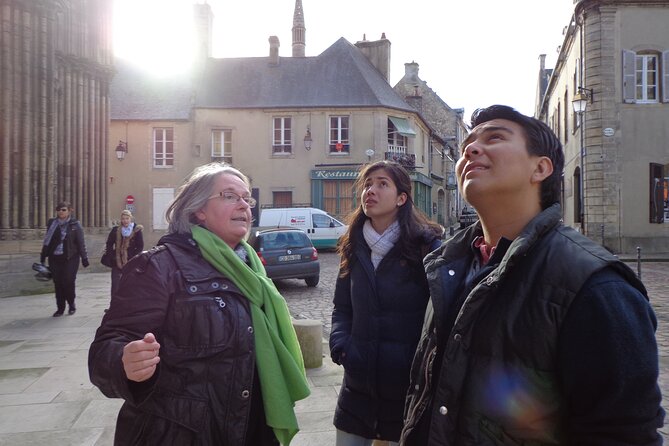
On Rue Léonard Lambert Leforestier, you hear about Bayeux’s beginnings in Celtic times and see the remains of the Roman castrum. This stop helps establish that Bayeux was important long before the Norman period.
You also see new dichroic glass, a modern visual detail set against much older stonework. That contrast is one of the tour’s strengths. Bayeux is not preserved as a museum piece. It is a living town where new design sits beside Roman and medieval remains.
The old and new elements also give your guide a chance to explain how the town changes without losing its character. You may want to pause here for photographs, but remember that the tour has many stops. If your group wants more time for pictures, tell the guide early.
Notre-Dame Cathedral in about 20 minutes
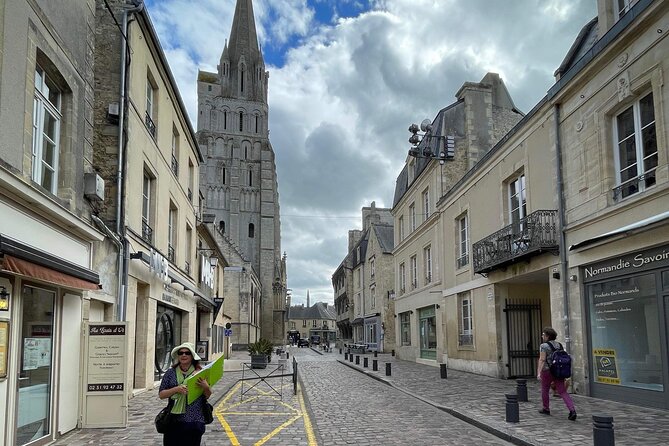
The cathedral receives the longest listed stop, about 20 minutes. Your guide explains the different stages of construction and points out architectural features that are easy to overlook from the square.
The building’s long development makes it a useful lesson in changing styles, building methods, and religious importance. Instead of seeing one finished monument, you begin to read the cathedral as a structure shaped over time.
The inside can only be included within the two-hour tour if access is authorized that day. Do not assume interior entry is guaranteed. If the cathedral is closed or the schedule does not allow it, the guide will focus on the exterior and its architectural details.
This is also where the private format can help. A guide can spend more time on the features that interest you, or move along if young children or tired feet need a change. The tour does not include museum tickets, and any admission costs outside the walking service are not part of the price.
The Liberty Tree and the French Revolution
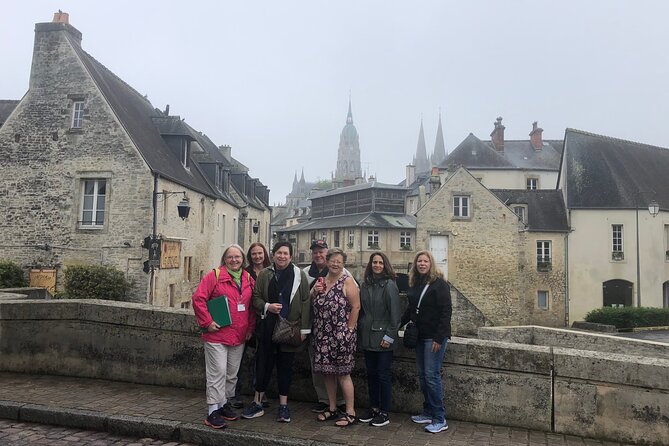
The Arbre de la Liberté is a sycamore tree more than 200 years old. Its name connects it to the French Revolution, and the guide explains why the tree became a symbol of liberty.
This is a small stop with a large lesson. The French Revolution was not only fought in distant political halls. Its symbols reached town squares and ordinary communities. A tree can carry a political message for generations, especially when it survives long after the people who planted it are gone.
I appreciate stops like this because they break up the march of famous dates. You get a physical object, a local setting, and a short explanation of a national event. It is also a good place to rest briefly, depending on the group’s pace.
Place Charles de Gaulle and the Liberation of Bayeux
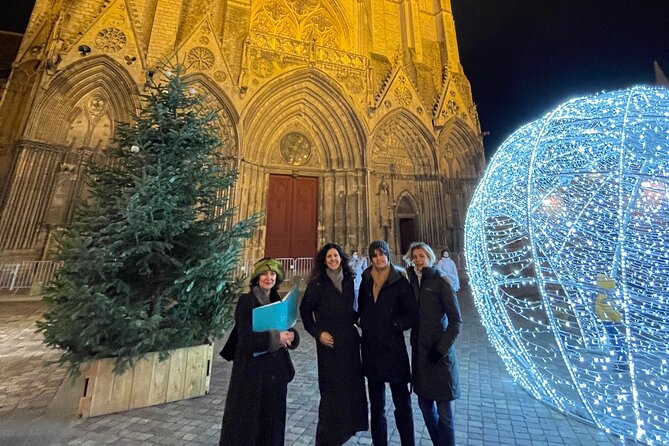
The final major stop is Place Charles de Gaulle, where the guide discusses the liberation of Bayeux on June 7 and General de Gaulle’s first visit to the square.
Bayeux has a special place in the story of Normandy in 1944. This stop connects the town’s streets with the larger events of the Second World War, while keeping the focus on local memory and civic life. If you want to visit the British cemetery, ask about it. The walk itself does not promise a cemetery visit, but guides can explain why that area matters to local people.
The tour’s treatment of the Liberation can change with conditions. During major anniversary events or heightened security, streets may be blocked. The guides have shown that they can alter the route and still provide a worthwhile experience. That flexibility is useful during anniversary periods, when Bayeux can have restrictions and unusual crowds.
What the guide adds to the experience
The strongest feature here is the guide’s presentation. Christele is praised for clear English, humor, strong storytelling, and the habit of bringing the whole story together with recaps. She has also adjusted routes during difficult weather and major D-Day anniversary restrictions.
Marie-Noëlle receives similar praise for her local knowledge, friendly manner, and practical suggestions for places to eat and museums to visit afterward. Her connections around town have sometimes added a personal touch, such as greetings with shop owners and local residents.
The guides are not simply reading dates from a script. They explain architecture, historical figures, old habits, language, and local expressions. That makes the town feel more understandable. You will still need to ask for the kind of detail you want, especially if your main interest is the lives of ordinary people or the past two or three centuries.
Recording or filming the guide is not permitted. You should be ready to listen, ask questions, and take your own notes afterward if needed.
Pace, weather, and practical comfort
This is a walking tour with many standing stops. Two hours may sound easy, but standing on stone streets in wind or rain can become tiring. The guide uses public benches when possible, but anyone with back problems, limited stamina, or a pregnancy should consider bringing a small folding stool.
Toilets are rare during the two-hour route, so use one before the tour starts. Wear shoes suited to old streets, and carry a light rain layer. These simple steps will make the experience much more pleasant.
Most people can take part, and the route can be changed for age range and mobility. Share your limits when booking. The private format gives the guide a chance to prepare rather than discover a problem halfway through the walk.
Is $119.83 a fair price?
For one person, the total cost may feel high. For four people, it comes to roughly $30 each, which is a reasonable price for a private two-hour service in a historic town.
You are paying for more than movement between landmarks. The guide adapts the route, explains details in context, answers personal questions, and can offer suggestions for the rest of your stay. A large group tour may cost less per person, but it will not provide the same control over pace or subject.
The value is best for a first day in Bayeux. You get an overview before visiting the cathedral, planning a D-Day excursion, or trying to see the famous embroidery when the museum reopens. It can also help solo visitors, since a private booking is available even when you are not part of a larger party.
Free cancellation is available up to 24 hours before the start time. Changes made inside that period are not accepted, so confirm your schedule before the final day.
Who should book this Bayeux walk?
Book it if you like history explained through streets, buildings, and small details. It is especially suitable for couples, families, or friends who can share the cost and want a flexible pace.
It is also a good match for anyone visiting Bayeux for the first time. The tour ties together periods that can otherwise feel disconnected: Celtic and Roman beginnings, medieval work and religion, the Norman conquest, the French Revolution, and the 1944 Liberation.
You may want another plan if your main goal is museum access. The Tapestry Museum is closed until October 2027, and the walking tour does not include indoor museum visits. Likewise, if you dislike standing outdoors or need frequent toilet breaks, the format will require extra preparation.
Should you book it?
I would book this tour early in a Bayeux stay, especially for a group of up to four. The guides bring warmth, humor, and local detail to a town that can otherwise seem like a collection of attractive old buildings.
The best reason to choose it is the private attention. Ask for more daily-life stories, more architecture, or more 20th-century history, and let the guide shape the walk around you. Just bring sensible shoes, check the cathedral access on the day, and remember that the museum is closed until October 2027.
FAQ
How long is the private Bayeux walking tour?
The tour lasts approximately two hours.
How many people can join the tour?
The private tour is limited to four people. For a larger group, you need to contact the provider.
What languages are available?
The tour can be conducted in English or French. The guides are bilingual.
Where does the tour start?
The standard meeting point is the Bayeux Tourist Office at 3 Rue Saint-Jean, 14400 Bayeux.
Is hotel pickup included?
Walking pickup may be possible from certain hotels or accommodations. This is not vehicle pickup, and you should request it if your accommodation is not on the suggested list.
Where does the tour finish?
The usual ending point is near the center of Bayeux, close to the main street or cathedral, around À La Reine Mathilde at 47 Rue Saint-Martin. The ending can change if a different walking pickup is arranged.
Does the tour include museum admission?
No. The tour does not include museums. The Bayeux Tapestry Museum is closed until October 2027, and the guide explains the embroidery from outside.
Can the cathedral interior be visited?
The cathedral interior can only be included in the two-hour service if access is authorized on the day. It is not guaranteed.
Can the tour be changed for mobility needs?
Yes. The route and commentary can be adapted according to the group’s age range and mobility. You should provide details about your needs in advance.
What is the cancellation policy?
You can cancel for a full refund up to 24 hours before the scheduled start time. Cancellations or changes made less than 24 hours before the start are not accepted.
More WWII and D-Day Tours in France
- Historic Bayeux Daily Group City Tour In English 2 hrs (Apr-Sept)
★ 5.0 · 220 reviews - Vienna: World War II Historical Walking Tour
★ 4.8 · 1,772 reviews - Zagreb: City & History Walking Tour & WW2 Tunnels
★ 4.9 · 1,202 reviews - Pearl Harbor History Remembered Tour from Ko Olina
★ 5.0 · 1,009 reviews
Just added around France
- Historic Bayeux Daily Group City Tour In English 2 hrs (Apr-Sept)★ 5.0 · 220 reviews
- Roman Sites and Historical Places Day Trip from Avignon★ 4.0 · 101 reviews
- Enchanting Historical Walking Tour in Avignon★ 5.0 · 53 reviews
- Roman Heritage & Wine Legacy★ 5.0 · 40 reviews
- History and Van Gogh in Provence from AIX-EN-PROVENCE★ 4.5 · 24 reviews
- Gourmet & Cultural Tour Aix En Provence English / Espanol★ 5.0 · 88 reviews
- Toulouse Food & History Tour with a Chef (in English)★ 5.0 · 59 reviews
- The historic district of Montmartre★ 4.9 · 66 reviews
WWII & D-Day Tours, compared.

Pearl Harbor History Remembered Tour from Ko Olina
Read our review →
Hiroshima Peace (Heiwa) Walking Tour at World Heritage Sites
Read our review →
![Pearl Harbor & USS Arizona Small-Group Tour [Early Access]](https://4.historywanderer.com/wp-content/uploads/pearl-harbor-uss-arizona-small-group-tour-early-access-400x266.jpg)
Pearl Harbor & USS Arizona Small-Group Tour [Early Access]
Read our review →
Anne Frank and the Jewish History of Amsterdam Private Tour
Read our review →
Anne Frank and Amsterdam Jewish History Walking Tour
Read our review →Browse the lists this tour appears in