
Review · PARIS
Paris Le Marais Walking Tour: An Incredible History – Small Group
Paris rewards slow walking. This two-hour Le Marais tour connects old markets, Jewish Paris, and a royal square in a small group, giving you a useful sense of how one neighborhood changed over time. I especially like the maximum group size of eight and the way the route mixes major sights with everyday places such as the Marché des Enfants Rouges.
I also like that guides such as Clara, Valentin, Hugo, Benoit, and Vincent bring different strengths, from careful historical explanation to practical advice about where to return later. The main drawback is the short length: two hours gives you a strong introduction, but you may wish for more time, especially after seeing how much Le Marais contains.
Key points before you book
- Four carefully chosen stops: You visit Carreau du Temple, the Marché des Enfants Rouges, Rue des Rosiers, and Place des Vosges.
- Small groups of eight or fewer: A compact group makes it easier to hear the guide and ask questions.
- A useful first-day activity: The route helps you get your bearings before returning to explore shops, cafés, and streets on your own.
- History with local life: The tour covers royal Paris, Jewish Paris, markets, neighborhood change, and modern culture.
- Good guide feedback: Clara, Valentin, Hugo, Benoit, Vincent, Emily, and others are praised for their warmth, clear explanations, and easy conversation.
- About $66.26 per person: The price makes the most sense if you value context, local orientation, and a personal guide rather than simply checking off sights.
Why Le Marais works so well on foot
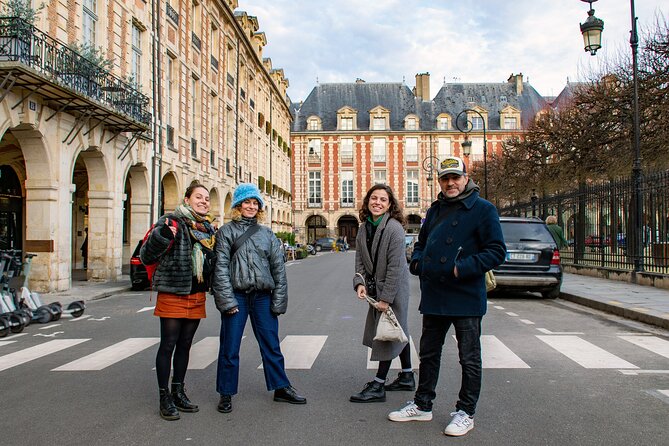
Le Marais is one of Paris’s best neighborhoods for a focused walking tour. Its story is not limited to one period. You move from a former second-hand clothing market to a historic food market, then into the Jewish quarter and finally to a formal royal square.
That range gives the walk a clear shape. You are not just looking at handsome buildings. You are seeing how land use, migration, commerce, religion, and fashion changed this part of Paris.
The route also avoids the common problem of a city tour that covers too much ground. You remain in one district, so the details have time to settle. I like this approach for a first or second day in Paris, when you want to understand a neighborhood well enough to return without a map.
The pace is described as easy and relaxed. That matters because the best part of Le Marais is often between the famous points: a street name, an old façade, a market stall, or a small change in the character of the neighborhood.
More History Walking Tours in France
- Paris: Dark History and Ghostly Guided Walking Tour
★ 4.7 · 1,000 reviews - Paris City of Fashion History Private Guided Walking Tour
★ 5.0 · 221 reviews - Paris City Center w/ Notre Dame interior | Exclusive Walking Tour
★ 5.0 · 190 reviews
Carreau du Temple and the story of change
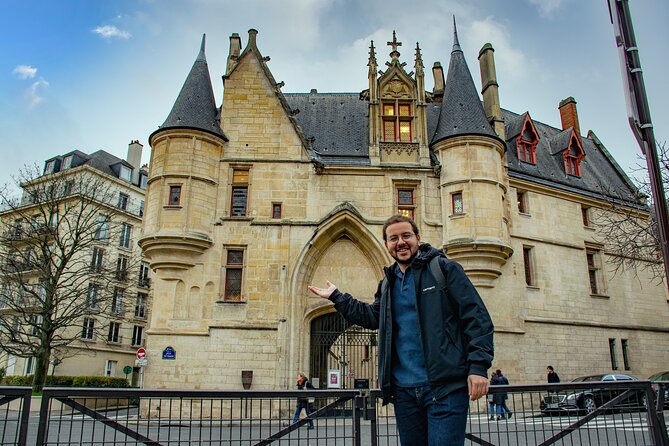
The tour begins at 89 Rue de Turbigo, near Carreau du Temple. You spend about 20 minutes here, with no separate admission charge.
Carreau du Temple once served as a second-hand clothing market beginning in 1863. Today, the building is used as an exhibition hall. That change neatly reflects Le Marais itself, which moved from a poorer district to one of Paris’s fashionable areas.
This is a strong opening stop because it gives you a theme for the entire walk: neighborhoods are not fixed. Buildings can change purpose, and a district can change social character while still keeping traces of its earlier life.
Your guide can help you read that change rather than simply admire the architecture. Hugo, described as a full-time guide and historian, was especially praised for connecting the neighborhood’s past with present-day Paris. Benoit was also appreciated for mixing historical details with current cultural points.
There is no major attraction entrance here, so the value comes from the explanation. If you prefer grand interiors and long visits inside monuments, this stop may feel brief. If you like learning why a building matters, 20 minutes is enough to set the stage.
Marché des Enfants Rouges: Paris at the food stalls
Next comes the Marché des Enfants Rouges, reached after another short walk. You spend about 20 minutes at this covered market, which is recognized as the oldest food market in Paris.
This is one of the most appealing stops for anyone who wants to see Paris as a lived-in city. The market appears often in food tours, books, and documentaries, but its real value here is that it gives the neighborhood a daily, local focus. Parisians come on weekends, and the market remains part of ordinary city life rather than a sight built only for sightseeing.
Your guide can explain why this market matters within Le Marais. You will also have a chance to note it for a later meal or snack, though this is a walking tour rather than a dedicated food tour. The time at the market is limited, so you should not expect a long tasting session or a full meal.
That short visit can be a benefit. You get an introduction without giving up the rest of the route. If the market catches your interest, you can return independently after the tour and spend more time there.
One practical point: market areas can be lively, particularly on weekends. A small group helps, but you should still stay close to the guide and keep track of your belongings.
Rue des Rosiers and Jewish Paris
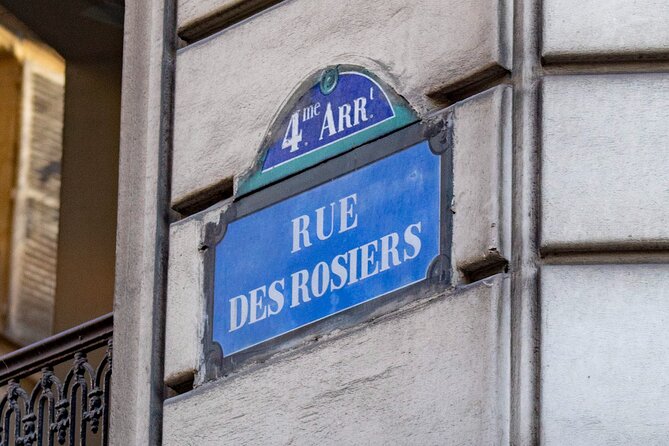
The longest stop is Rue des Rosiers, with about 40 minutes devoted to the street and the surrounding Jewish district. This is the heart of Jewish Paris and the part of the route where the guide has the most room to explain a community that has existed in Paris since the Middle Ages.
The extra time is important. A quick pass through the street would give you a visual impression, but not much context. Forty minutes allows the guide to discuss Jewish culture and the district’s place in Paris without rushing from one photo point to the next.
I would pay close attention here and ask questions. The history of a neighborhood is easier to understand when you connect it to people, community, faith, work, and daily life. The tour’s smaller size should make that kind of conversation easier than it would be in a large group.
Clara received especially strong praise for giving an in-depth historical perspective while keeping the walk relaxed and conversational. Another guide, Valentin, was appreciated for patience and for taking time with questions. Those qualities matter most at Rue des Rosiers, where a quick list of dates would not be enough.
You should also keep your expectations realistic. The tour introduces the district, but it cannot cover every part of Jewish Paris in 40 minutes. If this subject is a central reason for your visit, treat the walk as a starting point and return later for a slower look.
More History Walking Tours in Paris
- Paris: Le Marais & Montmartre Jewish History Walking Tour
★ 4.8 · 170 reviews - Paris Walking Tour , Historical Sites .
★ 5.0 · 150 reviews - Paris – Historic City Center Walking Tour
★ 5.0 · 134 reviews - Unique Guided Walking Tour of Great Women in Parisian History
★ 5.0 · 89 reviews
Place des Vosges and the royal finish
The route ends at Place des Vosges, about 20 minutes after Rue des Rosiers. This is the formal, polished finale: a royal square dating from 1612 and one of the defining sights of Le Marais.
The square offers a useful contrast to the earlier stops. Carreau du Temple speaks to work and neighborhood change. The food market shows everyday commerce. Rue des Rosiers brings cultural and religious history. Place des Vosges gives you royal planning, architecture, and literary associations.
Victor Hugo once lived on the square, adding another layer to its appeal. The guide explains why the place is so important and helps you look beyond its good looks. It is easy to take a quick photograph and move on, but a short explanation makes the square more memorable.
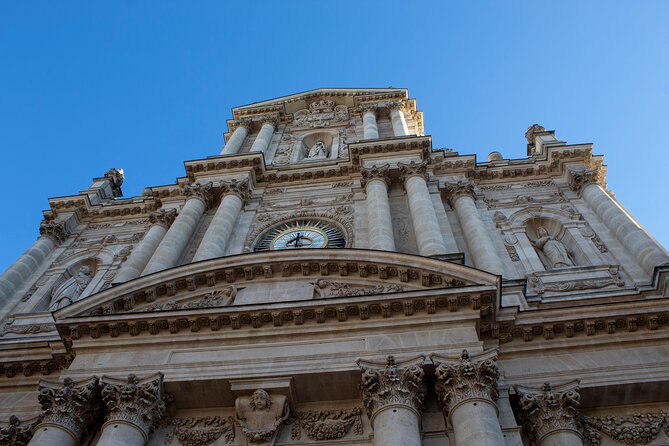
The official end point is Paroisse Saint-Paul Saint-Louis, at 99 Rue Saint-Antoine, in the southern part of the neighborhood. That is a practical finish. You can rest after the walk, continue through Le Marais, or use the surrounding area as your next starting point.
Because the tour does not include hotel pickup or drop-off, you need to make your own way to both ends. The starting point is near public transportation, and the walk ends in a part of the district where you can continue independently.
A guide-led walk with room for questions
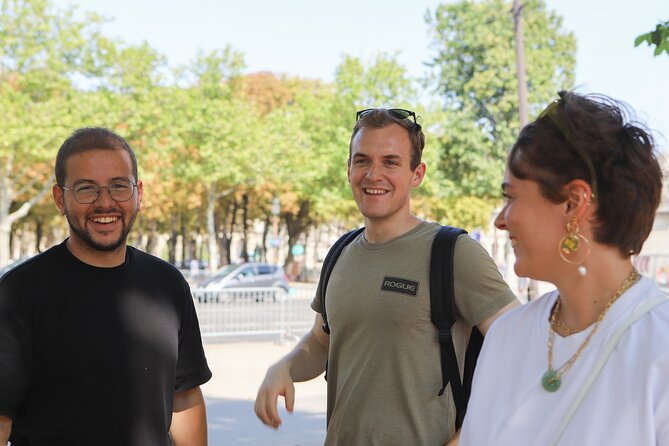
The strongest part of this experience is the guide’s role. The route itself is good, but the value comes from the person explaining what you see.
Clara was praised for being warm, clear, and easy to talk with. One family found her explanations useful without feeling like a classroom lesson. Another visitor wished the tour lasted longer, and Clara explained that half-day and full-day options are available from the same company.
Valentin was described as patient and helpful. That is useful if you arrive with a long list of questions or if you are still finding your footing in Paris. Hugo brings a historian’s interest, while Benoit was praised for adding modern cultural context and humor.
Vincent and Shakira were also appreciated for their friendly manner and for pointing out parts of the neighborhood such as the market, a vegan bakery, and shopping areas. Emily led a private walk that allowed the group to set its own pace.
These details suggest a flexible experience rather than a rigid script. Still, guides can differ in tone and emphasis. If you have a particular interest, such as Jewish Paris, architecture, food, or literary history, tell your guide early so the conversation can move in that direction when possible.
Is two hours enough for Le Marais?

Two hours is enough for a strong introduction, not enough for a full exploration. The listed stop times add up to about 100 minutes, leaving the rest for walking between locations and short explanations along the way.
That timing should suit you if you want a compact neighborhood overview. You will see the main points, hear the broad story, and finish with ideas for your own wandering.
You may want more time if you enjoy photography, food markets, shopping, or detailed historical discussion. The route passes through places that can easily fill half a day, especially if you stop to eat at the market or explore Rue des Rosiers after the guide leaves.
The experience works well early in a Paris visit. One person took it shortly after arriving and found it useful for deciding which places deserved a return visit. That is exactly how I would use it: take the guided walk first, then come back to the streets and markets that interest you most.
What the $66.26 price gives you
At about $66.26 per person, this is not a cheap way to walk through Le Marais. You are paying for a local guide, a small group, a planned route, and explanations that help you understand what you see.
The price is easier to justify if your group reaches the maximum of eight people and you value personal attention. A small group gives you more space to ask questions and reduces the chance that the guide’s comments disappear into a crowd.
If only two people book, the tour may feel almost private. One couple had that experience and enjoyed the relaxed pace and the chance to discover an area they might choose for a future Paris stay. That is a good value for visitors who prefer conversation and flexibility over a large, low-cost group.
The price does not include food, admission charges, hotel transportation, or gratuities. The four listed stops do not require a separate admission ticket, but you should budget for anything you choose to buy at the market or along the route.
Weather, comfort, and who should book
The tour runs rain or shine. Bring suitable clothing and shoes, since you will be outside for about two hours. A cold, wet day did not prevent one person from enjoying the walk, but weather can affect how comfortable you feel and how long you want to linger at each stop.
The tour is offered in English and accepts mobile tickets. Service animals are allowed, and most people can participate. Because the experience is a walking tour, you should be comfortable moving between the four stops for the full duration.
I would recommend it to:
- First-time visitors who want an introduction to Le Marais
- History fans who enjoy context and conversation
- Families with older children or teenagers
- Couples who prefer a small, easygoing group
- Visitors staying nearby who want to understand the district before exploring it alone
- Anyone interested in Jewish Paris, local markets, or historic urban change
I would be more cautious if you want a food tour, a museum visit, or a long route with many interior stops. You should also consider a longer half-day or full-day option if two hours feels too short for your interests.
Should you book this Le Marais walk?
Book it if you want a friendly, history-focused introduction to one of Paris’s most interesting districts. The small group, clear route, and guides who encourage questions give the tour real value, especially at the price point when the group is small.
Skip it if you want extensive food tastings, museum entry, or several hours of independent exploration. For most visitors, though, this is a smart way to get oriented. Take notes on the market, Rue des Rosiers, and any street your guide highlights, then return later at your own pace.
Free cancellation is available up to 24 hours before the start time. If you need to cancel or make changes, do it before that deadline.
FAQ
How long is the Paris Le Marais walking tour?
The tour lasts approximately two hours.
How many people can join the tour?
The group has a maximum of eight people. A private option is also available.
What language is the tour offered in?
The tour is offered in English.
Where does the tour begin?
It begins at 89 Rue de Turbigo, 75003 Paris, France.
Where does the tour end?
It ends at Paroisse Saint-Paul Saint-Louis, 99 Rue Saint-Antoine, 75004 Paris, France.
Which places are included on the route?
The route includes Carreau du Temple, Marché des Enfants Rouges, Rue des Rosiers, and Place des Vosges.
Are admission tickets included?
The four listed stops have no separate admission charge. Food, drinks, and personal purchases are not included.
Does the tour run in bad weather?
Yes. The tour takes place rain or shine. Service animals are allowed, and most people can participate.
Is hotel pickup included?
No. Hotel pickup and drop-off are not included, so you must make your own way to the starting and ending points.
Can I cancel for a refund?
Yes. You can cancel up to 24 hours before the start time for a full refund. Changes or cancellations made less than 24 hours before the start time are not accepted.
More Small-Group History Tours in Paris
- Paris: Napoleon’s Tomb and the Invalides Small-Group Guided Tour
★ 4.5 · 30 reviews - London Small Group Tour of Historical Pubs
★ 5.0 · 10,422 reviews - Boston: Freedom Trail History Small Group Walking Tour
★ 5.0 · 6,450 reviews - Madrid Tapas & Taverns Small Group Food & History Tour
★ 5.0 · 2,664 reviews
Just added around Paris
- Unique Guided Walking Tour of Great Women in Parisian History★ 5.0 · 89 reviews
- Paris Walking Tour , Historical Sites .★ 5.0 · 150 reviews
- Louvre Evening Escape – Avoid The Crowds! Exclusive Guided Tour★ 5.0 · 59 reviews
- Unique Tour of Literary Women in Parisian History with Tastings★ 5.0 · 75 reviews
- Paris Jewish Heritage: Le Marais & Montmartre Guided Walking Tour★ 5.0 · 45 reviews
- Père Lachaise Cemetery Tour: A Stroll Through Immortal History★ 5.0 · 18 reviews
- Paris – Historic City Center Walking Tour★ 5.0 · 134 reviews
- Montmartre & Sacré Coeur Private Historical 2-Hour Walking Tour in Paris★ 5.0 · 21 reviews
History Walking Tours, compared.
History and Hauntings of Salem Guided Walking Tour
Read our review →
Freedom Trail History Small Group Walking Tour
Read our review →
Historic Charleston Guided Sightseeing Walking Tour
Read our review →
Tapas Walking Tour with Food, Wine, and History
Read our review →
Savannah History and Haunts Candlelit Ghost Walking Tour
Read our review →

A History of Terror – Belfast City Centre Walking Tour
Read our review →Browse the lists this tour appears in