
Review · CAMPANIA
Naples: Historic Center Guided Tour with Underground Ruins
Naples reveals itself in layers. This four-hour walk links grand squares, football folklore, old churches, artisan workshops, and the buried remains of ancient Neapolis. I like the way it covers both the polished city around Via Toledo and the untidy, energetic heart of the historic center. I also like the final visit to San Lorenzo Maggiore, where you go about 10 meters below the church to see Greek and Roman ruins. The main drawback is the pace: four hours on foot, with stairs and an underground section, can feel demanding if you prefer a slow day.
You meet near the Neptune Fountain in Piazza Municipio and follow a certified guide through central Naples. I would especially value a guide such as Giorgia or Gianluca, both praised for making the city’s history, customs, and daily character easy to understand. Bring cash, and skip this tour if enclosed spaces make you uncomfortable.
Key points to know before booking
- The tour begins near Piazza Municipio: You start beside the Neptune Fountain, then walk toward Via Toledo and Piazza del Plebiscito.
- You see Naples above and below ground: The route ends at San Lorenzo Maggiore, with a visit to an ancient Greek agora and Roman forum.
- San Gregorio Armeno is a highlight for craft lovers: Its shops display handmade Neapolitan nativity figures and scenes.
- The guide shapes the experience: The strongest praise goes to Giorgia and Gianluca for clear history, local customs, and engaging storytelling.
- The route covers a lot in four hours: Expect a city walk rather than a relaxed church-by-church visit.
- The price is $99 per person: The fee includes the certified multilingual guide and the €10 entrance to the underground archaeological site.
Starting at Piazza Municipio beside the Neptune Fountain
The meeting point near the Neptune Fountain gives you a useful introduction to Naples right away. Piazza Municipio sits close to several major sights, so the tour begins in a part of the city where civic power, royal history, shopping, theater, and old street life meet.
Your guide leads the group toward Via Toledo, one of Naples’ best-known shopping streets. This first stretch helps you see how the city changes from broad public spaces to narrower historic lanes. Via Toledo also sits close to the Spanish Quarters, an area closely tied to Naples’ working-class identity and street culture.
The guide’s role matters here. A walk through central Naples can easily become a list of buildings, but the strongest guides add the customs and small details that make the city easier to read. Giorgia received particular praise for explaining history alongside local traditions. Gianluca was also singled out for his love of Naples and his ability to add details beyond standard dates and names.
More Old Town and Historic Centre Walks in Italy
- Rome in a Day Tour with Vatican, Colosseum and Historic Center
★ 4.5 · 1,042 reviews - Rome Food Tour in the Historic Centre with 8+ Food Tastings
★ 5.0 · 1,000 reviews - Genoa: 2-Hour Guided Walking Tour of the Historical Center
★ 4.2 · 605 reviews
Via Toledo, the Maradona mural, and Naples football culture
One of the more unusual stops along this part of the route is the Maradona mural and sacred altar dedicated to the famous Neapolitan football legend. It is not simply a sports sight. In Naples, Maradona is tied to local pride, memory, and identity, so this stop gives you a glimpse of how football enters everyday life.
I like this inclusion because it prevents the walk from becoming a parade of royal buildings and churches. You get a sense of what Naples values now, not only what it valued centuries ago. If football does not interest you, the stop may be brief, but it still helps explain the emotional tone of the city.
The route then takes in the exterior of Galleria Umberto I. This grand arcade is one of the city’s recognizable architectural sights, with a strong connection to Naples’ public and commercial life. Since the tour is focused on walking through the city rather than spending long periods inside every building, you should expect an outside look rather than an extended interior visit.
Royal Naples around the San Carlo Theatre

The walk continues past the exterior of Castel Nuovo, also called Maschio Angioino, followed by the San Carlo Theatre and the Royal Palace. These sights show a different side of Naples from the tight lanes of the old center. Here, the city feels more formal, with large buildings and open public spaces built around royal and civic power.
You also reach Piazza del Plebiscito, one of Naples’ most important gathering places. It is used for public events and concerts, and its broad scale gives you a useful break from the compressed streets that come later.
This section is particularly helpful if Naples is new to you. You see the city’s major public face before entering the older lanes. The contrast is part of the point: Naples is not one single style or mood. It shifts quickly from grand architecture to neighborhood life.
The tour description gives 15 minutes for a guided portion at Piazza del Plebiscito, though the full experience lasts four hours. I would treat the square as one stop within the larger walk, not as a separate extended visit. If you want detailed interiors of the Royal Palace, San Carlo Theatre, or Castel Nuovo, you may need extra time on your own.
Entering the historic center through Via dei Tribunali

From Piazza del Plebiscito, the route turns toward the historic center. Via dei Tribunali is one of the key streets here, and walking it gives you a clear sense of Naples’ dense, layered character.
You pass historic pizzerias along the way. The tour does not include a meal, so I would not book it expecting a pizza tasting. Still, the street scenes provide useful context for Naples’ food culture, especially if you plan to return later for lunch or dinner.
This is where a guide can save you from simply wandering without understanding what you see. The center is full of churches, small businesses, craft shops, and old buildings packed close together. A good explanation helps connect the street to the larger story of Naples.
The route is also more demanding here. Pavement, crowds, and narrow streets can make it harder to stay beside the guide. Wear comfortable shoes and keep your attention on the group. The supplied information does not specify group size, so you should be ready for a normal guided walking format rather than a private tour.
More Archaeological Site Tours in Italy:
- Discover the Ancient Ruins of Pompeii: Day Trip from Rome
★ 3.5 · 2,247 reviews - Ancient Syracuse: private guided tour of the Neapolis archaeological park
★ 4.5 · 88 reviews - Ancient Rome: Archeological area Largo Argentina
★ 3.9 · 49 reviews - Olbia: Archaeological Tour of Ancient Sardinia + Transport
★ 4.6 · 21 reviews
San Gregorio Armeno and handmade nativity scenes

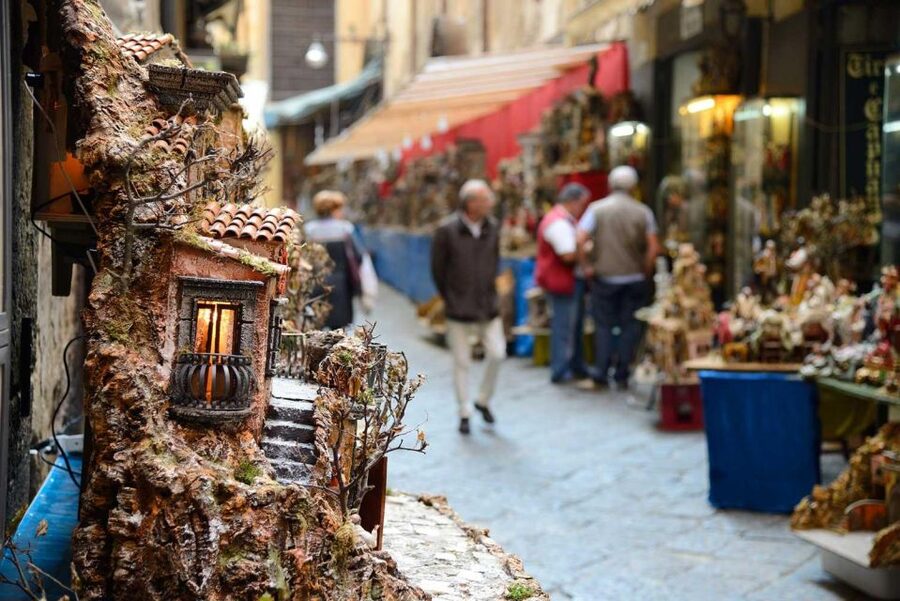
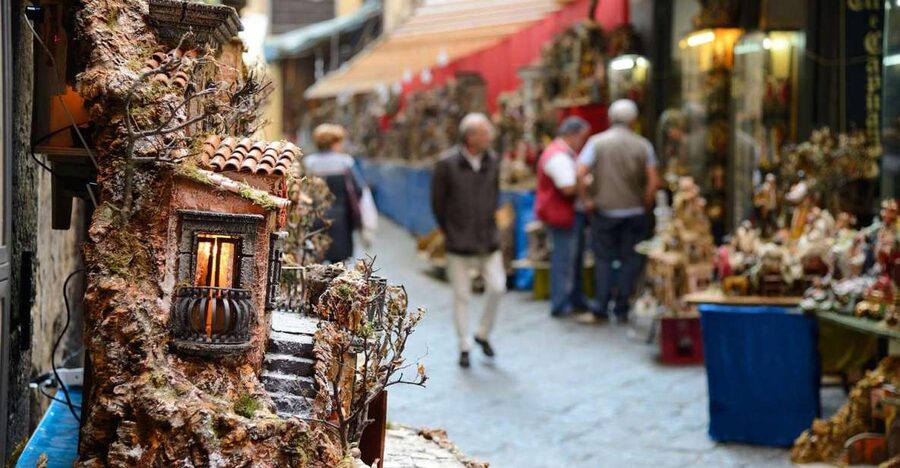
San Gregorio Armeno is one of the most distinctive stops. The street is famous for its handcrafted nativity scenes, which reflect a long Neapolitan tradition of miniature figures and detailed displays.
You will see religious characters, but the craft has a broader local flavor. Neapolitan nativity scenes are known for placing sacred subjects in lively, human settings. The street gives you a direct look at handwork rather than a polished museum display.
I would allow extra attention here, even though the tour must keep moving. The shops are part of the experience, and the figures make good souvenirs if you are looking for something tied specifically to Naples. The tour does not state that purchases are included, so any shopping is your own expense.
This stop also gives the walk a change of pace. After royal monuments and major streets, you are looking at small handmade objects produced within a living craft tradition. That mix is one of the tour’s best qualities.
Spaccanapoli, San Domenico Maggiore, and Santa Chiara
Next comes Spaccanapoli, the street known for cutting a long, straight line through the historic center. The name literally means Naples splitter, and the route offers a strong sense of how the old city is organized.
Along this stretch, the guide points out an artistic group of squares and churches. San Domenico Maggiore, an 18th-century church, and medieval Santa Chiara are among the important stops. The tour presents these sights as part of the city’s living center rather than isolated monuments.
That approach suits Naples. You can see art and religion, but you also remain close to daily street life. People move through the same spaces, shops stay open, and the old city continues to function around its historic buildings.
Do not expect long, quiet visits inside every church. The experience is a guided overview with a set route, and the underground site takes up the final part. If you have a particular interest in Santa Chiara or San Domenico Maggiore, note the locations and return later for a slower visit.
Going below San Lorenzo Maggiore
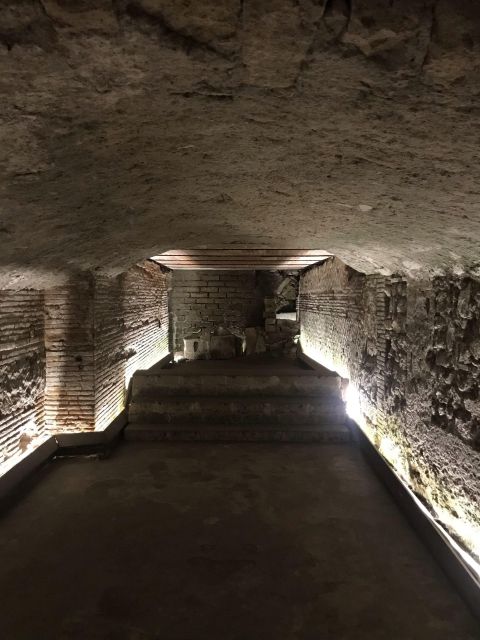
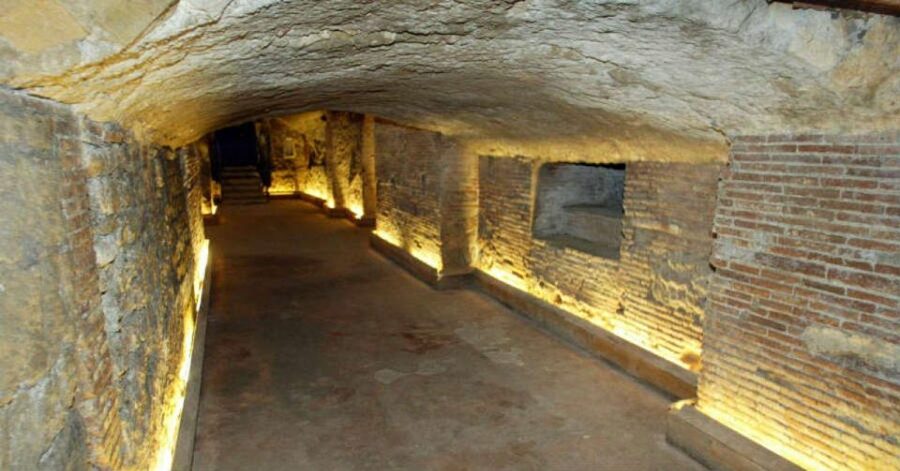
The tour’s most unusual section comes at San Lorenzo Maggiore. The church is described as one of the oldest in Naples, and the visit continues below its floors. You descend about 10 meters to reach the remains of ancient Neapolis.
This is not just a generic underground passage. The archaeological area includes a Greek agora and the civic and religious Roman Forum. In practical terms, you are seeing how the city was used long before the modern streets above it were built.
I like this ending because it gives the whole walk more meaning. You first see modern Naples, royal Naples, and the medieval and later historic center. Then you move below the church to an earlier city. The layers are easy to picture because you have just walked across the streets that grew above them.
The underground portion is also the main physical consideration. The tour specifically warns that it is not suitable for people with claustrophobia. You should be comfortable descending below ground and walking through an enclosed archaeological space.
The entrance fee to the underground site, listed as €10 per person, is included. A certified guide leads this section, and skip-the-ticket-line access is part of the arrangements. You should still expect the visit to follow a set schedule because the whole walk has to fit within four hours.
What the guides add to the walk
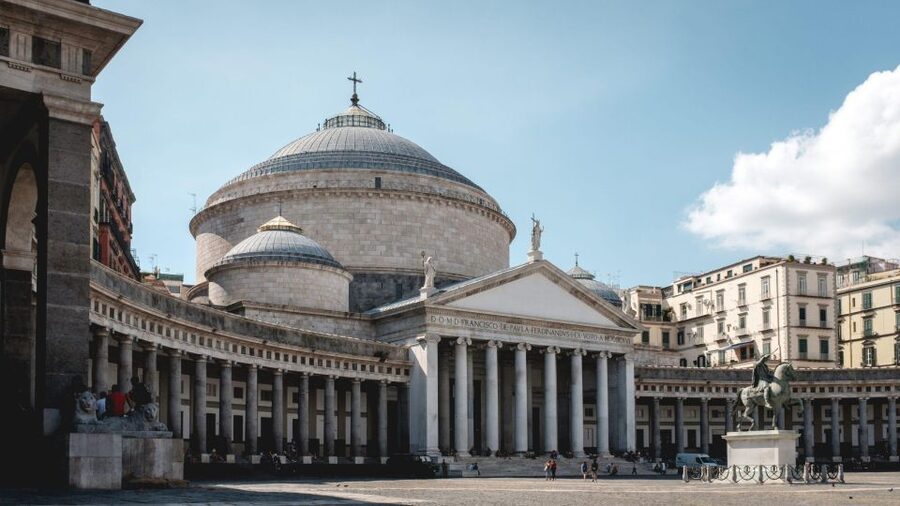
The guide is the part of this experience that can make the difference between a useful introduction and a hurried sightseeing loop. The strongest comments praise the guides’ clear English, friendly manner, and ability to explain Naples beyond official facts.
Giorgia was praised for combining history with customs and traditions, helping visitors understand the city’s different sides. Gianluca was described as someone who clearly loves Naples and adds details that make the route feel alive. Other comments describe the guides as thoughtful, easygoing, and very good at presenting the history of Napoli.
The tour is offered in Italian, English, and Spanish. If you need a language other than those listed, this is not the right choice. If you choose English, the available feedback points to guides who can explain the material clearly.
I would also ask questions as you walk. The route covers many places, and a good guide can help you decide which sights deserve a return visit. Ask about the Maradona altar, the nativity craft, or the difference between the Greek and Roman remains. These topics are likely to produce a more memorable conversation than simply collecting building names.
Is $99 a fair price?
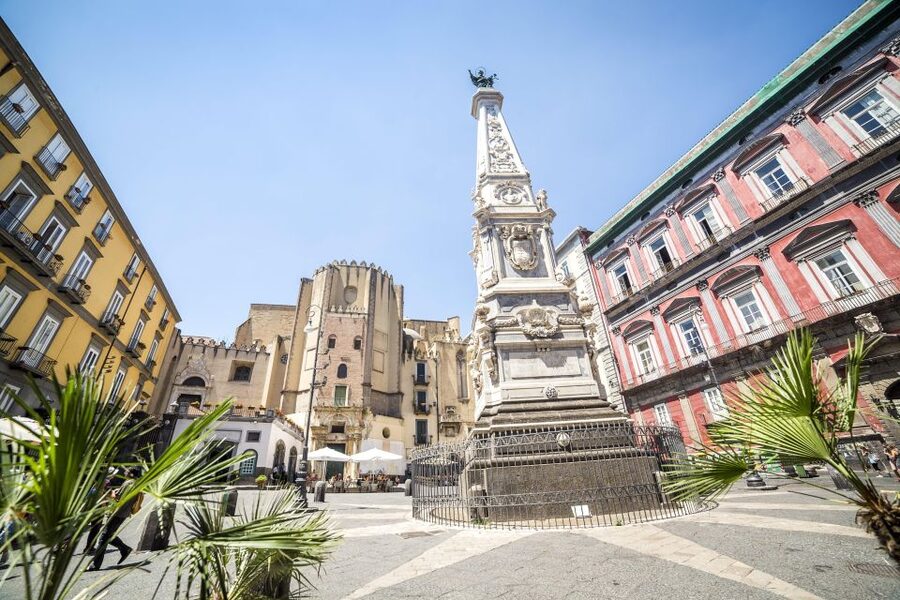
At $99 per person, this is not a bargain-priced city walk. The value depends on how much structure and explanation you want.
You are paying for four hours with a certified multilingual guide, a route through several major parts of Naples, and entrance to the underground archaeological area. The €10 site admission is included, so the cost is not simply a walking tour with an extra ticket added later.
I think the price is easier to justify if you have limited time in Naples or want a first-day orientation. In four hours, you cover Via Toledo, the Spanish Quarters area, Galleria Umberto I, Maschio Angioino, San Carlo Theatre, the Royal Palace, Piazza del Plebiscito, Via dei Tribunali, San Gregorio Armeno, Spaccanapoli, several churches, and San Lorenzo Maggiore.
The tradeoff is depth. You cannot spend a long time inside each church or monument at this pace. If you are happy to see the main sights, understand their place in the city, and return later to the ones you like best, the price may work well. If you prefer one museum or monument explored slowly, book a more focused experience instead.
The option to reserve now and pay later may help if your schedule is still changing. Cancellation is free up to 24 hours before the start time, with a full refund. Those terms give you some flexibility, but the key decision remains the walking pace and underground setting.
Who will enjoy this Naples tour most?
I would recommend it to a first-time visitor who wants a strong introduction to central Naples in one outing. It is also a good fit if you want local stories alongside famous sights, rather than a route focused only on architecture.
History and archaeology fans will especially appreciate the final visit below San Lorenzo Maggiore. Craft lovers will enjoy San Gregorio Armeno, and football fans will understand why the Maradona altar matters to the city.
The tour is less suitable if you have limited mobility, dislike long walks, or feel uneasy in enclosed spaces. The supplied information only specifically rules out people with claustrophobia, so you should consider your own comfort with a four-hour walking route and an underground descent.
Families may find the changing scenery useful, but the route still requires attention and stamina. The most successful experience will come from treating it as an active city walk, not a bus tour with long stops.
Should you book the underground Naples walk?
Book it if you want to connect Naples’ grand public sights with its crowded historic center and ancient remains below the streets. The combination of Via Toledo, Piazza del Plebiscito, San Gregorio Armeno, Spaccanapoli, and San Lorenzo Maggiore gives you a broad first look at the city.
I would book it early in your Naples stay, then use what you learn to choose places for a second visit. Come with comfortable shoes, cash, and enough energy for four hours. If enclosed spaces are a serious concern, skip this one and choose a surface-level city walk instead.
For most visitors who want history, local character, and archaeology in one outing, the underground section makes the $99 price easier to defend.
FAQ
Where does the tour meet?
The meeting point is near the Neptune Fountain in Piazza Municipio.
How long does the tour last?
The tour lasts four hours.
What languages are available?
The live guide is available in Italian, English, and Spanish.
What is included in the price?
The price includes a certified multilingual guide and the entrance fee to Underground Naples of Neapolis Sotterrata, listed as €10 per person.
What sights are visited above ground?
The route includes Via Toledo, the Spanish Quarters area, Galleria Umberto I, the exterior of Castel Nuovo, San Carlo Theatre, the Royal Palace, Piazza del Plebiscito, Via dei Tribunali, San Gregorio Armeno, Spaccanapoli, San Domenico Maggiore, and Santa Chiara.
What is visited underground?
At San Lorenzo Maggiore, you descend about 10 meters to see archaeological remains of ancient Neapolis, including the Greek agora and the civic and religious Roman Forum.
Is the tour suitable for people with claustrophobia?
No. The underground portion is not suitable for people with claustrophobia.
Just added around Italy
- Olbia: Archaeological Tour of Ancient Sardinia + Transport★ 4.6 · 21 reviews
- Naples: Monuments and Historic District Self-Guided Tour★ 4.0 · 50 reviews
- Naples: Historic City Center Guided Walking Tour★ 4.7 · 38 reviews
- Naples: Historic Center Tour & Veiled Christ Entry Tickets★ 5.0 · 97 reviews
- Milan: History & Street Food Tour with Wine Tasting★ 4.9 · 30 reviews
- Milan: Fresh Pasta and Tiramisù Class in A Historical Home★ 4.9 · 195 reviews
- Milan : Historic Private Walking Tour★ 4.7 · 49 reviews
- Cinematic & Classical Organ Experience in Historic Church★ 4.7 · 22 reviews
Archaeological Site Tours, compared.
Discover the Ancient Ruins of Pompeii: Day Trip from Rome
Read our review →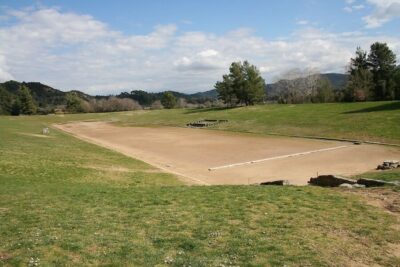
Ancient Olympia: Archaeological Site and Museum Entry Ticket
Read our review →
Cusco: Historical Guided City Tour with 4 Inca Ruins
Read our review →
Ancient Chacchoben Mayan Ruins & Mayan Experience from Costa Maya
Read our review →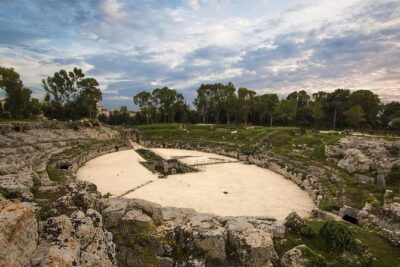
Ancient Syracuse: private guided tour of the Neapolis archaeological park
Read our review →
Coba Private Tour – Ancient Ruins & Refreshing Cenote Swim
Read our review →
Alanya: Ancient Ruins & Hidden Coves of Gazipaşa w/ Cave
Read our review →
3-Day Ancient Greek Archaeological Sites Tour from Athens
Read our review →Browse the lists this tour appears in