

Review · TENNESSEE
Memphis 2-Hour Historic Walking Tour: Beyond Beale
Memphis has more stories than Beale Street. This $32 walking tour links the Peabody Hotel, old cotton wealth, Civil War ground, the Mississippi River, and Dr. Martin Luther King Jr.’s final march. I like the way it shows Memphis as both a polished Southern city and a rough river town. I also like that the famous Peabody Duck March is built into the experience, not treated as a separate extra.
The main consideration is timing. The tour must reach the Peabody for the ducks, and one group found the walk hurried near the end. A large group or a hard-to-hear microphone can make it tougher to follow every story, so arrive early, stay close to your guide, and claim a good position for the duck ceremony.
Key points to know before you book

- The Peabody ducks anchor the tour: You watch the famous March of the Ducks, a Memphis tradition dating to 1933.
- Memphis history gets two sides: Your guide covers the city’s old-Southern polish as well as its rough river-town past.
- The route goes beyond Beale Street: Expect Court Square, Cotton Row, Fourth Bluff Park, Deadman’s Alley, Main Street, and Civil War sites.
- Several guides earn strong praise: Mary, Kate, Shannon, Charlie, and Charley are repeatedly singled out for clear stories, humor, and helpful answers.
- The tour is a useful first look: Two hours gives you a firm sense of downtown Memphis, though not enough time for long stops at every place.
- Comfortable shoes matter: You walk for roughly two hours, with no hotel pickup or drop-off included.
Why this Memphis walk is more than a Beale Street stroll
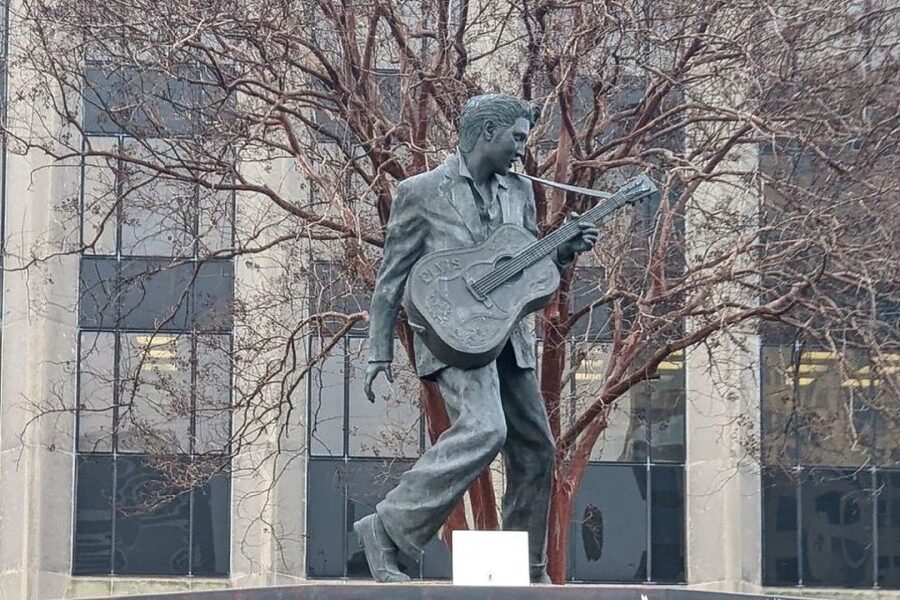
Memphis is often sold through music, barbecue, and Beale Street. Those are important, but they do not explain the whole city. This tour gives you a wider frame, showing how the river, cotton trade, war, civil rights, hotels, and downtown streets shaped Memphis.
I like the tour’s central idea: Memphis has always had two personalities. One is gracious and well-dressed, built around riverboats, cotton money, grand hotels, and formal squares. The other is loud, unruly, and harder-edged, shaped by gamblers, gangsters, roughnecks, and the constant movement of a river port.
That contrast gives the walk its character. You are not simply checking off old buildings. You are hearing why Memphis can feel elegant on one block and rowdy on the next. A good guide makes those connections clear, and the strongest guides on this tour appear to do exactly that.
The rating is 4.8 from 68 bookings, which fits the tour’s main strength: the guide. Mary is praised for humor, energy, and entertaining stories. Kate gets credit for patience and clear answers. Shannon is singled out for making the city easier to understand, while Charlie and Charley are described as friendly and highly informed.
Guide quality can vary on any walking tour, but this one has a consistent pattern of strong guide feedback. That matters because the streets and buildings alone do not tell you enough. The stories are the product.
More History Walking Tours in the USA
- History and Hauntings of Salem Guided Walking Tour
★ 5.0 · 14,564 reviews - Boston: Freedom Trail History Small Group Walking Tour
★ 5.0 · 6,450 reviews - Historic Charleston Guided Sightseeing Walking Tour
★ 5.0 · 6,216 reviews
Starting inside the Peabody Memphis
You meet in the Peabody Hotel lobby, near the Concierge Desk. Arrive 15 minutes early. This is more than a polite suggestion, since the lobby can be busy and the tour has a fixed appointment with the ducks.
The Peabody is a fitting starting point. It represents the refined side of Memphis, and its duck tradition is one of the city’s most unusual public rituals. Since 1933, trained ducks have marched to and from the hotel’s lobby fountain under the direction of a Duckmaster.
The exact tour sequence gives you time at the Peabody, with about 20 minutes listed for a visit and photo stop. The duck march itself is the part you need to plan around. If you have never seen it, it is a fun and slightly peculiar introduction to Memphis. This city has never been afraid of a good show.
Do not assume you can arrive at the last minute and still get a good view. One group reported reaching the hotel just in time and having a poor sightline. The guide was praised, but the group felt rushed because several people arrived late and the schedule had to catch up.
If the ducks are the main reason you booked, stay alert to the clock. You may want to stand where you can see the fountain and the route into the lobby. The ceremony is included, but the best view is not guaranteed.
Court Square and the city’s public face
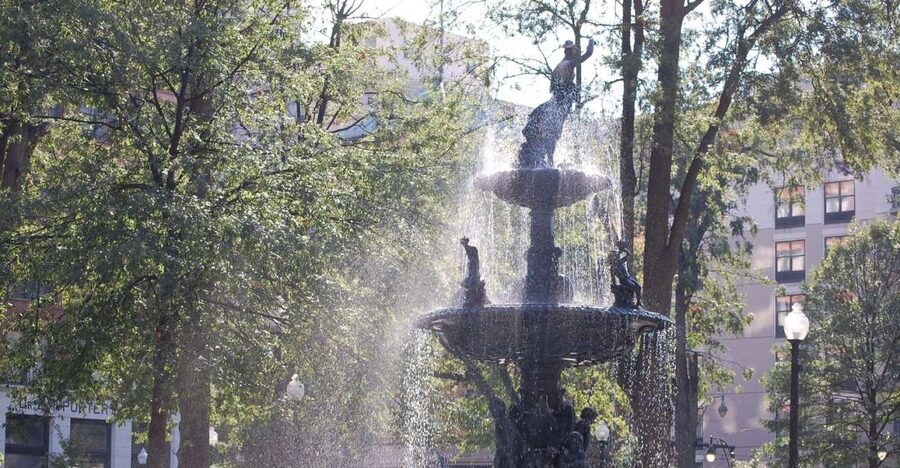
From the Peabody, the walk moves into downtown. Historic Court Square is one of the key places where Memphis feels like an old civic center rather than only a music destination.
A guided stop here helps explain how the city developed around public buildings, commerce, and the river. You get a sense of the formal Memphis, the city associated with cotton money and Southern manners. It is a useful counterpoint to the rougher stories that follow.
The tour spends about 75 minutes on its main downtown walking section. That is enough time to connect several places, but it is not a slow architectural tour. You should expect to keep moving, listen while walking, and save detailed photos for the shorter stops.
I would treat Court Square as a place to get your bearings. You are learning how downtown fits together and how the city’s older public life relates to its trading past. The guide’s explanations are more important than any single building.
Cotton Row and Memphis commerce
Cotton Row brings the city’s commercial past into focus. Cotton was central to Memphis, and the old trading district helps explain why the city accumulated money, influence, and conflict.
This is where the tour’s two-sided view works well. Cotton wealth helped create a polished city, but the trade also depended on a harsh economic system and a river port full of labor, movement, and risk. The guide’s job is to connect the attractive old city with the less comfortable forces behind its growth.
You may also get a new rooftop perspective over Memphis during the walk. The information does not promise a particular building or a long rooftop visit, so think of this as a brief city view rather than a full observation deck experience.
Still, a higher viewpoint can help you understand the downtown pattern. After walking through older streets, looking across the city gives you a better sense of how the historic core sits beside the river and the wider urban area.
Same place, a different slice of the past:
- Charleston’s Old South Carriage Historic Horse & Carriage Tour
★ 5.0 · 10,023 reviews - Beneath The Streets Underground History Tour
★ 4.5 · 8,006 reviews - Charleston Horse-Drawn Carriage Tour: Explore Historic Charleston
★ 5.0 · 3,561 reviews - Savannah History and Haunts Candlelit Ghost Walking Tour
★ 5.0 · 3,235 reviews
Fourth Bluff Park and the Mississippi River
Fourth Bluff Park is one of the tour’s best chances to connect Memphis with the Mississippi River. The park overlooks the river, giving you a place to pause and consider why this city grew here.
The river is not just scenery. It explains Memphis’s role as a shipping and trading center, and it helps make sense of the city’s mix of wealth, labor, travelers, crime, music, and changing neighborhoods. A guide can turn that broad view into a useful lesson in place and power.
Do not expect a long nature stop. This is a city walking tour, not a park outing. The value comes from the viewpoint and the explanation, not from spending a quiet half hour at the overlook.
Bring a camera, as recommended, but keep your attention on the guide. The stories are easy to miss if you focus only on photographs.
Civil War Memphis at two important sites
The walk includes locations tied to the Battle of Memphis and Forrest’s Raid. These stops give you a look at the city during the Civil War and show that Memphis was not on the sidelines of national events.
The Battle of Memphis took place on the river, making the waterfront location especially meaningful. The city’s position and commercial importance made it strategically valuable. A stop connected with Forrest’s Raid adds another chapter, this time involving Confederate cavalry and the violence that reached the city during the war.
The tour does not present itself as a full Civil War program, so you should not expect long battlefield interpretation or museum-style displays. Instead, the guide places Memphis into the larger conflict while you stand in the actual downtown setting.
That approach suits a short city walk. You get enough context to recognize the sites when you return to them later, perhaps with more time for a museum or historical attraction. The tour is strongest as an introduction, not as the final word on Memphis during the war.
Deadman’s Alley and the rougher side of town

Deadman’s Alley shifts the mood. Even the name points toward the less polished Memphis, a place associated with trouble, crime, and hard living.
This part of the walk supports the tour’s broader theme. Memphis was never just grand hotels and cotton offices. It was also a rough river town where people came and went, money changed hands, and the law did not always control the streets.
Your guide supplies the meaning here. Without that context, an alley can be little more than a quick photo stop. With a good explanation, it becomes a reminder that city history often survives in small, easily missed spaces.
The route also passes along Main Street, another chance to see how downtown connects its older commercial core with later chapters of Memphis life. Keep your expectations practical: the attraction is the sequence of places and stories, not elaborate displays at each stop.
Dr. Martin Luther King Jr.’s last march

The tour includes a location connected with Dr. Martin Luther King Jr.’s last march. This is one of the most serious moments on the route and gives the walk a direct link to the civil rights struggle.
The stop matters because it places Memphis in the national story of racial justice and labor rights. It also prevents the tour from becoming a light parade of old hotels, cotton offices, and colorful characters.
Expect the guide to connect the location with Memphis as it exists today. One of the tour’s useful aims is showing how the past still shapes the present city. You may leave with a clearer sense of why Memphis history cannot be reduced to music and food, enjoyable as those subjects are.
Give this part your full attention. It is not simply another landmark on a route.
The guide makes or breaks the two hours
The strongest part of this experience is the human element. Several guides receive unusually warm praise for being personable, clear, patient, and ready to answer questions.
Mary is described as especially lively, with humor that keeps the walk moving. Kate is praised for her patience, concise answers, and friendly manner. Shannon gets repeated credit for explaining Memphis in a way that helps first-time visitors understand the city. Charlie and Charley are also praised for being friendly and well prepared.
That does not mean every group will have the same experience. A microphone problem affected one outing, especially for older participants, and turning up the volume made the sound scratchy rather than clearer. If you cannot hear, tell the guide early and stay near the front.
One recorded group had 16 people, with 12 in the main party. A group of that size can be manageable, but it makes positioning important. You may need to move closer when the guide stops, especially on busy streets or around the Peabody ceremony.
The walk is conducted in English. It works best for people who enjoy listening while walking and asking questions along the way.
Is $32 a fair price?
At $32 per person, this is a reasonable price for a two-hour guided introduction to downtown Memphis. You are paying for a live guide, a planned historical route, and entry into the Peabody Duck March experience.
The value is strongest if this is your first visit. You get a basic map of the city’s past, several places you might otherwise miss, and useful context for exploring on your own afterward. The tour can also help you decide which subjects deserve more of your time, such as civil rights, the Civil War, cotton commerce, or Memphis music.
The value is weaker if you mainly want a long Beale Street tour. Beale Street is part of the broader downtown setting, but this experience is intentionally about what lies beyond it. One participant wished more time had gone toward Beale Street stories instead of the 30 minutes connected with the ducks.
That is a fair criticism, but it also describes the tour’s purpose. If you have already seen the duck march, the included ceremony may feel like time you would rather spend on history. If the ducks are new to you, they add a memorable and distinctly Memphis moment.
Who should take this tour?
I would recommend it to first-time visitors who want a clear introduction before exploring downtown alone. It is also a good fit if you enjoy local stories more than a long list of photo stops.
You should choose it if you want:
- A short overview of Memphis history
- A guide who can connect separate downtown sites
- Civil War and civil rights context
- A Mississippi River viewpoint
- The Peabody Duck March included in the price
- A walking experience rather than a vehicle tour
You may want something else if you dislike fixed schedules, have difficulty walking for two hours, or already know downtown Memphis well. It is also less suitable if you want to spend most of the time on Beale Street or examine one historical subject in great depth.
Wear comfortable shoes and bring a camera. Hotel pickup and drop-off are not included, so arrange your own way to the Peabody and return from there.
My verdict: book it for context, not just landmarks
I would book the Memphis 2-Hour Historic Walking Tour if I were visiting Memphis for the first time and wanted the city to make more sense quickly. The route covers enough ground to connect the river, cotton, war, civil rights, downtown commerce, and the Peabody tradition.
The best reason to book is the guide. Mary, Kate, Shannon, Charlie, and Charley are all praised for making the information clear and enjoyable. The main weakness is the fixed timing around the ducks, especially for groups that arrive late or want a slower historical walk.
Book it when you want a lively orientation to downtown and accept that two hours means a brisk pace. Skip it if you have already seen the Peabody ceremony and would rather spend that time on a focused Beale Street, civil rights, or Civil War experience.
FAQ
How long is the Memphis Beyond Beale walking tour?
The tour lasts two hours.
Where does the tour meet?
Meet your guide in the Peabody Hotel lobby, near the Concierge Desk.
How early should I arrive?
Arrive 15 minutes before the scheduled start time so you can check in and be ready to leave with the group.
Is the Peabody Duck March included?
Yes. The Peabody Duck March is included in the tour.
What language is the tour conducted in?
The live tour guide speaks English.
Does the tour include hotel pickup and drop-off?
No. Hotel pickup and drop-off are not included.
What should I bring?
Bring comfortable shoes and a camera.
Can I cancel for a refund?
Yes. You can cancel up to 24 hours in advance for a full refund. You can also reserve now and pay later.
More Two-Hour Tours in the USA
- 2-Hour Gettysburg Battlefield Guided History Bus Tour with a National Park Guide
★ 4.5 · 2,201 reviews - 2 Hour LoDo Historic Walking Tour in Denver
★ 5.0 · 1,106 reviews - 2 Hour Historic Market Food Tour and Hands-On Biscuit Class
★ 5.0 · 251 reviews - 2-Hour Food, History and Street Art Tour of Ponce City Market
★ 5.0 · 159 reviews
Just added around the USA
- Historical Bicycle Tour of Dunedin★ 5.0 · 44 reviews
- Safety Harbor Ghost Tour★ 5.0 · 60 reviews
- Tarpon Springs Ghost Tour★ 4.5 · 19 reviews
- Cincy Brunch History and Streetcar Tour with Riverside Food Tours★ 5.0 · 108 reviews
- 2.5 Hour Kayaking with Manatee and History Tour in Tarpon Springs★ 5.0 · 24 reviews
- Chicago River Architecture Tour Aboard a Historic Yacht★ 5.0 · 45 reviews
- Walkin’ with Colin: Chicago History-Mystery-Comedy-Tragedy Tour★ 5.0 · 218 reviews
- Historical and Architectural Chicago Fireboat River & Lake Cruise★ 5.0 · 246 reviews
History Walking Tours, compared.

History and Hauntings of Salem Guided Walking Tour
Read our review →
Freedom Trail History Small Group Walking Tour
Read our review →
Historic Charleston Guided Sightseeing Walking Tour
Read our review →
Tapas Walking Tour with Food, Wine, and History
Read our review →
Savannah History and Haunts Candlelit Ghost Walking Tour
Read our review →
A History of Terror – Belfast City Centre Walking Tour
Read our review →Browse the lists this tour appears in