
Review · MARRAKECH
Historical Marrakech Walking Tour
Marrakech reveals itself one stone at a time. This three-hour walk links Koutoubia Mosque, Bab Agnaou, and Bahia Palace with a licensed guide who explains the city’s past, customs, architecture, and daily life. I like the clear focus on major landmarks, and I also like the small group limit of 15 people, which gives you a better chance to ask questions.
The meeting point is easy to find around Jamaa El Fna, and you can choose a morning or afternoon departure. The main consideration is the heat: much of the experience takes place outdoors, so the early or later departure may be more comfortable. You should also remember that the Bahia Palace admission fee, food, drinks, and guide gratuity are not included.
Key points before you book
- Three major Marrakech sights in one walk: See Koutoubia Mosque, the 12th-century Bab Agnaou gate, and Bahia Palace without arranging separate visits.
- A small group of up to 15 people: The size is modest enough for questions and easier listening than a large coach tour.
- Guides who adapt to your interests: Youssef tailored explanations toward crafts and artisans for one group, while Hassan earned praise for making architecture, culture, and history easy to understand.
- Morning and afternoon choices: The scheduled options are 10:00 AM to 1:00 PM and 2:30 PM to 5:30 PM.
- A useful first look at the medina: The route gives you context for Marrakech’s landmarks, local customs, and public life.
- A clear extra cost: Koutoubia Mosque and Bab Agnaou are listed with free admission, but the Bahia Palace ticket is separate.
Why this three-hour walk works well in Marrakech
Marrakech can feel like a lot at first. The medina has busy squares, narrow routes, historic walls, and architectural details that are easy to pass without understanding. A walking tour gives you a frame for the city instead of leaving you to guess what each building meant.
This route is especially useful if you are new to Marrakech. It places three major sights into one compact outing and gives you a guide to explain how they fit into the city’s story. You are not simply ticking off photo stops. You can ask about customs, architecture, local life, and the meaning of what you are seeing.
The format also suits you if you prefer a short introduction before exploring on your own. Three hours is long enough to cover substantial ground, but it does not take over an entire day. You can still return to Jamaa El Fna, shop, rest, or visit another attraction afterward.
The group maximum of 15 matters. You will not receive the same private attention as on a one-to-one tour, but this is far more manageable than a large group. A smaller gathering also helps when the guide is explaining details near a busy square or monument.
More History Walking Tours in Morocco
- Fez: Guided Walking Tour of the Historic Medina
★ 5.0 · 359 reviews - Fes: A Guided Walking Tour Through the Historic Medina
★ 4.4 · 97 reviews - Fez: Walking Tour in the Ancient City of Fez
★ 4.8 · 73 reviews
Starting near Jamaa El Fna
The tour begins at فندق علي on Rue Moulay Ismail, Marrakech 40000, with Jamaa El Fna identified as the easy-to-find meeting area. Since the supplied meeting details include both the hotel address and the famous square, I would check the exact meeting instructions before setting out. That small bit of preparation can save you from searching around a busy part of the city.
Jamaa El Fna is a useful starting point because it quickly introduces you to Marrakech’s public life. You can expect scents, sounds, movement, and a strong sense that the city is lived in rather than arranged for sightseeing. The square is not just a backdrop. It is one of the places where Marrakech’s social energy comes into view.
Your guide’s role is important here. Without context, the square can seem like a sensory rush. With an explanation of customs and daily life, you have a better chance of understanding what you are seeing instead of treating it as a series of colorful snapshots.
The tour is offered every day during the stated operating period, with morning and afternoon departures. The morning option runs from 10:00 AM to 1:00 PM, while the later option runs from 2:30 PM to 5:30 PM. If you dislike strong heat, the later part of the day may be worth considering, although conditions will vary.
Koutoubia Mosque, Marrakech’s great landmark
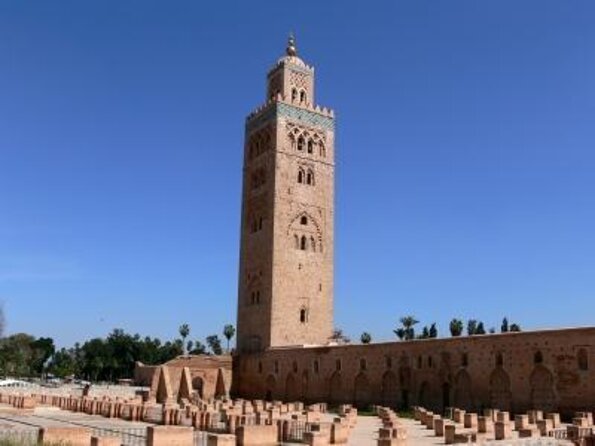
The first listed stop is Koutoubia Mosque, with about 30 minutes set aside. It is the largest mosque in Marrakech and one of the city’s best-known landmarks. The tour lists admission as free, which keeps this part of the outing simple.
The value here is not just the view. A guide can point out why the mosque matters to Marrakech and help you notice architectural features that may otherwise blend into the surrounding city. The stop also gives you a firm geographic reference point as you begin to understand the city.
You should keep your expectations realistic. The itinerary identifies Koutoubia Mosque as a sightseeing stop, but it does not promise interior access. The practical experience may therefore focus on the exterior, the surrounding area, and the mosque’s place in Marrakech’s history and culture.
Thirty minutes is a sensible amount of time for this part of the walk. It allows for an explanation, photographs, and questions without making the entire tour feel slow. If you enjoy architecture, this is a good moment to ask your guide about the building’s design and its importance to the city.
Bab Agnaou and the 12th-century city walls
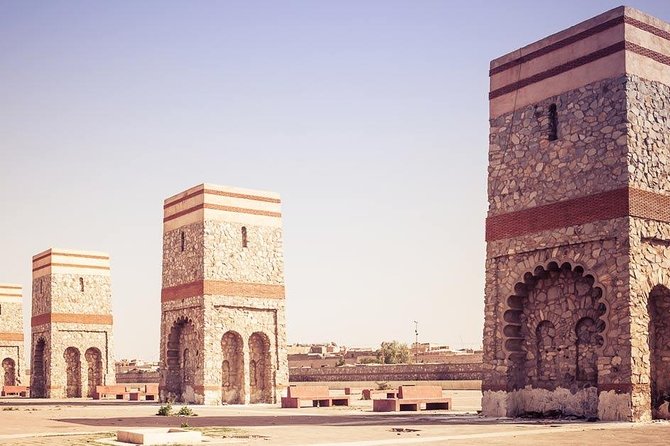
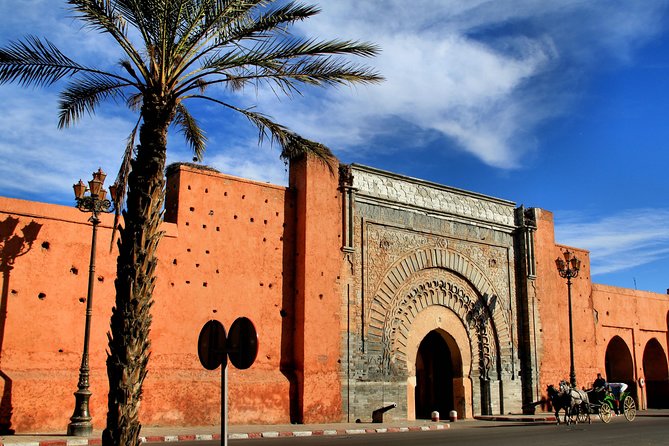
Next comes Bab Agnaou, one of Marrakech’s 19 historic gates. Built in the 12th century, it gives the walk a direct connection to the city’s earlier defenses and royal approach routes.
Gates can be easy to overlook when you are focused on markets and squares. Bab Agnaou rewards a slower look. Its age and position help explain how Marrakech was organized and protected, while its ornament gives the guide a chance to discuss architecture and local history.
The planned stop lasts about 30 minutes, and admission is listed as free. That makes it a useful pause with no extra ticket cost. You can spend the time examining the stonework, listening to the explanation, and asking how the gate relates to the rest of the old city.
I especially like the balance between this stop and the larger monuments. Koutoubia Mosque represents religious and civic importance, while Bab Agnaou gives you a more structural view of Marrakech. Together, they show that the city’s identity is built from more than markets and palace rooms.
As with any outdoor stop, comfort depends on the weather. The tour requires good weather, and poor conditions may lead to a new date or a full refund. Bring sensible walking gear and plan for time outside, though the tour information does not specify a required dress code or equipment list.
Same place, a different slice of the past:
- Marrakech: Saadian Tombs & Bahia Palace, Medina Guided Tour
★ 4.6 · 1,989 reviews - Marrakech Historical and Cultural Tour – Half Day City Tour
★ 4.5 · 1,180 reviews - Atlas Mountains – Ancient Ait Ben Haddou Day Tour from Marrakech
★ 5.0 · 411 reviews - Full-day Historical Meknes Volubilis and Moulay Idriss Tour
★ 4.5 · 196 reviews
Bahia Palace and the biggest time commitment
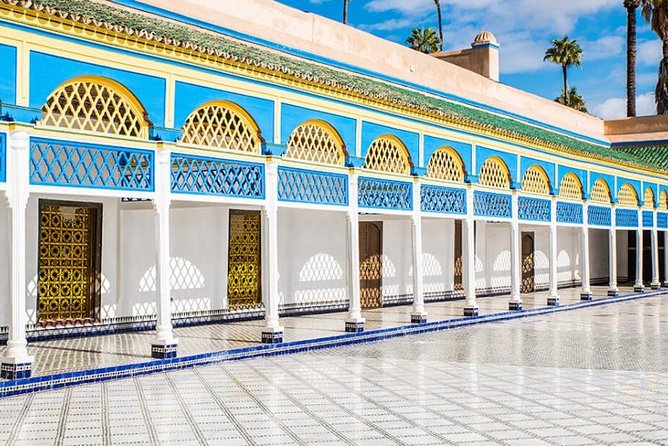
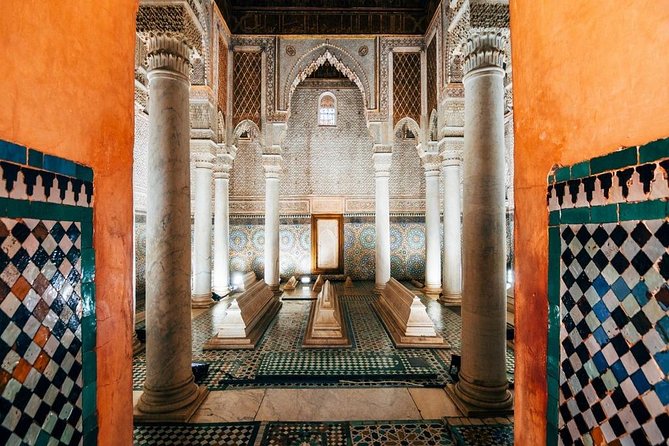
Bahia Palace receives the longest visit, about one hour. The palace covers eight hectares and dates from the 19th century. Its name is translated as the palace of the beautiful or the brilliant, and the scale suggests why it deserves more time than the two earlier stops.
This is likely the most detailed section of the walk. A palace visit gives you a chance to study rooms, courtyards, decoration, and the way a grand residence was arranged. Your guide can add the human and political context that bare walls cannot provide.
The extra time is useful because palaces are easy to rush. One quick look at a decorated room rarely tells you much. An hour gives you space to listen, look closely, and connect the design with the people and customs behind it.
There is one clear cost to plan for: the Bahia Palace admission ticket is not included. The tour price covers the guide, but you will pay the monument entrance separately. The exact ticket amount is not provided, so I would budget for an additional admission fee rather than assuming the $44.20 price covers every expense.
The palace also gives you a strong reason to choose this tour over a simple city orientation walk. You are not only seeing public monuments. You are entering a major historic residence and receiving an explanation of its architecture and cultural setting.
The guides make the difference
A walking tour is only as useful as its guide. Here, the guide is central to the experience, and the named guides receive particularly strong praise for different strengths.
Youssef is described as a guide who explained Marrakech, local customs, and everyday life while adapting the outing to an interest in crafts and artisans. That is worth noting if you care about Moroccan design, handmade work, or the people behind the city’s markets. You should tell the guide what interests you at the start, since the experience can then feel more personal.
Hassan is praised for making culture, architecture, and history easy to understand. That quality matters in Marrakech, where an ornate doorway or old wall can have several layers of meaning. Clear explanations help you remember what you saw after the tour ends.
Yousef is also singled out for broad knowledge about Morocco and for providing a strong overall guiding experience. The spelling differs from Youssef in the supplied information, so you should not assume which guide you will receive. Still, the consistent point is clear: the guides are expected to do more than lead you between stops.
The tour includes a licensed guide, but gratuity is not included. If your guide gives you useful explanations, answers questions, and adjusts the focus to your interests, you may wish to budget a tip separately.
What the $44.20 price really buys
At $44.20 per person, this is not the cheapest way to walk around Marrakech. The value depends on how much you want interpretation rather than simple access to the sights.
You are paying for a three-hour guided route, a small group of no more than 15 people, and a planned connection between three important places. You also avoid the work of researching each stop in advance and trying to understand the city while finding your way through it.
The price does not include food, drinks, monument tickets, or gratuity. The Bahia Palace charge is the main planned admission cost listed here, while Koutoubia Mosque and Bab Agnaou show free admission. That makes the total cost fairly easy to estimate, but you should still leave room for the palace ticket and any refreshments.
I think the price makes the most sense at the start of your Marrakech stay. The guide can give you a basic map of the city’s history and customs, which may help you make better choices during the rest of your visit. If you already know the medina well and prefer exploring alone, the value may be lower.
The average booking lead time is 26 days. That suggests you should not wait until the last moment if you want a specific morning or afternoon slot, particularly if your schedule is fixed.
Timing, comfort, and practical limits
The tour lasts about three hours and requires walking between historic sites. The information says most people can participate, and service animals are allowed. It is also near public transportation, which makes the start and finish more practical for many visitors.
The schedule offers two choices:
- Morning: 10:00 AM to 1:00 PM
- Afternoon: 2:30 PM to 5:30 PM
Heat is the main practical concern. One participant specifically found the conditions hot and suggested choosing an earlier or later time. I would take that advice seriously, especially because you will be outdoors for much of the walk.
The tour ends back at the meeting point. That is convenient if you want to continue around Jamaa El Fna, return to your accommodation, or use the nearby transport options. It also means you do not need to arrange a separate pickup at the end.
The tour requires good weather. If the provider cancels because conditions are poor, you are offered another date or a full refund. You can cancel for a full refund up to 24 hours before the start time. Within 24 hours, refunds are not available, and changes are not accepted.
Who should book this Marrakech walk?
I would recommend this tour if you want a clear introduction to Marrakech’s historic center without giving up a full day. It suits first-time visitors, people who enjoy architecture, and anyone who wants a guide to explain local customs and daily life.
It is also a good fit if you prefer a small group but do not need a private tour. A maximum of 15 people offers a reasonable middle ground between personal attention and a lower price than a private guide.
You may find it especially useful if crafts and artisans interest you. Tell your guide at the beginning, as Youssef is described as tailoring the discussion to those interests.
I would think twice if you dislike outdoor walking, hot weather, or paying monument fees separately. The walk is not designed as a luxury, door-to-door sightseeing outing. It is a straightforward city tour that asks you to walk, listen, and stay engaged.
Should you book the Historical Marrakech Walking Tour?
I would book this tour if you want the main historical sights explained by a local guide rather than visited on your own. The combination of Koutoubia Mosque, Bab Agnaou, and Bahia Palace gives you a useful mix of religious, defensive, and residential architecture.
The strongest reason to choose it is the guiding. Youssef, Hassan, and Yousef are praised for explaining Morocco in an approachable way and for responding to specific interests. Choose the cooler departure time when possible, confirm the meeting point, and budget separately for the Bahia Palace ticket and gratuity.
For $44.20, the tour offers good value when you want orientation, context, and a manageable three-hour route. If you already have a detailed Marrakech plan or prefer independent wandering, you may be happier visiting the sites alone.
FAQ
How long is the Historical Marrakech Walking Tour?
The tour lasts approximately three hours.
What sights are included?
The route includes Koutoubia Mosque, Bab Agnaou, and Bahia Palace. It also begins and ends at the meeting point near Jamaa El Fna.
Is the Bahia Palace entrance fee included?
No. The Bahia Palace admission ticket is not included in the tour price.
Are Koutoubia Mosque and Bab Agnaou free to enter?
The tour information lists admission as free for both Koutoubia Mosque and Bab Agnaou.
What departure times are available?
The scheduled departures are 10:00 AM to 1:00 PM and 2:30 PM to 5:30 PM, Monday through Sunday during the stated operating period.
How large is the group?
The tour accepts a maximum of 15 people.
Can I cancel for a full refund?
Yes. You can receive a full refund if you cancel at least 24 hours before the experience begins. Cancellations or changes made within 24 hours are not refunded or accepted.
Just added around Morocco
- 6-Day Private Morocco Cultural Tour From Casablanca To Marrakech★ 5.0 · 24 reviews
- Discovery of Moroccan Culinary Heritage, History and Secrets★ 4.5 · 48 reviews
- Marrakech The History and Culture Day Trip★ 4.5 · 45 reviews
- Marrakech: Historical Discovery Tour★ 4.1 · 87 reviews
- Marrakech: Guided Medina History & Culture Tour★ 5.0 · 23 reviews
- Marrakech: Day Trip to the Beautiful and Historic Essaouira★ 4.3 · 39 reviews
- Marrakech: Half-Day Guided Journey through History & Culture★ 4.3 · 20 reviews
- From Marrakech: Essaouira Full day trip, beach and History★ 4.9 · 26 reviews
History Walking Tours, compared.
History and Hauntings of Salem Guided Walking Tour
Read our review →
Freedom Trail History Small Group Walking Tour
Read our review →
Historic Charleston Guided Sightseeing Walking Tour
Read our review →
Tapas Walking Tour with Food, Wine, and History
Read our review →
Savannah History and Haunts Candlelit Ghost Walking Tour
Read our review →
A History of Terror – Belfast City Centre Walking Tour
Read our review →Browse the lists this tour appears in