
Review · ATLANTIC COAST
Discovery of Moroccan Culinary Heritage, History and Secrets
Bread, spices, and a beautiful riad make a fine lesson. This Marrakech experience combines a hands-on Moroccan cooking class with a visit to the Moroccan Culinary Arts Museum, so you learn about the food and then prepare some yourself. I especially like the traditional Dada cook, the 34-station teaching kitchen, and the chance to visit a neighborhood bread oven and herbalist. The main drawback is that the timing and inclusions need a careful check: the activity is listed at about two hours, though the description also calls it a half-day experience, and one past participant found that the promised water and tea were not provided.
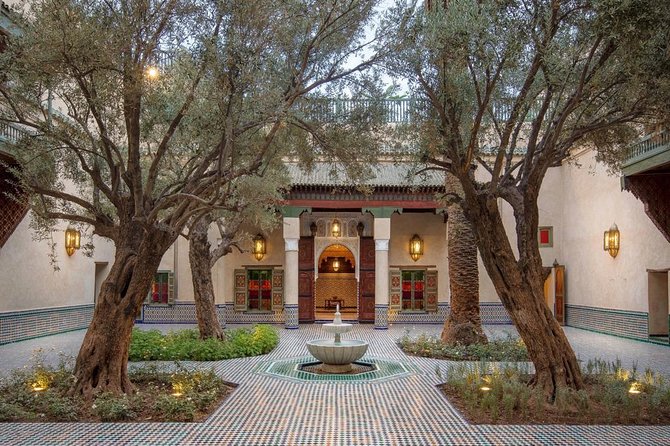
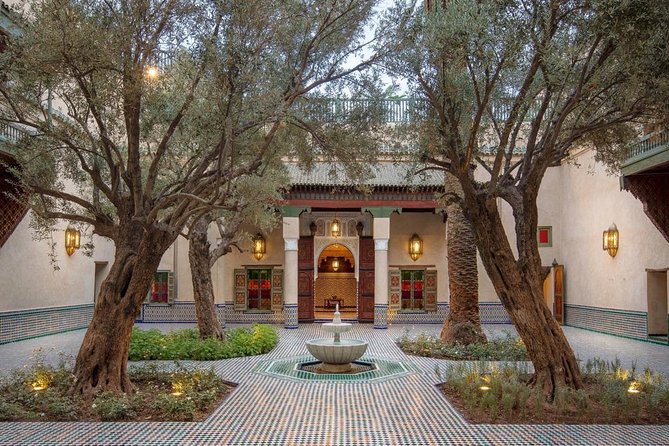
I also like the setting. The museum occupies a restored riad near Bahia Palace, with a Moroccan living room, courtyard, terrace, cooking displays, and a calm atmosphere away from the busiest palace crowds. The cooking lesson is taught in French or English with interpreter support, but language arrangements have not always matched the booking, so confirm your preferred language before you arrive.
Key points at a glance
- A Dada leads the kitchen lesson: Learn traditional Moroccan methods from a Dada, the term used for a traditional household cook.
- The museum adds useful context: Displays cover Moroccan foods, recipes, serving customs, utensils, and cooking methods.
- You visit a real bread oven: The program includes a look at bread making and a visit to a local herbalist to see where spices come from.
- The teaching kitchen has 34 stations: This is built for practical instruction rather than a casual demonstration only.
- Tasting follows the lesson: Eat the dishes you prepare, with Moroccan tea and optional Moroccan wine discovery.
- The price is reasonable for a combined activity: At $69.79 per person, the value depends on receiving the complete class, meal, museum visit, and listed refreshments.
Starting at the Moroccan Culinary Arts Museum near Bahia Palace
You meet at the Moroccan Culinary Arts Museum on Rue Riad Zitoun el Jdid in Marrakech. The museum is only a short distance from Bahia Palace, which makes this easy to pair with a palace visit, though the area can be busy and the entrance may not be obvious at first glance.
The building is one of the strongest parts of the experience. It is a traditional riad that has been carefully restored, with the kind of tiled courtyard, carved details, and quiet interior spaces that give the lesson a proper sense of place. You are not cooking in a generic classroom tucked into a hotel. The building itself helps explain how food, hospitality, and household life fit together in Morocco.
At reception, you receive an introduction to the class and the museum. The staff can provide French or English interpretation. Younes has helped visitors get settled and guided them through the site, while Yasmina is identified as the museum’s general manager. If language matters to you, ask for English confirmation at booking and again on arrival. One person booked an English class but found the session was conducted in French.
The museum can also be visited on its own, but this combined experience makes better use of the building. A standard museum visit may be fairly short, while the class gives you a reason to spend more time in the riad and connect the displays with actual food preparation.
More Food and History Tours in Morocco:
- Sevilla Food Tour: Tapas, Wine, History & Traditions
★ 5.0 · 3,468 reviews - Victoria Guided Food and History Tour
★ 5.0 · 2,015 reviews - Gastown Historic Walking Food Tour
★ 5.0 · 1,863 reviews
What the museum adds before you cook
The museum presents Moroccan food through photographs, videos, objects, preparation stations, dinnerware, and explanations of how dishes are made and served. It covers familiar staples such as bread, couscous, tajine, pastilla, salads, spices, and other parts of the national kitchen.
I find this background useful because Moroccan food names can be confusing at first. A tajine refers both to a cooking vessel and to dishes cooked in it. Tangia is a different preparation, despite the similar sound. The museum is also a place to sort out how bread, herbs, spices, and shared meals fit into daily life.
Some of the displays are modern and well organized. Other sections may feel more modest than the handsome building around them. If you are mainly interested in architecture, the riad and courtyard may be the highlight. If you want a full museum experience with extensive objects and long written explanations, you may find the exhibition a little light.
The museum opened as a newer cultural attraction and includes several floors and a terrace. Displays explain food traditions through visual material, which helps if you do not want to spend an hour reading labels. A few visitors have wished for a cookbook based on the material, so bring a notebook if you want to remember a spice mixture or preparation method.
Bread, spices, and the neighborhood visit
The program includes a demonstration of Moroccan bread making, followed by a visit to the bread oven and a local herbalist. This is one of the most useful parts of the day because it takes the subject out of the museum and into the neighborhood.
Bread is not simply a side item on a Moroccan table. The demonstration helps you see the work behind the round loaves that commonly accompany meals. You can watch how dough is handled and learn more about the baking process before seeing the oven itself.
The herbalist visit gives the spices some practical context. Instead of seeing jars with labels only, you can connect the ingredients with the places where cooks buy and use them. The class focuses on the art of dosing spices, which matters in Moroccan cooking. The goal is not to bury a dish under seasoning. Small amounts, timing, and balance do much of the work.
The supplied information does not promise a market tour or a large shopping stop, so you should not expect an extended spice-market outing. This is a focused visit connected to the lesson, not a separate shopping excursion.
Cooking with the Dada in a 34-station kitchen
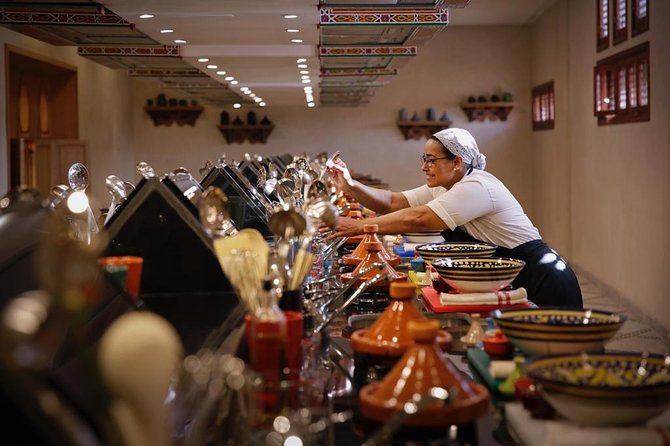
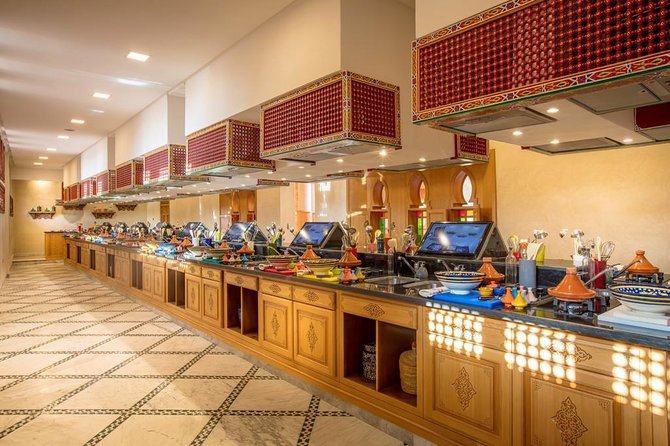
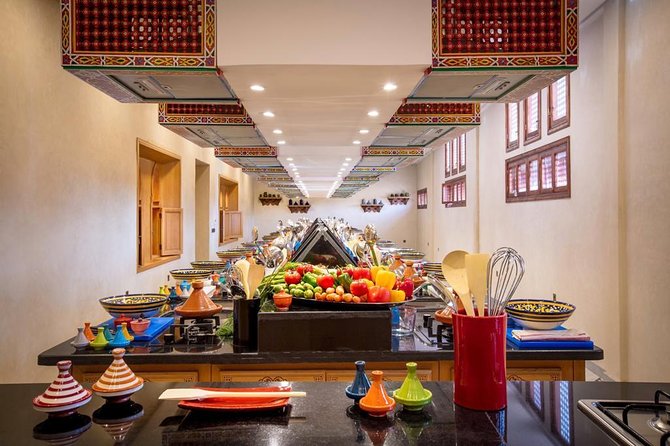
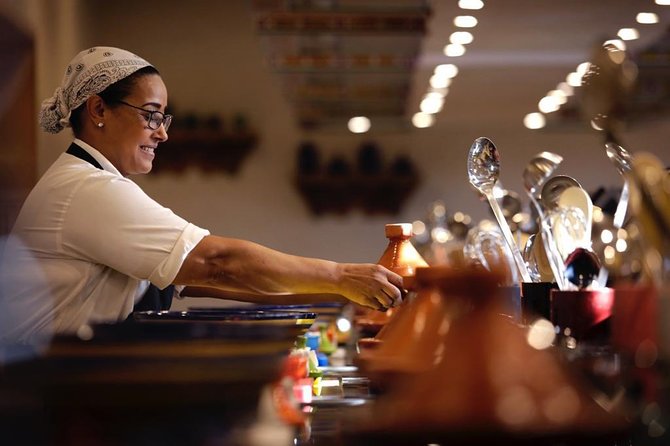
The class takes place on the second floor, where a Moroccan living room sits beside a professional teaching kitchen with 34 workstations. That layout matters. You are set up to take part, rather than standing at the back of a crowded room trying to see one cutting board.
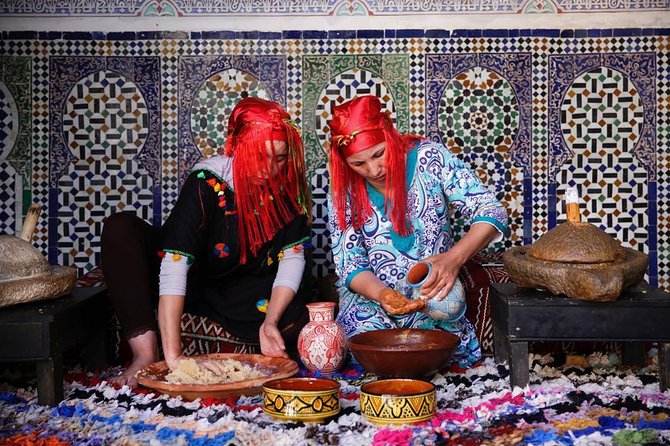
A Dada leads the lesson. In Moroccan usage, this refers to a traditional cook, often associated with the household cooking traditions passed from one generation to the next. Her role gives the class a stronger cultural link than a purely technical cooking demonstration.
The program describes instruction in tajines, couscous, and other Moroccan dishes. Past participants have prepared a chicken tajine, two Moroccan salads, a dessert, and three-course meals. The exact menu may vary, so check what is planned for your date if a particular dish matters to you.
You should expect practical help with both words and actions. One person described receiving verbal and manual assistance, which is encouraging for beginners or anyone who is not confident in the kitchen. The lesson is designed to be approachable, not a test of professional cooking skills.
The reported group limit is 34 people, matching the number of stations. That is a fairly large maximum for a cooking class, but the individual workstations should make participation possible. If the class fills completely, the experience may feel more like a structured workshop than a quiet private lesson.
The most valuable skill is learning how to judge amounts. Moroccan recipes often rely on feel, sequence, and visual clues rather than exact measurements alone. The Dada’s instruction on spices, baking, and cooking methods can help you recreate the meal at home, though you may need to write down the details as you go.
A few more history tours around Morocco worth a look
- Marrakech Historical and Cultural Tour – Half Day City Tour
★ 4.5 · 1,180 reviews - Atlas Mountains – Ancient Ait Ben Haddou Day Tour from Marrakech
★ 5.0 · 411 reviews - Fez: Guided Walking Tour of the Historic Medina
★ 5.0 · 359 reviews - Historical Marrakech Walking Tour
★ 5.0 · 198 reviews
Eating what you prepared on the terrace
After cooking, you eat the prepared dishes on the terrace. This changes the mood from classroom to shared meal and gives the food a proper finish.
The meal is included, along with bottled water and coffee or tea according to the stated inclusions. Moroccan tea is also part of the program, with a tea ceremony listed as a separate step. One past participant reported being charged for water and not receiving tea or coffee, so it is sensible to clarify these details at the start rather than assume every item will appear automatically.
The food itself has received strong praise. Dishes have included tajine, salads, dessert, and other Moroccan preparations, with particular appreciation for the freshness and taste. Since you help make the meal, the tasting has more meaning than a standard restaurant lunch. You can connect the final flavors with the chopping, spice blending, and cooking steps you just completed.
The terrace setting should be pleasant, but this is still a working cooking activity, not a formal dining event. You will get the reward of a prepared meal, not a long restaurant service with a broad menu.
Moroccan wine discovery is optional. Alcoholic drinks are not included in the price, so budget separately if you want wine. This is a useful add-on for adults interested in local wine, but the class remains complete without it.
How much value do you get for $69.79?
At $69.79 per person, the price is fair if the complete program runs as described. You receive a museum visit, a cooking lesson, a meal, bottled water, tea or coffee, a bread demonstration, a neighborhood food visit, and access to a restored riad. A simple museum ticket costs much less, but it does not provide the practical instruction or meal.
The price is especially attractive for people who would otherwise book a separate museum visit and cooking class. You are combining the two, with the building and food serving as a common thread.
The value drops if you mainly want a short museum visit. The exhibition can be seen more cheaply on its own, and some displays may not hold your attention for long. It also drops if the class is not delivered in your chosen language or if listed refreshments are missing.
Before paying, confirm three points:
- The exact start time and expected length
- The cooking language
- Whether water, tea or coffee, and the meal are included as described
The activity has free cancellation if you cancel at least 24 hours before the start time. Cancellations inside that window are not refunded, and changes are not accepted within 24 hours. The cut-off uses Marrakech local time.
Who will enjoy this Marrakech cooking class?
I would choose this for food-focused visitors who want more than a restaurant meal. It suits couples, families, and first-time cooks because the instruction includes practical help and the class does not require advanced kitchen skills.
It can also work well for families with older children. A 12-year-old took part in the cooking class with a grandparent, which suggests the activity can appeal across generations. Children who enjoy doing rather than simply looking will get more from this than from a standard museum tour.
The experience is also a good fit if you have already visited Bahia Palace and want a quieter nearby stop. The restored riad gives you another look at local architecture, while the food displays explain things you may have noticed at breakfast or dinner.
I would be more cautious if you want a small, intimate class, a guaranteed English-only lesson, or a long half-day food tour. The maximum group size is 34, and the description gives mixed signals about duration. At roughly two hours, it is a compact introduction. The phrase half-day suggests that the full schedule may sometimes run longer, especially when the museum, neighborhood stops, cooking, and meal are all included.
Practical advice before you book
Wear clothes that are comfortable for standing and cooking. The supplied information does not give a dress code, but a practical outfit makes more sense than formal clothing for a kitchen lesson.
Arrive at the stated museum meeting point rather than assuming the class begins inside another nearby attraction. The activity ends back at the same meeting point, which simplifies planning for the rest of your day.
Service animals are allowed, and the site is near public transportation. No separate hotel pickup is listed, so plan to reach Rue Riad Zitoun el Jdid on your own.
Ask about the menu if you have dietary restrictions. The available information does not state how allergies, vegetarian requests, or other special diets are handled. Do not assume substitutions are available.
The museum shop may also be worth a look. One visit included purchases there along with lunch, but the shop contents and prices are not specified, so treat it as an optional extra rather than part of the paid program.
Should you book the Moroccan Culinary Arts Museum experience?
Book it if you want a practical introduction to Moroccan food in a memorable building. The Dada-led lesson, bread oven visit, herbalist stop, and hands-on cooking are the strongest reasons to choose it. You also get to eat the food you prepare, which gives the activity a satisfying finish.
I would still confirm the language, duration, and refreshments before booking. The program has a reported rating of 4.6 from 48 reviews, with especially strong praise for the setting, organization, professional kitchen, helpful staff, and tasty food. Its weak points are not the idea of the experience, but occasional mismatches between what was promised and what was delivered.
For food lovers, families, and curious first-time cooks, this is a worthwhile Marrakech activity. For a quick museum visit only, buy the simpler admission instead. For everyone else, the cooking class offers the better value and the more lasting memory.
FAQ
Where does the Moroccan cooking experience begin?
It begins at the Moroccan Culinary Arts Museum on Rue Riad Zitoun el Jdid, Marrakesh 40000, Morocco.
Where does the activity end?
The activity ends back at the Moroccan Culinary Arts Museum, the same place where it begins.
How long does the experience last?
The stated duration is approximately two hours. The description also refers to it as a half-day cooking experience, so confirm the expected schedule before booking.
Is the class available in English?
Reception and interpretation are offered in French or English. Confirm your preferred language in advance because one booking was conducted in French despite being made for English.
Are food and drinks included?
Lunch, bottled water, and coffee or tea are listed as included. Alcoholic beverages are not included. Moroccan wine discovery is optional and costs extra.
Can I cancel for a full refund?
Yes. You can cancel at least 24 hours before the local start time for a full refund. Cancellations or changes made less than 24 hours before the experience are not accepted, and the amount paid is not refunded.
Just added around Morocco
- 6-Day Private Morocco Cultural Tour From Casablanca To Marrakech★ 5.0 · 24 reviews
- Marrakech The History and Culture Day Trip★ 4.5 · 45 reviews
- Marrakech: Historical Discovery Tour★ 4.1 · 87 reviews
- Marrakech: Guided Medina History & Culture Tour★ 5.0 · 23 reviews
- Marrakech: Day Trip to the Beautiful and Historic Essaouira★ 4.3 · 39 reviews
- Marrakech: Half-Day Guided Journey through History & Culture★ 4.3 · 20 reviews
- From Marrakech: Essaouira Full day trip, beach and History★ 4.9 · 26 reviews
- Fes: A Guided Walking Tour Through the Historic Medina★ 4.4 · 97 reviews
Food & History Tours, compared.
Sevilla Food Tour: Tapas, Wine, History & Traditions
Read our review →

Dublin Historical Centre Food Tour with 8 Food Tastings & Drinks
Read our review →
The Great Indian Food Tour: Old Delhi Food and Heritage Walk
Read our review →
Browse the lists this tour appears in