
Review · HAMBURG
Historic Free Tour of Hamburg Old Warehouse District
Brick, bridges, canals, and trade make this 100-minute walk a useful introduction to Hamburg. The route links the old Speicherstadt warehouses with modern HafenCity, the Elbphilharmonie, and the sharp prow-like Chilehaus. I especially like the focus on how coffee, tea, cocoa, spices, tobacco, and carpets shaped the port.
I also like the pay-at-the-end format. At $2.16 per person when booked, the tour is unusually inexpensive, yet you still get a Spanish-speaking guide, photographs, local suggestions, and entry to one of Hamburg’s oldest coffee shops without needing to buy anything. The small group limit of 30 helps keep the walk manageable.
The main consideration is weather. This is an outdoor walking tour with no museum admission included, and poor weather can lead to a new date or a full refund. If you want to enter the Elbphilharmonie, Miniatur Wunderland, or the Coffee Museum, you will need separate tickets.
Key Points Before You Go
- A 100-minute walk through Speicherstadt: See Hamburg’s famous brick warehouse district from Baumwall to Chilehaus.
- Spanish-language guiding: The tour is designed for Spanish speakers and includes historical explanation rather than only photo stops.
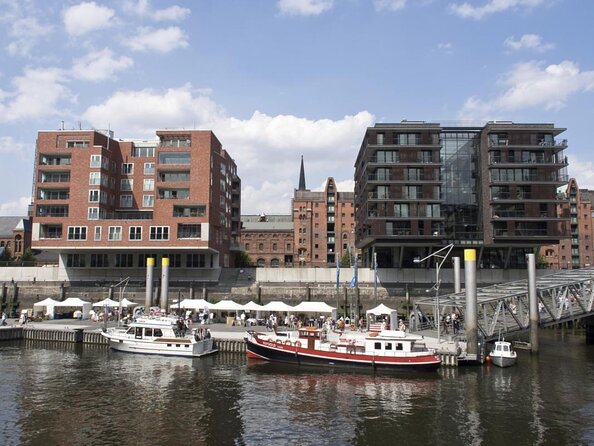
- Old and new Hamburg together: Canal-side warehouses share the route with HafenCity and views of the Elbphilharmonie.
- Pay what you decide at the end: The listed price is about $2.16 per person, while the final payment is left to you.
- A free coffee-shop visit: You enter one of Hamburg’s oldest coffee shops, but food and drinks are not included.
- Small but not private: The maximum group size is 30 people, so this is a shared walking tour rather than a one-to-one experience.
Starting at Baumwall and Entering Speicherstadt
The tour begins at Baumwall, at 20459 Hamburg, at 2:45 pm. This is a practical starting point because the area sits close to the southern edge of Hamburg’s old city and beside the harbour.
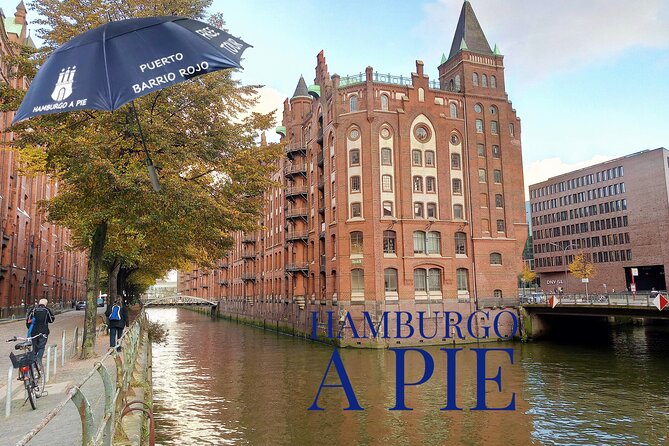
From here, you move toward Speicherstadt, the warehouse district that gives the walk its main character. The setting changes quickly. Modern HafenCity appears nearby, while the older warehouse blocks bring you into Hamburg’s port past.
I like this opening because it gives you two views of the city at once. Hamburg is not presented as a single historic centre frozen in time. Instead, you see how an old trading port keeps changing while its warehouse district remains a major part of its identity.
The route is entirely on foot, so comfortable shoes matter. The tour lasts about one hour and 40 minutes, and the route includes canals, bridges, alleys, and several stops outside important buildings. You should expect a steady city walk rather than a short stroll between a few monuments.
A few more history tours around Germany worth a look
- Leipzig: City History Canal Sightseeing Tour on a Motorboat
★ 4.7 · 7,671 reviews - Leipzig: 1.5-Hour Historical Walking Tour in German
★ 4.7 · 2,217 reviews - Berlin: 3-Hour World Heritage Cruise to Potsdam
★ 4.5 · 1,569 reviews
Why Speicherstadt Looks So Different
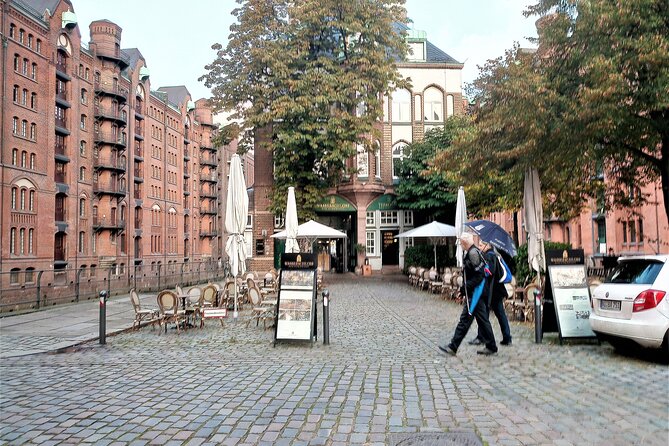
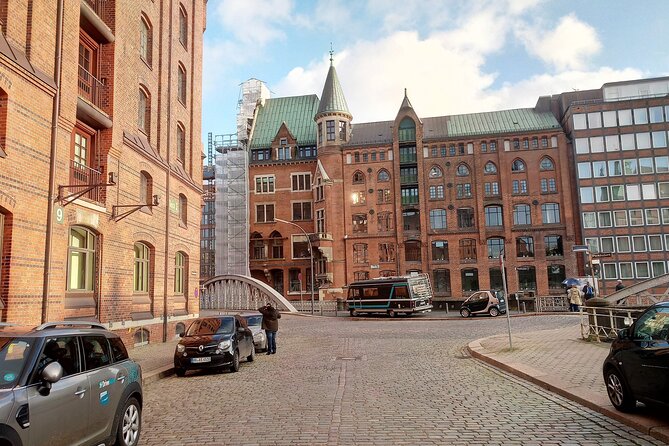
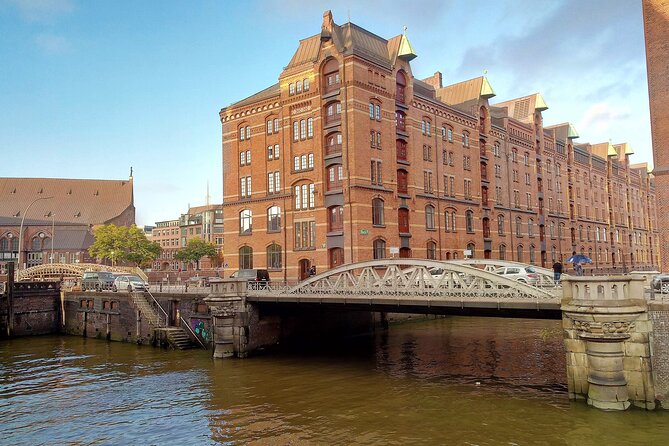
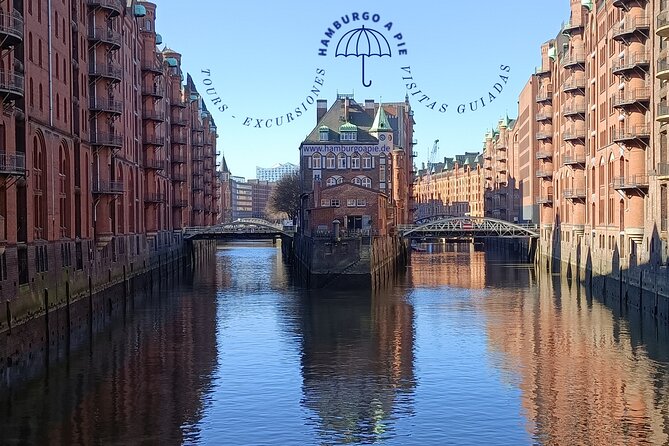
Speicherstadt is known for its neo-Gothic red-brick architecture. The buildings were constructed on wooden piles, a practical response to Hamburg’s watery port setting. Their tall walls and repeated shapes give the district a strong visual rhythm, but the buildings were designed for work, not decoration alone.
This was a warehouse and trading centre in the 19th century. Goods such as coffee, tea, cocoa, spices, tobacco, and oriental carpets passed through the area. The canals made it possible to move cargo close to the warehouses, while bridges connected the blocks above the water.
That history gives the walk real substance. You are not simply looking at old brick façades. You are seeing the physical system that helped Hamburg handle international trade. The guide also covers the curiosities of commerce in the area, which is useful if you want to understand why these buildings were built in such a large and unusual group.
The warehouses are arranged by letters according to when they were built. That small detail helps you read the district as you walk. Instead of seeing one giant complex, you can notice how it grew over time.
One particularly important subject is the former residential life of the area. People once lived in parts of the island, but their homes were taken away when the district was designated for customs-free trade. The result was a place built for goods rather than ordinary neighbourhood life. That change adds a human cost to the commercial success of Speicherstadt.
Canals, Bridges, and the Working Port
The canals are among the best reasons to take this tour on foot. From street level, you can see how closely the water and warehouses are linked. Bridges lead you from one block to another, while narrow passages and brick walls make the district feel separate from the wider city.
The tour stops at notable points rather than rushing past them. That matters here because Speicherstadt’s appeal is in its details. A canal view, a warehouse entrance, or a change in brickwork can tell you as much about the district as a famous landmark.
The setting also explains why photography is part of the experience. The company offers photographs during the walk, and you are encouraged to bring your own camera or mobile phone. You should still bring your own device if you want a full personal record, since the details of how many guide photographs you receive are not specified.
The world’s largest warehouse complex is the central subject of this part of the route. The scale can be difficult to grasp from a single viewpoint, so walking through several streets and across several bridges gives you a better sense of its size.
HafenCity and the Elbphilharmonie View
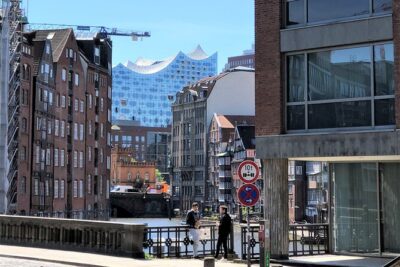
The route then connects Speicherstadt with HafenCity, Hamburg’s newer harbour district. This change in architecture is one of the walk’s strongest features. You move from red-brick warehouses and canals toward a modern port quarter known for the Elbphilharmonie concert hall.
The Elbphilharmonie is one of Hamburg’s most recognizable buildings. Its dramatic façade and state-of-the-art acoustics have made it a major cultural landmark. The tour gives you views of the building, but it does not include entry to the concert hall.
That distinction is important. If you want to visit the inside, hear a performance, or see the building beyond the exterior viewpoints, you will need to arrange that separately. This tour is a city walk with architectural views, not an Elbphilharmonie visit.
I like the way this section places the concert hall in its wider setting. You can see it not as an isolated modern attraction, but as part of Hamburg’s redevelopment beside the historic port. The guide also explains how the building greatly increased in cost during its creation, adding a useful political and financial angle to the architectural story.
The route lets you compare two very different ideas of Hamburg. Speicherstadt reflects storage, customs, and shipping. HafenCity reflects culture, new construction, and public attention. Seeing both during one walk makes the changes easier to understand.
Same place, a different slice of the past:
- Heidelberg: Night Watchman Historic Adventure Tour
★ 4.7 · 1,186 reviews - The Local Tour of Hamburg Historic Centre
★ 5.0 · 1,058 reviews - Elbfloren: Historical city tour
★ 4.8 · 929 reviews - Berlin: History of the Third Reich Guided Walking Tour
★ 4.7 · 791 reviews
The Chilehaus Finish
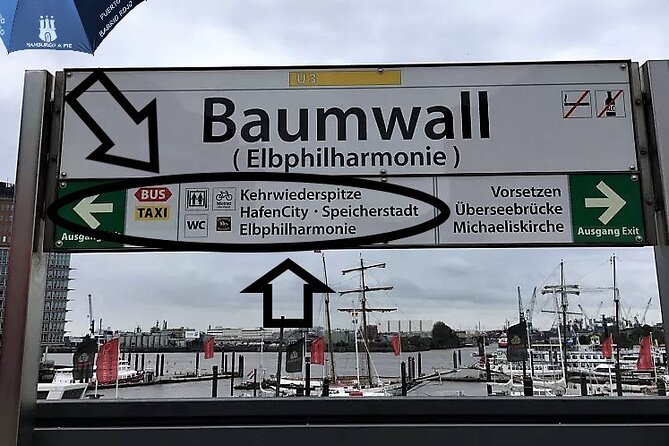
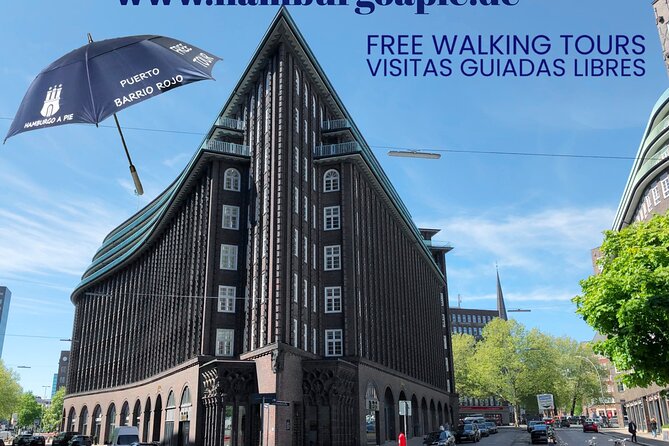
The walk ends at Chilehaus, at 20095 Hamburg. This is a fitting final stop because the building is known for its pointed façade and sharp angle, which resemble the bow of a ship.
Chilehaus is not simply another old building to photograph. Its shape connects architecture with Hamburg’s maritime identity. The narrow, pointed end gives the building a strong sense of movement, even though it is firmly rooted in the city.
Ending here also gives the tour a clear progression. You begin beside the harbour, pass through the warehouse district, see modern HafenCity and the Elbphilharmonie, and finish with one of Hamburg’s most distinctive architectural works.
The end point is useful for continuing your own sightseeing. The tour includes local recommendations, so you can ask the guide what to see next. Since the tour ends in the city centre near Chilehaus, you are not left at an isolated transport point.
The Coffee Shop Stop and What Is Included
One unusual inclusion is entry to one of Hamburg’s oldest coffee shops. No consumption is included, so you should not expect a free coffee or snack. Still, the stop adds a link between Hamburg’s trading past and one of its most important imported goods.
Coffee was among the products handled in Speicherstadt, so this is more than a random break. It connects the commercial history of the warehouses with a living part of the city’s café culture.
The tour also includes third-party insurance and photographs during the walk. You receive local recommendations for later sightseeing, which can be useful if this is your first time in Hamburg or if you want to spend more time around HafenCity and the old town.
No museum or exhibition tickets are included. That covers places such as Miniatur Wunderland and the Coffee Museum. Food, drinks, bottled water, public transport, transfers, boat rides, and museum tours are also separate expenses.
Is $2.16 Good Value?
At roughly $2.16 per person, the listed price is strikingly low for a 100-minute guided walk. The format is a free tour model, meaning you decide the amount to pay at the end. The small listed price should not be treated as the full measure of the guide’s work, since the payment decision comes after the tour.
The value is strongest if you want orientation and context before exploring on your own. You get a structured route, a Spanish-speaking guide, historical background, photographs, and local recommendations without paying for museum admission or transport.
The value is weaker if you expect access inside major attractions. You do not enter the Elbphilharmonie, Miniatur Wunderland, or the Coffee Museum. You also do not get a boat ride or a full museum visit.
I would choose this tour for its setting and explanation, not for included attractions. The warehouses, canals, bridges, HafenCity views, and Chilehaus are the main event.
Timing, Group Size, and Practical Details
The start time is 2:45 pm, and the walk lasts about one hour and 40 minutes. That makes it easy to fit into an afternoon, though you should avoid booking another fixed activity immediately afterward. The exact finish time can vary slightly with the pace of the group and the number of stops.
The maximum group size is 30 people. That is not an intimate private tour, but it is smaller than a large coach-style outing. Keep close to the guide around bridges, canals, and city streets, especially if the group becomes spread out.
The tour is near public transport, but transport to Baumwall is not included. You need to make your own way to the meeting point. The mobile ticket makes entry simple, and confirmation is provided at booking.
Most people can participate, and service animals are allowed. The information does not promise step-free access across every part of the route, so anyone with specific mobility needs should confirm conditions before booking. Since this is a walking tour through historic streets, bridges, and alleys, practical footwear is a sensible choice.
Weather can affect the experience. If poor weather causes cancellation, you are offered another date or a full refund. If you cancel, you need to do so at least 24 hours before the start time for a full refund. Cancellations within 24 hours are not refunded, and late changes are not accepted.
Who Will Enjoy This Walk Most?
This tour suits you if you want Hamburg explained through its port, trade, and architecture. It is especially useful for Spanish-speaking visitors who prefer a guided introduction before choosing which museums or attractions deserve more time.
It also works well for first-time visitors who want to connect several major areas in one outing. The route ties together the old city, Speicherstadt, HafenCity, the Elbphilharmonie, and Chilehaus without requiring separate transport between each area.
I would also recommend it to architecture fans. You see neo-Gothic brick warehouses, modern harbour construction, the dramatic concert hall, and the ship-bow form of Chilehaus in one sequence.
You may want something else if your priority is indoor sightseeing, a boat trip, or detailed museum interpretation. This experience stays outdoors for most of its duration and does not include entry to the city’s headline museums or concert hall.
Should You Book the Historic Free Tour of Hamburg?
I would book this walk if you want a low-cost, Spanish-language introduction to Hamburg’s warehouse district and harbour redevelopment. The strongest reasons are the carefully linked route, the canal and bridge views, the story of trade, and the contrast between Speicherstadt and HafenCity.
The best tip is to treat it as a foundation for the rest of your time in Hamburg. Take note of the museums, cafés, and harbour activities the guide recommends, then return to the places that interest you most.
Skip it if rain is likely, if you need a private guide, or if you mainly want to go inside the Elbphilharmonie and other attractions. For everyone else, this is a practical way to understand why Hamburg’s old warehouses, modern concert hall, and sharp-edged Chilehaus belong in the same city story.
FAQ
Where does the tour begin?
The tour begins at Baumwall, 20459 Hamburg, Germany.
What time does the tour start?
The scheduled start time is 2:45 pm.
How long does the walking tour last?
The tour lasts approximately one hour and 40 minutes, or 100 minutes.
Where does the tour end?
The tour ends at Chilehaus, 20095 Hamburg, Germany.
What language is the tour conducted in?
The tour is conducted in Spanish.
Is the tour really free?
The tour uses a pay-at-the-end format, so you decide the amount to pay after the walk. The listed booking price is $2.16 per person.
Does the tour include Elbphilharmonie entry?
No. The tour includes views of the Elbphilharmonie, but access inside the concert hall is not included.
Are museum tickets included?
No. Museum and exhibition tickets, including Miniatur Wunderland and the Coffee Museum, are not included.
Is food or coffee included?
No food, drinks, or bottled water are included. The tour does include entry to one of Hamburg’s oldest coffee shops, but you pay for any consumption yourself.
Can I cancel for a refund?
Yes. You can receive a full refund if you cancel at least 24 hours before the start time. Cancellations within 24 hours are not refunded.
Just added around Germany
- Lights tour through the port of Hamburg and to the historic warehouse district★ 3.5 · 70 reviews
- Free Tour: History of the Port, Red Light District and the Beatles★ 5.0 · 48 reviews
- Hamburg Historic Old Town and WW2 Walking Tour in Small Group★ 5.0 · 39 reviews
- Walking Through Dresden’s Past with Dr. Fraser Macdonald★ 5.0 · 72 reviews
- Historic Dresden Private Walking Tour★ 5.0 · 32 reviews
- Historic center of Berlin – Tour in Italian★ 5.0 · 143 reviews
- Berlin Food & Cultural Tour: Must-Try German & Berliner Classics★ 5.0 · 51 reviews
- Private Berlin WWII and Cold War History Tour with Local Expert Guide★ 5.0 · 28 reviews
Hamburg History Tours, compared.
Historical Tour of the St. Pauli Sex Work District
Read our review →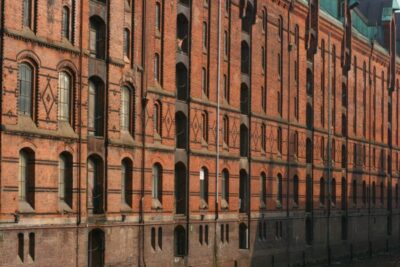
Sightseeing Tour – Free Tour – Historic Center-Hamburg On Foot
Read our review →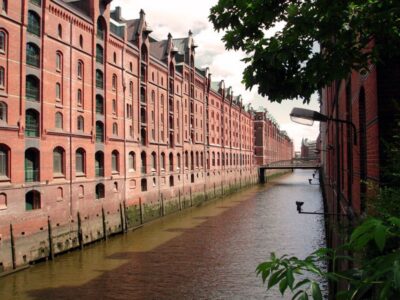
German Hamburg Historic City Center Pay-What-You-Want Tour
Read our review →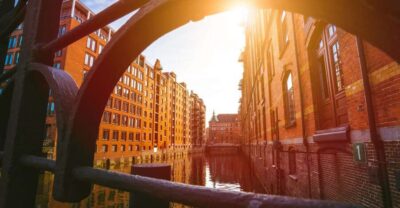
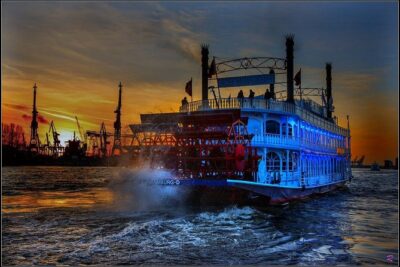
Lights tour through the port of Hamburg and to the historic warehouse district
Read our review →
Free Tour: History of the Port, Red Light District and the Beatles
Read our review →Browse the lists this tour appears in