
Review · HAMBURG (STATE)
German Hamburg Historic City Center Pay-What-You-Want Tour
Hamburg’s story is packed into two hours. This German-language walking tour links the Town Hall, historic port, Speicherstadt, and St. Michael’s Church, giving you a useful first look at the city without committing to a long day of sightseeing. I like the clear route through Hamburg’s political, religious, and trading past, and I like the guide-led storytelling, which includes short anecdotes rather than only dates.
The pay-what-you-want format also gives this tour strong value for a budget-conscious visit. A listed price of $3.40 per person gets you a place, but the guide’s fee is not included, so you should plan to leave a tip at the end. The main consideration is language: the tour is conducted in German, and groups are limited to seven people, with larger parties asked to book privately.
Key details before you book
- Hamburg in 1,300 years: The walk connects the city’s early beginnings in the Holy Roman Empire with its role in modern Germany.
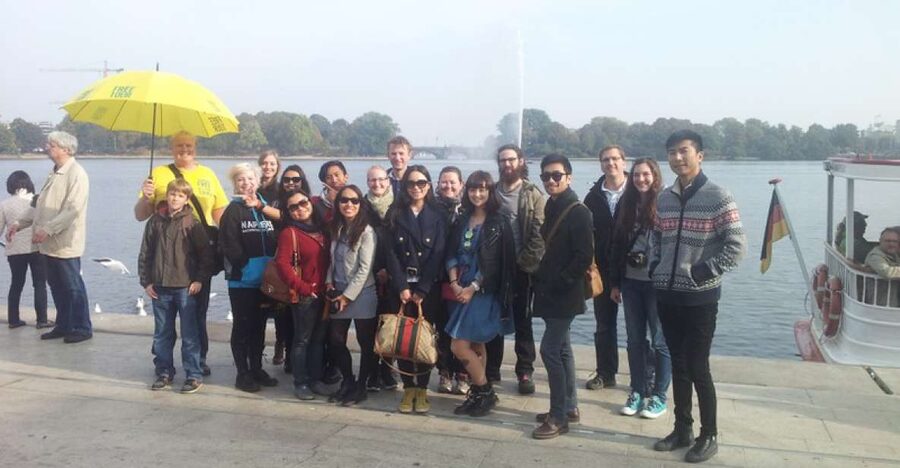
- Yellow umbrellas at the Town Hall: Meet directly in front of the main entrance and look for the bright yellow umbrellas.
- Food is part of the story, not the price: You may hear about fischbrötchen, matjes, and labskaus, but food and drinks are not included.
- A compact two-hour route: The tour covers several major sights without requiring public transport.
- German-language guiding: You need enough German to follow history, jokes, and explanations.
- Small groups only: Reservations are accepted for up to seven people, even if a larger party books separately.
Starting beneath Hamburg’s Town Hall
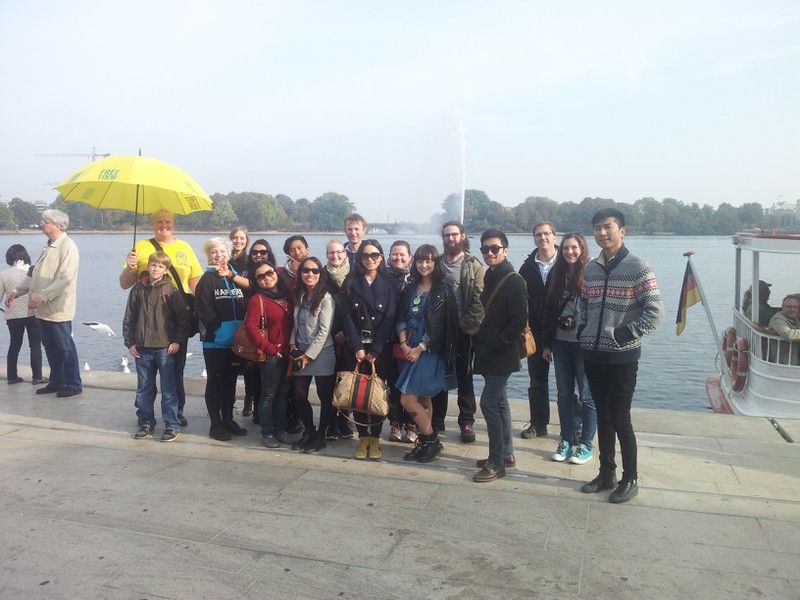
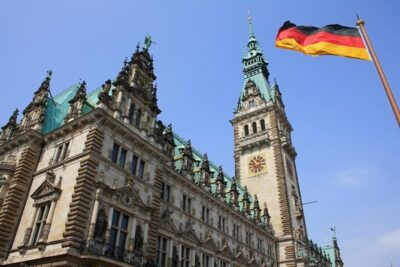
The tour begins in front of Hamburg’s impressive Town Hall, a sensible meeting point for a central walking route. Look for the bright yellow umbrellas at the main entrance. That visual marker matters in a busy city center, especially if you are meeting a group for the first time.
The Town Hall is more than a grand photo stop. It is the political heart of Hamburg, and the guide uses it to explain how the city developed from a small enclave of the Holy Roman Empire into a major international city. This gives the rest of the walk a useful frame: Hamburg’s identity is tied to self-government, commerce, religion, and its connection to the water.
I like beginning here because you get context before the sightseeing becomes a string of handsome buildings. A good guide can point out why the building matters, not simply tell you to take a picture. The guide, working for tips, is also likely to shape the pace around the group’s questions and interests.
The small-group limit helps here. With no more than seven people per reservation, you should have a better chance of hearing the guide clearly and asking questions. The provider does not allow larger groups to join through separate bookings, so a party of eight or more needs to arrange a private tour instead.
A few more history tours around Germany worth a look
- Leipzig: City History Canal Sightseeing Tour on a Motorboat
★ 4.7 · 7,671 reviews - Leipzig: 1.5-Hour Historical Walking Tour in German
★ 4.7 · 2,217 reviews - Berlin: 3-Hour World Heritage Cruise to Potsdam
★ 4.5 · 1,569 reviews
Following 1,300 years of Hamburg’s story
The opening history section covers about 1,300 years, moving from Hamburg’s early position within the Holy Roman Empire to its place in the 21st century. That is a lot of ground for a two-hour walk, so you should expect a brisk overview rather than a specialist lecture on every era.
For a first orientation, that approach works well. You will get a sense of how Hamburg changed from a small settlement into a city with political influence, religious landmarks, port connections, and major warehouse districts. The guide also adds small anecdotes, which can make a long timeline easier to remember.
A previous tour with Jan was described as both interesting and easy to follow, with Hamburg’s story mixed with short personal anecdotes. That detail is worth noting if you prefer a guide who keeps the pace lively. The strongest praise attached to this experience centers on the way history is presented: informative, but not weighed down by a long list of dates.
Because the tour is in German, the language shapes the experience. If you are comfortable listening to German for two hours, you should get much more from the stories and humor. If you only know basic German, the buildings and route will still be useful, but the historical detail may be harder to catch.
Seeing the Town Hall as Hamburg’s political center
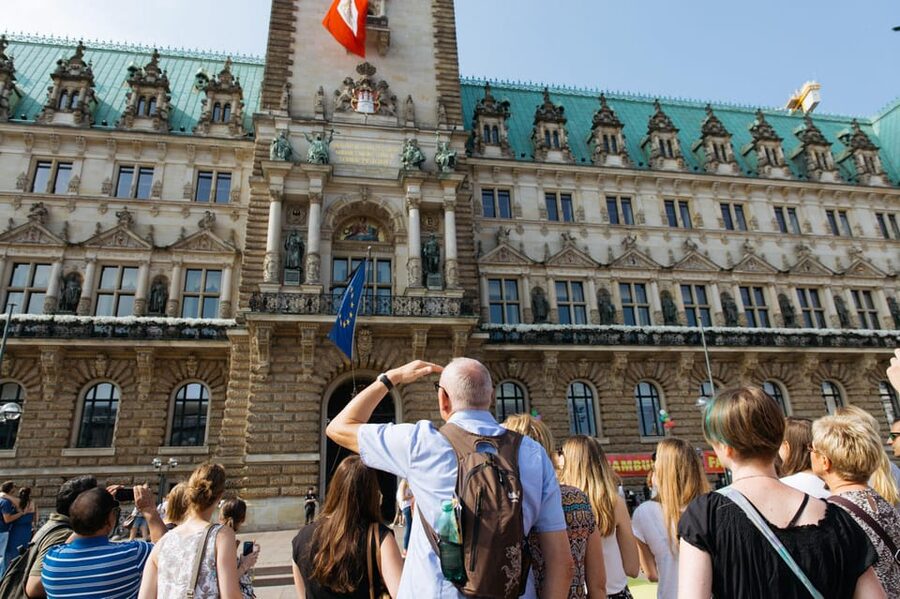
After the introduction, the Town Hall receives proper attention. Its role in city government makes it a natural stop for understanding Hamburg’s civic character. The guide explains the building and its place in the city rather than treating it as a quick exterior photograph.
The tour information says you may look inside some of Hamburg’s medieval churches and learn about their treasures. This part adds a religious layer to the city’s story. You are not only walking past façades. You are being shown how churches preserve art, objects, and traditions connected to earlier periods of Hamburg’s life.
Access inside a church can depend on opening conditions, services, or local rules, so I would treat interior visits as part of the planned experience but not assume every church will be open in the same way. The important point is that the walk includes more than modern streets and grand civic buildings.
This portion should suit you if you enjoy connecting architecture with history. It may feel less satisfying if you want long interior visits or detailed art commentary. The two-hour limit means the guide must keep moving, and the tour is designed as a city overview rather than a full church tour.
Sampling Hamburg’s port food culture
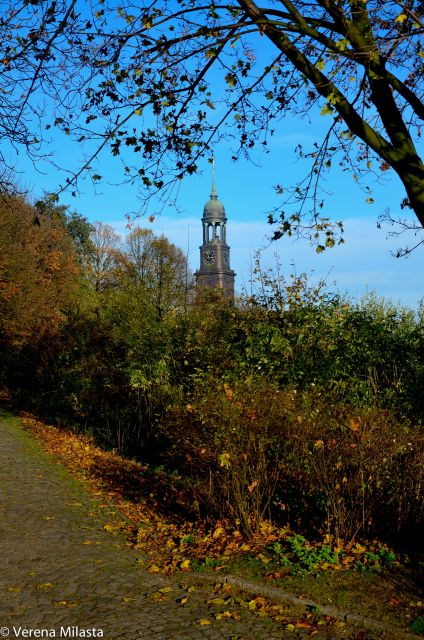
The route continues toward a historic port area, where the guide introduces local specialties. This is one of the more personal parts of the walk because food gives you a quick sense of Hamburg’s working port culture.
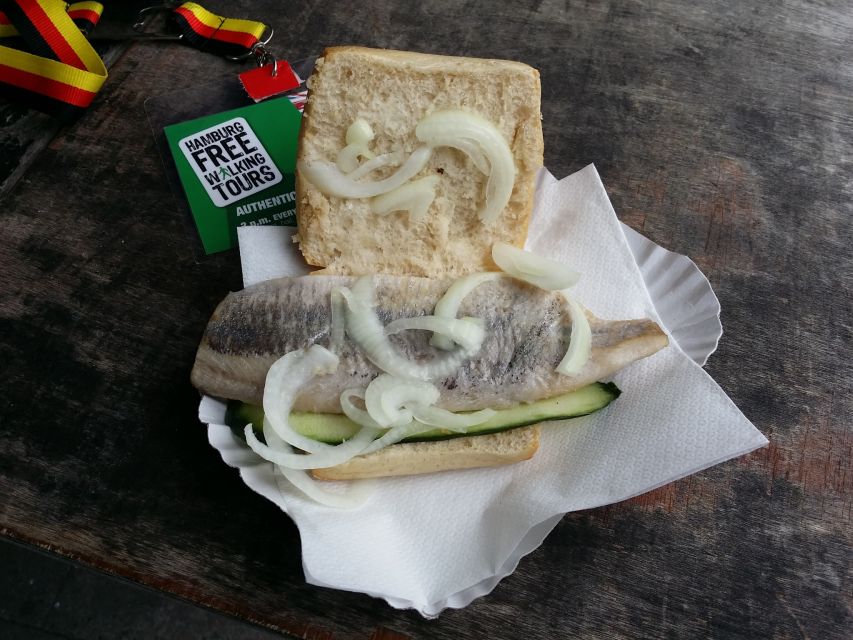
You may hear about fischbrötchen, or fish rolls, along with matjes and labskaus. The tour description makes clear that brave participants are free to taste these local dishes, but food and drinks are not included. You will need to pay for anything you choose to order.
That arrangement is fair for a pay-what-you-want tour. It keeps the base cost low and lets you decide if you want a snack, a full portion, or no food at all. It also avoids forcing every person in the group into the same meal choice.
Labskaus can be a surprise for anyone who expects a light port snack. It is a traditional northern German dish, while matjes is associated with herring. The tour does not promise a formal tasting, so think of this stop as a chance to learn about local food and make your own purchase if something catches your eye.
I would bring a little extra money if you want to try one of the specialties. If you have dietary restrictions, the supplied details do not specify alternatives, ingredients, or allergy arrangements, so ask the guide before buying anything.
Same place, a different slice of the past:
- Heidelberg: Night Watchman Historic Adventure Tour
★ 4.7 · 1,186 reviews - The Local Tour of Hamburg Historic Centre
★ 5.0 · 1,058 reviews - Elbfloren: Historical city tour
★ 4.8 · 929 reviews - Berlin: History of the Third Reich Guided Walking Tour
★ 4.7 · 791 reviews
A quick photo stop in Speicherstadt
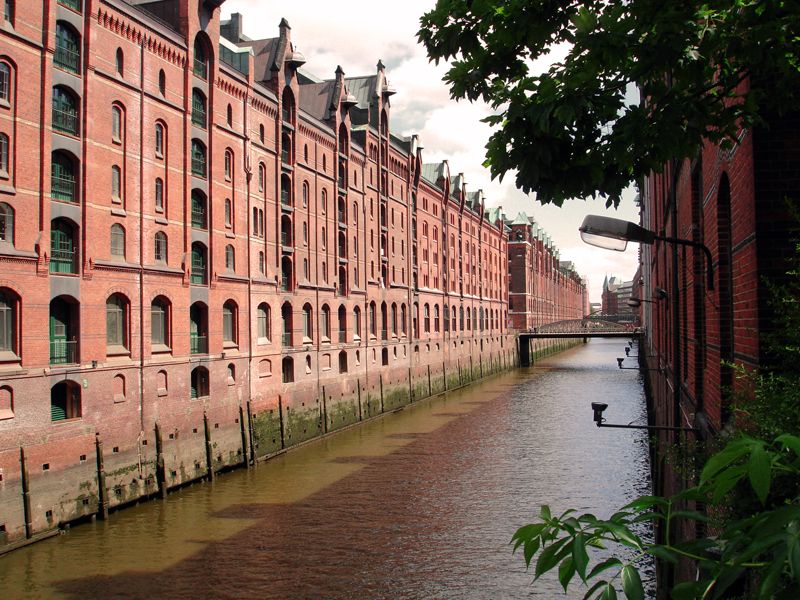
The tour then reaches Speicherstadt, Hamburg’s old warehouse district. Here, the focus is on a short photo stop and the area’s impressive industrial architecture.
This is a useful contrast with the Town Hall and churches. Speicherstadt shows the practical side of Hamburg’s past, where trade, storage, and port activity shaped the city. The tall warehouse buildings give you a clear visual sense of how commercial Hamburg differed from its civic and religious center.
The stop is described as quick, so plan your expectations carefully. You should have time to take photographs and hear why the district matters, but not an extended architectural study or a leisurely exploration of every canal and building.
I like this kind of short stop on a first-day walk. It gives you a strong visual landmark without letting one district consume the entire tour. If Speicherstadt is high on your list, you can return later with more time. The walking tour helps you decide if you want to do that.
Ending at St. Michael’s Church
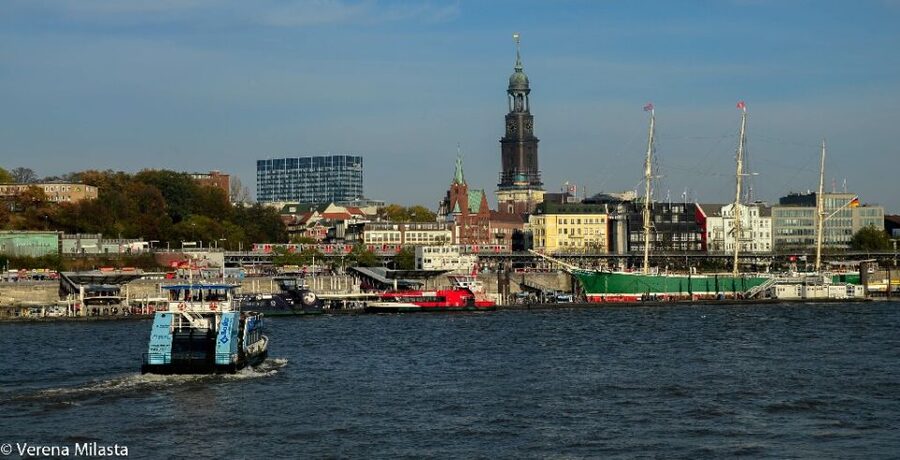
The advertised route ends at St. Michael’s Church, one of Hamburg’s best-known landmarks. The church is described as beautiful, and you are free to look inside or enjoy the view from the tower.
This makes a good final stop because it offers both an interior option and a higher viewpoint. If you still have energy and the church is open, you can take a look inside. If you want a wider view of Hamburg, the tower may be appealing, though tower access is not included in the tour price.
Do not assume that admission to the tower or any paid church attraction is covered. The included item is a city guide, while the guide’s honorarium, food, drinks, and transport are excluded. Budget separately for any optional visit inside the church or up the tower.
There is one practical detail to clarify before you set your post-tour plans. The route description says the walk ends at St. Michael’s Church, while the meeting-point information says the activity ends back at the meeting point. Since those details do not match perfectly, ask the provider where the group will finish on your chosen date.
What the pay-what-you-want price really means
The listed price of $3.40 per person is unusually low for a two-hour guided walk, but it is not the full cost of the experience. The guide’s fee is not included, and the tour works on a pay-what-you-want basis.
That model can be excellent value if you want a low-cost introduction to Hamburg. You pay the listed amount to reserve your place, then decide what to give the guide. I would treat the tip as part of the expected cost, not as an optional extra you can ignore.
The format also means you are paying for the guide’s time and storytelling rather than for museum admission, transport, or a meal. That suits you if you want orientation and local explanation. It is less suitable if you prefer a fixed-price package with every expense covered.
The reserve-now-and-pay-later option keeps your cash free when you book. You can cancel up to 24 hours in advance for a full refund, which is useful when Hamburg’s weather or your wider schedule remains uncertain.
Weather, walking, and group size
Tours run in rain, hail, or sunshine, so dress for the forecast and bring suitable shoes. The activity lasts two hours and is designed as a city walk, with stops at civic buildings, churches, the port, Speicherstadt, and St. Michael’s.
There is no transport included. That is not a problem for a central walking route, but you should allow enough time to reach the Town Hall before the start. The meeting point is directly in front of the main entrance, not at a separate transport hub.
The activity is listed as wheelchair accessible. Since the route includes historic churches, port areas, and old warehouse architecture, I would still contact the provider if you need specific information about surfaces, entrances, or access inside individual sights. The general accessibility statement is positive, but it does not give detailed information for every stop.
The group rule is firm. Only reservations of up to seven people are accepted, and separate bookings cannot be used to create a larger party. If you are traveling with eight or more people, book a private tour rather than risking refusal at the meeting point.
Who will get the most from this walk
I would choose this tour if you want a short first look at Hamburg and can follow a German-speaking guide. It is especially useful near the start of a visit, when you want to understand the city’s layout and choose which places deserve a longer return visit.
It should also suit anyone who likes history delivered through buildings, streets, food, and local anecdotes. The route does not stay in one museum or focus on one period. Instead, it links the city’s political center, religious sites, port traditions, commercial architecture, and a major church.
You may want another option if you need English guiding, a private group larger than seven, or a tour with food, entrance fees, and transport included. The tour is also not designed for slow, detailed visits inside every landmark.
The strongest reason to book is the combination of price and coverage. In two hours, you get a practical introduction to several important parts of central Hamburg, with a guide who can explain how they fit together. The main tradeoff is that the experience depends heavily on your German and on what you choose to pay the guide afterward.
Should you book the Hamburg historic center tour?
Book it if you understand German, want a low-cost orientation, and like walking tours that mix major sights with local food and city history. The 4.8 rating from 80 ratings supports the idea that the format works well, especially when the guide keeps the history clear and adds anecdotes, as Jan did on one particularly well-received tour.
Bring weather-ready clothing, money for a tip and any food or church admission, and arrive at the Town Hall entrance looking for the yellow umbrellas. Before booking, confirm the finishing point if you need to meet transport or reserve a timed activity afterward.
For a small group of no more than seven, this is a sensible way to get your bearings in Hamburg without spending much. Just remember that the low booking price is the starting point, not the complete cost, and that German is essential to getting the full benefit.
FAQ
How long does the Hamburg historic center tour last?
The tour lasts two hours. Check availability for the starting times offered on your chosen date.
What language is the tour conducted in?
The live tour guide speaks German. The activity information lists German as the available language.
Where does the tour meet?
Meet directly in front of the main entrance of Hamburg’s Town Hall. Look for the bright yellow umbrellas.
What sights are included on the route?
The route includes the Town Hall, some medieval churches, a historic port area, Speicherstadt, and St. Michael’s Church.
Is food included in the tour price?
No. Food and drinks are not included. You may hear about local specialties such as fischbrötchen, matjes, and labskaus, and you can choose to buy them yourself.
How many people can be in one group?
Reservations are accepted for groups of up to seven people. Groups of eight or more must book a private tour, and separate bookings cannot be combined to form a larger group.
Can I cancel the booking?
Yes. You can cancel up to 24 hours in advance for a full refund. The reserve-now-and-pay-later option lets you book without paying immediately.
Just added around Germany
- Historic Christmas tour of Lübeck★ 4.3 · 47 reviews
- Historic Berlin Pubs & History Tour★ 4.9 · 73 reviews
- Heidelberg: Experience our history 1.5-hour walking tour through the old town★ 4.7 · 306 reviews
- Heidelberg: Discover Heidelberg Castle – experience history up close★ 4.7 · 171 reviews
- Hamburg: Speicherstadt Historical Guided Walking Tour★ 4.7 · 71 reviews
- Berlin: Cold War History and Berlin Wall Guided Walking Tour★ 5.0 · 33 reviews
- Görlitz: Ghosts and Spooky Historical Night Walking Tour★ 4.8 · 197 reviews
- Freiburg: Exciting City Tour with sightseeing and history★ 4.3 · 103 reviews
Hamburg History Tours, compared.

Historical Tour of the St. Pauli Sex Work District
Read our review →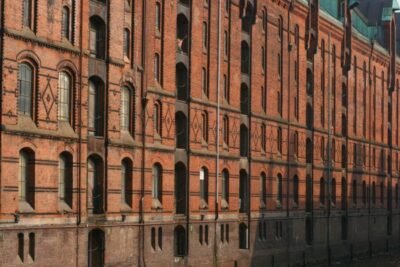
Sightseeing Tour – Free Tour – Historic Center-Hamburg On Foot
Read our review →
Browse the lists this tour appears in