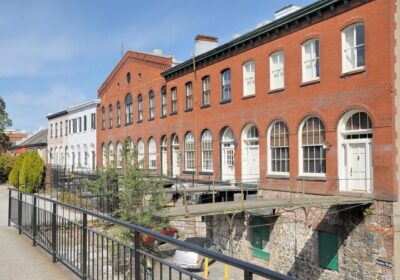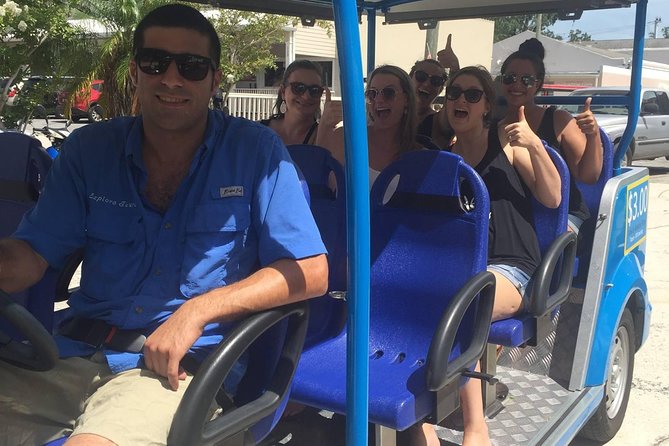
Review · ST AUGUSTINE
Guided Historical Tour of St. Augustine Per Person
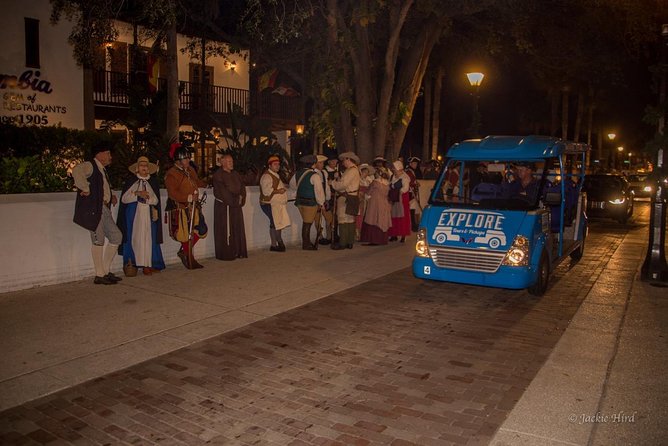
History comes quickly in St. Augustine. This one-hour open-air electric vehicle tour packs the city’s major landmarks into a small-group ride, with a guide who explains what you are seeing as you go. I like the personal scale, with a maximum of nine people, and I like that the driver stops to speak clearly and answer questions instead of simply rolling past the sights.
The tour is especially useful at the start of a visit. You get a quick sense of the city’s layout, then you can return to the places that catch your interest. Guides Karen, Marc, Mark, and Deanna receive especially warm praise for their storytelling, humor, and local insight.
The main drawback is the short running time. You will pass many historic sites rather than tour their interiors, and the open-air vehicle can feel cool or breezy. Parking is not provided, so you need to arrive early and allow time to find a space near the starting point.
Key Points Before You Book
- Small groups of up to nine: You can hear the guide, ask questions, and sometimes receive what feels like a private tour.
- One hour of city orientation: The route covers major sites in the downtown historic area without requiring a long walk.
- A guide-led history lesson: The driver explains St. Augustine’s Spanish, British, Catholic, military, and civic past.
- Open-air electric vehicle: It offers a clear view of the streets, but bring a light layer for cool or windy weather.
- Strong customer approval: The tour has a 5.0 rating from 471 reviews and is recommended by 99 percent of customers.
- Useful first-day activity: The ride can help you decide which museums, churches, forts, and historic buildings deserve more of your time.
Why This One-Hour Ride Works So Well

St. Augustine can be confusing at first. Important sites sit close together, but their stories span more than four centuries and several ruling powers. A short ride gives you the basic map and a timeline before you start exploring on foot.
I like that the tour does not treat the city as a collection of pretty buildings. The route connects the Spanish founding of 1565 with Catholic missions, coastal defense, British control, American military use, railroad-era wealth, and modern city life.
Your guide is also the driver, which keeps the group compact and makes questions easy. Previous rides have included only one passenger, while other groups have had six or eight people. That small size matters because you can hear the guide and receive answers that are more specific than a standard large bus commentary.
The guides have different personalities. Karen is praised for detailed research, patience, humor, and an ability to tell stories rather than recite dates. Marc and Mark are described as entertaining and well informed, while Deanna mixes formal history with local hearsay in a light way. Your guide will depend on the schedule, but the repeated praise is clear: the people leading this ride are a major part of its value.
More Guided Tours in the USA:
- History and Hauntings of Salem Guided Walking Tour
★ 5.0 · 14,564 reviews - Historic Charleston Guided Sightseeing Walking Tour
★ 5.0 · 6,216 reviews - Historic Savannah Guided Walking Tour
★ 5.0 · 2,918 reviews
Starting at 1 Cordova Street

The tour begins at 1 Cordova Street and returns to the same meeting point. Check the special instructions on your ticket carefully, since the exact meeting details are important.
The route uses an open-air electric vehicle and focuses on downtown St. Augustine. That means you see more ground than you would on a one-hour walking tour, with less physical effort. It also means the vehicle moves through regular city traffic. One customer noted that traffic around St. Augustine can be difficult, so allow extra time to reach the meeting point.
Parking is not included. Plan to arrive early, especially if you are driving in from the beach or another part of town. A late arrival can be stressful, even though the company has sometimes been able to wait a few extra minutes when notified by phone.
Bring the phone number you provide at booking and make sure it is reachable on the tour day. The ride is offered in English, and confirmation arrives when you book.
Mission Nombre de Dios and the City’s Spanish Beginning
One of the most meaningful stops is Mission Nombre de Dios, tied to the founding of St. Augustine in 1565. Pedro Menéndez de Avilés landed here on September 8, proclaimed the site for Spain and the Church, and named it Nombre de Dios, meaning Name of God.
The Shrine of Our Lady of La Leche traces its origins to that first settlement. Father Lopez became the first parish priest in St. Augustine, giving this place both religious and civic importance.
The tour also connects the mission area with the Fountain of Youth Archaeological Park. Menéndez founded the city at the Timucua village of Seloy, located at today’s park. That detail helps place the Spanish arrival within an existing Indigenous setting rather than presenting the city as if it began with Europeans alone.
You will not have time for a full visit to every site during this one-hour ride. Instead, your guide points out the location and explains why it matters. If the mission or Fountain of Youth interests you, mark it for a separate visit later.
The Cathedral Basilica and Catholic St. Augustine
The Cathedral Basilica of St. Augustine is another important point along the route. It is the city’s oldest Catholic church and the oldest parish in the country.
The building gives you a direct connection between the first Spanish settlement and St. Augustine’s continuing Catholic identity. Your guide may help you notice its location beside the Plaza de la Constitución, where religious, civic, and commercial life have long met.
The value here is context. If you later enter the cathedral, the ride has already introduced its place in the city’s story. The same applies to the Shrine of Our Lady of La Leche and other religious sites. You are not simply collecting photographs. You are learning why these places were built where they were.
A few more history tours around the USA worth a look
- Charleston’s Old South Carriage Historic Horse & Carriage Tour
★ 5.0 · 10,023 reviews - Beneath The Streets Underground History Tour
★ 4.5 · 8,006 reviews - Boston: Freedom Trail History Small Group Walking Tour
★ 5.0 · 6,450 reviews - Charleston Horse-Drawn Carriage Tour: Explore Historic Charleston
★ 5.0 · 3,561 reviews
Castillo de San Marcos and the Coquina Defense
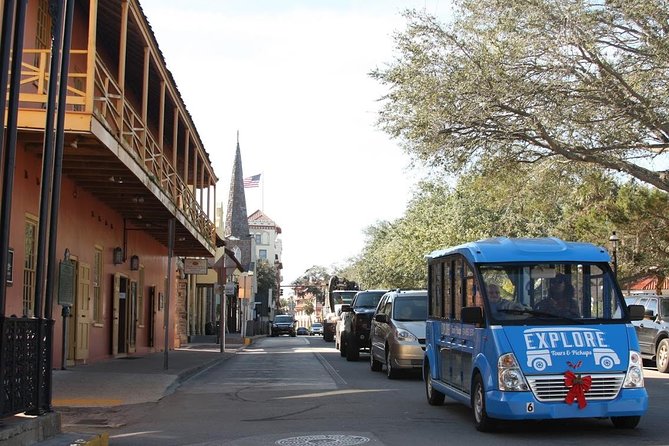
The Castillo de San Marcos is the route’s biggest military landmark. Built by the Spanish to defend Florida and the Atlantic trade route, it is the oldest masonry fortification in the continental United States.
The fort also represents more than military engineering. It reflects 450 years of cultural contact and conflict involving Spanish, British, American, Indigenous, and other communities. Its coquina construction is especially important. The local shellstone helped create a fortification that looks solid and imposing, yet has a distinctive texture and character.
The electric vehicle gives you a useful outside view, but you should not confuse passing the Castillo with touring it. The full national monument visit requires more time, and the one-hour route is best understood as an introduction. If you enjoy forts, military history, or architecture, return later for a longer look.
Old Homes and the Spanish Colonial City
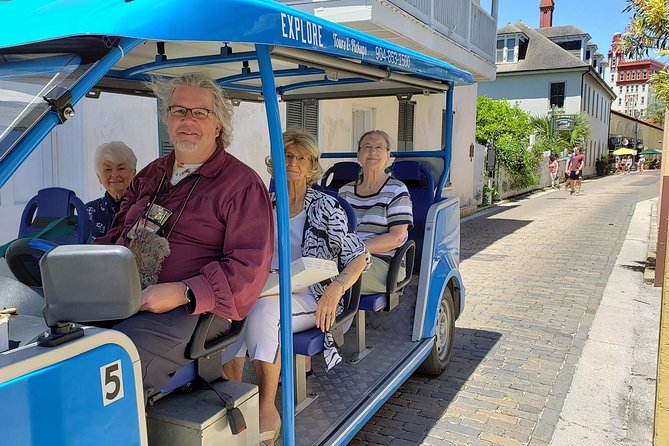
The Gonzalez-Alvarez House, also known as the Oldest House, adds a domestic scale to the route. Owned and operated by the St. Augustine Historical Society, it is described as the oldest surviving Spanish colonial residence in Florida.
A fort tells you how a city defended itself. A house shows how people lived. This stop helps balance the grand landmarks with the everyday side of colonial St. Augustine.
You will also pass the Ponce de Leon Hotel, now Flagler College. Its name recalls Henry Flagler’s role in the city’s later development and the era when St. Augustine became a fashionable destination. The tour uses the building to connect the old Spanish city with Florida’s grand hotel period.
That contrast is one of the ride’s strengths. In a short distance, you move from early colonial homes to elaborate architecture built during Florida’s boom years. A guide can make those layers easier to read than a self-guided drive.
Flagler’s Memorial Presbyterian Church
Flagler’s Memorial Presbyterian Church was dedicated on March 16, 1890. Henry Flagler built it for his daughter Jennie Louise Flagler, who died in 1889.
The church was designed by Carrère and Hastings, the same architectural firm associated with the Ponce de Leon Hotel. Its design draws on St. Mark’s Basilica in Venice, Italy.
This is a good example of how St. Augustine’s later buildings borrow from European traditions while serving very personal purposes. The church is not only an attractive structure. Its design and origin reveal the wealth, ambition, and private grief connected with Flagler’s influence.
The vehicle allows you to see the church without adding another long walk to your schedule. If you want to study the details, make a note to return on foot.
Tolomato Cemetery and St. Francis Barracks

Tolomato Cemetery was used from the 18th century until 1884. A cemetery stop may sound quiet compared with a fort or grand hotel, but it gives the city’s timeline a human scale. It reminds you that St. Augustine’s story includes generations of ordinary residents, clergy, soldiers, and families.
The St. Francis Barracks offers a different angle. Franciscan friars built the coquina structure between 1724 and 1755. When Britain took control of Florida in 1763, the building was converted to military use.
After the United States claimed Florida in 1821, the U.S. Army controlled the barracks until its deactivation in 1900. It was later leased to Florida State Troops, the forerunner of today’s National Guard, in 1907.
These sites show why a guide is useful. Without explanation, you might see an old cemetery and a handsome military building. With context, you can follow the shifts from Spanish religious life to British rule and then American administration.
Plaza de la Constitución and the Bridge of Lions
The Plaza de la Constitución sits at the center of the historic city. It is bordered by the Cathedral Basilica, Trinity Episcopal Church, and Government House, and it faces the Bridge of Lions.
A central pavilion hosts city events, private functions, and live entertainment. The public market has been used since the 1500s, when fish, vegetables, and other goods were traded there. That long commercial use helps explain why the plaza still feels like the city’s civic heart.
The Bridge of Lions was completed in 1927 during Florida’s extravagant land boom. It was designed as both a transport route and a work of art, linking downtown St. Augustine with Anastasia Island.
The bridge and plaza make a fitting final portion of the route. Together, they show how St. Augustine kept adapting. The city did not stop with its Spanish colonial beginning. It gained new civic buildings, churches, roads, hotels, and public spaces over time.
What You Get for $30.60
At $30.60 per person, the tour is priced as a short orientation rather than a full-day historical program. I think the value is strongest if you are visiting St. Augustine for the first time, have limited mobility, or want to cover a lot of ground before choosing where to spend your next few hours.
The small group improves the value. You are not paying only for transport. You are paying for a guide who can answer questions, point out details, and adjust the conversation to the people in the vehicle.
The ride also saves energy. St. Augustine’s historic center is compact, but a warm day, crowded streets, and repeated stops can make a walking tour tiring. The electric vehicle lets you see the main areas without giving up the guide’s commentary.
The limitation is clear: the tour lasts about one hour. You will not get extended interior visits, long photo stops, or a full treatment of every building. If you want a slow architectural study or a deep look at the Castillo, you need separate admission and extra time.
Weather, Comfort, and Group Size
The vehicle is open-air, so weather affects comfort. A light drizzle may not be a major problem, but cool wind can be noticeable. On a cooler day, one guide provided a blanket, yet you should still bring a light jacket or sweater.
The compact vehicle offers a better view than a closed bus and makes it easier to hear the guide. It also means less shelter from sun, wind, and rain. The experience requires good weather, and a cancellation caused by poor weather comes with the option of a different date or a full refund.
Service animals are allowed. The tour is near public transportation, and most people can participate. The maximum group size is nine, though smaller groups are common and occasional departures may feel nearly private.
Who Should Book This Tour?
I would choose this tour for a first visit, a short stay, or the first morning of a longer trip. It gives you the lay of the land and helps you decide which places deserve a closer look.
It suits families who want history without a long walk, couples who prefer a personal guide, and groups that enjoy asking questions. It is also a practical choice if you want to see the city before committing to several museum visits.
You may want something else if you prefer to move slowly, enter every site, or focus on one subject. A walking tour or individual attraction visit will give you more time at each location.
Free cancellation is available up to 24 hours before the start time. Changes or cancellations within 24 hours are not refunded, and the company may cancel if the minimum number of riders is not reached. In that case, you receive a different date or experience, or a full refund.
FAQ
How long is the Guided Historical Tour of St. Augustine?
The tour lasts approximately one hour.
Where does the tour begin?
It begins at 1 Cordova St, St. Augustine, Florida 32084, and returns to the same meeting point.
How many people can join the tour?
The maximum group size is nine people.
Is the tour offered in English?
Yes. The tour is offered in English.
Does the tour include parking?
No. Parking is not provided, so you should arrive early to find a space.
Are service animals allowed?
Yes, service animals are allowed.
What happens if bad weather cancels the tour?
You will be offered a different date or a full refund if poor weather causes the tour to be canceled.
Should You Book It?
Book this tour if you want a friendly, efficient introduction to St. Augustine’s major sites. The strongest reasons are the small vehicle, the chance to ask questions, and guides such as Karen, Marc, Mark, and Deanna, who bring humor and clear storytelling to the route.
At $30.60, it is a fair buy for an hour of transport and interpretation, especially when you use the ride to plan the rest of your visit. Just bring a layer, allow extra time for traffic and parking, and remember that this is a city overview, not a full tour inside every landmark.
Just added around the USA
- Historical Bicycle Tour of Dunedin★ 5.0 · 44 reviews
- Safety Harbor Ghost Tour★ 5.0 · 60 reviews
- Tarpon Springs Ghost Tour★ 4.5 · 19 reviews
- Cincy Brunch History and Streetcar Tour with Riverside Food Tours★ 5.0 · 108 reviews
- 2.5 Hour Kayaking with Manatee and History Tour in Tarpon Springs★ 5.0 · 24 reviews
- Chicago River Architecture Tour Aboard a Historic Yacht★ 5.0 · 45 reviews
- Walkin’ with Colin: Chicago History-Mystery-Comedy-Tragedy Tour★ 5.0 · 218 reviews
- Historic Homes and Cottages of Wicker Park Walking Tour★ 5.0 · 44 reviews
Guided, compared.
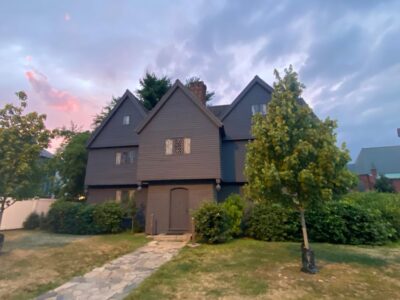
History and Hauntings of Salem Guided Walking Tour
Read our review →
Edinburgh Castle Guided History Tour with Tickets
Read our review →
Historic Charleston Guided Sightseeing Walking Tour
Read our review →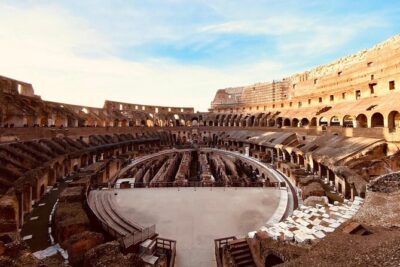
Colosseum with Arena, Roman Forum and Palatine Guided Tour
Read our review →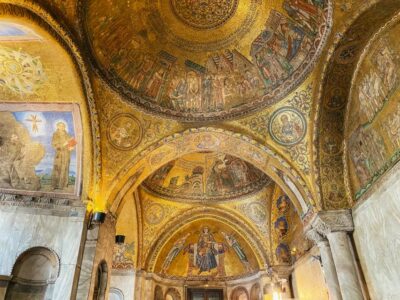
St. Mark’s Basilica Guided Tour & VR History Intro
Read our review →
Colosseum with Arena, Roman Forum and Palatine Hill Guided Tour
Read our review →