
Review · ATHENS
Full Day Biblical Ancient Corinth Canal Mycenae Epidauvro Nafplio
Ancient legends, Roman ruins, and sea views fill this long day. This private excursion from Athens takes you across the Corinth Canal to Ancient Corinth, Mycenae, and Nafplio, with a Mercedes sedan or luxury Skoda, hotel pickup, and an English-speaking driver. I especially like the flexible schedule and the chance to combine major archaeological sites with a proper seaside town. The main catch is that entrance fees and lunch are extra, and the day covers a lot of ground.
I also like the personal service. Drivers such as Chris, Yiannes, Michael, Costas, Ioannis, and Dimitrios have been praised for careful driving, useful historical explanations, patience, and good local suggestions. Plan on roughly 9 to 10 hours, and remember that the advertised itinerary mentions Epidaurus in the title, but the detailed schedule does not include a stop there.
Key points to know before booking
- A private day in the Peloponnese: Only your own group rides in the vehicle, with pickup and return from an Athens hotel, apartment, or port.
- The Corinth Canal is a quick but memorable stop: You get about 15 minutes to look into the narrow waterway linking the Saronic and Corinthian gulfs.
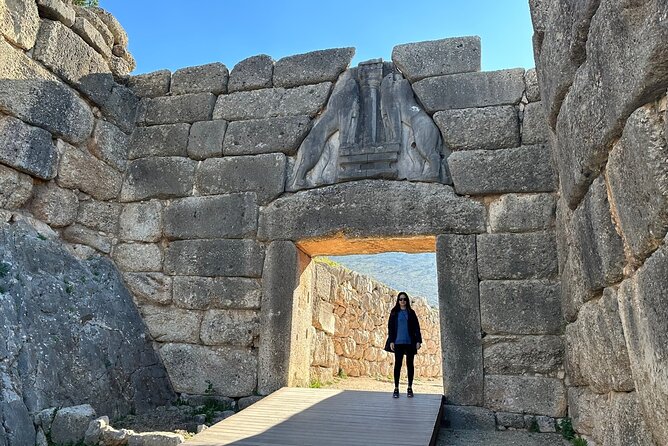
- Mycenae supplies the big ancient wow factor: The Lion Gate, Cyclopean walls, museum, and Treasury of Atreus make this the strongest archaeological stop.
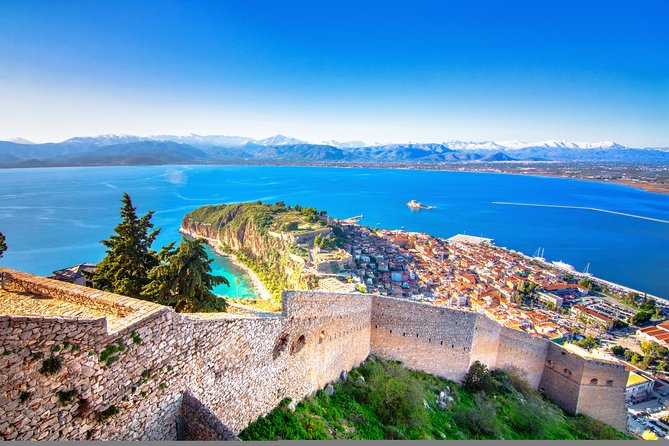
- Nafplio adds breathing room: Expect old-town streets, Syntagma Square, seaside lunch time, and views toward Bourtzi.
- Palamidi requires serious stairs: The town-to-fortress route is commonly called the 999 steps, while the actual count is often given as 913 to the fortress.
- Budget beyond the tour price: The $277.09 per-person cost covers transport and service, but not attraction tickets, lunch, gratuities, or a licensed guide inside the sites.
Why this route works from Athens
This is a lot of Greece in one day, but the route has a sensible shape. You leave Athens for the Peloponnese, stop at the Corinth Canal, explore Ancient Corinth, continue to Mycenae, and finish in Nafplio before returning.
I like the contrast. Corinth gives you a biblical and Roman connection. Mycenae takes you far earlier, into the Bronze Age world of Agamemnon. Nafplio then changes the pace with Venetian and neoclassical buildings, a harbor, cafés, and a more relaxed town center.
The private format matters here. A fixed public bus itinerary can make a day like this feel hurried and impersonal. With your own driver, you can ask for more time at a favorite stop, adjust the order where practical, or spend less time at a place that does not hold your attention.
The day is still ambitious. You are not getting a slow archaeological study. You are getting a broad introduction, with long periods in the vehicle between sites. I would choose this trip for a first look at the region, not for a detailed specialist visit.
More Ancient History Tours in Athens
- Athens: Ancient Greek Theater Performance
★ 4.7 · 2,481 reviews - Historical Delphi One Day Tour with Arachova Stop & Expert Guide
★ 4.5 · 1,247 reviews - From Athens: Ancient Corinth Day Trip with Canal & VR Guide
★ 4.6 · 1,073 reviews
The Corinth Canal makes a sharp opening
The Corinth Canal is only a short stop, usually around 15 minutes, but it gives you an immediate sense of the Peloponnese’s geography. The waterway cuts through the narrow isthmus and separates the mainland from the peninsula, effectively making the Peloponnese an island.
The canal was completed in the late 19th century, yet the idea is far older. Periander, the ruler of Corinth in the 6th century BC, is credited with considering such a project. Since digging through the rock was beyond the technology of the time, ships and cargo were moved across a stone route known as the diolkos.
You will not need much time here. Look down into the canal, take in the steep sides, and listen to the explanation of why ships once had to sail around the Peloponnese, adding about 185 nautical miles to their journey. It is a quick stop, but a useful one because it explains why Corinth mattered.
Cenchreae brings Paul’s Corinth into view
The stop in the Corinthia region focuses on Kechries, the site of the ancient port of Cenchreae. It connects the day to the New Testament and to the Apostle Paul’s second missionary journey.
According to Acts, Paul stopped at Cenchreae and had his hair cut after completing a vow. Paul also mentions the local Christian community and Phoebe in his letter to the Romans. The visit is brief, around 15 minutes, and admission is free.
Do not expect a large, fully presented archaeological complex here. Its value comes from the setting and the connection to early Christianity. If biblical places matter to you, this small stop adds meaning to the larger Corinth visit.
Ancient Corinth rewards a careful walk
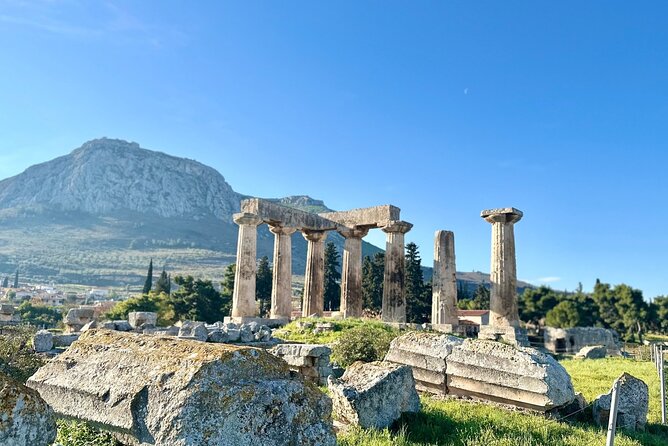
Ancient Corinth is the first major site of the day, with about 45 minutes at the archaeological area, followed by time in the museum and at nearby monuments. Admission is not included, so check the current ticket cost before departure and carry a payment method accepted at the entrance.
The Roman Forum is the heart of the site. It was a large public center with shops, temples, an altar, and the Bema, a raised platform where officials addressed the public. Christian tradition connects the Bema with Paul’s trial before Gallio, the Roman official who refused to treat the dispute as a criminal matter.
The site also includes the Lechaion Road, the Fountain of Peirene, a basilica, stoas, and the remains of the agora. The appeal is not one perfect monument. It is the chance to picture Corinth as a working city, with commerce, law, worship, and public life packed into the same center.
The Archaeological Museum of Ancient Corinth sits inside the site and helps make sense of the scattered ruins. Its displays were created after excavations uncovered a large number of objects. Give yourself enough time to see it, especially if you want sculpture, pottery, and smaller finds to fill in what the stones cannot explain.
The Temple of Apollo is the visual centerpiece. Built around 550 BC, it is one of the earliest Doric temples in mainland Greece and the Peloponnese. Its monolithic columns are especially impressive because they were carved from single pieces of stone.
Acrocorinth is also part of the Corinth story, though the listed visit is short. The massive rock above the ancient city served as a defensive stronghold because it controlled the route into the Peloponnese. You may see it from below or make a brief stop for the view, but do not expect a full fortress exploration in 15 minutes.
More Ancient History Tours in Greece
- Acropolis, Parthenon & Athens Old City Heritage Walking Tour
★ 4.5 · 876 reviews - Private Biblical Tour Ancient Corinth & Isthmus Canal from Athens
★ 5.0 · 762 reviews - Athens: Ancient Corinth & Nafplio Full Day Trip with Swim
★ 4.8 · 531 reviews - Athens Skip the Line: Open Air Ancient Greek Theatre Performance
★ 4.5 · 520 reviews
Mycenae turns myth into stone
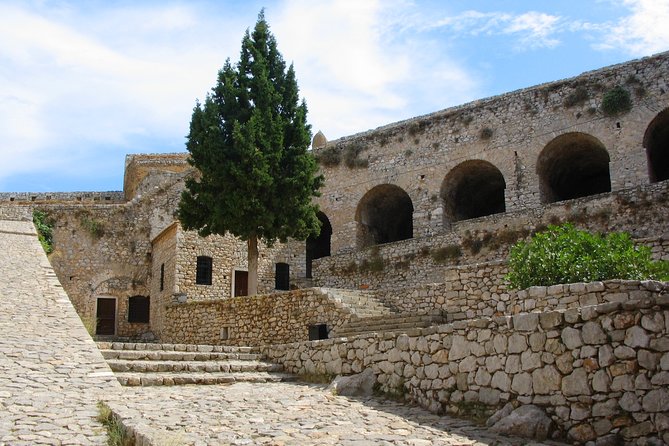
Mycenae is the strongest stop for many people. The citadel was the center of the Mycenaean civilization, which flourished from roughly 1600 to 1100 BC. At its height around 1350 BC, the citadel and lower town covered about 32 hectares and may have held 30,000 people.
The site is tied to Agamemnon, the legendary king associated with the Trojan War. The real value, though, is architectural. Massive Cyclopean walls surround the citadel, and their huge blocks led later Greeks to believe that only Cyclopes could have built them.
The Lion Gate is the great entrance. Dating to around 1250 BC, it has two lions or lionesses carved above the doorway in a heraldic pose. The relief is unusual because it survived above ground and remains the best-known piece of Mycenaean sculpture.
You get about an hour at Mycenae, with additional time for the Lion Gate, museum, and Treasury of Atreus. The ground is uneven, and the site involves slopes and exposed walking. Good shoes, water, and sun protection will make this part much easier.
The Archaeological Museum of Ancient Mycenae helps explain the citadel, burial customs, and the period’s military power. It is a compact visit, so you will need to move at a steady pace.
The Treasury of Atreus, also called the Tomb of Agamemnon, is separate from the main citadel area. This tholos tomb has a beehive-shaped interior and dates to about 1250 BC. Its lintel above the entrance weighs about 120 tons, a startling reminder of what Bronze Age builders could manage.
I would not rush the tomb. Walk into the circular chamber, look at the scale of the stonework, and let the quiet do some of the work. It is one of those places where the engineering is more impressive than any dramatic reconstruction.
Nafplio gives the day a human scale
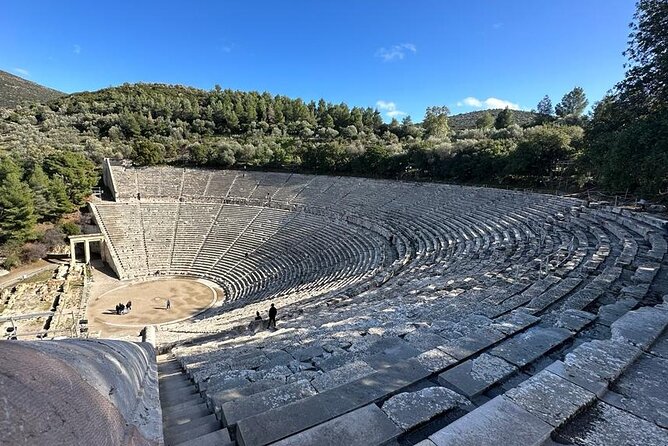
After the ruins, Nafplio feels like a reward. It was the capital of the newly formed Greek state until 1834, and its old town mixes Venetian, neoclassical, and eastern architectural touches.
You get about two hours here, including time for lunch at a traditional seaside tavern. The meal is not included, so ask your driver for a restaurant recommendation and confirm prices before ordering if you are watching your budget.
Syntagma Square is the old town’s main gathering place. It is a good place to get your bearings before walking the cobbled streets and looking up at the balconies and older houses. The square also connects with the city’s early modern political history, including the former Parliament building from the period of Ioannis Kapodistrias.
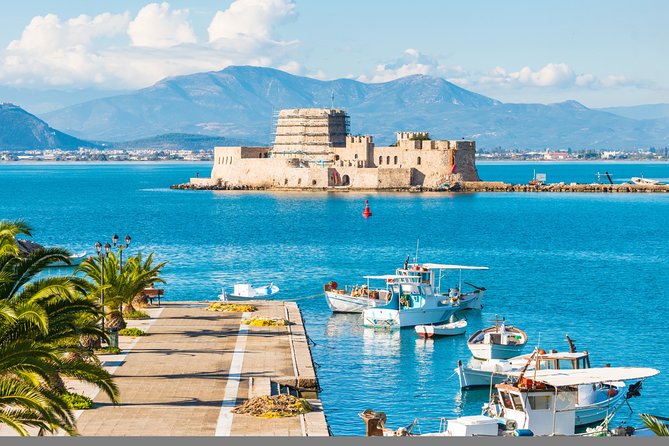
Bourtzi, the small fortress on the islet of Agioi Theodoroi, gives Nafplio its postcard view. The Venetians built it in 1473, and the fortress later served as a prison and, for a time, a luxury hotel. A boat ride to the islet takes less than 10 minutes, but the boat visit is not included and may not fit comfortably into the schedule.
The itinerary also includes Akronafplia Fortress, the oldest part of Nafplio. It was once a separate fortified town and later formed part of the city’s defenses. The stop is short, so you are mainly getting the setting and views rather than a full fortress tour.
The Lion of the Bavarians is a different kind of sight. Carved into the rock, the sleeping lion commemorates Bavarian soldiers who died in Nafplio in 1833 during a typhoid outbreak. It is easy to photograph and provides a brief look at Greece’s early royal period.
Palamidi is worth it, but count your knees
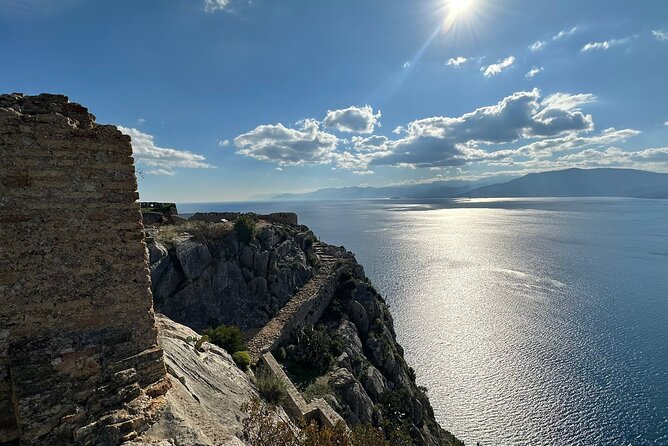
Palamidi Castle sits on a 216-meter hill above Nafplio. The Venetians built the fortress during their second period of rule, from 1686 to 1715, and its position gives you broad views over the town and Argolic Gulf.
The famous stairway is usually called the 999 steps. The more precise figure often given for the climb from town to the fortress is 913, with more than 1,000 steps needed to reach the highest point inside the complex. The difference is less important than the warning: this is a real climb.
The scheduled visit is about 30 minutes, which is enough for a short look and photos if you arrive by vehicle at the upper entrance. It is not enough for a leisurely exploration of every bastion. Admission is extra.
If you have limited mobility or dislike steep stairs, tell the operator in advance and confirm exactly where the vehicle will leave you. The castle is one of the day’s best viewpoints, but you should not feel obliged to climb every stair simply because the number has become part of the legend.
Transport, drivers, and the private format
Pickup and drop-off are offered from an Athens hotel, Airbnb residence, or port. For a group of one to three, transport is in a luxury sedan. Groups of four to seven use a minivan. Vehicles have air conditioning, WiFi, and bottled water.
The driver waits in a hotel lobby, at an apartment entrance, or at a port gate with a name sign. Airport pickup is available for an additional charge. The stated end point is the original meeting point, or another agreed location.
The driver is not automatically a licensed guide. You receive an English-speaking driver with extensive historical knowledge, but a licensed guide to accompany you inside archaeological sites costs extra. This distinction matters if you want formal guiding at Corinth and Mycenae rather than explanations during the drive and at the entrances.
The strongest service comes from the human side. Chris has been praised for adjusting the day around what a couple had already seen. Costas was noted for early arrival texts, water, careful driving, solid English, and useful options. Michael was described as patient when time ran long, while Yiannes and Dimitrios were praised for history, courtesy, and thoughtful pacing.
That consistency is encouraging, but individual drivers naturally differ. When you book, ask how much commentary you can expect and confirm that your day is private for your own party.
Is $277.09 a fair price?
At $277.09 per person, this is not a low-cost sightseeing day. The value depends heavily on group size. For two people, you are paying for a private car, a long-distance driver, flexibility, hotel pickup, and a full day of transport. For four to seven people sharing a minivan, the per-person value improves.
You still need to add entrance fees for the attractions, lunch in Nafplio, optional boat costs for Bourtzi, tips, and possibly a licensed guide. Put those extras into your budget before deciding.
I think the price is reasonable for people who value privacy and convenience. It is less attractive if you are happy with public transport, want only one archaeological site, or prefer to spend a full day in Nafplio. The ability to adjust stops is the main benefit, not the number of places checked off.
Free cancellation is available up to 24 hours before the start time. Poor weather can also lead to a different date or a full refund. The experience is offered in English, and confirmation is provided when booking.
Who should book this day?
I would choose this for a first visit to Athens when you want to see beyond the capital without arranging several separate trips. It suits couples, families, and small groups who want a private vehicle and a driver who can adapt the pace.
It also works well for anyone drawn to biblical Corinth, Bronze Age Mycenae, and Greek political history. The mix is unusually broad: Paul, Apollo, Agamemnon, Venetian fortresses, and the early Greek state all appear in one day.
I would think twice if you want long, unhurried time at each archaeological site. I would also ask for a revised plan if Epidaurus is essential to you, because it is named in the tour title but not included in the detailed stop schedule.
Should you book it?
Book this tour if you want a comfortable, private introduction to Corinth, Mycenae, and Nafplio, and you accept that it will be a busy day. The best parts are the flexible transport, personal driver service, Mycenae’s monumental ruins, and Nafplio’s welcome change of pace.
Before paying, confirm the exact stops, entrance costs, vehicle size, pickup time, and whether you want to add a licensed guide. If you do that homework, this is a strong choice for seeing a wide slice of the Peloponnese from Athens without having to manage the driving yourself.
FAQ
How long does the tour last?
The tour lasts approximately 9 to 10 hours.
Is the tour private?
Yes. Only your own group is scheduled to participate.
Where can pickup take place?
Pickup is offered from an Athens hotel, Airbnb residence, or port. Airport pickup is available for an additional cost.
What vehicle is used?
Groups of one to three people travel in a luxury sedan. Groups of four to seven use a comfortable minivan.
Is transportation included?
Yes. The price includes private transportation, air conditioning, WiFi, and bottled water.
Are entrance fees included?
No. Entrance fees for the archaeological sites, museums, Palamidi Castle, and other attractions are not included.
Is lunch included?
No. Lunch is scheduled at a traditional seaside tavern in Nafplio, but the meal cost is extra.
Is a licensed guide included?
No. The tour includes an English-speaking driver with historical knowledge. A licensed guide to accompany you inside archaeological sites costs extra.
Is Epidaurus included?
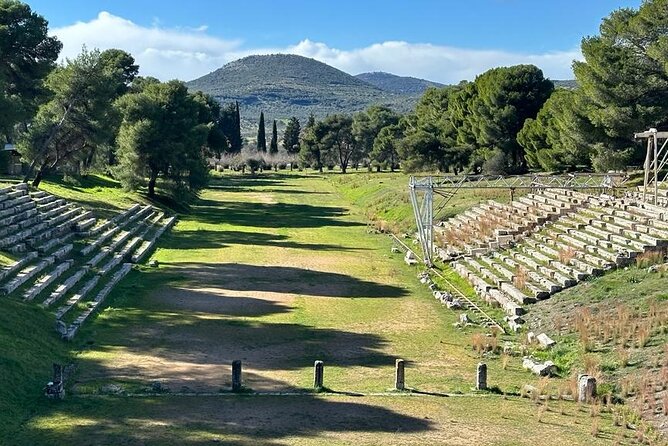
Epidaurus appears in the tour title, but the detailed schedule provided does not list a stop there. Confirm this point with the operator before booking if Epidaurus is important to you.
More Full-Day Tours in Athens
- Ancient Corinth, Epidaurus, Nafplio full day private tour from Athens
★ 5.0 · 206 reviews - Ancient Corinth, Mycenae, Epidaurus, Nafplio full day private tour from Athens
★ 5.0 · 130 reviews - Ancient Olympia full day private tour from Athens
★ 5.0 · 83 reviews - Athens Highlights & Ancient Corinth Full Day Private Tour
★ 5.0 · 54 reviews
Just added around Athens
- The original Christian tour on Paul’s footsteps in Athens and ancient Corinth★ 4.5 · 25 reviews
- Small-Group Women History in Ancient Greece Walking Tour★ 5.0 · 38 reviews
- Athens: Combo Ticket for Acropolis & 6 ancient sites★ 3.0 · 21 reviews
- Ancient Sparta & Mystras Private Day Tour from Athens★ 5.0 · 52 reviews
- Ancient Olympia & Isthmus Canal Private Tour from Athens★ 5.0 · 20 reviews
- Ancient Agora & Temple of Hephaestus Entrance Ticket★ 3.5 · 22 reviews
- Half Day Historical Athens City Private Taxi Service Tour★ 5.0 · 79 reviews
- Ancient Corinth, Sanctuary of Hera, Blue Lake & Canal from Athens★ 5.0 · 26 reviews
Ancient History Tours, compared.
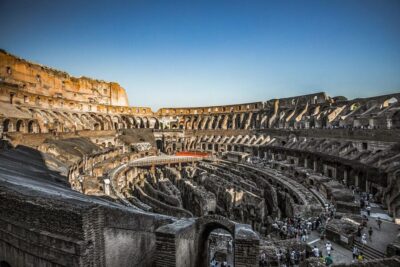
Colosseum: Underground and Ancient Rome Tour
Read our review →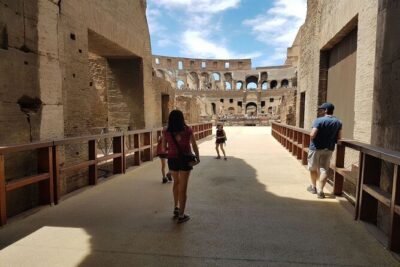
Colosseum & Ancient Rome with Arena Floor Option I Max 6 People
Read our review →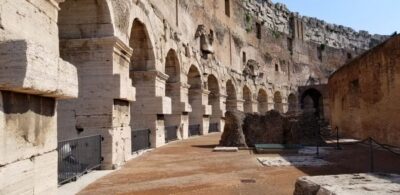
Colosseum, Ancient Rome Tour or AudioGuided Tour
Read our review →
Colosseum Underground & Ancient Rome Guided Tour
Read our review →
Taormina: Ancient Theater Skip-the-Line Ticket & Audio Guide
Read our review →
Discover the Ancient Ruins of Pompeii: Day Trip from Rome
Read our review →
Discover Matera, the ancient city – English tour
Read our review →Browse the lists this tour appears in