
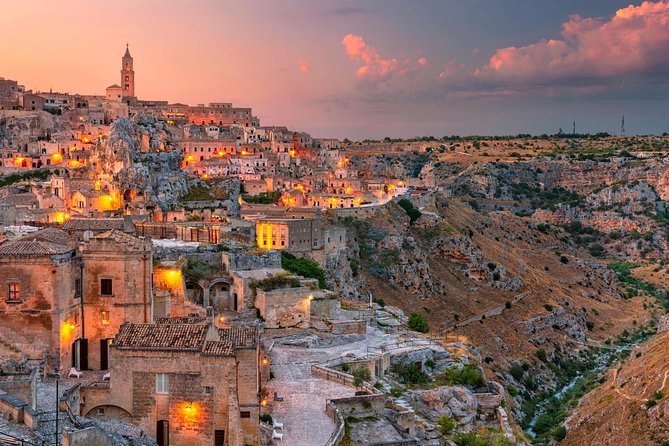
Review · MATERA
Discover Matera, the ancient city – English tour
Ancient stone streets tell surprising stories. This small-group Matera walking tour brings you through the Sasso Caveoso and part of the Sasso Barisano, where cave homes, rupestrian churches, old water systems, and family memories explain how Matera changed from Italy’s Shame of Italy to a UNESCO World Heritage city. I especially like the personal stories from guides such as Gaetano and Renato, and the way the tour takes you beyond the obvious viewpoints into quieter corners of the Sassi. The main consideration is simple: this is not a church-by-church sightseeing tour, and one guest found the explanations repetitive.
The price is about $36.28 per person for roughly two to three hours. That is fair value if you want context, orientation, and stories you would struggle to gather on your own. You should wear sensible shoes, expect walking on uneven alleys and slopes, and come ready to listen. The tour works best early in your Matera visit, when its explanations can guide the rest of your stay.
Key points to know before walking into the Sassi
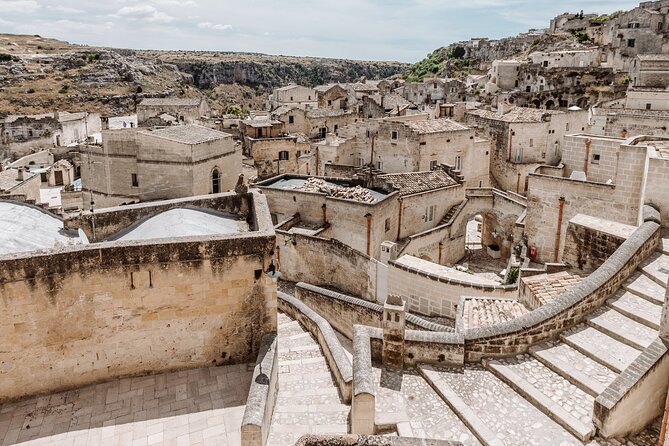
- The focus is the people of Matera: You learn how families lived in the cave districts, why they were displaced, and how the city later reclaimed its identity.
- Sasso Caveoso takes center stage: The route explores one of Matera’s most evocative districts, then continues into part of Sasso Barisano.
- Guides add local perspective: Renato, Gaetano, Sara, and Domenico lead the experience, with personal and family stories forming an important part of the walk.
- This is not a standard church tour: The emphasis is on streets, homes, architecture, anthropology, water collection, food traditions, and daily life.
- The group can reach 20 people: It is still more personal than a large coach excursion, though the largest groups may feel less intimate.
- Plan for practical walking: The tour lasts two to three hours, requires sensible footwear, and includes time for questions and photographs.
Why a guided walk makes sense in Matera
Matera is easy to admire and surprisingly hard to understand. From a distance, the Sassi look like a dramatic sweep of stone dwellings carved into the hills. Once you enter the alleys, the city becomes a maze of steps, bends, terraces, and passages. Without a guide, you can see plenty and still miss what made this place so unusual.
This tour gives you a framework. Instead of treating Matera as a collection of photogenic caves, it explains how the city worked. You hear about homes, bakeries, churches, private spaces, public water systems, and the people who lived here. The result is less a checklist of monuments and more a story about a community.
I like that the tour does not pretend Matera was always picturesque. Its recent past includes poverty, overcrowding, and the removal of families from the Sassi. Understanding that difficult chapter makes the city’s current success more meaningful. Matera’s rise to UNESCO World Heritage status was not simply a matter of cleaning up old stone buildings. It involved a major change in how people viewed the city and its past.
The guide’s job is especially important here. Gaetano is repeatedly praised for combining humor with clear explanations, while Renato is valued for his family connection to the area and for sharing stories passed down through earlier generations. Sara and Domenico may also lead the walk. The exact guide matters because the experience depends heavily on storytelling, but the format is designed around guides who care deeply about Matera and the Sassi.
More Ancient History Tours in Italy
- Colosseum: Underground and Ancient Rome Tour
★ 4.7 · 12,691 reviews - Colosseum & Ancient Rome with Arena Floor Option I Max 6 People
★ 5.0 · 3,306 reviews - Rome: Colosseum, Ancient Rome Tour or AudioGuided Tour
★ 4.4 · 2,879 reviews
Entering Sasso Caveoso and the older Matera
The walk develops through the most suggestive parts of ancient Matera, beginning with Sasso Caveoso and continuing into part of Sasso Barisano. These districts are not presented as separate museum pieces. You move through their lanes and openings while the guide explains how the city grew and how its residents used the space.
Sasso Caveoso is especially useful for understanding the cave-city idea. The stone dwellings are not just holes in a cliff. They were homes, workspaces, storage areas, and parts of a tightly organized neighborhood. A guide can point out details that blend into the rock when you are walking alone.
You can expect frequent stops for explanation, questions, and photographs. The pace is generally relaxed rather than strenuous, but this is still a walking tour through uneven alleys. There are slopes and steps, so good shoes matter more than stylish ones. The two to three hour length gives the guide time to explain the setting without forcing you through at a hurried pace.
The route also avoids the feeling of being marched from one famous building to another. The point is to read Matera as a living settlement. A bend in an alley, a cave opening, or a view across the valley can become evidence in the larger story of how people adapted to this difficult terrain.
Sasso Barisano and the city’s changing face
Part of the walk continues through Sasso Barisano, giving you a broader sense of Matera’s layout. Seeing more than one district helps you understand that the Sassi are not a single cave neighborhood with one identical appearance. Each section has its own arrangement, views, and visual character.
The tour’s strength here is connection. Architecture is explained alongside social history and daily life. You may hear how private and shared spaces functioned, how water was collected, and how traditional bakeries fit into community life. These details turn the stone streets into places where real families worked, cooked, raised children, and managed scarce resources.
The guide also explains why Matera remained little known outside Italy until relatively recently. That context is vital. You are not just looking at old buildings that happened to survive. You are learning why the city was neglected, why its residents were moved, and why later generations began to see value in what had once been treated as a national embarrassment.
This is one of the tour’s best features: it does not separate beauty from hardship. The views are striking, but the guide keeps attention on the people behind the walls. That balance gives the walk more weight than a simple photo stop.
Cave homes, water systems, and family memories
One of the most memorable possibilities on this experience is a visit to a cave house connected to Renato’s family. That personal link gives a human scale to the broader story. Instead of hearing only general facts about how people lived, you can connect the subject to one family’s experience in Matera.
The tour also covers public and private water collection systems. In a dry stone settlement, water was not an abstract subject. It shaped home design, storage, hygiene, and daily routines. Seeing how those systems worked helps you notice features that might otherwise look like ordinary cuts and chambers in the rock.
Traditional bakeries add another practical layer. Food production was tied to neighborhood life, and a bakery tells you something about how residents shared resources and organized their work. These stops are valuable because they explain Matera through ordinary routines rather than only through grand religious or civic buildings.
The anthropology of the Sassi is a major part of the experience. That word can sound academic, but the idea is straightforward: you learn how people lived together, how space was divided, and how customs developed around the environment. Guides also bring in family anecdotes and personal experiences, which keeps the subject grounded.
Same place, a different slice of the past:
- Rome: Colosseum with Arena, Roman Forum and Palatine Guided Tour
★ 4.0 · 5,598 reviews - Venice: St. Mark’s Basilica Guided Tour & VR History Intro
★ 3.9 · 4,880 reviews - Colosseum with Arena, Roman Forum and Palatine Hill Guided Tour
★ 4.5 · 3,526 reviews - Colosseum Underground & Ancient Rome Guided Tour
★ 4.5 · 2,590 reviews
The history behind the Shame of Italy
Matera’s modern identity cannot be understood without the painful period when the Sassi were seen as a symbol of backwardness and poverty. Families were displaced from the old districts, and the cave neighborhoods lost much of their original community life.
The tour explains this change step by step. You learn why the city was overlooked for so long, what life in the Sassi involved, and how attitudes shifted. That makes the phrase Shame of Italy more than a dramatic label. It reflects a real period when the city’s living conditions became a national problem.
The later transformation is equally important. Matera moved from neglect toward preservation, recognition, and renewed interest. UNESCO status helped confirm the value of the site, but the story is not just about an award. It is about the effort to understand the Sassi as a cultural record rather than a place to erase.
Gaetano is especially effective for visitors who want a clear timeline. His approach is described as funny, detailed, and easy to follow, with the history of the region connected to the people of Matera. Renato brings a different strength through local roots and family stories. Either style can help you grasp why the city feels both ancient and newly appreciated.
A route beyond churches and famous filming sites
If you want to visit every major church, this is not the right tour. The experience specifically avoids being a standard church-focused route. Rupestrian churches may be discussed or encountered, and you will see religious traces within the Sassi, but the main subject is the city itself.
That choice is a benefit for many people. Matera offers far more than religious architecture, and a walk through its meanders can show you how the entire settlement worked. You pay attention to dwellings, alleys, water, baking, family life, and the relationship between the two Sassi districts.
The route can also include a well-known filming location connected with the James Bond film No Time to Die. The useful part is not simply recognizing a movie backdrop. The guide has explained an unusual production problem and how it was handled, adding a bit of modern film history to the older story of Matera.
You should not expect a full film tour, though. The movie reference is one detail within a much larger discussion. If you are a film fan, it is a pleasant bonus. If you are mainly interested in Matera’s people and architecture, it does not distract from the main purpose.
Guide quality and group size
A walking tour of this kind rises or falls on the guide. The strongest comments focus on Gaetano’s humor, clear English, depth of information, and ability to answer questions. Renato is praised for being engaging and for taking people off the obvious route while sharing stories tied to his own background.
A group of up to 20 people is small enough to feel manageable in comparison with a large sightseeing crowd. You can usually hear the guide, ask questions, and take photographs without stopping an entire busload of people. Still, 20 is not a private tour. If the group reaches its maximum, quieter moments may feel less personal.
The tour seems best suited to people who enjoy explanation. One honest criticism was that the guide sometimes repeated information and talked too much, leaving that person wishing for more time simply looking at the city. That is a fair concern. The experience gives you a great deal of context, and you should not book it if you want a mostly silent walk with quick photo stops.
For most people, the information is the point. The high rating of 4.9 from 1,771 ratings, along with a 98 percent recommendation rate, suggests that the guide-led format works very well. You can also ask questions about restaurants and places to explore after the tour. Gaetano has been praised for offering dining suggestions based on whether you want something casual or more formal.
Is $36.28 a fair price for two to three hours?
At about $36.28 per person, this is not the cheapest way to walk around Matera, but the price is reasonable for a two to three hour small-group experience in English. You are paying for orientation, local interpretation, and access to stories that are not obvious from street signs.
The value is highest if this is your first visit. A good tour can save you from wandering past important details and can help you decide which corners of the Sassi deserve a second look. It also gives you a clearer basis for visiting churches, museums, viewpoints, or cave buildings on your own later.
The value is lower if you already know Matera well or mainly want independent photography time. You may find the explanations too detailed, especially if you prefer to set your own pace. The tour does include time for photographs and questions, but it is fundamentally an interpretive walk.
I would schedule it near the beginning of your stay. That way, the guide’s explanations can shape what you notice afterward. It is also a good place to ask for suggestions about restaurants and nearby areas to explore.
Practical details that matter on the day
Confirmation arrives at booking, and the experience is offered in English with a mobile ticket. It is near public transportation, and service animals are allowed. Most people can participate, but you should remember that the route involves walking through the uneven Sassi, so sensible shoes are essential.
The tour requires good weather. If poor weather forces cancellation, you are offered another date or a full refund. You can cancel for a full refund up to 24 hours before the start time. Cancellations or changes made within 24 hours are not refunded or accepted.
The experience is often booked about 33 days ahead. That does not guarantee that every departure sells out, but it is a useful sign that you should not leave it until the last minute if your dates are fixed.
Who should book this Matera walking tour?
I would recommend it to first-time visitors, history fans, architecture lovers, and anyone who wants to understand the Sassi beyond their dramatic appearance. It is also a good choice if you prefer a relaxed walk with room for questions rather than a rushed list of monuments.
Families may appreciate the stories about homes, bakeries, water, and everyday routines, though the group size and uneven streets may not suit everyone. Film fans will enjoy the James Bond location, but that is a small part of the experience, not its main purpose.
You may want another option if you only want to visit churches, avoid extended explanations, or need a fully private pace. You should also plan carefully if walking on slopes and uneven alleys is difficult.
Should you book Discover Matera, the ancient city?
Yes, if you want Matera to make sense rather than simply look beautiful. The combination of Sasso Caveoso, Sasso Barisano, cave homes, water systems, family stories, and the city’s difficult modern past gives you a much fuller picture than a quick self-guided stroll.
I especially like the human focus and the chance to be led by guides such as Gaetano or Renato, who bring humor, local roots, and clear explanations. The only real caution is that the tour can feel talk-heavy, and it is not designed as a church checklist.
For roughly $36.28, the experience offers solid value and a strong introduction to one of Italy’s most unusual cities. Wear good shoes, book it early in your stay, and choose it if you want to leave Matera with respect for the people who made the Sassi their home.
FAQ
How long does the Matera tour last?
The tour lasts approximately two to three hours.
Is the tour offered in English?
Yes. The experience is offered in English.
Which parts of Matera does the tour visit?
The route passes through Sasso Caveoso and part of Sasso Barisano, including suggestive alleys and less tourist-focused areas of ancient Matera.
Does the tour focus on churches and cathedrals?
No. It is not a classic church-focused tour. The emphasis is on the city’s alleys, homes, history, architecture, anthropology, water systems, bakeries, and the lives of people who lived in the Sassi.
What is the maximum group size?
The tour accepts a maximum of 20 people.
Can I cancel for a full refund?
Yes. You can cancel at least 24 hours before the local start time for a full refund. Cancellations or changes made less than 24 hours before the start time are not refunded or accepted.
Just added around Italy
- Guided Cultural Tour of the Godfather Film in Messina★ 5.0 · 31 reviews
- SU NURAXI BARUMINI Unesco World Heritage Site★ 5.0 · 129 reviews
- Picnic aperitif in the vineyard of an ancient trullo in Martina Franca★ 5.0 · 21 reviews
- Brescia the Unexpected: History, Local Stories & a drink★ 5.0 · 31 reviews
- Bologna historical art walking tour with hidden gems and tastings★ 5.0 · 108 reviews
- Private or semi-private tour of the historic center of Bologna★ 5.0 · 34 reviews
- Best of Bologna in one day : Food, architecture, art and history★ 5.0 · 27 reviews
- Bolognese Cooking Class with Margherita in the Historic Center★ 5.0 · 26 reviews
Ancient History Tours, compared.
Colosseum: Underground and Ancient Rome Tour
Read our review →
Colosseum & Ancient Rome with Arena Floor Option I Max 6 People
Read our review →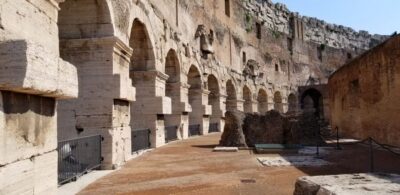
Colosseum, Ancient Rome Tour or AudioGuided Tour
Read our review →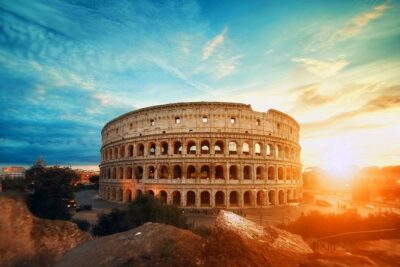
Colosseum Underground & Ancient Rome Guided Tour
Read our review →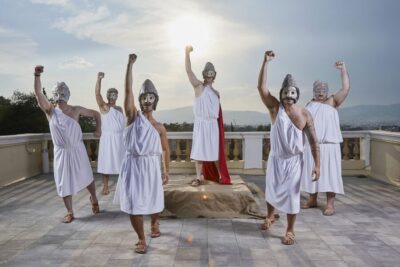
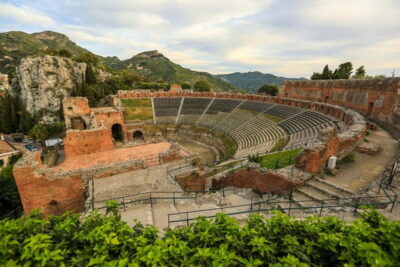
Taormina: Ancient Theater Skip-the-Line Ticket & Audio Guide
Read our review →
Discover the Ancient Ruins of Pompeii: Day Trip from Rome
Read our review →
Pantheon Elite Guided Tour – Rome’s Iconic Ancient Temple
Read our review →Browse the lists this tour appears in