
Review · BRESCIA
Brescia the Unexpected: History, Local Stories & a drink
Brescia rewards curious walkers. This three-hour tour links Roman ruins, medieval churches, and modern Italy with local stories that help the city make sense. I like the route’s range, from the hilltop castle to the Carmine district, and I like that the small group is capped at 12 people. The included drink gives the walk a friendly finish.
I also like the guide’s local focus. Davide Borghi and Chiara bring personal knowledge of Brescia’s customs, politics, architecture, and favorite drink, the pirlo. The main drawback is that the tour covers a lot on foot, and one important stop, the Biblioteca Queriniana, is closed on Saturday afternoons, Sundays, and Mondays.
Key points to know before booking
- Start above the city at Castello di Brescia: The meeting point is at Via del Castello 13, with wide views toward central Brescia and the northern mountains.
- See several eras in one walk: The route moves from ancient Rome to medieval power struggles, Renaissance government, Fascist-era architecture, and working-class Brescia.
- Enter the painted Santissimo Corpo di Cristo: This church is often called Brescia’s Sistine Chapel because of its remarkable ceiling.
- Keep an eye on the Queriniana schedule: The library and bishop’s palace are not available on Saturday afternoons, Sundays, or Mondays.
- Finish with a local drink: Adults receive an alcoholic drink at an old city-center bar, while younger participants receive a nonalcoholic drink.
- Expect a small, social group: The tour allows no more than 12 people and is offered in English.
Why this Brescia walk is worth your time
Brescia is easy to overlook. Many visitors use it as a rail stop between Milan, Lake Garda, and Verona, then move on before seeing what is here. That is a mistake if you enjoy cities where Roman foundations, old churches, grand civic squares, and everyday neighborhoods sit close together.
This tour works because it does not treat Brescia as a line of monuments. It connects the places. You learn how the city’s noble families shaped Piazza Paolo VI, how government played out under the Loggia, and how later political ideas transformed Piazza della Vittoria.
The route also gives you two different views of Brescia. From the castle, you see the city from above. In the Carmine district, you walk through a close, urban neighborhood associated with labor struggles, rebellion, and a more independent local character.
The experience costs $102.12 per person. That is not a small fee for a three-hour walking tour, especially since the listed sights have no separate admission charge. The value comes from the guide, the small group, the access to interiors such as the painted church and Queriniana, and the amount of context packed into one afternoon or morning.
If you want a self-guided stroll with time to stop for coffee, this may feel expensive. If you want Brescia explained by someone who cares about its stories, the price becomes easier to justify. The included drink and snacks at the end add a pleasant local touch, though personal purchases and souvenirs are not included.
A few more history tours around Italy worth a look
- Colosseum: Underground and Ancient Rome Tour
★ 4.7 · 12,691 reviews - Rome: Colosseum with Arena, Roman Forum and Palatine Guided Tour
★ 4.0 · 5,598 reviews - Venice: St. Mark’s Basilica Guided Tour & VR History Intro
★ 3.9 · 4,880 reviews
Starting at the castle above Brescia
The tour begins at Castello di Brescia, at Via del Castello 13. This is useful for orientation, but it also means you should pay attention to the meeting point rather than assuming the walk begins in the central piazzas.
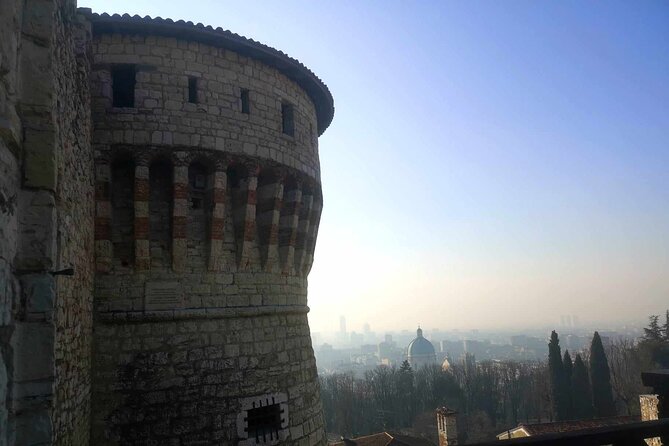
Brescia’s castle occupies the city’s highest point. Its walls began taking shape in the eighth century, and the route includes a short walk through and inside the old fortifications before reaching the highest panorama.
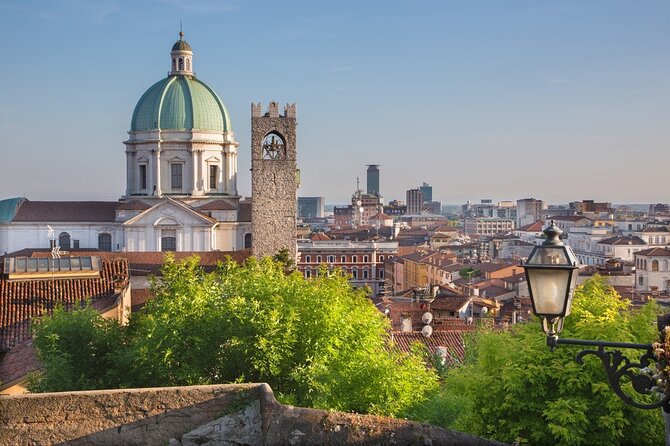
The view is one of the tour’s strongest openings. You can look across the city center and toward the northern mountains surrounding Brescia. It gives you a quick sense of the city’s position and scale before you begin threading through its streets.
The castle stop lasts about 25 minutes. That is enough for the main view and a short look around, but not enough for a long museum visit or an unhurried exploration of every wall. You should wear comfortable shoes and expect some walking on historic surfaces.
The painted ceiling of Santissimo Corpo di Cristo
From the open air of the castle, the tour moves to Chiesa del Santissimo Corpo di Cristo. The church is sometimes called Brescia’s Sistine Chapel, a bold comparison that tells you where to focus: upward.
The main reward is the painted ceiling. The visit lasts about 20 minutes, so this is not a long church tour. It is a concentrated stop where the guide can point out what you might miss if you entered alone, especially the way the decoration fills the interior overhead.
I like this part of the route because it breaks up the outdoor walking. It also shows why a city tour can be more useful than a list of monuments. You can enter a beautiful building, look around, and leave with only a general impression. A guide helps give the space a place in Brescia’s story.
Ancient Rome at the Capitolium and Forum
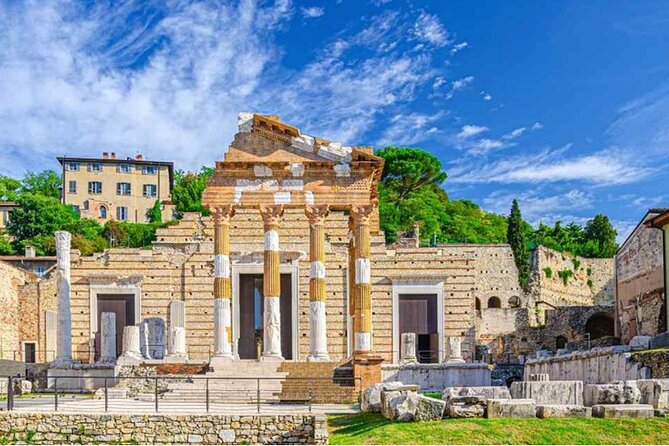
The Tempio Capitolino and Piazza del Foro place ancient Rome directly in the city center. This is one of the clearest reminders that Brescia is not only a medieval or Renaissance city.
The stop lasts around 20 minutes. You will see a Roman temple and the forum area, then hear how this ancient layer fits beside later buildings and streets.
The appeal is the contrast. One moment you are thinking about medieval religious and political power. The next, you are looking at the remains of Roman public life. The close spacing of the stops makes Brescia feel like a city built in chapters, not a place with its past locked away in one distant archaeological site.
Because the schedule is tight, this stop is best for orientation and explanation rather than a detailed archaeological study. If Roman sites are your main reason for visiting Brescia, you may want additional time on your own.
Same place, a different slice of the past:
- Colosseum with Arena, Roman Forum and Palatine Hill Guided Tour
★ 4.5 · 3,526 reviews - Colosseum & Ancient Rome with Arena Floor Option I Max 6 People
★ 5.0 · 3,306 reviews - Rome: Colosseum, Ancient Rome Tour or AudioGuided Tour
★ 4.4 · 2,879 reviews - Colosseum Underground & Ancient Rome Guided Tour
★ 4.5 · 2,590 reviews
A quiet stop at the Queriniana
The Biblioteca Queriniana and Palazzo vescovile offer one of the tour’s more unusual visits. The library dates to the 1700s and is open to the public, yet it is easy to miss if you do not know to look for it.
This is exactly the sort of stop that improves a city walk. You are not simply being led to the most photographed square. You are shown a place connected to Brescia’s intellectual and religious life, one that many independent visitors could pass without entering.
The visit takes about 20 minutes. Plan carefully, though. This stop is not available on Saturday afternoons, Sundays, or Mondays. If seeing the Queriniana matters to you, choose another day and confirm the timing when you book.
On days when it is closed, the broader route still works. The guide can explain the building and its place in the city, but you will not receive the same interior visit. That schedule limitation is the clearest reason to avoid booking this tour on a Monday if the library is a priority.
Piazza Paolo VI and Brescia’s family rivalries
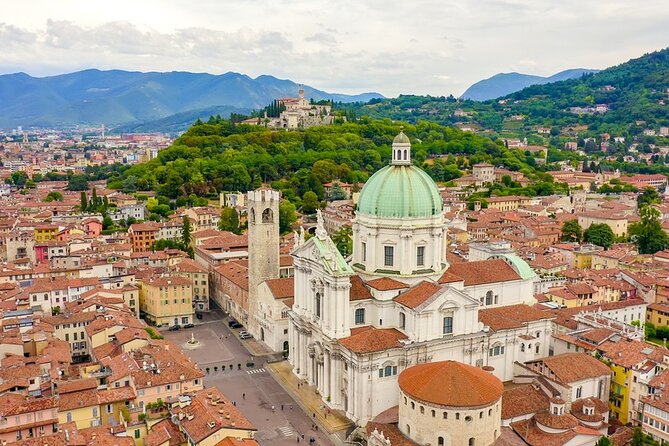
Piazza Paolo VI is one of Brescia’s most recognizable squares. Here, the route passes the Old and New Domes, the medieval Pegol Tower, and buildings that help explain the long struggles among the city’s noble families.
This is a good place to hear how architecture can preserve political conflict. Towers were not only decorative. They reflected status, competition, and the uneasy balance between powerful families.
The stop lasts about 20 minutes. You will not have time to study every detail of the domes or wander off for a separate church visit, but the guide’s stories should help you read the square as a record of old rivalries rather than simply a handsome open space.
I find this kind of explanation especially useful in Italian cities. A grand square can look calm now, while its earlier life involved arguments, alliances, and power contests. Brescia’s past becomes easier to picture when those human tensions are part of the story.
Piazza della Loggia, the civic heart
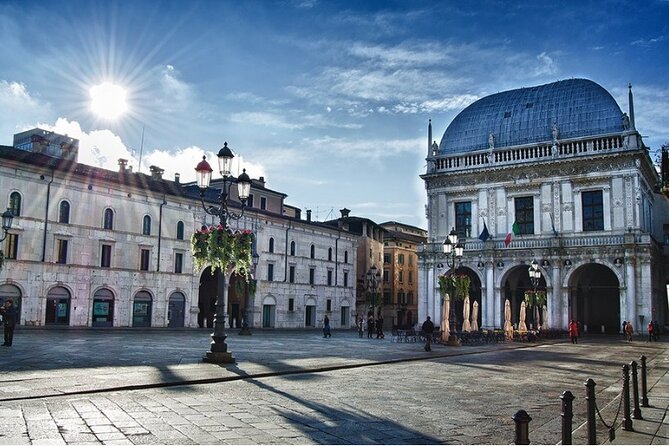
Piazza della Loggia is described as Brescia’s beating heart, and it is easy to see why. The Loggia, built as the city’s key political building from the late 14th century onward, gives the square its strong Venetian appearance.
The tour spends about 20 minutes here. You will hear about the public events and political life that unfolded beneath the Loggia over the centuries, while taking in one of Brescia’s finest Renaissance civic spaces.
This stop links nicely with Piazza Paolo VI. That earlier square presents religious buildings, towers, and noble competition. Piazza della Loggia shifts attention toward public government and civic identity.
The square is also a good place to pause and look around. Notice how the architecture frames the open space and how the Loggia gives the piazza a clear public face. The guide’s stories should help you understand why this is more than a pretty stop for photographs.
The bold, difficult story of Piazza della Vittoria
Piazza della Vittoria offers a sharp change in mood and style. Architect Marcello Piacentini designed this monumental square to glorify Mussolini’s Fascist regime, making it an important example of Rationalist architecture.
The tour does not present the square as politically neutral. Instead, it addresses the tragic history behind the design while also explaining why the place can still be visually striking. That balance matters. You can recognize the power of the architecture without ignoring the regime it served.
The visit takes about 20 minutes. The guide also shares anecdotes about Brescia’s past and present, giving the square a human scale beyond its official monumental purpose.
I appreciate this stop because it treats modern history as part of the city rather than an awkward subject to skip. Brescia is not only Roman temples and old domes. Its 20th-century story also shaped the streets you see today.
Via San Faustino and the Carmine district
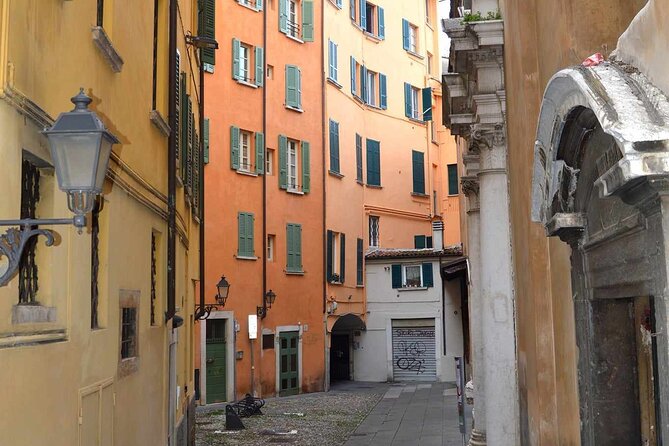
The final major walking section takes you along Via San Faustino and into the Carmine district. This is where the tour moves away from formal monuments and toward the city’s more rebellious personality.
Carmine was once considered a sketchy part of Brescia. Its narrow lanes now preserve what the tour describes as the city’s genuine, creative, cocky, and independent side. Many local struggles for better living conditions and workers’ rights began in these alleys, along with anti-establishment movements.
The route spends about 35 minutes here, longer than at most individual sights. That extra time makes sense. Carmine is not one building to inspect and photograph. It is a neighborhood to read through its streets, atmosphere, and stories.
This may be the section I would value most if I wanted to understand present-day Brescia. Monumental squares explain official power. Carmine helps explain ordinary people, social pressure, and the city’s stubborn character.
It is also the part that may appeal most to repeat visitors. If you have already seen the main cathedral or Roman remains, a walk through Carmine gives you a different reason to like Brescia.
The included drink and the local pirlo
The tour ends at a different location from the starting point, though the exact end point is not specified. At a local old bar in the city center, each adult participant receives an alcoholic drink. Anyone under 18 receives a nonalcoholic drink.
The drink is more than a standard add-on. Davide has explained the pirlo, a cocktail associated with Brescia, and served it with snacks. That gives you a small taste of local social life after several hours of walking.
You should treat the drink as part of the experience, not as a full meal. The snacks may take the edge off your appetite, but personal food and additional drinks are not included. This is a good moment to ask the guide for restaurant and cafe suggestions, something Davide has done for people wanting lunch afterward.
The finish also helps the tour feel less rushed. You have time to sit, talk, and ask questions after moving through so many periods of Brescia’s past.
Guide style, group size, and practical details
The maximum group size is 12 people. That is small enough for a more personal walk, though the experience will still depend on the day’s group and the guide leading it.
Davide Borghi is specifically praised for storytelling, local knowledge, a cheerful manner, and clear contact before the meeting. Chiara is also associated with the tour and has led guests through Brescia. If you receive messages before the tour, read them carefully because the castle meeting point is more specific than a general city-center address.
The tour is offered in English and uses a mobile ticket. Most people can take part, and service animals are allowed. The route is near public transportation, but it remains a walking experience with roughly three hours on foot and a short climb or walk around the castle.
The booking pattern suggests that people often reserve it well ahead, with an average of 42 days. You do not need to book that early by rule, but planning ahead is sensible if your Brescia dates are fixed or if you want a particular day.
Free cancellation is available up to 24 hours before the start time for a full refund. Changes or cancellations made inside that window are not accepted and are not refunded.
Who should book this Brescia experience?
Book it if you want a clear introduction to Brescia and prefer stories over a simple checklist of sights. It suits solo visitors, couples, families, and small groups who enjoy walking, architecture, local politics, and a drink with conversation at the end.
It is also a strong choice if you have only one day in Brescia. The route covers the castle, church interiors, Roman remains, major civic squares, the Queriniana when open, and Carmine without requiring you to plan the sequence yourself.
You may want to skip it if you dislike group walking tours, need long breaks between stops, or want extended time inside each monument. The price is high for a tour where admissions are free, and the three-hour schedule leaves little room for independent browsing.
Should you book it?
I would book this tour if you want Brescia explained by a local guide rather than simply photographed. Its best features are the broad historical range, the small group, Davide and Chiara’s personal approach, and the move from grand landmarks into the Carmine district.
Choose a day other than Monday, Sunday, or Saturday afternoon if the Queriniana matters to you. And leave room after the tour for lunch or another drink, since the walk gives you plenty of ideas for continuing on your own.
FAQ
How long does the Brescia tour last?
The tour lasts approximately three hours.
Where does the tour start?
It starts at Via del Castello 13, 25121 Brescia, Italy, near Castello di Brescia.
Does the tour finish where it starts?
No. The activity ends at a different location, though the exact end point is not specified.
What language is the tour offered in?
The guided tour is offered in English.
Is a drink included?
Yes. Each participant over 18 receives an alcoholic drink at a local old bar in the city center. Participants under 18 receive a nonalcoholic drink.
When is the Biblioteca Queriniana unavailable?
The Biblioteca Queriniana and Palazzo vescovile are not available on Saturday afternoons, Sundays, or Mondays.
What is the cancellation policy?
You can cancel up to 24 hours before the experience begins for a full refund. Cancellations or changes made less than 24 hours before the start time are not accepted and are not refunded.
Just added around Italy
- SU NURAXI BARUMINI Unesco World Heritage Site★ 5.0 · 129 reviews
- Picnic aperitif in the vineyard of an ancient trullo in Martina Franca★ 5.0 · 21 reviews
- Bologna historical art walking tour with hidden gems and tastings★ 5.0 · 108 reviews
- Private or semi-private tour of the historic center of Bologna★ 5.0 · 34 reviews
- Best of Bologna in one day : Food, architecture, art and history★ 5.0 · 27 reviews
- Bolognese Cooking Class with Margherita in the Historic Center★ 5.0 · 26 reviews
- Tuk Tuk tour in Bergamo, Città Alta and the ancient Venetian walls★ 5.0 · 32 reviews
- Historic Center Of Bari, Locorotondo, Alberobello And Polignano★ 4.5 · 22 reviews
Italy History Tours, compared.
Colosseum: Underground and Ancient Rome Tour
Read our review →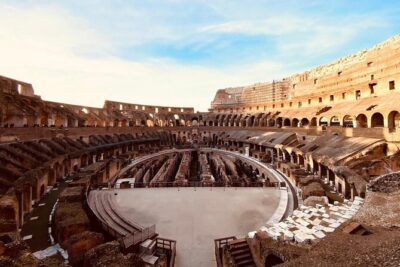
Colosseum with Arena, Roman Forum and Palatine Guided Tour
Read our review →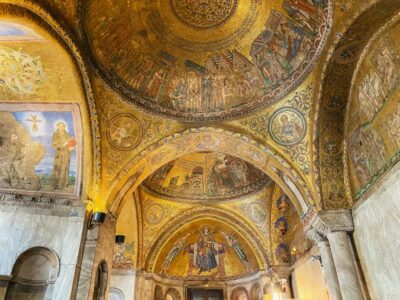
St. Mark’s Basilica Guided Tour & VR History Intro
Read our review →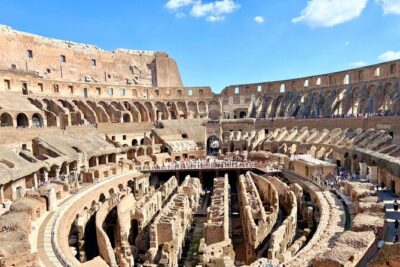
Colosseum with Arena, Roman Forum and Palatine Hill Guided Tour
Read our review →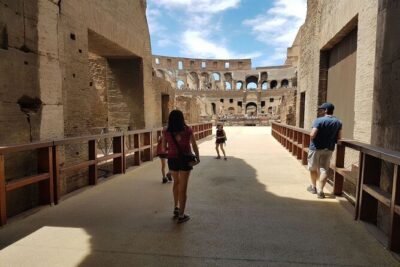
Colosseum & Ancient Rome with Arena Floor Option I Max 6 People
Read our review →
Colosseum, Ancient Rome Tour or AudioGuided Tour
Read our review →
Colosseum Underground & Ancient Rome Guided Tour
Read our review →
Venice’s Best: Basilica, Doge’s Palace, Gondola & History Gallery
Read our review →Browse the lists this tour appears in