
Review · COLORADO
Denver: History and Architecture Walking Tours
Denver’s past is written in brick. I like the choice of four focused routes, and I like that each one links buildings to the people who shaped the city. The main drawback is simple: you walk outdoors in all weather, and the pace may not suit anyone with mobility limits.
For $20, this is a useful introduction to Denver’s early years rather than a grand sightseeing production. The 90-minute format keeps the subject manageable, while a small group of no more than 10 people gives you a fair chance to ask questions. Guide Lois earned special praise for adding period details, while one low rating noted that a guide relied too heavily on notes, so the quality may depend on who leads your departure.
Key points to know before booking
- Four different Denver stories: Choose LoDo, Capitol Hill, Quality Hill, or Larimer Square, with each route centered on a distinct part of the city.
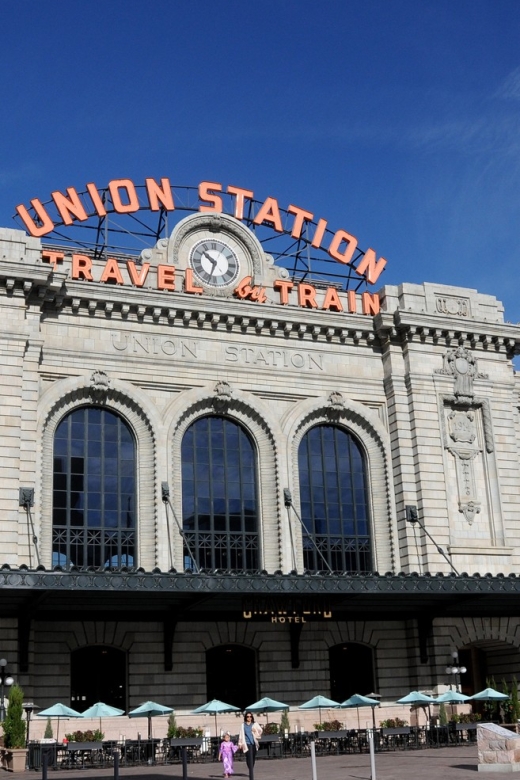
- Union Station as a starting point: The LoDo tour begins at Denver’s major railroad landmark and follows the area’s change from tents to rail hub, skid row, and urban center.
- Molly Brown House setting: The Capitol Hill walk begins outside the famous museum and moves among late 19th-century mansions.
- A small group of 10 or fewer: The size should make questions easier and keep the walk more personal.
- Short but useful timing: Ninety minutes gives you a solid city introduction without taking over your day.
- Bring your own comfort kit: Wear walking shoes, carry water, use sunscreen, and dress for the forecast because tours run rain or shine.
Four routes, four versions of Denver

The most important choice comes before you meet the guide. You are not booking one fixed walk with a minor variation. You are selecting one of four routes, and each has a different mood and subject.
Lower Downtown, or LoDo, is the best choice if you want Denver’s broadest urban story. Starting at Union Station, the route looks at how a small gathering of tents grew into a railroad hub, later declined into skid row, and eventually became a sought-after urban district. That arc gives the tour a useful sense of change. You are not simply admiring old façades. You are considering how transportation, commerce, neglect, and redevelopment reshaped the same streets.
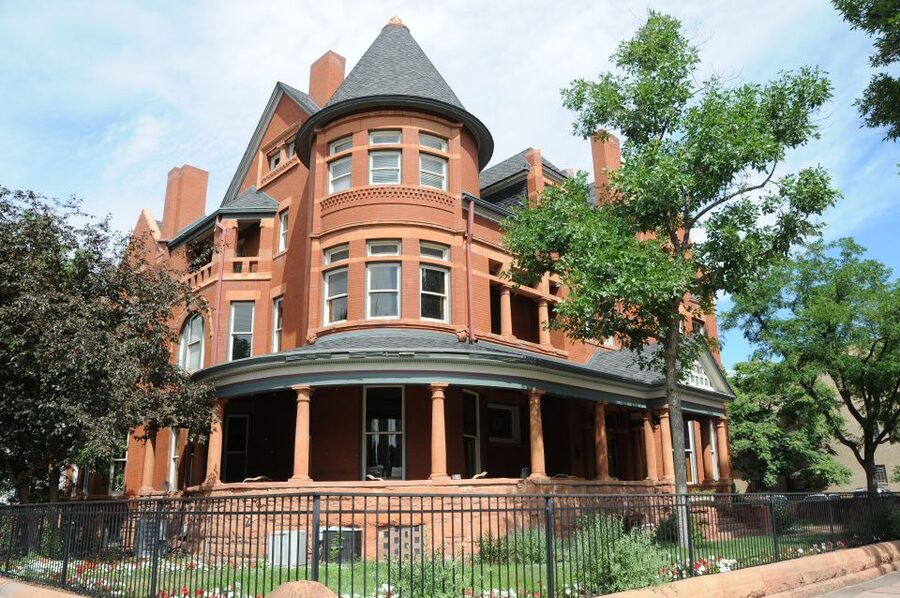
Capitol Hill is the pick for grand houses and personal stories. Beginning outside the Molly Brown House Museum, the walk explores historic mansions and the families who lived in them at the end of the 19th century. I would choose this route if you enjoy architecture best when it is tied to household life, ambition, and social history.
Quality Hill focuses on some of Denver’s most notable residences. The Governor’s Mansion, Malo Mansion, and Zang Mansion are named highlights, and the tour explains the people behind those homes and their lasting role in the city. This route should appeal to anyone who wants a closer look at how prominent residents expressed status through architecture.
Larimer Square offers the clearest preservation story. You explore Denver’s oldest block and learn how local citizens saved it from decay and helped create the city’s first historic district. That makes this a strong option if you care about the decisions that preserve old buildings, not just the buildings themselves.
Because the supplied meeting instructions place the guide at the flagpole in front of Union Station, check your booking details carefully if you select a route described as starting elsewhere. The Capitol Hill description specifically names the Molly Brown House Museum as its starting point.
More History Walking Tours in the USA
- History and Hauntings of Salem Guided Walking Tour
★ 5.0 · 14,564 reviews - Boston: Freedom Trail History Small Group Walking Tour
★ 5.0 · 6,450 reviews - Historic Charleston Guided Sightseeing Walking Tour
★ 5.0 · 6,216 reviews
LoDo and Union Station: a city changes course
Union Station is a fitting place to begin the LoDo walk. It gives you an immediate visual reminder that Denver grew through movement, trade, and rail connections. From there, the tour follows the neighborhood’s larger story rather than treating its old buildings as isolated objects.
The strongest part of this route is the contrast between different eras. Denver began as a small grouping of tents, became an important railroad hub, passed through a period associated with skid row, and later turned into an urban hot spot. That sequence helps explain why a neighborhood can feel both old and newly polished at the same time.
I like this route for first-time visitors because it provides context for the city center. Instead of seeing Union Station, old commercial buildings, and renovated streets as separate sights, you get a basic explanation of how they fit together. It is also a good choice if you want the tour to address urban change and redevelopment.
The limitation is that the route’s value depends heavily on the guide’s storytelling. The buildings themselves cannot explain every turn in Denver’s fortunes. One guide was criticized for reading from a notebook, which suggests that delivery matters here. A strong guide can make the city’s reversals feel clear and human. A less polished one may leave you wishing for more facts and less recitation.
Capitol Hill: mansions with family stories

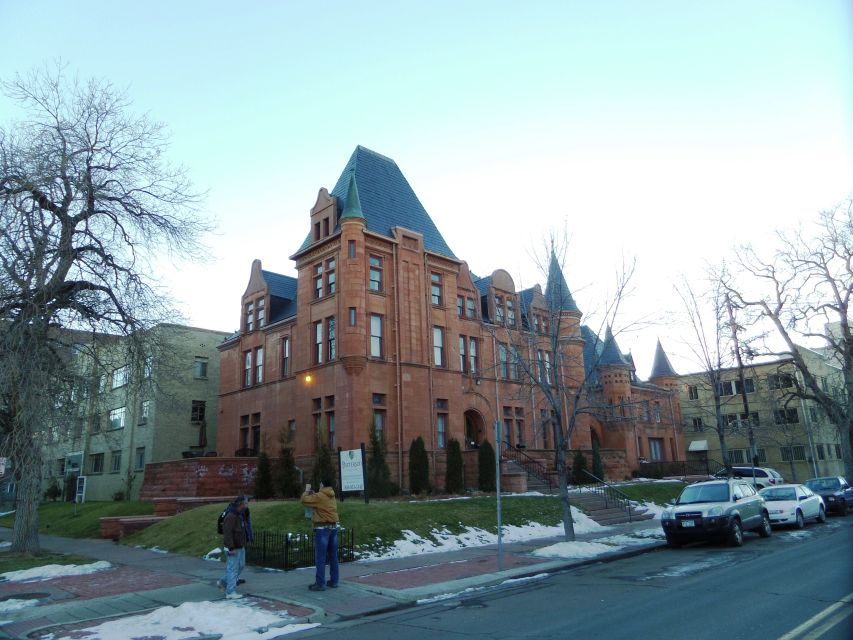
Capitol Hill gives the tour a more residential feel. The starting point outside the Molly Brown House Museum places you among the kind of grand homes that reflect Denver’s late 19th-century wealth and confidence.
The point is not just to look at large houses. You learn about the families who lived in them and the period in which they were built. That human angle makes the route more approachable. Architecture can become dry when it is reduced to dates and styles. Family stories give the façades a reason to matter.
I would pick Capitol Hill if you enjoy walking through an established neighborhood and comparing buildings. The description promises charming historic mansions, so the appeal is visual as well as historical. You also get a sense of how Denver’s prosperous residents presented themselves at the end of the 19th century.
The walk may be less useful if you want a sweeping overview of all Denver history. Its focus is narrower, with attention on residences and their former occupants. That is not a flaw, but it is worth matching the route to your interests.
The tour’s best guides add the wider period around each building. Guide Lois was praised for explaining not only the structures, but also what was happening during the time they were built. That is exactly the kind of added context that makes a mansion walk feel like more than a parade of expensive houses.
Quality Hill: architecture and the people behind it
Quality Hill is the route for visitors who want Denver’s grandest residential architecture in one concentrated walk. The Governor’s Mansion, Malo Mansion, and Zang Mansion are the named highlights, giving you clear points of interest from the start.
What makes this route worthwhile is the connection between the homes and their owners. You learn about the individuals who built or occupied these residences, along with the legacy they left in Denver. That approach helps you see architecture as a public statement. A mansion says something about wealth, influence, taste, and the city’s ambitions at the time.
I would choose Quality Hill if you already know you enjoy historic houses and want a focused outing. It should also work well for repeat visitors who have seen the central sights and now want a more specialized look at Denver’s civic and residential past.
The tradeoff is scope. A route centered on a few major homes may offer less of the rough-and-tumble urban story found in LoDo or the preservation story found at Larimer Square. You should select this one for its architecture and notable residents, not as a general introduction to every side of Denver.
More Architecture and Landmark Tours in the USA:
- Chicago in a Day: Food, History & Architecture Walking Tour
★ 5.0 · 1,153 reviews - Historic Charleston Walking Tour: Rainbow Row, Churches, and More
★ 5.0 · 691 reviews - Charleston’s Best Highlights: History, Culture & Architecture
★ 5.0 · 422 reviews - Charleston: History and Architecture Guided Walking Tour
★ 4.8 · 349 reviews
Larimer Square: saving Denver’s oldest block
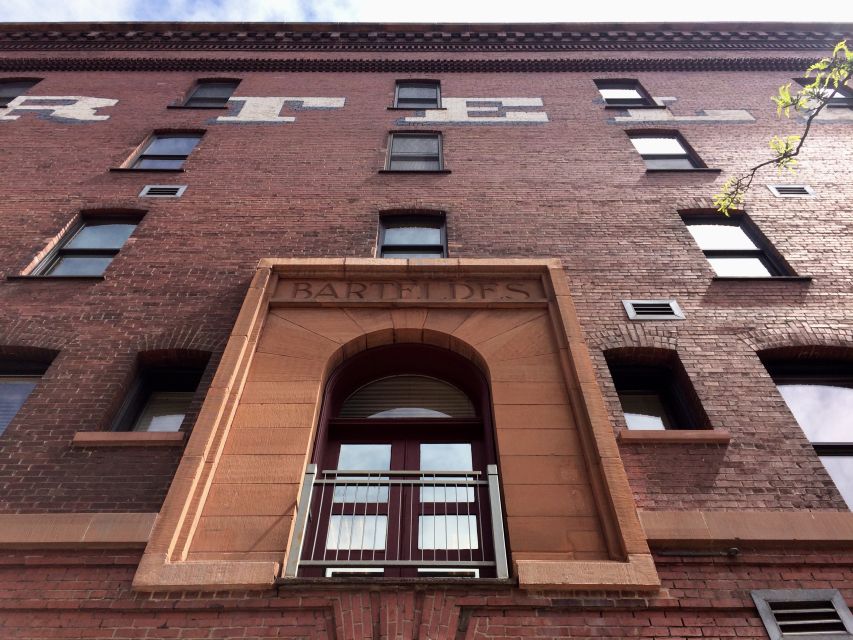
Larimer Square offers the clearest lesson in preservation. You explore Denver’s oldest block and learn how local citizens prevented it from falling into ruin and helped establish the city’s first historic district.
That story adds an important layer to the walk. Old buildings do not survive by accident. Someone has to recognize their value, argue for their protection, and find a workable future for them. The route lets you consider how ordinary citizens helped shape the Denver you see today.
I like this option for visitors who want more than architectural description. It explains the civic effort behind the setting. You are not only looking at old walls. You are learning why the block still exists and how preservation became part of Denver’s identity.
Larimer Square is also a sensible route if your interest is concentrated in one historic area. The walk is likely to feel more contained than a broad neighborhood tour, which can be helpful when you have limited time. The drawback is that you may want additional time afterward to look around at your own pace, since 90 minutes passes quickly when a small area has a long story.
What the guides add to the buildings

The advertised strength of this experience is the guide, and the feedback supports that. Several high ratings point to clear explanations, useful pictures, good answers to questions, and an ability to make the material relatable.
That matters because Denver’s architecture can look impressive without being easy to interpret. A guide can point out why a building matters, connect it to the people who commissioned it, and place it within a period of growth or decline. The best version of this tour gives you a new way to read the city after the walk ends.
Guide Lois received especially strong praise for adding details about both the buildings and the era around them. Another high rating described the tour as a good use of time and money because it combined history, architectural information, and conversation.
The experience is not guaranteed to be equally polished every time. One booking received a poor rating because the guide appeared to read most of the material from a notebook, and another person wanted more facts. I would keep that in mind if you expect a formal lecture packed with dates. The tour seems better suited to people who value discussion and explanation, though the guide’s style can affect the result.
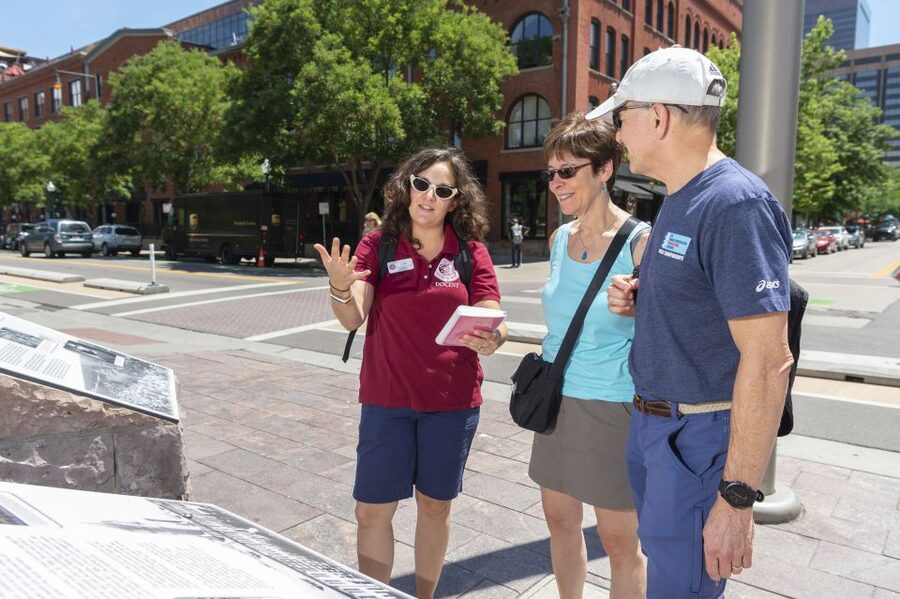
The guides wear maroon polo shirts marked Historic Denver, so finding the group should be straightforward. You are asked to arrive 10 minutes early at the meeting point.
Is $20 a fair price for 90 minutes?
At $20 per person, I consider this a good-value introduction to Denver’s built history. The price covers a live, English-language guided walk in a group limited to 10 people. You are paying for local interpretation rather than transport, food, or entry to a museum.
That last point matters. Food and drinks are not included, and the experience is outdoors. You should think of the tour as a compact orientation, not a full-day attraction with indoor stops and refreshments.
The value improves if you choose the route that matches your interests. LoDo gives you the broadest urban change story. Capitol Hill and Quality Hill suit architecture and prominent families. Larimer Square is best for preservation and Denver’s oldest block.
Ninety minutes is long enough to give the subject shape but short enough to fit before lunch, after a business appointment, or alongside other city plans. One person specifically used the tour as a good way to finish a Denver business trip. I would allow extra time afterward if a particular building or district catches your attention.
Practical details for a comfortable walk
Wear comfortable shoes. The tour is on foot, and even a 90-minute city walk can feel long if your footwear is poor.
Bring water and sunscreen, and wear clothing suited to the weather. Tours operate in rain or shine, so a forecast that looks uncertain should affect what you pack. There is no indication that food or drinks are supplied.
The experience is listed as wheelchair accessible, but it is also marked as unsuitable for people with mobility impairments. Those two details do not fully agree, so anyone with access needs should confirm the exact route and walking conditions before paying.
The tour is conducted in English. The group is limited to 10 participants, which should make it easier to hear the guide and ask questions than on a large city walk.
Free cancellation is available up to 24 hours before the activity for a full refund. You can also reserve now and pay later, which helps if your Denver schedule is still changing.
Who should choose this Denver walk?
I would recommend it to first-time visitors who want historical context without spending half a day indoors. It also suits architecture fans, people interested in preservation, and anyone who prefers a guide-led introduction to a city rather than wandering without a plan.
The four-route format makes it easy to tailor the experience. Pick LoDo for a broad urban story, Capitol Hill for mansions and families, Quality Hill for major residences and civic figures, or Larimer Square for preservation.
I would be more cautious if you need a highly structured lecture, dislike walking in bad weather, or have mobility concerns. The guide’s presentation style may vary, and the outdoor format is part of the deal.
FAQ
How long does the Denver walking tour last?
The tour lasts 90 minutes.
How much does the tour cost?
The price is $20 per person.
Which walking tours are available?
You can choose the Lower Downtown Walking Tour, Capitol Hill Walking Tour, Mansion of Quality Hill Tour, or Larimer Square Tour.
Where does the tour meet?
The guide meets you at the flagpole in front of Union Station. Guides wear maroon polo shirts marked Historic Denver.
How early should I arrive?
Arrive 10 minutes before the scheduled start time.
What language is the tour in?
The live guided tour is conducted in English.
How many people are in each group?
The group is limited to 10 participants.
Does the price include food or drinks?
No. Food and drinks are not included.
What should I bring?
Bring comfortable shoes, sunscreen, water, and clothing suitable for the weather.
Does the tour operate in bad weather?
Yes. All tours operate in rain or shine.
Should you book it?
Book this tour if you want Denver’s old buildings explained through the people, business changes, and preservation efforts behind them. At $20, the small group and 90-minute format offer a sensible way to get oriented, especially if you choose the route that matches your interests.
I would choose LoDo for a first look at Denver’s changing city center, Capitol Hill or Quality Hill for grand homes, and Larimer Square for a focused preservation story. Confirm the starting point for your selected route, arrive early, and come ready to walk outdoors. If those conditions suit you, this is a practical and fairly priced introduction to Denver’s architectural past.
Just added around the USA
- Philadelphia: Valley Forge National Historical Park Tour★ 4.9 · 39 reviews
- Door County Historic Cottage Row & Strawberry Islands Cruise★ 4.2 · 24 reviews
- Discover Alexandria: Historic Homes, Churches, and Taverns!★ 5.0 · 26 reviews
- D.C: Monuments & History Guided Open-Air Bus Tour-Day &Night★ 4.8 · 92 reviews
- Denver: City Highlights and History Walking Tour★ 4.9 · 95 reviews
- DC: Georgetown History & Architecture Tour with Local Guide★ 4.9 · 69 reviews
- Washington DC: African American History Museum Private Tour★ 4.7 · 54 reviews
- Dallas: Historic West End Ghost Walking Tour★ 4.6 · 59 reviews
Architecture & Landmark Tours, compared.

St. Mark’s Basilica Guided Tour & VR History Intro
Read our review →
Venice’s Best: Basilica, Doge’s Palace, Gondola & History Gallery
Read our review →
Córdoba: Skip-the-Line Great Mosque-Cathedral History Tour
Read our review →
Pantheon Elite Guided Tour – Rome’s Iconic Ancient Temple
Read our review →
Abu Dhabi Grand Mosque, Palace, and Heritage Village
Read our review →
Chicago in a Day: Food, History & Architecture Walking Tour
Read our review →

Colosseum Special Access Tour, with Ancient Temples & Tombs
Read our review →Browse the lists this tour appears in