
Review · CENTRAL HUNGARY
Budapest: Jewish History Guided Walking Tour with Historian
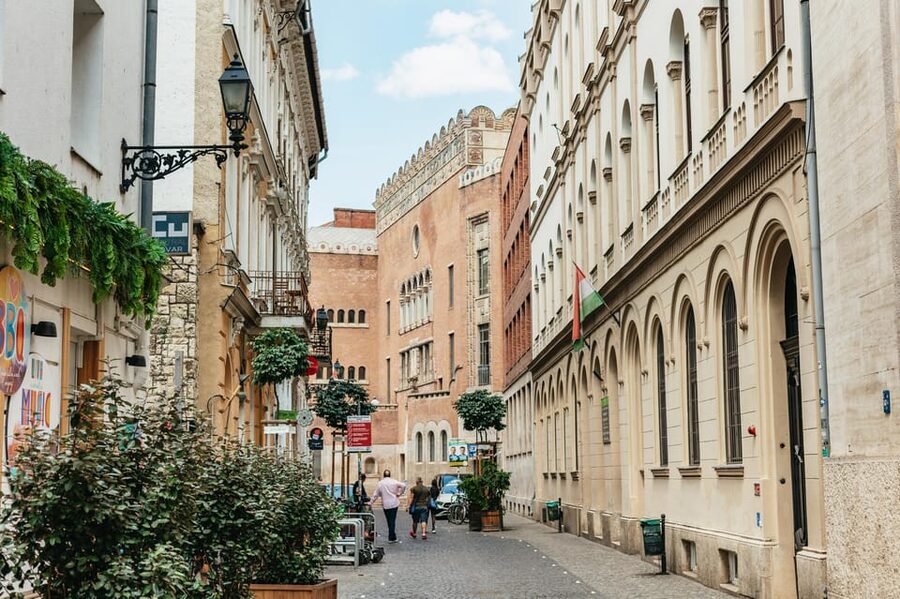
Budapest’s past is written on its streets. This small-group walking tour brings the Jewish Quarter to life through synagogues, ghetto remnants, rescue memorials, street art, and stories that do not skip the harder parts of Hungarian history. I especially like the historian-led approach and the stop for coffee with flódni, a traditional Jewish Hungarian cake. The main drawback is clear: the three synagogues are viewed from outside, so you will need separate admission if you want to see their interiors.
The tour also gets high marks for its guides. Barbara, Andrea, András, Gábor, Noémi, Judit, Maggie, Daniel, and others have been praised for clear explanations, humor, and a willingness to answer questions. A group capped at 10 keeps the walk personal, though 2.5 hours is still a lot of time on your feet.
Key points about Budapest’s Jewish Quarter walk
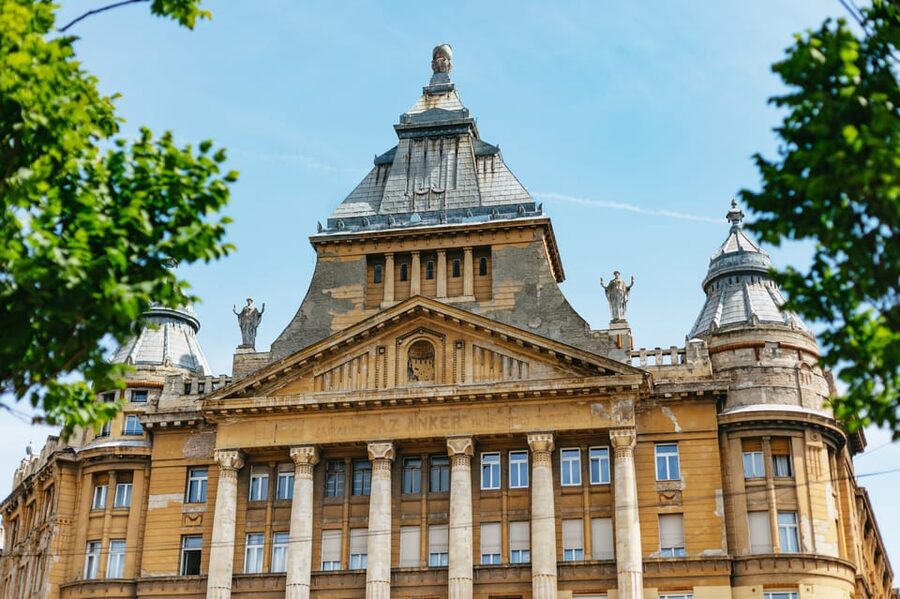
- Three major synagogue exteriors: See the Dohány Street, Rumbach Street, and Kazinczy Street synagogues from the outside.
- A serious look at World War II: Learn about the Budapest Ghetto and rescuers such as Raoul Wallenberg and Carl Lutz.
- Flódni with coffee: Finish with a local Jewish cake and a hot drink or soft drink at a café.
- A historian guide: The tour covers Jewish life, Hungarian politics, migration, religious restrictions, and the community today.
- A compact group: With no more than 10 people, you can usually hear the guide and ask questions.
- More than memorials: The walk includes Gozsdu Passage, ruin pub tips, kosher businesses, and Budapest street art.
Starting beside Erzsébet Square and the Ferris wheel
The meeting point is in front of the Kempinski Hotel Corvinus Budapest, facing the Ferris wheel on Erzsébet Square. This is a useful central location, not an obscure meeting spot at the edge of town. You can reach Deák Ferenc tér on the M1, M2, or M3 metro lines, as well as by several buses and trams.
Arrive ready to walk. The tour lasts about 2.5 hours, with roughly 2 hours and 15 minutes devoted to sightseeing and a 15-minute café stop. The walking pace has generally been described as comfortable, but the route still covers a substantial part of the 7th District. One person noted that a hot day made the distance more demanding, which is a fair warning for summer visits.
You should wear shoes suited to city streets and dress for the forecast. The tour runs in all weather, so rain or cold will not automatically cancel the outing. That practical detail matters in Budapest, where a gray morning can turn into a warm afternoon, or a clear start can give way to rain.
More Jewish Heritage Tours in Budapest:
- Budapest Jewish Heritage Memorial Walking Tour & Synagogue Entry
★ 5.0 · 568 reviews - Budapest: Jewish Heritage Guided Tour with Synagogue Ticket
★ 4.8 · 533 reviews - Budapest Grand Half-Day Jewish Heritage Tour
★ 4.8 · 135 reviews
The 7th District and the story of Jewish Budapest
The first great strength of this walk is its range. You are not given only a short account of World War II, then led from one memorial to the next. The guide places Jewish life in Budapest within a longer story that reaches back more than 200 years and continues into the present.
You hear about Jewish settlement, religious life, social restrictions, migration, and the pressures that encouraged some people to convert. One North American participant particularly appreciated an introduction to Hungary’s changing borders and political position in Europe. That kind of background helps you understand why Jewish communities moved through Hungary and Poland, and why their lives were shaped by laws far beyond the streets you are walking.
This broader frame is important. Without it, the Jewish Quarter can look like a collection of attractive buildings and fashionable cafés. With it, the streets become evidence of changing laws, wealth, religious divisions, war, survival, and renewal.
Your guide may use a tablet or visual material to explain where Hungary fits into European history. That was especially useful for people arriving with little prior knowledge of Hungarian history. If you enjoy asking questions, the small group gives you a better chance to pause and discuss details rather than simply follow a flag through the streets.
Three synagogues, three traditions, and one important limitation
The route takes you past the exteriors of three major synagogues:
- Dohány Street Synagogue
- Rumbach Street Synagogue
- Kazinczy Street Orthodox Synagogue
Each building points to a different part of Jewish religious and architectural life in Budapest. The Dohány Street Synagogue is the grandest of the three and is often described as the largest synagogue in Europe. Its scale makes an immediate impression from the street, even without entering.
Rumbach Street Synagogue was built in 1872 by Viennese architect Otto Wagner. Its exterior helps explain the district’s architectural variety and the connection between Budapest and wider Central European design. The tour also takes you through lively Gozsdu Passage, giving you a chance to see how a historic quarter now mixes restaurants, nightlife, shopping, and memory.
Kazinczy Street represents the Orthodox side of the district. Seeing all three from outside lets the guide explain differences within Budapest’s Jewish community without turning the tour into a simple architecture walk.
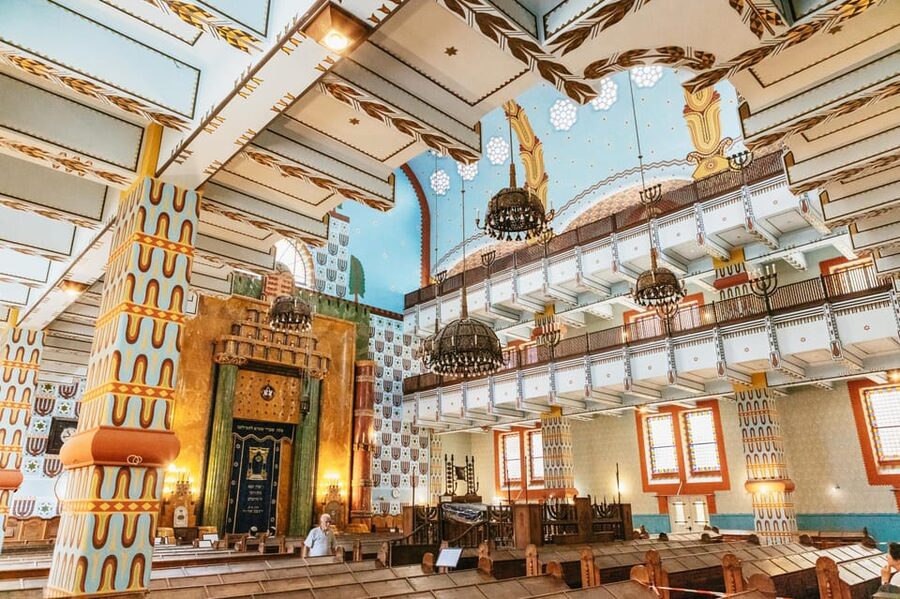
Here is the catch: entry to the synagogues is not included. The advertised format visits them from outside only. One past booking included confusion about synagogue access, so do not assume that a walking-tour ticket provides entry. If you want to visit the interiors, plan separate time and admission.
That limitation is not necessarily a flaw. It keeps the price lower and leaves the tour focused on streets, stories, and context. But if your main goal is to see the interiors of the Dohány or Rumbach synagogues, this is only part of your plan.
Walking the former Ghetto
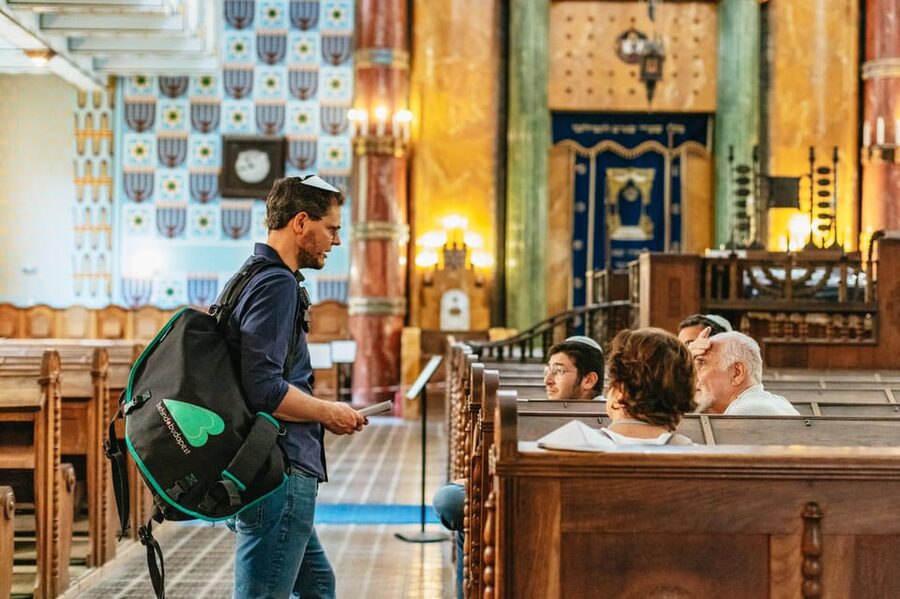
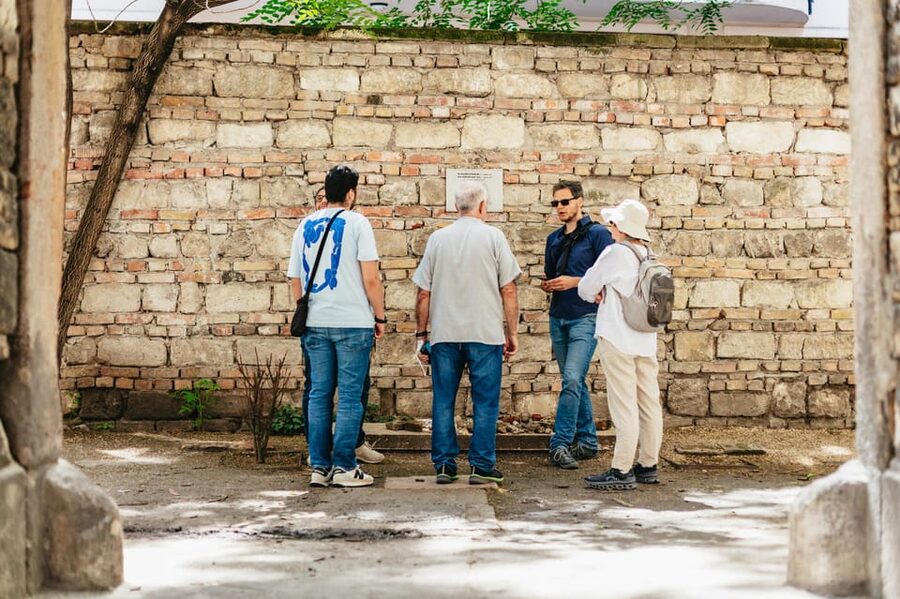
The tour continues through streets associated with the former Budapest Ghetto. You see synagogues, kosher restaurants, kosher shops, monuments, and surviving traces of the old boundary. A particularly sobering detail is that the wartime ghetto existed for less than two months, yet its effects remain central to the district’s story.
The route helps you connect large historical events to ordinary urban spaces. A street corner, a remaining section of wall, or a building facade can carry more weight once you understand what happened there. The guide’s job is not simply to point at landmarks, but to explain how people lived, worshiped, worked, and suffered in the same neighborhood.
This is also where the tour’s tone matters. Several guides, including Gábor, Noémi, and Maggie, were praised for telling the truth without smoothing away Hungary’s role in the treatment of Jews. That honesty is one of the strongest reasons to choose a historian-led walk. The subject is painful, and a cheerful sightseeing script would feel badly out of place.
At the same time, the tour is not presented as nonstop gloom. The district is also home to an active Jewish community, food businesses, religious sites, nightlife, and contemporary art. You get a picture of a neighborhood shaped by loss but not defined only by loss.
More History Walking Tours in Budapest:
- Budapest Historical Sightseeing – Free Walking Tour
★ 5.0 · 1,302 reviews - BloodThirsty Hungary: Walking tour & Dark Historical Stories
★ 4.9 · 633 reviews - History and Hauntings of Salem Guided Walking Tour
★ 5.0 · 14,564 reviews - Lisbon: History, Stories and Lifestyle Walking Tour
★ 4.8 · 10,902 reviews
Raoul Wallenberg, Carl Lutz, and the people who resisted
The World War II section focuses on individuals who helped save Jewish lives during the winter of 1944 and 1945. At memorials connected with Raoul Wallenberg and Carl Lutz, you learn how these men protected or assisted tens of thousands of Jews.
Both are recognized as Righteous Among the Nations, a title given to people who helped save Jews during the Holocaust. Hearing their stories at relevant memorials gives the history a human scale. Instead of treating rescue as an abstract idea, the guide shows you the names and places linked to people who took serious risks.
The tour also deals with the wider political setting and Hungary’s participation in the persecution of Jews. That directness was praised by people who wanted an account that did not avoid responsibility. You should expect difficult material, but the guide’s storytelling and the chance to ask questions help keep the subject clear rather than overwhelming.
If World War II is your main interest, this portion will likely be the emotional center of the walk. If you want equal time on all periods, remember that the tour also covers earlier Jewish life and present-day Budapest, so the wartime section is part of a larger story.
Gozsdu Passage, ruin pubs, and street art
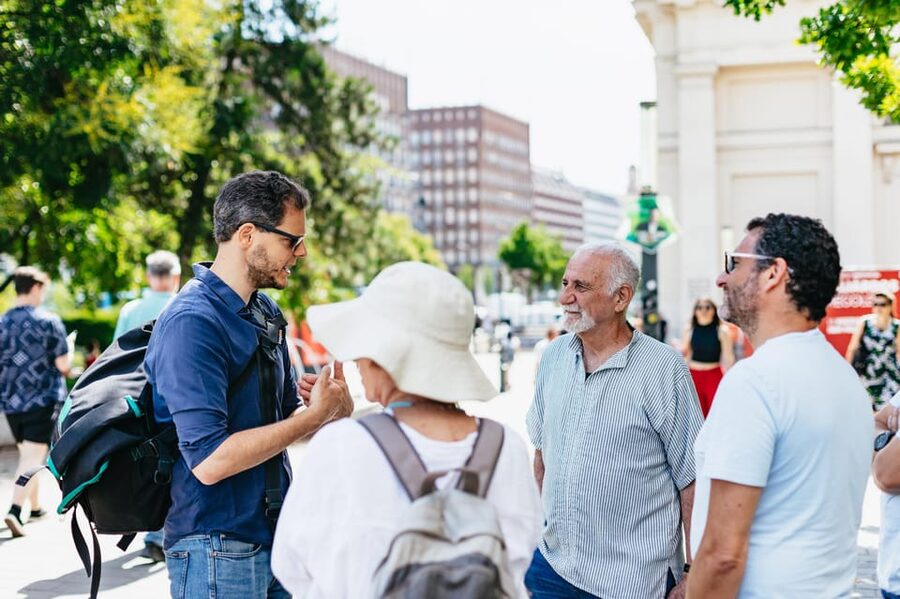
Budapest’s Jewish Quarter is not an open-air museum. It is one of the city’s most active nightlife areas, and the tour makes that contrast part of the experience.
At Gozsdu Passage, the guide explains how a historic setting now draws restaurants, bars, and evening crowds. You also receive local tips about the famous ruin pubs. These suggestions can be useful if you want to return after dark, though nightlife itself is not the central purpose of the tour.
Street art adds another layer. The guide points out striking murals and other pieces around Erzsébet Town, showing how artists have used walls to comment on Budapest’s identity and public life. The art helps prevent the walk from becoming a sequence of memorial stops. You see a living district with competing uses and changing faces.
This mix is one of the tour’s most appealing features. You can move from a serious account of the former Ghetto to a colorful wall, then past a kosher shop or a crowded passage. That sudden change can feel jarring, but it reflects the real neighborhood better than a carefully separated historical zone would.
Flódni and the final café stop
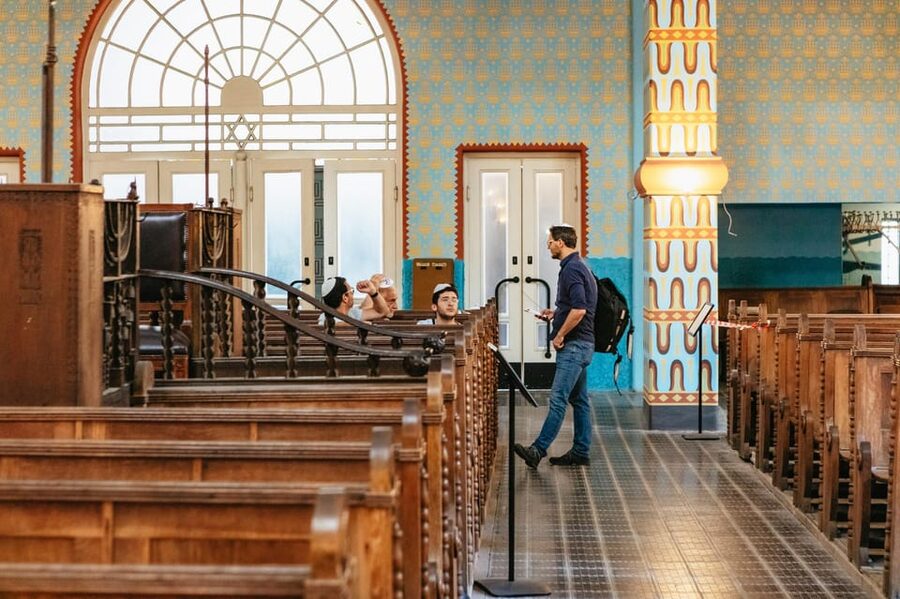
The tour includes coffee or a soft drink and a slice of flódni, a local Jewish cake. The stop lasts about 15 minutes, so think of it as a short pause rather than a full meal.
Flódni is traditionally made with layers associated with apple, walnut, poppy seed, and plum filling. The supplied tour details identify it as a local Jewish cake, while the café stop gives you a simple way to connect food with the district’s culture. It is a small inclusion, but a useful one. Food can make a historical discussion feel less distant, especially after a serious walk.
Do not book this expecting a food tour. The cake is a cultural sample, not a long tasting session. If you are hungry, eat before or after the walk. The stop is best seen as a chance to sit, ask a final question, and let the material settle.
How the guides shape the experience
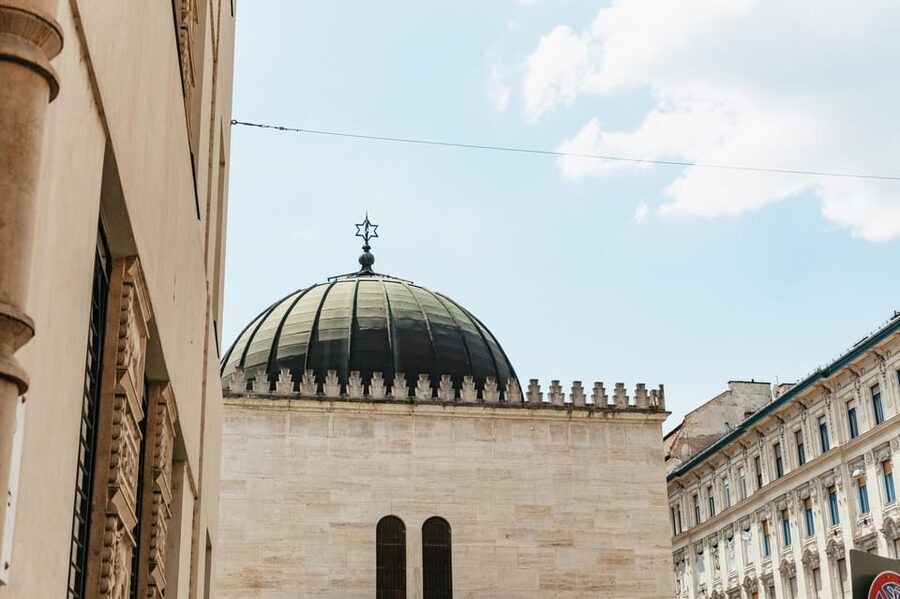
The guide is the key variable on any history walk, and the feedback here is unusually consistent. Gábor is repeatedly praised for humor, warmth, and his ability to handle questions. Noémi is described as passionate, clear, and attentive to individual needs. András is praised for combining Hungarian history with the Jewish Quarter’s story, while Daniel is remembered for telling stories in an engaging way.
Other guides named in past bookings include Barbara, Andrea, Judit, Maggie, Zsolt, Aron, Gabriel, Barinka, Lila, and Orsi. The specific guide depends on the date, so you should not book on the assumption that one particular person will lead your walk unless the provider confirms it.
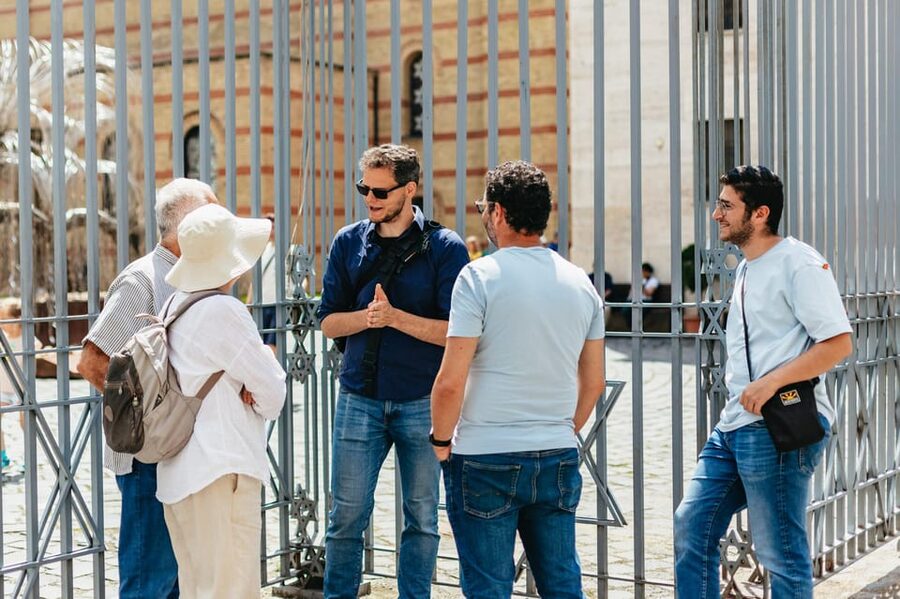
Small groups help. A maximum of 10 people makes it easier to hear explanations in busy streets and gives you room to ask about family history, architecture, politics, or current Jewish life. One small group had only three people, which allowed for a more flexible conversation. A larger group of 10 was still considered a good size.
The only criticism worth noting is that one person found the route less structured when synagogue access was unclear. That sounds like an unusual administration problem rather than a problem with the historical content, but it is another reason to confirm that the synagogues are exterior visits only.
Is $63 a fair price?
At $63 per person, this is not the cheapest way to walk around the Jewish Quarter. You can see many streets and buildings on your own for free. The value comes from the interpretation: a historian guide links architecture, religious divisions, Hungarian politics, the Holocaust, rescue efforts, current community life, and street culture in one organized route.
The price also includes the cake and coffee or soft drink, though that is a modest part of the total cost. The real purchase is the guide’s time and the small group. If you already have a strong grasp of Hungarian and Jewish history, you may find the price harder to justify unless you particularly want local stories and context.
For most first-time visitors, I think the cost is reasonable. It is less expensive than a private tour, and the group limit keeps it from feeling like a mass outing. The high rating and repeated praise for guides also suggest that the quality is usually strong, though no scheduled tour can guarantee a particular guide.
You can cancel up to 24 hours before the start for a full refund, and you can reserve now and pay later. Those policies make the booking less risky if your Budapest schedule is still shifting.
Who should take this tour?
I would choose this walk if you want history told plainly, with room for questions and some connection to present-day Budapest. It suits adults, families with older children, and anyone interested in Jewish culture, World War II, architecture, politics, or the changing life of city neighborhoods.
It is especially useful early in your Budapest stay. You leave with a better sense of where the Jewish Quarter is, how to find the synagogues, which streets connect to the former Ghetto, and where Gozsdu Passage and the ruin pubs fit into the city.
You should think twice if you dislike walking, want extensive synagogue interiors, or prefer a tour focused only on food or architecture. The subject includes persecution and death, and the guide does not soften the historical record. That seriousness is a strength, but it may not suit someone looking for a light introduction to Budapest.
Should you book it?
Book this tour if you want the Jewish Quarter explained by a well-prepared local historian rather than viewed as a collection of attractive streets. The strongest reasons are the small group, the honest treatment of Hungary’s wartime history, the rescue stories connected with Wallenberg and Lutz, and the chance to see how Jewish life continues alongside nightlife and street art.
Do not book it as your only synagogue visit. Since the three synagogues are viewed from outside, arrange separate admission if interiors matter to you. For a thoughtful first look at one of Budapest’s most important districts, though, the $63 fee buys far more than a walk from one facade to another.
FAQ
Where does the tour start?
Meet your guide in front of the Kempinski Hotel Corvinus Budapest, facing the Ferris wheel on Erzsébet Square.
How do I reach the meeting point?
You can take the M1, M2, or M3 metro lines to Deák Ferenc tér. Several buses and trams also serve the area.
How long does the tour last?
The tour lasts about 2.5 hours, including approximately 2 hours and 15 minutes of sightseeing and a 15-minute café stop.
What language is the tour in?
The live guided tour is conducted in English.
Are the synagogues visited inside?
No. The three synagogues are visited from the outside only, and entry is not included.
Which synagogues are included in the route?
The route includes the exterior of the Kazinczy Street Orthodox Synagogue, the Rumbach Street Synagogue, and the Dohány Street Synagogue.
Is food included?
Yes. The tour includes a local Jewish cake called flódni, along with coffee or a soft drink at a local café.
How large is the group?
The tour is limited to 10 participants.
What happens if the weather is bad?
The tour runs in all weather conditions, so you should dress appropriately for rain, cold, or heat.
Just added around Budapest
- Segway Guided Tour In Budapest, Historical Buda Castle★ 5.0 · 28 reviews
- Budapest Private 3-Hour Jewish Heritage Tour★ 4.3 · 49 reviews
- Budapest: Communist History Tour with House of Terror Option★ 4.8 · 182 reviews
- Budapest Grand Half-Day Jewish Heritage Tour★ 4.8 · 135 reviews
- Budapest: Historic Downtown Bicycle Ride with Scenic Views★ 4.8 · 151 reviews
- Budapest Paddle Steamer Danube Cruise with Tokaj & Audio Guide★ 4.5 · 338 reviews
- Budapest Jewish Heritage Memorial Walking Tour & Synagogue Entry★ 5.0 · 568 reviews
- Budapest: Jewish Heritage Guided Tour with Synagogue Ticket★ 4.8 · 533 reviews
Jewish Heritage Tours, compared.
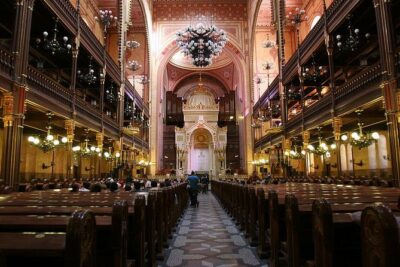
Budapest Jewish Heritage Memorial Walking Tour & Synagogue Entry
Read our review →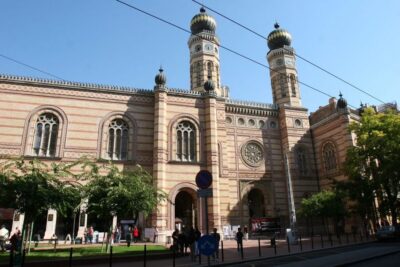
Jewish Heritage Guided Tour with Synagogue Ticket
Read our review →
3-Hour Porto Jewish Heritage Walking Tour with Local Guide
Read our review →
Private Jewish Heritage Journey by Barcelona Dreaming
Read our review →
Anne Frank and the Jewish History of Amsterdam Private Tour
Read our review →
Lisbon Jewish Heritage and History – Private Tour Van
Read our review →
Browse the lists this tour appears in