
Review · MUMBAI
Best South Mumbai Heritage Walk
Mumbai reveals itself one block at a time. This three-hour walk brings you through South Mumbai’s grandest streets, linking the Gateway of India, Kala Ghoda, colonial-era civic buildings, Marine Drive views, and Chhatrapati Shivaji Terminus. I like the small maximum group of 15 and the choice of morning or afternoon departures, which makes this easier to fit into a busy Mumbai stay.
I also like the price: about $17.89 per person for three hours of guiding and sightseeing. Guides such as Aakash, Gautam, Sandesh, and Sanika have been praised for clear storytelling, friendly conversation, useful photo stops, and broad knowledge of Mumbai. The main thing to consider is the walking itself. You will cover a lot of ground on city streets, so heat, traffic, and uneven pavement can make this less relaxing than a vehicle tour.
Key points to know before booking
- Eight major South Mumbai sights: The route takes in the Gateway of India, Kala Ghoda, Town Hall, Flora Fountain, Horniman Circle Garden, the Bombay High Court, the Taj Mahal Palace, and Chhatrapati Shivaji Terminus.
- A strong architecture focus: You will see Victorian Gothic Revival, Neoclassical, and other colonial-era styles within a compact part of the city.
- A useful three-hour introduction: The walk gives you a quick but substantial first look at Fort, Colaba, and nearby landmark districts.
- Morning or afternoon choices: You can select the departure that best matches your arrival time, sightseeing plans, or tolerance for Mumbai’s heat.
- Good for photographs: Walking lets you stop close to façades, fountains, gardens, railway details, and street scenes that are easy to miss from a car.
- A small-group format: With no more than 15 people, you have a better chance of hearing the guide and asking questions than on a large coach excursion.
Why walking South Mumbai makes sense
South Mumbai is one of the best parts of the city to explore on foot. Its major sights sit relatively close together, and the changes in architecture are easier to understand when you move between them at street level. A car can get you from one attraction to another, but it tends to turn the city into a series of quick windshield views.
This tour focuses on the way colonial rule shaped Mumbai’s public buildings, commercial streets, railway stations, and waterfront monuments. You will not just see isolated landmarks. You will get a sense of how Fort, Colaba, and the surrounding districts fit together.
I especially like the slower pace. You can stop for photographs, study carved details, and listen while standing in front of a building instead of trying to hear a guide over engine noise. The eco-friendly side of the tour is a bonus, but the real benefit is access. Your feet take you close to details that a vehicle-based tour cannot reach.
The format is also easy for a first visit. The tour runs for about three hours, starts near CST Station, and finishes near Regal Cinema and the Gateway of India. That leaves you in a useful part of South Mumbai for further sightseeing, a meal, or a visit to the waterfront.
More History Walking Tours in India
- Fontainhas Heritage Walk by Make It Happen
★ 5.0 · 2,834 reviews - The Great Indian Food Tour: Old Delhi Food and Heritage Walk
★ 5.0 · 1,698 reviews - Old Goa Heritage Walk by Make It Happen
★ 5.0 · 797 reviews
Starting near CST Station and finding the group
The meeting point is McDonald’s at Empire Building, 134 to 136 Dr Dadabhai Naoroji Road, next to the restaurant and opposite CST Station in Fort. This is a practical central point, especially if you are already visiting Chhatrapati Shivaji Terminus or using nearby public transportation.
The end point is Regal Cinema in Apollo Bandar, Colaba, close to the Gateway of India. Since the walk begins and ends in different places, plan your next stop around Colaba rather than expecting to return to CST.
A mobile ticket keeps the booking simple. Confirmation is provided at booking, and the tour is listed as suitable for most people. Still, you should expect to be outside for much of the three hours. Comfortable walking shoes, water, sun protection, and a little patience with city traffic are sensible choices.
The morning and afternoon options are useful, but your choice affects comfort. If you dislike strong heat, the earlier departure may be the better pick. The afternoon option can work well if you arrive late in the morning or want to combine the walk with another activity earlier in the day.
Gateway of India and the Taj Mahal Palace
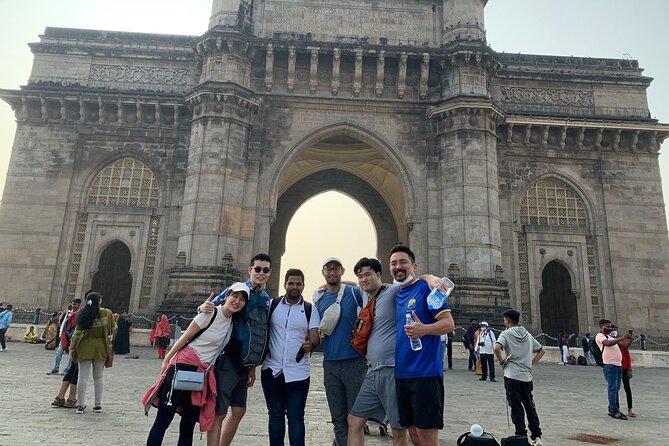
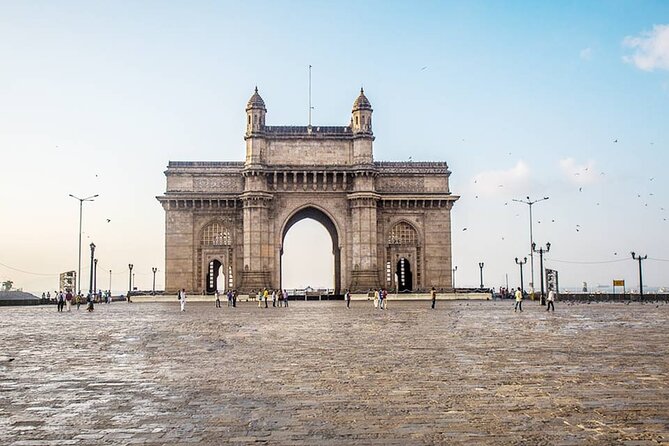
The Gateway of India is one of Mumbai’s defining monuments. Built in the early 20th century, the arch faces the harbor and gives the tour an immediate sense of place. It is a natural photograph stop, but it is also a useful starting point for understanding Mumbai’s connection to trade, imperial power, sea travel, and tourism.
Expect about 30 minutes here. That is enough time to look at the arch from different angles and hear the guide explain its place in the city’s past. Since admission is free, you are paying for the guide’s interpretation rather than a museum ticket.
The nearby Taj Mahal Palace adds a different layer. This heritage hotel is one of the best-known buildings in the Colaba area, and its grand exterior helps show how the waterfront became associated with luxury, travel, and international visitors. The stop is listed for about 10 minutes, so think of it as an exterior viewing point rather than a hotel visit.
A practical note: the Gateway area is one of the most popular places in Mumbai for photographs. Your guide can help you use the short stop well, but do not expect a quiet, empty monument. The value here is seeing the Gateway and Taj together, with the harbor setting providing the larger picture.
Kala Ghoda, where art and architecture meet
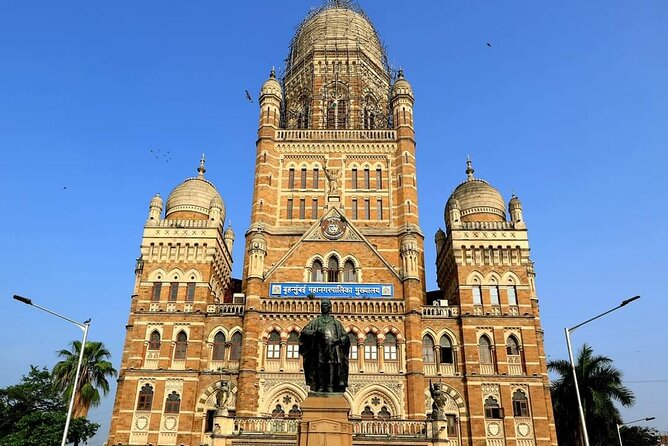
Kala Ghoda is a strong stop for people who enjoy urban design. The district is known for its cultural institutions, galleries, public spaces, and older buildings. The name is closely associated with the area’s former black horse statue, but the tour’s main value is the mix of architecture and city life around it.
The planned 30 minutes gives you time to look beyond the most obvious façade. This is a good place to ask your guide how Mumbai’s cultural districts developed and how older buildings continue to share space with modern businesses and public events.
The area hosts the Kala Ghoda Arts Festival each February. If your visit falls outside that period, you will not experience the festival itself, but the information helps explain why the district has such a strong arts identity.
This stop should suit photographers and curious first-time visitors. It may be less satisfying if you want extended interior visits, because the walk is designed around exterior landmarks and street-level interpretation.
Same place, a different slice of the past:
- Old Delhi Food, Heritage&Cultural Walk with Rickshaw ride to Masterji Kee Haveli
★ 5.0 · 742 reviews - Blue City Heritage Private Walking Tour With Pickup and Drop-Off
★ 5.0 · 441 reviews - Kolkata Heritage Tram Tour
★ 4.0 · 395 reviews - Private Heritage Walking Tour in Jaisalmer Fort and Old Bazaar
★ 5.0 · 306 reviews
Town Hall and the Neoclassical side of Fort
Town Hall, also called the Asiatic Society of Mumbai Town Hall, offers a change from the more ornate Gothic buildings elsewhere on the route. Its Neoclassical design and position in Fort make it a useful example of how different architectural ideas were used across South Mumbai.
The stop is allotted about 30 minutes, which gives the guide time to explain the building rather than treating it as a quick photo backdrop. Look for the formal proportions and classical details. This is one of the points where an informed guide adds real value, since the difference between Neoclassical and Victorian Gothic Revival is much easier to grasp when someone points it out in front of you.
The building houses the Asiatic Society of Mumbai. The tour data does not promise an interior visit, so plan on seeing it from outside unless your guide tells you otherwise. That limitation is worth noting for anyone who prefers museum access over city walking.
Flora Fountain and the center of old Fort
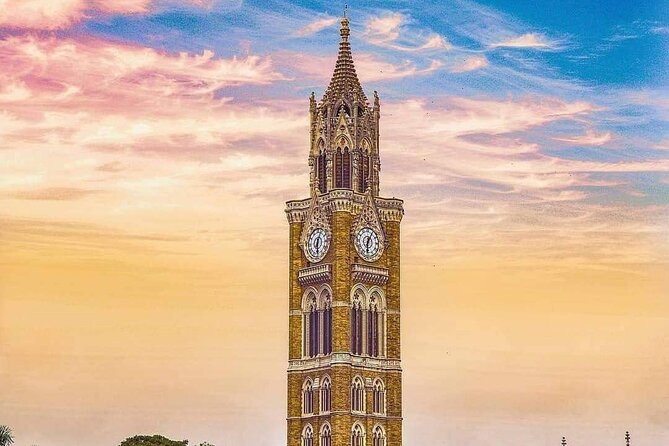
Flora Fountain sits at Hutatma Chowk, at the southern end of Dadabhai Naoroji Road. It is both a decorative monument and a marker of the old Fort district, where major roads, offices, and public buildings meet.
The 30-minute stop should give you time to study the fountain’s sculpted details and understand its place in the surrounding streets. This is the kind of sight that can be easy to pass quickly by car. On foot, you can pause, take close photographs, and compare the fountain with the buildings around it.
The area also shows Mumbai as a working city, not just a collection of monuments. You will see the heritage structures in an active urban setting, with traffic and daily business continuing around them. That is part of the appeal, though it also means noise and crowds can affect how long you want to linger.
Horniman Circle Garden and the civic heart of Mumbai
Horniman Circle Garden covers about 2.5 acres in the Fort district and is surrounded by office complexes. The listed stop lasts 10 minutes, so this is more of a short pause than a full garden visit.
Even with limited time, the garden gives you a break from the harder stone and traffic of the surrounding streets. It also helps you see how open public space was planned into the commercial core of South Mumbai.
Do not expect a long rest stop or a leisurely park visit. The garden is included as part of the larger route, and the guide will likely keep the group moving. If you enjoy seeing how public spaces fit into a city’s older business district, this brief stop earns its place.
The Bombay High Court and Victorian Gothic Revival
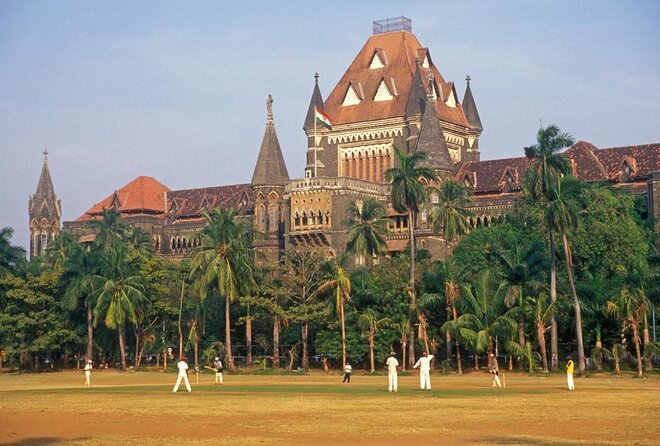
The principal bench of the Bombay High Court is another important architectural stop. It belongs to the group of monumental public buildings that helped shape South Mumbai’s Victorian-era civic identity.
The stop is scheduled for about 10 minutes. That is enough for an exterior look and a concise explanation, but not enough for an extended architectural study. You will get more from it if you have already noticed the contrast between Town Hall’s Neoclassical style and the more Gothic forms seen elsewhere.
This part of the walk is especially useful for understanding how colonial power was expressed through public architecture. The buildings were not designed as decoration alone. Their scale, ornament, and location gave government and law a visible presence in the city.
Chhatrapati Shivaji Terminus, the grand finale
Chhatrapati Shivaji Terminus is the biggest architectural payoff for many people on this walk. The historic railway station is a UNESCO World Heritage Site and one of Mumbai’s most recognizable buildings.
The planned 30 minutes gives you time to appreciate the exterior and the station’s role in the city. The building combines Victorian Gothic Revival ideas with Indian architectural elements, making it more complex than a simple European-style monument.
A guided explanation helps here because the details can overwhelm you. Look up at the towers, arches, ornament, and layered façade. Then remember that this is still a working rail station, not a silent museum. The combination of daily transport and monumental design is exactly what makes the site so interesting.
Because the meeting point is opposite CST, the station may appear both at the beginning and as a major point in the overall route. Check the exact flow with your guide on the day, especially if you want to arrange a train connection afterward. The tour ends at Regal Cinema near Colaba, so do not plan a tight departure from CST immediately after the walk.
How good are the guides?
The strongest part of this experience is likely to be the guide. Aakash has been praised for extensive historical knowledge and a friendly manner. Gautam has been credited with bringing in photo stops and Bollywood-related insight, while Sandesh has been appreciated for interesting facts about South Mumbai’s landmarks. Sanika has been described as personable and able to connect local sights with wider Indian culture.
Those names matter because this route depends on explanation. The buildings are impressive, but a weak guide could reduce the walk to a list of dates and names. A good one helps you notice why the architecture looks different, how colonialism affected the city, and how the landmarks connect.
Guide quality can vary from one departure to another, so I would keep your expectations sensible. The consistent strength shown by the guide feedback is the personal side of the experience: conversation, local context, photography advice, and a willingness to explain more than the basic script.
Price, group size, and overall value
At $17.89 per person, this is a good-value introduction to South Mumbai. You are getting about three hours of guided sightseeing, access to eight major landmarks from the outside, and a route that would be harder to organize efficiently on your own.
The value is strongest if you are new to Mumbai or want the city’s architecture explained in plain language. It is less compelling if you already know Fort and Colaba well, or if you prefer visiting interiors at your own pace.
The maximum group size is 15. That is not a private walk, but it is small enough to feel more personal than a large sightseeing group. You should be able to hear the guide and ask questions, although the experience will still depend on how closely the group stays together in busy streets.
The free cancellation policy also reduces the risk of booking. You can cancel for a full refund up to 24 hours before the local start time. Cancellations or changes within 24 hours are not refundable, so check your schedule before committing.
Who should book this walk?
I would recommend it to first-time visitors, architecture fans, photographers, and anyone who wants a useful orientation to South Mumbai without sitting in a vehicle. It also suits people who enjoy learning through streets and façades rather than spending the whole day inside museums.
The tour may not suit you if walking for three hours is difficult, if you need a fully indoor activity, or if you want long visits inside each landmark. The route is active and urban, with stops that vary from 10 to 30 minutes.
Should you book the South Mumbai Heritage Walk?
Yes, if you want an affordable first look at South Mumbai with a guide who can connect the Gateway of India, Fort, Colaba, CST, and the city’s many architectural styles. The strongest reasons to book are the small group, flexible departure times, useful route, and repeated praise for guides who make the walk friendly and informative.
I would choose the morning departure if heat concerns you, wear good shoes, and allow extra time after the tour at the Gateway of India or in Colaba. If you want a slow, human-scale introduction to Mumbai’s grand public buildings, this walk is a solid choice. If your priority is interior access or sitting in air conditioning, choose a different sightseeing format.
FAQ
How long is the South Mumbai Heritage Walk?
The walk lasts approximately three hours.
How much does the tour cost?
The listed price is $17.89 per person.
Are morning and afternoon departures available?
Yes. You can choose between morning and afternoon tour options.
Where does the tour start?
The meeting point is McDonald’s at Empire Building on Dr Dadabhai Naoroji Road, next to McDonald’s and opposite Chhatrapati Shivaji Terminus in Fort, Mumbai.
Where does the tour end?
The tour ends at Regal Cinema in Apollo Bandar, Colaba, near the Gateway of India.
What sights are included?
The route includes the Gateway of India, Kala Ghoda, Town Hall, Flora Fountain, Horniman Circle Garden, the Bombay High Court, the Taj Mahal Palace, and Chhatrapati Shivaji Terminus.
Is admission included at the sights?
The listed stops have no admission ticket charge. The tour focuses on seeing the landmarks during the walking route.
How many people can join the tour?
The activity has a maximum of 15 participants.
Can I cancel for a full refund?
Yes. You can cancel at least 24 hours before the local start time for a full refund. Cancellations and changes made within 24 hours are not accepted for a refund.
Just added around India
- See Bangalore through my eyes (Cultural / Historical / Walking Tour)★ 5.0 · 60 reviews
- Malleswaram heritage walk, an immersive walking tour in Bangalore★ 5.0 · 20 reviews
- Treasures of Mysuru – day tour★ 5.0 · 27 reviews
- Discover Bangalore with Me (A Private Historical Walk Tour)★ 5.0 · 24 reviews
- Bangalore Heritage and Cultural Walking Tour★ 3.5 · 21 reviews
- Bangalore: Walk In the Footsteps of Maharajas & Sultans★ 5.0 · 18 reviews
- Bangalore Heritage Walk – Private Walking tour★ 5.0 · 47 reviews
- World heritage site of Belur & Halebid with temple sculptures★ 5.0 · 24 reviews
History Walking Tours, compared.
History and Hauntings of Salem Guided Walking Tour
Read our review →
Freedom Trail History Small Group Walking Tour
Read our review →
Historic Charleston Guided Sightseeing Walking Tour
Read our review →
Tapas Walking Tour with Food, Wine, and History
Read our review →
Savannah History and Haunts Candlelit Ghost Walking Tour
Read our review →
A History of Terror – Belfast City Centre Walking Tour
Read our review →Browse the lists this tour appears in