
Review · SALEM
Best Salem Witch Trials Historical Walking Tour
Salem’s darkest story unfolds on ordinary streets. This 90-minute walking tour connects the Witch Trials Memorial, the Witch House, former jail sites, and other downtown locations tied to the 1692 crisis. I like the focus on actual people, including Bridget Bishop, Giles Corey, Betty Parris, and George Corwin, rather than treating Salem as a collection of spooky props. I also like the convenient downtown route and the guide’s effort to explain places that no longer exist. The main drawback is clear: many trial buildings are gone, so you will spend much of the tour listening beside modern buildings rather than entering preserved historic sites.
The $30 price is fair if you want a fast introduction before exploring Salem on your own. Just keep your expectations straight. This is a history walk with frequent stops, not a theatrical ghost show, a museum visit, or a walk to the actual hanging site.
Key points before you book
- The Witch House is the only surviving Salem building with a direct tie to the 1692 trials.
- The tour covers about one mile in 90 minutes, with plenty of standing and short talks at each stop.
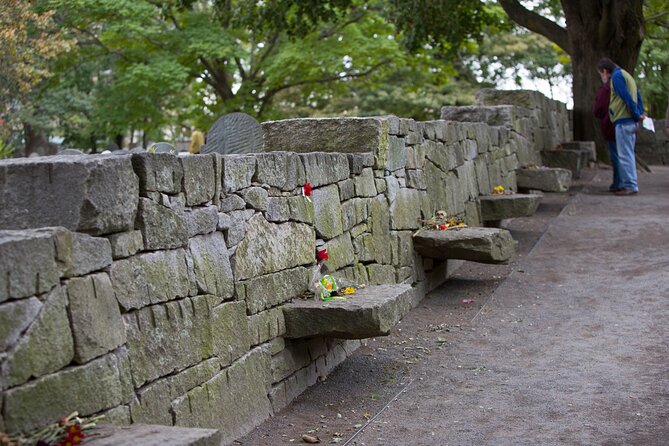
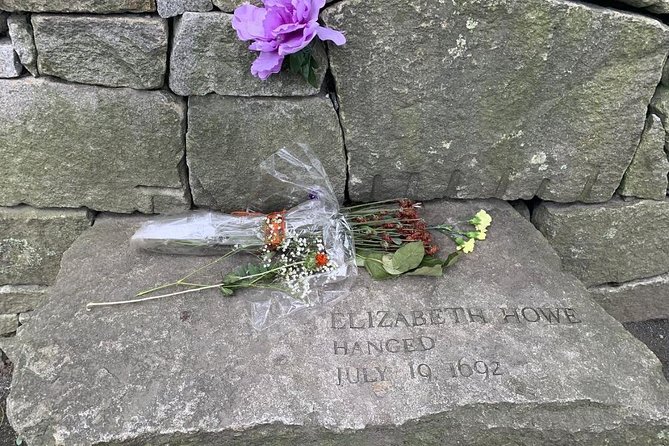
- The Salem Witch Trials Memorial gives the tour its emotional center, with 20 benches honoring the innocent people who died.
- Several important locations are now modern businesses or offices, including the former jail and court areas.
- Guides use stories, maps, and old images to explain missing buildings and lost sites.
- October requires extra time, since parking, traffic, crowds, and narrow streets can make downtown Salem difficult to navigate.
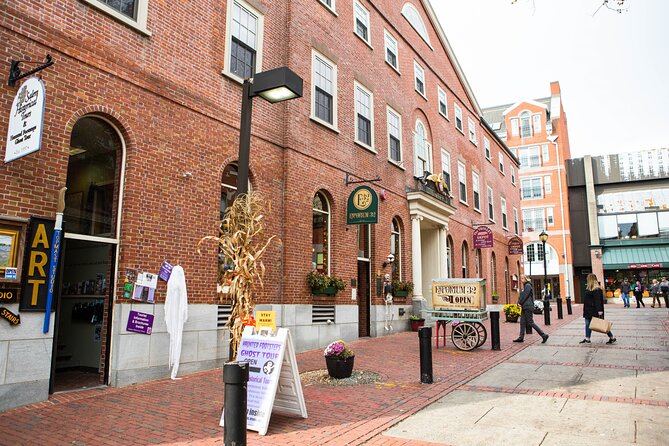
Starting at 8 Central Street in downtown Salem
You meet at the Salem Historical Tours office at 8 Central Street. Tours leave at 10 a.m., 1 p.m., and 4 p.m., and you should arrive 15 minutes early for check-in. The guide is described as carrying a recognizable sign, but the office address matters most, especially since some booking messages can make the meeting location seem unclear.
The route returns to the downtown area. That is useful because you can continue to the Witch House, the Peabody Essex Museum, restaurants, shops, or other Salem sights without arranging a ride back to your car.
The group can include up to 40 people, which is a fairly large walking group for a story-based tour. A good guide will need to project clearly and keep the group together at busy crossings. Smaller groups may feel more personal, but the maximum size is worth noting if you prefer quiet, intimate tours.
The experience runs in rain, cold, heat, and other weather conditions. Salem’s historic center includes uneven sidewalks, brick, cobblestones, narrow paths, and stairs. Wear shoes that can handle a mile of walking and bring clothing suited to the forecast. There are no public restrooms included, so plan ahead.
More Dark History and Haunted Tours in the USA
- Savannah History and Haunts Candlelit Ghost Walking Tour
★ 5.0 · 3,235 reviews - New Orleans Small-Group Haunted History Carriage Tour
★ 4.5 · 2,289 reviews - New Orleans Haunted History Ghost Tour
★ 4.5 · 2,084 reviews
The Salem Witch Trials Memorial: the emotional heart of the walk
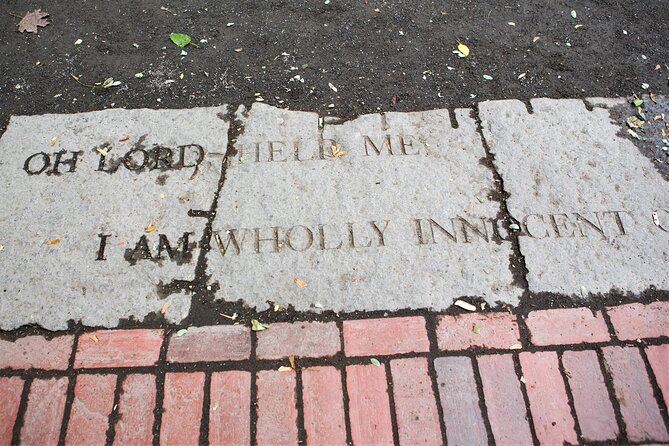
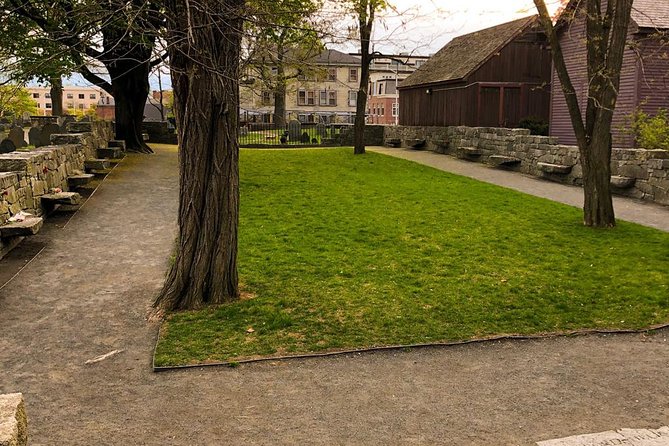
The memorial is one of the most important stops. Created in 1992, it honors the 20 people who died during the Salem Witch Trials. Each person has a stone bench marked with a name, death date, and manner of death.
This is not a flashy attraction. Its power comes from the names and the silence around them. The guide explains the memorial’s symbolism and tells some of the victims’ stories, giving the event a human scale that a simple timeline cannot provide.
One point to clarify before booking: the group may not walk through every part of the memorial in detail. The tour description places the memorial on the route, but the amount of time and movement there can depend on the guide and the crowd. If the memorial matters most to you, ask the guide to point out the benches and explain the design.
The stop lasts about ten minutes. That is enough for an introduction, but not a long private visit. I would return afterward if you want a quieter look.
Rockafellas and the former First Church site
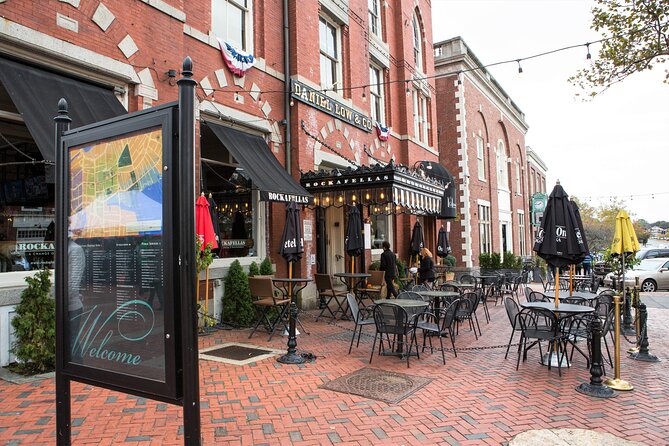
Rockafellas is now a restaurant in the Daniel Low and Company building. Its location once held the First Church of Salem and the city meeting house during the witch trials.
This is a useful example of the tour’s central challenge. You are not looking at a preserved 1692 church. You are standing at the site where an important civic and religious building once stood, while a modern restaurant operates there today.
The guide’s job here is to connect the address to the town’s power structure. The meeting house was not just a place of worship. It was part of the public life of Salem, which helps explain how religious fears, civic authority, accusations, and legal decisions could reinforce one another.
The stop is short, about ten minutes. Admission to the restaurant is not included, and this is an exterior history stop rather than a meal or interior visit.
George Corwin’s world at the Joshua Ward House
The Joshua Ward House is now the Merchant Hotel. The property is linked to the former home of George Corwin, the High Sheriff of Essex County in 1692.
Corwin signed arrest and execution warrants for people accused during the trials. He also took personal property and was accused of torturing people in his home. That makes this stop less about architecture and more about the machinery of the trials: arrest, confinement, property seizure, and official authority.
The tour spends only about five minutes here, so you will not get a long architectural visit. The value is in understanding who enforced the court’s decisions and how the crisis affected people beyond the courtroom.
The guide may show old images or explain where the former structure stood. This is one of several places where the exact historical setting has been replaced or altered. If you want reconstructed rooms and objects, you will need to visit museums separately.
More History Walking Tours in the USA
- History and Hauntings of Salem Guided Walking Tour
★ 5.0 · 14,564 reviews - Boston: Freedom Trail History Small Group Walking Tour
★ 5.0 · 6,450 reviews - Historic Charleston Guided Sightseeing Walking Tour
★ 5.0 · 6,216 reviews - Historic Savannah Guided Walking Tour
★ 5.0 · 2,918 reviews
The Witch House and Judge Jonathan Corwin
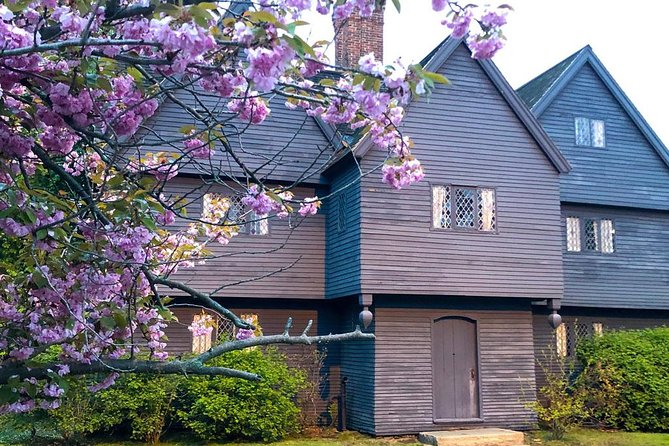
The Witch House is the strongest physical connection on the route. It is the only remaining Salem structure with a direct link to the 1692 trials. The house dates to the 1660s and belonged to Judge Jonathan Corwin.
Corwin met with Judge Hathorne there to discuss who might be considered a witch. The building gives you something rare on this walk: a surviving place associated with people who helped shape the court’s decisions.
The tour generally discusses the house from the outside. Admission is not included, so you should treat this stop as a preview rather than a house tour. If you want to see the interior, plan a separate visit and allow extra time.
This is also the best place to separate fact from Salem’s popular supernatural image. The building is called the Witch House because of its connection to Judge Corwin, not because the house belonged to an accused witch or because a supernatural event occurred there.
Betty Parris and the beginning of the crisis
The Salem YMCA on Sewall Street marks the location associated with the former home where nine-year-old Betty Parris was moved in July 1692. The original house is gone.
Betty was the daughter of Reverend Parris, and the guide explains her role, along with her cousin’s role, in the events that helped start the witchcraft hysteria. This stop is important because it shifts the story away from courts and judges and toward the children whose accusations helped set the crisis in motion.
There is no surviving house to enter here. You are listening at a modern location while the guide rebuilds the scene through names and events. That can be rewarding if you enjoy historical interpretation, but disappointing if you expect a visible landmark at every stop.
Bridget Bishop and Lyceum Hall
Turner’s Seafood occupies Lyceum Hall, built on land once owned by Bridget Bishop and her husband Edward. Bridget was the first woman executed during the 1692 trials.
Her story shows how quickly an accusation could move through Salem’s legal system. The tour explains that only eight days passed between her arrest, trial, and execution. That compressed timeline gives you a sharp sense of the danger faced by the accused.
Again, this is a location-based story rather than a preserved trial building. Turner’s Seafood is a working restaurant, and admission is not part of the tour. You can return for a meal, but the walking tour itself does not include food or an interior historical exhibit.
The Witch Dungeon Museum and a grim jail lesson
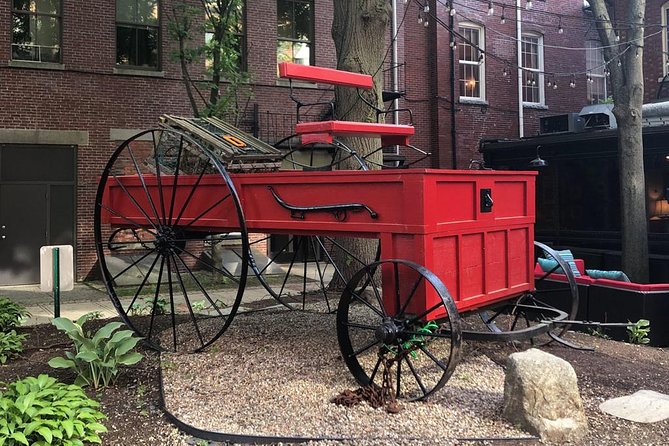
The Witch Dungeon Museum is not directly connected to the original 1692 trials, but it helps explain the conditions accused people faced in jail. Prisoners could be held in tiny cells, sometimes no larger than a phone booth or closet, and they had to pay for their own confinement.
The guide also explains that some prisoners died in jail. A photo opportunity with the pillories, or stocks, adds a visual moment to a subject that can otherwise feel abstract.
This stop has a possible weakness. Because the museum is not directly tied to the trials, some people may find it less important than the memorial, Witch House, or court site. For me, its value depends on how clearly the guide explains the difference between a later museum presentation and the actual 1692 locations.
Admission is not included. The tour’s role is to explain the jail experience and point out related history, not provide a full museum visit.
The Bewitched statue and Salem’s pop-culture detour
The statue of Elizabeth Montgomery as Samantha Stevens from Bewitched offers a lighter pause. You can take a picture with the television character and hear about episodes filmed in Salem.
The guide also explains whose land the statue occupies, adding an ironic twist to the stop. It is a reminder that modern Salem is built from several layers: colonial history, witch trial memory, Halloween culture, and television nostalgia.
This is not a major historical stop, but it keeps the walk from becoming relentlessly grim. Some people will enjoy the contrast. Others may prefer more time at the serious sites, especially if this is their only Salem history tour.
The court, the jail, and the story of Giles Corey
The Salem Masonic Building marks the area where the Witchcraft Court, formally called the Court of Oyer and Terminer, once operated. Most trials took place in this vicinity, with additional proceedings held in January 1693.
The guide discusses the court’s decisions, including a case where a jury found an accused person innocent but the judges rejected that result. That detail shows how fragile legal protection was during the crisis.
At 50 St. Peter Street, you hear about the former Witchcraft Jail. The building is gone, but the address is tied to prisoners held during the trials, including Giles Corey. Corey became known for being crushed during interrogation, and some prisoners died in jail before their cases were resolved.
These stops can be frustrating if you want to see the actual courtroom or jail. You will not. The value lies in learning the precise places where those buildings once stood and understanding what happened there.
The actual hanging site is more than a mile from the central route, near a Walgreens. The tour does not walk there because doing so would add substantial time and make the route harder for children, older people, and anyone with mobility concerns. If the hanging site is essential to you, plan to visit it separately.
How the guiding style shapes the experience
The strongest guides bring the people of 1692 to life. One guide, Bob, has been praised for presenting the period as a sequence of human choices and consequences, while keeping the grim subject approachable. Other guides have been praised for answering questions, maintaining a comfortable pace, and making the material interesting for teenagers.
Guide quality can vary. Some presentations may lean toward scattered anecdotes rather than a clear chronology. If you want the story in order, ask early for the basic sequence: the initial accusations, the court process, the imprisonment, the executions, and the collapse of the trials.
The walk includes a great deal of standing and listening. It is not highly interactive, and it does not provide theatrical scenes or hands-on exhibits. The best experience comes when you treat the city streets as a map and let the guide fill in what time has removed.
Is $30 a fair price?
At $30 per person, the tour offers a reasonably priced orientation to Salem. You get 90 minutes with a local guide, a route of about one mile, and explanations at several sites that would be easy to miss or misunderstand on your own.
The value is strongest for first-time visitors who want a clear starting point. It also works well for families with older children and teenagers, since the route is short and the stories are easier to follow when attached to real addresses.
The value is weaker if you expect entry to historic buildings, a visit to the hanging site, or a fully chronological lecture. Admission fees, parking, food, and hotel transportation are not included.
October is the most difficult time for logistics. Traffic and parking become much worse, and crowds, vendors, narrow sidewalks, and street activity can slow the group. Arrive early and allow more time than your navigation app suggests.
Who should book this Salem walking tour?
I would choose this tour if you want:
- A short introduction before visiting Salem’s museums and historic houses
- Personal stories tied to real people and addresses
- A guide to explain locations that disappeared long ago
- A central route that returns you to downtown
- A walking activity that takes about 90 minutes rather than half a day
I would look elsewhere if you want a theatrical ghost tour, extensive interior visits, a small private group, or a walk to the actual execution site. You may also feel underwhelmed if every stop must have a preserved building.
The tour is offered in English. Children must have an adult with them, and most people can participate if they can walk and stand for about a mile within 90 minutes. Service animals are allowed.
Should you book it?
Book it if you want context before exploring Salem on your own, especially if you are new to the witch trials. The memorial, Witch House, former court area, jail location, and stories of people such as Bridget Bishop and Giles Corey give you a useful framework for the rest of your visit.
Skip it if you already know the subject well or want constant visual evidence from 1692. Salem’s original court, jail, meeting house, and many homes are gone. This tour cannot restore them, but a strong guide can explain where they stood and why those places mattered.
Free cancellation is available up to 24 hours before the start time. That makes booking easier, but the practical decision is simple: come for the stories and the map of lost places, not for a parade of preserved buildings.
FAQ
How long does the Salem Witch Trials walking tour last?
The tour lasts approximately 90 minutes and covers about one mile.
Where does the tour begin?
It begins at the Salem Historical Tours office at 8 Central Street, Salem, Massachusetts. You should arrive 15 minutes before departure.
What time does the tour depart?
Tours depart at 10 a.m., 1 p.m., and 4 p.m.
Does the tour visit the actual hanging site?
No. The hanging site is more than a mile from the central route, near a Walgreens. The tour explains why it does not include that walk.
Is admission to the Witch House included?
No. Admission fees for the Witch House and other attractions are not included.
Is the tour suitable for people with mobility concerns?
The route can be challenging because Salem has narrow and uneven sidewalks, bricks, cobblestones, and stairs. Each participant must be able to complete about one mile within 90 minutes, with frequent stops.
What happens if the weather is bad?
The tour operates in all weather conditions, so you should dress appropriately. Parking and traffic are especially difficult in October.
Just added around the USA
- Historical Bicycle Tour of Dunedin★ 5.0 · 44 reviews
- Safety Harbor Ghost Tour★ 5.0 · 60 reviews
- Tarpon Springs Ghost Tour★ 4.5 · 19 reviews
- Cincy Brunch History and Streetcar Tour with Riverside Food Tours★ 5.0 · 108 reviews
- 2.5 Hour Kayaking with Manatee and History Tour in Tarpon Springs★ 5.0 · 24 reviews
- Chicago River Architecture Tour Aboard a Historic Yacht★ 5.0 · 45 reviews
- Walkin’ with Colin: Chicago History-Mystery-Comedy-Tragedy Tour★ 5.0 · 218 reviews
- Historic Homes and Cottages of Wicker Park Walking Tour★ 5.0 · 44 reviews
Dark History & Haunted Tours, compared.
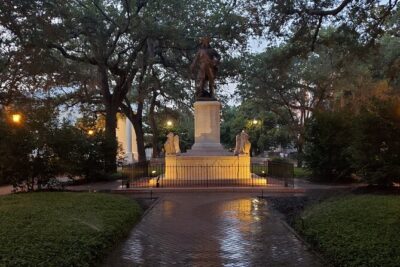
Savannah History and Haunts Candlelit Ghost Walking Tour
Read our review →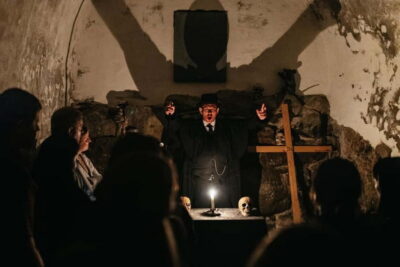

New Orleans Small-Group Haunted History Carriage Tour
Read our review →


Genteel and Bard’s Savannah Dark History and Ghost Encounter Walking Tour
Read our review →
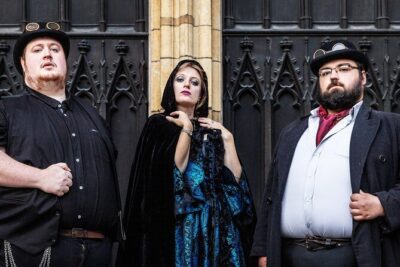
Shadows of York: Ghost Walk and Horrible History.
Read our review →Browse the lists this tour appears in