
Review · BERLIN
Berlin Uncensored: A History of Sex & Freedom
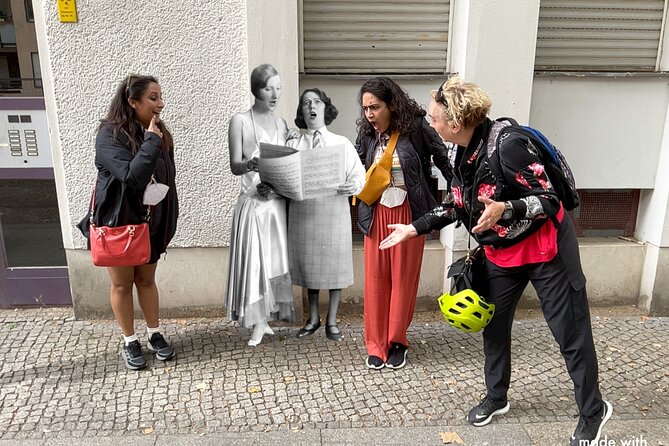
Berlin has always challenged polite conversation. Berlin Uncensored: A History of Sex & Freedom follows that quality through streets, memorials, former nightlife districts, and places tied to the city’s sexual and queer past. I like the small maximum of 10 people, which gives you room to ask direct questions, and I like the mix of street history with rare photos, videos, and augmented reality. The main caution is that this is an adult history tour, not a light sightseeing walk. Some subjects include Nazi persecution, sex work, gender identity, AIDS, and sexual violence.
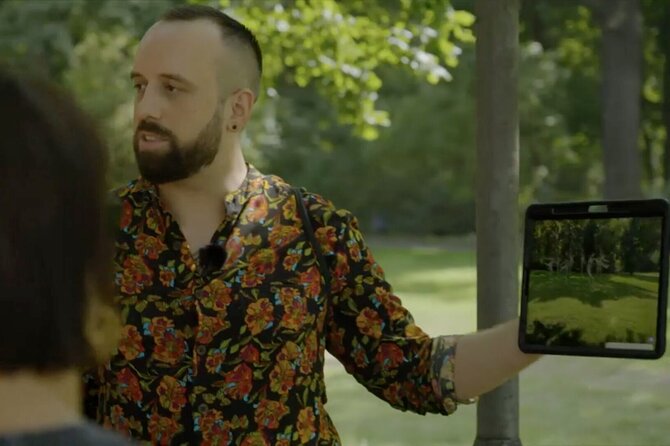
The tour is led in English by Jeff, a sociologist and certified sex educator. His calm, respectful, trauma-informed approach is a major strength. At $82.90 per person for about three and a half hours, the price is not cheap, but the intimate format and specialized subject make it a reasonable choice if you want more than Berlin’s standard monuments.
Key things to know before you book
- Berlin’s sexual history begins before the 1920s: You’ll hear about nudism, sexual science, contraception, gender identity, and public health.
- The group is capped at 10 people: That matters on a serious discussion tour, since you can ask questions without shouting across a crowd.
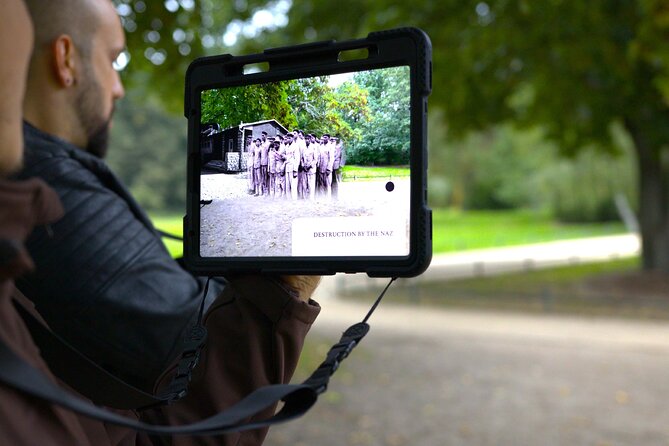
- Jeff uses more than spoken storytelling: Over 200 historical photos, videos, and augmented reality elements help put lost places and people back into view.
- The route connects pleasure with political power: Nazi censorship, queer persecution, the divided city, and the AIDS crisis all form part of the story.
- The tour ends where it starts: Meet at Alnatura Super Natur Markt on Else-Lasker-Schüler-Straße at 2 p.m., then return to the same area.
- This is for adults: The minimum age is 18, and the subject matter calls for an open, respectful attitude.
Why this small-group tour works
The best feature here is the scale. With no more than 10 participants, the walk can feel like a guided conversation rather than a speech delivered to a passing crowd. You can ask about a historical figure, a term, a political decision, or a modern club without waiting for a formal question period.
That format also suits the subject. Sex and gender are not topics that fit neatly into a standard sightseeing script. Berlin’s story includes scientific progress, personal freedom, exploitation, censorship, racism, war, and political hypocrisy. Jeff’s background as a sociologist and certified sex educator gives the tour a useful framework, and the supplied feedback repeatedly praises his clear English, approachable manner, and ability to handle sensitive subjects responsibly.
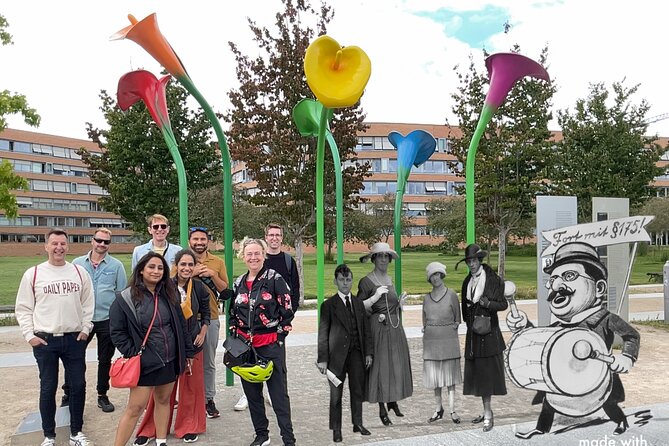
The technology adds another layer. The tour includes more than 200 archival images and videos, along with augmented reality features and Mixies, which let you make playful photos with digital historical elements. The visual material can be especially helpful when a building or club has disappeared. It also gives you a sense of the people who shaped these scenes, rather than leaving you with only street addresses.
Still, the technology is not always essential. One piece of feedback found some virtual imagery unnecessary at times. I would treat it as a bonus, not the main reason to book. The real value is the interpretation and the chance to ask questions in a small group.
A few more history tours around Berlin worth a look
- Berlin: 3-Hour World Heritage Cruise to Potsdam
★ 4.5 · 1,569 reviews - Berlin: History of the Third Reich Guided Walking Tour
★ 4.7 · 791 reviews - Berlin: Berlin Charité Guided History Tour
★ 4.4 · 660 reviews
Nollendorfplatz and the culture of body freedom
The tour begins and ends near Nollendorfplatz, one of Berlin’s most important areas for queer life and nightlife. The opening discussion focuses on FKK, the German tradition of Freikörperkultur, or free-body culture.
You’ll learn how nudism developed from the 19th century onward and how it became linked to ideas about health, nature, equality, and freedom from restrictive clothing. The subject is more complicated than simply saying Berliners like sunbathing. FKK took different forms over time, and public nudism remained especially important at lakes and parks.
This is a good opening because it broadens the meaning of sexual freedom. The tour is not only about clubs or erotic entertainment. It also asks how people think about the body, who gets to use public space, and when personal freedom becomes a political issue.
The first stop is brief, about 10 minutes, but it sets up themes that return throughout the walk.
Magnus-Apotheke and the lost Institute for Sexual Science
One of the most important sections takes place near Magnus-Apotheke, connected with Magnus Hirschfeld and Berlin’s former Institute for Sexual Science. Hirschfeld was a pioneer in sexology, and the institute studied desire, relationships, contraception, sexual health, and gender identity.
This part gives the tour its intellectual center. Berlin’s sexual history was not built only in bars and cabarets. It was also shaped by doctors, researchers, educators, and people who were willing to challenge accepted ideas about sex and identity.
You’ll hear about early work involving rubber condoms, research into treatments that preceded modern Viagra, and the first gender affirmation surgeries. The tour also discusses people such as Dora Richter, Lili Elbe, and Karl M. Baer. These stories help show that conversations about gender transition and medical care did not begin in the 21st century.
The destruction of the institute by the Nazis in 1933 is one of the walk’s saddest turning points. Research, records, and personal histories were lost or scattered. The point is not simply that Berlin once had progressive ideas. It is that those ideas were vulnerable, and that political repression can erase institutions that seemed firmly established.
Allow about 20 minutes here. If you have a particular interest in medical history, gender identity, or early sexual research, this may be the most valuable stop.
The LGBTQ memorial and the Nazi attack on sexual freedom
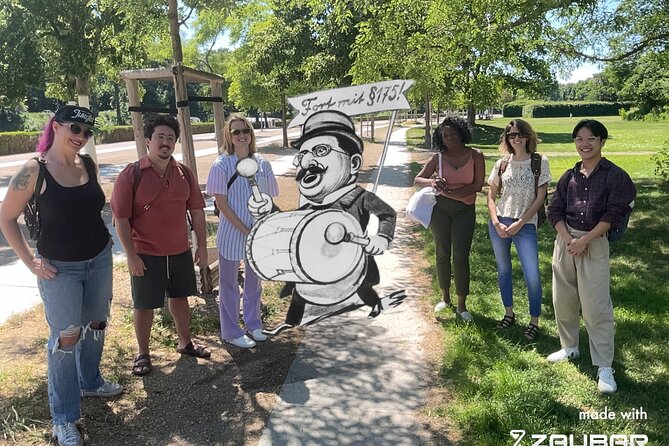
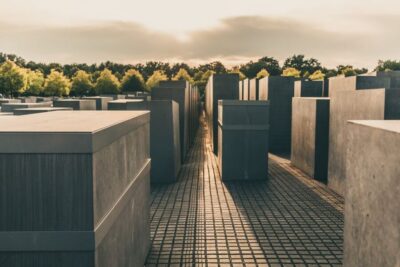
At the Memorial to Homosexuals Persecuted Under National Socialism, the tour turns from scientific progress to state violence. You’ll learn how the Nazi government closed erotic clubs, censored sexuality, and targeted people whose identities or behavior did not fit its narrow rules.
The discussion includes Ernst Röhm, a senior Nazi figure who was known to be homosexual and was killed during the Night of the Long Knives. His case shows the regime’s hypocrisy. Private knowledge could be tolerated when politically useful, then weaponized when convenient.
The persecution reached LGBTQIA+ people, sex workers, and others labeled degenerate. Many were arrested and sent to concentration camps, where some were forced to wear pink triangles. The symbol was later reclaimed by LGBTQIA+ rights movements.
This stop lasts about 10 minutes, but its emotional weight is greater than its length suggests. The memorial is not treated as a quick photo stop. It becomes a place to consider how quickly a city associated with sexual freedom can become dangerous for the same people who once found refuge there.
Same place, a different slice of the past:
- Berlin Historical Highlights Walking Tour
★ 4.9 · 657 reviews - Berlin Private Complete History All Day Walking Tour
★ 5.0 · 474 reviews - Berlin: Cold War & Berlin Wall History Guided Bike Tour
★ 4.8 · 422 reviews - Berlin: Historic Boat Sightseeing City Center Tour
★ 4.5 · 415 reviews
Kurfürstenstraße and Berlin’s older sex trade
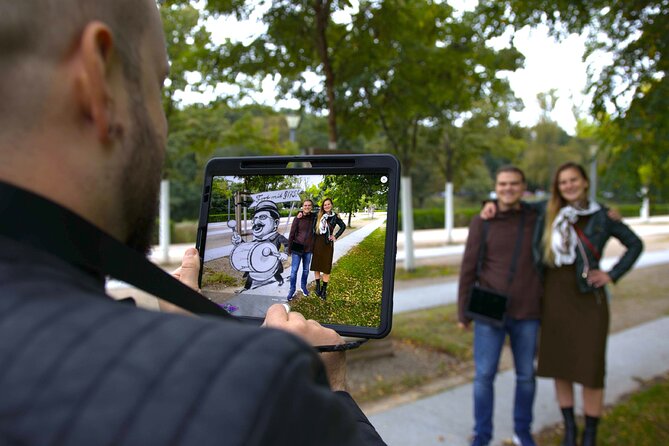
Kurfürstenstraße brings the story back to public life and commercial sex. Before the Nazi period, Berlin was known for open prostitution, erotic venues, and a wide range of nightlife.
The stop also covers fetish and kink culture, which existed in organized forms long before those interests became more visible in mainstream culture. You’ll hear about brothels and less public forms of sexual commerce, along with the ways Berlin made room for desires that many other cities forced underground.
This section may appeal to anyone interested in the social history of cities. It shows that sexual culture is shaped by laws, policing, money, and neighborhood life, not only by personal preference. It also helps explain why Berlin’s modern reputation did not appear from nowhere.
The discussion here is around 15 minutes. Keep in mind that the tour describes historic locations rather than promising access to current venues. The value is in understanding how the district developed.
Lesbian Berlin at Schwerinstraße 9
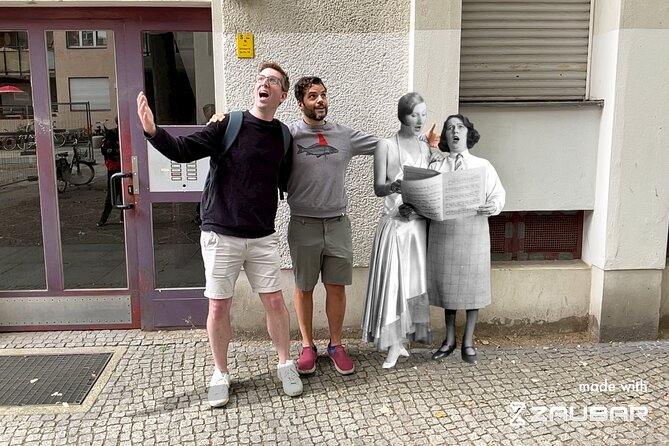
The stop at Schwerinstraße 9 focuses on Berlin’s lesbian communities in the early 20th century. You’ll hear about the Toppkeller, a meeting place for women who resisted social expectations, and about Claire Waldoff, a cabaret singer associated with lesbian identity.
Music is important here. The Lavender Song helps show how entertainment could carry coded or open messages about queer life. Cabaret was not merely decoration in old Berlin. It gave performers and audiences ways to test social boundaries.
The story also includes Josephine Baker, the famous Black performer who was admired in Berlin while also facing racial discrimination. Her experience adds an important complication. Sexual openness did not mean that the city was free of racism, sexism, or unequal treatment.
This is a short stop, about 10 minutes, but it prevents the tour from becoming a story told only through gay male nightlife. It gives lesbian history, performance, race, and class a proper place in the walk.
Christopher Isherwood and the world behind Cabaret
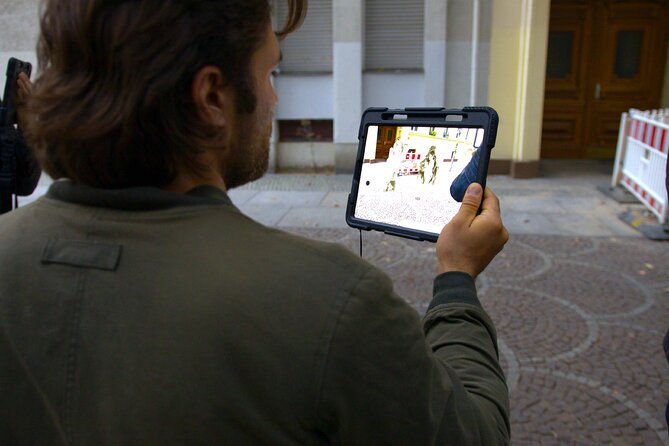
At a residential building connected with Christopher Isherwood, you’ll consider the gay male culture of Berlin during the 1920s and early 1930s. Isherwood’s writing captured a city that attracted men from across Europe and offered forms of sexual freedom unavailable in many other places.
His memoirs later helped inspire works adapted into Cabaret. The tour uses his life to connect private experience with public culture. Streets, apartments, clubs, and friendships all become part of the story.
This stop is useful even if you know the musical or film. It helps separate the theatrical version of Berlin from the historical city behind it. The freedom was real for some people, but it existed alongside poverty, political violence, police pressure, and unequal access to safety.
The stop lasts about 10 minutes. You won’t enter a museum or private home, so the experience depends on Jeff’s explanation and the archival material shown along the way.
Eldorado and the city’s complicated openness
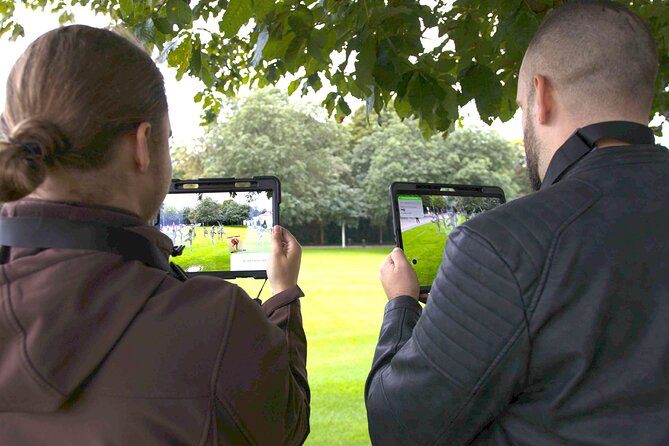
Near the present-day Denns BioMarkt, the tour recalls the former Eldorado Club, one of the best-known nightlife spots of 1920s Berlin. The club welcomed drag performers and people seeking open sexual expression. It also attracted powerful figures, including Ernst Röhm before the Nazi crackdown.
That contradiction is central. Eldorado represented freedom, but even authoritarian politicians could visit such spaces privately while publicly supporting repression. The club’s story exposes the gap between what people do and what governments permit them to admit.
You’ll also hear about a journalist from Vogue who visited Eldorado and described a drag queen as the most beautiful woman in Berlin. Details like this make the period easier to picture, though the tour does not pretend that nightlife alone made the city tolerant.
After roughly 15 minutes, the route moves into the postwar period. The former club is no longer there, so the stop works best when you use the historical images and let the street become a marker for what has vanished.
East and West Berlin after 1945
At the Internationale Stele Gegen das Vergessen, the story shifts to the divided city. West Berlin experienced the sexual revolution, with changing attitudes toward relationships, pornography, and alternative lifestyles. East Berlin had tighter state control in many areas, yet public nudism became highly popular.
This contrast is one of the tour’s more unusual subjects. The political systems did not produce a simple division between freedom and repression. Each side managed sexuality in its own way, and FKK became part of everyday leisure in East Germany.
You’ll hear the provocative phrase used for the Berlin Wall, the condom of the GDR, along with the story of a conservative politician who helped save thousands of lives during the AIDS crisis. These details show how public health and sexual politics can cross party lines.
The stop takes about 15 minutes. It is a good reminder that Berlin’s sexual culture was shaped by the Cold War as much as by cabaret and nightlife.
Modern Berlin: Berghain, KitKat, and Folsom Europe
The final section returns to Nollendorfplatz and present-day Berlin. You’ll hear about Berghain, with its strict no-photo rule and famously selective entry, as well as KitKat Club, Insomnia, and Lab.Oratory.
The tour does not reduce modern nightlife to a list of places to party. It explains how electronic music, sexual experimentation, fetish culture, and personal boundaries overlap in Berlin. You’ll also learn about Folsom Europe, described as the world’s largest fetish festival, which brings thousands of people to the city.
This is where the insider tips can be useful. If you want to explore Berlin’s sex-positive nightlife after the tour, Jeff can point you toward current events and venues. Treat those suggestions as orientation, not a guarantee of entry or a substitute for checking each venue’s current rules.
The tour lasts about three and a half hours in total. Since it is a walking experience with many stops, comfortable shoes and attention to the weather are sensible. In extreme rain or storms, the tour can be canceled for a full refund or moved to another date.
Is $82.90 a fair price?
At $82.90, this costs more than a basic public walking tour. You are paying for a specialized subject, a certified sex educator, a group of no more than 10, archival material, augmented reality, and time for questions.
I think the value is strongest for people who want context rather than a quick parade of famous places. A large group could cover the same streets for less money, but it would not offer the same room for discussion. The price is less convincing if you only want modern club recommendations or a general introduction to Berlin.
The tour also works well for private groups and professional gatherings. One organizer arranged three groups for an international conference, and the format was described as engaging and dynamic. Group discounts are available, so it may be worth checking the rate if you are booking for several people.
Practical details before you go
Meet at Alnatura Super Natur Markt, Else-Lasker-Schüler-Straße 18, 10783 Berlin, at 2 p.m. The tour is offered in English and ends back at the meeting point. It is near public transportation, and service animals are allowed.
Most people can participate, but the subject matter deserves some thought. You will hear about persecution, Nazi concentration camps, prostitution, medical procedures, queer identity, and the AIDS crisis. Jeff’s trauma-informed approach is reassuring, yet you should still choose this tour only if those subjects are appropriate for you.
Confirmation is provided when you book. You can cancel for a full refund up to 24 hours before the start time. If bad weather or the minimum number of participants causes cancellation, you’ll be offered another date or a full refund.
Who should book Berlin Uncensored?
I recommend this tour if you want to understand how Berlin’s sexual culture connects to science, politics, art, fascism, the Cold War, and modern nightlife. It is especially well suited to curious adults who enjoy asking questions and prefer a small, conversational group.
You may want to skip it if you are looking for a conventional city walk, a family activity, or a tour focused mainly on architecture. The content is serious, sometimes unsettling, and occasionally playful, but it is never simply a party story.
For the right audience, this is an unusual and worthwhile way to read Berlin. You leave with more than a list of clubs or scandalous anecdotes. You gain a clearer sense of how freedom is built, restricted, lost, and reclaimed.
FAQ
Where does the tour begin?
It begins at Alnatura Super Natur Markt, Else-Lasker-Schüler-Straße 18, 10783 Berlin, Germany.
What time does the tour start?
The scheduled start time is 2 p.m.
Where does the tour end?
The tour ends back at the meeting point.
How long does the experience last?
The walking tour lasts approximately three hours and 30 minutes.
Is the tour offered in English?
Yes. The tour is offered in English.
What is the maximum group size?
The group can include no more than 10 participants.
Is there a minimum age?
Yes. The minimum age is 18.
What is included in the experience?
The price includes the guided walk with a sociologist and certified sex educator, augmented reality elements, Mixies, more than 200 historical photos, videos and archival materials, and insider tips about modern sex-positive nightlife and events.
Can I cancel for a refund?
Yes. You can cancel at least 24 hours before the start time for a full refund. Cancellations or changes made less than 24 hours before the start time are not refunded. Weather or minimum-participant cancellations may result in another date or a full refund.
Just added around Berlin
- Historic center of Berlin – Tour in Italian★ 5.0 · 143 reviews
- Berlin Food & Cultural Tour: Must-Try German & Berliner Classics★ 5.0 · 51 reviews
- Private Berlin WWII and Cold War History Tour with Local Expert Guide★ 5.0 · 28 reviews
- Private Tour: Jewish Heritage Walking Tour of Berlin★ 5.0 · 29 reviews
- Small-Group Historical Bike Tour in Berlin★ 4.5 · 103 reviews
- East Berlin Food & History Tour with Eating Europe★ 5.0 · 204 reviews
- Explore Berlin History and Highlights Sightseeing Walking Tour★ 5.0 · 81 reviews
- Berlin: Private Bike Tour of the Berlin Wall and Third Reich★ 5.0 · 23 reviews
Berlin History Tours, compared.
Berlin Private Complete History All Day Walking Tour
Read our review →
Cold War & Berlin Wall History Guided Bike Tour
Read our review →
Browse the lists this tour appears in