
Review · SERBIA
Belgrade: 3-Hour Serbian History Walking Tour
Belgrade makes you work for its story. This three-hour walk brings that story into focus, linking Serbian history with daily life, politics, religion, and the wider Balkans. I especially like the route through Skadarlija and the time spent at Kalemegdan Fortress, where the city’s long struggle between empires becomes easier to understand.
I also like the guides’ clear, friendly way of handling difficult subjects. Marija, Pedja, Aleksandar, Jovana, Tibor, and others have been praised for explaining Serbia’s complicated past without burying you in dates. The main drawback is simple: four kilometers in three hours leaves little time for long visits inside buildings.
The tour costs $35 per person, which is fair for a live English-speaking guide and a strong first look at central Belgrade. Wear proper walking shoes, expect city streets and some uneven ground, and arrive ready to ask questions. This is not just a parade of monuments. It is a brisk lesson in why Belgrade became one of Europe’s most contested capitals.
Key points to know before you go
- The route links central Belgrade with Kalemegdan Fortress, moving from modern civic spaces to the city’s oldest defensive ground.
- Skadarlija adds local character, with a short walk through the historic bohemian quarter and time for photographs.
- The tour tackles difficult subjects, including Serbia’s place between Eastern and Western powers, recent politics, religion, and the Balkans.
- Guides are the strongest part of the experience, with Marija, Pedja, Aleksandar, Jovana, Tibor, and Tibi praised for clear explanations and warm personalities.
- The four-kilometer route is manageable but active, so comfortable shoes matter more than stylish ones.
- The final stop is Rajićeva Shopping Center, useful if you want to continue exploring central Belgrade on your own.
Why this is a smart first walk in Belgrade
Belgrade is not a city you understand from one grand monument. Its character comes from layers. Celtic, Roman, Byzantine, Ottoman, Austro-Hungarian, German, and Russian forces all shaped the city, fought around it, or passed through it. The tour gives you a framework for those layers without asking you to become a Balkan historian before lunch.
I like the way the route moves between ordinary streets, public squares, religious buildings, and military sites. That variety keeps the three hours moving. You are not planted in one museum room listening to a lecture. You are seeing how the past sits beside present-day Belgrade.
The guide also brings in geography. Belgrade occupies a strategic position where the Sava and Danube meet, a meeting point that helped make the city valuable and vulnerable. That setting explains much of its story. Control the rivers, and you influence movement between Central Europe and the Balkans.
The strongest guides on this tour appear to be good at explaining complicated subjects in plain language. Marija is repeatedly praised for making Serbian and Yugoslav history easy to follow. Aleksandar is praised for connecting past events with present politics. Pedja is noted for tying history to buildings and architecture. Those are useful skills in Belgrade, where one street corner can raise questions about several centuries at once.
More History Walking Tours in the world:
- History and Hauntings of Salem Guided Walking Tour
★ 5.0 · 14,564 reviews - Lisbon: History, Stories and Lifestyle Walking Tour
★ 4.8 · 10,902 reviews - Boston: Freedom Trail History Small Group Walking Tour
★ 5.0 · 6,450 reviews
Starting at Terazije and entering civic Belgrade
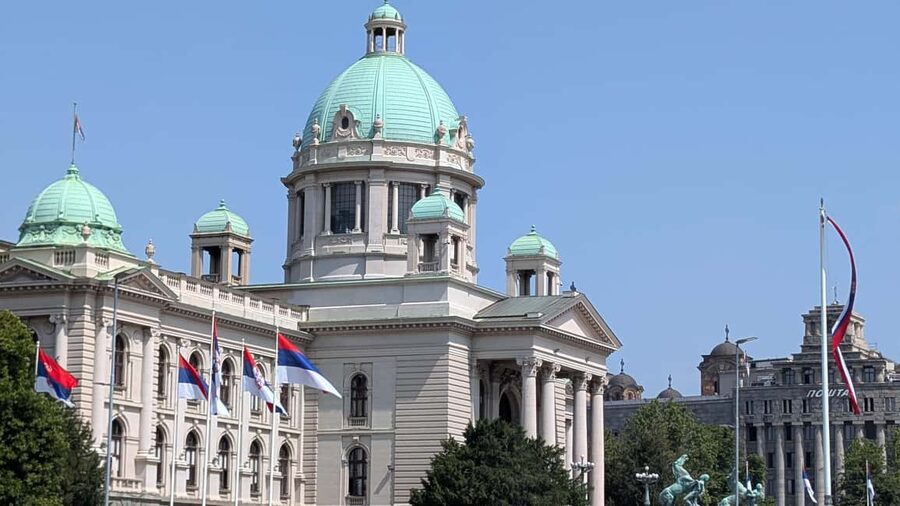
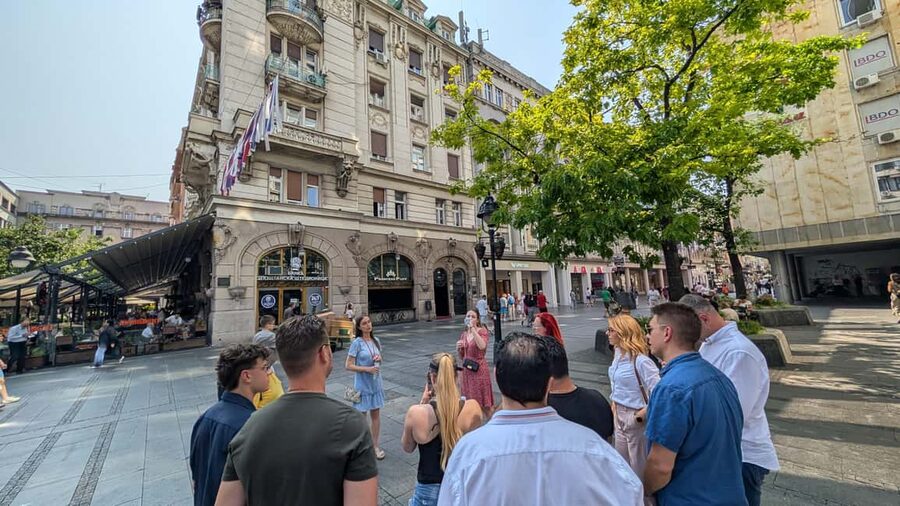
The meeting point is next to the fountain at Terazije Square. From there, the tour begins with the National Assembly of the Republic of Serbia, where you get about 20 minutes of guided sightseeing and free time.
This opening gives you an immediate sense of modern Serbia as a state. The assembly is not simply a photo stop. It helps place Belgrade in its role as the national capital, where political decisions, public ceremonies, and debates over Serbia’s direction take place.
You should pay attention to the guide’s explanation here. The tour is designed to connect buildings with politics, geography, and current affairs, rather than treating history as a list of rulers. That approach is particularly useful if you know little about Serbia or Yugoslavia.
The first section is also a good chance to settle into the walking pace. Keep your shoes comfortable from the start. You will cover about four kilometers, and the tour does not return to the meeting point.
Kneza Mihaila and Republic Square
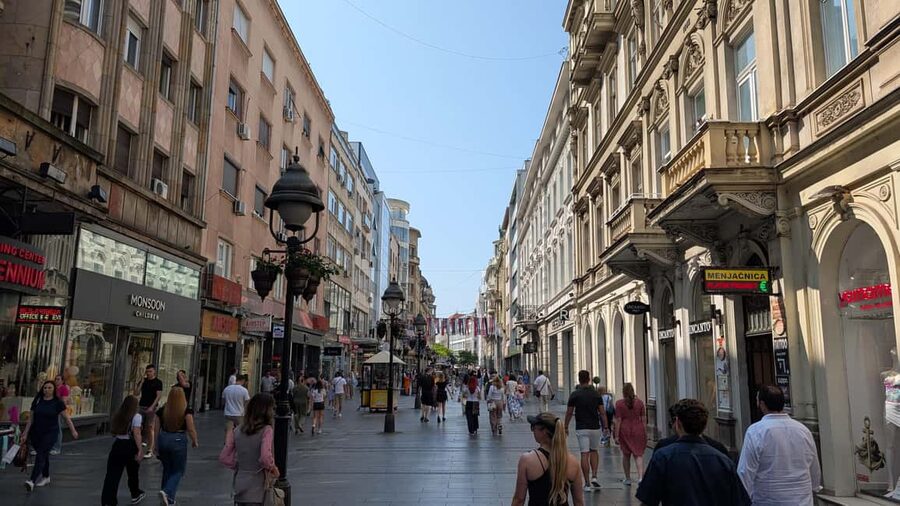
The route continues along Kneza Mihaila, Belgrade’s best-known central pedestrian street. You get about 20 minutes of guided walking here, followed by another 20 minutes around Republic Square.
This part of the tour helps you read the city as it is today. Kneza Mihaila connects shops, cafes, historic facades, public life, and the central sightseeing district. The street is a natural place to notice how Belgrade’s older architecture and modern city routines sit side by side.
Republic Square gives the guide another public stage for explaining Serbia’s capital. The timing is short, so do not expect a detailed architectural study of every building. Instead, you get orientation and context, along with an introduction to the central area you may revisit later.
I find this useful early in a city visit because you learn where the main pedestrian zone is and how it connects to other sights. The tour is not only about the past. It helps you decide where to walk, eat, shop, or return after the guide says goodbye.
Skadarlija, Belgrade’s bohemian quarter
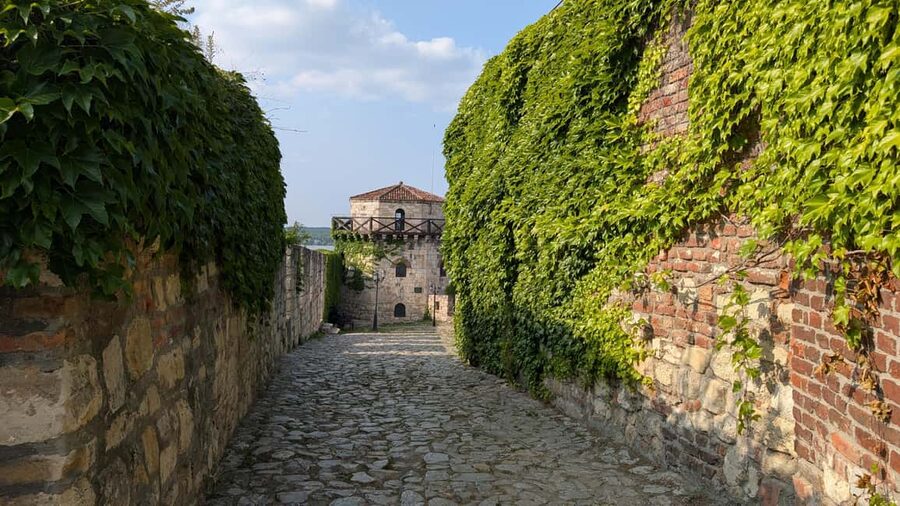
Skadarlija is one of the most appealing stops on the route. The group gets roughly 20 minutes here for photographs, sightseeing, and a guided explanation.
This short street is known for its old-fashioned atmosphere and association with artists, writers, musicians, and restaurants. The tour gives you enough time to notice the character of the place without turning the stop into a full meal break.
I would treat Skadarlija as an introduction, not a complete visit. If the street catches your interest, return later at a slower pace. The tour’s schedule allows a photo stop and explanation, but three hours must cover a lot of ground.
This is also one of the places where a local guide adds real value. A guide can explain Serbian customs, social habits, and the role of traditional restaurants in local life. Jovana was praised for sharing Serbian traditions and practical suggestions for restaurants and museums, which is exactly the sort of information that can make Skadarlija more than a quick photograph.
More Three-Hour Tours in the world:
- Berlin: 3-Hour World Heritage Cruise to Potsdam
★ 4.5 · 1,569 reviews - Edinburgh: 3-Hour Historical Walking Tour in Italian
★ 4.7 · 734 reviews - 3-Hour Porto Jewish Heritage Walking Tour with Local Guide
★ 4.5 · 396 reviews - 3-Hour Atlanta Beltline Food, Street Art and History Tour
★ 5.0 · 345 reviews
Student Park and the Holy Archangel Michael
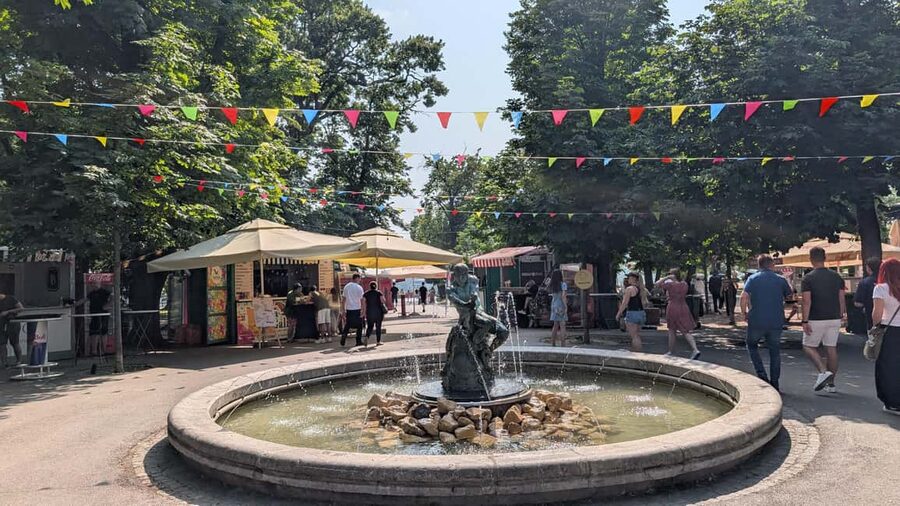
After Skadarlija, the group walks through Student Park for about 10 minutes. It is a shorter stop, but it gives the route a change of pace before the religious and fortress sections.
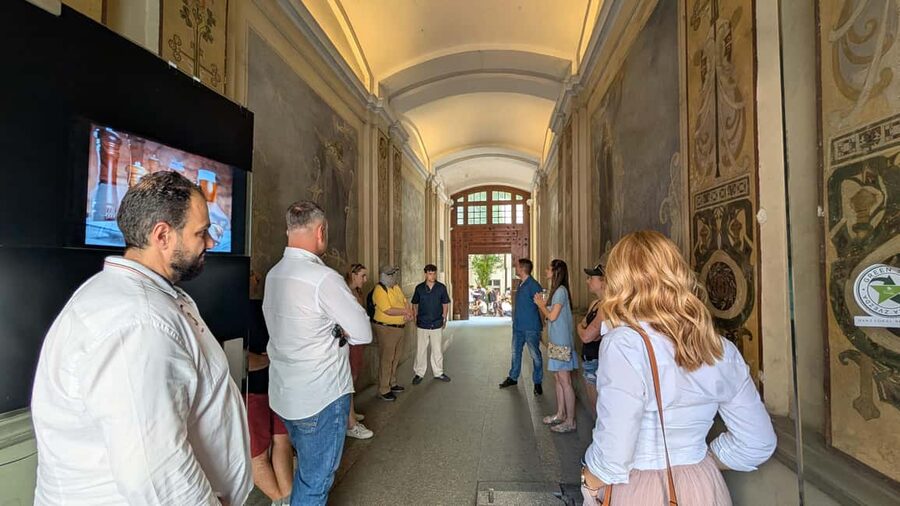
You then visit the Church of the Holy Archangel Michael for about 15 minutes. This introduces the religious side of Serbian history and helps explain why faith and national identity are closely linked in the country’s story.
The tour does not treat religion as a separate subject. Instead, it places religious buildings within the wider history of Serbia, the Ottoman period, shifting borders, and the relationship between politics and identity. That context is valuable because many major Serbian historical questions cannot be understood through military events alone.
The visit is brief, so modest clothing and respectful behavior are sensible. The information provided does not promise a long interior tour, and the schedule suggests a focused stop rather than an extended church visit.
Kalemegdan Park and the Belgrade Fortress
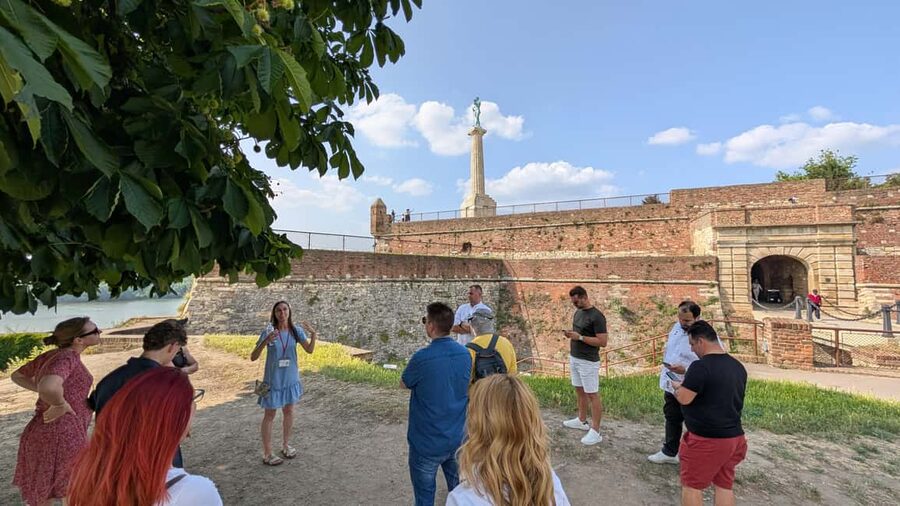
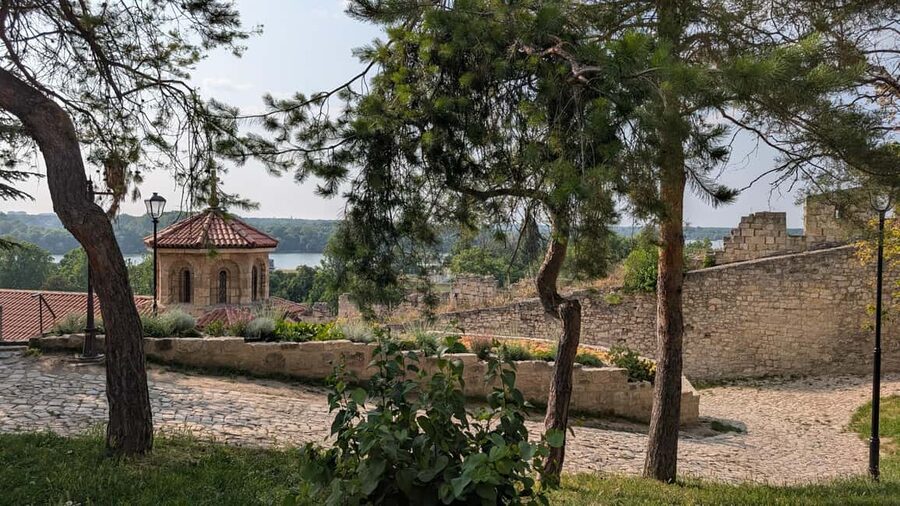
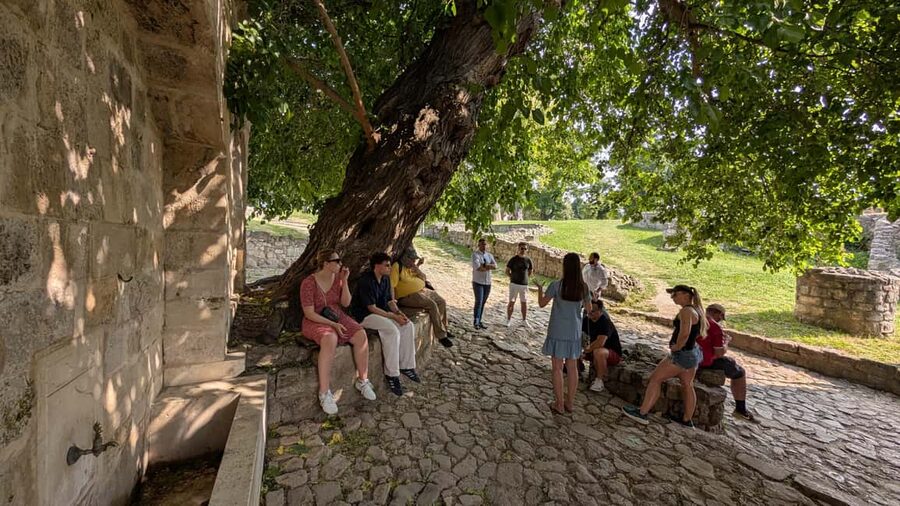
The route’s main historical payoff comes at Kalemegdan Park and Belgrade Fortress. About 20 minutes is allocated to Kalemegdan Park, followed by another 20 minutes around the fortress, including photographs, scenic views, and guided sightseeing.
Kalemegdan is where Belgrade’s geography becomes clear. From this elevated area, you can appreciate the meeting of the Sava and Danube and see why this ground mattered to so many powers. The rivers were not decorative scenery. They were routes for trade, armies, supplies, and political influence.
The fortress itself carries the evidence of repeated rebuilding and conflict. Romans, Byzantines, Ottomans, Austro-Hungarians, and other forces all belong to the broad story of this strategic site. A guide helps turn walls, gates, and viewpoints into a sequence of events rather than a collection of stones.
The Military Museum is listed among the highlights, but the schedule does not promise a full museum visit. You should expect to encounter it as part of the fortress area, with the guide explaining its place in Belgrade’s military story. If you want a long museum visit, plan a separate return.
This is the section where the guide’s storytelling matters most. Marija has been praised for explaining complicated Serbian and Balkan history with clarity and balance. Aleksandar has been praised for making the forces that shaped Serbia and Yugoslavia understandable. Those abilities matter at Kalemegdan because the site can otherwise feel like a scenic overlook with old walls.
The area may also be the most physically demanding part of the walk. You will be moving through a large park and fortress complex, and the route includes walking rather than simply standing in one place. On hot days, shade and pacing become important. One guide, Maria, was specifically praised for finding shaded spots during a very hot walk.
Ružica Church and the Monument of Gratitude to France
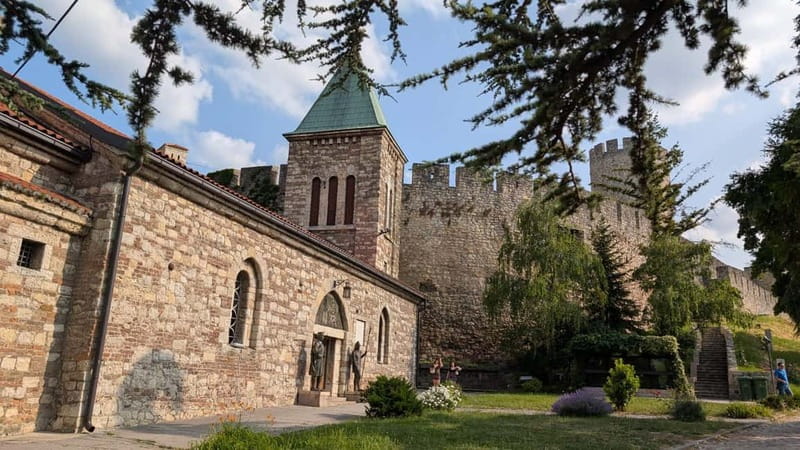
Ružica Church receives about 15 minutes for a visit, photograph, and explanation. The church is associated with the 15th century and is one of the more unusual religious stops on the route.
Its position within the fortress area gives it extra meaning. You are not visiting a church in isolation. You are seeing how worship, defense, and the city’s changing rulers occupy the same small area.
A short stop cannot cover every detail, so listen for the guide’s main points and save questions for the walk afterward. The tour is designed to keep moving, and the guide must balance the church with the fortress, park, and other landmarks.
The final sightseeing stop is the Monument of Gratitude to France, with about 15 minutes of explanation and viewing. This adds another international layer to the tour and reminds you that Serbia’s story includes alliances and relationships beyond the Ottoman and Austro-Hungarian worlds.
Ending the formal route at this monument gives the tour a useful modern connection. Belgrade’s history is not only about ancient battles. It also includes diplomacy, memory, and the way nations choose to honor one another.
What the three-hour format does well
Three hours is enough to give you a clear map of central Belgrade and its main historical themes. It is not enough for slow museum visits, long church interiors, or detailed examination of every monument.
That tradeoff works well for a first day. You get an introduction to the National Assembly, Kneza Mihaila, Republic Square, Skadarlija, Student Park, Holy Archangel Michael, Kalemegdan, Belgrade Fortress, Ružica Church, and the Monument of Gratitude to France. You also finish near Rajićeva Shopping Center, in a useful part of the city.
The route appears to be available with a small group, and some bookings may end up feeling almost private. Andrew described having Maria to himself for three hours, while other comments praise guides for answering many questions and adjusting explanations to individual interests.
That flexibility is one of the tour’s best features. You can ask about architecture, Serbian traditions, the 1990s, Yugoslavia, current politics, or regional relationships. Several guides have been praised for answering questions clearly and without rushing.
Still, the pace may not suit someone who wants to linger at every stop. Families with very young children should note that one guide was especially patient with a two-year-old, but the overall walk remains four kilometers. The experience is accessible for wheelchair users, though you should still consider your own comfort with a historic fortress and city walking route.
Price, practical details, and who should book
At $35 per person, I consider this a good-value introduction to Belgrade. The fee covers a three-hour English-language guide, and the route includes many of the city’s most important central sights. You are paying less for admission-based attractions and more for interpretation, organization, and the chance to ask questions.
That distinction matters. You can walk along Kneza Mihaila or enter Kalemegdan Park without a guide. What you cannot easily recreate is a clear explanation of how the rivers, empires, religions, wars, Yugoslavia, and modern Serbia connect.
Bring comfortable shoes. The route is about four kilometers, and the tour includes walking through streets, parks, and a fortress area. You may also want water, especially in warm weather, though no drink is included in the stated price.
The tour is best for:
- First-time visitors who want a clear orientation to Belgrade
- History fans who enjoy politics, military stories, and changing borders
- People curious about Serbia’s relationship with the wider Balkans
- Visitors who want local suggestions for restaurants and museums
- Families who can manage a steady three-hour walk
- Anyone who prefers a guide who welcomes direct questions
It may be less suitable if you want a relaxed cafe walk, a long museum visit, or a tour focused only on architecture. The subject matter can also be serious, especially when the discussion reaches recent history and current politics. The best guides handle these topics calmly and clearly, but you should come ready for more than picturesque streets.
Free cancellation up to 24 hours before the start and the option to reserve now and pay later make the booking fairly flexible. The tour is offered in English and is wheelchair accessible.
Should you book this Belgrade walking tour?
I would book it near the beginning of a Belgrade visit, especially if you are staying for only a short time. The route covers the city center, Skadarlija, the fortress, Ružica Church, and major civic sights, while the guide gives you the background needed to understand what you see afterward.
The strongest reason to choose it is the quality of explanation. Guides such as Marija, Pedja, Aleksandar, Jovana, Tibor, Tibi, and others have been praised for clear storytelling, humor, patience, and useful local advice. The main caution is the schedule: expect a brisk overview, not a full-day archaeological or museum tour.
At $35, this is a sensible purchase for a first orientation. Book it if you want Belgrade’s complicated past explained in plain English, with enough walking and scenery to keep the lesson grounded in the city itself.
FAQ
How long is the Serbian history walking tour?
The tour lasts three hours.
How much does the tour cost?
The price is $35 per person.
Where does the tour begin?
It begins at Terazije Square, next to the fountain.
Where does the tour finish?
The tour finishes at Rajićeva Shopping Center.
What language is the tour offered in?
The live tour guide speaks English.
How much walking is involved?
The route covers around four kilometers on foot.
What should I bring?
Bring comfortable shoes suitable for a three-hour city walk.
Is the tour wheelchair accessible?
Yes, the activity is listed as wheelchair accessible.
Can I cancel for a full refund?
Yes. You can cancel up to 24 hours in advance for a full refund.
Just added around the world
- Monument Valley: Scenic 3.5-Hour Cultural Tour★ 4.8 · 117 reviews
- Mostar thru history -private tour★ 4.9 · 43 reviews
- Monkey Feeding & Historic Sugar Plantation & Rum Distillery★ 4.7 · 31 reviews
- Milan: History & Street Food Tour with Wine Tasting★ 4.9 · 30 reviews
- Mont Saint Michel: Village History and Legends Walking Tour★ 4.8 · 96 reviews
- Milan: Fresh Pasta and Tiramisù Class in A Historical Home★ 4.9 · 195 reviews
- Milan : Historic Private Walking Tour★ 4.7 · 49 reviews
- Mojo Workshop Cooking Class in Ancient Canarian Village★ 4.9 · 127 reviews
History Walking Tours, compared.
History and Hauntings of Salem Guided Walking Tour
Read our review →
Freedom Trail History Small Group Walking Tour
Read our review →
Historic Charleston Guided Sightseeing Walking Tour
Read our review →
Tapas Walking Tour with Food, Wine, and History
Read our review →
Savannah History and Haunts Candlelit Ghost Walking Tour
Read our review →
A History of Terror – Belfast City Centre Walking Tour
Read our review →Browse the lists this tour appears in