Review · LAKE DISTRICT
Bariloche: German Immigration and History Walking Tour
History gets personal here. This 90-minute walk connects Bariloche’s German architecture and immigration story with real places, including the school where Erich Priebke was intercepted by journalist Sam Donaldson and the house where Priebke lived. I like the clear focus on three waves of German immigration and the way guide Diego turns each stop into part of one connected story. I also like the short route, about 1 kilometer, which fits neatly between outdoor activities.
The main drawback is the uphill walking, especially around the German neighborhood. You should also know that an English tour may become bilingual, with Spanish and English explanations taking more time. At $41 per person, this is not a bargain stroll, but the strong guiding, unusual subject, and access to places tied to Bariloche’s difficult past give it solid value for history-minded visitors.
Key points before you book
- Three immigration waves: Follow German arrivals from the mid-19th century through the postwar period, including the Nazi presence.
- Priebke’s Bariloche connection: See the school linked to his discovery by Sam Donaldson and the house where he lived before his 1994 extradition.
- A compact central route: Walk roughly 1 kilometer from the Civic Center into Bariloche’s German neighborhood.
- Excellent bilingual guiding: Diego receives the most praise for clear English, strong storytelling, and thoughtful answers.
- History beyond the postcard: Visit the Civic Center, Andean Club, National Park administration, German School, and Belgrano Square.
- A few practical cautions: Some streets are uphill, and bilingual delivery can leave less time for questions.
Why this short walk tells a bigger Bariloche story
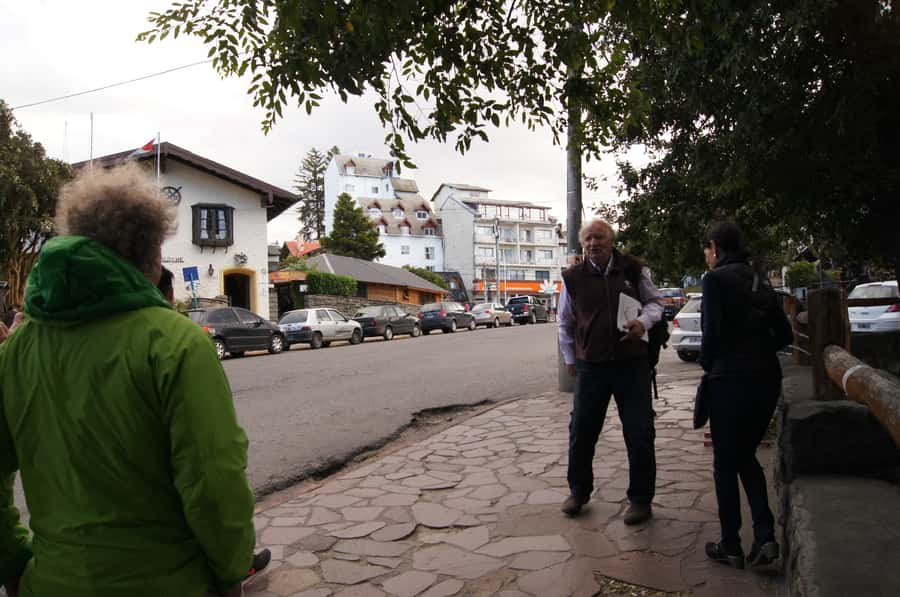
Bariloche is often sold through chocolate shops, lake views, ski slopes, and mountain excursions. Those are good reasons to come, but they do not explain why the town looks and feels the way it does. This tour gives you a useful layer of context by tracing German influence through buildings, institutions, families, and political history.
The subject is not simply a celebration of European style. The tour separates ordinary German immigration from the later arrival of Nazi figures and the myths that grew around German activity in Patagonia. That distinction matters. It keeps the story from becoming a simple tale of picturesque alpine architecture or sensational wartime rumors.
I appreciate that the walk uses actual locations instead of treating history as a lecture in one room. You move from place to place, stop for an explanation, then continue with the next part of the story. The changing setting helps you remember how the town’s public institutions and residential streets fit together.
The experience has earned a 4.8 rating from 169 ratings, and the strongest praise centers on the guide rather than on grand production. That is important here. The subject needs care, chronology, and the ability to separate documented events from local stories. Diego is repeatedly singled out for his English, his pacing, and his ability to answer questions without losing the thread.
More History Walking Tours in the world:
- History and Hauntings of Salem Guided Walking Tour
★ 5.0 · 14,564 reviews - Lisbon: History, Stories and Lifestyle Walking Tour
★ 4.8 · 10,902 reviews - Boston: Freedom Trail History Small Group Walking Tour
★ 5.0 · 6,450 reviews
Starting at the Civic Center
Meet by the door of the tourist information office in Bariloche’s Civic Center square. This is a practical starting point because the Civic Center itself is one of the places used to explain the town’s German connections.
You begin in a busy, recognizable part of central Bariloche, then shift your attention from the square to the institutions and buildings around it. The Civic Center gives the guide a way to set the scene before the walk heads toward the German neighborhood.
Expect a stop-and-go rhythm rather than a continuous stroll. Diego explains a section, the group walks to the next point, and the story picks up again. One visitor described the use of cliffhangers between stops, which is a good description of the method. The next location often answers a question raised at the previous one.
That approach suits the subject. You are not asked to remember a long list of names and dates all at once. Instead, the story unfolds in pieces, tied to places you can see.
The Andean Club and National Park administration
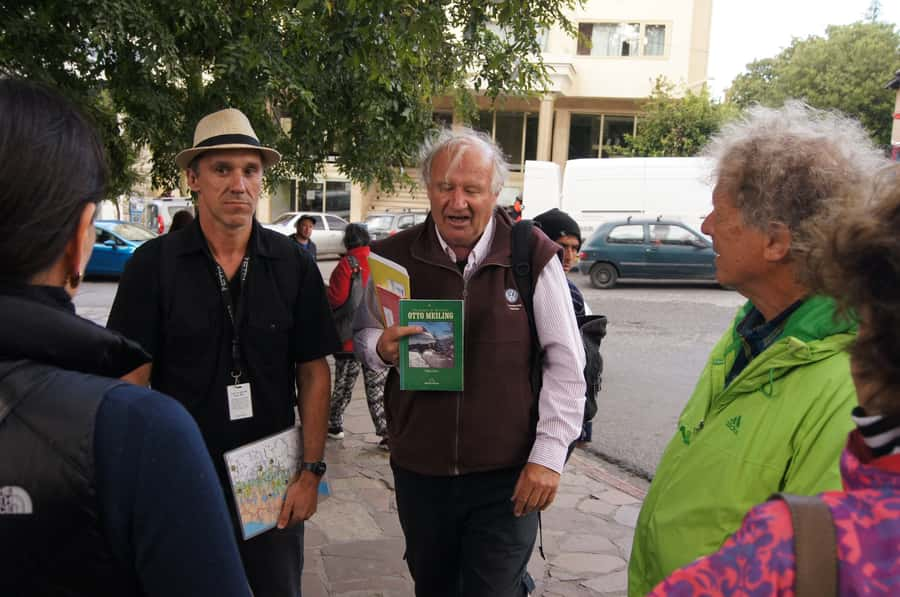
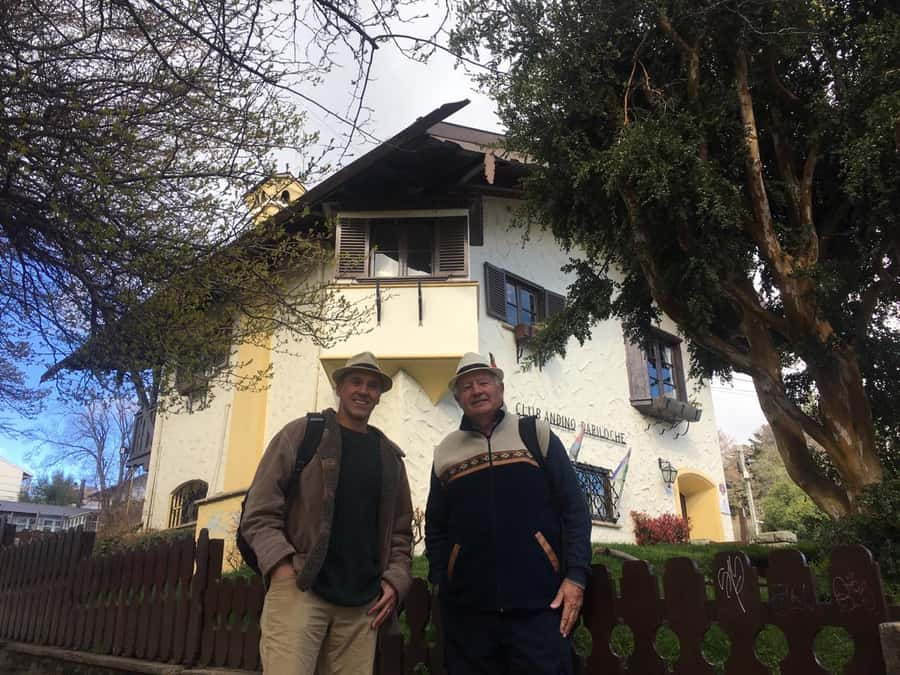
The route includes the Bariloche Andean Club and the administration of Nahuel Huapi National Park. These stops help connect German arrivals with the institutions that shaped Bariloche’s early public life and outdoor identity.
The tour is not presented as a general guide to every part of Bariloche. Its purpose is narrower: show how German influence appeared in the development of the town and how that influence became part of its public image. The Andean Club is especially relevant because Bariloche’s mountain culture is central to its identity, not just an attraction added for visitors.
You will likely get more from these stops if you pay attention to the difference between cultural influence and political affiliation. German language, customs, building styles, and organized outdoor activity do not automatically point to Nazi involvement. The guide’s job is to explain those layers separately.
This is one of the tour’s most useful features. It gives you a way to look at Bariloche’s institutions without turning every German connection into a conspiracy.
The German School and the Priebke story
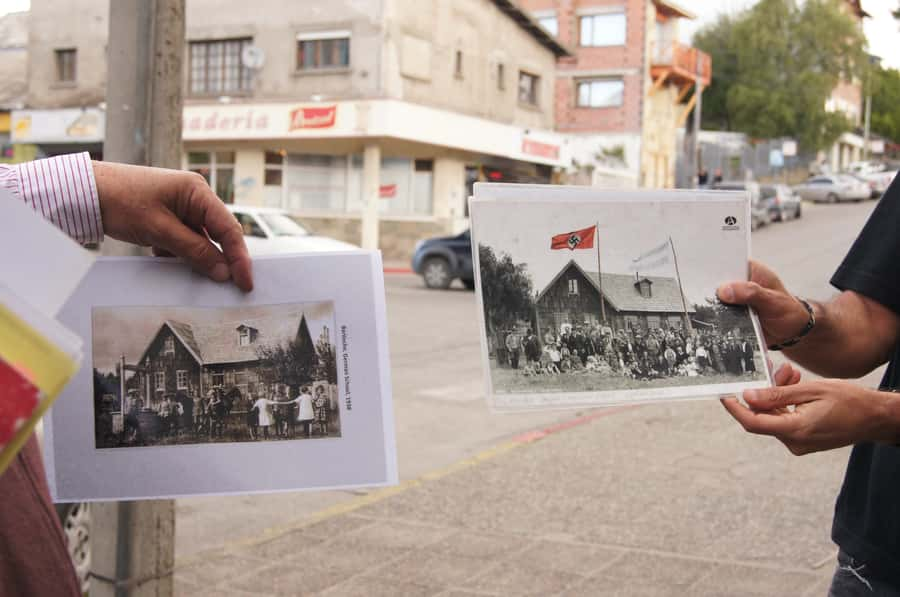
The German School is the most emotionally charged stop because it is linked to Erich Priebke’s discovery by American journalist Sam Donaldson. You also see the house where Priebke lived before he was extradited in 1994 after an American journalist uncovered his presence.
These are not abstract references in a timeline. They are ordinary-looking places connected with an extraordinary and troubling chapter. That contrast is part of what makes the stop memorable. A residential house and a school building can look harmless, yet both sit inside a story involving identity, concealment, journalism, and accountability.
The tour presents Priebke as part of the third, Nazi wave of German presence, rather than treating him as proof that all German immigrants shared the same politics. That distinction is essential. It allows you to understand the postwar Nazi presence without erasing the earlier German communities that had different origins and purposes.
The Priebke material also gives the walk a clear narrative turn. You start with immigration and local development, then reach the question of how former Nazi officers came to live in Argentina and why their presence remained hidden or contested. The topic is serious, but the guides praised most often handle it in an engaging and careful way.
If you have come to Bariloche expecting only pleasant European-style buildings, this section changes the mood. That is a benefit if you want honest history, but it may feel heavy if you are looking only for architecture.
A few more history tours around the world worth a look
- Colosseum: Underground and Ancient Rome Tour
★ 4.7 · 12,691 reviews - London Small Group Tour of Historical Pubs
★ 5.0 · 10,422 reviews - Prague: Oldtown, Medieval Underground & Dungeon History Tour
★ 4.3 · 10,277 reviews - Charleston’s Old South Carriage Historic Horse & Carriage Tour
★ 5.0 · 10,023 reviews
Belgrano Square and the German neighborhood
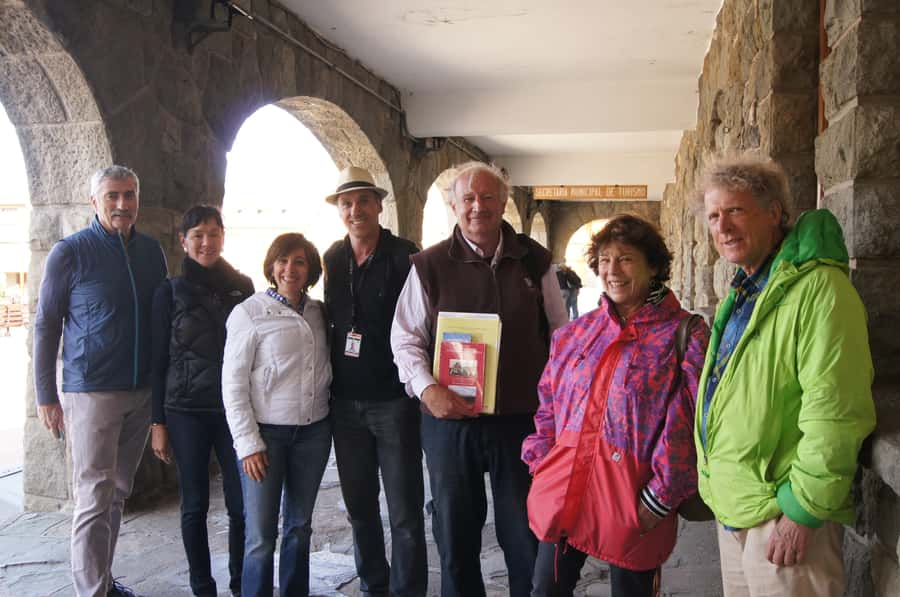
Belgrano Square and nearby streets bring the story down to the level of homes and neighborhood design. The walk points out different house styles with German origins, giving you something visible to compare with the historical explanation.
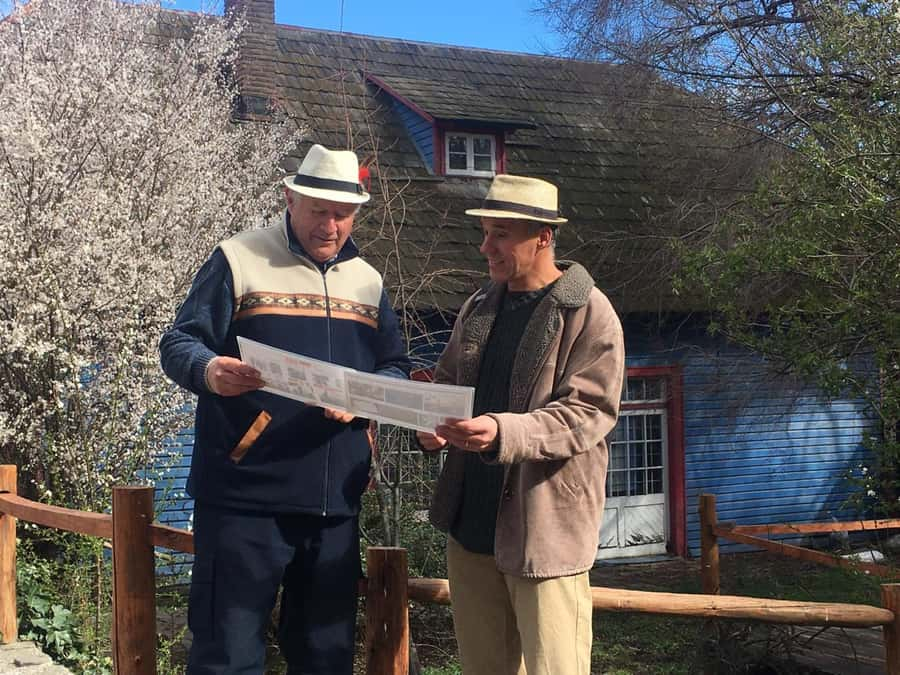
This is where the tour becomes more than a talk about immigration waves. You can connect the idea of German influence with the built environment, then notice similar details later as you explore Bariloche on your own. The guide uses old photographs and other visual material to compare earlier Bariloche with the town you see today.
The route is short, but do not assume it is flat. One visitor specifically warned that much of the area is uphill. The distance is manageable for most people who are comfortable with a 1-kilometer city walk, but the incline matters more than the mileage.
Wear sensible shoes and allow yourself to pause if needed. Since the experience lasts 90 minutes, you are not racing from one end of town to another. Still, the combination of standing, walking, and uphill streets makes it a better choice when you are not already worn out from a full day in the mountains.
The three waves of German immigration
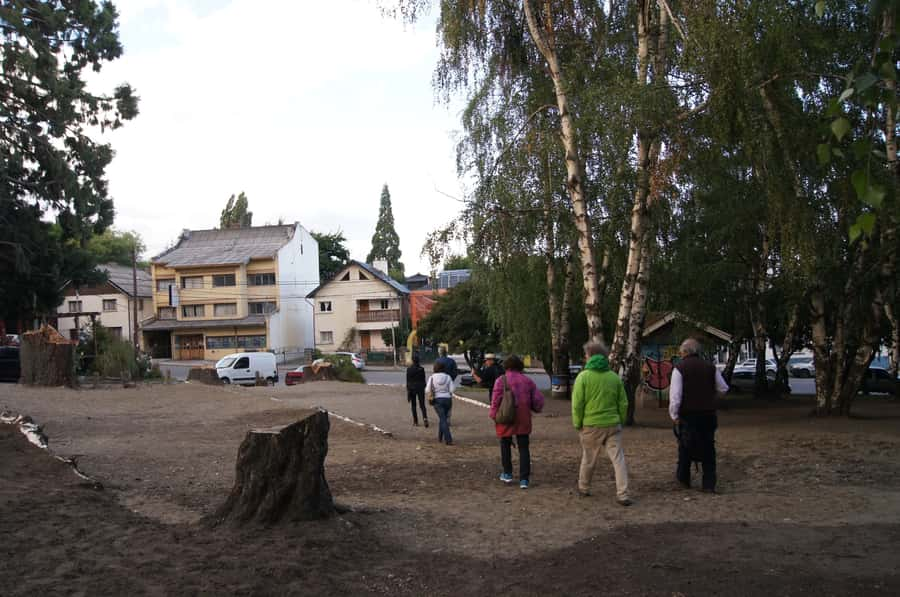
The central lesson is the division into three main waves of German immigration to Argentina and Bariloche. The tour covers arrivals beginning in the mid-19th century, then moves through later groups, ending with the Nazi wave after the Second World War.
The value is in the comparison. You learn that German presence was not one single movement with one motive. Different groups arrived at different times, and the reasons behind their presence cannot be bundled together.
The first wave helps explain the older foundations of German life in the region. Later immigration adds further layers, while the Nazi period introduces a much darker political story. The guide uses sites around town to show how those periods overlap in public memory.
You should expect a guided interpretation rather than a university seminar. The tour is designed to make the subject understandable during a short walk, not to cover every German settlement in Argentina or every wartime figure connected with the country. That focus is a strength for most visitors, though anyone seeking archival detail may want more time afterward for independent reading.
Reality, rumors, and Patagonia theories
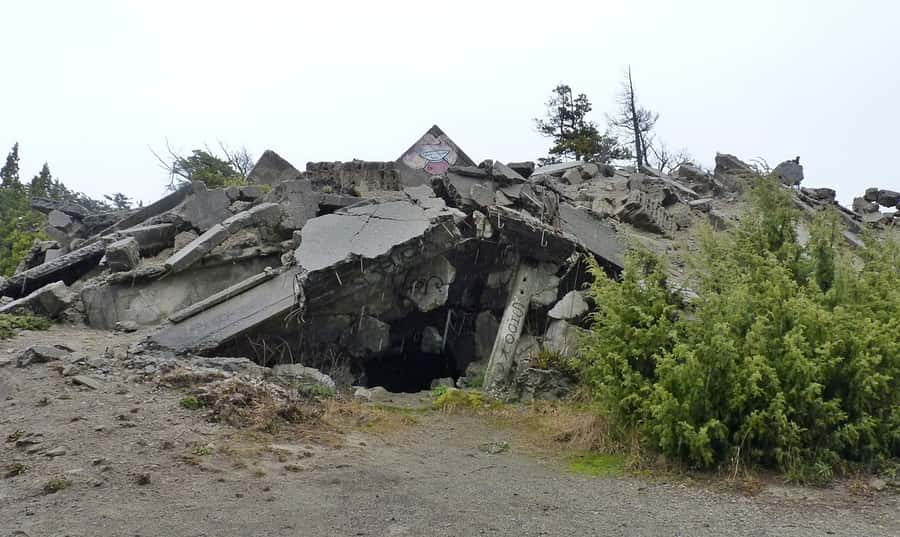
The tour closes with a discussion of theories about German presence in Patagonia. This is a useful ending because Bariloche has attracted stories that mix documented facts with speculation.
The important thing is the method. The guide does not simply repeat dramatic claims as if they were established history. The point is to examine the difference between what is known, what has been reported, and what has grown into local legend.
That final discussion may send you looking for more information later. One person said the Nazi history left them wanting to watch more material afterward, which makes sense. The tour gives you a framework, then leaves room for further questions.
I would not book this walk expecting a sensational conspiracy tour. Its value is greater when you want to understand why those stories exist and how they relate to the actual history of German immigration and postwar fugitives in Argentina.
Diego’s guiding style and the bilingual format
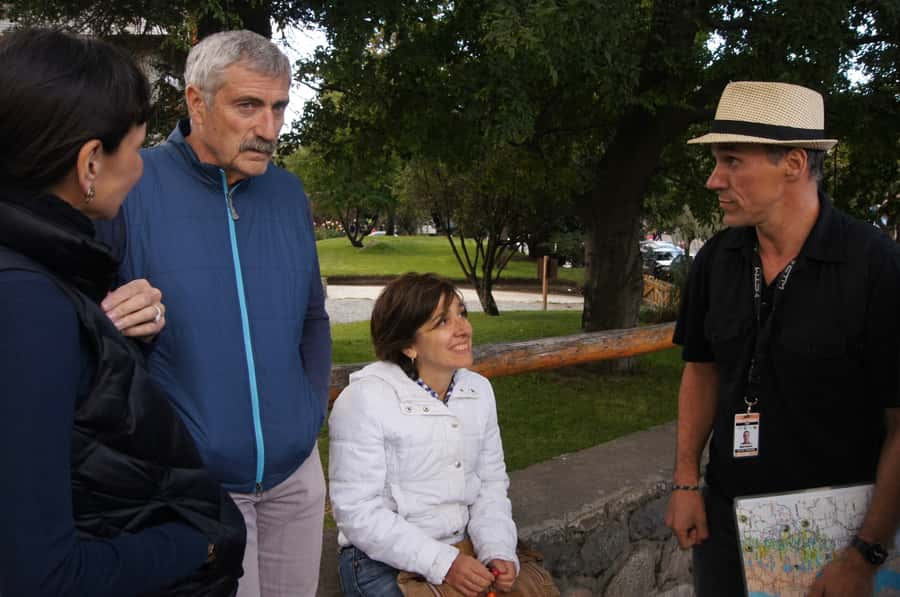
Diego is the guide most often praised, and the comments are specific. He is described as an excellent English speaker, an engaging storyteller, and a person who answers questions clearly. His approach uses frequent changes of location, old images, suspense between stops, and explanations that connect one site to the next.
That style works well for a 90-minute walk. A long speech in one place could become tiring, especially with a complicated subject. Moving through central Bariloche keeps the group alert and gives the information a physical anchor.
The tour is offered in Spanish and English. Some departures may include both languages, so each explanation can take longer. One person felt this reduced time for questions, while others found the bilingual presentation easy to follow because Diego handled both languages well.
If you want a purely English lecture with long pauses for discussion, ask about the language arrangement when you book. If you are comfortable with a bilingual group, the format can work well. Just keep in mind that the 90-minute schedule has limits.
The guide’s strongest quality is not merely factual command. It is the ability to make a complicated story feel ordered. Several accounts describe him as a teacher or storyteller, and that is the right expectation. You are there to understand connections, not to collect isolated facts.
Is $41 a fair price?
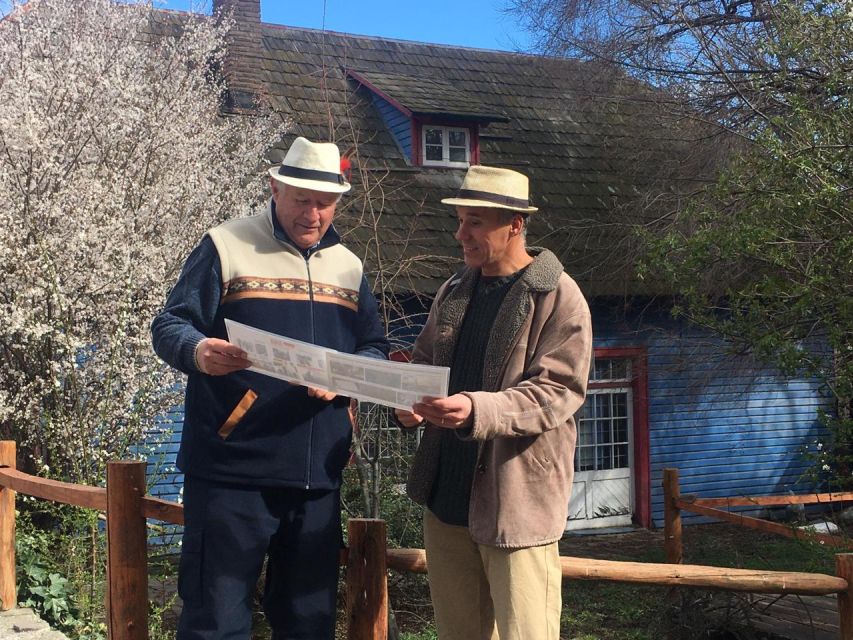
At $41 per person, this is more expensive than a basic free walk, but it offers a specialized subject and a guide who appears to be the main reason the experience works. You are paying for interpretation, not transport, food, or entry to a major monument.
The route covers about 1 kilometer and lasts 90 minutes. On distance alone, the price may seem high. The value improves if you care about Bariloche’s German identity, the history of Nazi fugitives in Argentina, or the way public memory shapes a city.
I would consider it good value for visitors who would otherwise leave Bariloche with only a vague sense of German influence. The tour also helps you read the city for the rest of your stay. Afterward, the buildings and institutions around the center have more meaning.
It is less compelling if you are uninterested in political history or if your schedule is already packed with outdoor trips. The subject is specific, and the experience depends heavily on listening. You should choose it because you want the story, not because you need another general sightseeing walk.
Who should take this Bariloche history walk?
I recommend it most strongly for:
- History fans interested in immigration, Nazi fugitives, and Argentina after the Second World War.
- First-time visitors who want context for Bariloche’s architecture and German identity.
- People who enjoy walking tours built around stories, photographs, and real locations.
- English-speaking visitors who value a guide comfortable in both English and Spanish.
- Anyone looking for a thoughtful activity between hikes, lake trips, or other outdoor plans.
You may want to skip it if uphill walking is difficult for you, if you dislike serious historical subjects, or if you want a tour centered mainly on scenic views. This is a city history walk, not a mountain excursion.
The meeting point is easy to identify at the Civic Center, by the tourist information office door. The guide and walking tour are included. You can cancel up to 24 hours before the start for a full refund, and a reserve-now, pay-later option is available, which helps if your Bariloche plans depend on changing weather.
Should you book it?
Book this tour if you want the story behind Bariloche’s German appearance, especially the difference between early immigration and the later Nazi presence. The stops at the German School, Priebke’s former house, Belgrano Square, and the town’s institutions make the subject concrete.
I would book it early in your stay if possible. The walk can give you useful context for the rest of your time in the center, and its short length makes it easy to fit around other plans. Choose a time when you have enough energy for uphill streets and enough attention for a serious subject.
At $41, it is not the cheapest way to spend 90 minutes in Bariloche. But with Diego’s strong guiding style, a focused route, and a story that goes well beyond postcard scenery, it earns its place on the schedule for curious visitors.
FAQ
Where does the German Immigration and History Walking Tour meet?
The meeting point is in Bariloche Civic Center square, by the door of the tourist information office.
How long does the tour last?
The tour lasts 90 minutes.
How far do you walk?
The route covers approximately 1 kilometer.
What languages are available?
The tour is offered in Spanish and English.
What is included in the price?
A guide and the walking tour are included.
How much does the tour cost?
The price is $41 per person.
Can I cancel for a full refund?
Yes. You can cancel up to 24 hours in advance for a full refund.
Can I reserve now and pay later?
Yes. The reserve-now, pay-later option lets you keep your plans flexible and pay nothing at the time of booking.
Just added around the world
- The Curacao’s Colorful History Walking Tour★ 5.0 · 55 reviews
- Olous – Guided Snorkelling Excursion to Discover Olous Sunken Ancient City★ 4.5 · 31 reviews
- Visita Guiada Por El Casco Histórico De Cuenca Y Su Catedral★ 5.0 · 45 reviews
- Experience Cozumel Historical Center Mayan and Beach Experience★ 5.0 · 20 reviews
- Private Half Day Cultural Tour to Mayan Ruins and Cenote★ 4.5 · 31 reviews
- From Kolymbari: Ancient Diktyna & Hidden Beach Quad Safari★ 5.0 · 22 reviews
- Historic Cork Delicious Donut Adventure by Underground Donut Tour★ 5.0 · 232 reviews
- Otoch Mayan Experience Tour: Cultural & Historical Adventure★ 3.5 · 18 reviews
History Walking Tours, compared.
History and Hauntings of Salem Guided Walking Tour
Read our review →
Freedom Trail History Small Group Walking Tour
Read our review →
Historic Charleston Guided Sightseeing Walking Tour
Read our review →
Tapas Walking Tour with Food, Wine, and History
Read our review →
Savannah History and Haunts Candlelit Ghost Walking Tour
Read our review →