
Review · CORK
Historic Cork Delicious Donut Adventure by Underground Donut Tour
Fresh donuts make city history easier to swallow. Underground Donut Tour’s Cork walk combines local landmarks and bakery stops in a compact two-hour route through the city center. I like the mix of the English Market area, old streets, music history, and treats made fresh along the way. I also like that guides such as Paddy, Chloe, Marysol, Rachel, and Marinna bring plenty of personality to the walk.
The main drawback is value. At $65 per person, this is a costly walking tour, especially for a family of five. The sweets can also pile up quickly, and the historical content may feel repetitive if you want a detailed, serious study of Cork.
Key things to know before you book
- Four food stops may be part of the fun: Past tours have included a vegan bakery, French pastries, American-style donuts, and Brazilian mini churros.
- The walk covers central Cork: You visit areas around Merchants Quay, the Opera House, Coal Quay, Washington Street, and St Patrick Street.
- It is more than a pastry crawl: Guides explain Cork’s buildings, markets, coat of arms, music connections, and political past.
- The group can include up to 20 people: That keeps the tour manageable, though it is not a private experience.
- Come hungry, but not dessert-starved: The amount of food may be generous enough to leave some for the next morning.
- The route is not ideal for serious mobility limits: It is a city walk with several stops, and good weather is required.
What the Cork donut walk is really like
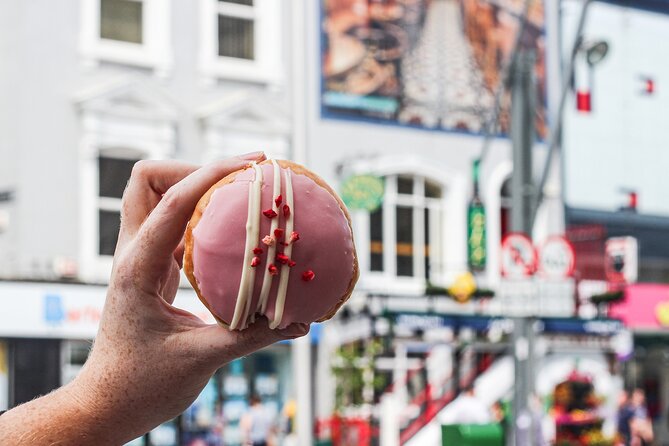
This is best understood as a guided city introduction with a sweet theme, not as a formal food course or a deep architectural tour. You spend roughly two hours moving through central Cork while stopping for breakfast donuts and other baked goods.
The food gives the walk its easy rhythm. You are not simply listening to a guide talk beside a building for half an hour. You get a landmark, a story, a short walk, and then something edible. That pattern works especially well for families, since younger children have a clear reward built into the route.
I also like the way the route includes places you might pass without noticing on your own. Cork’s center has old market spaces, grand public buildings, music memorials, churches, and small architectural details tucked between modern shops. A guide helps connect those pieces.
Still, you should set your expectations correctly. The experience is not built around long museum visits or inside access to major attractions. Most sightseeing happens from the street, and admission to the listed stops is free because you are viewing them from outside.
A few more history tours around Ireland worth a look
- Dublin Historical Centre Food Tour with 8 Food Tastings & Drinks
★ 5.0 · 1,718 reviews - 2-Hour Historical Walking Tour from Dublin
★ 5.0 · 875 reviews - Historical 2-Hour Guided Walking Tour of Dublin
★ 4.7 · 865 reviews
Starting at Cameron Bakery on Parnell Place
The meeting point is Cameron Bakery at 25 Parnell Place, in central Cork. This is a practical start because the first food stop is also tied to the bakery side of the experience. You receive a mobile ticket, and the tour is conducted in English.
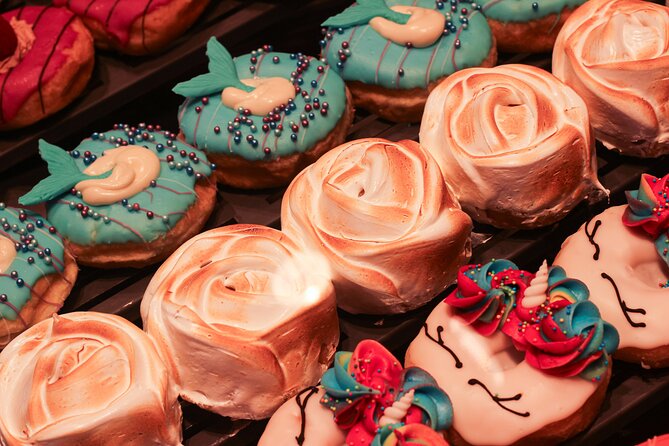
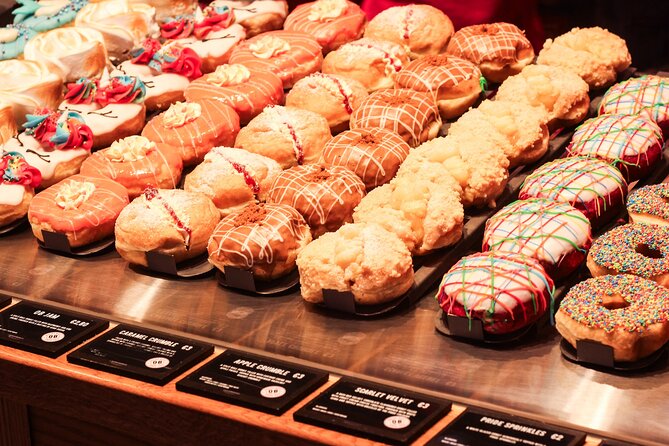
The food selection can vary, but the experience has included a mix of freshly prepared donuts and other baked goods. One detailed account described stops at Dolce Bun, Cameron’s, Offbeat, and a Brazilian bakery. Those samples included vegan pastries, French croissants, classic American-style donuts, and filled mini churros.
That variety is a real strength. You are not eating the same type of donut four times. At the same time, the tour name can create a narrow expectation. Some stops may feature pastries or churros rather than a traditional ring donut, so this is better for people who enjoy baked treats in general.
If you have a small appetite, plan ahead. The food may be plentiful. One family found that the sweets became too much by the end, while another group had enough left over for breakfast the next day. I would treat the first stop as a taste, not a challenge to finish everything immediately.
Merchants Quay and Cork’s trading past
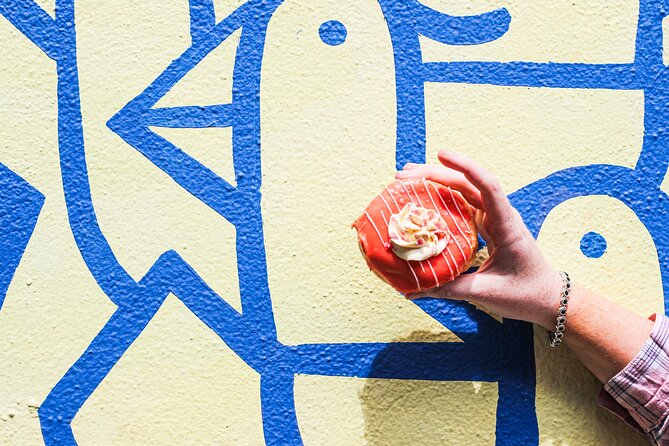
The first sightseeing stop is Merchants Quay Shopping Centre, where the guide explains how this part of Cork once depended on boats and cargo. The city’s waterways shaped its trade, and casks of premium Cork butter were among the famous goods moved through the area.
This is a useful opening because it gives you a simple way to understand Cork: follow the commerce. The modern shopping center occupies a place that once saw far more loading, unloading, and river traffic.
The stop lasts about 15 minutes. That is enough time for a concise explanation and orientation, but not enough for a long historical lecture. I see that as a benefit early in the tour. You get the basic setting without losing momentum.
Cork Opera House, Shandon Bells, and Queen Anne houses
Next comes Emmet Place and Cork Opera House. The guide explains the building’s past from outside and points toward the famous Shandon Bells. You also see two attractive Queen Anne houses, one now occupied by Starbucks.
This is one of the better visual sections of the route. Several different periods sit close together, and the guide can help you read the contrast between the opera house, historic homes, and modern commercial use. You get a quick lesson in how Cork keeps using old buildings for new purposes.
The stop is scheduled for about 30 minutes, making it the longest single sightseeing pause. That gives the guide more room for stories and questions. Paddy was praised for bringing old Cork to life through stories that felt different from a standard bus tour, while Marysol was singled out for explaining both local buildings and wider Irish events.
The limitation is that the experience remains an outdoor explanation. If you want to tour the opera house itself or hear the bells up close, this walk does not promise that.
Same place, a different slice of the past:
- Celtic Boyne Valley & Ancient Sites Day Tour From Dublin
★ 4.5 · 865 reviews - From Dublin: Celtic Boyne Valley and Ancient Sites Tour
★ 4.5 · 618 reviews - Dublin to Cork, Blarney Castle & Cóbh Heritage Centre by train
★ 4.5 · 510 reviews - Dublin: Jeanie Johnston Tall Ship Irish Famine History Tour
★ 4.8 · 431 reviews
Rory Gallagher’s statue and Cork’s music connection

The Rory Gallagher Memorial Sculpture provides a welcome change of subject. Gallagher was a celebrated rock and blues guitarist from Cork, and the bronze statue honors his connection to the city.
You can stop for photographs while hearing about his life and local ties. This is a small stop, around 15 minutes, but it adds character to the route. Cork is not presented only as a place of old markets and public buildings. You also see how the city remembers a modern cultural figure.
I especially like this stop for people who enjoy music, since it gives the walk a personal Cork connection. It is also a good photo opportunity for families and casual visitors who may not want every stop to be a long history lesson.
Coal Quay and the medieval city
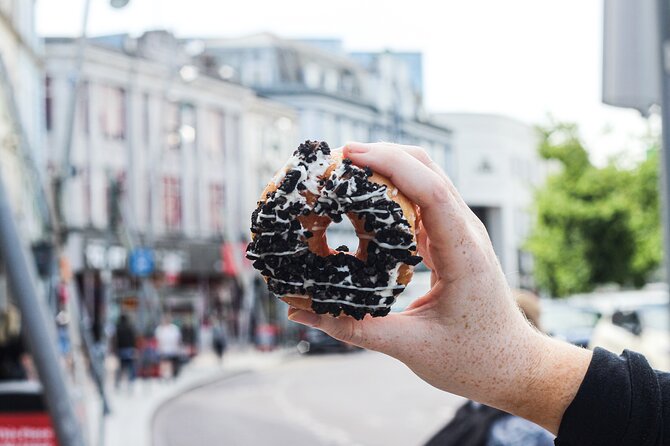
At Coal Quay Market, the guide points out the heart of medieval Cork and explains where Irish residents once bought food. You also look at Cork’s coat of arms on a wall near the site of an old tower connected with the Queen’s Castle.
This stop rewards close attention. The remains and references are not necessarily dramatic at first glance, but they help you picture how the older city was organized. A guide makes the difference here because the meaning is tied to what used to occupy the site.
The stop lasts about 15 minutes. You will not get a full archaeological tour, but you should come away with a clearer sense of Cork before its modern streets and shopping areas took shape.
Washington Street and the city’s public buildings
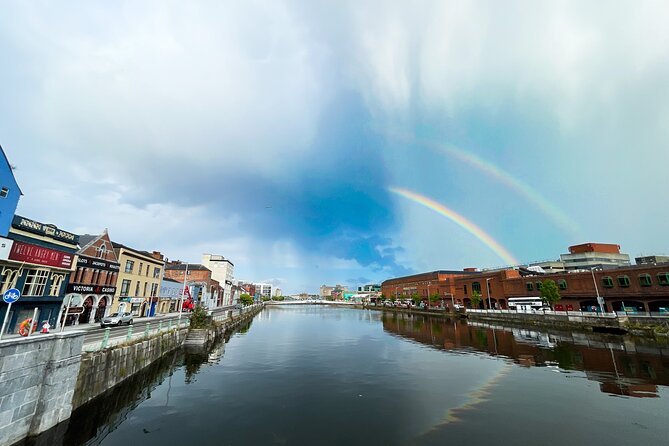
Washington Street brings you past Cork Courthouse, Reardons Emporium, and St Augustine’s Church. This section is less about one single attraction and more about seeing how different buildings share the same urban corridor.
The courthouse gives the street a formal civic presence, while Reardons Emporium and St Augustine’s add commercial and religious layers. The route works well here because you are walking rather than being driven past the buildings. You have time to look upward, compare facades, and ask the guide what you are seeing.
The stop is listed at about 15 minutes. That may feel brief if you want detailed architectural analysis, but it keeps the tour moving toward the final food stop.
St Patrick Street and a final stop at Cafe Mexicana
The last walking section follows St Patrick Street, Cork’s modern central shopping street. Here the guide points out the mix of architectural styles and the Huguenot burial ground hidden within the city center.
That burial ground is exactly the sort of detail many people miss when walking alone. It adds an unexpected reminder that Cork’s past includes communities and religious traditions that are not obvious from the main retail street.
The tour ends at Cafe Mexicana on Carey’s Lane. The route is designed to finish there, rather than return you to Cameron Bakery, so plan your next move from the city center. The end point is useful for continuing your day on foot, though you should not assume the guide will escort you elsewhere. One guide, Paddy, did walk a participant back to the train station, but that was a kind gesture rather than a listed part of the tour.
The guides make or break the experience
The strongest praise goes to the people leading the walks. Paddy was described as entertaining and well informed, with a gift for telling stories about old Cork. Chloe was praised for patience, warmth, and making sure a parent with a disability felt included. Marysol received strong marks for explaining both Cork and Irish history, even though she grew up in Venezuela.
Rachel, Marinna, Julian, and other guides also received warm comments for being friendly, clear, and easy to listen to. One guide handled an unavailable stop by quickly arranging an alternative, which shows the practical value of having a flexible leader.
There is one fair concern: not every guide will be from Cork or have a personal Irish background. One participant felt that a local guide would have added more depth, even while acknowledging good knowledge of the city. If local family stories and a strongly regional viewpoint matter most to you, ask about the guide when possible, though assignments may change.
The tour format may also limit what a guide can cover. One family felt that some facts were repeated and that the guide had little control over the set content. That is worth keeping in mind if you prefer a flexible, question-led walk.
Is $65 a fair price?
The price is $65 per person, which puts this well above a basic free walking tour. You are paying for the guide, the food, and the convenience of a planned route through central Cork.
For a visitor who wants both breakfast and orientation, the price can make sense. The tour connects several neighborhoods and landmarks, and the food may include four separate bakery experiences. You also avoid spending time deciding where to eat or how to fit the sights together.
For a family, the arithmetic is less comfortable. Five tickets would cost $325 before any other spending, and children may not want several rounds of sweets. If your main goal is a detailed Cork history tour, you may find better value in a dedicated cultural walk and buying one pastry on your own.
I would book this for the combination, not for the cheapest meal or the most rigorous history lesson. Its value rises if you enjoy trying different bakeries and want a friendly introduction to the center.
Who will enjoy it most?
This tour suits families with children who need variety and a clear reason to keep walking. It also fits first-time Cork visitors who want a quick orientation before exploring the city independently.
You will likely enjoy it if you like:
- Short outdoor explanations rather than long indoor visits
- Food stops with different pastry styles
- Music, markets, old streets, and local stories
- A guide who can answer questions while keeping the pace light
- Small-group sightseeing, with a maximum of 20 people
It is less suitable for someone who dislikes sweet food, wants a quiet museum-style tour, or has significant mobility limitations. Most participants can take part, and service animals are allowed, but the activity involves walking through city streets and is not recommended for people with major mobility issues.
The tour also depends on good weather. If poor weather causes cancellation, you are offered another date or a full refund.
Booking timing and cancellation
The experience is often booked about 45 days in advance, so I would reserve ahead if your Cork dates are fixed. Confirmation arrives when you book, and free cancellation is available up to 24 hours before the start time.
Cancel at least 24 hours ahead for a full refund. Changes or cancellations inside that window are not accepted for a refund. The cut-off follows local Cork time, so check the clock carefully if you are changing plans from another time zone.
Should you book the Historic Cork Delicious Donut Adventure?
Book it if you want a cheerful, food-led introduction to Cork and like learning in short portions. The best parts are the variety of bakery stops, the unusual details around the city center, and the guides who make the walk personal. Paddy, Chloe, and Marysol received especially strong praise for their storytelling and care.
Skip it if $65 feels high for a walking tour, if you do not want a large amount of sweet food, or if you need a highly detailed account of Irish history. For most people, the smartest approach is to arrive hungry, pace yourself at the food stops, and see this as a tasty city sampler rather than a full historical course.
FAQ
How long does the Historic Cork Delicious Donut Adventure last?
The tour lasts approximately two hours.
How much does the tour cost?
The listed price is $65 per person.
Where does the tour begin?
It begins at Cameron Bakery, 25 Parnell Place, Centre, Cork, T12 VH29, Ireland.
Where does the tour finish?
The tour finishes at Cafe Mexicana on Carey’s Lane in central Cork.
Is food included?
Yes. Breakfast donuts are included, along with food stops featuring baked goods.
Is the tour conducted in English?
Yes, English is the listed language for the experience.
What places does the walk visit?
The route includes Merchants Quay, Cork Opera House, the Rory Gallagher Memorial Sculpture, Coal Quay Market, Washington Street, and St Patrick Street.
How many people can join the tour?
The maximum group size is 20 people.
Is the tour suitable for children?
Most participants can take part, and the mix of city sights and treats is designed to keep children engaged. The amount of food may be more than some children want.
Can I cancel for a full refund?
Yes. You can cancel at least 24 hours before the start time for a full refund. Poor-weather cancellations provide a different date or a full refund.
Just added around Ireland
- The Queenstown Story @ Cobh Heritage Centre , Great Stories of Emigration.★ 4.5 · 181 reviews
- Visit 16 Sites Key Historical Sites And Experience Cobh Rebel Tours★ 5.0 · 167 reviews
- Galway: Dark History Guided City Walking Tour★ 4.8 · 236 reviews
- Kilkenny: Historical Highlights Walking Tour★ 4.9 · 90 reviews
- Kilkenny: Historical and Hysterical Guided City Walking Tour★ 5.0 · 126 reviews
- Dublin: LGBT Pride Walking Tour with Queer History★ 5.0 · 24 reviews
- Dublin: Macabre History Walking Tour★ 4.9 · 95 reviews
- Wicklow Historic Gaol: 1-Hour Tour★ 4.4 · 56 reviews
Ireland History Tours, compared.
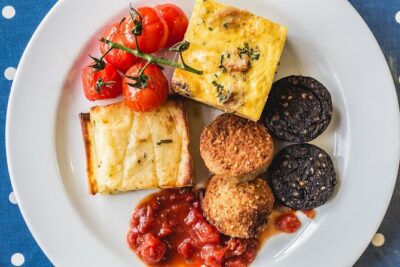
Dublin Historical Centre Food Tour with 8 Food Tastings & Drinks
Read our review →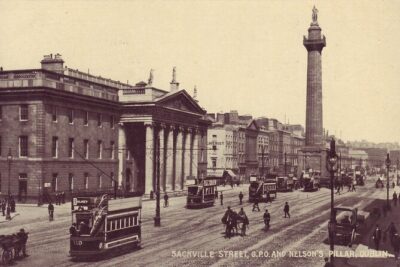
Historical 2-Hour Guided Walking Tour of Dublin
Read our review →
Celtic Boyne Valley & Ancient Sites Day Tour From Dublin
Read our review →
Dublin to Cork, Blarney Castle & Cóbh Heritage Centre by train
Read our review →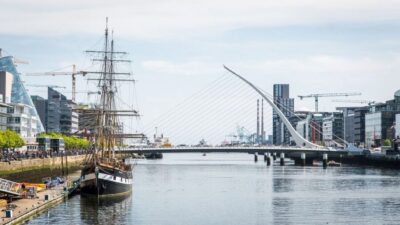
Jeanie Johnston Tall Ship Irish Famine History Tour
Read our review →
Browse the lists this tour appears in