
Review · CENTRAL GREECE
Athens: History of Rebellion Walking Tour
Athens has more stories than ancient temples. This 2.5-hour walk follows the city’s long fight against Ottoman rule, fascism, police violence, and social injustice, linking famous squares with the less familiar political life of modern Greece. I especially like the route’s shift from Monastiraki and Syntagma to Exarchia, and I like the way guide Maelle turns dates and events into a human story. The main drawback is that this is a serious, discussion-led tour, so it may not suit anyone looking only for light sightseeing.
I also appreciate the small-group format, which gives you room to ask questions and talk through difficult subjects. The final stretch in Exarchia adds a side of Athens that standard ancient-history tours usually skip. You should be ready to walk and stand for two to three hours, often in the sun, and the route is not suitable for people with mobility impairments.
Key points at a glance
- A modern-history route: Follow Athens from Ottoman rule and the Greek Revolution to fascism, dictatorship, protest movements, and present-day activism.
- Exarchia is the main event: Learn how this central neighborhood became associated with anarchists, refugees, artists, the LGBT+ community, and campaigns for social justice.
- A strong guide matters here: Maelle is praised for clear explanations, humor, empathy, and personal recommendations for food and sightseeing.
- More discussion than monument collecting: The tour asks you to think about graffiti, public space, political movements, and who gets remembered.
- A useful first-day activity: The route can give you context for the rest of your stay, especially if modern Greek society is new to you.
- Bring practical gear: Wear comfortable shoes, carry water, and pack a hat and sunscreen.
Why this Athens walk feels different
Most first visits to Athens focus on the Acropolis, classical temples, and the city’s ancient past. Those places matter, but they do not explain everything you see on the streets today. This walk shifts the focus to the people, movements, and conflicts that helped shape modern Athens.
The story begins roughly 200 years ago, when the city was still under Ottoman rule and resistance helped fuel the Greek Revolution. From there, the route moves through the formation of the modern Greek state and into more recent struggles involving fascism, violence, oppression, and demands for freedom.
That change in focus is the tour’s real value. You are not simply collecting names and dates. You are learning why certain squares carry political weight, why some public spaces become gathering points, and why neighborhoods such as Exarchia mean much more to residents than a stop on a sightseeing map.
The tone appears thoughtful rather than narrowly political. The experience is clearly sympathetic to resistance movements, so you should book it if you want to examine those movements seriously. If you prefer a neutral overview with little discussion of current politics, this may feel too pointed.
More History Walking Tours in Athens
- Acropolis, Parthenon & Athens Old City Heritage Walking Tour
★ 4.5 · 876 reviews - Ancient Athens for Kids 4-Hour Private Walking Tour
★ 5.0 · 66 reviews - Private Athens Walk: Ruins, Markets & Local Stories
★ 5.0 · 41 reviews
Starting among old Athens in Monastiraki
Meet in Monastiraki Square, in front of Pantanassa Church. Look for a guide holding a sign that says Athens City of Rebellion. This is a practical meeting spot near one of Athens’ best-known central areas, but allow a little time to locate the church within the square.
Monastiraki is not treated simply as a photogenic starting point. The tour uses the area to take you back to the Ottoman period and the early stages of Greek resistance. The setting helps connect the modern city beneath your feet with the political changes that shaped the Greek state.
The stop at Monastiraki itself is brief, about five minutes, so expect an introduction rather than a long monument talk. That is useful because the route has a lot to cover. You get the historical frame, then keep moving.
From here, you pass the Metropolitan Church of Athens and continue toward a less obvious stop. The short visit gives the guide room to point out details that you might otherwise pass without noticing. This is one reason comfortable shoes matter: the tour is not a series of long indoor visits, but a moving conversation through central Athens.
Syntagma, Parliament, and the public square
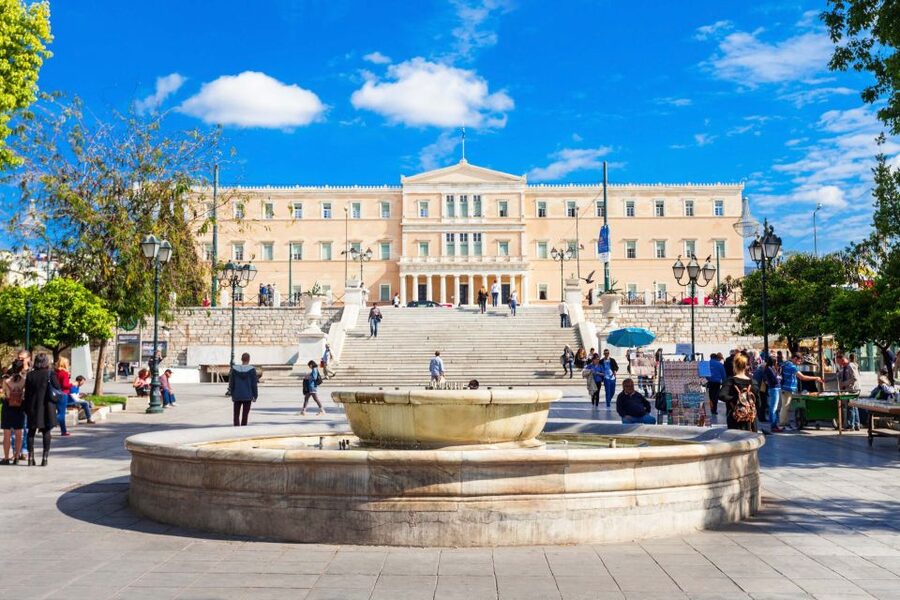
The walk continues toward Syntagma Square, the symbolic heart of modern Greek protest. Here, the guide connects the city’s past struggles with large popular movements and the public actions that have taken place in the square.
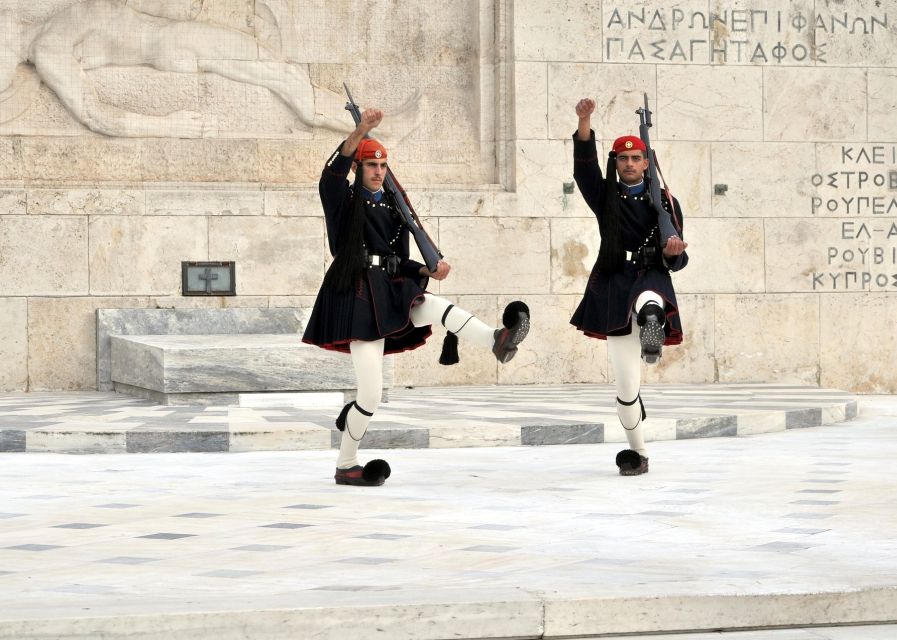
You spend about ten minutes at Syntagma, followed by visits to the Hellenic Parliament and the Tomb of the Unknown Soldier. These stops are close together, but each serves a different purpose. Syntagma is the public gathering place, Parliament represents political authority, and the tomb brings questions of national memory and sacrifice into the conversation.
The tour does not treat these locations as isolated landmarks. Instead, you look at how a government building and a civic square can become stages for mass action. That connection is especially useful if you have seen Syntagma only as a place to photograph the guards or cross the street.
The guide also covers individuals who became symbols of resistance. The exact balance between personal stories and larger movements will depend on the group and the guide’s style, but the experience is designed to make political history more human. Maelle receives especially high praise for explaining modern Greek history in clear chronological order and for making room for questions.
You will be outside for most of this section. Athens can be hot, and there is no promise of long indoor breaks, so bring water, sunscreen, and a sun hat.
From Kolonaki to the Academy of Athens
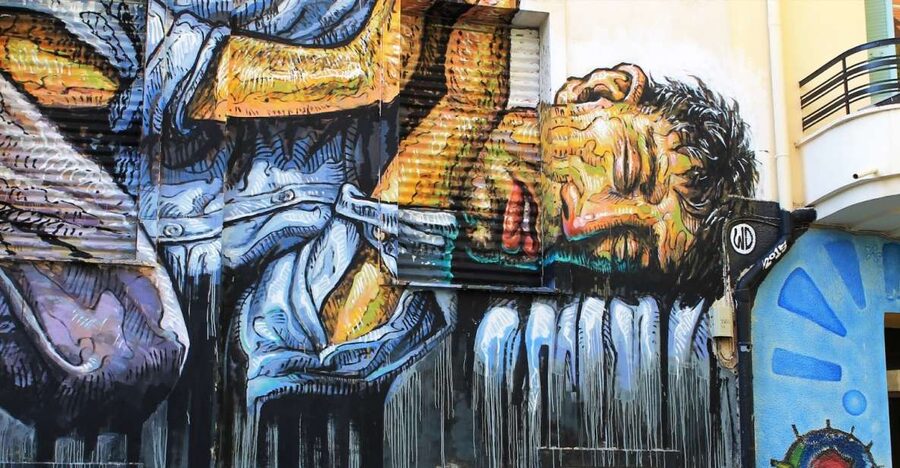
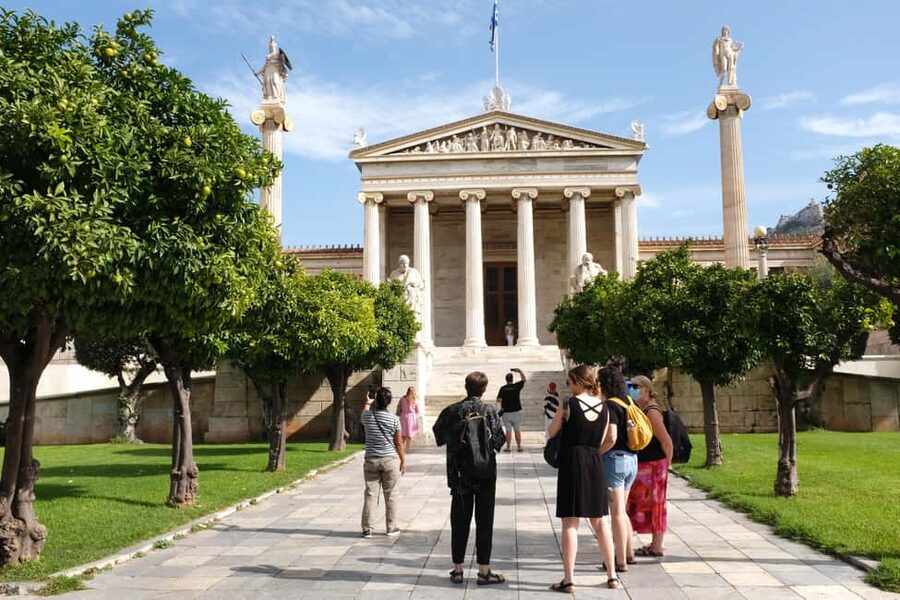
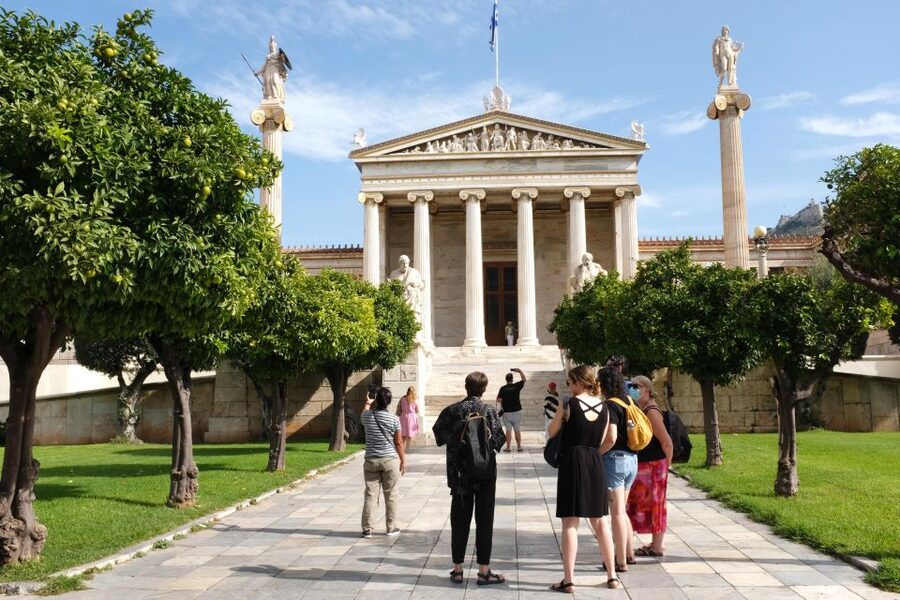
After Syntagma, the route passes through Kolonaki and reaches the Academy of Athens. Kolonaki is a useful transition point because it lets the tour move from the formal center of state power toward neighborhoods with different social and political identities.
The Academy stop lasts about ten minutes and adds another layer to the story of modern Greece. Here, the walk can help you connect national ideals, public institutions, and the way history gets presented in official spaces.
This part may appeal to you if you like seeing how a city’s grand buildings relate to its less polished streets. It is not a museum tour, and you should not expect extended interior visits. The value comes from the guide’s explanation and from comparing the formal architecture around you with the street-level politics still ahead.
Several people who enjoyed the tour praised its ability to connect facts they had already heard into a clearer picture. That is a useful promise for a visitor who knows a little about Greece but finds modern history hard to place. The guide’s job here is not just to add more information, but to show how the pieces fit.
More History Walking Tours in Greece
- Small-Group Women History in Ancient Greece Walking Tour
★ 5.0 · 38 reviews - Athens:Acropolis – Historical Center Walking Tour in Spanish
★ 5.0 · 32 reviews - Private Athens: Historical Walking Tour Including the Changing of the Guard
★ 5.0 · 27 reviews - Corfu: History and Culture Walking Tour
★ 4.9 · 55 reviews
Entering Exarchia, Athens’ political neighborhood
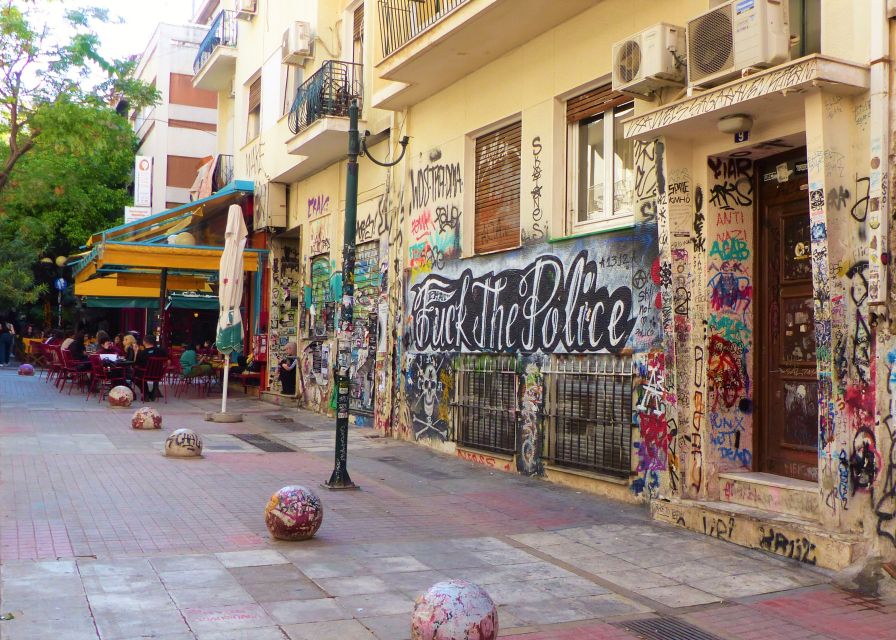
Exarchia is the defining section of the walk. The neighborhood is presented as a current center of resistance and activism, with ties to anarchists, refugees, the LGBT+ community, artists, and people working for social justice.
You should not expect Exarchia to be treated as a tidy attraction. The point is to understand it as a living neighborhood with competing pressures and strong local identity. The guide discusses its struggles with police repression and gentrification, as well as efforts to preserve its anarchist and collectivist character.
The route includes several stops in and around Exarchia, including a secret stop, another less obvious location, and Exarchion Square. Each is listed for roughly five to ten minutes, but the exact flow will depend on questions and conversation. This is where a small group has a real advantage. You can ask what you are seeing, discuss street art, and explore ideas rather than standing quietly behind a flag.
Street art is part of the experience, but it is not just decoration. The guide uses it to raise questions about who controls public space and how artists respond to political events. One experience with Maelle specifically praised the way she used graffiti by street artist WD to encourage critical thinking.
That approach makes the walk more than a tour of controversial locations. You are asked to consider how a city communicates, who has a voice, and what happens when a neighborhood becomes famous for resisting authority.
What Maelle adds to the experience

A history-of-rebellion tour depends heavily on the guide. Dry facts would not be enough, especially when the subject includes civil conflict, authoritarianism, police violence, migration, and current political disagreements.
Maelle is repeatedly praised for warmth, humor, clarity, patience, and care for the people who live in the neighborhoods being discussed. She is also described as willing to share personal perspective while treating local lives with respect. That matters in Exarchia, where a careless tour could turn a real community into a backdrop.
The best part of her approach appears to be the balance between explanation and conversation. You get a timeline, but you also get questions. You hear about major events, then consider how those events affect daily life and public space.
Maelle also gives practical suggestions after the walk, including places to eat, shopping areas, sights in Athens, and ideas for Greek islands. These tips are not the main product, but they can be useful if you take the tour early in your trip. One participant wished they had booked it on the first day because it helped make better sense of the city.
The tour is offered in English or French. Private and small-group options are available, so check the format carefully when booking if group size matters to you.
How much value do you get for $44.04?

At $44.04 per person, this is not the cheapest way to spend two and a half hours in Athens. You can walk through Monastiraki, Syntagma, and Exarchia on your own for free.
The price makes more sense if you want context rather than directions. You are paying for a guide who can connect Ottoman rule, the Greek Revolution, national politics, resistance movements, and current neighborhood struggles in one coherent route. You are also paying for access to a perspective that is easy to miss if you rely only on standard guidebooks and major monuments.
The value is strongest for visitors who enjoy conversation and want to understand present-day Athens. It is weaker if you mainly want photographs, long stops at famous buildings, or entry to historic interiors. There are no museum admissions, meals, transport, or other extras included. What you receive is the walking tour and guide.
Free cancellation up to 24 hours before the activity and the reserve-now, pay-later option reduce the risk of committing early. Still, your main decision should be about subject matter and walking ability, not booking flexibility.
Who should book this walk?
I would recommend it to you if you have already seen some ancient Athens and want to understand the modern city. It is also a strong choice for anyone interested in political history, social movements, migration, street art, community organizing, or urban change.
It suits curious first-time visitors, especially if you book it near the beginning of your stay. The route can give meaning to places you later pass on your own, and the recommendations at the end may help shape the rest of your trip.
You may want to skip it if you dislike political discussion or feel uncomfortable with a tour that is sympathetic to resistance movements. The guide does not present rebellion as a distant subject sealed in a history book. The focus reaches into current questions about policing, gentrification, and social justice.
Also consider the physical side. You will walk and stand for two to three hours. Comfortable shoes, water, a hat, and sunscreen are essential. The activity is not suitable for people with mobility impairments.
One practical point needs checking before you book: the information gives Monastiraki as the meeting point and says the activity ends back there, while the route description lists Plateia Exarcheion as the finish. Ask the provider to confirm the final endpoint for your date.
Should you book the Athens History of Rebellion Walking Tour?
Book it if you want Athens to feel like a living city rather than an open-air museum. The route links familiar places with overlooked stories, and Exarchia gives the experience its strongest sense of place.
At $44.04, the tour earns its price through interpretation, small-group conversation, and access to modern Greek history that many standard city tours leave out. I would choose it early in an Athens visit, wear good shoes, and arrive ready to listen, ask questions, and accept that some answers will remain contested.
Skip it if you want a relaxed landmark stroll with little politics. For everyone else, especially those drawn to social history and the voices behind the monuments, this is a thoughtful way to meet Athens on its own terms.
FAQ
How long does the Athens History of Rebellion Walking Tour last?
The tour lasts 2.5 hours. Starting times vary, so check availability for the date you want.
Where does the tour begin?
Meet in Monastiraki Square in front of Pantanassa Church. The guide will hold a sign that says Athens City of Rebellion.
Where does the tour end?
The activity information says it ends back at the meeting point, while the route description lists Plateia Exarcheion as the finish. Confirm the endpoint with the provider before booking.
What languages are available?
The tour is offered in English and French.
Is the tour private or shared?
Private and small-group options are available. Check the booking choice for your preferred format.
What places does the route visit?
The route includes Monastiraki, the Metropolitan Church of Athens area, Syntagma Square, the Hellenic Parliament, the Tomb of the Unknown Soldier, Kolonaki, the Academy of Athens, Exarchia, and Exarchion Square.
What should I bring?
Bring comfortable shoes, water, sunscreen, and a sun hat.
Is the tour suitable for people with mobility impairments?
No. The activity is listed as unsuitable for people with mobility impairments.
Can I cancel for a refund?
Yes. You can cancel up to 24 hours in advance for a full refund. You can also reserve now and pay later.
Just added around Athens
- The original Christian tour on Paul’s footsteps in Athens and ancient Corinth★ 4.5 · 25 reviews
- Small-Group Women History in Ancient Greece Walking Tour★ 5.0 · 38 reviews
- Athens: Combo Ticket for Acropolis & 6 ancient sites★ 3.0 · 21 reviews
- Ancient Sparta & Mystras Private Day Tour from Athens★ 5.0 · 52 reviews
- Ancient Olympia & Isthmus Canal Private Tour from Athens★ 5.0 · 20 reviews
- Ancient Agora & Temple of Hephaestus Entrance Ticket★ 3.5 · 22 reviews
- Half Day Historical Athens City Private Taxi Service Tour★ 5.0 · 79 reviews
- Ancient Corinth, Sanctuary of Hera, Blue Lake & Canal from Athens★ 5.0 · 26 reviews
History Walking Tours, compared.

History and Hauntings of Salem Guided Walking Tour
Read our review →
Freedom Trail History Small Group Walking Tour
Read our review →
Historic Charleston Guided Sightseeing Walking Tour
Read our review →
Tapas Walking Tour with Food, Wine, and History
Read our review →
Savannah History and Haunts Candlelit Ghost Walking Tour
Read our review →
A History of Terror – Belfast City Centre Walking Tour
Read our review →Browse the lists this tour appears in