
Review · ZANZIBAR
Stone Town Historical Walking Tour
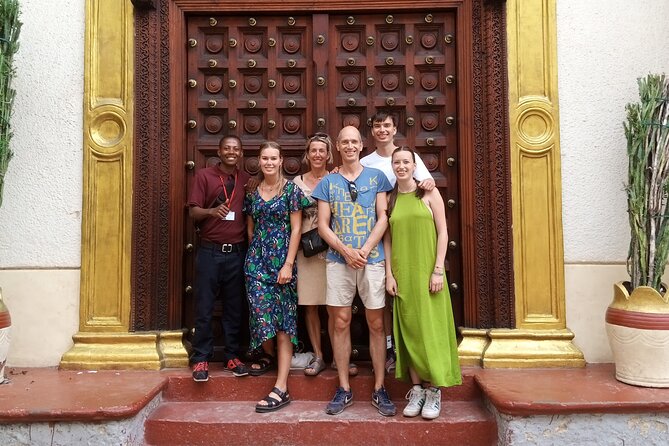
Stone Town rewards curious walkers. This private tour links Zanzibar’s old streets with its Omani, Persian, Portuguese, African, and colonial past. I like the small-group format and the chance to ask questions as you go, rather than follow a guide with a large crowd. I also like that the route covers both grand landmarks and everyday places such as Darajani Market and Jaws Corner.
The main caution is practical: the House of Wonders area is under construction, and one booking caused confusion over the meeting location. You should confirm the exact starting point at House of Wonders before setting out. The former slave market costs an additional $5, and the tour price does not include other entrance fees, transport, food, or tips.
Key points before you book
- Private three-hour walk: Only your group takes part, with a listed duration of two to three hours.
- History with a serious edge: The tour explains East Africa’s slave trade and visits the former slave market site.
- Stone Town’s headline sights: Expect the House of Wonders, Old Fort, Freddy Mercury’s former home, churches, gardens, and markets.
- Strong guide feedback: Alfa, Alfan, Khalfan, Sultan, Rabik, and other guides receive praise for clear explanations, patience, and personal attention.
- Good for families: Guide Rabik kept children aged seven and twelve interested during a walk lasting more than three hours.
- Low base price, extra costs: The $20 fee covers the guide, but the former slave market admission is $5 per person, with other costs separate.
Starting at the House of Wonders
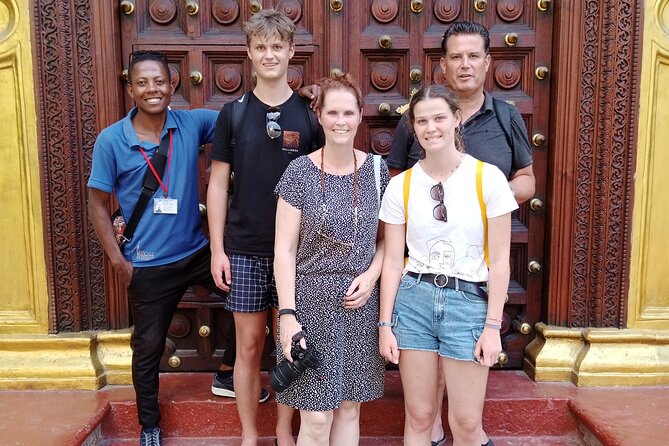
The tour begins at the House of Wonders on Sokoku Street, listed at map code R5QQ+JR. This is a sensible place to start because it puts you near several of Stone Town’s central sights. The activity ends back at the same meeting point, which makes it easier to plan your next move.
Allow a little extra time to find the guide. One party had trouble because the map pin appeared inside a construction area. The provider explained that the building itself was not the intended meeting point. That is not a reason to reject the tour, but it is a reason to confirm the landmark and guide contact before you leave your hotel.
The House of Wonders is one of Stone Town’s best-known buildings, but its condition matters. Parts of the site are under construction, and access may not be as tidy or straightforward as the name suggests. You can still use the area as your orientation point, while your guide explains how Zanzibar’s political and cultural story developed around the waterfront.
More History Walking Tours in the world:
- History and Hauntings of Salem Guided Walking Tour
★ 5.0 · 14,564 reviews - Lisbon: History, Stories and Lifestyle Walking Tour
★ 4.8 · 10,902 reviews - Boston: Freedom Trail History Small Group Walking Tour
★ 5.0 · 6,450 reviews
Reading Stone Town through many cultures
This walk is strongest when it connects different eras instead of presenting Stone Town as a single old quarter. The route covers local African roots, Persian influence, Portuguese rule, the Sultanate of Oman, and the later presence of European religious institutions.
That range gives you a useful frame for the streets you are seeing. A carved door is not just a photo stop. A market is not merely a place to buy spices or souvenirs. A fort is not simply a pile of old stone. Your guide helps connect these visible pieces with the people and powers that shaped the town.
Several guides are praised for answering questions in plain language. Alfa is repeatedly described as patient and easy to talk with. Alfan is noted for explaining the sights clearly, while Sultan spent extra time pointing out the town’s carved wooden doors. These details matter because Stone Town is best understood at street level, where a flexible conversation can add more than a fixed speech.
The experience has a strong score of 4.9 from 143 ratings, with 97 percent recommending it. That does not remove the need for sensible expectations, but it does point to a consistent strength: the guide usually makes the town more understandable and personal.
Old Fort and the waterfront
The Old Fort is one of the major stops. It gives the walk a firm historical anchor and helps explain Zanzibar’s defensive past. You will have time to look around, take photographs, and ask how the fort fits into the wider story of Stone Town.
The supplied details do not promise a special event, performance, or paid entry inside the fort, so treat it as a guided exterior and heritage stop unless your guide confirms otherwise. That is useful to know if you are planning a strict schedule.
From this part of town, the route also reaches Forodhani Garden. The garden is associated with the waterfront and is one of the places that helps you feel the change from historic monument to public gathering space. The walk may be especially appealing in the afternoon, when you can pause for photographs and watch local activity, though the exact timing depends on your start time and guide.
Jaws Corner brings another change in mood. This is a familiar meeting place in the old town, and its inclusion keeps the route from becoming a parade of formal buildings. Your guide can show you how ordinary social spaces fit into Stone Town’s identity.
Freddy Mercury’s Zanzibar connection

The tour includes the house associated with Freddie Mercury, the lead singer of Queen. For music fans, this may be the most personal stop on the route. It adds a modern cultural link to a tour otherwise centered on forts, churches, markets, and the Sultanate period.
Keep expectations measured. The information provided describes seeing the house, not a guaranteed museum visit or a long interior tour. The separate Freddy Mercury Museum is also listed among the highlights, but the exact entry arrangement is not specified. Ask your guide whether the stop is an exterior viewing or includes admission.
That small distinction can save you from expecting a formal museum experience when the main value may be the connection between a world-famous musician and Stone Town. It is a quick, memorable pause rather than the central subject of the walk.
A few more history tours around the world worth a look
- Colosseum: Underground and Ancient Rome Tour
★ 4.7 · 12,691 reviews - London Small Group Tour of Historical Pubs
★ 5.0 · 10,422 reviews - Prague: Oldtown, Medieval Underground & Dungeon History Tour
★ 4.3 · 10,277 reviews - Charleston’s Old South Carriage Historic Horse & Carriage Tour
★ 5.0 · 10,023 reviews
Darajani Market and local street life
Darajani Market is one of the most useful stops for understanding present-day Stone Town. The market brings you close to local food, trade, and daily routines. One guide-led visit included the fish market and a chance to try jackfruit, giving the walk a sensory side that monuments alone cannot provide.
Market visits work best when you stay observant and respectful. Follow your guide’s lead before photographing people, stalls, or food. The route is not presented as a food tour, so do not expect a long tasting menu. Instead, think of Darajani as a short, practical look at how the town shops and eats.
This is also where a private tour has an advantage. You can ask about unfamiliar fruit, seafood, prices, or local customs without holding up a large group. One guide also offered advice about buying souvenirs. That kind of help can be useful, though you should still make your own decisions and agree on prices before buying.
Churches and the former slave market
The Anglican and Catholic churches show another side of Zanzibar’s past. Their inclusion makes the route broader than a tour focused only on Omani rulers and coastal trade. You get a clearer sense of the religious communities that shaped Stone Town and the different architectural traditions visible in a compact area.
The former slave market site is the most serious stop. The tour explains the slave trade in East Africa and its place in Stone Town’s past. This is not a light sightseeing subject, and you should allow time to absorb it rather than rush through for photographs.
Admission to the former slave market is not included. It costs $5 per person. The guide fee also excludes other entrance charges, all taxes, transport, personal purchases, and a tip. The base price is low, but your final cost will rise if you enter paid sites or buy anything during the walk.
For many people, this stop will justify the tour by itself. A guide can give the site context that you would miss by simply walking past it. At the same time, the experience may feel emotionally heavy. That is appropriate to the subject, but it is worth knowing before you book.
What the guide adds to a private walk

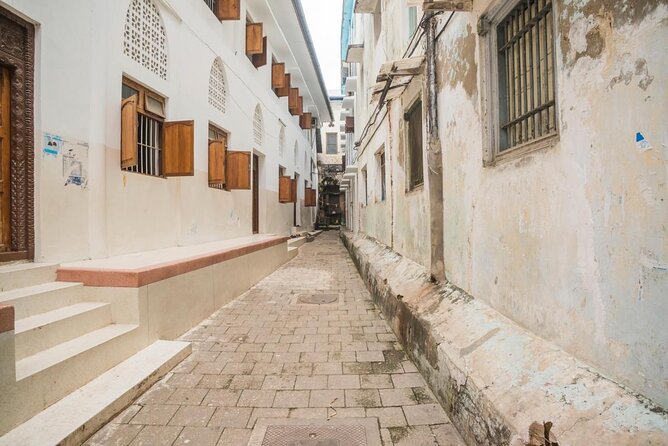
The guide is the main reason to choose this experience over wandering alone. Stone Town’s lanes can be confusing, and a local guide can turn scattered buildings into a connected story. The strongest feedback focuses on patience, clear explanations, kindness, and willingness to answer questions.
Alfa appears often in the supplied comments, along with Alfan and Khalfan. Other guides named include Sultan and Rabik. Khalfan is praised for allowing couples to move at a comfortable pace and stop for photographs or souvenirs. Rabik adjusted the walk for children aged seven and twelve, keeping them involved for more than three hours.
That flexibility is especially useful for a private booking. You can ask for more time at the market, spend longer looking at doors, or move faster through a stop that does not interest you. One solo participant even received temporary help with the $5 admission fee while arranging local currency. That is a kind gesture, though you should not treat it as part of the formal service.
The walk can also help with the rest of your Zanzibar plans. One guide made sure a guest connected with a ride back to the hotel. Another visitor booked further island help through the same company. Those are welcome extras, but the core promise here is the Stone Town walk, not transport or a full island itinerary.
Time, comfort, and group size

The stated duration is about two to three hours, with the itinerary listing three hours. One family’s tour lasted more than three hours, so you should keep some flexibility in your schedule. A private walk can stretch when questions, photographs, shopping, or children’s breaks take more time.
You will be on your feet through historic streets and market areas. The information does not specify pavement quality, shade, restrooms, or accessibility arrangements, so ask the provider if any of those are important to you. Comfortable shoes, water, and protection from the sun are sensible choices for any several-hour city walk.
Most people can participate, according to the booking details. The private format means only your party joins, which suits couples, families, solo visitors, and groups that want to set their own pace. A larger party of ten was handled with two guides, so ask in advance how your group will be staffed if you are traveling with many people.
Mobile tickets make the booking simple, and confirmation is sent at booking. Still, keep the meeting instructions handy. The one reported location problem shows why a saved map pin alone may not be enough.
Is $20 good value?
At $20 per person, the tour offers solid value if you want a guided introduction to Stone Town. The price includes a certified professional guide and a private experience. For a first day in Zanzibar, that can save you time and help you understand what you are seeing before exploring alone.
The value depends on how you use the walk. If you only want quick photographs of the Old Fort and House of Wonders, you may prefer to wander independently. If you want explanations of the slave trade, religious sites, markets, doors, and the town’s mixed cultural past, the guide adds real value.
Budget an additional $5 per person for the former slave market. Entrance fees elsewhere, transport, food, souvenirs, taxes, and the guide’s tip are separate. Free cancellation is available up to 24 hours before the start time. Cancellations inside 24 hours are not refunded, and poor weather may lead to a new date or a full refund.
Who should book this Stone Town walk?
I would choose this tour for a first visit, especially if you want history explained without committing to a full-day outing. It also suits families because the private guide can adjust the pace, and it works well for solo visitors who want company and local orientation.
Music fans will appreciate the Freddie Mercury stop. Shoppers may value the market and souvenir advice. Visitors interested in East African history should make time for the former slave market, while those seeking only food should remember that this is not primarily a tasting tour.
I would be more cautious if you need a fully accessible route, guaranteed interior access to every listed site, or a precise two-hour finish. Those details are not promised. Confirm the meeting point, ask which sites include admission, and leave room for the walk to run long.
Should you book it?
Book this tour if you want a private, affordable introduction to Stone Town with a guide who can answer questions and adjust the pace. The mix of major landmarks, market streets, churches, Freddie Mercury’s former home, and the former slave market gives you a useful first look at Zanzibar’s past and present.
Skip it if you prefer to explore alone, dislike walking in busy historic lanes, or want all entrance fees and transport bundled into one price. For most first-time visitors, though, the $20 guide fee is a fair trade for clearer context, easier navigation, and a more human connection to Stone Town.
FAQ
Where does the Stone Town Historical Walking Tour start?
It starts at the House of Wonders, at R5QQ+JR on Sokoku Street in Zanzibar, Tanzania.
Where does the tour end?
The activity ends back at the meeting point at the House of Wonders.
How long does the walking tour last?
The listed duration is two to three hours, with the itinerary describing a three-hour walk.
Is this a private tour?
Yes. Only your group participates in the activity.
What is included in the price?
A professional certified tour guide is included.
Does the tour include transportation?
No. The price does not include any means of transport.
Is the former slave market admission included?
No. Entry to the former slave market costs $5 per person.
Are taxes and entrance fees included?
No. All fees and taxes are excluded, as are entrance fees beyond the stated tour service.
Can I cancel for a full refund?
Yes, if you cancel at least 24 hours before the experience begins. Cancellations or changes made within 24 hours are not refunded or accepted. If poor weather causes the tour to be canceled, you will be offered another date or a full refund.
Just added around the world
- The Curacao’s Colorful History Walking Tour★ 5.0 · 55 reviews
- Olous – Guided Snorkelling Excursion to Discover Olous Sunken Ancient City★ 4.5 · 31 reviews
- Visita Guiada Por El Casco Histórico De Cuenca Y Su Catedral★ 5.0 · 45 reviews
- Private Half Day Cultural Tour to Mayan Ruins and Cenote★ 4.5 · 31 reviews
- From Kolymbari: Ancient Diktyna & Hidden Beach Quad Safari★ 5.0 · 22 reviews
- Experience Cozumel Historical Center Mayan and Beach Experience★ 5.0 · 20 reviews
- Historic Cork Delicious Donut Adventure by Underground Donut Tour★ 5.0 · 232 reviews
- Otoch Mayan Experience Tour: Cultural & Historical Adventure★ 3.5 · 18 reviews
History Walking Tours, compared.

History and Hauntings of Salem Guided Walking Tour
Read our review →
Freedom Trail History Small Group Walking Tour
Read our review →
Historic Charleston Guided Sightseeing Walking Tour
Read our review →
Tapas Walking Tour with Food, Wine, and History
Read our review →
Savannah History and Haunts Candlelit Ghost Walking Tour
Read our review →
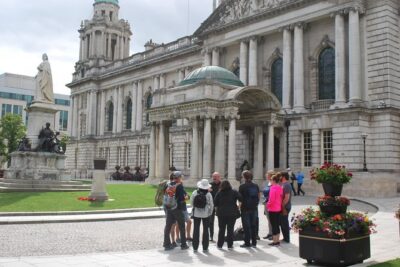
A History of Terror – Belfast City Centre Walking Tour
Read our review →Browse the lists this tour appears in