
Review · WASHINGTON DC
DC Monuments & History Guided E-Cart Tour-Blankets
See Washington without wearing out your shoes. This two-hour electric-cart tour links Capitol Hill, the National Mall, the memorials, and the White House in one brisk outing. I like the efficient route and the guides’ personal touch, especially when they pause for photos and answer questions. The main concern is the vehicle: the cover is not guaranteed, and an open cart can feel bitterly cold or windy.
The tour costs $52.70 per person and returns to its starting point at 333 G Street NW. That is fair value if you have only one afternoon, an evening, or a family that would rather ride than march between monuments. I would book it in mild weather, or dress for serious winter conditions and confirm the cart setup before you go.
The six details that matter most
- You cover a lot in two hours: Capitol Hill, the Mall, major memorials, and the White House all fit into one compact route.
- The guides make the difference: Lorenzo, Feyzi, Elmira, Fernando, and others have been praised for clear facts, humor, photo help, and friendly service.
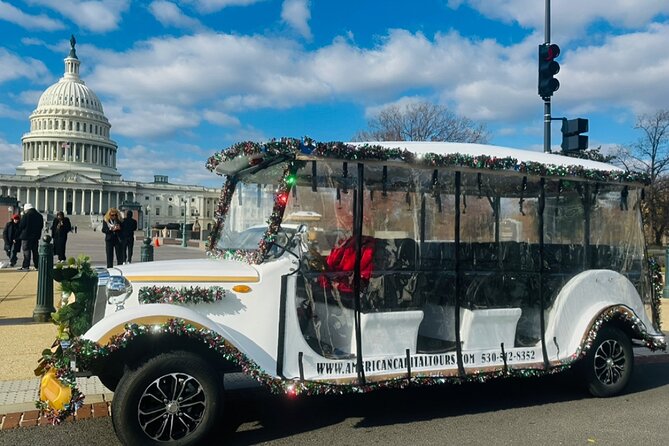
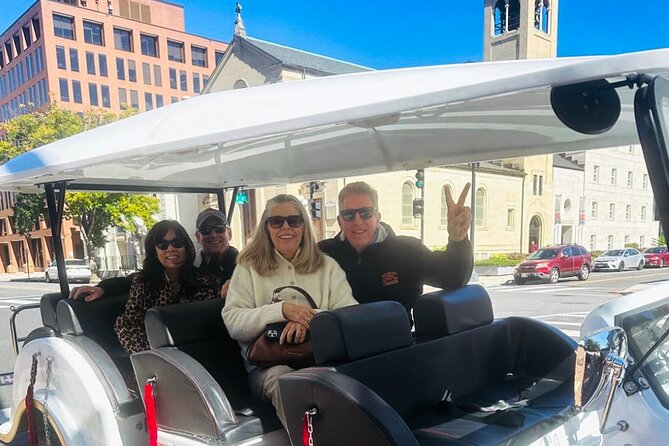
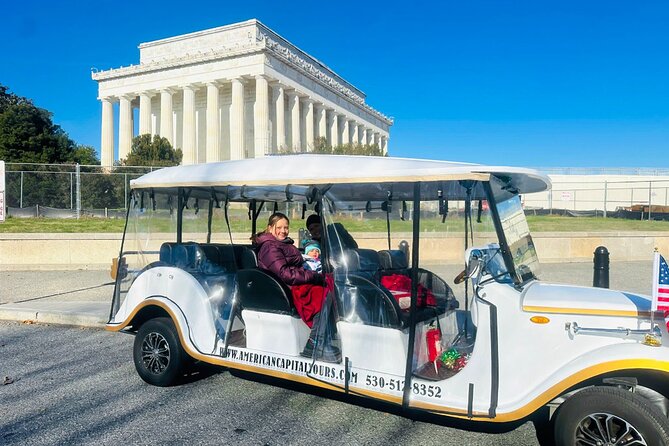
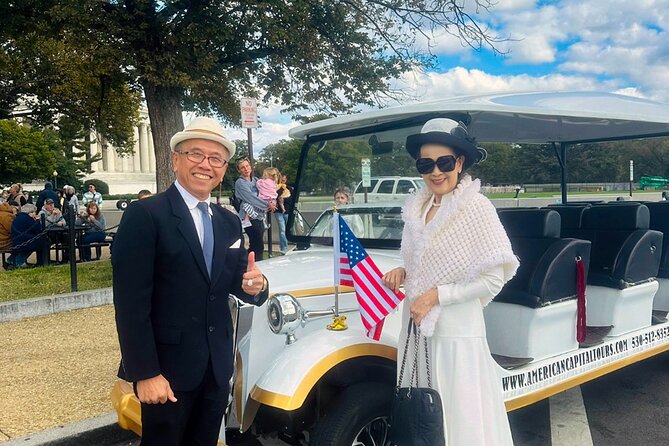
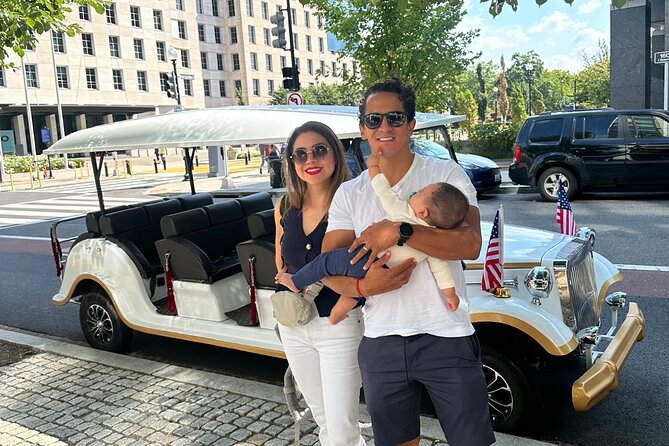
- The cart is open-air: Some vehicles have plastic covers, but the exact setup can vary. Do not assume the covered cart shown in promotional images.
- Blankets are provided: They help, but they do not replace a warm coat, gloves, hat, and scarf on a cold day.
- You stop for photos: The schedule gives you short breaks at major memorials, with the longest listed pause at the Lincoln Memorial.
- You do not tour the interiors: This is an outside sightseeing ride. Admission to the Washington Monument and White House is not included.
Why this cart tour works well in Washington
Washington is spread out in a way that looks manageable on a map but can eat up a day on foot. The Lincoln Memorial, Jefferson Memorial, Capitol Hill, and White House are not next-door neighbors. A cart lets you connect them without spending half your visit crossing broad avenues and long stretches of the National Mall.
I like the format for a first look. You get a useful outline of the city, hear the basic story behind the monuments, and then decide which places deserve a longer return visit. It is not a substitute for walking through the museums or reading every inscription, but it gives you a strong orientation.
The tour is offered in English and lasts about two hours. It begins and ends at 333 G Street NW, which is near public transportation. The maximum group size is listed as 71, so the actual feel may depend on the departure and vehicle being used. Some experiences feel intimate, while a full departure will feel more like a shared sightseeing ride.
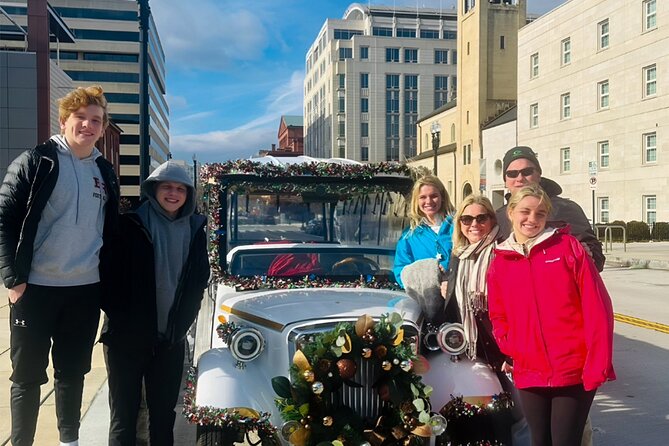
The strongest part is the human element. Guides such as Lorenzo and Feyzi have been praised for mixing facts with jokes and keeping families engaged. Elmira has been singled out for adding extra details about sights passed along the route. Guides may also take photos for you at stops, a small favor that matters when your whole group wants to appear in the picture.
More History Bike, Segway and Tuk-Tuk Tours in the USA
- Charlotte’s Ultimate Southern Charm Historical City Cart Tour
★ 5.0 · 1,347 reviews - Asheville Historic Downtown Guided Electric Bike Tour with Scenic Views
★ 5.0 · 1,234 reviews - Private Guided Historic Electric Cart Tour of St. Augustine
★ 5.0 · 1,194 reviews
Capitol Hill begins the story
The route opens at Capitol Hill, the center of federal government. You see the United States Capitol, home of the Senate and House of Representatives, along with the Supreme Court. The grand architecture gives you an immediate sense of how Washington was designed to project power and order.
The listed stop is only about five minutes, so treat it as an introduction rather than a full Capitol visit. You will not have time to explore the building or tour the grounds in depth. The value is in getting your bearings and hearing why this hill became the political heart of the capital.
Eastern Market is also part of the Capitol Hill setting. Its redbrick building and neighborhood market tradition add a more local note to an area otherwise dominated by government buildings. The schedule does not promise a market visit, so think of it as context rather than a shopping stop.
Museums from the outside, with a useful orientation

The route passes major Smithsonian institutions and the National Gallery of Art. These include the National Museum of Natural History and the National Museum of African American History and Culture.
The National Gallery of Art holds more than 150,000 works across painting, sculpture, decorative arts, photography, prints, and drawings. That number is less important than what it tells you: this is not a quick room or two. If art interests you, use the cart ride to mark it for a separate visit.
The Natural History Museum is free and open 364 days a year. Its location on the Mall makes it easy to combine with other sights, but you should not expect to tour it during this two-hour ride.
The National Museum of African American History and Culture opened its permanent home in 2016. Its dark bronze-colored exterior and layered design make it one of the most distinctive buildings on the Mall. Again, the cart gives you an outside look and historical orientation, not entry.
This is one reason I would schedule the tour early in your Washington stay. You can use what you learn to plan the rest of your visit instead of wandering among museums without a clear order.
The Washington Monument gives the route its center
The Washington Monument is the tallest structure in Washington, DC, rising 555 feet and five-eighths of an inch. Its simple obelisk shape is easy to recognize, but the story behind it is less simple. Construction took 36 years, and the stone changes slightly in color because the work was completed in separate periods.
The stop lasts about ten minutes. That is enough to get out, frame photographs, and hear the basic facts. It is not enough for a full visit inside. Admission is not included, so you would need a separate ticket and more time if you want to ride to the top.
From the monument, the city’s planned design becomes easier to understand. The long Mall, the memorials, and the government buildings all relate to the broad central axis. Your guide can point out how the major sights fit together, something that is harder to grasp when you visit each place separately.
Same place, a different slice of the past:
- History and Hauntings of Salem Guided Walking Tour
★ 5.0 · 14,564 reviews - Charleston’s Old South Carriage Historic Horse & Carriage Tour
★ 5.0 · 10,023 reviews - Beneath The Streets Underground History Tour
★ 4.5 · 8,006 reviews - Boston: Freedom Trail History Small Group Walking Tour
★ 5.0 · 6,450 reviews
Jefferson and Roosevelt bring different voices
The Thomas Jefferson Memorial sits beside the Tidal Basin, where its white columns and domed roof create one of the city’s most recognizable views. The memorial honors Jefferson as the principal author of the Declaration of Independence and as the third president.
The listed pause is about ten minutes. That gives you time to walk toward the memorial, take pictures, and look up at the statue and inscriptions. It is a short stop, so anyone wanting a slow reading of the text should return later.
The Franklin Delano Roosevelt Memorial follows in the same general area. It is more sprawling and less formal than the Jefferson site, with multiple sections devoted to Roosevelt’s presidency and the era he represented. The itinerary does not give a separate timed stop, so your guide may explain it while driving or during the nearby portion of the route.
That contrast is useful. Jefferson presents an idealized founding vision. Roosevelt’s memorial asks you to think about crisis, government, and ordinary life during a difficult period. Even in a quick tour, the pairing gives you more than a parade of statues.
Martin Luther King Jr. Memorial and the power of a short stop
The Martin Luther King Jr. Memorial occupies four acres in West Potomac Park. Its central Stone of Hope sculpture shows King emerging from a granite block, a strong visual reference to his words about hope.
The stop is listed at eight minutes. That sounds brief, but it is enough for the main view and a few photographs. I would take the time to look beyond the statue and notice the quotations carved into the surrounding stone. The memorial works best when you pause for the words, not just the picture.
This stop also adds needed balance to a route that begins with presidents and federal buildings. It connects the capital’s monumental core to the civil rights movement and the continuing argument over American equality.
Lincoln, Vietnam, and Korea in one concentrated stretch
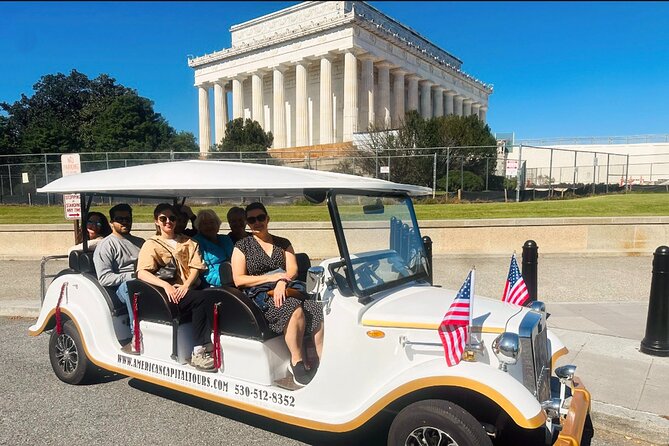
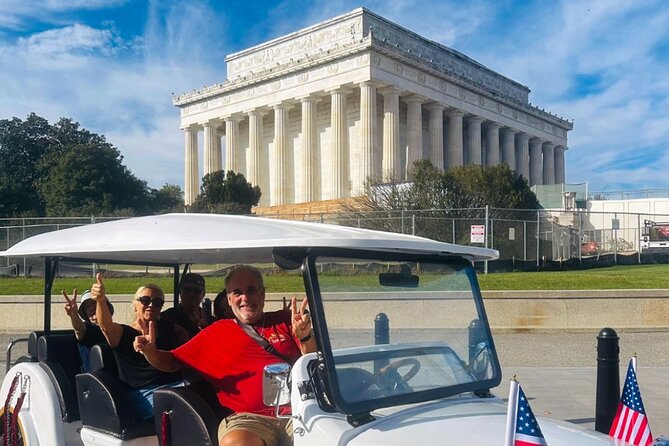
The Lincoln Memorial receives the longest listed pause, about 15 minutes. Its 36 Doric columns represent the states in the Union at the time of Lincoln’s death. Two more columns frame the entrance, and each is 44 feet tall.
The steps provide one of the classic views in Washington, looking across the Reflecting Pool toward the Washington Monument. The stop is short, but it gives you enough time to climb, see the seated Lincoln, and take the famous long-axis photograph.
Nearby, the Vietnam Veterans Memorial offers a much quieter experience. Its polished wall lists the names of service members who died or remain missing from the Vietnam War. The Korean War Veterans Memorial uses figures and reflective surfaces to remember those who served in that conflict.
These memorials work best when you lower the pace. The cart can get you there quickly, but your own attention matters more than the vehicle. If you feel rushed, make a note to return after the tour. The Lincoln and Vietnam sites are especially easy to revisit on foot.
The Albert Einstein Memorial is another quick sight along the broader route. The bronze Einstein sits with manuscript pages in hand. It is a lighter moment after the war memorials, and an entertaining photo stop for families.
The White House closes the loop
The tour finishes its main sightseeing circuit at the White House, the official residence and workplace of the president. The building at 1600 Pennsylvania Avenue has housed every president since John Adams when the capital moved from Philadelphia in 1800.
The listed stop is about five minutes, and admission is not included. This is an exterior viewing point, not a White House tour. Security restrictions and public access can change, so do not book this experience expecting to go inside.
Five minutes is enough for a front-facing photo and a short explanation of the building’s role. If you want a more detailed look at presidential history, plan a separate visit to a museum or historic site.
The open-air cart is the key practical issue
The biggest weakness is not the route or the history. It is the vehicle expectation.
The experience is described as an electric cart, and some promotional images show a cart with plastic sides or a cover. Yet the actual cart may be uncovered. The operator has explained that covers can be removed for better visibility and that availability can vary. Several cold-weather bookings became unpleasant because riders expected wind protection and received an open vehicle instead.
Blankets are supplied, and many people found them helpful. They are a thoughtful touch, especially when a guide hands them out before the ride begins. But a blanket cannot block wind around your face, hands, or feet, and it will not turn the cart into a heated vehicle.
My advice is simple: treat this as an outdoor ride in all seasons. In winter, wear a full coat, gloves, hat, scarf, and warm shoes. If you are booking because you specifically need a covered vehicle, contact the operator first and ask what vehicle is assigned to your departure. Do not rely on the picture.
The issue is less serious in mild weather. In spring, fall, or a calm summer evening, the open cart is part of the appeal. You get unobstructed views and a pleasant breeze rather than a sealed bus window.
Night rides and family value
The tour can run during the day or at night. A nighttime departure changes the mood completely. The monuments are lit, the broad avenues feel calmer, and the pauses offer strong photo chances. The tradeoff is that details on buildings and memorial inscriptions are harder to see after dark.
Families get particular value from the short format. Two hours is long enough to keep the main sights moving but short enough for children who would lose patience on an all-day walking tour. One guide even made a hot chocolate stop for children during a cold outing, though you should not treat that as a guaranteed part of every departure.
Teenagers may respond better to a guide who uses humor and stories than to a long lecture. Feyzi has been praised for keeping teens interested, while other guides have used jokes and small historical details to make the ride feel less like a classroom.
Solo visitors can also fit in easily. The small number of seats on some departures may create a relaxed setting, but the stated maximum of 71 means you should not assume every ride will be nearly private.
Is $52.70 a fair price?
At $52.70 per person, this is not the cheapest way to see Washington. You are paying for a guide, transportation, a planned route, and the ability to cover widely separated sights in about two hours.
The value is strongest when you have limited time, mobility concerns, children, or a first day in the city. It is also useful when government buildings are closed, since the major experience is outside and does not depend on interior admission.
The value drops if you are a strong walker with several days in Washington. The National Mall is free, many memorials cost nothing, and you can explore at your own pace. A self-guided route takes longer but lets you linger at the places that matter most.
I see the tour as an orientation purchase. Pay for the overview, then return independently to the Lincoln Memorial, the Vietnam wall, a Smithsonian museum, or the Tidal Basin.
Who should book this experience?
Book it if you want to see the main Washington sights without a long walk. It suits families, first-time visitors, people on a tight schedule, and anyone who wants a guide to explain what they are seeing.
It also works well as a first-night activity. The guide can point out places for later visits, and the nighttime version gives you a different view of the capital.
Think twice if you dislike outdoor rides, need a reliably enclosed vehicle, or plan to spend long periods inside museums. This is a fast outside tour, not a museum pass or a deep study of American history.
Free cancellation is available up to 24 hours before the start time. Changes or cancellations inside that window are not refunded, so do not wait until the last minute if your plans are uncertain.
Final call: book it with realistic expectations
I would book this tour for a quick, well-organized introduction to Washington. The route is efficient, the memorial stops are useful, and guides such as Lorenzo, Feyzi, Elmira, and Fernando have shown the friendly style that makes a short ride worthwhile.
I would not book it based on the promise of a covered cart. Confirm the vehicle, dress for the weather, and think of the blankets as a bonus rather than winter equipment. Do that, and $52.70 buys you a practical first look at a city that is much easier to understand once someone connects the monuments for you.
FAQ
How long does the DC Monuments and History Guided E-Cart Tour last?
The tour lasts approximately two hours and ends back at the meeting point at 333 G Street NW in Washington, DC.
Where does the tour begin?
The meeting point is 333 G Street NW, Washington, DC 20001, USA. The activity returns to this same location.
Is the tour offered in English?
Yes. The experience is offered in English.
Are admission tickets included?
The tour includes outside stops and guided transportation. Admission is not included for the Washington Monument or the White House. The listed memorial stops do not require an admission fee.
Are blankets provided?
Yes. Blankets are provided, and they can help in cool weather. The cart is not guaranteed to be heated or covered, so you should still dress warmly in winter.
What is the cancellation policy?
You can cancel at least 24 hours before the start time for a full refund. Cancellations or changes made less than 24 hours before the experience are not accepted for a refund.
Just added around the USA
- Tarpon Springs Ghost Tour★ 4.5 · 19 reviews
- Historical Bicycle Tour of Dunedin★ 5.0 · 44 reviews
- Safety Harbor Ghost Tour★ 5.0 · 60 reviews
- Cincy Brunch History and Streetcar Tour with Riverside Food Tours★ 5.0 · 108 reviews
- 2.5 Hour Kayaking with Manatee and History Tour in Tarpon Springs★ 5.0 · 24 reviews
- Chicago River Architecture Tour Aboard a Historic Yacht★ 5.0 · 45 reviews
- Walkin’ with Colin: Chicago History-Mystery-Comedy-Tragedy Tour★ 5.0 · 218 reviews
- Historic Homes and Cottages of Wicker Park Walking Tour★ 5.0 · 44 reviews
History Bike, Segway & Tuk-Tuk Tours, compared.
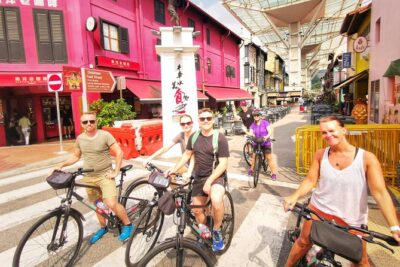
Historical Singapore Bike Tour on Full-Sized Bicycles
Read our review →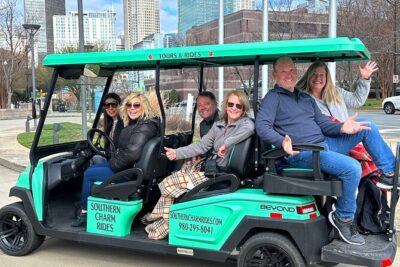
Charlotte’s Ultimate Southern Charm Historical City Cart Tour
Read our review →

Asheville Historic Downtown Guided Electric Bike Tour with Scenic Views
Read our review →
Private Guided Historic Electric Cart Tour of St. Augustine
Read our review →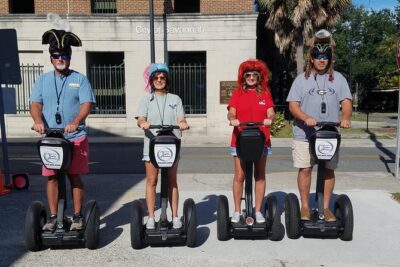
60-Minute Guided Segway History Tour of Savannah
Read our review →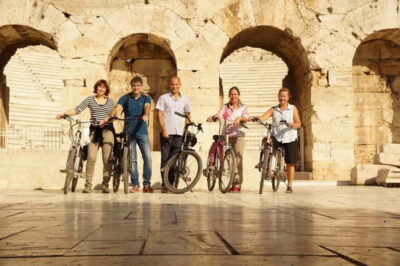
Historic Athens: Small Group Electric Bike Tour
Read our review →
90 Minute Historic Uptown Neighborhood Segway Tour of Charlotte
Read our review →Browse the lists this tour appears in