
Review · TANGIER
Walking Tangier Tour from ancient Kasba to Bustling Souks
Tangier reveals itself on foot. This private walk links the Kasbah, medina, and souks with several important museums, giving you a useful first look at the city rather than a quick photo stop. I like the flexible format, and I like that guides such as Anas, Bilal, and Rabab adjust the conversation to your interests. The main consideration is that the tour lasts two to four hours, so six stops can feel brisk if you want long museum visits.
The price is $48.50 per person, a fair figure for a private experience if you are sharing it with family or friends. You also get pickup, mobile ticketing, and free cancellation up to 24 hours before the start. Bring comfortable shoes, since Tangier’s old quarters are built for wandering, not smooth, level strolling.
Six reasons this Tangier walk is worth considering
- Grand Socco gives you the city’s best starting point: This open square connects modern Tangier with the old medina.
- The Kasbah sits at the city’s highest point: Expect narrow lanes, old walls, and a strong sense of Tangier’s defensive past.
- Dar El Makhzen adds real historical depth: The former sultan’s palace contains Roman mosaics, maps, statuary, and an Andalusian garden.
- The private format changes the pace: Your guide can spend more time on architecture, maps, shopping areas, or local stories.
- The American Legation and Nahon Synagogue widen the picture: Tangier’s story includes Moroccan, American, Muslim, Jewish, European, and Andalusian connections.
- The guides earn unusually strong praise: Anas is noted for warmth and responsiveness, Bilal for professionalism, and Rabab for tailoring the walk to personal interests.
Starting at Grand Socco, Tangier’s natural crossroads
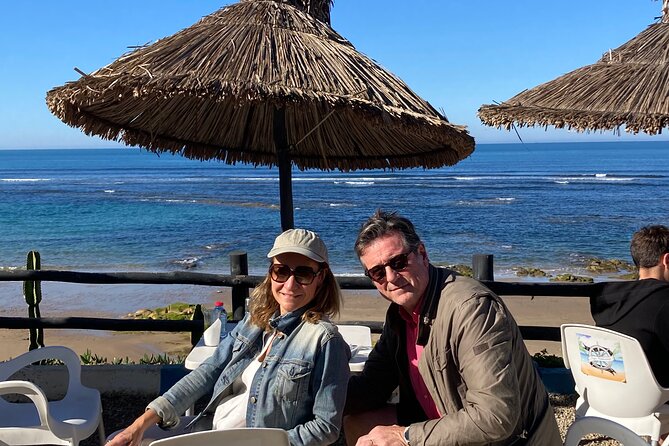
The walk begins at Place du Grand 9 Avril 1947, usually called Grand Socco. This is more than a handy meeting point. The square marks the change from modern Tangier to the old medina, so it helps you understand the city’s layout before you enter the lanes.
The name comes from souk, the Arabic word for market. That tells you something about the square’s purpose. It has long been a place of trade and meeting, with people moving between the old city and newer parts of Tangier.
I like starting here because it gives you a moment to get your bearings. The open space, colonial-era buildings, traditional architecture, and steady local movement provide a useful contrast to the compact streets ahead. Your guide can also introduce the city’s past before the walls and alleys begin to blur your sense of direction.
You spend about 15 minutes here, so this is an orientation stop rather than a long lecture. If you want time for people-watching or photographs, say so early. A private tour gives you a better chance of adjusting the pace, but the overall schedule still has several stops to cover.
More Ancient History Tours in Morocco
- Atlas Mountains – Ancient Ait Ben Haddou Day Tour from Marrakech
★ 5.0 · 411 reviews - Full-Day Tour to Essaouira – The Ancient Mogador City from Marrakech
★ 5.0 · 127 reviews - Fez: Walking Tour in the Ancient City of Fez
★ 4.8 · 73 reviews
Climbing into the Kasbah and its old lanes
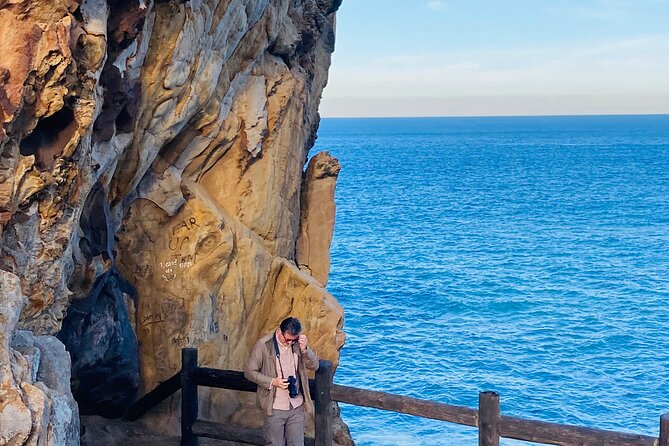
From Grand Socco, the walk moves toward Tangier’s Kasbah. This fortified quarter occupies the city’s highest point, which explains both its defensive role and the views you may find along the way.
The Kasbah’s story reaches back through Phoenician and Roman influence, followed by Arab and Andalusian contributions. You do not need to memorize a long list of rulers to appreciate the place. The key point is that Tangier has repeatedly absorbed outside cultures, and the Kasbah shows this in its buildings, street plan, and customs.
Allow about 45 minutes here. The narrow, winding lanes are the main attraction. They are easy to enjoy when you are not trying to navigate them alone, and that is one of the strongest reasons to choose a local guide. Anas, Bilal, and Rabab are all identified with this experience, and the personal praise for them points to an important benefit: you are not simply being marched from one landmark to the next.
I especially like the private format for this part. If architecture catches your eye, you can ask for more detail. If you are with children, the guide can keep the historical explanation lively. If you have limited time in Tangier, you can focus on the parts of the Kasbah that interest you most.
The drawback is physical rather than cultural. Tangier’s old quarters include narrow streets and changing surfaces. The supplied information says most people can participate, but you should still expect a proper walking tour, not a vehicle-based sightseeing trip.
Dar El Makhzen, the palace behind the museum doors
The Museum of the Kasbah occupies Dar El Makhzen, a former sultan’s palace. This is the most concentrated history stop on the walk, with about 35 minutes set aside for it.
The museum covers the area from prehistoric times through the 19th century. Displays are presented in French and Arabic only, so your guide becomes especially useful if you do not read either language. Ask questions as you move through the rooms. A private guide can explain what matters instead of leaving you to decode every display on your own.
The courtyard comes first, followed by interior rooms and an Andalusian garden. The museum’s highlights include a Roman-era mosaic of Venus from Volubilis, statuary, and two large maps.
The first map traces trade routes from Phoenician metal trading through later commerce and into modern electronic goods. The second shows the known world as mapped in Tangier in 1154. It is displayed upside down by modern standards, which makes it a memorable reminder that maps reflect the beliefs and knowledge of their makers.
I would give this stop your full attention. Museums can feel like filler on walking tours, but this one explains why Tangier became a meeting point for so many cultures. The limitation is time. Thirty-five minutes is enough for a guided overview, but not for a slow reading of every exhibit.
Entering the medina without getting lost
The Medina of Tangier is the heart of the walk. Its narrow lanes, market stalls, old walls, courtyards, and changing smells create the sensory side of the city that museums cannot provide.
You have about 35 minutes here. That is enough to see the character of the old quarter and understand how daily commerce works, but it is not a full afternoon for shopping. The medina is also where a local guide adds the most practical value. Tangier’s old streets can feel confusing at first, and a guide helps you move with purpose rather than spending your limited time checking a map.
The experience description presents the medina as a place tied to writers and artists, including William Burroughs. That literary connection is useful, but I would not let it overshadow the living neighborhood. Look at the ordinary details: the way people use the lanes, the colors and patterns on the walls, the small market activity, and the rhythm of the streets.
One point deserves special praise: a guide specifically received credit for being local, kind, and hospitable without pressuring the group to buy anything. That matters in a market district. You can browse without feeling that every pause must become a purchase.
If shopping is important to you, ask how much time can be devoted to it. The advertised duration is flexible, but the six-stop plan means the guide must balance browsing with museums and landmarks.
More History Walking Tours in Morocco
- Fez: Guided Walking Tour of the Historic Medina
★ 5.0 · 359 reviews - Historical Marrakech Walking Tour
★ 5.0 · 198 reviews - Fes: A Guided Walking Tour Through the Historic Medina
★ 4.4 · 97 reviews
The American Legation and Morocco’s long connection with the United States
The Tangier American Legation Museum adds a surprising international chapter. The building was established in 1821 and is recognized as the oldest American diplomatic property in the world. The United States acquired it abroad during a period when its connection with Morocco was already taking shape.
The Moroccan-American Treaty of Friendship was signed in 1786, before the U.S. Constitution. That fact gives this stop unusual weight. It shows that relations between Morocco and the United States are not a recent development tied only to modern tourism or politics.
About 30 minutes are allotted here. The stop works well after the medina because it shifts your attention from local street life to international diplomacy without leaving the old city.
I would ask your guide to connect the building to the wider story of Tangier. The city has long served as a meeting point between North Africa, Europe, and the Atlantic world. This museum helps explain why foreign governments, merchants, writers, and artists paid such close attention to Tangier.
Again, the time is useful but limited. If diplomatic history is a major interest, you may want to note the museum and return independently, if your schedule allows. The tour gives you a strong introduction rather than an exhaustive museum visit.
A quieter stop at Moshe Nahon Synagogue
The final listed stop is Moshe Nahon Synagogue, located on a dead-end street off Rue des Synagogues in the Beni Idir quarter of the medina. It was built in the 19th century by Moïse Nahon, a member of an influential Jewish family in Tangier.
The synagogue ceased operating in the second half of the 20th century and later fell into disrepair. Restoration in 1994 brought it back as a museum. You have about 15 minutes here.
This is a small but important stop because it prevents an oversimplified view of Tangier. The city’s story includes a longstanding Jewish community alongside Muslim, European, and American connections. The synagogue also shows how old buildings can change purpose while preserving evidence of the people who once used them.
Fifteen minutes will not allow for a lengthy visit, but the stop works as a final reminder that Tangier’s identity cannot be reduced to one faith, one empire, or one architectural style.
What the private format really gives you
The tour is private, meaning only your group participates. That is more valuable here than it might be on a simple panoramic drive. The old city has tight lanes, variable pace, and many possible points of interest. A private guide can respond to your questions instead of following a fixed script for a large crowd.
The strongest personal accounts focus on the guides. Anas is described as informative, entertaining, and attentive to the group’s happiness. Bilal receives praise for professional service and for helping visitors learn about Tangier and Morocco. Rabab is noted for identifying a participant’s interest in maps and architecture and shaping the walk around it.
That flexibility is useful for several kinds of visitors:
- First-time visitors who want a clear introduction to Tangier.
- Families who need a guide able to adjust the pace and explanation.
- Culture-focused visitors interested in museums, religious history, and architecture.
- People with only a few hours who want several major areas covered efficiently.
- Independent-minded shoppers who want help finding their way without sales pressure.
The main tradeoff is that a private tour costs more than joining a large group, especially if you are alone. At $48.50 per person, the value improves when two or more people share the experience. You are paying for a local guide, a planned route, museum access as described, and the ability to ask for a more personal approach.
Timing, pickup, and what to wear
The experience is offered Monday through Sunday from 10:00 a.m. to 1:00 p.m. The stated duration is approximately two to four hours. The six stops have listed times totaling about 175 minutes, so a tour lasting close to three hours is a reasonable expectation, with walking between sites adding to the total.
Pickup is offered, and the experience also has mobile ticketing. Since the information does not specify every pickup location or the exact meeting point, confirm those details when you book. Confirmation is provided at booking time.
Wear shoes suited to old-city streets. You should also keep your schedule slightly open, since museum visits, questions, and the walking pace can affect the final length. Most people can participate, but anyone concerned about uneven streets or a demanding walk should ask the provider for current route details.
Cancellation is free when made at least 24 hours before the start time. Changes or cancellations inside that period are not accepted for a refund.
Should you book this Tangier walking tour?
I would book it if you want a compact, private introduction to Tangier that balances street life with serious cultural sites. The route is stronger than a simple Kasbah stroll because it includes Dar El Makhzen, the American Legation, and Moshe Nahon Synagogue. You leave with a broader understanding of the city, not just a collection of photographs.
I would be more cautious if you want a slow shopping day or long museum visits. Six stops in two to four hours means the guide must keep moving. The best approach is to tell Anas, Bilal, Rabab, or your assigned guide what matters most at the start.
For a couple, family, or small group sharing the cost, $48.50 per person is a reasonable price for a private route with local guidance. For a solo visitor on a tight budget, compare it with a group walk. Book this one when personal attention, cultural range, and help finding your way through the medina matter more than spending the whole day at one site.
FAQ
How much does the Tangier walking tour cost?
The price is $48.50 per person.
How long does the tour last?
The experience lasts approximately two to four hours.
What are the tour hours?
The tour is offered Monday through Sunday from 10:00 a.m. to 1:00 p.m.
Is pickup available?
Yes. Pickup is offered, but confirm the exact pickup details when booking.
Is this a private tour?
Yes. Only your group participates.
Which places are included?
The route includes Grand Socco, Tangier Casbah, the Museum of the Kasbah, the Medina of Tangier, the Tangier American Legation Museum, and Moshe Nahon Synagogue.
Are museum admission tickets included?
Admission tickets are listed as included for the stops on the route.
Can I cancel for a full refund?
Yes, if you cancel at least 24 hours before the experience start time. Cancellations made less than 24 hours in advance are not refunded.
Just added around Morocco
- 6-Day Private Morocco Cultural Tour From Casablanca To Marrakech★ 5.0 · 24 reviews
- Discovery of Moroccan Culinary Heritage, History and Secrets★ 4.5 · 48 reviews
- Marrakech The History and Culture Day Trip★ 4.5 · 45 reviews
- Marrakech: Historical Discovery Tour★ 4.1 · 87 reviews
- Marrakech: Guided Medina History & Culture Tour★ 5.0 · 23 reviews
- Marrakech: Day Trip to the Beautiful and Historic Essaouira★ 4.3 · 39 reviews
- Marrakech: Half-Day Guided Journey through History & Culture★ 4.3 · 20 reviews
- From Marrakech: Essaouira Full day trip, beach and History★ 4.9 · 26 reviews
Ancient History Tours, compared.
Colosseum: Underground and Ancient Rome Tour
Read our review →
Colosseum & Ancient Rome with Arena Floor Option I Max 6 People
Read our review →
Colosseum, Ancient Rome Tour or AudioGuided Tour
Read our review →
Colosseum Underground & Ancient Rome Guided Tour
Read our review →
Taormina: Ancient Theater Skip-the-Line Ticket & Audio Guide
Read our review →
Discover the Ancient Ruins of Pompeii: Day Trip from Rome
Read our review →
Discover Matera, the ancient city – English tour
Read our review →Browse the lists this tour appears in