
Review · NORTHERN TERRITORY
Darwin: Small Group 2-Hour Heritage Walk
Darwin’s past is written into its streets. This easygoing two-hour walk connects the city’s pioneer days, World War II bombings, Cyclone Tracy, and modern multicultural life in a way a bus tour cannot. I especially like the small group limit of 10 and the chance to reach historic corners that larger vehicles must skip. The main drawback is the heat: you need a reasonable level of fitness, water, sun protection, and enough stamina to keep walking with few places to sit.
The tour also earns points for its practical pace. Guide John has been praised for making the walk informative without rushing, and for looking after the basics in Darwin’s sun. At $41 per person, it is a fair buy if you want context before exploring alone, though it is less appealing if you prefer air-conditioned sightseeing or struggle with extended walking.
Key points at a glance
- A genuinely small group: The tour accepts up to 10 people and needs at least two paying guests to run.
- A local guide with personal insight: John leads the walk and brings Darwin’s history and culture to life with clear explanations and lived experience.
- A useful first-day activity: The route gives you a strong orientation to central Darwin in two hours.
- Historic sites you cannot see well from a bus: Brown’s Mart, the old courthouse, police station, and Palmerston Town Hall ruins are best appreciated on foot.
- A leisurely but continuous walk: The pace is sensible, yet there are not many spots to stop, sit, or rest.
- Good value for short stays: At $41, the walk makes efficient use of limited time in Darwin.
Starting beneath John McDouall Stuart
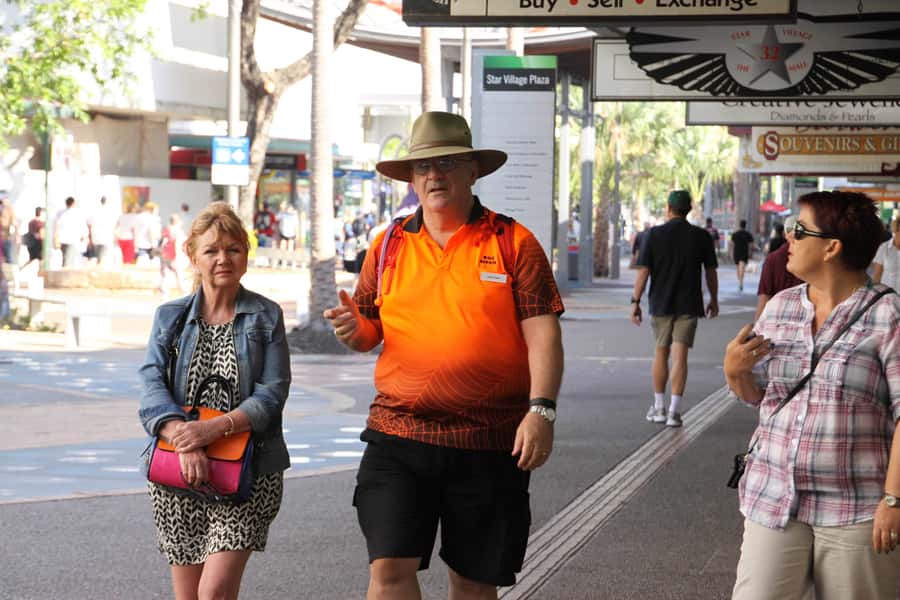
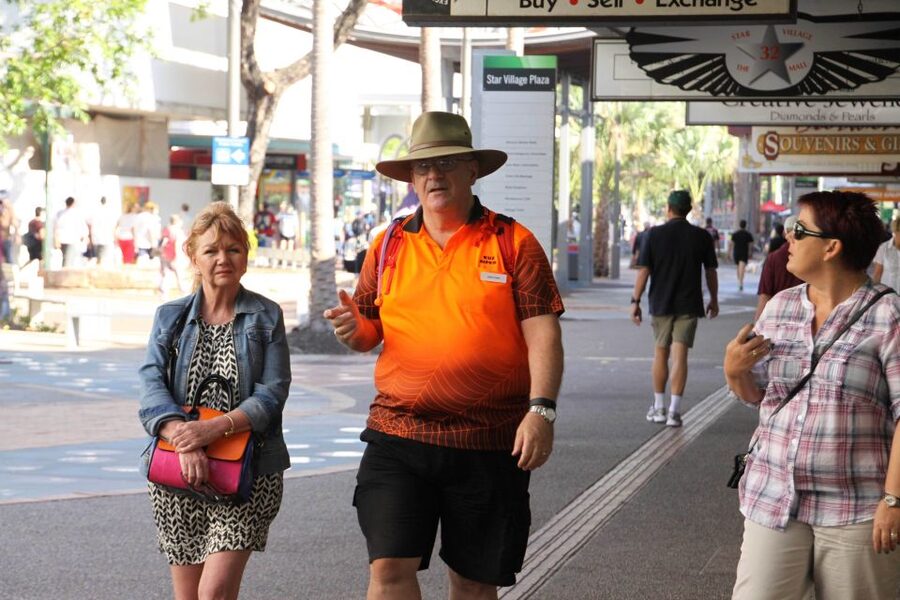
Meet your guide under the John McDouall Stuart statue in Raintree Park. Look for the bright orange shirt, a useful marker in a city where the sun can make everyone appear to be seeking shade.
This central meeting point puts you right among Darwin’s civic and historic streets. There is no hotel pickup, so you need to make your own way there. The finish is at the corner of Knuckey Street and the Esplanade in Darwin City, which gives you a different position from where you began and makes it easy to continue your day on foot.
The guide begins by setting Darwin in context. This is not just a collection of old buildings. The city has been shaped by pioneer settlement, wartime attack, tropical weather, rebuilding, and immigration. A good guide helps you see those forces in the streets rather than leaving them as disconnected dates.
More History Walking Tours in Australia
- Ultimate Melbourne Walking Tour: History, Laneways & Culture
★ 5.0 · 1,451 reviews - Sydney: The Rocks 90-Minute History Walking Tour
★ 4.7 · 1,092 reviews - Discover Perth Walking Tour: History, Art, Local Insights + More!
★ 5.0 · 458 reviews
Walking through Darwin’s wartime past
World War II is one of the key subjects on this walk. The bombing of Darwin changed the city and its place in Australian history, and the tour uses the central streets to explain that period.
I like this part because it gives purpose to the buildings and public spaces around you. Instead of hearing a brief wartime reference while a coach moves on, you can pause, look around, and connect the story with the city’s layout. The walking format also allows the guide to answer questions as they arise.
The route does not promise a museum visit or a long stop inside a single attraction. Its strength is the wider picture. You move through several sites while hearing how Darwin developed and rebuilt. If your main goal is a specialist military tour, this will be too broad. If you want a clear introduction to Darwin’s wartime story as part of a larger city walk, it fits well.
Cyclone Tracy and a city rebuilt
Cyclone Tracy is another major part of the commentary. The storm had a lasting effect on Darwin, and understanding it helps explain why the city feels different from many older Australian capitals.
Your guide uses the streets, buildings, and rebuilt sites to show how Darwin’s identity has been shaped by destruction and renewal. That makes the walk more than a parade of preserved facades. You get a sense of a city that has had to repair, replace, and rethink itself.
This is where a local guide adds real value. John has been praised for explaining not only the official history but also the way Darwin evolved over time. He has also been noted for sharing personal experience and answering questions at length. That makes the material easier to follow than a standard memorized script.
The old courthouse, police station, and Brown’s Mart
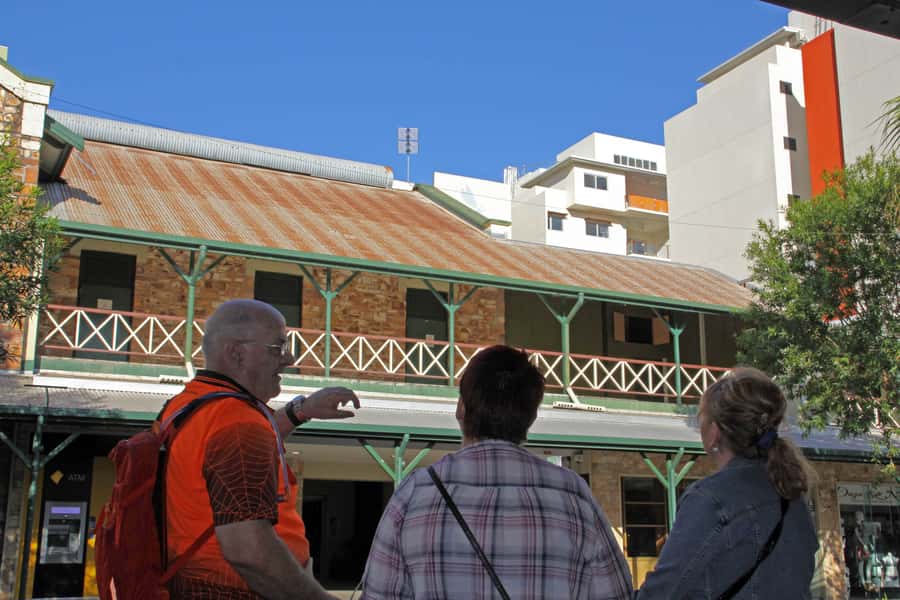
Several of the most interesting stops are connected with Darwin’s early civic life. The old courthouse and police station help you picture the administration of an early settlement, while Brown’s Mart theater adds a cultural angle.
These buildings are particularly useful for anyone who enjoys architecture but does not want a dedicated building tour. You can see how public services, law, and entertainment once fitted into the town’s daily life. Their reconstruction also gives the guide an opening to discuss what was lost and what was carefully restored.
Brown’s Mart is a strong example of why walking works here. A passing bus can point out a building, but you have more time to study its form, hear its story, and take photographs. The stop is not only about age. It shows how older structures continue to have a place in present-day Darwin.
The old courthouse and police station may appeal most to history-minded visitors. They are not flashy attractions, and the experience depends on the guide’s explanation. That is a fair trade on a small walking tour, but you should not expect extensive interior access based on the information provided.
Same place, a different slice of the past:
- Puffing Billy Railway: Heritage Steam Train Journey
★ 4.6 · 1,195 reviews - Morning World Heritage Cruise on the Gordon River from Strahan
★ 5.0 · 1,193 reviews - Strahan: World Heritage Cruise on Gordon River with Lunch
★ 4.8 · 1,143 reviews - Experience History onboard The Mary Valley Rattler
★ 5.0 · 963 reviews
Palmerston Town Hall and the meaning of ruins
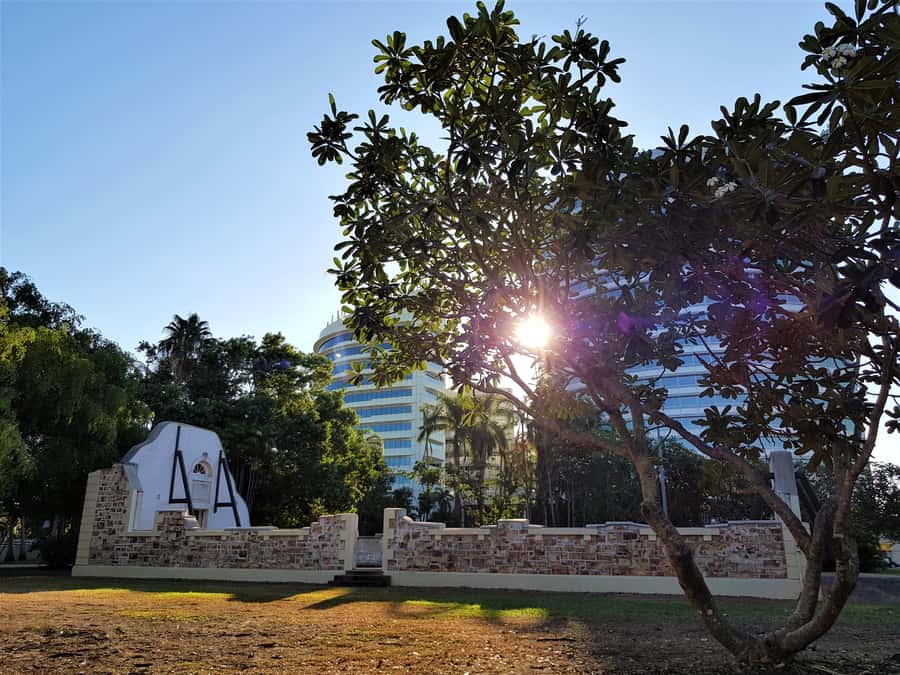
The Palmerston Town Hall ruins offer one of the more unusual sights along the route. These remains connect Darwin with its earlier name, Palmerston, and show how the city’s public buildings have been altered by time, weather, and disaster.
Ruins can be easy to overlook when you are exploring alone. With commentary, they become evidence of how the settlement grew and how its civic center changed. You can also photograph the old masonry and compare it with the newer buildings nearby.
This stop helps balance the tour. Not every attraction is a complete, polished building. Some are fragments, and those fragments can say just as much about Darwin’s past. The guide’s role matters here because the physical remains may not explain themselves.
Government House, Parliament House, and the Supreme Court
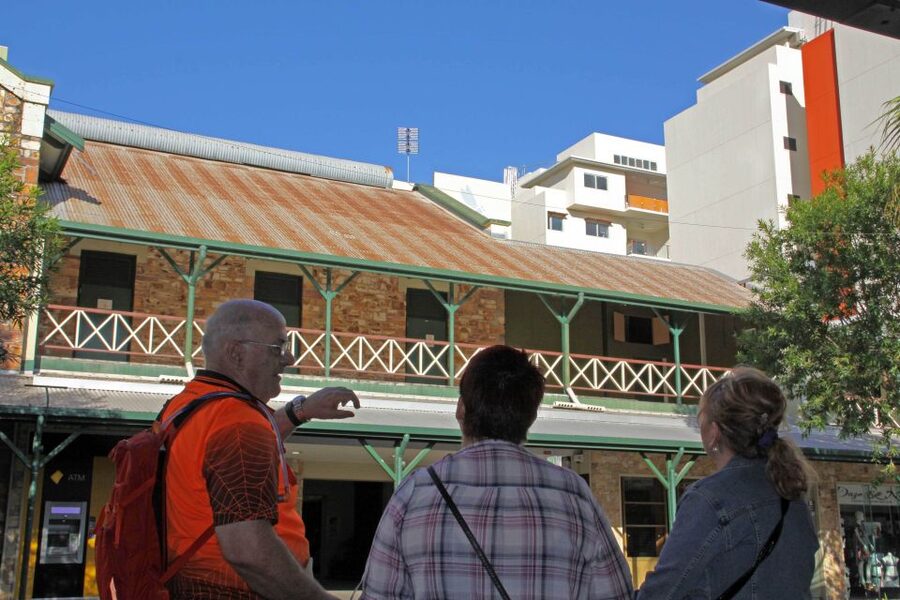
The walk also passes major Northern Territory institutions: Government House, Parliament House, and the Supreme Court of the Northern Territory. Together, they show Darwin as the administrative center of the territory, not only a frontier town with a tropical setting.
I find this contrast useful. In a short distance, you move from early civic buildings and reconstructed heritage sites to institutions that represent modern government and law. The result is a better sense of how Darwin blends its past with its present.
These stops are mainly exterior sightseeing points, so your enjoyment will depend on how much you like architecture, public buildings, and local government. The guide provides the meaning and background. You should not book this walk expecting entry into every building.
Public art, tropical plants, and small details
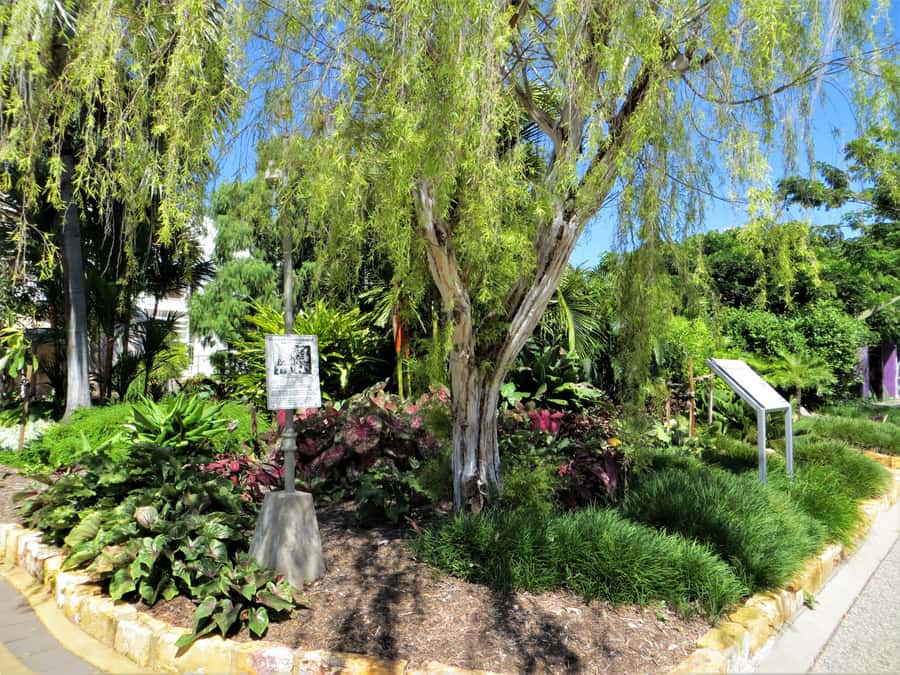
One pleasure of the route is the chance to notice details that are easy to miss when you travel by vehicle. Public artworks, tropical plants, architecture, historic buildings, and wildlife all become part of the walk.
The tour is not only a history lesson. It gives you a working introduction to the center of Darwin, including the visual details that make the city feel like a modern tropical capital. You will have plenty of chances to take photographs, so keep your camera ready rather than packed away.
The mention of wildlife is broad, and no specific animals are promised. That is worth keeping in mind. You might spot something interesting, but the reliable highlights are the buildings, plants, public art, and street-level views.
Why the 10-person limit matters
A group of 10 is small enough for the guide to keep the walk personal. You can hear spoken commentary without the feel of a large excursion, and you have a better chance of asking questions as the route unfolds.
The experience can be especially good if numbers are low. One two-person booking became almost a private walk, with John able to share stories, answer questions, and pay close attention to hydration and sun protection. You should not assume you will receive a private tour, but the small maximum leaves room for a more personal experience.
The tour needs at least two paying guests to operate. That condition matters if you are booking for one person or visiting during a quieter period. Check availability before building your day around it.
Pace, heat, and what to bring
The walk lasts two hours and is described as leisurely paced. That does not mean effortless. There are not many places to stop, sit, and rest, and the activity is not suitable for people with a low level of fitness.
Darwin’s sun makes preparation important. Bring:
- A sun hat
- Sunscreen
- Water
- A camera
- Hand sanitizer or tissues
Comfortable walking shoes are a sensible choice, even though they are not specifically listed among the required items. Bare feet are not allowed, smoking is not allowed, and pets cannot join the tour except for assistance dogs.
The best way to judge the physical demand is to think about two hours of steady city walking with limited sitting. If you can manage that comfortably, the tour should feel reasonable. If you need regular rest stops, the lack of seating could become frustrating.
The guide makes or breaks the experience
The strongest praise for this walk centers on John. He has been described as personable, enthusiastic, helpful, and excellent at explaining Darwin’s history and culture. Several people found his pace comfortable, and one booking specifically praised how he made sure the group stayed hydrated and protected from the sun.
That combination matters. A heritage walk can easily become a list of dates and building names. John’s approach appears to be more conversational, with room for questions and local observations. You are not simply being moved from one point to another.
The commentary is in English only. If you are comfortable following spoken English, that keeps the tour direct and easy to manage. If you need another language, this is not the right fit.
Is $41 good value?
At $41 per person, the walk is priced sensibly for a two-hour guided experience with a local guide and a maximum group of 10. You are paying for interpretation, route planning, and access to stories you may not pick up by wandering alone.
The value is strongest in three situations. First, book it near the beginning of your Darwin stay so the city makes more sense afterward. Second, choose it if you have limited time and want a compact introduction. Third, take it if you enjoy asking questions and learning how a place changed over time.
The value is weaker if you only want free sightseeing or if you plan to spend the day indoors. Food and drinks are not included, and there is no hotel transfer. Still, those exclusions are normal for a short city walk, and the $41 price avoids the cost and time of a longer organized excursion.
Who should book this Darwin walk?
I would recommend it to first-time visitors, history fans, architecture lovers, and anyone who prefers a small group to a large coach. It is also a smart choice for people with only a short window in Darwin, since two hours gives you a useful introduction without taking over the day.
It suits solo visitors and couples particularly well because a small group makes it easier to ask questions and meet the guide. It can also work for older children who can walk steadily, but children under 10 are not suitable for the tour.
You should skip it if you dislike walking in the heat, need frequent seating, want hotel pickup, or expect entry into every historic building. The route is an outdoor city walk, not an air-conditioned sightseeing trip.
Should you book the Darwin Heritage Walk?
Book this tour if you want Darwin explained by someone who knows the city and enjoys sharing it. The combination of wartime stories, Cyclone Tracy, reconstructed heritage buildings, civic institutions, public art, and tropical street life gives you a clear picture in just two hours.
I would especially choose it at the start of a Darwin visit. John’s calm pace, local insight, and attention to sun and water add practical value, while the small group keeps the experience friendly. Just bring water, wear proper shoes, and accept that the city’s heat is part of the deal.
FAQ
Where does the Darwin Heritage Walk start?
The tour starts under the John McDouall Stuart statue in Raintree Park. The guide wears a bright orange shirt.
Where does the walking tour finish?
The walk finishes at Knuckey Street and the Esplanade in Darwin City, Northern Territory 0800, Australia.
How long does the tour last?
The tour lasts two hours.
What language is the tour conducted in?
The live commentary is provided in English only.
How many people can join the group?
The group is limited to 10 participants. At least two paying guests are required for the tour to operate.
Is the tour suitable for children?
Children under 10 are not suitable for this activity.
What should I bring?
Bring a sun hat, sunscreen, water, a camera, and hand sanitizer or tissues.
Can I cancel the booking?
You can cancel up to 24 hours in advance for a full refund. You can also reserve your place and pay later, which helps keep your plans flexible.
More Two-Hour Tours in Australia
- 2-Hour Gettysburg Battlefield Guided History Bus Tour with a National Park Guide
★ 4.5 · 2,201 reviews - Kyoto Gion: 2-Hour Geisha Culture & History Walking Tour
★ 5.0 · 1,186 reviews - 2 Hour LoDo Historic Walking Tour in Denver
★ 5.0 · 1,106 reviews - 2-Hour Historical Walking Tour from Dublin
★ 5.0 · 875 reviews
More Small-Group History Tours in Australia
- London Small Group Tour of Historical Pubs
★ 5.0 · 10,422 reviews - Boston: Freedom Trail History Small Group Walking Tour
★ 5.0 · 6,450 reviews - Madrid Tapas & Taverns Small Group Food & History Tour
★ 5.0 · 2,664 reviews - Hidden Alleyways and Historic Sites Small-Group Walking Tour
★ 5.0 · 2,335 reviews
Just added around Australia
- Albany: Historic Whaling Station Entry Ticket★ 4.8 · 24 reviews
- A Barossa Valley pickup: Wine and Heritage Tour, Local Guide★ 4.9 · 20 reviews
- Hobart: Historic Lunch Cruise★ 4.6 · 271 reviews
- Tasman Peninsula Tour, Cruise & Port Arthur Historic Site★ 4.9 · 339 reviews
- Ultimate Melbourne Walking Tour: History, Laneways & Culture★ 4.8 · 338 reviews
- Tasman Island Cruises and Port Arthur Historic Site Day Tour from Hobart★ 5.0 · 477 reviews
- Discover Perth Walking Tour: History, Art, Local Insights + More!★ 5.0 · 458 reviews
- Derwent River Historic Harbour Cruise From Hobart★ 4.5 · 570 reviews
History Walking Tours, compared.

History and Hauntings of Salem Guided Walking Tour
Read our review →
Freedom Trail History Small Group Walking Tour
Read our review →
Historic Charleston Guided Sightseeing Walking Tour
Read our review →
Tapas Walking Tour with Food, Wine, and History
Read our review →
Savannah History and Haunts Candlelit Ghost Walking Tour
Read our review →
A History of Terror – Belfast City Centre Walking Tour
Read our review →Browse the lists this tour appears in