
Review · PULA
Olive Oil Guided Tasting and History in Pula: Why It Scores 4.5/5
Olive oil has a past worth tasting. At the House of Istrian Olive Oil in Pula, you learn how Romans produced and exported oil, then compare fine Istrian bottles with an ordinary supermarket example. I like the hands-on tasting and the sweet dessert pairing, which turns a history lesson into something you can actually remember. I also like the small-group size, capped at 20 people. The main drawback is that the museum is fairly small, and its layout may feel a little odd.
This is a good pick if you want more than another sightseeing walk. The guide leads you through smell, taste, and texture, explaining positive and negative qualities and the role of polyphenols. The history display could use more interaction, but the tasting appears to be the star, with a clean, friendly setting and an easy-to-reach meeting point.
Key things to know before you book
- Roman oil-making comes first: See how olive oil was produced and exported in Istria during Roman times.
- You compare quality side by side: The tasting includes high-quality Istrian oils and a standard supermarket oil.
- A sweet surprise finishes the session: Extra virgin olive oil is paired with dessert, an unusual and memorable close.
- The guide does the heavy lifting: Expect clear explanations about sensory faults, good qualities, and polyphenols.
- The visit lasts about 90 minutes: The exact length depends partly on your questions and interest.
- The group stays relatively small: Up to 20 people can take part, which gives the tasting a more personal feel.
Starting at the House of Istrian Olive Oil in Pula
The experience begins at Istarska ul. 30, in central Pula. It ends at the same place, so you do not need to arrange a separate pickup or find your way to another part of town afterward.
The venue is open Monday through Saturday from 10 a.m. to 6 p.m. The listed operating period runs from March 30, 2022, through January 21, 2027. Since the activity is offered in English and uses a mobile ticket, it should fit easily into a day of exploring Pula, provided you choose a time within those hours.
I would allow about an hour and a half. The stated duration is roughly one to one and a half hours, with the final timing depending on your interest and the questions you ask. That flexibility is useful if you want a short introduction, but you should not book it expecting a rushed 30-minute stop.
More Guided Tours in Croatia:
- Pula: Historic Walking Tour with Local Guide & City Views
★ 4.8 · 214 reviews - Pula: Historic Sites Guided Walking Tour
★ 4.8 · 78 reviews - Dubrovnik: Small-Group Guided Old Town History Walking Tour
★ 4.9 · 37 reviews
Roman production before modern tasting
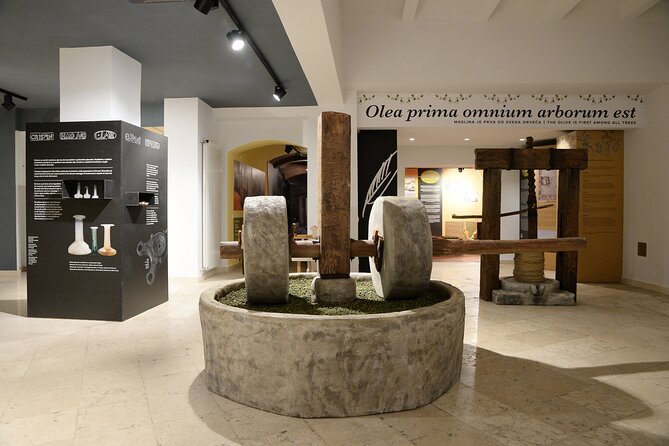
The first part takes place in an exhibition about olive oil in Istria. The focus is not only on the finished product, but also on the work behind it.
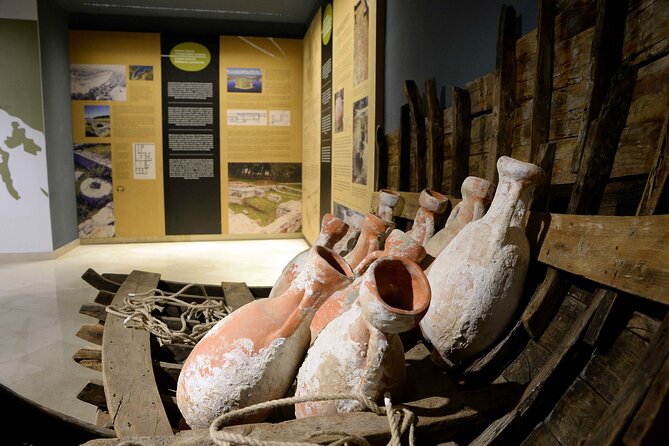
You see how Romans made olive oil in Istria, along with information about where and how it was exported. That gives the tasting a useful local setting. You are not simply sampling a product from a shop shelf. You are learning why olive growing and oil production have mattered in this part of Croatia for centuries.
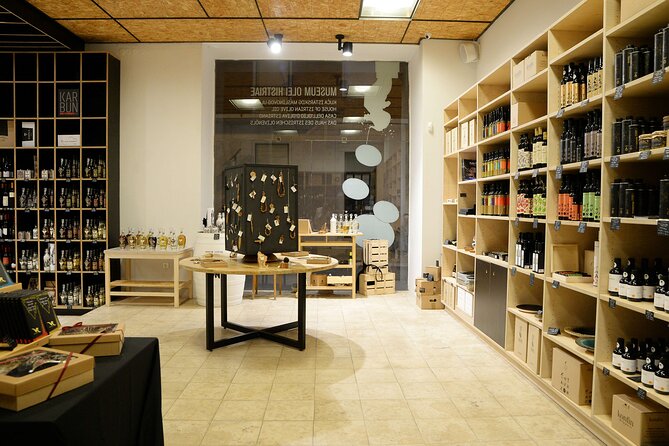
The exhibition is described as small, and that is worth keeping in mind. You can cover it without giving up half a morning, which suits a short city visit. At the same time, the compact size means you should not expect a major museum with room after room of displays.
The layout may also feel unusual. The historical information is useful, but the presentation may not be especially interactive. If you enjoy handling objects, pressing buttons, or moving through elaborate displays, this part could seem quiet. I would treat it as preparation for the tasting rather than the main event.
Two short films add a little variety. One covers traditional processing, while the other explains how olive oil is made today. Together, they help connect older methods with present-day production without asking you to read a long series of panels.
Learning how Istrian oil is made today
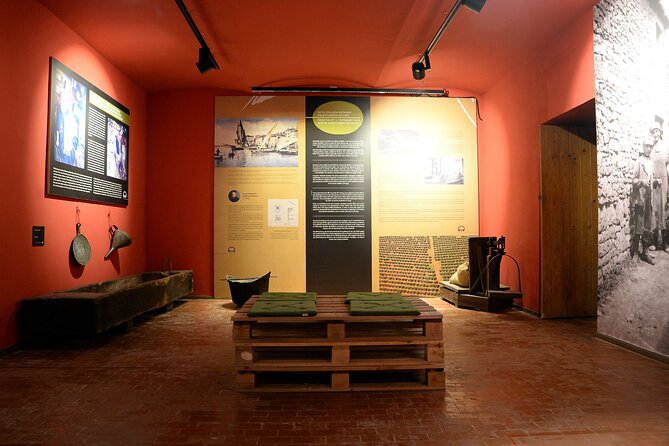
The films matter because olive oil quality is shaped by more than the type of olive. Processing, storage, freshness, and handling all affect what ends up in your glass and on your plate.
The presentation gives you a basic way to think about the difference between traditional and modern production. You also get a clearer idea of why a bottle labeled extra virgin is not automatically a guarantee of excellent taste.
That distinction is one of the useful parts of the visit. The experience encourages you to question what extra virgin means in practical terms, not just accept the wording on a label. You leave with a better sense that quality has to be assessed through the oil itself.
The historical portion may not satisfy someone looking for a long technical lecture. Still, it makes the tasting more meaningful. Once you know that Istrian oil has an old production story and a modern commercial life, the next stage feels less like a sample session and more like a lesson in local food culture.
The tasting room and sensory comparison
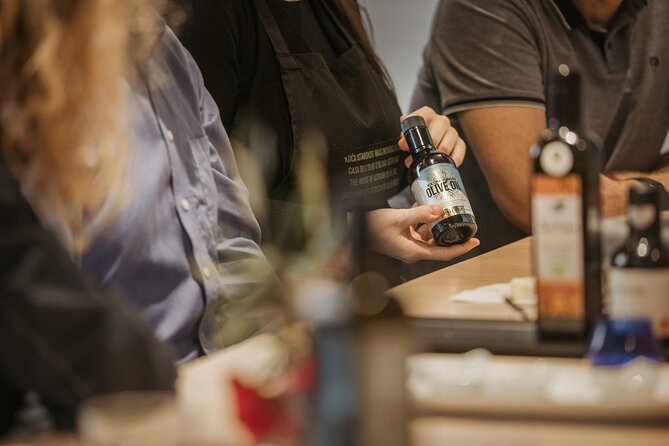
After the exhibition, you move to the tasting room. This is where the experience becomes more active.
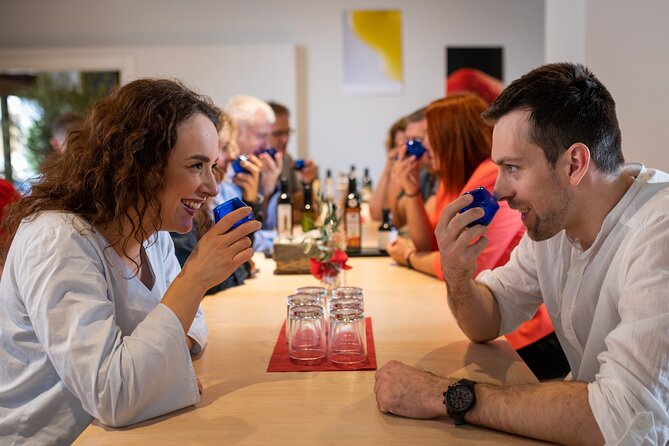
You work through a sensory analysis of several high-quality Istrian olive oils. The goal is not simply to decide which one you like best. You learn how to notice aroma, flavor, texture, and faults, using your own senses instead of relying on the label or price.
A key feature is the comparison with an oil commonly bought in a supermarket. That side-by-side approach is especially helpful for first-time tasters. Abstract descriptions can be hard to remember, but a direct contrast gives you something concrete to identify.
The guide explains how to recognize good and bad olive oils, including positive and negative attributes. This is the point where the experience offers lasting value. You can use the information later when shopping, ordering food, or judging the oil served at a restaurant.
The tasting is also a good setting for questions. The guide is praised for giving clear answers and knowing the subject well. The staff are described as friendly, and the venue as clean, which matters when the experience depends on careful attention to smell and flavor.
Do not expect the tasting to be a free-form meal. Snacks are included, but this is an educational tasting rather than lunch. The purpose is to understand the oils, not to fill up.
A few more history tours around Croatia worth a look
- Dubrovnik Old Town History Walking Tour
★ 5.0 · 1,684 reviews - Dubrovnik: Ancient City Walls & Wars Walking Tour
★ 5.0 · 1,270 reviews - Zagreb: City & History Walking Tour & WW2 Tunnels
★ 4.9 · 1,202 reviews - Walking Tour of Split with a ‘Magister’ of History
★ 5.0 · 1,122 reviews
Polyphenols and the health angle
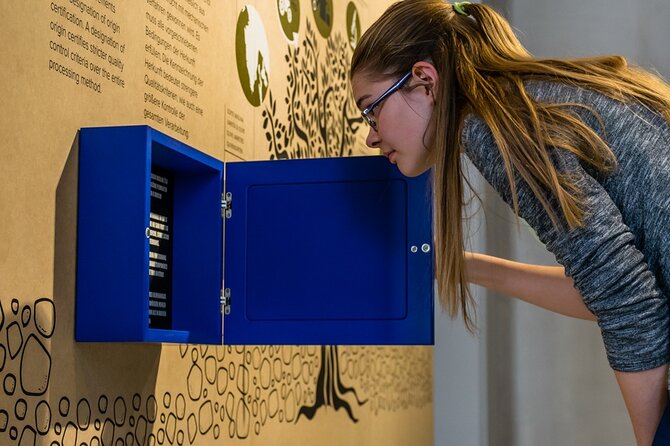
The session also explains why polyphenols matter. These natural compounds are often discussed in connection with olive oil and health, but the visit places the topic within the tasting rather than turning it into a medical lecture.
That is useful because you learn to connect a quality feature with a sensory experience. The guide can explain why certain oils may taste more bitter or peppery and how those characteristics relate to the oil’s composition.
You should still treat this as food education, not personal health advice. The experience offers general information about polyphenols and olive oil. It does not replace guidance from a medical professional.
For many people, this will be one of the more memorable details. A tasting that explains both flavor and production gives you more to take home than a list of tasting notes.
The surprise dessert pairing

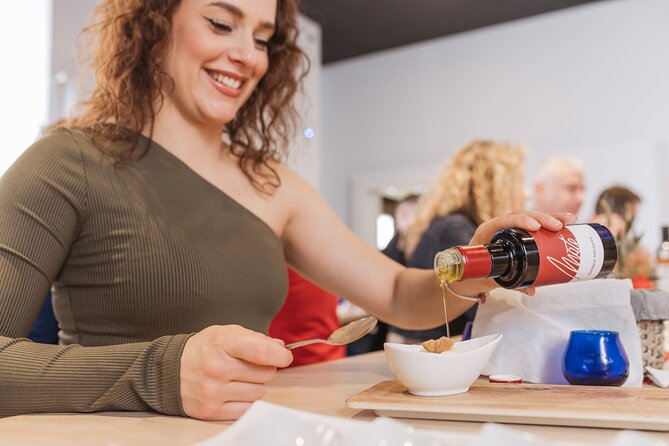
The tasting ends with a sweet pairing. A surprise dessert is served with high-quality extra virgin olive oil.
This is a smart finale because it challenges the usual idea that olive oil belongs only with bread, salad, or savory dishes. The pairing shows how the oil can work with something sweet, and it gives you a final flavor to remember.
The exact dessert is not specified in advance. That keeps the ending playful, but it also means you should not book this expecting a particular pastry or ingredient.
I like this part because it turns a technical subject into a simple food experience. You are more likely to remember the lesson when it ends with an unexpected combination instead of another explanation about production methods.
The dessert is not presented as a full meal. If you arrive hungry, plan to eat separately before or after the visit. The included snacks and dessert are supporting parts of the tasting, not a replacement for lunch or dinner.
What the price means at $36.04
The listed price is $36.04 per person. For about 90 minutes, that is more than the cost of a basic museum ticket, but you are paying for several elements together: admission to the exhibition, an English-language guide, a guided sensory tasting, snacks, the comparison oils, and the dessert pairing.
I see the strongest value in the instruction. If you only wanted to sample olive oil, you could buy a bottle for much less. Here, the point is learning how to judge what you taste and why the oils differ.
The price makes the most sense for food-focused visitors, curious first-time tasters, and anyone who expects to buy Istrian olive oil during a Croatia trip. It is less compelling if you dislike tasting unfamiliar foods or prefer a large historical museum with extensive displays.
The group limit of 20 helps protect the value. That is not an intimate private lesson, but it is small enough for the guide to explain the oils and answer questions. The experience may feel more personal when the group is well below the maximum.
It is booked, on average, 23 days ahead. That suggests you should not wait until the last morning if your Pula schedule is fixed. Booking ahead also helps if you want a particular day, since the activity runs Monday through Saturday rather than every day.
Who will enjoy this Pula experience
I would recommend it most strongly to:
- People who enjoy local food and want context behind what they eat
- Visitors curious about Croatian and Istrian food culture
- First-time olive oil tasters who want a simple introduction
- Couples or small groups looking for an indoor activity in Pula
- Anyone planning to buy olive oil and wanting to avoid poor-quality bottles
- Food-focused visitors who appreciate a tasting with history attached
It is also suitable for most participants, and service animals are allowed. The venue is near public transportation, which makes it practical if you are moving around Pula without a car.
You may enjoy it less if you want a large museum, a long walking tour, or a full meal. The exhibition is compact, the layout may seem strange, and the historical material is supported by only two short films. The food lesson is the main reason to come.
Timing the visit during your Pula day
Because the experience lasts around 90 minutes and ends where it begins, it is easy to place between other Pula sights. A morning session leaves the afternoon open, while an afternoon booking can provide a cool indoor break during a day of sightseeing.
The opening hours are broad enough to give you options, from 10 a.m. until 6 p.m. The activity is offered in English, so you should be comfortable following spoken explanations and discussing flavors in that language.
Give yourself enough time to arrive at Istarska ul. 30. The mobile ticket is convenient, but it does not make a late arrival harmless. The published details do not promise that a delayed participant can join at another point, so arriving on time is the sensible plan.
The experience is suitable for most people, but the provided information does not specify every accessibility detail. If you have a particular mobility need, contact the provider before booking rather than relying only on the general participation note.
How the experience has been received
The overall rating is 4.7 out of 5, with 94 percent of people recommending it. The strongest praise goes to the tasting guide, the useful explanations, the friendly staff, and the clean venue.
The most common reservation concerns the exhibition. It is smaller than some visitors expect, and the layout is not perfect. The historical content is considered informative, but it could be more interactive.
That balance is important. I would not sell this as a major museum visit. I would sell it as a guided olive oil lesson that happens to begin with a compact museum section. Set your expectations that way and the experience is more likely to feel worthwhile.
The tasting itself receives the warmest response. The guide’s ability to answer questions and explain the difference between oils appears to be the reason the experience works so well. If you pay attention and ask questions, you should get more from it than by simply sampling each oil and moving on.
Cancellation and practical booking advice
Free cancellation is available if you cancel at least 24 hours before the local start time. A cancellation made less than 24 hours ahead is not refundable, and changes inside that window are not accepted.
Confirmation is provided at booking. The maximum group size is 20, and the activity ends back at Istarska ul. 30.
Since the tasting is often booked 23 days in advance, I would reserve it once you know your Pula dates. Check the opening day and time carefully, since the experience is listed for Monday through Saturday and not Sunday.
Should you book the olive oil tasting in Pula?
Book it if you want a focused, practical introduction to Istrian olive oil. The strongest reasons are the side-by-side comparison, the guide’s clear explanations, the lesson about positive and negative qualities, and the surprising dessert pairing.
Skip it if you are searching for a large museum, a substantial meal, or a highly interactive historical attraction. The exhibition is small and the layout may not thrill you.
For most food-focused visitors, the $36.04 price is fair because the value lies in what you learn. You leave better prepared to judge olive oil, with a clearer sense of Istrian food culture and a memorable sweet ending.
FAQ
Where does the olive oil experience begin?
It begins at Istarska ul. 30, 52100, Pula, Croatia.
Where does the experience end?
It ends back at the meeting point on Istarska ul. 30.
How long does the olive oil tasting last?
The full experience lasts about one to one and a half hours. The exact length depends on your interests and questions.
What language is the experience offered in?
The experience is offered in English.
What is included in the tasting?
Olive oil tasting and snacks are included, along with a surprise dessert paired with high-quality extra virgin olive oil.
How many people can join the activity?
The maximum group size is 20 people.
When is the House of Istrian Olive Oil open?
It is open Monday through Saturday from 10 a.m. to 6 p.m. The listed operating period runs from March 30, 2022, through January 21, 2027.
Can I cancel for a full refund?
Yes. You can receive a full refund if you cancel at least 24 hours before the experience starts. Cancellations made less than 24 hours before the start time are not refunded.
Just added around Croatia
- Zeljava Airbase: History and Adventure Tour/Plitvice★ 5.0 · 75 reviews
- Bits of History – Half day kayak Tour with Wine delight★ 5.0 · 178 reviews
- (Official) Korcula Buggy: Our History, Food & Wine (Ana & Branko)★ 5.0 · 27 reviews
- Private History Old Town and City Wall Tour in Dubrovnik★ 5.0 · 41 reviews
- Private Walking Tour of Dubrovnik Hidden Gems and History★ 5.0 · 19 reviews
- Game of Thrones and History Combo Private Tour★ 5.0 · 53 reviews
- Historic Walk with Game of thrones details in Dubrovnik★ 5.0 · 20 reviews
- Dubrovnik History, Sweets & Liquors in a Private Palace (PRIVATE)★ 5.0 · 63 reviews
Croatia History Tours, compared.

Walking Tour of Split with a ‘Magister’ of History
Read our review →
Dubrovnik Combo: Old Town & Ancient City Walls
Read our review →
Browse the lists this tour appears in