
Review · VIRGINIA
Colonial Williamsburg: Colonial History Guided Walking Tour
History feels closer on foot.
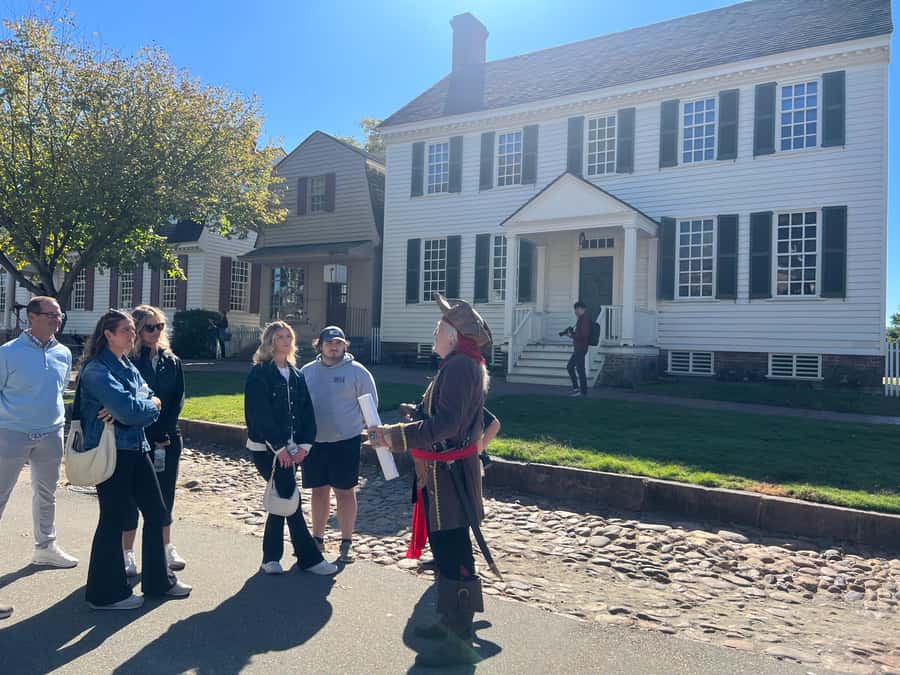
This 105-minute Colonial Williamsburg walking tour brings the eighteenth century to street level, with redcoats, American revolutionaries, period dress, and stories about people often left out of schoolbooks. I like the personal guide, especially when the tour moves beyond George Washington and Thomas Jefferson to explain ordinary colonial life and the political shift from royal rule to elected government.
I also like the way the route links famous figures to real places, including the Raleigh Tavern, the Capitol, and the Governor’s Palace area. The main drawback is practical: much of the tour takes place outdoors, and one visitor found the meeting point confusing while another wished for more shade on a hot day. Come with good shoes, sunscreen, and a little patience.
Key points to know before you book
- Start at the Capitol Building: Meet your guide in front of the Capitol on East Duke of Gloucester Street, not at the courthouse shown by some map directions.
- Hear more than founding-father stories: The tour covers royal government, elected officials, overlooked colonial figures, and the human cost of independence.
- See major historic locations: The route includes the Raleigh Tavern and may cover sites such as the Gaol and Bruton Parish, with exterior interpretation rather than guaranteed entry into every building.
- Expect a lively guide: Elizabeth receives especially strong praise for her enthusiasm, audience participation, and ability to answer questions. Tom Williams and Lexi have also led highly regarded tours.
- Plan for outdoor conditions: Bring comfortable shoes and sunscreen. Shade and seating may be limited, though the guide can adjust the pace when needed.
- Pay $25 for context, not access: The price covers the personal guide. Parking is separate, costing $5 if you arrive before 5:00 PM.
Why this 105-minute walk works
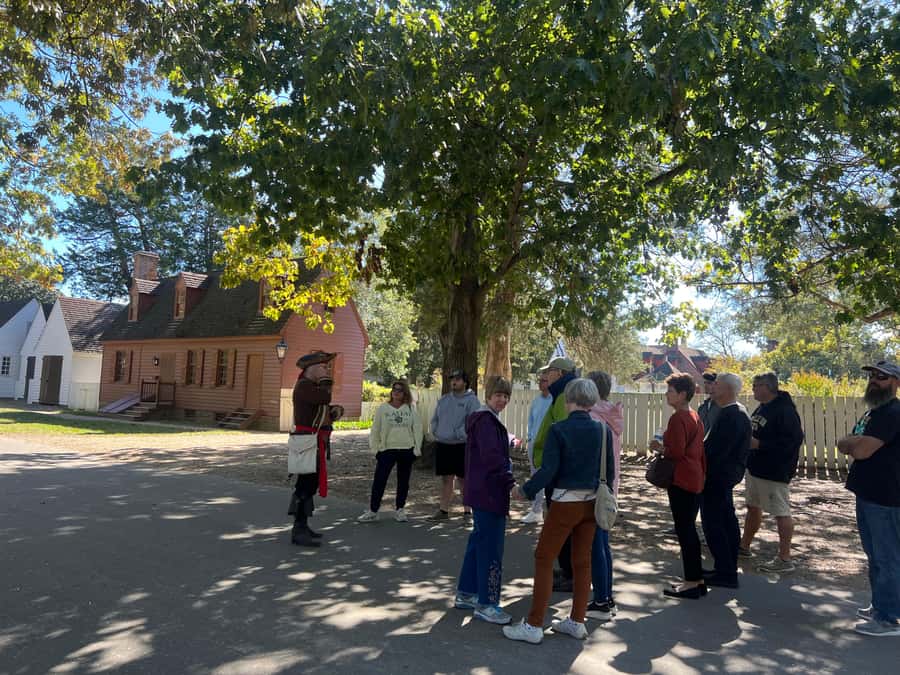
Colonial Williamsburg can feel large and scattered when you first arrive. A guided walk gives you a clear route and a running explanation of what you are seeing, so the buildings do not become a collection of pretty facades with dates attached.
The tour begins at the Capitol Building and returns there after moving through the historic area. That makes it easy to fit into a day of sightseeing. You do not need to arrange transportation between stops, and the walking route gives you time to notice details that can be missed from a car or shuttle.
At $25 per person, this is best viewed as a historical orientation. It does not replace every paid building experience, and the guide is not promising entry to each shop, home, or public building. Instead, you pay for a human explanation of the streets, politics, characters, and connections that make the restored town meaningful.
That distinction matters. If you want a long series of indoor visits, this may feel limited. If you want help making sense of the whole site before exploring further, the price is reasonable.
More History Walking Tours in the USA
- History and Hauntings of Salem Guided Walking Tour
★ 5.0 · 14,564 reviews - Boston: Freedom Trail History Small Group Walking Tour
★ 5.0 · 6,450 reviews - Historic Charleston Guided Sightseeing Walking Tour
★ 5.0 · 6,216 reviews
Meeting the guide at the Capitol
The official meeting point is in front of the Capitol Building on East Duke of Gloucester Street. Parking is available at 460 Francis Street East, and parking costs $5 if you arrive before 5:00 PM.
Give yourself extra time to get oriented. The directions advise using 430 East Duke of Gloucester Street for walking directions to the Palmer House, then looking toward the end of the blacktop circle. Your guide should be standing on the road in front of the Capitol.
Do not rely fully on Google Maps for this meeting. The directions warn that it may send you to the courthouse instead. One person also had trouble finding the right parking area and was unsure where parking was allowed. Another arrived at the old Capitol and needed clarification about the location.
This is a small issue, but it can spoil the start of a short tour. I would arrive early, confirm the Capitol building visually, and keep your phone available in case the guide calls. Elizabeth has contacted a group before the tour, which helped clear up a location mix-up.
The Capitol begins the political story
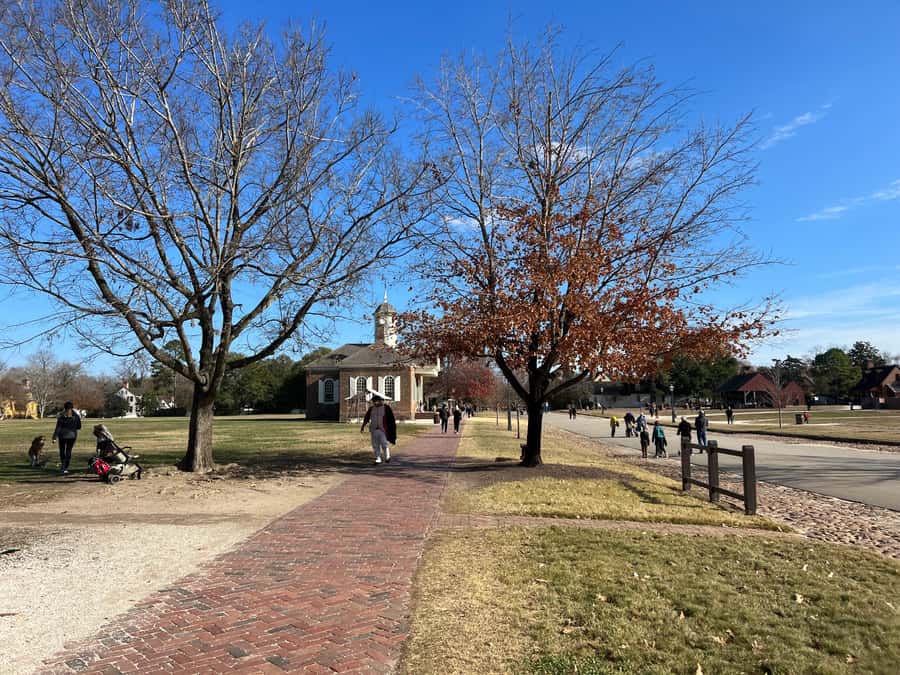
The Capitol is more than a starting marker. It gives the guide a natural place to explain how Virginia was governed and how colonial authority changed over time.
You hear about the royal government and the movement toward elected officials. That shift is central to the American story, but it can sound abstract in a textbook. Here, it is tied to the buildings and streets around you, including places used by the people who argued over Virginia’s future.
The tour also connects this political story to the approach of independence. You are not simply told that America declared independence. The guide places that decision within the tensions of colonial government, public debate, and the people who lived through the change.
This is one of the tour’s strongest features. It treats independence as a difficult political transition rather than a single heroic moment. You still hear about major figures, but you also get a sense of the wider society around them.
Raleigh Tavern and the texture of daily life
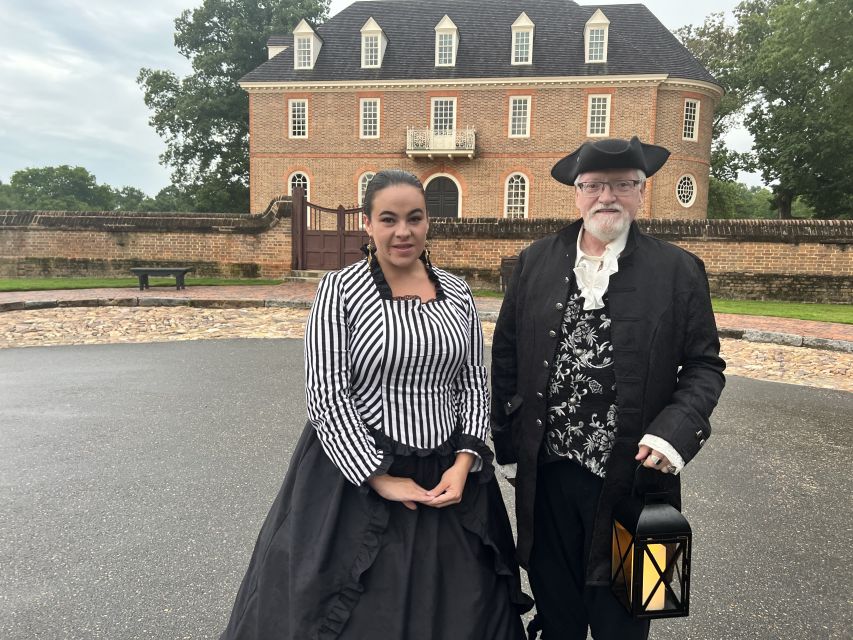
The Raleigh Tavern is one of the route’s key historic sites. It helps shift the tour from formal government to the social world of colonial Williamsburg.
A tavern was not just a place to eat or sleep. It was part of the public life of the town, and the guide uses locations like this to explain how people met, talked, conducted business, and exchanged ideas. The tour’s value comes from hearing those connections while looking at the actual setting.
You should not expect every building on the route to open for a full interior visit. One particularly useful account noted that the group did not enter most houses or shops, but the guide still provided strong information about many of them. That is important to understand before booking.
The experience is primarily a guided walk, not a building-by-building ticket. If you want to step inside specific sites, you may want to pair this walk with Colonial Williamsburg admission or additional visits. The tour can then give you the political and social framework that makes those interiors easier to understand.
More Colonial History Tours in the USA:
- Colonial History Tour in Williamsburg Virginia
★ 5.0 · 97 reviews - Vung Tau Essential: Beach, Christ Statue & Colonial Heritage
★ 5.0 · 284 reviews - Full-Day Ho Chi Minh City Tour with Colonial Heritage & Chinatown
★ 5.0 · 246 reviews - Colonial Zone: Historical Tour with a visit to the Columbus Lighthouse and Tres Ojos Park
★ 4.9 · 157 reviews
Tarpley and Thompson store, trades, and local connections
The Tarpley and Thompson store is another named site along the experience. A store like this helps show the commercial side of colonial life, where goods, money, status, and relationships met in one place.
The guide’s job is not merely to identify the building. The stronger part is explaining what its role says about the town and its people. You may hear how colonial society worked through trade, public reputation, and personal connections, rather than through the neat categories often used in school lessons.
This is also where the attention to period detail becomes useful. The costuming, building fronts, and recreated street life give you visual clues, while the guide supplies the meaning. Without that explanation, period clothing can be little more than decoration. With it, the scene becomes a prompt to think about rank, work, authority, and daily habits.
The recreation is carefully presented, but you should still remember that you are seeing a historical interpretation. The guide helps bridge the gap between the restored setting and the people who once used it.
Stories beyond Washington and Jefferson
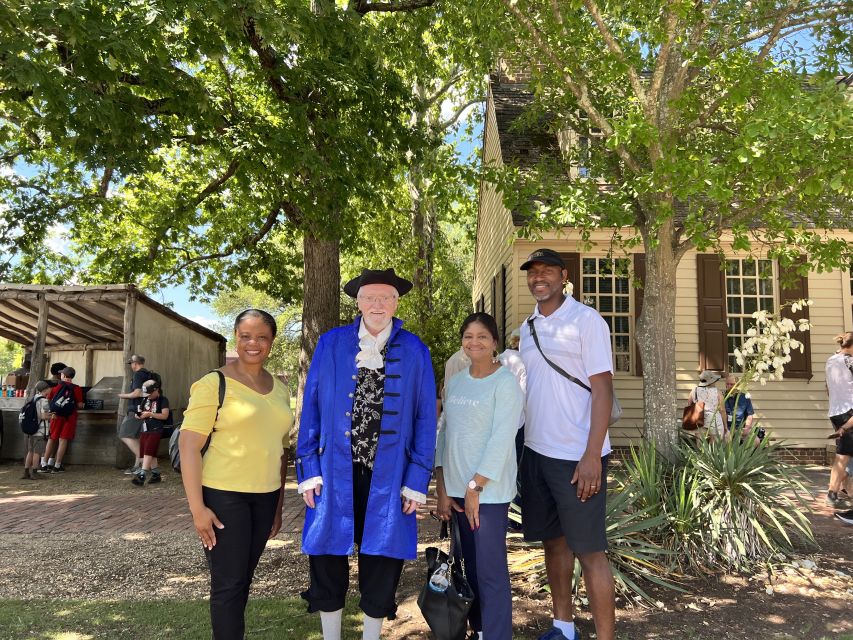
The tour includes George Washington and Thomas Jefferson because their connection to Williamsburg matters. You visit places associated with the founding generation and hear about the role those figures played in the city’s political life.
But the better reason to book this walk is that the guide does not stop there. The tour makes room for colonial figures who receive little attention in standard history lessons. That wider cast gives the town a more human shape.
Elizabeth is especially praised for adding information people had not heard before and for making the group participate. Her style appears to be energetic, friendly, and conversational. She has also been described as someone who answers questions carefully rather than rushing through a prepared speech.
Tom Williams has led the tour as well, bringing detailed knowledge of the grounds and history. Lexi has also guided the experience, including in rainy conditions. The guide may vary, but the strongest pattern is clear: you are paying for a live interpreter, and the quality of that person matters greatly.
The guide may also explain the origins of familiar American sayings. That is a small but memorable feature because it links colonial subjects to language you still hear today. These connections keep the tour from feeling like a list of dates.
The Governor’s Palace and the move toward independence
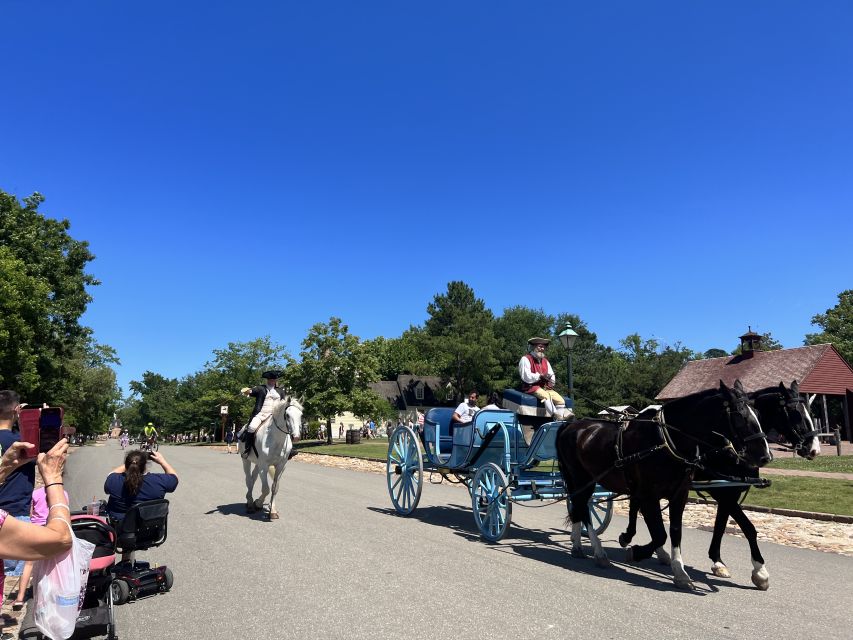
Around the Governor’s Palace, the tour returns to power. This is where the contrast between royal authority and elected representation can become easier to picture.
The guide tells stories about the royal government and the transition to elected officials. You get a sense of how Virginia’s political structure changed, and why independence was not just a matter of replacing one group of leaders with another.
The independence portion is described as poignant rather than purely triumphant. That tone is useful. It leaves room for the uncertainty and cost of the decision, instead of turning the entire story into a parade of famous names.
The walk then returns toward the Capitol. Ending where you began gives the tour a tidy shape: government at the opening, social and commercial life in the middle, and the political break with Britain before the return.
Costumes, redcoats, and recreated colonial streets
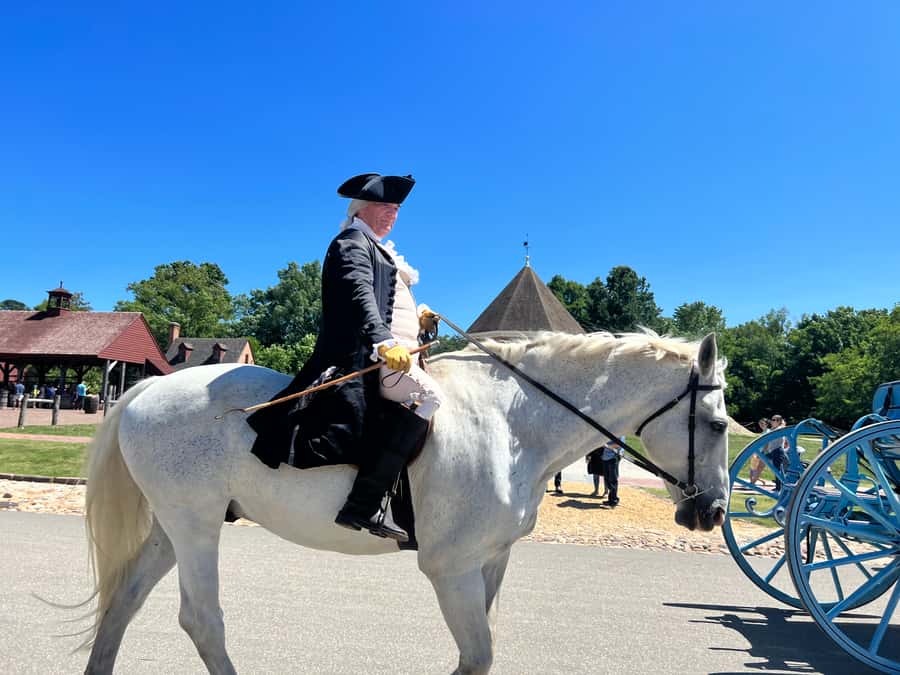
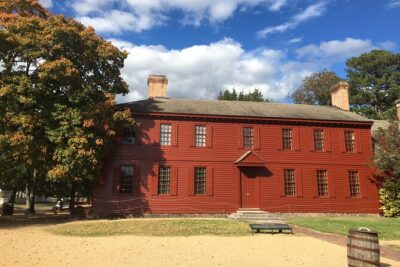
You will encounter staff in period-specific clothing, including the visual presence of British redcoats and American revolutionaries. This adds atmosphere without requiring special effects or theatrical staging.
The clothing matters because it reinforces the difference between social roles and political sides. At the same time, you should not expect a full stage performance. The main experience is still a walking tour led by a guide, with costumed interpretation around you.
The recreated setting works best when you pay attention to small details. Storefronts, public buildings, clothing, and street views all help create a picture of eighteenth-century America. The guide gives those details a purpose by explaining who used the spaces and what was at stake there.
For children, this can make the history easier to follow. Several guides have kept younger group members engaged with stories and participation. Still, the tour lasts 105 minutes, so children who struggle with outdoor walking may need breaks.
Walking comfort, heat, rain, and mobility
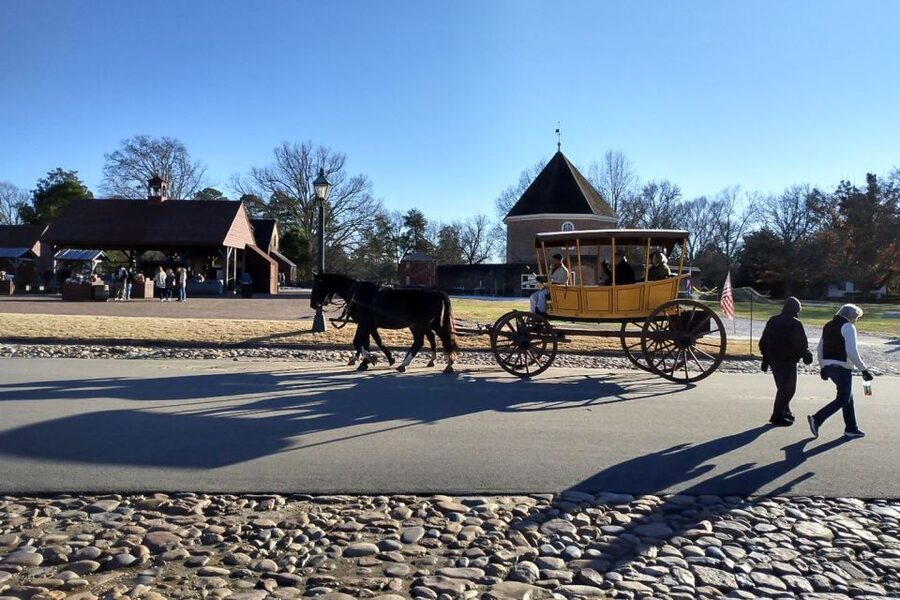
The route is wheelchair accessible, but you should still plan for outdoor conditions. Comfortable shoes are specifically recommended, and sunscreen is a sensible addition.
Heat can affect the experience. One person felt the information was excellent but wished the group had paused in the shade more often on a hot, sunny day. That is a fair concern, especially during summer in Virginia.
Rain is also possible. Lexi has led the walk in rainy weather, but the experience remains an outdoor activity. Check the forecast and dress accordingly.
The guide can make practical adjustments. Elizabeth accommodated two people who had trouble walking by allowing them to sit from time to time. That is encouraging if someone in your group needs a slower pace, though you should still consider the length of the walk and the conditions on the day.
Because the tour is wheelchair accessible, it may suit a broad range of visitors. If your mobility needs are specific, contact the operator before booking so you can confirm that the route works for your group.
What the $25 price includes
The $25 fee covers the personal guide and the 105-minute walking experience. It does not include parking, which costs $5 before 5:00 PM at the available parking area.
The value depends on how you use it. For a first look at Colonial Williamsburg, the guide can save you from wandering without context. You receive a connected explanation of government, commerce, famous figures, overlooked people, independence, and the recreated setting.
You do not receive a promise of entry into most buildings or shops. If your priority is seeing interiors, budget separately for those visits. The walk works best as an introduction or companion to a broader Colonial Williamsburg day.
The flexible booking terms are useful for a changing itinerary. You can reserve now and pay later, and cancellation is allowed up to 24 hours before the tour for a full refund. Starting times vary, so check availability when choosing a date.
Who should book this Colonial Williamsburg walk?
I would recommend it to first-time visitors who want a clear introduction before exploring on their own. It also suits history-minded families, couples, and anyone who prefers stories and discussion to silent signs.
You will get the most from it if you enjoy asking questions. The strongest guides encourage participation, explain unfamiliar details, and adjust their presentation to the group.
It is also a good choice if you have only part of a day. The route takes 105 minutes and returns to the Capitol, leaving you free to continue sightseeing, eat, or visit additional buildings.
I would think twice if you want a fully indoor tour, guaranteed access to historic interiors, or protection from hot sun and rain. This is an outdoor walk, and the restored town is part of the experience.
Should you book it?
Book this tour if you want Colonial Williamsburg to feel like a connected story rather than a series of buildings. The strongest reasons are the lively guides, the attention to lesser-known people, the political explanation around the Capitol and Governor’s Palace, and the useful links between colonial life and modern language.
Prepare for a little walking, outdoor weather, and possible confusion at the meeting point. Arrive early, follow the Capitol directions rather than Google Maps, and bring sunscreen and comfortable shoes.
At $25, it is a sensible choice for context. Pair it with interior visits if you want a fuller day, or take it alone if you want a focused introduction to Williamsburg’s streets, politics, and people.
FAQ
How long is the Colonial Williamsburg guided walking tour?
The tour lasts 105 minutes, or about one hour and 45 minutes.
How much does the tour cost?
The price is $25 per person.
Where does the tour begin?
Meet your guide in front of the Capitol Building on East Duke of Gloucester Street.
Where can I park for the tour?
Parking is available at 460 Francis Street East. Parking costs $5 if you arrive before 5:00 PM.
What should I bring?
Bring comfortable shoes and sunscreen. The experience takes place outdoors, so plan for the weather.
Is the tour offered in English?
Yes. The live tour guide leads the experience in English.
Is the tour wheelchair accessible?
Yes, the tour is listed as wheelchair accessible.
Does the tour enter every historic house or shop?
No guarantee of entry is provided. The experience is a guided walk, and much of the interpretation takes place from outside the buildings.
What happens if I need to cancel?
You can cancel up to 24 hours in advance for a full refund.
Can I reserve now and pay later?
Yes. You can reserve your place and pay later, which keeps your plans flexible.
Just added around the USA
- Washington DC: African American History Museum Private Tour★ 4.7 · 54 reviews
- Dallas: Historic West End Ghost Walking Tour★ 4.6 · 59 reviews
- NYC: New York City History of Stand-Up Comedy Tour★ 4.8 · 21 reviews
- Colorado Springs: Guided Ghost Story and History Tour★ 4.5 · 46 reviews
- Civil War History Tour – The Battle of Franklin, Tennessee★ 4.9 · 85 reviews
- Chicago: Food, History and Architecture Tour★ 4.8 · 104 reviews
- Chicago: Historic Gangsters & Twilight Tales Night Cruise★ 4.1 · 63 reviews
- Cincinnati: Historic Sightseeing Cruise★ 4.4 · 373 reviews
Colonial History Tours, compared.

Vung Tau Essential: Beach, Christ Statue & Colonial Heritage
Read our review →
Full-Day Ho Chi Minh City Tour with Colonial Heritage & Chinatown
Read our review →
Browse the lists this tour appears in