
Review · NEW ORLEANS
New Orleans French Quarter and Voodoo History Walking Tour
History gets personal here. This $21 walking tour links Congo Square, Marie Laveau’s former home, Bourbon Street, and Jackson Square through stories about voodoo, music, architecture, politics, and daily life in New Orleans. I especially like the strong mix of major sights and less obvious history, plus the guides’ talent for turning dates and names into memorable tales.
The tour also offers good value for a first look at the French Quarter. Guides such as Wolfy, Nika, Pepe, Erin, Angela, Robert, Bobby, and others are praised for humor, passion, and clear storytelling. The main caution is that the experience can reflect a guide’s personal viewpoint, and one recent rating found the political commentary distracting. You should also expect a fairly quick overview, not a specialist course in voodoo.
Key Points Before You Book
- Congo Square sets the tone: Begin with the early history of Indigenous peoples, the slave trade, and the roots of voodoo in New Orleans.
- Marie Laveau is treated as history, not just legend: See the site of her former home and hear about its role as a refuge for orphans and Choctaw vendors.
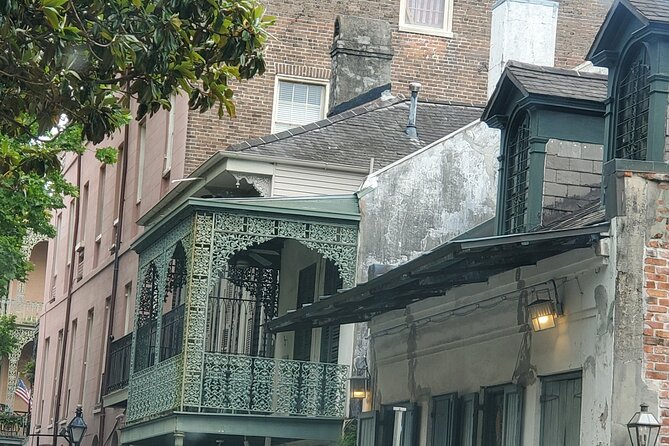
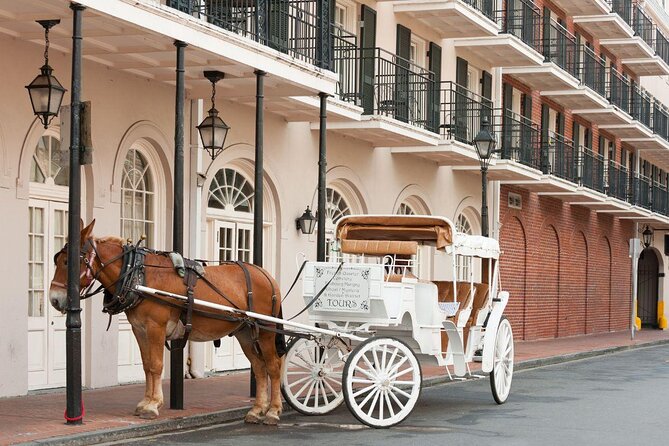
- The route covers the French Quarter’s essential landmarks: Walk through Bourbon Street, Preservation Hall, Royal Street, Voodoo Authentica, and Jackson Square.
- Storytelling is the main attraction: Guides including Wolfy, Nika, Pepe, and Erin are praised for humor, energy, and detailed answers.
- The format is compact and affordable: The walk lasts about 1 hour 45 minutes, costs $21 per person, and allows no more than 20 people.
- Plan for New Orleans weather: The tour needs good weather, and the company offers a new date or full refund if poor conditions cause cancellation.
Why This Short Tour Works Well in New Orleans
New Orleans can feel like several cities at once. French colonial architecture, Caribbean and African traditions, Catholic ritual, jazz, political drama, and ghostly folklore all share the same few blocks. A guide helps you connect those pieces instead of treating the French Quarter as a collection of pretty balconies and lively bars.
This walk is especially useful early in your stay. It gives you names, places, and stories that make later wandering more meaningful. After hearing about Congo Square, you may listen to street music with a better sense of its roots. After seeing the former site of Marie Laveau’s home, you may look at New Orleans voodoo with more care and less Hollywood fog.
The tour is conducted in English and begins at 11 a.m. from Voodoo Lounge at 718 North Rampart Street. It ends at Jackson Square, right in the center of the French Quarter. That one-way route is practical: you finish near restaurants, cafés, artists, musicians, tarot readers, and many of the district’s best-known buildings.
The group limit of 20 matters. It is not a private walk, but it should be small enough for questions and conversation. The guide-led format is also more flexible than an audio tour. Several guides have been praised for slowing down when needed, answering questions carefully, and choosing shaded spots on hot days.
Still, the 1-hour-45-minute schedule requires restraint. You will hear a lot, but you will not get an exhaustive account of every street or building. The best way to use this experience is as an introduction, then return to the areas that catch your interest.
More History Walking Tours in New Orleans
- New Orleans Garden District History Walking Tour
★ 5.0 · 2,879 reviews - French Quarter Historical Sights and Stories Walking Tour
★ 5.0 · 2,724 reviews - New Orleans Food and History Walking Tour
★ 5.0 · 1,544 reviews
Congo Square: Where the Story Begins
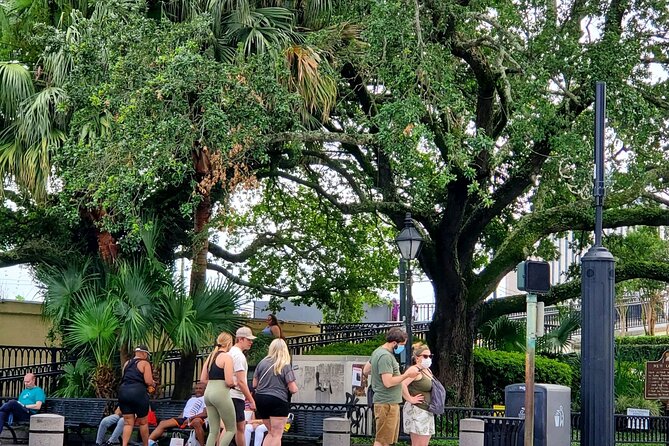
The first stop is Congo Square, with about 10 minutes set aside for the discussion. This is an important opening because the tour starts with people and culture rather than architecture.
You will hear about Indigenous peoples in the New Orleans area, the slave trade, and the early development of voodoo. That framing is valuable. Voodoo is often reduced to spooky costumes, curses, and sensational stories. Here, the subject is connected to forced migration, cultural survival, religious practice, and the people who shaped New Orleans.
The stop is brief, so do not expect a full lecture. Its purpose is to give you a foundation for the rest of the walk. The guide’s ability to explain difficult subjects plainly matters here, and the strongest comments about the tour praise exactly that skill.
This is also the point where the tour’s tone becomes clear. It aims to make history entertaining, but the better guides do not treat the subject as a cheap thrill. If you want only ghost stories, this opening may feel more serious than expected. If you want context, it is a strong start.
Marie Laveau’s Former Home and the Human Side of Voodoo
The stop at the original site of Marie Laveau’s home lasts about 10 minutes. Laveau is one of the most famous figures in New Orleans folklore, often called the Voodoo Queen. The location gives the guide a chance to separate popular legend from the life of a real woman with a lasting place in the city’s memory.
The most interesting detail is the home’s role as a safe place for people in need. Orphans and Choctaw vendors reportedly found shelter there. That detail makes Laveau more than a mysterious character in a black-and-white legend. It points to community service, social networks, and the practical ways people survived in nineteenth-century New Orleans.
I like this part because it gives the voodoo discussion a human center. You are not simply hearing about rituals or supernatural claims. You are hearing about a person, a home, and the people connected to it.
The limitation is that the stop is short and takes place at a former home site rather than a preserved interior. You should expect interpretation from the guide, not a museum visit or a displayed collection.
Bourbon Street Beyond the Party Image
Bourbon Street brings a different kind of history. The guide explains how the street got its name, why it became famous, and why local feelings about its reputation are complicated.
That last point is important. Bourbon Street is a major symbol of New Orleans, but it is not the whole city. Its bars, nightlife, and loud public image attract attention, while many residents have a more mixed relationship with what the street represents. A good guide can help you understand both the attraction and the irritation.
You will also hear about the Old French Opera House. This adds a useful cultural layer to a street often described only through nightlife. The stop helps show how entertainment in the French Quarter has changed over time.
Do not expect the tour to linger at every bar or offer a nightlife crawl. The focus is history and interpretation. For a quieter experience, the 11 a.m. start is sensible, since you encounter Bourbon Street before the evening crowd and party atmosphere become the main story.
More History Walking Tours in the USA
- New Orleans: French Quarter Food History Walking Tour
★ 4.9 · 713 reviews - New Orleans Cocktail History Walking Tour in the French Quarter
★ 5.0 · 604 reviews - New Orleans Jazz History and Music Walking Tour
★ 4.5 · 477 reviews - New Orleans French Quarter Walking and History Tour
★ 4.5 · 288 reviews
Preservation Hall and New Orleans Music
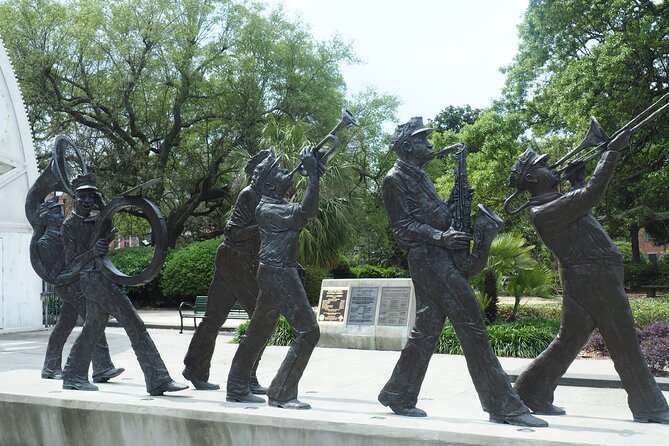
Preservation Hall receives about 10 minutes. It is one of the city’s best-known music venues and a major place for traditional New Orleans music.
The guide discusses the hall’s history, its musicians, and its work to protect local musical traditions. This is one of the route’s strongest links between the past and the present. Music in New Orleans is not simply background noise for a meal or a walk. It is one of the city’s main ways of carrying culture forward.
The stop may leave you wanting more. Ten minutes is enough for context, but not enough to hear a performance or explore the full story of the musicians connected with the venue. If music is your main reason for visiting, treat this as a starting point and consider setting aside separate time for Preservation Hall.
The tour does not include a concert ticket. That keeps the price down, but it also means you should not confuse this walking stop with a music performance.
Royal Street, the Courts, and Louisiana Politics
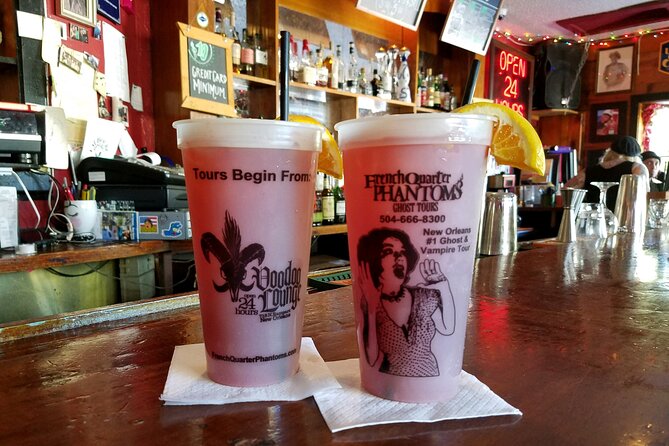
Royal Street shifts the subject from music and voodoo to buildings, law, and politics. The stop lasts about 15 minutes and includes the State Supreme Court building.
The guide also covers figures such as Huey P. Long and Edwin Edwards, along with Plessy versus Ferguson. These references widen the tour beyond familiar French Quarter legends. You get a look at the people and legal conflicts that helped shape Louisiana and the United States.
This section may appeal most to people who enjoy political history. It also gives the walk some balance. New Orleans is not only haunted tales, cocktails, and old balconies. It is a place shaped by court decisions, public officials, racial conflict, and arguments over power.
One caution: political interpretation can vary by guide. Most feedback praises the guides’ ability to explain complicated material, but one low rating objected to the treatment of Andrew Jackson and felt the commentary became too political. If you prefer a strictly neutral presentation, ask questions and keep in mind that a storyteller’s point of view is part of the experience.
Voodoo Authentica and the Living Tradition
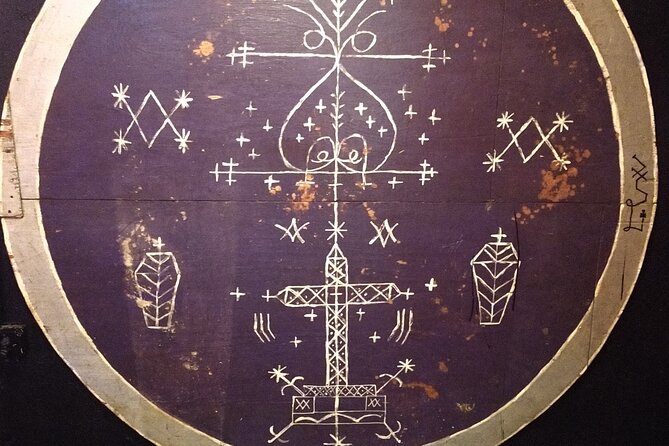
Voodoo Authentica is described as a voodoo cultural center and collection, with about 15 minutes devoted to the stop. This is where the earlier discussion can become more concrete.
The stop helps place voodoo within the city’s continuing cultural life rather than leaving it in the past. It may be especially useful if your prior idea of voodoo comes mainly from movies or tourist souvenirs. The walk presents it as a subject connected to belief, heritage, community, and local practice.
The time here is still limited. You will not receive a full academic treatment, and the stop should not be confused with a long museum visit. The strength is the guide’s explanation and the way it fits into the larger route.
One person wished for more information about voodoo overall. That is a fair expectation to manage. Despite the tour’s title, nearly half the experience also covers architecture, music, politics, Bourbon Street, and general French Quarter history. It is best for someone who wants voodoo as one major theme among several, not the sole subject.
Jackson Square: A Strong Finish
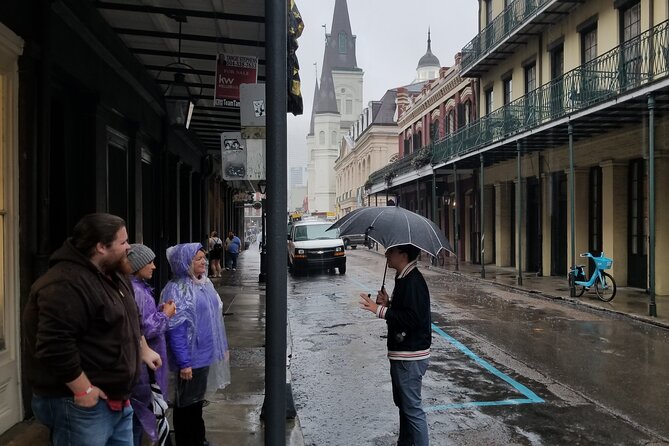
The tour ends in Jackson Square after about 15 minutes there. This is an excellent final stop because the square gathers so many of the city’s familiar images in one place.
You will see St. Louis Cathedral, the Cabildo, artists, musicians, tarot readers, and more historic buildings. The square gives the guide a natural place to pull the story together. Religion, government, public art, performance, tourism, and local character all meet here.
The ending is practical, too. You are left in the center of the French Quarter, with plenty of choices for lunch or further exploration. You can continue toward the river, return to Royal Street, or stay near the square and watch the artists and musicians.
Because the tour ends here rather than returning to its starting point, plan your next move before you set out. This is not a problem, but it is useful to know. The walk is designed as a one-way introduction.
The Guides Make or Break the Walk
The guide is the central reason this experience earns such strong marks. The overall rating is 4.8 out of 5 from 151 ratings, and 97 percent of participants recommend it. The most common praise is not about the route itself. It is about the people leading it.
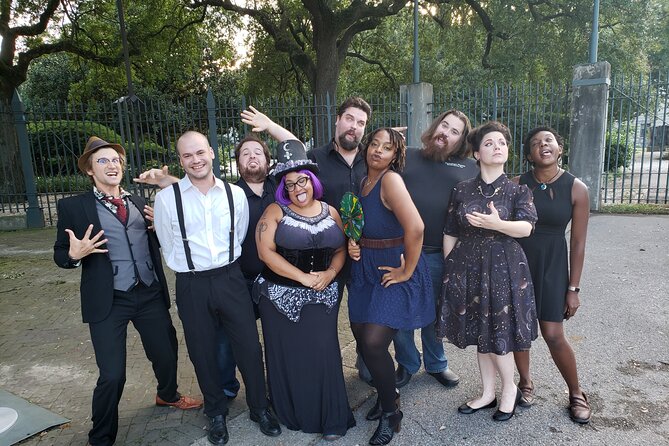
Wolfy is repeatedly praised for quick humor, passion, and a strong command of local history. Nika receives especially warm comments for her energy and excitement, including praise for keeping the tour enjoyable in light rain. Pepe is described as funny and well versed in local stories and theories. Erin is praised for a comfortable walking pace, clear English, and detailed answers.
Angela, Robert, and Bobby also receive strong marks for storytelling, organization, and thoughtful responses to questions. One guide took care to find shade, offer cold water, and allow bathroom breaks on a hot day. That kind of attention can make a real difference in New Orleans.
Guide assignments can vary, so you should not book on the assumption that a particular person will lead your walk. Still, the repeated pattern is encouraging: the company appears to rely heavily on personable storytellers rather than a fixed script alone.
Price, Pace, and Practical Value
At $21 per person, this is an inexpensive way to get oriented in the French Quarter. You are paying for about 1 hour 45 minutes of live interpretation, a small-group format capped at 20 people, and a route that combines several themes. The admission charges at the listed stops are free or included, so there are no major site-ticket costs added along the way.
I consider the price fair, especially if this is your first visit to New Orleans. A good guide can save you from spending your first day seeing disconnected sights without understanding how they fit together.
Wear comfortable walking shoes and prepare for heat or rain. The tour operates only in good weather, and poor conditions may lead to a new date or a full refund. Bring water, even though guides may help with breaks when conditions are difficult.
The mobile ticket is convenient. The start point is near public transportation, service animals are allowed, and most people can participate. The tour is in English, so you should be comfortable following spoken explanations for nearly two hours.
Free cancellation is available up to 24 hours before the 11 a.m. start time. Cancellations or changes within 24 hours are not refunded. That deadline matters if your plans are still uncertain.
Who Will Enjoy This Most?
I would recommend this walk to first-time visitors who want an intelligent introduction to New Orleans without spending half a day in a formal museum. It also suits solo visitors who want a structured way to get oriented, couples, families, and friends interested in culture and local stories.
You will likely enjoy it if you like:
- History explained through personal stories
- A mix of famous sights and lesser-known background
- Voodoo presented with cultural and historical context
- Guides who welcome questions and add humor
- A compact route that ends near other French Quarter sights
You may want another option if you want a long, specialist study of voodoo, a dedicated music tour, or a completely neutral presentation of political history. The route covers a lot, but its range means no single topic receives exhaustive treatment.
Should You Book the French Quarter and Voodoo Walk?
Yes, if you want a lively first orientation to New Orleans. For $21, the tour gives you a useful route, strong storytelling, and enough context to make the French Quarter more than a backdrop for photographs and drinks.
Book it near the start of your stay if possible. Then use the remaining days to revisit Congo Square, Preservation Hall, Royal Street, or Jackson Square with a sharper sense of what you are seeing.
Choose it with realistic expectations. This is not a private lesson in voodoo, and the tone may shift with the guide. But if you want a smart, entertaining walk that connects voodoo, music, architecture, politics, and local character, it is a solid choice.
FAQ
How long does the tour last?
The walking tour lasts approximately 1 hour and 45 minutes.
Where does the tour begin?
It begins at Voodoo Lounge, located at 718 North Rampart Street, New Orleans, Louisiana 70116.
Where does the tour end?
The tour ends at Jackson Square in the center of the French Quarter.
What time does the tour start?
The scheduled start time is 11 a.m.
Is the tour available in languages other than English?
The tour is offered in English.
What happens if bad weather cancels the tour?
If poor weather causes cancellation, you will be offered a different date or a full refund. You can also cancel up to 24 hours before the start time for a full refund. Cancellations within 24 hours are not refunded.
Just added around New Orleans
- Historic Garden District Walking Tour★ 5.0 · 75 reviews
- Garden District History and Homes Walking Tour★ 4.5 · 100 reviews
- New Orleans French Quarter Walking and History Tour★ 4.5 · 288 reviews
- New Orleans Garden District Food & History Tour (10am Everyday)★ 5.0 · 51 reviews
- French Quarter Historical Segway Tour★ 5.0 · 178 reviews
- Small-Group French Quarter History Walking Tour★ 5.0 · 39 reviews
- New Orleans’ Finest Haunted Pub Tour★ 4.5 · 38 reviews
- French Quarter History Tour with Cafe Du Monde★ 4.5 · 121 reviews
History Walking Tours, compared.
History and Hauntings of Salem Guided Walking Tour
Read our review →
Freedom Trail History Small Group Walking Tour
Read our review →
Historic Charleston Guided Sightseeing Walking Tour
Read our review →
Tapas Walking Tour with Food, Wine, and History
Read our review →
Savannah History and Haunts Candlelit Ghost Walking Tour
Read our review →
A History of Terror – Belfast City Centre Walking Tour
Read our review →Browse the lists this tour appears in