
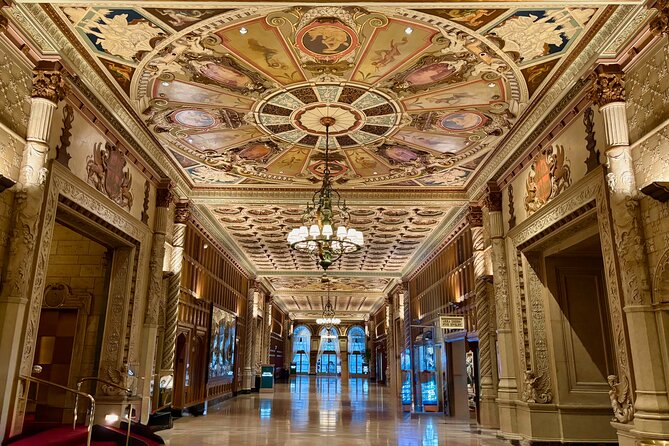
Review · LOS ANGELES
Downtown Los Angeles History and Architecture Walking Tour
Downtown Los Angeles has more layers than its movie image suggests. This $35 walking tour links theaters, banks, food halls, and old streets with the stories that shaped the city. I like the guide’s international viewpoint, and I like the use of old photos and maps to show how Downtown Los Angeles changed. The main caution is simple: this is a long, active walk, and its architecture talk is broad and story-driven rather than technical.
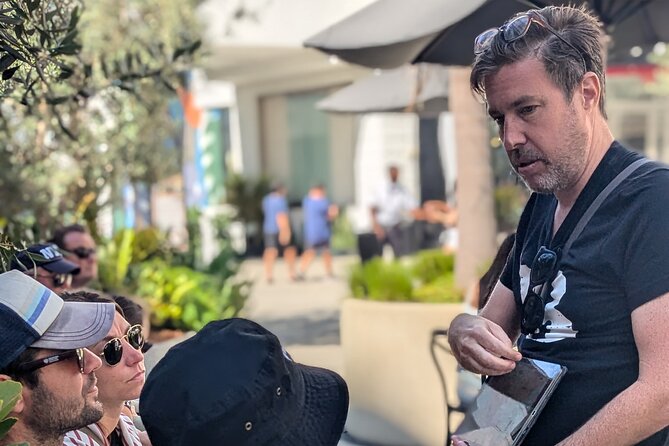
Guide Eloi brings a curious outsider’s eye to the route. A Belgian who lived in China before settling in Los Angeles, he has made Downtown LA his home for four years and hosts a podcast about its odd corners and past. That gives the tour a conversational feel, though busy streets can sometimes make it hard to hear.
If you enjoy movie palaces, adaptive reuse, urban planning, and buildings with several lives, this is a strong choice. If you want a formal architecture lecture, a leisurely pace, or frequent places to sit, you may find the experience less satisfying.
Four things to know before walking DTLA
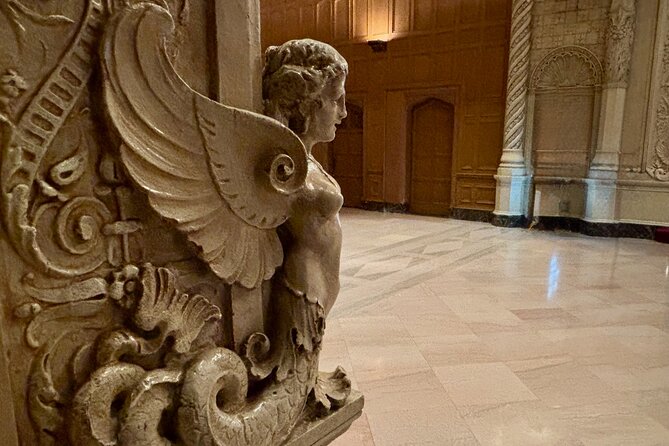
- The route connects major sights with overlooked interiors and details: You see famous places such as Grand Central Market and the Bradbury Building, but also old banks, theaters, arcades, and commercial districts.
- Film history is a major thread: The Million Dollar Theater, Los Angeles Theatre, Tower Theatre, and Bradbury Building help explain how Downtown Los Angeles became a backdrop for Hollywood.
- The group is limited to 15 people: That is small enough for questions and conversation, rather than a street-corner speech delivered to a crowd.
- The walk takes about two and a half hours: There are no listed admission charges for the stops, but you should expect steady walking with limited opportunities to rest.
- The approach is thoughtful rather than purely factual: Eloi connects architecture with public space, immigration, commerce, redevelopment, and the way film changes how we see a city.
- The tour ends near Metro rail: Hotel Per La is one block from 7th Street / Metro Center, making the finish convenient for continuing around Los Angeles.
Why this Downtown Los Angeles walk feels different
Many city walks point at a building, give you a date, and move on. This one tries to explain why the building matters. A former bank becomes a hotel. A movie palace becomes a retail space. A cafeteria born during the Great Depression becomes a theatrical dining venue. Downtown Los Angeles is full of these changes.
Eloi’s background shapes the tone. He grew up in Belgium, spent ten years in China, and now looks at Los Angeles with both affection and comparison. Angels Flight may bring to mind Lisbon’s funiculars or Hong Kong’s Peak Tram. The Jewelry District recalls Antwerp, his home country’s diamond center. Those links make the city easier to understand without pretending Los Angeles is simply another European or Asian city.
The strongest part of the experience is the conversation between past and present. Old photographs and maps help you compare the street in front of you with the one that existed decades ago. That visual aid is especially useful in a city where demolition, restoration, and repurposing have repeatedly altered the view.
The tone is not uncritical. Pershing Square becomes a way to discuss public space and privatization. The old financial district raises questions about ambition and decline. The walk asks you to notice who built Downtown, who used it, and who benefits from its latest transformation.
More History Walking Tours in the USA
- History and Hauntings of Salem Guided Walking Tour
★ 5.0 · 14,564 reviews - Boston: Freedom Trail History Small Group Walking Tour
★ 5.0 · 6,450 reviews - Historic Charleston Guided Sightseeing Walking Tour
★ 5.0 · 6,216 reviews
Grand Central Market starts the story with food
The meeting point is the Grand Central Market parking garage at 308 South Hill Street, but the first major stop is the market itself. Founded in 1917, this food hall presents Los Angeles in edible form, with Mexican tacos, Japanese ramen, Salvadoran pupusas, Jewish pastrami, and other international choices.
You get about ten minutes here, enough to understand the market’s role but not enough for a full meal. If you want to eat, plan to return later or arrive early. The market works well as an opening stop because it introduces the idea that Los Angeles has always been shaped by people arriving from elsewhere.
From there, the walk moves toward Angels Flight, a tiny railway with a surprisingly large place in the city’s memory. Built in 1901, it once served the Bunker Hill community. Its short length makes it easy to underestimate, but the guide uses it to explain how ordinary transport can become a civic symbol.
The route also passes Pershing Square, where the discussion shifts from nostalgia to urban design. The square has served as a gathering point for Downtown, but its current form raises practical questions about safety, ownership, access, and the purpose of central public spaces. This is one of the tour’s more analytical moments.
Bunker Hill leads into theaters and old Hollywood
The Bunker Hill steps represent change in physical form. The area was once a wealthy residential district, then became a center for culture and finance. The steps help frame Los Angeles as a city that repeatedly rebuilds itself, often leaving fragments of earlier eras beside new construction.
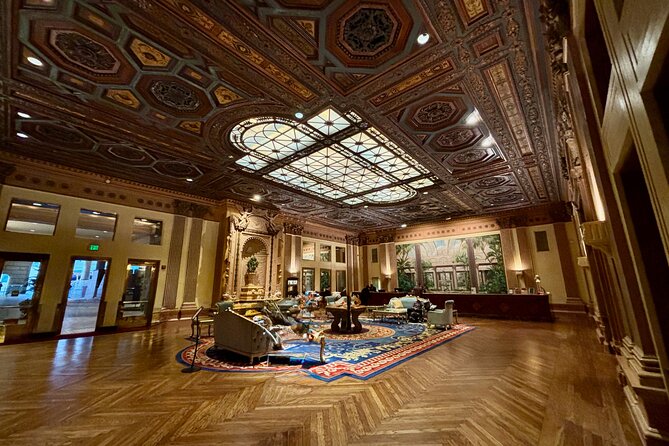
The Historic Theater District on Broadway is one of the route’s best sections. In about 20 minutes, you encounter a concentration of old movie palaces that is unmatched in scale. These theaters show how cinema once worked as architecture, ceremony, and entertainment all at once.
The Million Dollar Theater was Sid Grauman’s first movie palace. Its lavish design helped set a pattern for grand moviegoing spaces, where the building itself was part of the attraction. The guide connects this theater to the growth of Hollywood and the spread of cinema as a mass cultural force.
You should not expect a full theater tour at every stop. Access can vary, and much of the experience involves looking at façades, entrances, visible interiors, and historic images. Still, the route gives you a better sense of what Broadway once offered than a quick drive through Downtown.
The Bradbury Building turns architecture into cinema
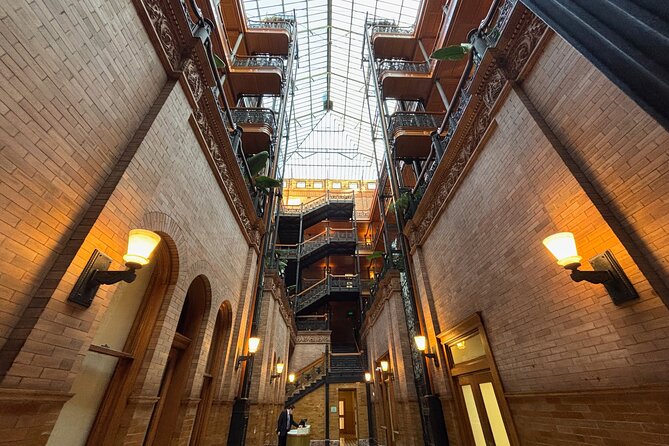
The Bradbury Building receives about ten minutes, but it is one of the most memorable stops. Its open atrium, iron staircases, and filtered light create an interior that feels unlike most office buildings.
The building’s connection to Blade Runner adds an easy entry point for film fans, yet the guide does not treat it only as a movie location. Its design raises a bigger question: why do some spaces feel imaginary even when they are made of ordinary materials such as brick, metal, glass, and stone?
This is a good example of the tour’s architectural style. You learn to look at space, light, movement, and atmosphere, not just names and construction dates. One criticism is fair here: anyone expecting detailed technical analysis of structure or preservation may want more depth. The payoff is a wider understanding of how buildings affect culture and memory.
More Architecture and Landmark Tours in the USA:
- Chicago in a Day: Food, History & Architecture Walking Tour
★ 5.0 · 1,153 reviews - Historic Charleston Walking Tour: Rainbow Row, Churches, and More
★ 5.0 · 691 reviews - Charleston’s Best Highlights: History, Culture & Architecture
★ 5.0 · 422 reviews - Charleston: History and Architecture Guided Walking Tour
★ 4.8 · 349 reviews
Banks, skyscrapers, and the old financial center
The Old Bank District follows, with around ten minutes devoted to Spring Street’s former role as the West Coast’s financial center. Beaux-Arts façades give the area a formal, ambitious appearance. The buildings once represented money, growth, and civic confidence.
The Continental Building helps explain the early skyscraper era. Completed in 1904, it was among Los Angeles’ first high-rises. Its Beaux-Arts exterior carries the weight of a city trying to prove it belonged among major American commercial centers.
The El Dorado Lofts adds another layer. Built as a luxury hotel in 1913, it has an ornate terra cotta exterior with floral and geometric decoration. Its later conversion into residential lofts shows how Downtown buildings can shift from luxury lodging to private homes without losing their visual identity.
This part of the route is especially useful if you like adaptive reuse. You see that preservation is not always about freezing a building in time. Sometimes it means allowing an old structure to serve a new purpose.
The Last Bookstore offers a change of pace
After banks and theaters, The Last Bookstore feels playful. The shop opened in 2005 and is known for its book tunnel, tall shelves, rare books, vinyl records, and local art. The visit lasts about ten minutes.
The store is photogenic, but it is more than a picture stop. Its presence in Downtown points to the area’s newer creative economy and to the way independent businesses can give old commercial buildings a fresh purpose.
You can expect a quick look rather than a long browsing session. If you want to shop, save time for a return visit. The stop works best as a change of mood before the tour returns to grand movie palaces and historic commercial buildings.
Los Angeles Theatre recalls cinema as spectacle
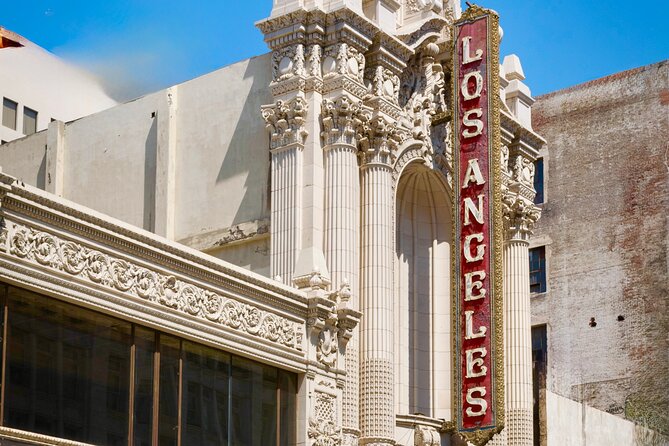
The Los Angeles Theatre is another highlight for anyone interested in film history. Built in 1931 for the premiere of Charlie Chaplin’s City Lights, it was designed with the kind of decoration associated with European opera houses.
Crystal chandeliers, gold details, and marble staircases helped make a night at the movies feel ceremonial. The theater represents a period when cinema was not only about the screen. The building, the entrance, and the crowd were all part of the event.
The guide uses this stop to explain the rise and decline of movie palaces around the world. That broader comparison is useful because it prevents the building from becoming just another old theater. You begin to see why these places mattered, and why their loss or reuse changes the character of a city.
Arcades, Clifton’s, and Downtown’s theatrical side
The Arcade Building is a less obvious stop, which is part of its appeal. Completed in 1924, it once contained studios and offices linked to Los Angeles’ growing radio industry. Today, it includes eateries and boutiques, giving you a clear example of old commercial space receiving a new life.
Clifton’s brings a stranger, more theatrical mood. Founded in 1931 as Clifton’s Cafeteria, it was known for providing free meals to people in need during the Great Depression. Its later design includes a large tree, forest-themed rooms, and hidden tiki bars.
The point is not simply that Clifton’s looks unusual. It shows how hospitality, charity, fantasy, and business can coexist in one place. This is the kind of stop you would be unlikely to understand fully by passing on a bus.
The Tower Theatre blends cinema with Apple retail
The Tower Theatre is one of the clearest examples of adaptive reuse on the route. Built in 1927, it was the first Los Angeles theater designed for films with synchronized sound. Its opening with The Jazz Singer marked a major shift in moviegoing.
The Spanish Renaissance Revival design includes carved details, stained glass, and vaulted ceilings. Film fans may recognize the theater from the Silencio scene in David Lynch’s Mulholland Drive, which suits its dreamlike mood.
Today, the building houses an Apple flagship store. That pairing could seem strange, but it makes a useful point. Historic buildings survive when a modern use can support them. The theater’s new role keeps its presence visible while changing how people enter and use the space.
Jewelry, fashion, and the city’s working economy
The Jewelry District covers 12 blocks and is described as the largest jewelry district in the United States. Its roots reach back to the 1920s. Eloi connects it to Antwerp, which gives the stop personal meaning and helps explain the district as a place of skilled work and trade, not just glittering windows.
The nearby Fashion District brings attention to another side of Los Angeles’ economy. This is where textiles, streetwear, design, and small business connect. It may not have the polished image of a major luxury shopping avenue, but it reveals how trends are produced and sold.
These sections keep the tour from becoming a parade of grand façades. You see commercial districts where people work, make things, and build businesses. That balance is important for understanding Downtown as more than a collection of historic buildings.
The final stretch reaches Eastern Columbia and Hotel Per La
The Eastern Columbia Lofts is an Art Deco favorite, with turquoise terra cotta tiles and a distinctive clock tower. Completed in 1930, it captures the confidence and style of its period. The building’s famous residents, including Johnny Depp, add a touch of celebrity appeal, but the architecture remains the main reason to stop.
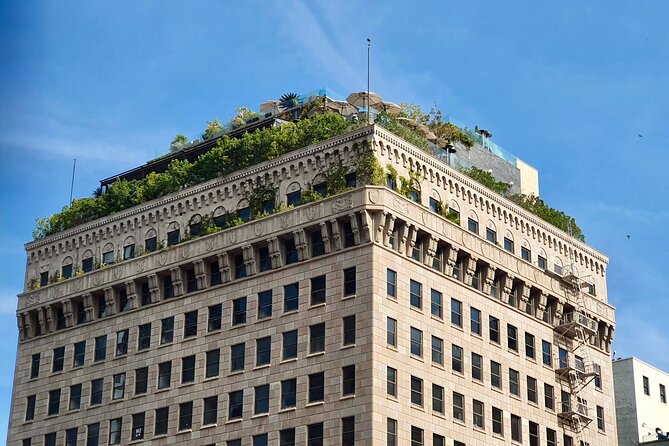
The final destination is Hotel Per La, formerly the Bank of Italy building. The 1920s structure reflects the aspirations of Italian immigrants and the growth of a major financial institution that later became Bank of America.
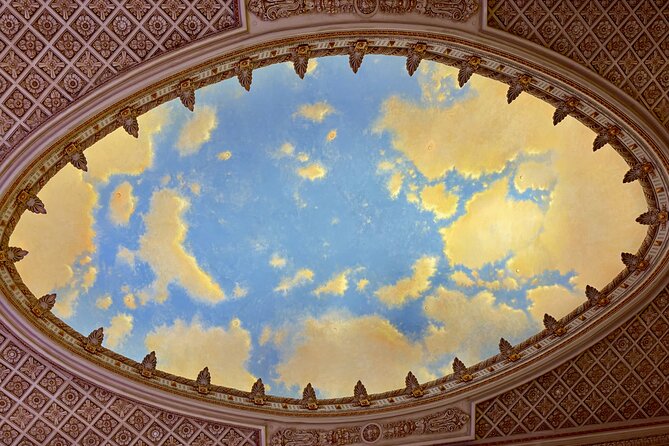
Inside, the restored gold ceiling, marble columns, art-filled spaces, and rooftop pool point to the building’s current life as a boutique hotel. You finish near 7th Street / Metro Center, one block from Metro rail lines A, B, D, and E. That makes the ending practical, especially if you want to continue exploring Downtown without returning to the starting point.
Price, pace, and who gets the most from it
At $35 per person, the tour offers good value if you care about context. You are not paying for admission to a major attraction. You are paying for two and a half hours of interpretation, route planning, historical images, and access to places you might otherwise pass without noticing.
The small maximum of 15 people improves the value. You can ask questions, and the format allows discussion instead of a one-way speech. Several strong comments praise Eloi’s humor, preparation, personal warmth, and ability to answer questions. One family found the material better suited to adults, although the guide made an effort to include a nine-year-old and a 14-year-old.
The main weakness is the walking. One comment described a long route without enough sitting, bathroom stops, or time for photos. Another found the guide difficult to hear in the noisy downtown streets. If you have hearing concerns, stay close to the guide and ask him to repeat important points.
The tour requires moderate physical fitness. Wear comfortable shoes, bring water, and allow time to stop for your own photos. The weather policy matters too: poor weather can lead to a new date or a full refund.
Should you book this Downtown LA tour?
Book it if you want architecture explained through people, movies, commerce, and urban change. It suits curious first-time visitors, longtime Angelenos, film fans, architecture students, urban planners, and anyone who enjoys asking why a city looks the way it does.
Skip it if you want a short sightseeing loop, a highly technical architecture class, or plenty of seated breaks. The route is active, the commentary can be broad, and Downtown traffic can make listening harder.
For most people who want to see beyond the familiar Los Angeles image, this is a worthwhile $35. The best reward is not one spectacular building. It is learning how markets, movie palaces, banks, shops, and public spaces fit into the city’s ongoing story.
FAQ
How long does the Downtown Los Angeles History and Architecture Walking Tour last?
The tour lasts approximately two hours and 30 minutes.
How much does the tour cost?
The listed price is $35 per person.
Where does the tour begin?
It begins at the Grand Central Market Parking Garage, 308 S Hill Street, Los Angeles, California 90013.
Where does the tour end?
The tour ends at Hotel Per La, Autograph Collection, 649 S Olive Street, Los Angeles, California 90014.
Is the ending near public transportation?
Yes. Hotel Per La is one block from the 7th Street / Metro Center station, served by Metro lines A, B, D, and E.
How large is the tour group?
The maximum group size is 15 people.
Is the tour offered in English?
Yes. The experience is offered in English.
Are admission tickets included?
The tour includes a local guide, and the listed stops have no admission ticket charge. Parking fees are not included.
Is the tour suitable for children?
Children can attend, but the subject matter is better suited to adults. The guide has made an effort to include children on family tours.
What happens if the weather is poor?
If bad weather causes cancellation, you will be offered another date or a full refund.
Can I cancel for a full refund?
Yes. You can cancel at least 24 hours before the start time for a full refund. Cancellations within 24 hours are not refunded.
Just added around the USA
- Historic Old Louisville Walking Tour★ 5.0 · 274 reviews
- Louisville: Private Guided Food, Bourbon & History Walking Tour★ 5.0 · 45 reviews
- Historic Walking Tour of Victorian Louisville with Food & Bourbon★ 5.0 · 216 reviews
- Louisville Legends: Downtown Derby City Food and History Tour★ 5.0 · 37 reviews
- Myrtles Plantation Daytime Historical Tour★ 4.5 · 50 reviews
- The History and Architecture of Downtown Los Angeles★ 5.0 · 94 reviews
- Black History Tours of South LA (Guided Van Tour) – Crenshaw★ 5.0 · 23 reviews
- 3 Hour Walking Food & Haunted History Tour in Lexington★ 5.0 · 18 reviews
Architecture & Landmark Tours, compared.
St. Mark’s Basilica Guided Tour & VR History Intro
Read our review →
Venice’s Best: Basilica, Doge’s Palace, Gondola & History Gallery
Read our review →
Córdoba: Skip-the-Line Great Mosque-Cathedral History Tour
Read our review →
Pantheon Elite Guided Tour – Rome’s Iconic Ancient Temple
Read our review →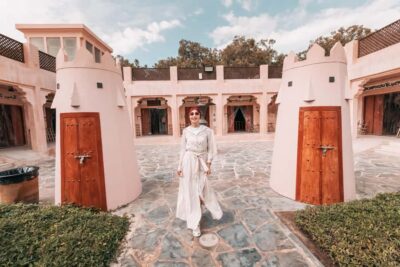
Abu Dhabi Grand Mosque, Palace, and Heritage Village
Read our review →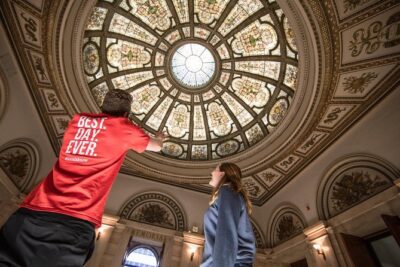
Chicago in a Day: Food, History & Architecture Walking Tour
Read our review →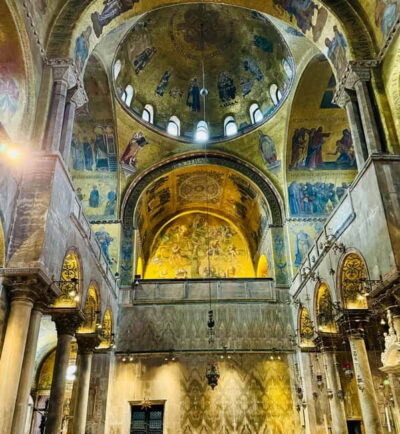
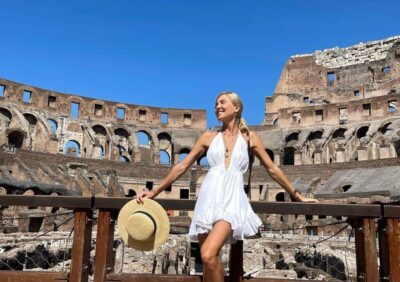
Colosseum Special Access Tour, with Ancient Temples & Tombs
Read our review →Browse the lists this tour appears in