
Review · CENTRAL GREECE
Acropolis & Ancient Agora Guided tour included all Entrances
Athens makes its ancient world impossible to ignore. This four-hour walk links the Acropolis with the Ancient Agora, giving you both the city’s sacred high point and its old civic center in one well-planned outing. I especially like the licensed English-speaking guide and the personal headsets, which help you follow the commentary even when the paths are crowded. The ticket package also covers both major sites, so the $126 price is easier to judge.
The South Slopes route adds more than a standard hill climb, with views, archaeological traces, and the Theatre of Dionysus before you reach the famous monuments above. I also like that the tour finishes at the Agora, not back at the starting point, leaving you near cafés and restaurants. The main drawback is the pace and terrain: four hours of uneven walking, stairs, sun, and crowds may be tiring, especially in summer or for anyone with limited mobility.
Key points to know before you book
- Two major Athens sites in four hours: You visit the Acropolis and Ancient Agora without arranging separate tickets or guides.
- A scenic approach to the Acropolis: The walk begins along the South Slopes, passing the Theatre of Dionysus and Odeon of Herodes Atticus.
- Strong guide-led storytelling: Guides such as Aphrodite, Anastasia, Yannis, Artemis, Kostas, and Demos have been praised for clear explanations, humor, and enthusiasm.
- Tickets and headsets included: Acropolis and Agora entry fees are covered, while wireless headsets make it easier to hear the guide.
- Useful for first-time visitors: The route connects temples, democracy, mythology, art, and daily life in one continuous story.
- Not an easy stroll: Comfortable shoes, water, sunscreen, and a hat matter. The tour is not suitable for wheelchair users or people with mobility impairments.
Starting at Porinou 5 near the Acropolis Metro Station
Your morning or afternoon begins at the Office of Athens Walks on Porinou 5, about a two-minute walk from Acropolis Metro Station. This central meeting point is handy if you are staying in central Athens or arriving by metro, but you should still allow time to find the office and arrive 15 minutes early.
The guide gives a short outline before the group sets off. English is the tour language, and the wireless headset system is an important practical touch. Athens can be noisy, with buses, crowds, guides, and city traffic all competing for attention. A headset means you can keep looking at the ruins instead of standing shoulder to shoulder with the guide.
The experience uses a separate entrance and includes the tickets for both the Acropolis and Ancient Agora. That saves you from buying two tickets and may reduce time spent in entry lines. It does not make the monuments quiet, though. In July, one visitor found the sites crowded with cruise groups, and that is a real possibility during peak hours.
More Ancient History Tours in Athens
- Athens: Ancient Greek Theater Performance
★ 4.7 · 2,481 reviews - Historical Delphi One Day Tour with Arachova Stop & Expert Guide
★ 4.5 · 1,247 reviews - From Athens: Ancient Corinth Day Trip with Canal & VR Guide
★ 4.6 · 1,073 reviews
The South Slopes and the Theatre of Dionysus
The route approaches the Acropolis from the South Slopes rather than sending you straight up the busiest path. This gives the first part of the walk a useful sense of progression. You see the hill rise ahead, learn about the religious activity connected with the area, and begin to understand why this rocky summit mattered so much to Athens.
The Theatre of Dionysus receives about 15 minutes of guided attention. This is a valuable first stop because it places performance, ritual, and public life into the Acropolis story. Your guide may also point out plants, stones, and archaeological features along the slopes. Those details help turn a climb through ruins into a look at how the site was used over time.
The South Slopes are scenic, but they are not smooth city sidewalks. Expect an uphill walk and uneven ground. You will want shoes with a firm sole, and you should not count on moving at your own pace. The guide generally keeps the group together, with stops for explanations and photographs.
The Odeon of Herodes Atticus and the climb above Athens
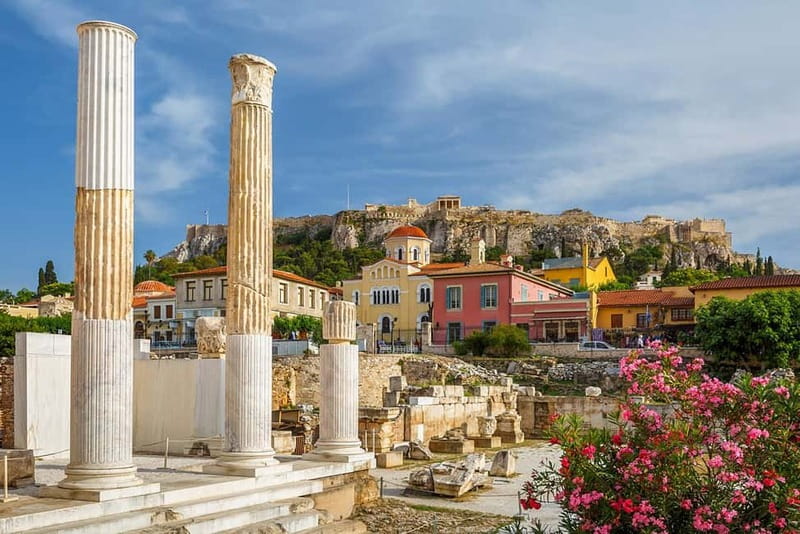
The route passes the Odeon of Herodes Atticus, a Roman-era performance space still used for events today. The planned walk here lasts around 15 minutes. Even from outside, its curved stone structure gives you a strong sense of scale and shows how the Acropolis continued to matter long after classical Athens.
As you climb, the views open across Athens. Bring a camera, but remember that flash photography is not allowed. A hat and sunscreen are sensible, particularly during the warmer months, when the stone can reflect a lot of heat.
The climb is moderate rather than extreme, but it is steady. One guide was praised for taking time with the ascent, and that is the kind of care that matters on this route. If you need frequent rest, tell your guide early. The tour includes a 15-minute break on the Acropolis, but there is still a lot to see afterward.
Temple of Athena Nike and the Propylaea
Near the summit, the small Temple of Athena Nike introduces you to one of the Acropolis’ most graceful monuments. The planned stop is brief, around five minutes, but your guide can explain its link with victory and the way smaller structures support the larger Acropolis story.
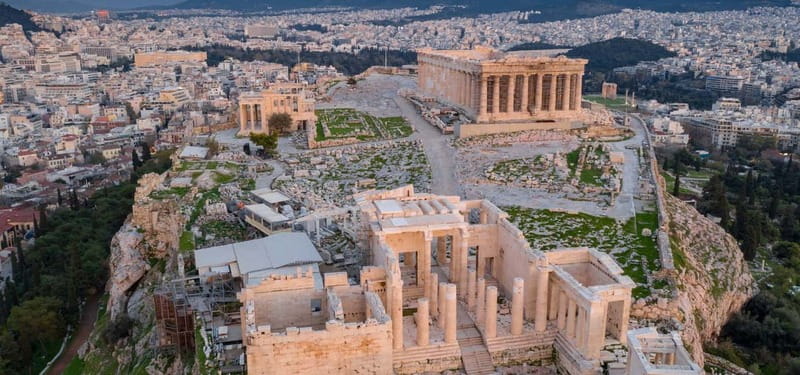
The Propylaea serves as the monumental gateway to the sacred hill. A 10-minute guided stop here helps you read the Acropolis as a carefully planned approach, not simply a collection of famous columns. As you pass through, the Parthenon and Erechtheion become the main focus, but the gateway deserves a pause of its own.
This is one place where a guide earns the fee. Without context, it is easy to hurry toward the Parthenon and miss how the entrance controlled the visitor’s first view of the sanctuary. The headset also helps here, since groups often gather around the gateway and voices can carry poorly.
More Ancient History Tours in Greece
- Acropolis, Parthenon & Athens Old City Heritage Walking Tour
★ 4.5 · 876 reviews - Private Biblical Tour Ancient Corinth & Isthmus Canal from Athens
★ 5.0 · 762 reviews - Athens: Ancient Corinth & Nafplio Full Day Trip with Swim
★ 4.8 · 531 reviews - Athens Skip the Line: Open Air Ancient Greek Theatre Performance
★ 4.5 · 520 reviews
The Erechtheion and its famous Caryatids
The Erechtheion gets about 15 minutes. Its unusual design makes it a useful contrast to the more regular shape of the Parthenon. The building is associated with Athena and other ancient religious traditions, and its famous Caryatids are among the most recognizable figures on the Acropolis.
Your guide will explain the structure, its religious role, and the importance of the sculpted female figures. The tour material specifically highlights the Caryatids, so you should expect them to receive close attention.
Do not expect a long quiet pause in front of every monument. The Acropolis is a working archaeological site with set paths, barriers, and many groups moving through at once. The value here lies in knowing what to look at and why it matters, rather than having unlimited time for photography.
Thirty minutes with the Parthenon
The Parthenon is the centerpiece of the visit, with about 30 minutes of guided commentary. It was dedicated to Athena and later became a symbol of Athenian culture, art, and democratic ideals. Your guide connects the building to its construction, religious purpose, and lasting effect on architecture.
That political connection is one of the tour’s strongest features. The Acropolis is not presented as a pretty ruin alone. You learn how the site relates to the identity of ancient Athens and to the idea of citizens taking part in public life.
The Parthenon is also a place where expectations need adjusting. Much of the building is under restoration, and crowds can affect your view. You will see columns, sculpture, and surviving architectural details, but not an untouched ancient temple. The guide helps you picture the original building and separate what remains from what has been rebuilt or moved.
The tour allows a short break after the main Acropolis visit. Use it for water, shade, photographs, and a moment to take in the city below. In hot weather, this pause is not a luxury. It is part of making the second half of the walk enjoyable.
Walking down to the Ancient Agora
The Ancient Agora changes the mood completely. The Acropolis is the sacred and symbolic high point. The Agora was the place where people gathered for political, social, commercial, and public life. Moving between the two sites gives you a fuller picture of Athens than visiting either one alone.
The Agora section receives about 30 minutes of guided attention, followed by a walk of about 10 minutes at the Temple of Hephaestus. The ground is uneven, and the site is open, so keep your water close and watch your footing.
I like this part because it turns abstract talk about democracy into a physical place. Citizens, philosophers, politicians, and merchants used this area for the ordinary business of the city. The guide explains how the public center functioned and points out monuments that reveal Athenian values and artistic skill.
One caution: a 30-minute guided portion can feel short if you want to study every ruin. One visitor felt that the Agora, especially the museum, stretched a little too long, while another part of the appeal is precisely the chance to slow down after the Acropolis. Your experience will depend on how much you enjoy artifacts and site detail.
The Temple of Hephaestus and Stoa of Attalos
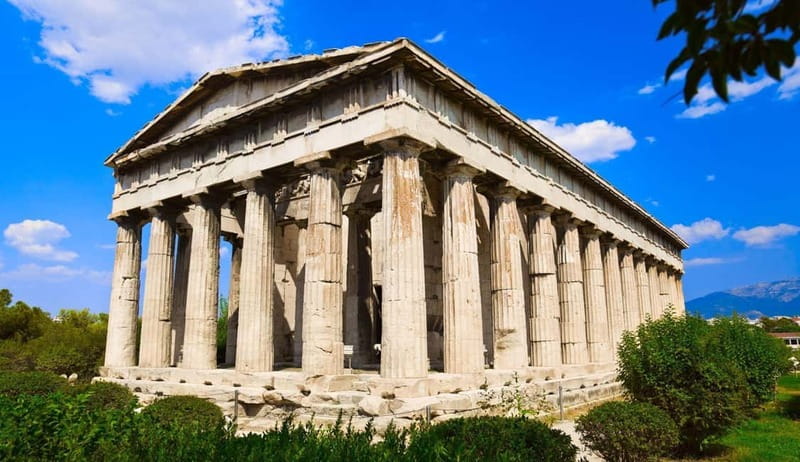
The Temple of Hephaestus is one of the best-preserved ancient temples in Athens. It was dedicated to Hephaestus, the god associated with craftsmanship, and it offers a useful comparison with the Parthenon. The two temples are different in setting and scale, but both show how much care ancient builders gave to religious architecture.
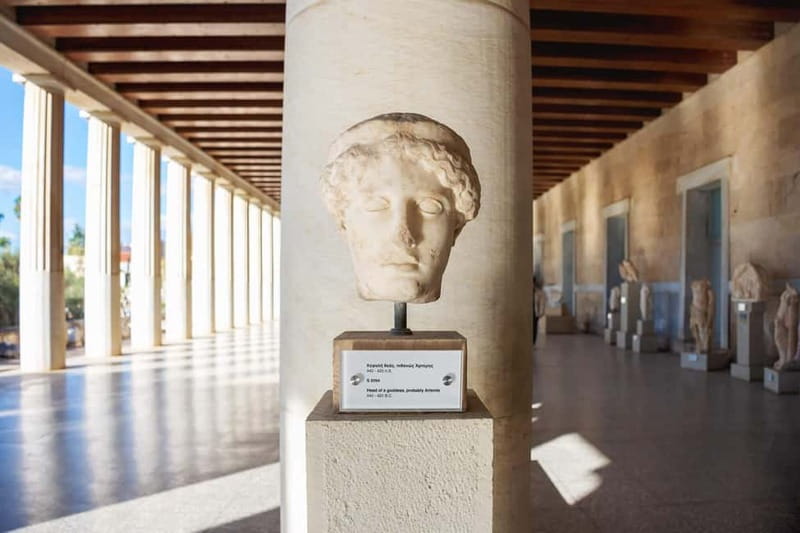
The Stoa of Attalos is another major Agora highlight. Its long, restored colonnade now houses a museum with objects from the site. Inside, you can connect ordinary items and archaeological finds with the public activities that took place around the Agora.
This is where the tour’s theme widens beyond famous monuments. You are not only looking at temples. You are seeing the setting for law, trade, public debate, and social life. Guides praised for clear storytelling, including Artemis, Antonia, and Alia, have used mythology, word origins, and historical events to make those connections easier to remember.
The Agora may appeal most to you if you enjoy seeing how a city worked day to day. If your main goal is only the Parthenon, the second site may feel like a long addition. If you want Athens to make sense as a society, it is essential.
Guide quality and the value of the storytelling
The guide can make or break a history-heavy walking tour. Here, the strongest pattern is clear explanation delivered with warmth and energy. Aphrodite was praised for connecting ancient and modern Athens. Anastasia was described as someone listeners could happily hear for hours. Yannis, Kostas, Demos, Annie, and Helena were also singled out for enthusiasm, patience, humor, or strong command of the subject.
Several guides have archaeological or history backgrounds, and that matters when you are looking at damaged buildings with little signage. A good guide tells you where to stand, what detail to notice, and how the monument fits into the larger story.
The best comments also point to restraint. One guide was praised for giving useful information without burying the group in facts. That balance is important over four hours. You want more than dates, but you do not want a lecture that leaves you too tired to look around.
The experience is conducted in English, and guide style can vary. Most feedback is highly positive, but the tour is still a group experience. You will not control every pause, photograph, or question. Families can do well with the format, and one guide was praised for keeping children aged 10 and 13 interested, but children under six are not accepted.
Is $126 a fair price?
At $126 per person, this is not the cheapest way to see Athens. The value comes from what is bundled together: two entrance tickets, a licensed guide, wireless headsets, and access through a separate entrance. You also avoid the work of planning two major archaeological visits on your own.
The price makes the most sense if you want structure and interpretation. Buying entry alone would give you access to the sites, but not the explanation that links the Theatre of Dionysus, Parthenon, Agora, and Temple of Hephaestus into one story. The tour also saves planning time, which matters if you have only a day or two in Athens.
The value is weaker if you prefer slow, independent visits. You may want more time in the Agora museum, more photography stops, or a long pause at each monument. In that case, a self-guided visit could offer more freedom, though it would require your own research and separate planning.
The included tickets remove one common surprise: there are no additional entry fees for the Acropolis or Agora. Meals, drinks, hotel pickup, personal expenses, and gratuities are not included.
Practical advice for the four-hour walk
Wear shoes that can handle stone paths and inclines. Bring water, sunscreen, a hat, and a camera, and check the forecast before you leave. Summer heat can make the climb and open Agora feel much harder than the distance suggests.
Arrive 15 minutes before the start time at Porinou 5. Bring a picture of a passport or ID for anyone under 18. Flash photography is not permitted.
The tour is not suitable for children under six, wheelchair users, or people with mobility impairments. If you have trouble with climbs or uneven surfaces, this is not the right way to see the Acropolis. A guide can help with the rhythm of the walk, but the terrain cannot be removed.
Free cancellation is available up to 24 hours before the start, and you can reserve now and pay later. Starting times vary, so check availability when choosing your date.
Who should book this Acropolis and Agora tour?
I would choose this tour if you are visiting Athens for the first time, want the major ancient sites in one half-day, and prefer a guide to explain what you are seeing. It is also a sensible choice if you value included tickets, line-saving access, and a clear meeting point near the metro.
Families with older children can benefit from the stories and shorter explanations, especially if the guide keeps the group moving. History fans will appreciate the connection between religion, architecture, democracy, mythology, and daily life.
I would hesitate if you dislike group schedules, need step-free access, or want long stretches of quiet time. Crowds can be heavy, particularly in summer and when cruise groups are in port. Still, the combination of the Acropolis and Agora gives you a far better sense of ancient Athens than the Parthenon alone.
FAQ
How long does the Acropolis and Ancient Agora tour last?
The tour lasts four hours, including the South Slopes, Acropolis monuments, a short break, and the Ancient Agora.
What sites are included?
The route includes the Theatre of Dionysus, Odeon of Herodes Atticus, Temple of Athena Nike, Propylaea, Erechtheion, Parthenon, Acropolis, Ancient Agora, Temple of Hephaestus, and Stoa of Attalos.
Are entrance tickets included?
Yes. The Acropolis entrance ticket and Ancient Agora entrance ticket are included in the booking.
Is the tour conducted in English?
Yes. The tour includes a live English-speaking guide.
Where does the tour meet and finish?
You meet at the Office of Athens Walks at Porinou 5, near Acropolis Metro Station. The tour finishes at the entrance to the Ancient Agora of Athens.
What should I bring?
Bring comfortable walking shoes, water, sunscreen, a hat, and a camera. Flash photography is not allowed. Arrive 15 minutes early, and participants under 18 should carry a picture of their passport or ID.
Just added around Athens
- The original Christian tour on Paul’s footsteps in Athens and ancient Corinth★ 4.5 · 25 reviews
- Small-Group Women History in Ancient Greece Walking Tour★ 5.0 · 38 reviews
- Athens: Combo Ticket for Acropolis & 6 ancient sites★ 3.0 · 21 reviews
- Ancient Sparta & Mystras Private Day Tour from Athens★ 5.0 · 52 reviews
- Ancient Olympia & Isthmus Canal Private Tour from Athens★ 5.0 · 20 reviews
- Ancient Agora & Temple of Hephaestus Entrance Ticket★ 3.5 · 22 reviews
- Half Day Historical Athens City Private Taxi Service Tour★ 5.0 · 79 reviews
- Ancient Corinth, Sanctuary of Hera, Blue Lake & Canal from Athens★ 5.0 · 26 reviews
Ancient History Tours, compared.
Colosseum: Underground and Ancient Rome Tour
Read our review →
Colosseum & Ancient Rome with Arena Floor Option I Max 6 People
Read our review →
Colosseum, Ancient Rome Tour or AudioGuided Tour
Read our review →
Colosseum Underground & Ancient Rome Guided Tour
Read our review →
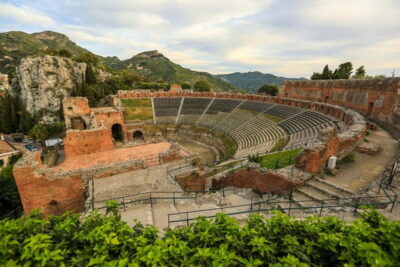
Taormina: Ancient Theater Skip-the-Line Ticket & Audio Guide
Read our review →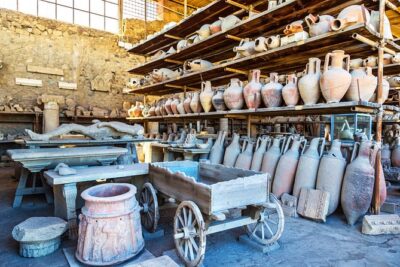
Discover the Ancient Ruins of Pompeii: Day Trip from Rome
Read our review →
Discover Matera, the ancient city – English tour
Read our review →Browse the lists this tour appears in