Review · LISBON
Tagus River Heritage and Traditional Lunch Bicycle Tour
Lisbon looks best from a bicycle. This four-hour private ride follows the Tagus from Belém toward Caxias, pairing famous monuments with coastal views, military history, and a rustic Portuguese lunch. I like the relaxed mix of cycling and culture, and I especially like that the meal and drinks are included rather than left to chance.
The tour also has a personal touch. Guide Nib brings warmth and clear local insight, and the private format means your group is not folded into a large crowd. The main consideration is the riding itself: you need a moderate fitness level, and an e-bike costs an additional €15.
Key points to know before booking
- Belém opens the ride with Portugal’s Age of Discovery: You see the Monument to the Discoveries and Belém Tower before leaving the best-known part of the route.
- Caxias adds quieter history: Forte de São Bruno introduces Lisbon’s defensive past, while the nearby gardens offer a change of pace.
- Lunch is part of the value: A rustic Portuguese meal with drinks is included at a typical Lisbon Coast restaurant.
- The tour is private: Only your own group takes part, which allows for a more personal rhythm and direct contact with the guide.
- A standard bicycle is included: You can choose an e-bike for an extra €15 if you prefer assistance.
- Small extras make the ride practical: You receive a helmet, water bottle, and peaked cap, and the tour begins and ends at Avenida Brasília.
A four-hour ride along the Tagus
This is a good choice if you want to see Lisbon without spending the whole day inside museums or on a packed sightseeing bus. The route begins at Avenida Brasília, close to Belém, at 10:30 a.m. From there, you ride west along the Tagus toward Caxias and return to the same meeting point.
The route combines major sights with less obvious stops. That balance matters. Belém gives you the grand national story, while Caxias brings you closer to Portugal’s defensive past and aristocratic garden culture. You get a broad picture of the riverfront instead of collecting only the city’s most photographed buildings.
The duration is about four hours, including sightseeing stops and lunch. That makes this a substantial half-day rather than a quick orientation ride. You should have enough time to enjoy the route without racing from one stop to the next, though the schedule will still feel active.
Because the tour is private, you can expect a more direct experience than you would get on a large group excursion. The guide can speak to your interests, and you are not adjusting your pace to a busload of strangers. The trade-off is that the price is set at $108.02 per person, so this makes the most sense if you value personal attention, the included meal, and the convenience of a planned route.
More History Bike, Segway and Tuk-Tuk Tours in Lisbon
- Explore Lisbon by Tuk Tuk: History and Viewpoints
★ 5.0 · 840 reviews - Private Tuk Tuk Tour Through Lisbon’s Historical Streets
★ 5.0 · 734 reviews - Lisbon: Guided Tuk-Tuk Tour Along the Historic Tram Line 28
★ 4.8 · 475 reviews
Starting in Belém at the Monument to the Discoveries
The first stop is the Padrão dos Descobrimentos, or Monument to the Discoveries. You spend about five minutes here, with free admission, while the guide explains the monument and the political setting in which it was built.
This is an important detail. The monument celebrates the navigators and figures linked to Portugal’s great period of overseas exploration, but it was erected under the Salazar regime. That gives the stop more depth than a simple photo break. You can look at the monument as both a celebration of national exploration and a product of 20th-century political storytelling.
Five minutes is not long enough for an extended visit inside, but that is not really the point of this tour. The guide’s explanation helps you place the monument within Portugal’s national identity, then you are back on the bicycle. If you want a long look at the sculpture or a visit to its interior, you would need to return separately.
I like this opening because it sets up the central theme of the ride: Portugal’s connection to the Tagus, the sea, exploration, and defense. You begin with the grand public story before heading toward quieter corners of the coast.
Belém Tower and the Manueline age
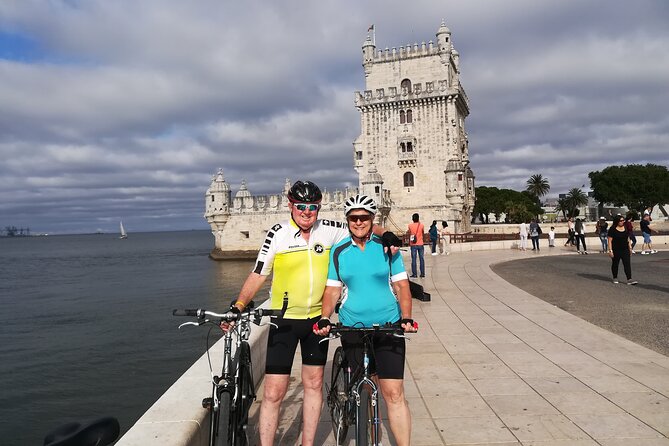
The next stop is Torre de Belém, one of Lisbon’s most recognizable buildings. The visit lasts about ten minutes, and admission is not included because the tour does not include an entry ticket. The guide focuses on the tower’s construction between 1515 and 1520 during the reign of King Manuel I.
The tower represents wealth, expansion, and exploration. Its riverside position makes the connection easy to understand. The Tagus was not simply a pretty waterfront. It was the route through which ships, goods, people, and news moved in and out of Portugal.
Ten minutes gives you a useful introduction and time to appreciate the exterior. It is not enough for a leisurely interior visit, so you should think of this as a guided look rather than a full monument tour. That keeps the bicycle route moving and avoids turning the day into a series of ticket lines.
This stop is especially useful if you have not yet visited Belém. You get context for the tower from the guide rather than just another photograph. If you have already spent a full morning at Belém’s monuments, the attraction here is the ride onward, where the scenery and mood begin to change.
Riding west toward Forte de São Bruno de Caxias
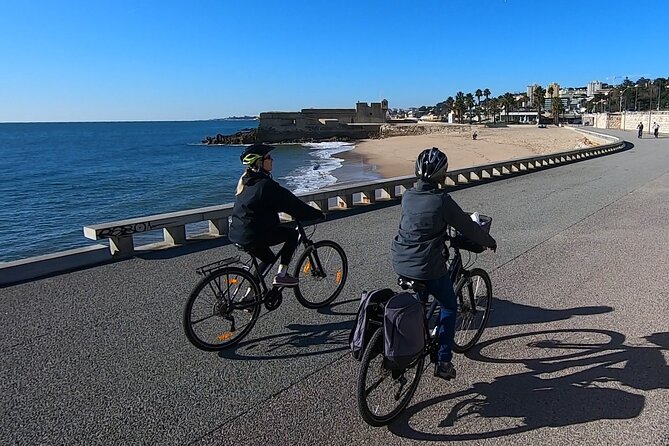
The move from Belém to Caxias gives the tour its character. You leave behind Lisbon’s most famous sightseeing zone and follow the Tagus along the Lisbon Coast. The route makes sense geographically and historically, since the riverfront connected the capital to its defensive positions farther west.
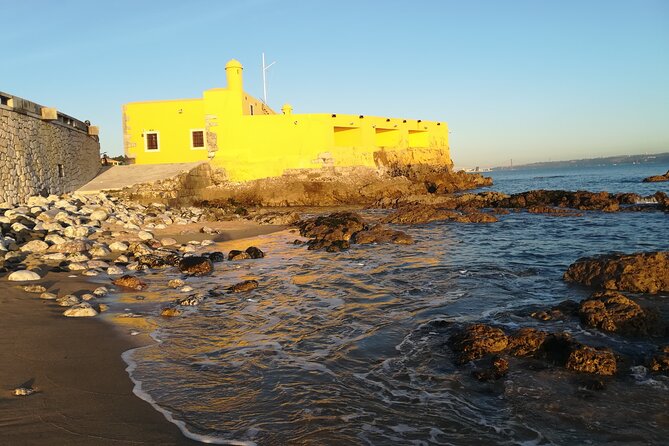
At Forte de São Bruno de Caxias, you spend around 15 minutes learning about the fort’s role in Lisbon’s defenses. It was built between 1647 and 1649 and became a strategic asset during the Portuguese War of Restoration, when Portugal fought to regain independence from Spain.
This stop adds a military layer to the day. The fort was not built for decoration. Its purpose was to help protect Lisbon from the Spanish navy, and its location shows how the river approach shaped the city’s security. After the grand symbols of exploration in Belém, you see how vulnerable the same waterway could be.
The stop is free and relatively brief. You should not expect a long museum visit or a detailed tour through extensive interiors. Instead, the value comes from the guide’s explanation and the chance to connect the fort with the broader geography of the Tagus.
I appreciate this change in subject. Many bicycle tours stay with views and architecture. This one asks you to notice why the coast mattered strategically, not just why it photographs well.
More History Bike, Segway and Tuk-Tuk Tours in Portugal
- Lisbon’s historic old town in a tuk-tuk in German
★ 4.9 · 319 reviews - Historic Lisbon Tour with Local Guide in Private Eco Tuk Tuk
★ 5.0 · 301 reviews - Alfama Private Tuk Tuk Tour: Lisbon’s Oldest Neighborhood (2 HRS)
★ 5.0 · 279 reviews - Lisbon on a Tuk Tuk Tour: History & Viewpoints
★ 4.9 · 204 reviews
A quieter pause at the Caxias gardens
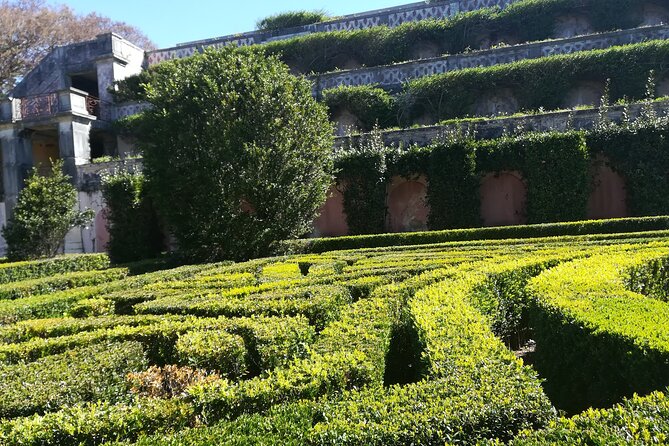
The Jardins da Quinta Real de Caxias provide the most restful stop on the route. You spend about 20 minutes in these 18th-century Baroque gardens, which were influenced by Versailles and designed to reflect the polished lifestyle of Portuguese aristocracy.
The gardens offer a useful contrast to the fort. At one stop, the riverfront is about defense and conflict. At the next, it is about leisure, status, and design. That contrast helps you understand how the same coastal setting served very different purposes.
The gardens are described as a lesser-known place on the Lisbon Coast, and they should appeal to you if you prefer quieter sights to nonstop landmark collecting. Twenty minutes is enough for a pleasant walk and a look at the layout, but not for a long garden visit. If formal gardens are a major interest, you may wish you had more time here.
Still, the brief pause works well within a cycling day. You can stretch your legs, slow down, and enjoy a setting that feels separate from central Lisbon. It also prevents the tour from becoming an endurance exercise. You are riding, stopping, listening, eating, and then riding again.
The included Portuguese lunch
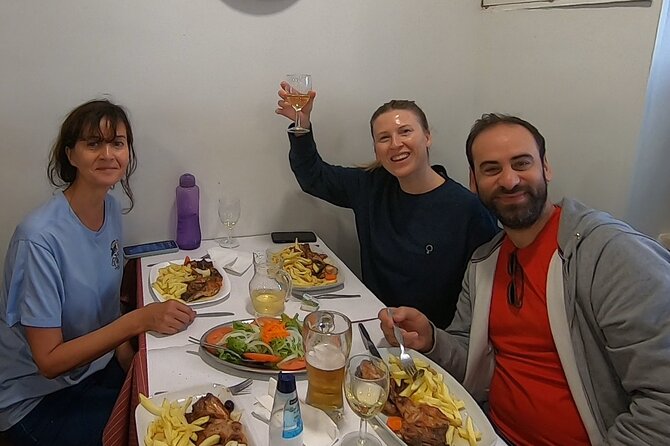
Lunch is one of the strongest reasons to consider this experience. A rustic Portuguese meal with drinks is included at a typical restaurant on the Lisbon Coast. The exact menu is not specified, so you should not book expecting a particular dish.
The value is practical as well as culinary. A four-hour ride creates a natural need for food, and having lunch built into the plan means you do not lose time choosing a restaurant or wondering where to stop. It also gives the day a local rhythm: see the sights, ride the coast, then sit down for a traditional meal.
Vegetarian and vegan dietary needs can be accommodated at the restaurant choices, but you should state your requirements when booking. That is important because the meal is part of the planned experience, not an afterthought.
I like the way lunch changes the tone of the tour. You are not simply being moved from one landmark to another. You are given time to eat, talk with your guide, and experience the coast through its food as well as its monuments. For many people, that meal will make the price easier to justify.
Standard bicycle or e-bike?
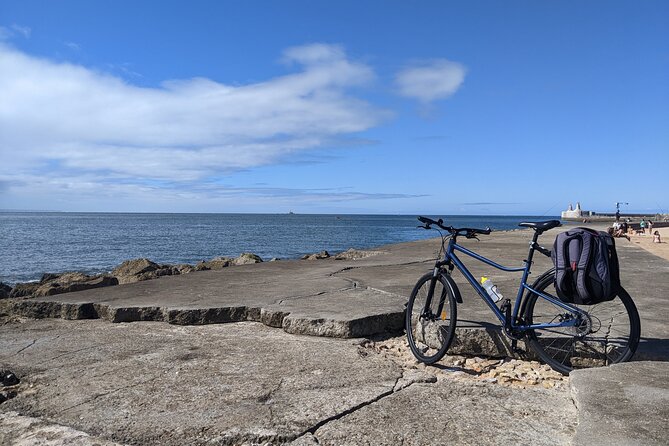
A regular bicycle is included in the $108.02 price. You also receive a helmet, a cycling water bottle, and a peaked cap. Those extras are modest, but useful on a half-day ride, especially if you prefer not to bring a bottle or headwear of your own.
An e-bike costs an additional €15. That is a reasonable upgrade if you are concerned about hills, stamina, or maintaining a comfortable pace. The tour requires moderate physical fitness, so the e-bike does not remove the need to ride, but it can make the day easier.
You should choose based on your normal cycling habits rather than pride. If you regularly ride and feel comfortable on a standard bicycle, the included option keeps the cost down. If you are unsure about your fitness, the extra €15 may be money well spent.
The tour information does not provide a detailed account of the road surfaces, gradients, or bicycle models. For that reason, you should ask the operator directly if those details matter to you. The important point is clear: this is an active sightseeing experience, not a vehicle-based tour with a token bicycle segment.
What the private format adds
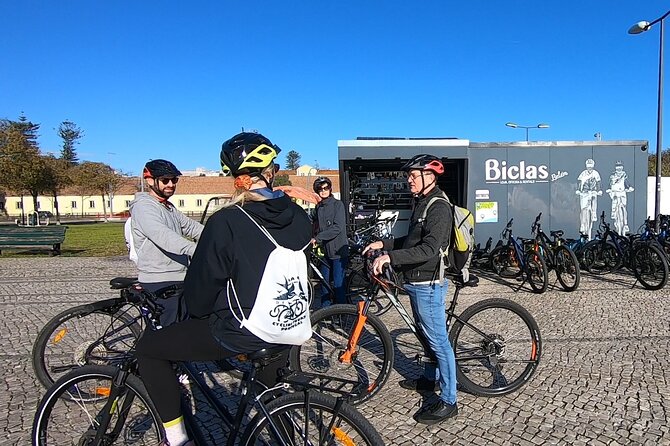
Only your group participates in the tour. That makes a real difference when a guide is explaining complicated subjects such as Salazar-era symbolism, Portugal’s overseas expansion, or the War of Restoration.
Guide Nib is praised for warmth and strong personal connection to his home. That matters here because the tour depends on explanation. The stops are not long, and the experience works best when the guide can turn a few minutes at each place into a clear story.
The private format also lets you keep the day at a sensible pace. You can ask questions without waiting for a large group, and you are less likely to spend time gathering people after every stop. It does not guarantee a completely flexible itinerary, since the tour still has a set route and lunch plan, but it gives you a more personal way to follow it.
The trade-off is price. A private four-hour tour costs more than joining a large group. I would consider it good value for couples, families, or friends who want history and food without the noise and delay of a big party.
Price, timing, and practical planning
At $108.02 per person, the tour is not the cheapest way to see Belém. You could visit the major monuments independently for less, especially since the listed stops are outside visits with free admission. The price becomes more reasonable when you count the bicycle, helmet, guide, private format, lunch, drinks, and route planning.
You meet at Avenida Brasília at 10:30 a.m., and the activity returns to that same meeting point. The location is near public transportation, which makes it easier to reach than a tour starting in a remote suburb. Allow extra time to arrive, since a late start could affect the group’s schedule.
The tour is offered in English and uses a mobile ticket. Confirmation is provided at booking. Free cancellation is available if you cancel at least 24 hours before the local start time. Changes or cancellations made inside that window are not refunded.
I would wear comfortable clothes and shoes suitable for cycling, though the tour information does not specify a dress code or bicycle clothing requirement. Bring only what you need, since the operator supplies a water bottle and cap, and lunch is already arranged.
Who will enjoy this ride most?
I would recommend this tour to you if you want a half-day experience that mixes movement, history, scenery, and food. It suits first-time visitors who want an introduction to Belém, as well as repeat visitors who would rather explore the coast than revisit central Lisbon’s busiest streets.
It is also a good fit for anyone who likes connected stories. The route links exploration, political symbolism, military defense, aristocratic leisure, and local dining. You are not just collecting four unrelated stops.
You may want a different plan if you dislike cycling, need a fully accessible sightseeing option, or want long interior visits at the monuments. The stops are short, and moderate fitness is required. The information provided does not describe accessibility arrangements, so you should confirm those directly before booking if needed.
Families and small groups may find the private format particularly useful. You can make the day feel more relaxed than a large organized excursion, while the e-bike option gives less confident cyclists a way to keep up.
Should you book the Tagus River bicycle tour?
Book it if you want a personal, active introduction to Lisbon’s western riverfront, with lunch included and a guide who adds meaning to short monument stops. The best parts are the contrast between Belém’s grand symbols and Caxias’s quieter fort and gardens, plus the simple pleasure of riding beside the Tagus.
Skip it if your priority is spending hours inside Belém Tower, touring museums, or avoiding physical activity. The tour is at its best when you treat it as a moving history lesson with a good meal, not as a full interior tour of every monument.
For most visitors who enjoy cycling at a moderate pace, the included lunch and private guiding make the price fair. Add the €15 e-bike upgrade if comfort matters more than keeping the cost to the basic rate.
FAQ
How long is the Tagus River bicycle tour?
The tour lasts approximately four hours.
Where does the tour start and finish?
It starts at Avenida Brasília, Lisbon, at 10:30 a.m., and ends back at the same meeting point.
Is an e-bike included?
A standard bicycle is included. An e-bike is available for an additional €15.
Is lunch included?
Yes. A rustic Portuguese lunch with drinks is included at a typical Lisbon Coast restaurant.
Can vegetarian or vegan dietary needs be accommodated?
Yes. The restaurant choices can cater to vegetarian and vegan requirements. You should provide your dietary information when booking.
Is this a private tour?
Yes. Only your own group participates in the activity.
More Local Culture and Traditions Tours in Lisbon
- Amsterdam Food and Cultural Tour with Tastings
★ 5.0 · 4,315 reviews - Sevilla Food Tour: Tapas, Wine, History & Traditions
★ 5.0 · 3,468 reviews - Tromsø: Reindeer Camp and Sami Cultural Tour with Lunch
★ 4.7 · 3,326 reviews - Half Day Dominican Republic Cultural Tour : Small Group
★ 4.5 · 1,862 reviews
More Local Culture and Traditions Tours in Portugal
- Lisbon Fado History Cultural Walking Tour
★ 5.0 · 118 reviews - Lisbon city tour on history, culture and current topics
★ 5.0 · 41 reviews - Lisbon 3 Hour Private Segway Cultural Tour with Local Guide
★ 4.5 · 23 reviews - Taste Funchal: food, wine & cultural tour
★ 5.0 · 906 reviews
Just added around Lisbon
- History-mistery of Lisbon (secrets societies and black arts)★ 5.0 · 29 reviews
- Tuk tuk experience through the historic neighborhood of Alfama★ 5.0 · 63 reviews
- Tomar & Obidos The Roman Legacy Villages World Heritage Tour★ 5.0 · 57 reviews
- Jewish Sephardic history in Lisbon★ 4.5 · 48 reviews
- Half Day Historical Walking Tour about the Slave Trade in Lisbon★ 5.0 · 172 reviews
- Charming Sintra on Private Guided Tour with History (All Day)★ 5.0 · 38 reviews
- Sintra Private Personalized Half-Day Experience★ 4.5 · 177 reviews
- Sintra World Heritage and Cascais Village Private Deluxe Tour★ 5.0 · 76 reviews
Local Culture & Traditions Tours, compared.

Amsterdam Food and Cultural Tour with Tastings
Read our review →
Sevilla Food Tour: Tapas, Wine, History & Traditions
Read our review →
Tromsø: Reindeer Camp and Sami Cultural Tour with Lunch
Read our review →
Half Day Dominican Republic Cultural Tour : Small Group
Read our review →
Ultimate Melbourne Walking Tour: History, Laneways & Culture
Read our review →
Tromsø: Sámi Reindeer Sledding and Sami Cultural Tour
Read our review →
Kyoto Gion: 2-Hour Geisha Culture & History Walking Tour
Read our review →