
Review · LIMA
Lima´s Vibrant Heritage & Larco Museum of Cultures Half Day Tour
Lima’s past comes in layers. This four-hour outing links the city’s grand central churches with the excellent Larco Museum, giving you a useful first look at Peru’s pre-Incan cultures, colonial art, and religious traditions. I especially like the small group limit of 15 people and the ease of round-trip transport from hotels in Miraflores or San Isidro.
I also like the strong focus on interpretation. Guides such as Suzanne, Gabriel, and Daniel have helped make the paintings, ceramics, saints, and old buildings easier to understand. The main drawback is the tight schedule: one hour at each stop leaves little time for lingering, and the Cathedral may be replaced by MALI on certain days.
Key points to know before booking
- Three major sights in four hours: You visit Santo Domingo, Lima Cathedral, and the Larco Museum in one compact half-day.
- The Larco Museum is the artistic centerpiece: Its ceramics, portraits, fruits, birds, and ancient objects give Peru’s early cultures a human feel.
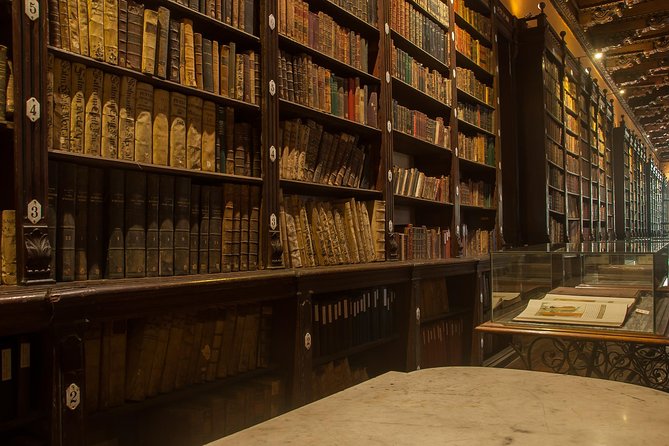
- Santo Domingo offers unusual details: Look for the old library, historic chairs, and the burial places linked to San Martín de Porres and Santa Rosa de Lima.
- Hotel transport keeps the day simple: Air-conditioned transportation is provided from Miraflores or San Isidro hotels.
- Dress carefully for churches: Shorts and sleeveless tops are not allowed in places of worship and selected museums.
- Plan around Cathedral closures: Saturday afternoons and Sunday mornings can bring a change to the MALI Museum.
Why this four-hour route works in Lima
Lima can feel spread out, especially when you are trying to connect the modern districts with the Historic Center. This tour solves that problem by combining transportation, entry fees, and a guide in one half-day. You do not have to arrange separate taxis between Miraflores, central Lima, and the Larco Museum.
The route also gives you three different ways to understand the city. Santo Domingo presents colonial religion and Lima’s early institutions. The Cathedral focuses on grand sacred art and the city’s Spanish foundation. The Larco Museum then takes you much further back, to the cultures that flourished in Peru before the Inca period.
At $69 per person, the value depends on how much structure you want. The price includes transportation with air conditioning, a guide, and admission to all three scheduled attractions. If you would otherwise pay for several taxis and museum tickets, the package can make practical sense. You are also paying for someone to explain what you are seeing, which matters in churches and museums where a display can otherwise pass by without much meaning.
The four-hour length is both a strength and a limit. It fits neatly into a morning or afternoon and works well if you have only a short stay in Lima. The tradeoff is that each stop receives about an hour, so you will need to keep moving.
More Museum and Gallery History Tours in Peru:
- Piramids of Tucume Tour, Sican Museum and Lambayeque city tour
★ 5.0 · 30 reviews - Paris: Louvre Museum Entry with History of Mona Lisa
★ 3.9 · 2,823 reviews - Venice’s Best: Basilica, Doge’s Palace, Gondola & History Gallery
★ 4.5 · 2,478 reviews
Santo Domingo and the saints of Lima
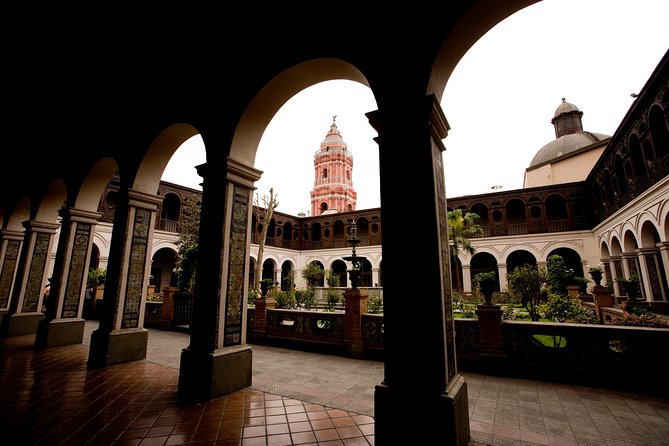
The Basilica and Convent of Santo Domingo is a strong opening stop because it brings together architecture, religion, education, and local history. The building dates to Lima’s early colonial period, and its corridors once connected with San Marcos University, described here as the oldest university in the Americas.
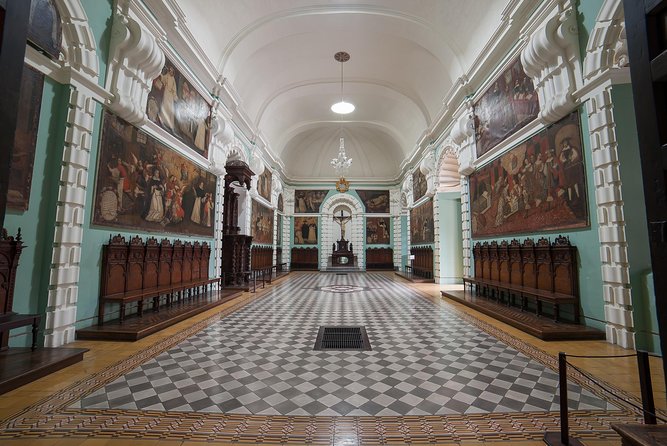
Inside, you can expect old rooms, religious art, and details that reward a guide’s explanation. The convent library holds about 25,000 rare volumes, with some dating to the 15th century. You may not have time to study every shelf, but the collection helps show how much written material passed through this institution.
Another unusual detail is the collection of the country’s oldest chairs. Small objects like these can make a historic building feel more immediate. Instead of looking only at grand altars, you get a sense of how people worked, studied, prayed, and lived within the convent.
Santo Domingo also has a close link to two important Peruvian saints. San Martín de Porres and Santa Rosa de Lima are buried here, and their stories are part of the visit. One past participant particularly valued learning about the cemetery beneath the church, as well as the lives of both saints. That underground setting adds a more personal side to the tour, though the precise areas open to you can depend on the day’s arrangements.
I would give Santo Domingo your full attention even if you are more interested in art than religion. The building helps explain how Spanish Catholic institutions shaped Lima, and the guide can connect its rooms to the city’s wider story. The main limitation is time. One hour is enough for a guided overview, but not for a slow inspection of every room and object.
Lima Cathedral and the city’s main square
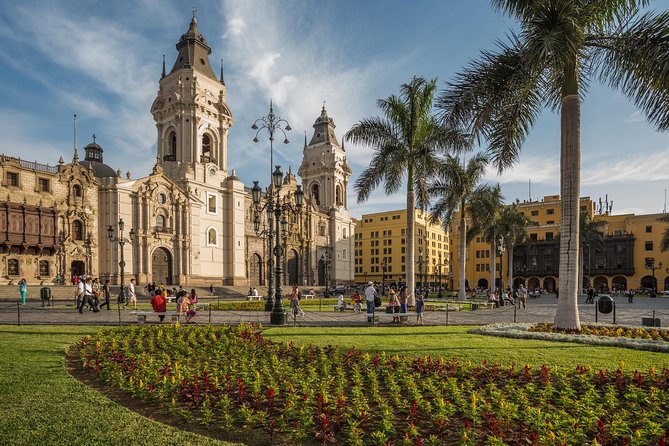
The Cathedral visit begins around Lima’s Main Plaza, one of the most important public spaces in the Historic Center. From here, the city’s colonial power is easy to read through the surrounding buildings, including the Cathedral, the Presidential Palace, and City Hall.
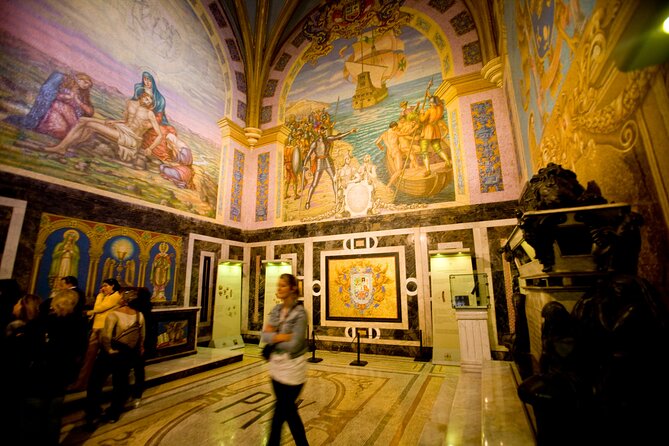
Inside the Cathedral, the focus is on religious paintings, decorated spaces, and historic objects. The building is also tied to Francisco Pizarro and the early Spanish foundation of Lima. A guide makes a real difference here because the artwork can otherwise seem like a succession of ornate rooms. Gabriel, for example, was praised for explaining the paintings and objects in clear English.
This stop is less about quiet contemplation and more about understanding how art, faith, and political power were displayed in colonial Lima. You will see how the Cathedral served as both a religious center and a symbol of the city’s importance.
There is an important scheduling catch. The Cathedral is closed on some holidays, on Saturday afternoons, and on Sunday mornings. When that happens, the tour visits the MALI Museum instead. That change is not necessarily a poor substitute, but it does mean the experience can differ from the advertised route. If seeing the Cathedral is essential to you, check the day and starting time before booking.
The dress rule matters here. Wear clothing that covers your shoulders and knees, and avoid shorts or sleeveless tops. You may be refused entry if you do not meet the requirements, so this is one occasion when practical clothing beats dressing for Lima’s warmer weather.
The Larco Museum’s ancient Peru collection
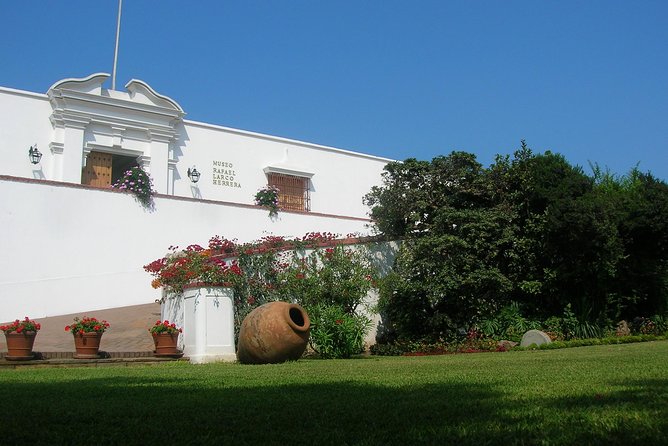
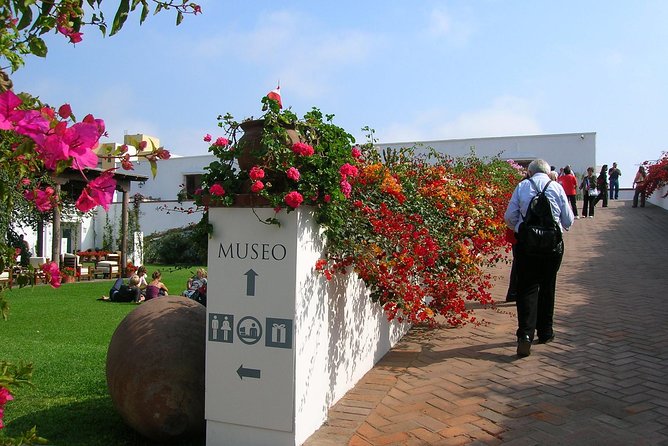
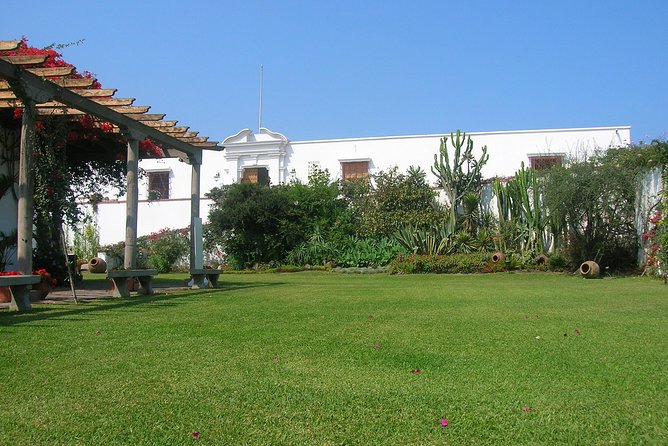
The Larco Museum is the largest part of the tour’s artistic appeal. It is about a 30-minute drive from Lima’s city center, so the included vehicle saves you the trouble of arranging that transfer on your own.
The museum presents ancient cultures of Peru through ceramics and other objects. You can expect pottery shaped or decorated as faces, fruits, birds, and everyday objects. These pieces help you see ancient Peru as a place of real people and familiar concerns, not just a list of dates and civilization names.
The ceramics are also a good reason to choose this tour if you prefer visual learning. A guide can point out what an object shows, explain why it matters, and connect it to the broader development of Peru’s early societies. Gabriel was singled out for bringing the pottery to life, while Suzanne was praised for explaining art and history with patience and energy.
One highlight is the museum’s warehouse, where a large collection of ceramic pieces is arranged for viewing. The sheer number of objects can be striking, but do not feel that you need to remember everything. Focus on the forms and images that catch your eye, then let the guide provide the context.
The museum has also received recognition from TripAdvisor’s Traveler’s Choice Awards as one of the world’s 25 best museums. That label alone should not decide your booking, but it reflects the museum’s broad appeal. It is organized around a clear story of Peru’s early cultures and works well for first-time visitors who want a solid introduction.
You receive about one hour here, which is enough for an informed highlights tour. It is not enough for a slow visit to every gallery. If ancient art is your main reason for coming to Lima, you may want to return independently for more time. On this half-day route, the museum works best as a focused introduction.
A few more history tours around Peru worth a look
- Lima’s Vibrant Heritage: Exploring the City’s Landmarks Half-day
★ 4.5 · 581 reviews - Lima: Historic Center Street Food, Market, and Eateries Tour
★ 4.9 · 216 reviews - Walking tour in the Historic Center of Arequipa
★ 4.4 · 180 reviews - Historic Downtown, Miraflores & Catacombs Private Tour
★ 5.0 · 100 reviews
Guides make the difference
The guide is the thread holding the day together. The strongest feedback has centered on clear explanations, friendly service, and the ability to adjust when plans change.
Suzanne has been praised for her energy, patience, and command of Lima’s history and art. She also helped one person sort out a meeting point for a later tour, a useful sign of practical support rather than simple narration. Gabriel received high praise for explaining Cathedral art and making Larco’s pottery easier to understand. Daniel has also been described as offering detailed information at each stop.
These names matter because a church and an archaeological museum do not explain themselves equally well. At Santo Domingo, a good guide can point out the saints, library, and old rooms. At the Cathedral, the guide can help you read the paintings. At Larco, the guide can turn rows of ceramics into a story about ancient life.
The small maximum of 15 people is another advantage. You are unlikely to have the privacy of a private tour, but a group this size should be manageable. You can usually hear the guide more easily than in a large coach group, and it is easier to ask a question.
The tour does not promise a particular guide, so you should not book solely on the hope of having Suzanne, Gabriel, or Daniel. Still, the repeated praise for the guiding suggests that the company places real weight on explanation, not just transportation.
Timing, transport, and the half-day tradeoff
Round-trip transport from Miraflores or San Isidro is included, with an air-conditioned vehicle. That is useful in Lima, where the Historic Center and the Larco Museum are not next door to one another. The drive from the center to Larco takes about 30 minutes, and having the route handled keeps the day moving.
A four-hour tour is a good fit if you are using Lima as a stop before another part of Peru or if you want a first orientation after arriving. The experience can also work well on a day when you do not want to manage the city’s traffic and ticketing yourself.
Still, you should expect a structured pace. The published timing gives about one hour to each attraction, and travel between sights uses part of the half-day. You will see the key places, but this is not the tour for lingering over every painting or reading every museum label.
The experience is generally suitable for most people, and the group is capped at 15. No special fitness requirement is stated, but you should be comfortable moving through historic buildings and museum spaces during a fairly active four-hour outing.
The experience is often booked about 48 days ahead. That does not guarantee it will sell out on your dates, but it suggests that planning early is sensible, particularly if your Lima schedule is tight.
Who will get the most from this tour
I would recommend this outing to first-time visitors who want a clear introduction to Lima’s cultural past without spending a full day on organized sightseeing. It also suits anyone who likes architecture, painting, religious history, or archaeology and wants a guide to connect the subjects.
It is a good choice if you are staying in Miraflores or San Isidro and prefer not to organize taxis to the Historic Center and Larco Museum. The included admissions add convenience, and the transport makes the route easier to manage.
You may want a different plan if you dislike fixed schedules or already know you want several hours at Larco. Independent visits would give you more control. You should also check the Cathedral schedule if that building is a priority, since MALI replaces it at certain times.
Dress for the churches from the start. Long trousers or a skirt below the knee, along with covered shoulders, will save you from having to solve a clothing problem at the door.
Cancellation and booking basics
You can cancel for a full refund up to 24 hours before the experience begins. Changes or cancellations made less than 24 hours before the start are not accepted for a refund, and the cut-off follows Lima’s local time.
Confirmation is provided at booking. Since the tour is frequently reserved well in advance, I would book once your Lima dates are firm, then check the start time against the Cathedral’s closure periods.
Should you book the Lima heritage and Larco tour?
Book it if you want a well-organized first look at Lima, especially if you value clear guiding and simple transport. The combination of Santo Domingo, the Main Plaza and Cathedral, and the Larco Museum covers a lot of ground in four hours, while the $69 price includes entries and an air-conditioned vehicle.
Approach it as a highlights tour, not a slow museum day. You will leave with a stronger grasp of Lima’s colonial churches, its famous saints, and Peru’s ancient ceramics. If that sounds like the right amount of structure, this is a sensible and well-priced introduction.
FAQ
How long does the tour last?
The tour lasts approximately four hours.
What attractions are included?
The scheduled visits are the Basilica and Convent of Santo Domingo, Lima Cathedral, and the Larco Museum.
Is transportation included?
Yes. Round-trip transportation with air conditioning is included from hotels in Miraflores or San Isidro.
What happens if Lima Cathedral is closed?
The Cathedral is closed on some holidays, Saturday afternoons, and Sunday mornings. If your tour falls during one of those periods, the visit changes to the MALI Museum.
What should I wear?
A dress code applies at places of worship and selected museums. Shorts and sleeveless tops are not allowed, and entry may be refused if your clothing does not meet the requirements.
How many people can join the tour?
The maximum group size is 15 people.
Just added around Peru
- Historic Downtown, Miraflores & Catacombs Private Tour★ 5.0 · 100 reviews
- Lima Peru Sea Lions, History and Palomino Callao Islands★ 5.0 · 56 reviews
- Guided Tours in Colonial and Modern Lima★ 5.0 · 54 reviews
- 6-Day Cultural Tour to Machu Picchu★ 5.0 · 76 reviews
- Piramids of Tucume Tour, Sican Museum and Lambayeque city tour★ 5.0 · 30 reviews
- Arequipa, Historic and Colonial City and Santa Catalina Monastery★ 4.5 · 42 reviews
- Aymara Route Mystical Cultural Tour★ 4.7 · 27 reviews
- Machu Picchu: historical and photographic guided tour★ 4.9 · 27 reviews
Museum & Gallery History Tours, compared.
Louvre Museum Entry with History of Mona Lisa
Read our review →
Venice’s Best: Basilica, Doge’s Palace, Gondola & History Gallery
Read our review →
Guided African American History Tour with Reserved Museum Entry
Read our review →
POLIN Museum of the History of Polish Jews Ticket
Read our review →
Bell Tower & St Mark’s Square History Gallery Ticket
Read our review →
Field Museum of Natural History Ticket or VIP Tour
Read our review →
Madrid in a Day Tour:Royal Palace, Historic Center & Prado Museum
Read our review →
Basilica, Doge’s Palace, History Gallery & Bell Tower Option
Read our review →Browse the lists this tour appears in