
Review · JEJU ISLAND
Jeju Island UNESCO Heritage Bus Tour
Jeju rewards a well-planned route. This three-day UNESCO tour links volcanic cliffs, forest paths, folk villages, beaches, markets, and tea fields without asking you to arrange Jeju’s long cross-island drives yourself. I like the mix of nature and culture, especially Seongsan Ilchulbong’s women divers performance and the stone-built Seongeup Folk Village. I also like the modest price, about $56 per person, when you consider the air-conditioned transport, fuel, parking, guide service, and airport drop-off.
The main caution is that the experience can vary with group size and guide assignment. Some departures use a professional English-speaking guide, while groups of up to four may ride with a taxi driver who has advanced English. That can work very well, as guides such as Lucas, Andy, Mr. Kim, Mr. Lee, and Terry have received strong praise, but it is worth confirming what kind of escort you will receive.
Five useful things to know before booking
- Three routes cover different sides of Jeju: Eastern, Western, and South and Western itineraries can be taken across three days.
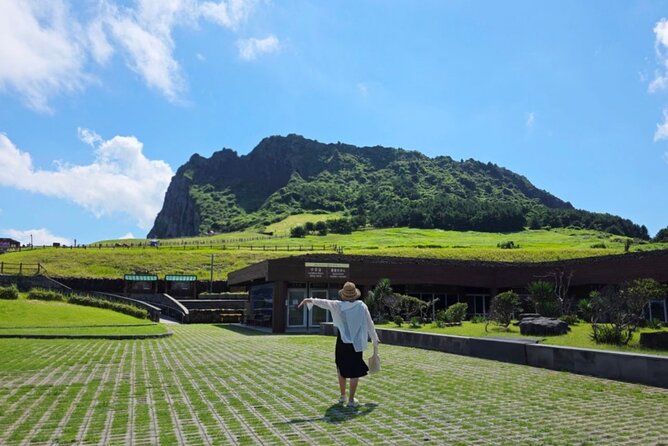
- Seongsan Ilchulbong is for photos and the women divers show: Hiking the peak is not included, and the show costs KRW 5,000.
- Weather can change the plan: Beaches, waterfalls, trails, and sea-based performances may be replaced with indoor or alternate sights.
- Seasonal flowers shape the experience: Camellias, canola, cherry blossoms, hydrangeas, pink muhly, and silver grass appear at different times.
- The route changes from April 11, 2026: Several western stops will be replaced by wetlands, a coastal road, or Aewol Café Street.
- The tour is efficient but full: Expect several stops each day, with limited time for long walks or unplanned exploring.
What the $56 price really buys you

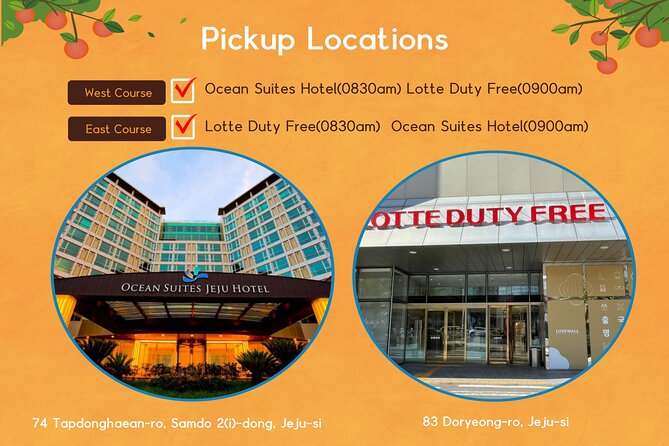
At roughly $56 per person, this is priced as a practical sightseeing service rather than a slow, private island outing. You get an air-conditioned vehicle, round-trip transport from the meeting location, fuel and parking costs, a licensed guide, and airport drop-off service. Meals, drinks, gratuities, and certain admissions remain yours to pay.
The value is strongest if you are staying in Jeju without a rental car. Jeju’s major sights are spread far apart, and the time saved by not planning roads, parking, and transfers is significant. You also get a ready-made route through the eastern, western, and southern parts of the island.
The price needs a little interpretation. The published capacity reaches 40 people, so a large departure may feel like a standard coach excursion. On the other hand, the operator explains that up to four people can join at the same price in a regular taxi with an advanced English-speaking driver. Groups of five to ten are offered a professional English guide. Confirming your vehicle and guide arrangement before departure is a sensible step.
The tour requires at least three people to operate. It also depends on suitable weather, so a poor forecast can lead to another date, a changed experience, or a refund. Free cancellation is available up to 24 hours before the start time.
More UNESCO World Heritage Tours in Korea:
- From Busan: Gyeongju UNESCO World Heritage Guided Day Tour
★ 4.8 · 1,250 reviews - Gyeongju UNESCO World Heritage Guided Day Tour from Busan
★ 5.0 · 660 reviews - Gyeongju UNESCO World Heritage Sites and History Full-Day Tour with Lunch
★ 5.0 · 104 reviews
Day one: forest, stone villages, and Jeju’s eastern coast
The eastern route begins at Saryeoni Forest Path, with about 50 minutes on site. This is an easy introduction to Jeju’s natural side, with a protected forest setting and a walking trail suited to people who want fresh air without committing to a demanding mountain hike.
Do not expect a long trek here. The schedule gives you a taste of the path, not a full-day walk through the forest. Wear shoes with a decent sole, since even short nature trails are more enjoyable when you are not worrying about every step.
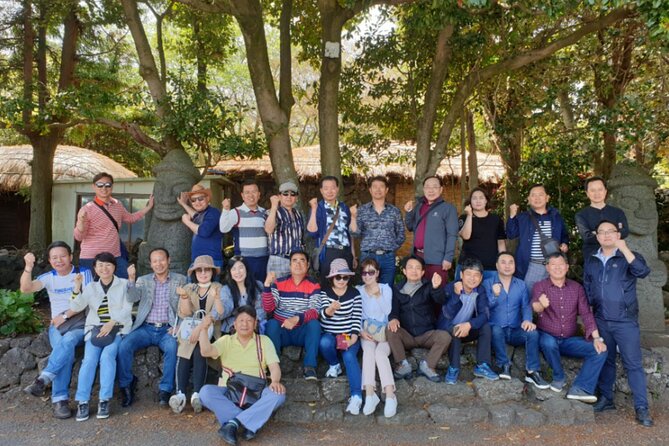
Seongeup Folk Village follows, also for about 50 minutes. This traditional settlement is known for stone walls and piles of volcanic rock built to help protect roofs from Jeju’s strong winds. The stop gives useful context for the island’s older rural life, and it breaks up the natural scenery with something made by human hands.
I would pay attention to the construction details rather than rushing through for photographs. The stonework tells you why local buildings look the way they do. The time is still limited, so this is an introduction rather than an extensive village visit.
At Seopjikoji, you get about 40 minutes along the eastern shore. The setting is particularly attractive in April, when yellow canola flowers appear. The coast makes a good photo stop, though the short visit means you will need to keep moving if you want to see more than the main viewpoint.
Seongsan Ilchulbong and the women divers performance
Seongsan Ilchulbong, also called Sunrise Peak, is the headline stop on the eastern day. The schedule allows about 80 minutes, but this portion is specifically for photographs and the women divers performance. Hiking to the summit is not included.
The show is scheduled for 2:00 p.m. and costs KRW 5,000 per person. The women divers, known locally as haenyeo, traditionally entered the sea without modern equipment to gather seafood. Seeing them perform is one of the most distinctive cultural moments in this itinerary, because it connects Jeju’s famous volcanic coast with a living local tradition.
Admission to Seongsan Ilchulbong is not included in the tour price. The performance can also be canceled if weather or sea conditions are poor. Ask your guide about the exact plan on the day, especially if the forecast is unsettled.
The final main stop is Hamdeok Beach, with about an hour to enjoy the shore. This gives the day a lighter finish after the cultural and geological stops. On rainy days, Hamdeok may be replaced by the Haenyeo Museum. A separate note also mentions Jeju Stone Park as a possible weather replacement, so expect the exact choice to depend on local conditions.
Manjanggul Cave is currently closed because of anti-falling construction, so do not book this tour expecting a cave visit. Its reopening date has been listed as August, but conditions can change.
Day two: Hallasan foothills, cliffs, gardens, and tea
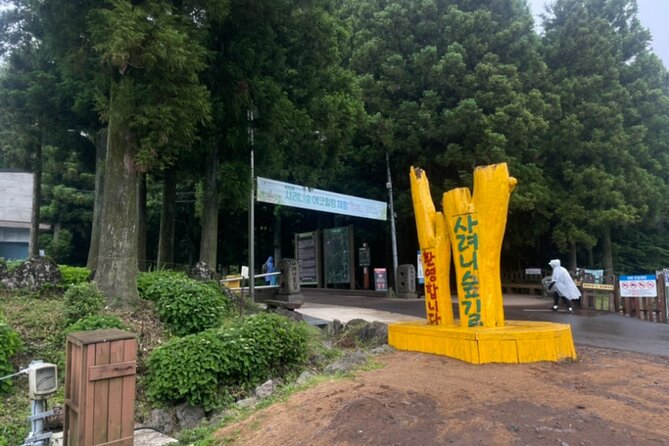
The western itinerary opens with the Eoseungsaengak Trail on Mount Halla. The planned visit lasts about 70 minutes. This is not a summit climb. It is a shorter mountain outing that lets you experience Jeju’s highland setting without giving up the rest of the day to hiking.
Weather matters here. The trail may be replaced by the 1100 Altitude Wetlands or another nearby natural stop. From April 11, 2026, the western route is scheduled to change from Eoseungsaengak Trail to the 1100 Altitude Wetlands. If you are booking around that date, read the updated route carefully.
Jusangjeolli Cliff is next, with about 40 minutes. Black hexagonal stone pillars line the coast, formed by volcanic activity and shaped into an almost geometric wall. This is one of Jeju’s clearest geological sights, and the short visit is enough for viewpoints and photographs.
The itinerary includes a possible tangerine-picking activity in winter. It costs KRW 5,000 per person and is paid on site. Since it is seasonal and optional, do not treat it as a guaranteed part of the day.
Camellia Hill receives about 70 minutes. The garden contains more than 500 types of camellia and changes with the seasons. Red camellias are associated with winter, hydrangeas with summer, and golden reeds with autumn. Flower timing is never perfectly predictable, so the garden may look very different from one month to the next.
For me, this is a good stop for visitors who want a calmer walk and garden photographs. It is less useful if you prefer geological sights above all else, since the tour already includes several outdoor viewpoints.
A few more history tours around Korea worth a look
- Seoul: Evening Dark History, Folklore & Ghost Story Walking Tour
★ 5.0 · 593 reviews - Old Korea Thousand History Tour of Gyeongju from Busan
★ 5.0 · 518 reviews - Hanbok Photoshoot and History Tour at Gyeongbokgung Palace
★ 5.0 · 276 reviews - From Seoul: Dae Jang Geum Park Historic K-Drama Set Tour
★ 4.9 · 143 reviews
Bomunsa Temple and O’sulloc Tea Museum
The stop at Sanbangsan Bomunsa Temple lasts about 40 minutes. This cliffside temple offers ocean views and Buddha carvings, with a quieter mood than the coast and gardens. The visit is brief, so think of it as a peaceful pause rather than a full temple study.
From April 11, 2026, the route is scheduled to follow the Sinchang Windmill Coastal Road instead of Bomunsa Temple. That change will suit people who prefer a coastal drive, but it removes one of the itinerary’s religious and historic stops.
O’sulloc Tea Museum gives you about 50 minutes among tea fields, tastings, desserts, and exhibitions. The green rows make a strong contrast with Jeju’s dark volcanic rock and coastal scenery. You can sample tea and browse the museum, though food and drinks are personal expenses.
From April 11, 2026, this western route is scheduled to stop at Aewol Café Street, a hop-on hop-off stop, instead of O’sulloc. Check the date of your visit before you assume tea fields are included.
Day three: markets, waterfalls, and Hueree
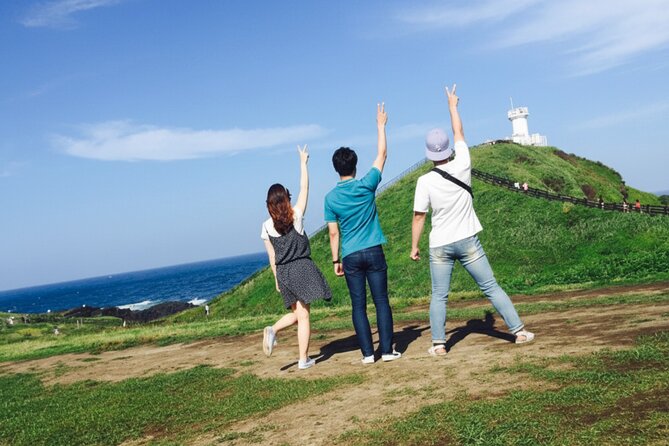
The third route begins again with Eoseungsaengak Trail, scheduled for about 75 minutes. Depending on weather, the visit may change to the 1100 Wetland, Eorimok, or Saebyeol Oreum. This flexibility helps protect the day from bad conditions, but it also means the route is not fixed in the way a museum visit would be.
O’sulloc Tea Museum follows for about 50 minutes. Because it appears on both the western and South and Western routes, the tea museum is useful if you miss it on day two or choose this route instead. It may feel repetitive if you take both western days and do not have a particular interest in tea.
Seogwipo Maeil Olle Market is the lunch stop, with about an hour. This is one of the most practical parts of the itinerary because you choose your own meal rather than being assigned one. The market also has souvenirs, so it is a good place to pick up small food gifts without setting aside another shopping trip.
Jeongbang Waterfall comes next, with about 40 minutes. It is known for flowing directly into the sea, an unusual setting that makes the stop memorable even though the visit is short. If rough weather restricts access, the tour substitutes Cheonjiyeon Waterfall.
The day ends at Hueree Natural Life Park, with about 70 minutes. The park has seasonal flowers, easy walking paths, and quiet countryside scenery. You may also end the tour here, which could be useful if you have an evening plan or need to reach another part of the island.
Guides, vehicles, and the human side of the tour
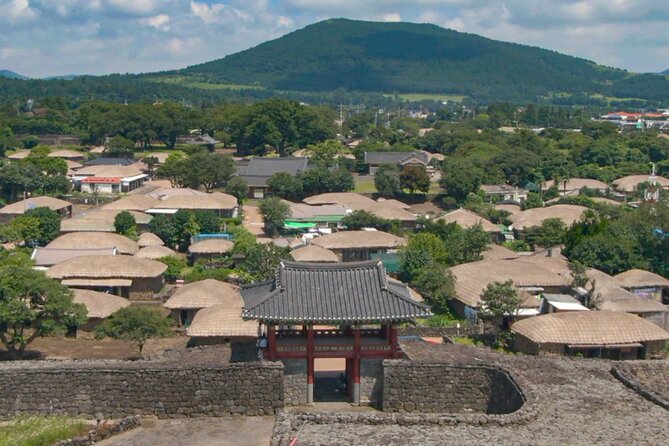
The strongest guide experiences come from personal attention and clear local explanation. Lucas is praised for being helpful and attentive, while Andy is described as thoughtful and compassionate. Mr. Kim, Mr. Lee, and Terry are also named as drivers or guides who helped make the route comfortable.
The important distinction is between a guide-led departure and a taxi-style arrangement. One account expected a professional English guide but received a driver who mainly transported the group and waited at each stop. Terry spoke English well and was accommodating, but the role was not the same as having someone explain every site.
That difference matters on a culture-heavy route. If you want detailed commentary at Seongeup Folk Village, Seongsan Ilchulbong, and Bomunsa Temple, confirm the language and guide arrangement before paying. If you mainly want reliable transport and time at the sights, a skilled driver may be enough.
Who will get the most from this Jeju tour?
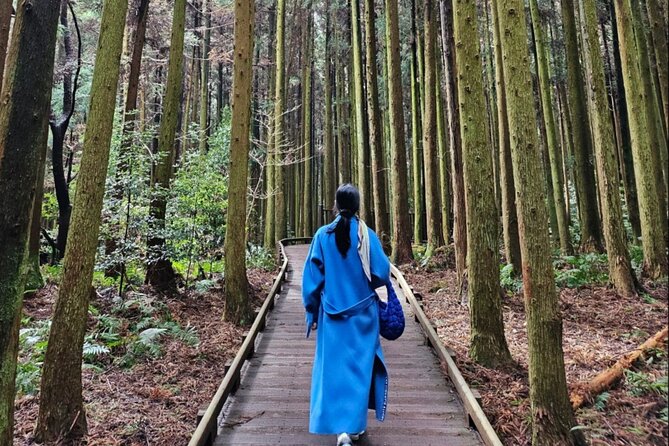
I would recommend it to a first-time Jeju visitor with limited planning time, especially someone who does not want to drive. It is also useful for people who want a broad sample of the island: volcanic rock formations, coast, flowers, tea, markets, waterfalls, and village life all appear in one organized plan.
It suits active sightseers who are happy with short walks and frequent transfers. It is less suitable if you want long hikes, extended photography sessions, or a relaxed morning at one place.
Families and older visitors may appreciate the vehicle and moderate walking schedule, but the repeated boarding and disembarking can become tiring. Bring water, sun protection, and comfortable shoes. Also leave room in your budget for lunch, drinks, the Seongsan admission and women divers show, and optional tangerine picking.
Should you book the Jeju UNESCO tour?
Book it if your priority is coverage. At about $56 per person, the combination of transport, fuel, parking, and a wide route is good value, particularly without a rental car. The 4.9 rating from 54 published ratings and 98 percent recommendation rate support the idea that many departures run well.
Book with care if you require a specific guide, a fixed itinerary, or a private pace. Confirm the escort arrangement, check the April 11, 2026 route changes, and accept that weather can replace major stops. If those limits are fine, this tour gives you a useful first look at Jeju, with enough variety to help you decide where to return for a slower visit.
FAQ
How long does the Jeju UNESCO Heritage Bus Tour last?
The experience is arranged across approximately three days, with separate Eastern, Western, and South and Western routes.
What is included in the tour price?
The price includes an air-conditioned vehicle, round-trip transfers from the meeting location, a licensed guide, parking fees, fuel costs, and airport drop-off services.
Are meals included?
No. Meals, drinks, and personal expenses are not included. On the third route, you can choose your own lunch at Seogwipo Maeil Olle Market.
Is hiking included at Seongsan Ilchulbong?
No. The Seongsan Ilchulbong stop is for photographs and the women divers performance. Hiking is not included.
How much does the women divers performance cost?
The performance is listed at KRW 5,000 per person and is scheduled for 2:00 p.m. It may be canceled because of weather or sea conditions.
Is tangerine picking included?
No. Tangerine picking is optional, available during the winter season, and costs KRW 5,000 per person, paid on site.
Can the itinerary change because of weather?
Yes. Hamdeok Beach may be replaced by the Haenyeo Museum, and mountain, waterfall, garden, or coastal stops may also be changed because of local conditions.
What happens if the tour does not meet its minimum group size?
The tour requires at least three participants. If it is canceled because the minimum is not met, you can be offered another date or experience, or receive a full refund.
Is airport drop-off available?
Yes. Airport drop-off services are included, and drop-off near Dongmun Market is also available after the tour.
Just added around Korea
- Gyeongju UNESCO World Heritage Sites and History Full-Day Tour with Lunch★ 5.0 · 104 reviews
- Full day Private Gyeongju UNESCO Heritage Tour : a glimpse into Silla★ 5.0 · 60 reviews
- Busan history and market food tour with local chef★ 5.0 · 58 reviews
- Gyeongju Historic Areas Day Tour with Sky Capsule from Busan★ 5.0 · 18 reviews
- Seoul: Street Photoshoot and Hidden Gem History Walking Tour★ 5.0 · 25 reviews
- Seoul: Suwon Hwaseong & Waujeongsa & Starfield Heritage Tour★ 4.8 · 27 reviews
- Seoul: UNESCO Heritage Palace, Shrine, and More Tour★ 4.8 · 18 reviews
- Gyeongju: UNESCO Heritage Tour Including Bulguksa Temple★ 4.8 · 104 reviews
UNESCO World Heritage Tours, compared.
World Heritage Shirakawa-go and Experience Tours from Kanazawa
Read our review →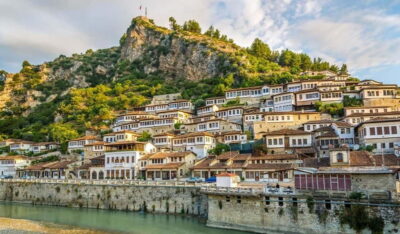
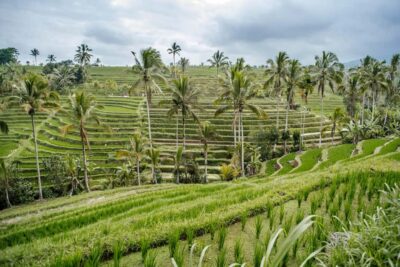
Bali: Tanah Lot UNESCO World Heritage Sites Full-Day Tour
Read our review →World Heritage Kyoto & Nara Uji Authentic Matcha Experience
Read our review →
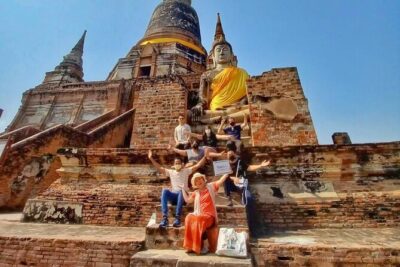
UNESCO’s Ayutthaya Historical Park: Full-Day Tour from Bangkok
Read our review →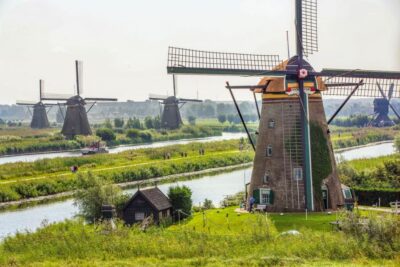
Rotterdam: Kinderdijk UNESCO World Heritage Entry Ticket
Read our review →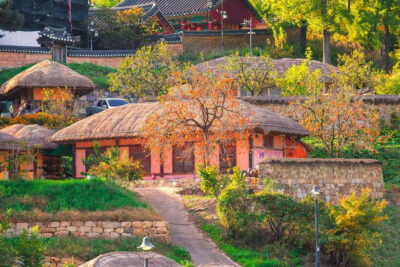
From Busan: Gyeongju UNESCO World Heritage Guided Day Tour
Read our review →Browse the lists this tour appears in