
Review · HONG KONG SAR
Between Capitalism & Communism: Hong Kong History Tip Based Tour
Hong Kong’s power stories begin on the pavement. This two-hour walk links courts, banks, churches, temples, and crowded streets to explain how colonial rule, Chinese sovereignty, and daily life still meet in Central. I like the personal guiding style, especially when guides such as Alice, Andy, Armie, and Wingman connect public events to life in Hong Kong. I also like the excellent value, with a professional guide and street food tasting for just $2.63 per person.
The main consideration is pace. You cover eight stops in about two hours, with several ten-minute visits and some walking through Central and Sheung Wan. If you want a slow architectural tour or long time inside each site, this will feel brisk. If you want useful context at the start of your stay, it is a strong choice.
Key points to know before you book
- Hong Kong’s political story takes center stage: The Court of Final Appeal frames the meaning of One Country, Two Systems.
- The route connects famous sights with practical context: St. John’s Cathedral, HSBC, Statue Square, Hollywood Road, and Man Mo Temple all gain a clearer purpose.
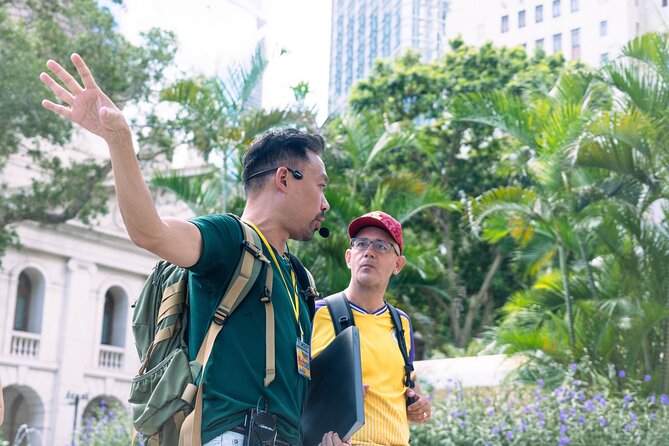
- Personal stories are a major strength: Alice, Andy, Armie, and Wingman have been praised for making recent events easier to understand.
- The $2.63 price is unusually low: You receive a local guide and street food tasting, though the tour is short and group size can reach 30.
- The walk finishes at Man Mo Temple: That makes it easy to continue exploring Hollywood Road and Sheung Wan afterward.
- You need moderate fitness: The route includes Central streets and the 800-meter Mid-Levels Escalator system.
Why this two-hour walk is useful in Hong Kong
Hong Kong can be hard to read at first. Glass towers, British colonial buildings, Chinese temples, packed sidewalks, and steep hills sit close together, but the reasons behind that mix are not always obvious.
This tour gives you a framework. Instead of passing St. John’s Cathedral as a pretty old building, you learn how it fits into colonial rule. Instead of seeing the HSBC headquarters as another giant bank, you hear about its famous lions, feng shui ideas, and Hong Kong’s unusual financial system. Instead of treating the Central-Mid-Levels Escalators as a clever piece of public transport, you see how the city adapted to its hills and dense growth.
The political side is not treated as a minor footnote. The route begins at the Court of Final Appeal, where the idea of One Country, Two Systems receives its most serious test. That gives the tour a clear purpose from the first stop: this is not just a sightseeing walk, but an explanation of how Hong Kong became what it is today.
You should expect a guide-led interpretation rather than museum-style displays or formal lectures. The strongest part of the experience is likely to be the conversation between locations. Guides have been praised for answering the question behind each building and for adding personal stories about life in Hong Kong.
More Cold War and Communism Tours in China:
- Prague: Communism History and Nuclear Bunker Guided Tour
★ 4.7 · 2,417 reviews - Prague Communism History and Nuclear Bunker Tour
★ 5.0 · 1,742 reviews - Bucharest: Communism and History Guided City Walking Tour
★ 4.9 · 918 reviews
Starting at the Court of Final Appeal
The meeting point is Central MTR Station, Exit K, with the tour starting at 11:00 a.m. From there, the first stop is the Court of Final Appeal, about ten minutes.
This is a smart place to begin. The court is not simply an attractive civic building. It gives the guide a chance to explain how Hong Kong operates within China while retaining separate legal and administrative systems under One Country, Two Systems.
You will not spend a long time here, so do not expect a full legal seminar. The value is the opening context. The court helps you understand why Hong Kong’s relationship with Beijing is central to almost every discussion of the city’s recent politics.
For a first visit, this can be more useful than beginning with a skyline viewpoint. You start by learning what questions to ask as you move through Central.
Statue Square and Hong Kong’s banking power
The walk continues to Statue Square, where you spend about ten minutes learning about financial power and the feng shui rivalry between major banks.
This is one of the more unusual themes on the route. Hong Kong’s banking district is often presented through numbers, skyscrapers, and luxury offices. The feng shui stories add another layer, showing how traditional beliefs can influence the shape and symbolism of modern commercial buildings.
You may find this stop especially memorable because it makes the financial district feel less anonymous. Towers are not just containers for offices. Their entrances, forms, and surrounding features can carry meaning in a city where old customs and high finance share the same block.
The short stop also keeps the story moving. You get an engaging explanation without spending half an hour staring at office buildings.
HSBC’s lions and the city built into the sea
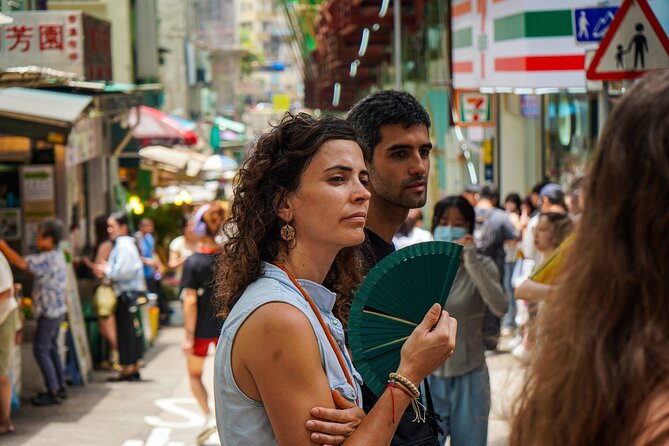
At the HSBC Main Building, the guide discusses the famous guardian lions and the way Hong Kong keeps expanding upward and outward.
The lions are a natural focus, but the larger point is the city’s financial identity. Hong Kong has no central bank that prints its own money in the usual sense described by the tour, yet its financial system has helped drive constant construction and growth.
This is also a good moment to consider space. Hong Kong has limited flat land, steep hills, and enormous demand for offices and housing. The result is a city that grows vertically and, in places, into reclaimed land. The guide uses the building and its surroundings to make that pressure visible.
The stop lasts about ten minutes. You should treat it as an explanation of the building’s role, not a visit inside the headquarters. The focus is on the exterior, the lions, and the story attached to them.
A few more history tours around China worth a look
- Beijing: Badaling Ancient Great Wall of China Day Trips
★ 4.8 · 208 reviews - Beijing Historical Tour II including Summer Palace, Lama Temple & Panda Garden
★ 4.0 · 187 reviews - Beijing Historical Tour I – Forbidden City, Tiananmen Square & Temple of Heaven
★ 4.0 · 120 reviews - 3-Day Yellow Mountains, Hongcun Village and Tunxi Ancient Street Private Tour
★ 5.0 · 75 reviews
St. John’s Cathedral and the colonial capital
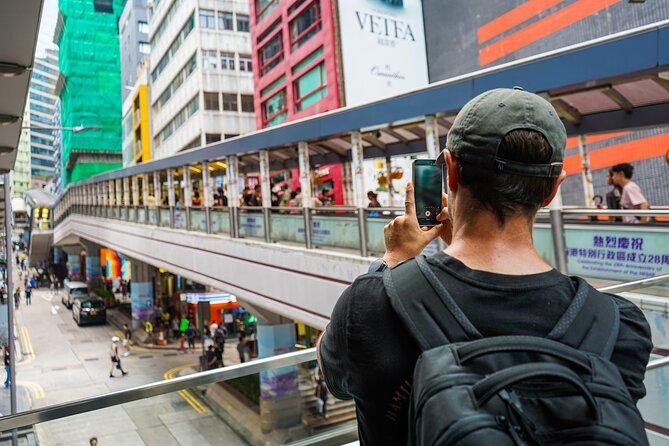
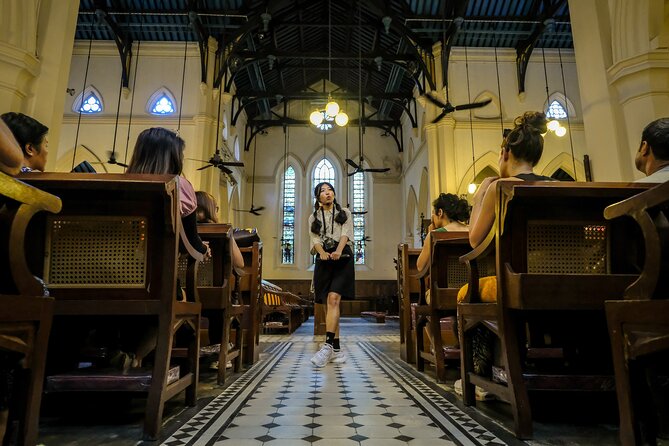
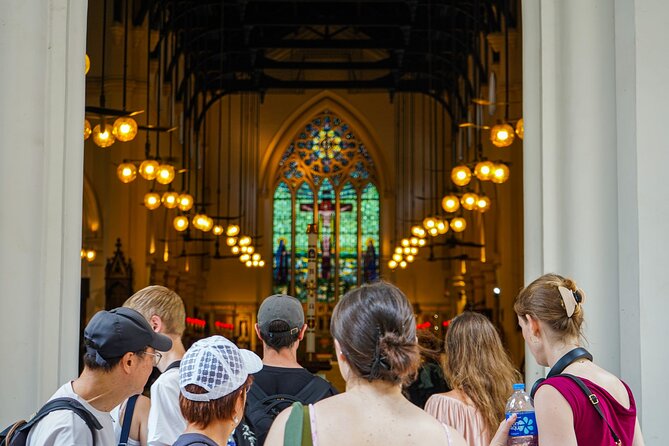
St. John’s Cathedral receives the longest stop, about twenty minutes. That extra time makes sense. It is described as Hong Kong’s oldest church and offers a quieter setting after the financial district.
Here, the guide connects religious architecture with British colonial rule. The location helps explain why the British established their administrative center among Hong Kong’s hills and how colonial authority took physical shape around Central.
This stop can also feel more human than the banking material. Guides have brought personal stories into the discussion, including the experience of living through Hong Kong’s political changes. Wingman was praised for sharing her own story, while Alice was credited with helping visitors understand what they were seeing through her account of life in the city.
That personal touch matters. Dates and government structures can tell you what happened, but a local guide can help explain how those changes affect the way people view home, identity, and the future.
The cathedral itself offers a pause from traffic and office towers. You should still remember that the tour gives you only about twenty minutes here. It is enough for context and a look around, but not a detailed church visit.
Queen’s Road Central, where old power meets modern pressure
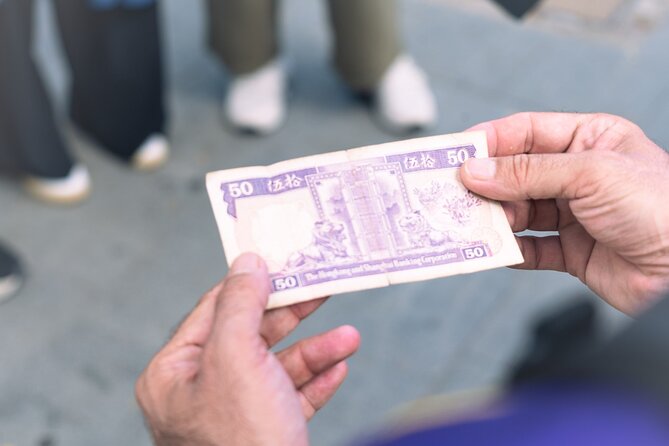
Queen’s Road Central brings you back into the city’s daily rush. This ten-minute section focuses on power suits, high rents, and the pressure that defines Central.
The street is useful because it shows Hong Kong in motion. The city’s history is not locked inside colonial buildings or courtrooms. It appears in the cost of space, the density of business, and the speed at which people move through the commercial center.
I like this part of the walk because it shifts from grand political themes to ordinary urban pressure. You begin to see Central as a place where international finance, local businesses, commuters, and shoppers compete for limited room.
The drawback is that ten minutes is not enough for a long street-food stop or independent shopping. The tour gives you an introduction, then keeps going. You can return later if Queen’s Road Central catches your interest.
Riding the 800-meter Mid-Levels Escalators
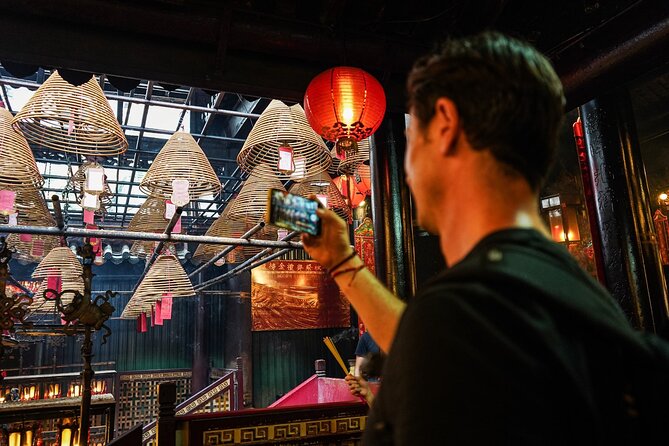
The Central-Mid-Levels Escalators are one of the route’s most practical highlights. You spend around ten minutes learning about this 800-meter outdoor escalator system and the engineering challenge of moving people across Hong Kong’s steep hills.
This is a good example of the tour’s method. A public transport feature becomes a way to understand the city’s geography. Hong Kong’s hills are not a backdrop. They affect where people live, how streets connect, and how the city solves basic movement problems.
You should wear comfortable shoes and be ready to walk between stops. The tour calls for a moderate level of fitness, and the route includes urban slopes, stairs, and busy sidewalks even if the escalator does some of the climbing.
Because the stop is short, you may not spend much time riding the entire system. The important point is how it functions within the city. If you want a longer ride or more photographs, you may need to return independently.
Hollywood Road and the changing face of Central
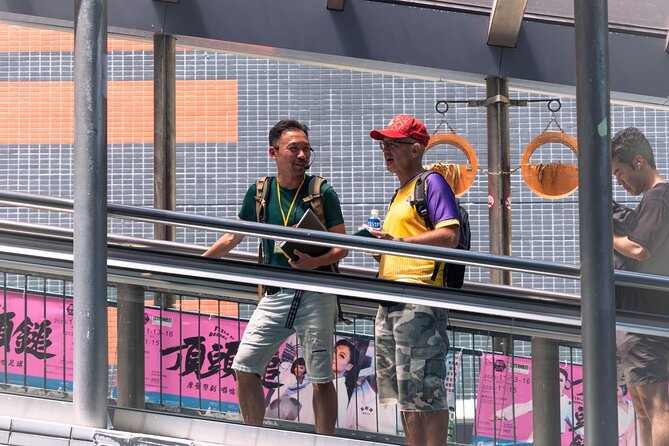
Hollywood Road marks a shift from colonial administration and finance to art, food, and street life. The guide explains how the road moved from a colonial divide to a creative center.
This stop helps prevent the tour from becoming too focused on government and banking. You get a sense of how older parts of Hong Kong can take on new uses without losing their earlier associations.
The route’s street food tasting adds a practical pleasure here or nearby, although the supplied details do not specify the food or portion. Treat it as a small taste rather than a full meal. The tour also ends near Man Mo Temple, so you can ask the guide for a local restaurant recommendation for lunch.
That restaurant advice may be one of the most useful takeaways. A short guided walk can help you avoid making your next meal choice at random, especially if you are new to Central, Sheung Wan, or Hollywood Road.
Man Mo Temple and the final link to justice
The last stop is Man Mo Temple, at 124 to 130 Hollywood Road in Sheung Wan. You spend about ten minutes here.
The temple lets the guide connect ancient belief with Hong Kong’s legal development. Its gods are presented as witnesses to the city’s changing ideas about justice, authority, and public life.
Ending here works well. The route begins with a modern court and finishes at a traditional religious site. Between them, you see banks, colonial buildings, roads, escalators, and creative districts. The pattern suggests that Hong Kong’s identity is not one clean story. It is a series of overlapping systems that continue to shape one another.
The finish is also useful for your day. You can continue around Hollywood Road, explore Sheung Wan, find lunch using the guide’s recommendation, or simply stay in the area rather than crossing back to the original meeting point.
What the guides add to the experience
The guide is the key variable here. A passionate local guide can turn a two-hour route into a clear introduction to Hong Kong. The strongest praise has gone to Alice, Andy, Armie, and Wingman.
Andy has been praised for explaining Hong Kong’s changing cityscape. Armie was described as providing a steady stream of information from start to finish. Alice’s personal account of life in Hong Kong helped place the sights and recent events in context. Wingman was appreciated for sharing her own story.
Those comments point to the tour’s best quality: personal interpretation. You are not simply handed a list of dates. You hear how the city’s changes can look and feel to someone who lives there.
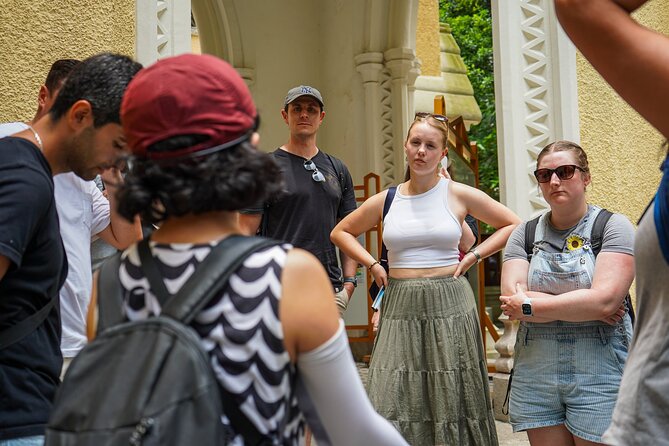
Guide quality can vary on any group tour, and the maximum group size is 30 people. That is large enough for the walk to feel less personal if everyone gathers tightly around one guide. Still, the strong 4.9 rating from 234 reviews and 97 percent recommendation rate suggest that the guiding is usually the reason people leave satisfied.
Price, group size, and practical value
At $2.63 per person, this is an exceptionally inexpensive introduction to Central. The price includes a professional local guide and street food tasting, with no hotel pickup or drop-off.
The value is strongest if you use the tour as a starting point. You receive political context, local stories, neighborhood orientation, and a food recommendation in two hours. That can save you time later because you will understand what you are looking at instead of passing through Central without a framework.
The price does not mean you should expect a private tour. Up to 30 people can join, and each stop is tightly timed. You are paying for a compact overview, not a leisurely walk with extended access to every site.
The tour starts at 11:00 a.m., which positions it well before lunch. Since it ends at Man Mo Temple and includes a restaurant recommendation, you can make it the first part of a full day in the area.
Free cancellation is available up to 24 hours before the start time for a full refund. Changes or cancellations made inside that period are not accepted for a refund. Poor weather or failure to meet the minimum number of participants can lead to a different date or a full refund.
Who should choose this Hong Kong walk?
I would choose this tour if you want to understand Hong Kong’s politics, colonial past, and modern financial identity in one compact outing. It suits first-time visitors, people interested in current affairs, and anyone who prefers local stories over a basic list of photo stops.
It is also a good match if you want help finding your bearings before lunch. The route links Central, Admiralty, Hollywood Road, and Sheung Wan, so you finish with a clearer sense of how these areas relate.
You may want something else if you dislike group walks, need long periods of quiet sightseeing, or want a detailed architectural study. The route moves quickly, and the group may reach 30 people. You should also be comfortable walking in an active city environment and handling a moderate level of physical exertion.
Should you book this tour?
Book it if you want a low-cost, high-context introduction to Hong Kong. The best reason is not the number of stops. It is the way the guide links the Court of Final Appeal, banking towers, British institutions, steep hills, street food, and Man Mo Temple into one understandable story.
The main tradeoff is speed. You will get short explanations rather than lengthy visits, and the personal quality depends partly on your assigned guide. Still, the excellent rating, strong recommendation rate, praised guides, and remarkably low price make this an easy choice for a first day in Central.
FAQ
How long does the Hong Kong history walking tour last?
The tour lasts approximately two hours.
Where does the tour start?
It starts at Central MTR Station, Exit K, in Central, Hong Kong.
What time does the tour begin?
The scheduled start time is 11:00 a.m.
Where does the tour end?
It ends at Man Mo Temple, 124 to 130 Hollywood Road, Sheung Wan, Hong Kong.
What is included in the tour?
The tour includes a professional local guide and a street food tasting.
Is hotel pickup and drop-off included?
No. Hotel pickup and drop-off are not included.
How many people can join the tour?
The maximum group size is 30 people.
Can I cancel for a refund?
Yes. You can cancel at least 24 hours before the start time for a full refund. Cancellations or changes made less than 24 hours before the start time are not accepted for a refund.
Just added around China
- 3-Day Yellow Mountains, Hongcun Village and Tunxi Ancient Street Private Tour★ 5.0 · 75 reviews
- Private Historical Tour: Guangzhou City Sightseeing Including Lunch★ 4.5 · 24 reviews
- 9 days Ancient Town Tour★ 5.0 · 21 reviews
- Dazu Ancient Rock Carvings Private Tour Extension★ 5.0 · 24 reviews
- Leshan Giant Buddha and Huanglongxi Ancient Town Day Trip★ 4.5 · 45 reviews
- BusDa-Ancient Great Wall &Badaling Great Wall Full-day Bus Tour★ 5.0 · 56 reviews
- 2-Hour Beijing Private Forbidden City Tour: History & Highlights★ 5.0 · 28 reviews
- 3-Day All-Inclusive Beijing Private Tour: Top Sights+Peking Duck★ 5.0 · 28 reviews
Cold War & Communism Tours, compared.
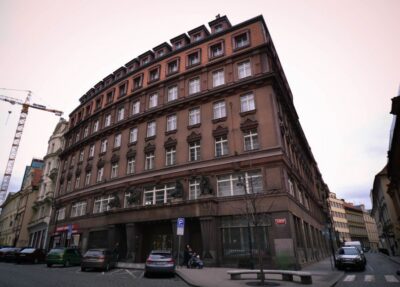
Communism History and Nuclear Bunker Guided Tour
Read our review →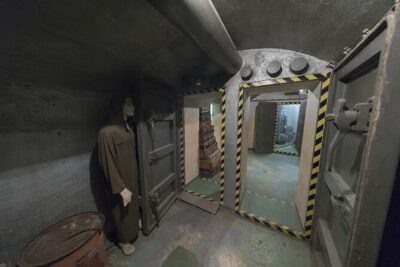
Prague Communism History and Nuclear Bunker Tour
Read our review →
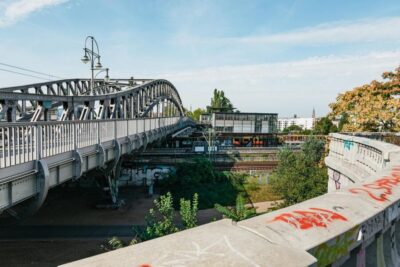
Cold War & Berlin Wall History Guided Bike Tour
Read our review →
Chisinau: Discover Soviet Heritage of Transnistria
Read our review →
Communist History Tour with House of Terror Option
Read our review →
Guided Bike tour of the Berlin Wall and Third Reich
Read our review →
Browse the lists this tour appears in