
Review · HOBART
Hobart History, People & Places – 2 hour city walk
History hides in plain sight here. This two-hour Hobart walk links the waterfront, Hunter Street, city parks, and Salamanca Place while giving you the stories behind the sandstone facades and old streets. I like the small-group format, which makes it easier to ask questions, and I like the leisurely pace, especially for a first look at central Hobart.
The tour costs $27.26 per person, a fair price for a local guide and two focused hours in the city center. The main consideration is that you will be outdoors in all weather, walking on city pavements, and the route may not suit anyone looking for a long stop at each landmark.
Key points to know before booking

- A compact route with real historical range: You cover Hunter Street, the waterfront, city parks, the seat of government, and Salamanca Place in about two hours.
- Small groups make a difference: The tour is described as having up to eight people, although the additional booking information gives a maximum of ten.
- Lisa earns especially warm praise: Her storytelling, use of old photographs and maps, and easy way with questions are repeatedly highlighted. Deb and Jan also lead tours.
- The walking is gentle but continuous: There are places to sit or perch, yet this remains a pavement walk rather than a sightseeing bus tour.
- It goes beyond British settlement: The guide discusses Indigenous people and their responses to the British invasion, alongside convict history and colonial growth.
- It finishes well for first-time visitors: Salamanca Place is a useful final stop, and the guide can suggest nearby cafes for coffee afterward.
Starting beside the waterfront at Hunter Street
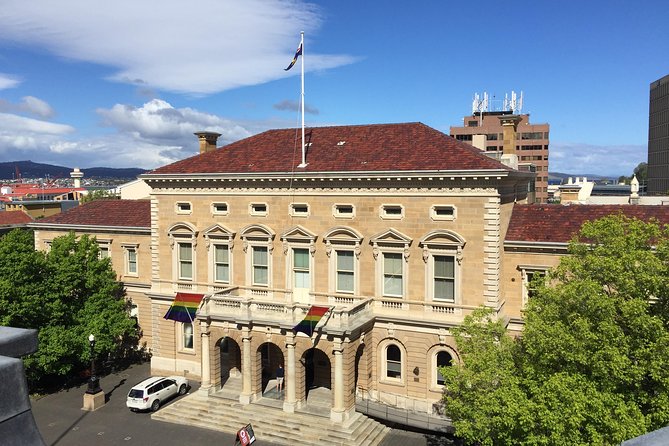
You meet your guide outside the Henry Jones Art Hotel at 25 Hunter Street. This is a sensible starting point because the area puts you close to Hobart’s waterfront and some of the city’s oldest built history from the first minutes of the walk.
The tour is not designed as a parade of postcard stops. Instead, your guide uses streets and buildings as prompts for stories about Hobart’s early years. You look closely at Georgian and Victorian details, many of them on heritage-listed buildings, and learn why the city developed as it did.
I like this approach because old buildings can blur together when you explore alone. A guide can point out the feature you would otherwise walk past, then connect it to the city’s growth, government, trade, settlement, or social life.
The route is especially useful if you have only a short stay in Hobart. Two hours gives you a working map of central Hobart without taking an entire morning or afternoon. You finish at Salamanca Place, so you can continue sightseeing, find lunch, or simply stop for coffee.
More History Walking Tours in Australia
- Ultimate Melbourne Walking Tour: History, Laneways & Culture
★ 5.0 · 1,451 reviews - Sydney: The Rocks 90-Minute History Walking Tour
★ 4.7 · 1,092 reviews - Discover Perth Walking Tour: History, Art, Local Insights + More!
★ 5.0 · 458 reviews
Hunter Street and Hobart’s early buildings
Hunter Street is one of the more useful parts of the walk for anyone interested in Hobart’s physical past. The guide draws your attention to sandstone buildings and preserved facades, with an explanation of the Georgian and Victorian styles visible along the route.
The architectural detail is not treated as decoration alone. You hear about the practical challenges faced by British settlers, as well as their successes, failures, and attempts to establish a city in Tasmania. This gives the buildings some human scale. A wall or doorway becomes part of a story rather than just another heritage label.
The tour also addresses the Indigenous people of the area and their responses to British invasion. That matters because a colonial city walk can easily become a one-sided account of settlement. Here, the past is presented with more than one viewpoint, including the disruption caused by British arrival.
You should expect a conversational history lesson rather than an academic lecture. Lisa is particularly praised for explaining a large amount of material without bombarding you with facts. Her use of maps and historical photographs helps you picture the city at earlier points in its development.
The waterfront and the changing face of Hobart
The waterfront section adds a different mood to the tour. After looking at buildings and streets, you get a sense of how the city connected to the water and how Hobart’s central area grew around that relationship.
This is also where the walk can feel most personal. A smaller group lets you stop for questions, and the guide can respond to what interests you. If you want more detail about settlement, convict history, architecture, or local stories, this is the kind of tour where asking is worthwhile.
The waterfront is not presented as a stand-alone scenic stroll. It is part of a broader explanation of Hobart’s origins and development. That makes the experience more useful than a quick photo stop, though you should not expect a long, unstructured period to wander independently.
One unusual detail is the discussion of Hunter Island. A review of the route specifically praises the stories connected with the area, along with the sandstone buildings. If you enjoy the odd local detail that changes how you see a familiar street, this section should appeal.
Churches, courts, prisons, and the seat of power
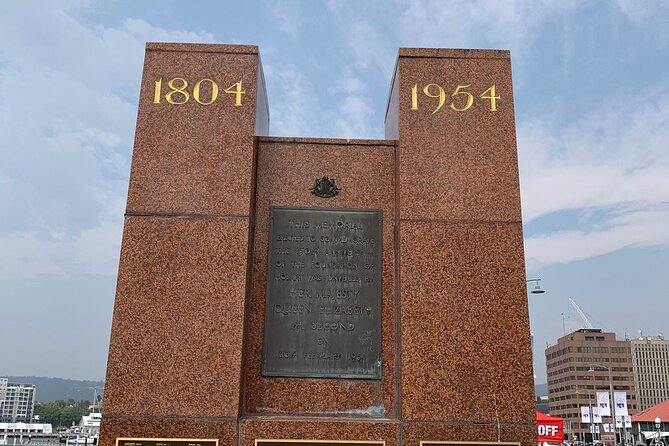
The route then works upward into the part of town associated with political and civic power. Churches, courts, and a prison all enter the story, giving you a clearer sense of how the settlement was governed and controlled.
This part will appeal to anyone interested in convict history. Several comments about the tour point to the founding of Hobart, early Tasmania, and the convict past as major reasons to book. The guide does not just list dates. The aim is to explain how institutions shaped the young city.
I would pay close attention here, because the buildings may look formal and respectable while the stories behind them can be far less comfortable. The contrast between elegant architecture and the hard realities of colonial life is one of the walk’s useful themes.
The route is described as easy and not arduous, but it is still a two-hour walk along pavements. You may find places to sit or perch along the way, which helps, especially if you are managing tired legs or traveling with children. Children must be accompanied by an adult.
Same place, a different slice of the past:
- Puffing Billy Railway: Heritage Steam Train Journey
★ 4.6 · 1,195 reviews - Morning World Heritage Cruise on the Gordon River from Strahan
★ 5.0 · 1,193 reviews - Strahan: World Heritage Cruise on Gordon River with Lunch
★ 4.8 · 1,143 reviews - Experience History onboard The Mary Valley Rattler
★ 5.0 · 963 reviews
City parks, statues, and stories hiding in plain sight

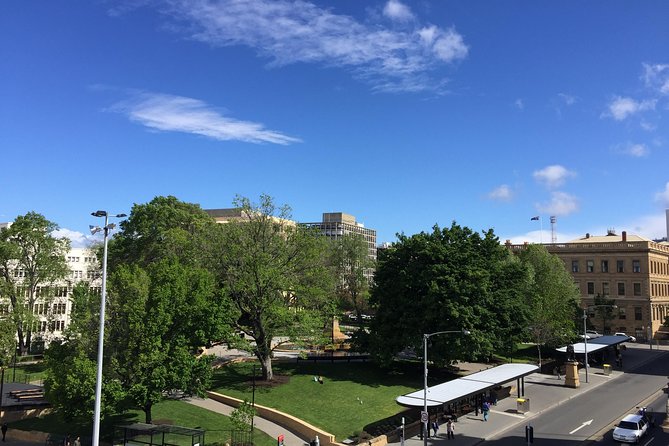
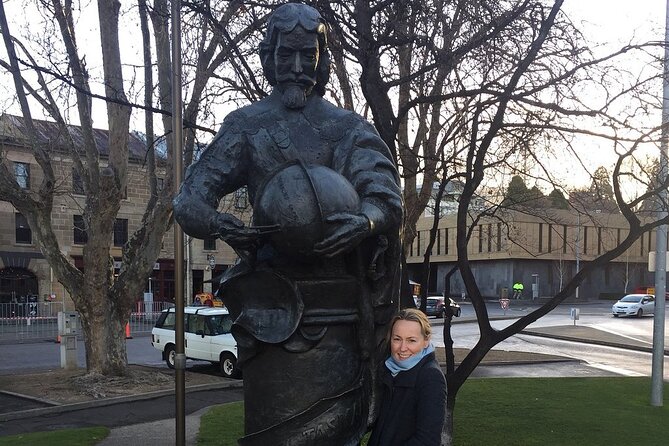
The walk passes through a city-center park where statues become the focus. This is one of the more entertaining sections because the guide explains the people and stories represented by the monuments rather than treating them as background scenery.
You may be surprised by how much a statue can reveal about a city’s values and memory. The tour’s appeal comes partly from these small discoveries. People who already walked through central Hobart without noticing certain details have found that the guide changed how they saw the area.
A second park has a darker secret, one that many locals apparently do not know. The available information does not spell out the secret, and that is probably best. You can expect an unexpected turn in the story, but not a manufactured ghost tour or a theatrical scare session.
The guide’s style is central here. Lisa is repeatedly praised for her humor, clear communication, and ability to turn facts into stories. Deb is also described as informative and funny, while Jan is praised for taking time to explain Hobart’s past. The exact guide depends on the departure, but the emphasis is clearly on local storytelling.
Arriving at Salamanca Place
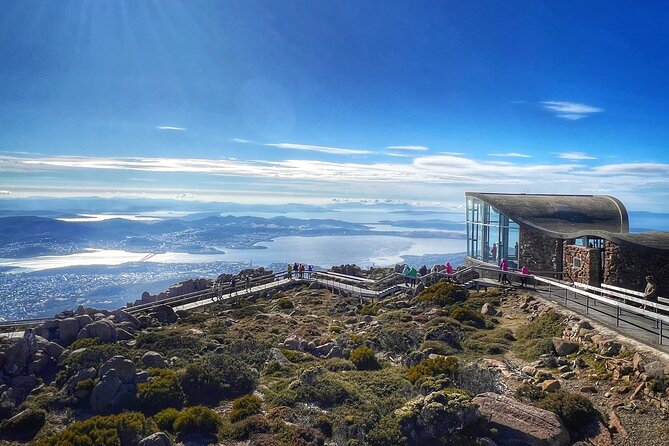
The final stop is Salamanca Place, the best-known endpoint on the route. Its sandstone warehouses and public spaces provide a strong finish because they bring together the architectural and historical threads from earlier in the walk.
Salamanca is famous for its Saturday markets, described here as the oldest markets in Australia. If your tour runs on a Saturday, you may find the area much busier than during a quieter visit, but the market setting also gives you a lively way to continue exploring after the walk.
The tour ends at Salamanca Place rather than returning you to the starting point. That is convenient if you plan to spend more time in the area, though you should remember that hotel pickup and drop-off are not included.
Your guide can recommend cafes for coffee after the tour. This small touch is practical. By the end of two hours, you may want to sit down, compare notes, and decide what to visit next.
The guides and the value of local stories
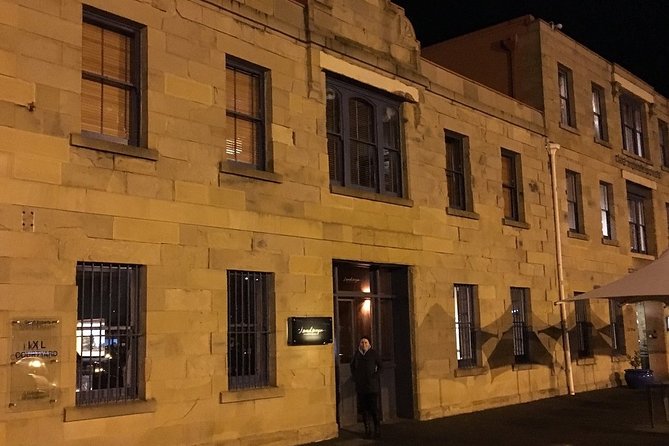
The strongest part of this experience is the guiding. Lisa receives the most praise, with repeated comments about her clear explanations, friendly manner, historical knowledge, and storytelling. She also uses photographs and maps, which can make the past easier to picture while you stand in the modern city.
One useful feature is her willingness to answer questions. A guide who simply recites a script can make a city walk feel flat. The feedback here points to a more responsive experience, with time for questions and photos and a pace that does not feel rushed.
Deb and Jan are also named as excellent guides. Deb is praised for her information and sense of humor, while Jan is described as taking time to show and explain many aspects of Hobart’s past.
The tour has a 4.9 rating from 224 reviews and is recommended by 98 percent of participants. Those figures suggest a dependable experience, though they should not make you expect a private tour or unlimited time at every stop.
Price, group size, and pace
At $27.26 per person, this is strong value if you want an introduction to Hobart rather than a full-day historical program. You are paying for two hours with a local guide, not for transport, food, admission tickets, or a series of indoor attractions.
The format keeps costs down and lets the guide focus on the city streets. For a first morning in Hobart, I think the price makes sense because you get context that can improve the rest of your visit. Buildings, parks, and Salamanca Place will mean more once you know some of their stories.
The group size is intended to be small. The tour description gives a maximum of eight people, while the additional information states a maximum of ten. Either way, this is considerably more personal than a large city group, but you should check the confirmed group limit when booking if that detail matters to you.
The pace is repeatedly described as comfortable, easy, and not arduous. Still, you need to be ready to walk for two hours on pavements. There are places to sit or perch, but this is not a seated sightseeing experience.
Who should book this Hobart walk
I would recommend it to first-time visitors who want a quick orientation before exploring alone. It is also a good fit for history fans, architecture lovers, cruise passengers with limited time, and anyone who prefers stories about people and places over a list of photo stops.
Families may find the manageable length useful, especially since children can take part with an accompanying adult. The content includes colonial history, convict history, Indigenous perspectives, buildings, parks, and local mysteries, so it offers enough variety to hold attention.
The tour is wheelchair accessible, and it operates near public transport. Since the walk uses city pavements and includes places to sit or perch, it may work well for many people with mobility needs, though you should consider your own comfort with a two-hour outdoor route.
You should think twice if you dislike walking, need guaranteed shelter, or want a tour focused only on major landmarks. It operates in all weather, and food and drinks are not included. Dress for the conditions and plan a cafe stop afterward if you want a break.
Booking, cancellations, and weather
You receive confirmation at the time of booking, and a mobile ticket is provided. Service animals are allowed, and most people can participate.
You can cancel for a full refund up to 24 hours before the local start time. Cancellations or changes made inside that 24-hour window are not refunded or accepted. If bad weather causes the tour to be canceled, you are offered another date or a full refund.
Cruise passengers should take special care with timing. A refund is not provided if you miss the walk because your ship arrives late or fails to arrive. If the minimum number of participants is not reached, you are offered another date or experience, or a full refund.
Should you book it?
I would book this tour if you want a well-priced first look at Hobart with a guide who can connect architecture, colonial settlement, Indigenous history, convict stories, parks, and local oddities.
The best reason to go is not simply the number of sights. It is the way the guide helps you notice what is already around you. Lisa appears to be the guide most often singled out, but Deb and Jan also receive strong praise, so the experience does not depend entirely on one person.
Skip it if you want free time at each stop, a covered vehicle, or a detailed visit inside museums and historic buildings. For most visitors with two spare hours, though, the easy pace, small group, strong storytelling, and Salamanca Place finish make this a sensible introduction to Hobart.
FAQ
How long is the Hobart History, People & Places walk?
The walking tour lasts approximately two hours.
Where does the tour start?
It starts outside the Henry Jones Art Hotel at 25 Hunter Street, Hobart.
Where does the tour finish?
The tour ends at Salamanca Place on Salamanca Place.
How much does the tour cost?
The listed price is $27.26 per person.
What places does the route include?
The route includes Hunter Street, the Hobart waterfront, city parks, civic buildings connected with churches, courts and a prison, and Salamanca Place.
Is the tour wheelchair accessible?
Yes, the tour is described as wheelchair accessible. It follows city pavements and has places to sit or perch along the route.
How large is the group?
The tour description gives a maximum of eight people, while the additional information states a maximum of ten travelers.
Is hotel pickup included?
No. Hotel pickup and drop-off are not included.
Does the tour operate in bad weather?
The tour operates in all weather conditions, so you should dress appropriately. If the experience is canceled because of poor weather, you are offered another date or a full refund.
Can I cancel for a full refund?
Yes. You must cancel at least 24 hours before the local start time for a full refund. Cancellations made less than 24 hours before the start are not refunded.
More Two-Hour Tours in Australia
- Darwin: Small Group 2-Hour Heritage Walk
★ 4.9 · 28 reviews - 2-Hour Gettysburg Battlefield Guided History Bus Tour with a National Park Guide
★ 4.5 · 2,201 reviews - Kyoto Gion: 2-Hour Geisha Culture & History Walking Tour
★ 5.0 · 1,186 reviews - 2 Hour LoDo Historic Walking Tour in Denver
★ 5.0 · 1,106 reviews
Just added around Australia
- Historic Battery Point★ 5.0 · 33 reviews
- Cascades Female Factory Historic Site [official]★ 4.5 · 110 reviews
- Cascade Historic Tour★ 5.0 · 38 reviews
- Darwin Heritage Walk★ 4.5 · 101 reviews
- Darwin History and Wartime Experience Tour★ 5.0 · 144 reviews
- Bombing of Darwin WWII Heritage Tours★ 5.0 · 261 reviews
- Private Half Day Tour: World Heritage Rainforest & Waterfall★ 5.0 · 19 reviews
- Historic Village Herberton Family Pass (2A+2C)★ 4.5 · 18 reviews
History Walking Tours, compared.
History and Hauntings of Salem Guided Walking Tour
Read our review →
Freedom Trail History Small Group Walking Tour
Read our review →
Historic Charleston Guided Sightseeing Walking Tour
Read our review →
Tapas Walking Tour with Food, Wine, and History
Read our review →
Savannah History and Haunts Candlelit Ghost Walking Tour
Read our review →
A History of Terror – Belfast City Centre Walking Tour
Read our review →Browse the lists this tour appears in