
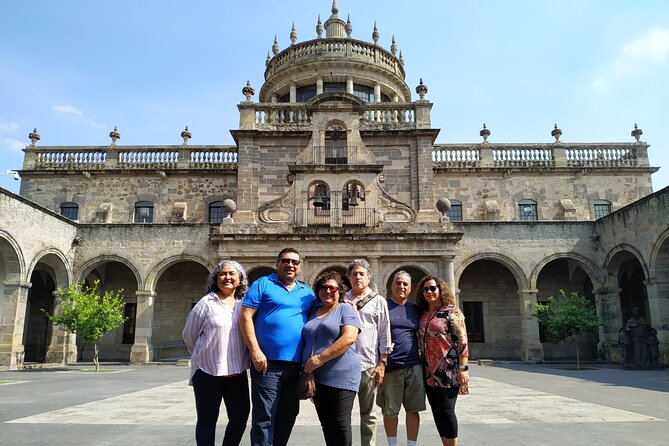
Review · GUADALAJARA
History and Murals: Walking Tour Guadalajara
Guadalajara tells its story in stone, paint, and food. This three to four-hour walk links the city’s grandest churches and plazas with José Clemente Orozco’s powerful murals at the Cabañas Museum, then finishes at Mercado Libertad. I especially like the small group size of up to 15 people and the way the tour mixes religious, political, artistic, and everyday local life. I also like that Cabañas entry is included, so you skip the museum ticket line.
The main drawback is simple: this is a walking tour with plenty of standing. There are no headsets or microphones, and access to the Government Palace and Teatro Degollado depends on local authorities. If you want a quiet, slow museum visit, this pace may feel busy. If you want a smart introduction to central Guadalajara, it offers very good value at $53.05.
Five things to know before you book
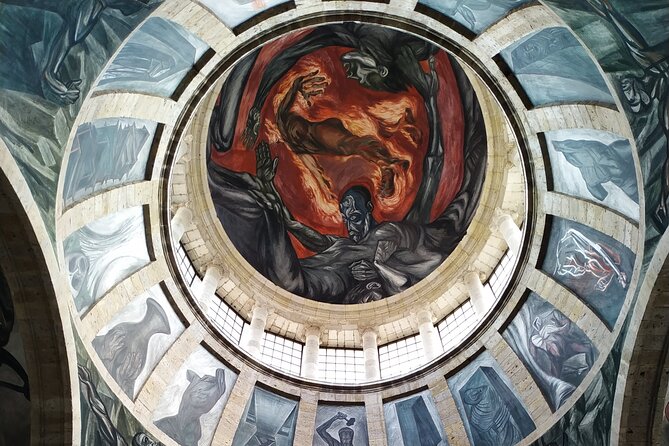
- Orozco’s Cabañas murals are the artistic centerpiece: You get about an hour with 57 frescoes in the former chapel.
- Fernando is the guide to look for: His English, historical background, patience, and clear storytelling receive consistent praise.
- The route covers Guadalajara’s main historic core: You see churches, government buildings, monuments, theaters, plazas, and a major market in one outing.
- The finish is useful, not ceremonial: The walk ends at Mercado Libertad, where you can eat, shop, and continue exploring on your own.
- Plan for standing and weather: The tour starts at 10 a.m., lasts roughly three to four hours, and needs good weather.
Starting at Plaza de Armas at 10 a.m.
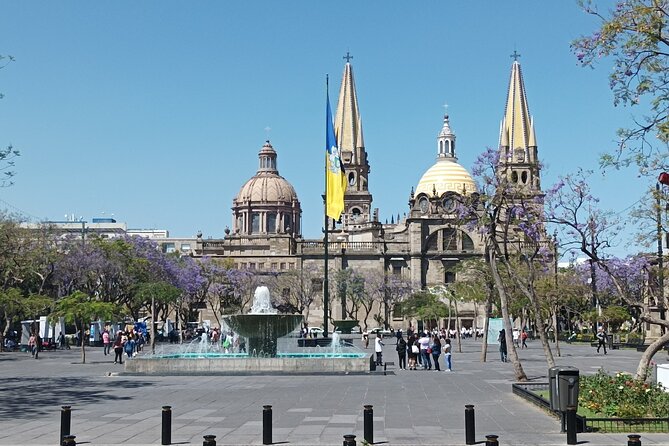
The meeting point is Plaza de Armas, the oldest square in Guadalajara’s historic center. It sits among the city’s most important buildings, making it a sensible place to get your bearings before the walk begins.
This opening stop is brief, about 20 minutes, but it sets up the city’s story. Guadalajara was founded in the 16th century, and the square remains tied to the civic and religious heart of the city. You will likely spend much of this first section standing while Fernando explains how the center was built and how its major institutions fit together.
The 10 a.m. start is practical. It gives you a full morning and early afternoon in the center, but you should still bring water, wear comfortable shoes, and prepare for sun. One useful touch is the guide’s effort to find shade and allow short pauses when possible.
More History Walking Tours in Mexico
- Historic Downtown Walking Tour
★ 5.0 · 1,289 reviews - Mexico City: Historic Downtown Walking Tour
★ 4.8 · 1,039 reviews - Walking Tour of the Historic Center of Mexico City
★ 5.0 · 870 reviews
Churches, stonework, and the city’s first landmarks
The Parroquia El Sagrario Metropolitano is a short but worthwhile stop. Inaugurated in 1839, it was Guadalajara’s first parish built from golden quarry stone. Its neoclassical design offers a different visual character from the cathedral nearby.
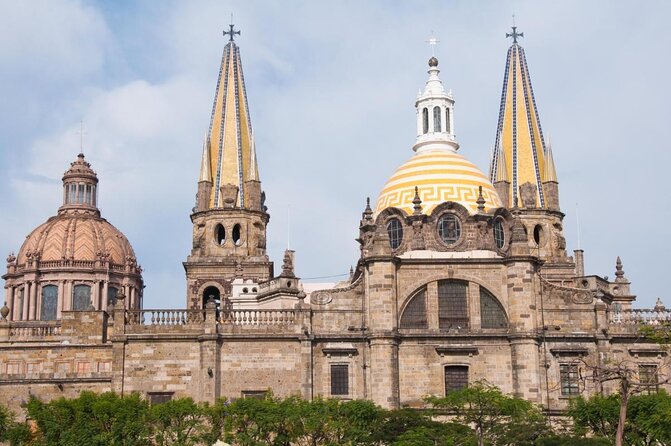
The tour then moves to Guadalajara Cathedral, whose construction began in the 16th century. You see both the exterior and interior of the state’s most important church. The cathedral is not treated as an isolated religious building. Fernando places it within the city’s wider political and social development, which helps keep the church visits from becoming a repetitive parade of facades.
You should expect about 20 minutes here. That is enough for an introduction and a look inside, though not enough for an extended personal visit. If you want time to sit quietly or study architectural details at length, plan to return later.
Next comes the Rotonda de los Jaliscienses Ilustres, a neoclassical monument honoring important men and women from Jalisco. This is a useful pause in the route because it shifts the subject from colonial institutions to regional identity and public memory.
Government buildings and the limits of access
The Guadalajara Municipal Palace appears along the route as a neocolonial building constructed between 1949 and 1952. It serves as the seat of the city’s municipal council. The exact amount of time spent here is not specified, so treat it as an exterior point of interest unless access is available.
The Palacio de Gobierno del Estado de Jalisco is one of the more important stops. Opened in 1790, it has served as a court during the viceregal period, a military barracks, and the home of the Jalisco congress. Inside, the main staircase contains a mural by José Clemente Orozco.
That mural is one reason this building matters so much to the tour. However, entry is not guaranteed. Access depends on state government rules, and current closures connected with preparations for the 2026 FIFA World Cup have affected visits. If the doors are closed, the guide can still explain the building and its place in Guadalajara’s past, but the indoor mural experience will be missing.
This uncertainty is worth understanding before you pay. The tour includes Cabañas as its reliable major art stop, but the Government Palace should be considered a possible extra rather than a promise.
Plaza de la Liberación and Teatro Degollado
Plaza de la Liberación dates from the 1950s and honors Mexican independence. It is another open public space where Fernando can connect national events with Guadalajara’s civic identity.
The Teatro Degollado is a highlight for architecture lovers. Opened in 1866 during the Reform War, it is regarded as the city’s leading theater for beauty and acoustics. Even if you only see the exterior, the building gives the route a strong cultural focus.
Interior access is also subject to availability. That means the theater may be viewed from outside on some departures. The tour allows about 10 minutes here, so do not expect a performance, long architectural study, or a full backstage visit.
A useful practical detail is the short break at Café Degollado. It lasts about 15 to 20 minutes and gives you time to use the restroom, drink water, and rest your feet. For a mostly standing walk, that small pause makes a real difference.
Same place, a different slice of the past:
- Historic Center Food Tour in Mexico City
★ 5.0 · 1,263 reviews - Mexico City Historical Centre Food Tour with 7 Authentic Tastings
★ 5.0 · 723 reviews - Historical and Cultural Walking Tour of San Miguel de Allende
★ 5.0 · 641 reviews - Historical and Cultural Walking Tour of San José del Cabo
★ 5.0 · 576 reviews
Plaza Fundadores and Plaza Tapatía
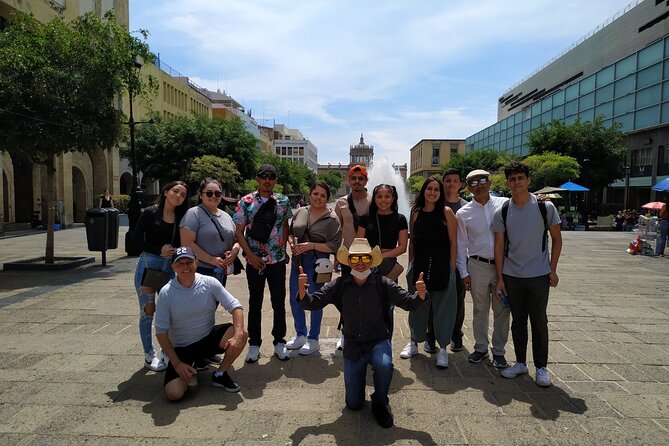
Plaza Fundadores marks the foundation of Guadalajara in 1542. Its bronze sculpture, made by local artisan Rafael Zamarripa, honors the city’s founders. This is a compact stop, but it helps connect the modern city with its founding story.
The route then crosses Plaza Tapatía, the largest and newest square in the historic center. Built in the 1970s, it focuses on commerce, public space, and handicrafts. The change in scale is noticeable. Earlier plazas feel tied to church and government; Plaza Tapatía points toward shopping, city life, and the market district ahead.
You will see these spaces on foot rather than from a vehicle, so you get a clearer feel for how the center connects. The walk also gives you chances to ask questions about buildings and street life instead of receiving only a fixed speech at each stop.
Cabañas Museum and Orozco’s 57 frescoes
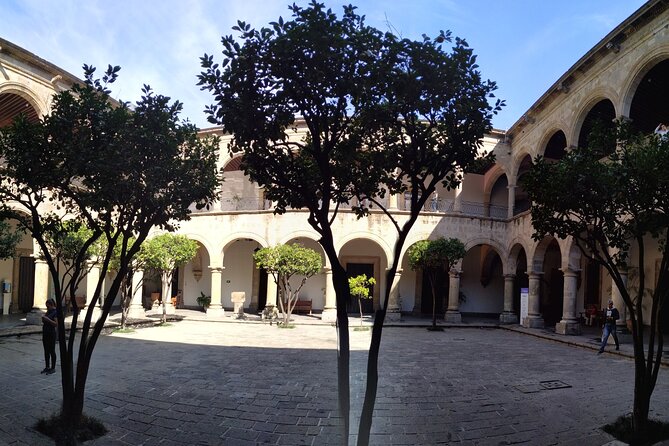
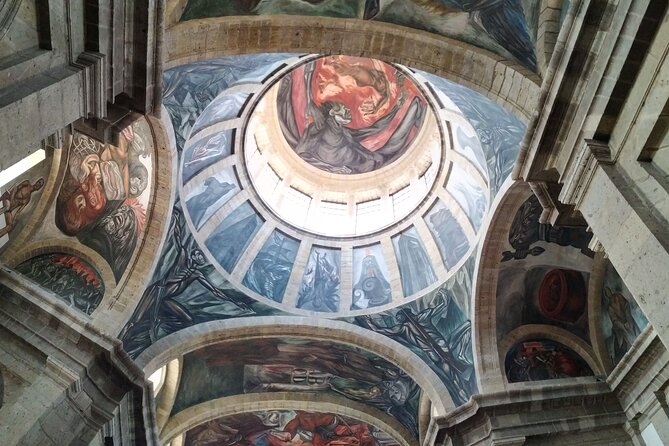
Museo Cabañas is the heart of the experience. You receive admission and spend about an hour inside, viewing José Clemente Orozco’s 57 fresco murals in the walls and domes of the main chapel.
Orozco is one of Mexico’s three major muralists, and these works are far more than decorative paintings. Their scale, subject matter, and placement make the chapel itself part of the artwork. The central images can feel forceful and unsettling, which is exactly why the guide’s approach matters.
Fernando often gives you time to look first, then explains the mural program and its ideas. That order is smart. You get a chance to form your own response before hearing the historical and artistic context. His explanations focus not only on what appears in the frescoes, but also on the political and social realities behind them.
This is where the tour earns much of its price. A museum ticket alone is only one part of the cost. The practical value comes from having the murals explained in English by someone who can connect Orozco’s work to Guadalajara, Jalisco, and Mexico’s wider history.
Still, do not expect a scholarly art seminar. The museum visit is one hour within a larger city walk, and the route has many other subjects to cover. Art lovers may want to return for more time after the tour.
Ending with food and shopping at Mercado Libertad
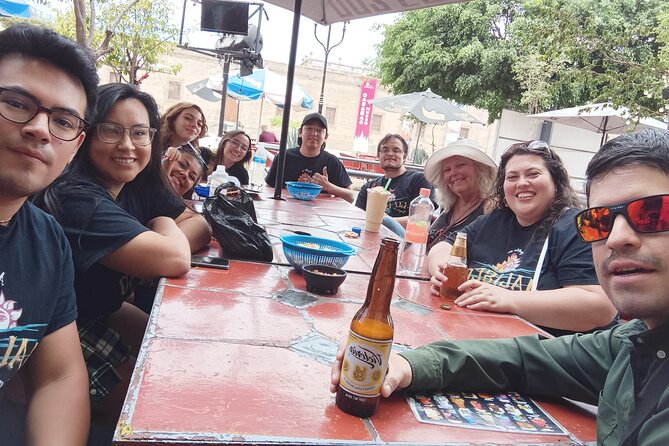
The final stop is Mercado Libertad, also called San Juan de Dios Market. It is described as the largest traditional market in Guadalajara and the largest of its kind in Latin America. The market sells typical food, regional crafts, souvenirs, and many everyday goods.
The official stop is about 15 minutes, but the tour ends here, so you can stay longer on your own. This is one of the best design choices in the route. You finish somewhere useful instead of being returned to the starting plaza with no clear next step.
Fernando can point you toward local specialties such as birria and tortas ahogadas. You may also have the chance to try tejuino, a traditional drink that one guest particularly enjoyed. These food suggestions add a local layer to a day otherwise centered on monuments and murals.
Keep your expectations practical. Mercado Libertad is a working market, not a polished food hall. That is part of its appeal, but it can also feel crowded and intense. Use the short guided visit to get oriented, then decide how much time you want to spend eating or shopping.
What the $53.05 price really covers
At $53.05 per person, this is not the cheapest way to walk around central Guadalajara. You can see many plazas and exteriors without paying for a guide. The question is what you would miss without one.
The fee covers an English-language guide, entry to Cabañas Museum, and a planned route through the main historic center. You also receive context for buildings that can otherwise blur together, especially if this is your first visit. With a maximum of 15 people, the group is small enough for questions, though it is not a private tour.
I think the price is fair for first-time visitors who want structure and explanation. It is less compelling for repeat visitors who already know the center and mainly want to browse at their own speed. The included museum entry is important, since Cabañas is the one stop where a guide adds clear value beyond simply pointing at a building.
The tour is often booked about 16 days ahead, so reserving early is sensible if your dates are fixed. Free cancellation is available up to 24 hours before the start time. If bad weather or an insufficient number of bookings cancels the experience, you can choose another date or receive a full refund.
Who will enjoy this walk most?
I would choose this tour for a first visit to Guadalajara, especially if you have only a short stay. It gives you a useful framework for the historic center and leaves you at a market where you can continue exploring.
It is also a strong choice for anyone interested in Mexican mural art, architecture, or political history. Fernando’s best quality is his ability to connect separate subjects. Churches, government offices, public monuments, Orozco’s murals, and market food become parts of one city story.
Families can manage the route, and most people can participate, but the walk includes substantial standing. Couples and solo visitors who enjoy asking questions should appreciate the small group. The tour is offered in English, and Fernando is praised for speaking clearly and patiently.
I would hesitate to book it if you dislike guided commentary, need frequent sitting breaks, or want guaranteed entry to every building. Government closures can change the indoor portion of the day, and there are no audio devices to help if you fall behind or have trouble hearing.
Final verdict: book it for context, not just sightseeing
You should book History and Murals: Walking Tour Guadalajara if you want the city explained, not simply photographed. The strongest combination is the small group, Fernando’s engaging English commentary, the included Cabañas entry, and the finish at Mercado Libertad.
Go in ready to walk, stand, listen, and adjust if government buildings are closed. If you do, this is a well-shaped introduction to Guadalajara, with enough food, art, architecture, and local perspective to make the center easier to understand for the rest of your stay.
FAQ
Where does the tour begin?
It begins at Plaza de Armas in Guadalajara’s Zona Centro, at 10 a.m.
Where does the tour end?
It ends at Mercado Libertad, also known as San Juan de Dios Market, at C. Dionisio Rodríguez 52.
How long does the walking tour last?
The experience lasts approximately three to four hours.
What language is the tour offered in?
The tour is offered in English.
Is admission to Museo Cabañas included?
Yes. Admission to Cabañas Museum is included, with about one hour allotted to see Orozco’s murals.
Is admission to the Palacio de Gobierno included?
No. Access is subject to state government availability, and entry is not guaranteed.
Is admission to Teatro Degollado included?
No. Access depends on the indications of local authorities.
How large is the tour group?
The maximum group size is 15 travelers.
Is the tour suitable for most people?
Yes. Most people can participate, but the experience involves walking and standing for much of the route.
What happens if the tour is canceled because of weather?
You can choose a different date or receive a full refund if poor weather causes the cancellation.
Just added around Mexico
- Culture, History and Food in Oaxaca City★ 5.0 · 43 reviews
- Bicycle Tour through Oaxaca learning about its Urban Art and History★ 5.0 · 78 reviews
- Oaxaca city bike ride – History & traditions★ 5.0 · 25 reviews
- Walking Tour in Historic Center CDMX★ 5.0 · 50 reviews
- Walking Tour – Impressive murals in Historical Center of Mexico City★ 5.0 · 224 reviews
- Food and Historic Walking Tour: Private Tortilla Crawl in Mexico City Downtown★ 5.0 · 35 reviews
- Best PRIVATE TOUR of Legends and Events in the Historic Center★ 5.0 · 33 reviews
- The real “Dia de muertos” tour in Mixquic + secret cemetery★ 4.0 · 27 reviews
History Walking Tours, compared.
History and Hauntings of Salem Guided Walking Tour
Read our review →
Freedom Trail History Small Group Walking Tour
Read our review →
Historic Charleston Guided Sightseeing Walking Tour
Read our review →
Tapas Walking Tour with Food, Wine, and History
Read our review →
Savannah History and Haunts Candlelit Ghost Walking Tour
Read our review →
A History of Terror – Belfast City Centre Walking Tour
Read our review →Browse the lists this tour appears in