Review · MEXICO CITY
Walking Tour – Impressive murals in Historical Center of Mexico City
Murals turn Mexico City history into something you can see. This walking tour links three major art sites in the Historic Center, pairing Diego Rivera masterpieces with stories about Mexican politics, Indigenous culture, revolution, and the artists who shaped modern Mexico. I especially like the chance to enter historic buildings rather than view murals only from the street, and the way guides such as Balaam and Miguel explain symbols that can be easy to miss.
The tour also gives you two useful choices: morning or afternoon departure, and a flexible route that can adapt to the day’s museum schedule. The main drawback is practical: you may walk for nearly three hours, and the Ministry of Public Education is closed on Tuesdays, so the exact stops change. A larger group can also make it harder to hear every explanation.
Key points to know before booking
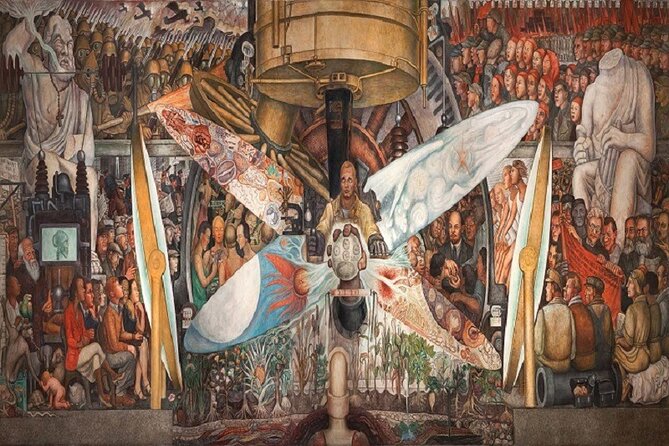
- See three important mural sites: Visit the Former College of San Ildefonso, the Ministry of Public Education, and Palacio de Bellas Artes, with a Tuesday replacement for the ministry.
- Expect art with political meaning: Guides explain how the murals connect to the Mexican Revolution, Indigenous traditions, religion, social class, and labor.
- Start at a historic school: San Ildefonso is tied to the birth of Mexican muralism and the first mural painted by Diego Rivera.
- Allow up to three hours on foot: Comfortable shoes matter, and the route may be demanding for slow walkers.
- Look for strong guiding: Balaam and Miguel receive repeated praise for their art knowledge, clear explanations, warmth, and ability to answer questions.
- Check the Tuesday schedule: The Ministry of Public Education does not open that day, so the route includes another Diego Rivera mural site instead.
Why Mexico City muralism works best with a guide
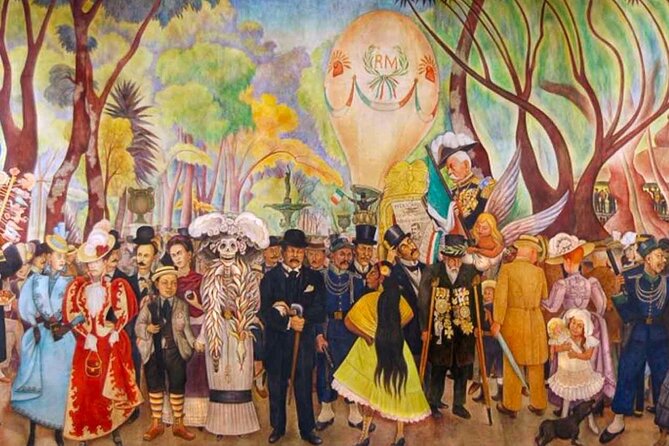
Mexico City’s murals are not simple wall decorations. They are packed with people, symbols, historical events, religious references, political arguments, and social criticism. Without context, you may admire the colors and scale but miss why a particular worker, politician, Indigenous figure, or revolutionary appears in the scene.
That is the main value of this tour. A good guide gives you a way to read the art. Balaam is praised for explaining the political and social forces behind muralism from the 1920s through the 1960s. Miguel is especially appreciated for connecting the art to the city streets, nearby architecture, archaeological remains, churches, and local food.
The strongest guides do not treat the murals like a school lecture. They answer questions, explain recurring symbols, and adjust the pace when the group needs a break. One small-group experience even included help arranging a street-food snack, while another adapted the route after a protest temporarily closed the Ministry of Public Education.
The tone can vary by guide and group size. A group of about a dozen people may feel crowded in front of the most important scenes, and one visitor found the English difficult to follow at times. Still, the overall rating is 4.9 from 224 ratings, and 98 percent of customers recommend the experience. The repeated praise centers on the guides’ passion and ability to make complicated art accessible.
More History Walking Tours in Mexico
- Historic Downtown Walking Tour
★ 5.0 · 1,289 reviews - Mexico City: Historic Downtown Walking Tour
★ 4.8 · 1,039 reviews - Walking Tour of the Historic Center of Mexico City
★ 5.0 · 870 reviews
San Ildefonso and Diego Rivera’s first mural
The tour begins at the Former College of San Ildefonso on Justo Sierra Street. This old school building is important not only for its architecture but also for its place in the story of Mexican muralism.
Inside, you see La Creación, Diego Rivera’s first mural. It decorates the college amphitheater, a setting that adds a personal layer to the visit. Rivera met a teenage Frida Kahlo here, long before both artists became international figures.
You get about 30 minutes at this stop, with admission included. That is enough time for an introduction to the building, a close look at the mural, and an explanation of how Rivera’s early work fits into the wider movement.
I would pay attention to how the guide introduces Rivera before the tour reaches his later works. This first mural helps you see the development of his style and ideas. It also gives you a useful starting point for the broader themes that return throughout the walk: religion, national identity, Indigenous culture, and the place of ordinary people in Mexican history.
The stop is not only for committed art students. If you know little about Mexican muralism, San Ildefonso provides a clear first chapter. If you already admire Rivera, the Frida Kahlo connection and the mural’s setting add a personal detail that you would not get from viewing reproductions online.
The Ministry of Public Education’s enormous mural courtyards
When the schedule permits, the Ministry of Public Education is the tour’s largest mural experience. Its Fiestas and Trabajo courtyards contain more than 3,000 square meters of murals, including work by Diego Rivera, Jean Charlot, Amado de la Cueva, and Roberto Montenegro.
This is not a single famous wall. It is a broad collection spread through the building, which makes the visit feel more like a walk through a visual record of Mexican society. The courtyards show Rivera’s interest in labor, celebrations, social groups, and the people who helped build the country.
You have about 40 minutes here, and admission is included. The building also contains two rooms dedicated to muralism, a multisensory hall with artistic and historical objects, a library, a children’s reading room, a Fondo de Cultura Económica bookstore, and a café. You may not have time to use every facility, but knowing they are there helps explain why this stop can take up a large part of the route.
The sheer amount of art is both the pleasure and the challenge. You will see far more than you can absorb in one quick glance, so the guide’s selection matters. Balaam is often praised for pointing out symbols and explaining the social and political setting behind individual scenes. That guidance keeps the courtyard from becoming a blur of figures and color.
The ministry is closed on Tuesdays. On that day, the tour substitutes the Diego Rivera Mural Museum. The replacement still keeps the focus on Rivera and Mexican muralism, but it is not the same experience as walking through the ministry’s courtyards. If the ministry is your main reason for booking, do not choose Tuesday.
Walking through the Historic Center to Bellas Artes
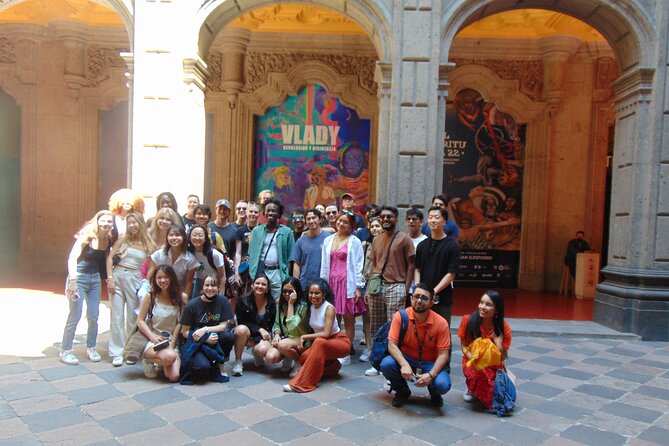
Between the buildings, you are walking through Mexico City’s Historic Center. Transportation is not included, and the route is designed as a walking experience, so you should plan for extended time on your feet.
The walk adds value because the murals do not exist in isolation. The guides may point out architecture, churches, public squares, archaeological excavations, and details of daily life along the way. Miguel is particularly praised for adding this city context and recommending street food.
The pace can be manageable for most people, but it is not a short museum visit. One person described the route as ambitious for a slower walker and appreciated taking an e-bike taxi to the final stop. Another advised wearing comfortable shoes after finding there was plenty to see and a lot of ground to cover.
The group limit is 25 people. That is smaller than a large sightseeing coach group, but it is not always intimate. A small group can make it easy to ask questions and hear the guide. A larger group may require you to stay close and move toward the front when the guide stops.
More Old Town and Historic Centre Walks in Mexico
- Historic Center Food Tour in Mexico City
★ 5.0 · 1,263 reviews - Mexico City Historical Centre Food Tour with 7 Authentic Tastings
★ 5.0 · 723 reviews - Walking Tour Across the Historic Center in Merida
★ 5.0 · 177 reviews - Private Walking Tour Gems of the Historic Center of Mexico City
★ 5.0 · 87 reviews
Palacio de Bellas Artes and its famous mural collection
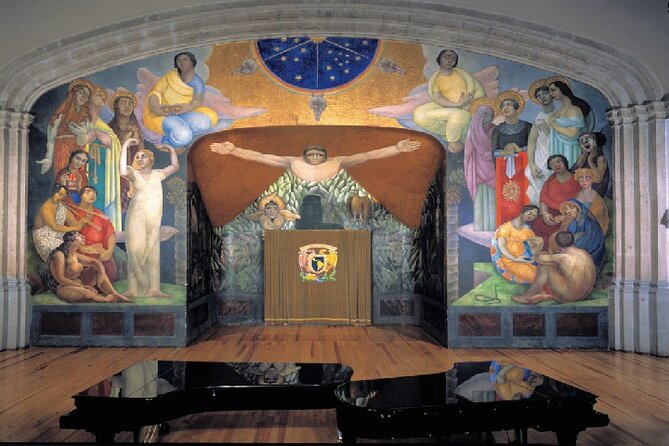
The final scheduled stop is Palacio de Bellas Artes on Juarez Avenue. The building itself is one of Mexico City’s major cultural landmarks, and its museum opened at the same time as the building. It hosts exhibitions, dance, theater, and other performances.
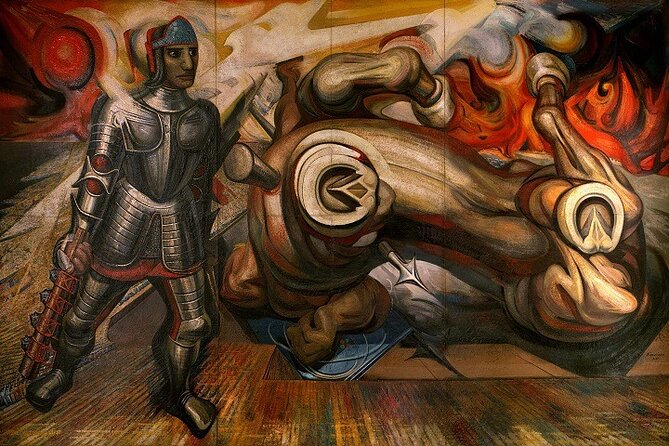
For this tour, the key attraction is the murals inside. Several Mexican artists with international reputations were commissioned to paint the building’s walls shortly before its inauguration in 1934. The collection includes major works by Rivera and other muralists, including David Alfaro Siqueiros and José Clemente Orozco.
You receive about 40 minutes here. That is enough for focused interpretation, but not enough to study every work in detail or fully explore the entire cultural complex. The guide helps you choose what matters most and explains how the murals relate to the political and social setting of their time.
One of the most useful parts of the Bellas Artes stop is seeing Rivera’s work alongside other artists. Rivera, Orozco, and Siqueiros did not all approach muralism in the same way. Comparing their subjects, tone, and use of figures gives you a better sense of the movement than seeing only one artist’s work.
Admission to Bellas Artes is listed separately from the included museum tickets, so confirm exactly what is covered for your departure. The tour ends here, near Alameda Park and public transportation, making it easy to continue sightseeing in the Historic Center afterward.
What the guides add to the experience
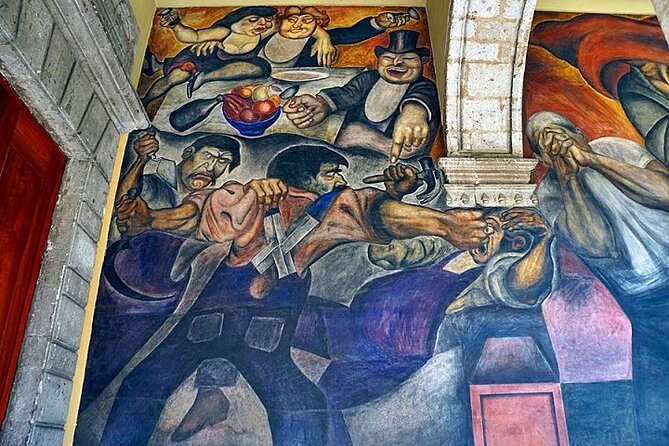
The guides are the main reason this tour earns such strong marks. Balaam is repeatedly praised for his passion for Rivera and Orozco, his grasp of Mexican art and politics, and his ability to answer questions. He also receives credit for helping people understand Aztec origin stories and Indigenous religious themes within the murals.
Miguel is praised for an energetic style and a broad knowledge of Mexican history, art, and city life. He has been described as flexible when a group wants to spend more time on certain subjects, while still covering the essential sites.
That flexibility is useful because the tour can become more than a mural walk. You may hear about the Mexican Revolution, the relationship between church and state, the conquest, labor movements, national identity, and the political positions of Rivera. These subjects explain the art, but they also make the tour feel like a short course in twentieth-century Mexico.
The experience may suit you less if you want a quiet, self-directed museum visit. Guides are active interpreters, and several hours of explanation can feel intense if you prefer to move quickly. Clear communication also depends on the individual guide. One person found the English understandable but occasionally difficult during questions.
Is $51 a fair price?
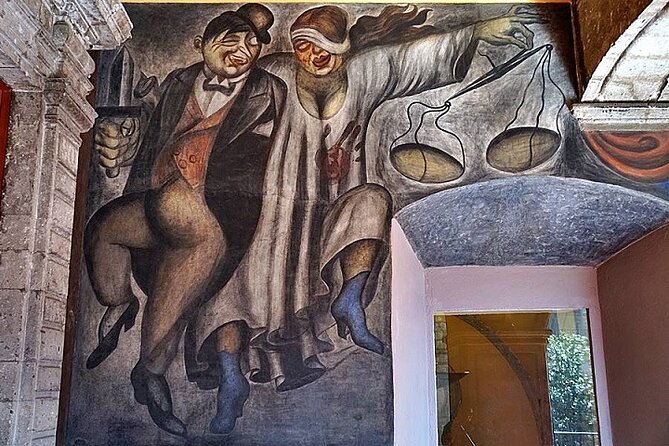
At $51 per person, this is not the cheapest way to see murals in Mexico City. You are paying for a guide, museum admission at the included sites, and a planned route through several buildings that would otherwise require your own research and navigation.
The price makes the most sense if you want interpretation. The murals are free or inexpensive to look at in some places, but understanding their symbols and political background is much harder without help. The tour also saves you from piecing together several locations in the Historic Center.
Value depends on the group size and the exact Tuesday route. A small group can feel like a private art lesson, especially when the guide has time for questions. A group near the maximum of 25 may offer less personal attention.
The experience is often booked about 16 days ahead, so reserve early if you have a fixed morning or afternoon schedule. Group discounts may be available, which could improve the cost for families or larger parties.
Who should book this mural walk?
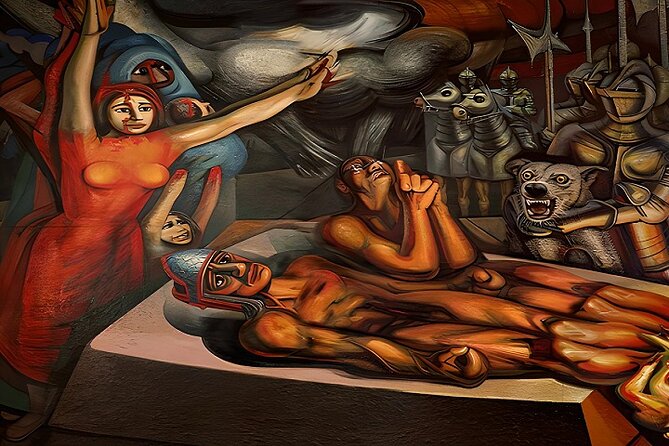
I would choose this tour if you want to understand what you are seeing, not just photograph it. It is a strong match for art lovers, first-time visitors to Mexico City, and anyone interested in the country’s political and cultural changes during the twentieth century.
It also suits a short visit. If you have only a day or two in the city, the tour gives you a focused route through major art sites and the Historic Center. Several people have used it as an early activity because the explanations help make later visits to Mexico City’s museums and historic buildings easier to understand.
Families can enjoy it, though younger children may find three hours of art discussion demanding. Couples and solo visitors benefit from the option to ask questions, especially in a small group.
I would hesitate if you have difficulty walking for several hours, dislike group touring, or want guaranteed access to the Ministry of Public Education on a Tuesday. The route is practical, but it is not effortless. Wear supportive shoes, stay near the guide, and allow extra time if the discussion runs long.
FAQ
How long does the mural walking tour last?
The experience lasts approximately one to three hours. Many visits run close to three hours because the route includes several buildings, walking between sites, and detailed explanations.
Where does the tour begin?
The tour begins at the Former College of San Ildefonso, Justo Sierra 16, in Mexico City’s Historic Center.
Where does the tour end?
The tour ends at Palacio de Bellas Artes on Avenida Juarez in the Historic Center.
Is the Ministry of Public Education open every day?
No. The Ministry of Public Education is closed on Tuesdays. On Tuesdays, the tour visits the Diego Rivera Mural Museum instead.
Is transportation included?
No. Transportation is not included. The experience is primarily a walking tour, and some people may find the route demanding.
Can I cancel for a full refund?
Yes. You can cancel at least 24 hours before the start time for a full refund. Cancellations or changes made within 24 hours are not refunded or accepted.
Should you book it?
Book this tour if you want the murals explained in plain language and tied to Mexico’s politics, Indigenous traditions, and city life. The strongest guides, especially Balaam and Miguel, can turn a collection of painted walls into a connected story.
The best choice is a morning or afternoon when the Ministry of Public Education is open, unless the Diego Rivera Mural Museum is your preferred substitute. At $51, the tour is worth it for interpretation and convenience, especially with a small group. Just bring comfortable shoes, allow up to three hours, and expect an active art lesson rather than a quick photo stop.
Just added around Mexico
- Culture, History and Food in Oaxaca City★ 5.0 · 43 reviews
- Bicycle Tour through Oaxaca learning about its Urban Art and History★ 5.0 · 78 reviews
- Oaxaca city bike ride – History & traditions★ 5.0 · 25 reviews
- Walking Tour in Historic Center CDMX★ 5.0 · 50 reviews
- Food and Historic Walking Tour: Private Tortilla Crawl in Mexico City Downtown★ 5.0 · 35 reviews
- Best PRIVATE TOUR of Legends and Events in the Historic Center★ 5.0 · 33 reviews
- The real “Dia de muertos” tour in Mixquic + secret cemetery★ 4.0 · 27 reviews
- 10 wonders of the Historic Center of Mexico City food and music★ 5.0 · 67 reviews
Old Town & Historic Centre Walks, compared.

Live Fado Show with Port Wine in Historic Center
Read our review →
Valencia Old Town Tour with Wine & Tapas in 11th Century Historic Monument
Read our review →
Prague Old Town, Medieval Underground and Dungeon Historical Tour
Read our review →
Historic Center and Getsemaní Shared Walking Tour
Read our review →
Old Town Walking Tour History and Tales in Edinburgh
Read our review →
Philadelphia Old City Historic Walking Tour with 10+ Top Sites
Read our review →