
Review · GENOA
2 Hours Private Historical Tour in Genoa
Genoa rewards curious walkers. This two-hour private tour uses an electric rickshaw to thread through the old center, linking churches, palaces, squares, and the harbor without asking you to wrestle with a map. I especially like the small-group format for up to two people and the way local guides such as Eleonora, Yusuf, Giulia, Sophie, and Beatrice bring personal knowledge to the route. The main caution is that the vehicle has had mechanical problems on some outings, including flat tires and delays.
I also like the practical shape of the tour: it begins near the cruise terminal at Galata Museo del Mare and returns there, making it useful for a short port call. You get a quick orientation before deciding which corners deserve more time on foot. The price is $114.93 per group, not per person, so it offers fair value for a couple, though the two-hour visit moves briskly and does not include extended time inside attractions.
Key points to know before booking
- The route reaches places that are awkward to connect on foot, including Sarzano Square, the medieval lanes, Via Garibaldi, and the Old Port.
- The tour is private for up to two people, giving you a more personal ride than a large group excursion.
- The meeting point is simple for cruise passengers, in the square outside the terminal exit at Galata Museo del Mare.
- Most stops are brief exterior visits, so treat this as a city orientation rather than a museum tour.
- The guides are a major strength, with repeated praise for Eleonora, Yusuf, Giulia, Sophie, Beatrice, Gavino, and others.
- Allow extra flexibility for weather and equipment, since the activity requires good weather and a few outings have been delayed by vehicle trouble.
Why an electric rickshaw works well in Genoa
Genoa’s historic center is a maze of narrow streets, steep lanes, old churches, and sudden little squares. That is part of its appeal, but it can be tiring to cover quickly, especially during a cruise stop. An electric rickshaw lets you sit back while your guide handles the route and traffic.
You are not pedaling, despite the occasional description of the vehicle as a pedal bike or pedi-bike. The reviews describe electric rickshaws and similar small vehicles. The key benefit is simple: you can look up at the architecture instead of watching your phone for directions.
This is also a good first activity in Genoa. The city can feel confusing at street level, with major sights tucked behind plain-looking passages. A local guide can point out places you might otherwise miss, then you can return later for a slower visit.
The tour is private, so you are not sharing the ride with a busload of strangers. For two people, the listed price works out to about $57.47 each. That is reasonable for a private two-hour ride with a guide, particularly if you are in port for only a few hours and want to cover ground without exhausting yourself.
The tradeoff is pace. Ten minutes at a stop gives you time for a look, a short explanation, and photos, but not a full examination of every building. Think of this as a moving introduction to Genoa, not a replacement for visiting the cathedral, museums, or palaces at length.
More Private History Tours in Italy
- Ancient Ostia Antica Semi-Private Day Trip from Rome by Train with Guide
★ 4.5 · 579 reviews - Colosseum & Ancient Rome Semi-Private Tour
★ 5.0 · 208 reviews - Ancient Pompeii Private Tour: Skip the Line & Kid-Friendly Option
★ 5.0 · 167 reviews
Starting at Sarzano Square and Genoa’s early core
The ride begins at Galata Museo del Mare, with the driver waiting in the square in front of the terminal exit. From there, the route heads into the old city and starts at Piazza Sarzano.
Sarzano is associated with Genoa’s earliest nucleus, known in ancient times as Ianua. It gives you a useful sense of the city before the grand palaces arrived. Look for the bell tower of Sant’Agostino church, the small temple, and colorful Ravecca Street behind the square.
The 15-minute stop is long enough for your guide to set the scene and explain how the old center developed. It is also a good place to begin taking photos because the square shows several layers of Genoa at once: religious buildings, tight urban streets, and the warm colors of the surrounding houses.
From here, you continue to the Church of Santi Cosma e Damiano. The stop is listed at only five minutes, so expect a quick look rather than a long church visit. That short pause fits the general style of the tour: the guide shows you the setting, gives you a reason to care, and keeps the vehicle moving.
Medieval lanes around Santi Cosma e Damiano
The Church of Santi Cosma e Damiano sits in the medieval historic center, where the reward is often the street itself as much as the formal sight. Genoa’s old lanes can reveal details that are easy to overlook when you are focused on reaching a major square.
This section is especially useful if you have limited mobility or only a short amount of time. The rickshaw can reach areas that feel cramped for larger vehicles, and you do not have to spend the morning climbing and descending streets.
Still, do not expect a detailed interior tour here. The itinerary gives five minutes to the church, and the activity is mainly about seeing the historic setting from the vehicle. If a particular church catches your eye, note it for a later visit.
Via Garibaldi and the grand palaces
Via Garibaldi provides a sharp change of mood. The street began as Strada Maggiore, later became Strada Nuova, and was known for centuries as Via Aurea, or the Golden Street. It took its current name in 1882 in honor of Giuseppe Garibaldi.
This is one of Genoa’s grand architectural stretches, lined with imposing palaces and gardens. The contrast with the narrow medieval lanes makes the city easier to understand. Genoa was not only a port of cramped passages and working streets. It was also a powerful city where wealthy families built homes meant to impress.
The 15-minute stop gives you time to take in the façades and listen to the guide’s explanation. The ride is most valuable here when your guide connects the buildings to the city’s political and commercial past instead of simply naming them.
The limitation is that the route does not include a stated interior visit to the palaces. If you want to see the famous collections inside places such as the Strada Nuova museums, plan a separate visit after the ride and check opening details for your date.
Same place, a different slice of the past:
- Colosseum: Underground and Ancient Rome Tour
★ 4.7 · 12,691 reviews - Rome: Colosseum with Arena, Roman Forum and Palatine Guided Tour
★ 4.0 · 5,598 reviews - Venice: St. Mark’s Basilica Guided Tour & VR History Intro
★ 3.9 · 4,880 reviews - Colosseum with Arena, Roman Forum and Palatine Hill Guided Tour
★ 4.5 · 3,526 reviews
Columbus’s house beside Porta Soprana
Near the medieval gate of Porta Soprana, you see the building known as Columbus’s House. It is probably an 18th-century reconstruction of the medieval home where Christopher Columbus spent part of his youth.
The house has two floors. His father, Domenico Columbus, reportedly used the ground floor as a wool-weaving and trading workshop, while the family lived above. Written sources place Columbus there between 1455 and 1470. The original building may have been destroyed during the French fleet’s bombardment of Genoa in 1684.
You get about ten minutes here. That is enough to understand the site and take a photo, but not enough for a long historical discussion unless the traffic and timing happen to work in your favor. The value lies in seeing the modest building in relation to the old walls and gate. It helps bring a famous name down from the level of legend and into the daily life of a medieval neighborhood.
Piazza Banchi and Genoa’s commercial past
Piazza Banchi sits close to one of the city’s important docks. In the 12th century, the square was associated with money changers whose stalls operated under the porticoes. It also served as Genoa’s old grain market.
This stop helps explain why Genoa’s streets are packed so tightly around the harbor. Trade shaped the city. Money, food, shipping, religion, and government all operated within a compact area.
The 15-minute visit should give you time to look at the square’s buildings and imagine the financial activity that once took place beneath the arcades. It is one of those stops where a good guide makes a major difference. The architecture may not announce its story at first glance, but the setting becomes much clearer once you understand what happened there.
San Lorenzo Cathedral and the city’s public heart
The cathedral of San Lorenzo is Genoa’s most important church, and the surrounding area became a central stage for medieval social and political life. The movement of the cathedral and the building of city walls helped make San Lorenzo the heart of the growing city.
The itinerary allows 15 minutes. That is enough to admire the exterior, notice the artistic details, and hear some of the legends connected with the cathedral. It is not a full cathedral visit. If the doors are open and you want to enter, ask your guide how much time the schedule allows, but do not assume the ride includes a long interior stop.
This is one of the places where you should keep your eyes moving. Genoa often rewards close inspection: carved stone, patterned façades, and small details can disappear if you only look at the main doorway.
Giardini Luzzati and Piazza De Ferrari
Giardini Luzzati offers another brief look at the medieval center. The stop lasts about ten minutes, and its appeal is the setting rather than a single major monument. It gives you another chance to see how public spaces fit into Genoa’s older street network.
Then the route reaches Piazza Raffaele De Ferrari, Genoa’s main square. In the center is a large bronze fountain made in 1936 by architect Cesare Crosa di Vergagni. The square is framed by the Teatro Carlo Felice, the Accademia Ligustica di Belle Arti, Palazzo Ducale, the Liguria regional offices, and Palazzo della Nuova Borsa.
The variety here is striking. You see the theater, government buildings, a former stock exchange, and the side of the Doge’s Palace in one open space. The ten-minute stop is short, but it gives you a clean visual break from the narrow lanes and makes an excellent orientation point for later exploring.
Palazzo San Giorgio and the Old Port
Palazzo San Giorgio is one of the historic palaces in the old center. The listed stop lasts ten minutes, so you should expect an exterior view and a short explanation rather than a formal palace visit.
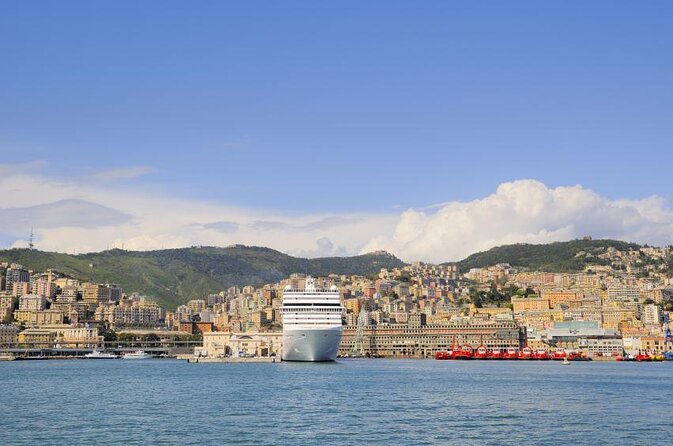
The final stop is the Old Port, where the city opens toward the water. Renzo Piano redesigned the waterfront plaza, which now links harbor views with cultural and recreational attractions. After the tight lanes, this broad waterfront setting feels like a natural release.
The Old Port is also where the tour’s themes come together. Genoa’s identity grew from its relationship with the sea, trade, money, and movement. You get a look at the modern waterfront while still surrounded by the old city’s historic frame.
The port is a good place to continue on your own if your schedule permits. You can use the tour as a guide to what deserves a longer stop, though the activity itself returns to the original meeting point at the terminal.
What the guides add to the ride
The strongest part of this experience is the guide. Eleonora receives repeated praise for her local knowledge and warm manner, and one account describes her as an ideal guide because she grew up in Genoa. Yusuf is also praised for his city knowledge, humor, safe driving, and easy conversation.
Giulia is another strong choice when available. Her local connection helped make the tour feel personal, while Sophie was praised for clear explanations and a fun approach. Beatrice, Gavino, Lucia, Jousef, and other guides also receive strong marks for making the city easier to understand.
One unusual detail is that a German-language tour was available in at least one case, delivered in charming German with an Italian accent. The advertised language is English, so you should not assume other languages are offered for every departure.
A good guide will adjust the balance between facts, photos, and questions. You can ask about restaurants, later walking routes, or places to revisit. One guide even dropped a couple at their hotel after the tour, but that is not presented as a standard feature, so treat it as an occasional courtesy rather than something to count on.
Mechanical issues and weather concerns
Most of the feedback is strongly positive, but you should know about the weak point. A few rides had vehicle problems, including a flat tire, broken wheel spokes, a lack of power on a hill, and one rickshaw that stopped working. One outing used three vehicles and finished about 30 minutes late. Another was shortened after a flat tire and involved a long walk back toward the ship.
These reports are not a reason to reject the tour outright, but they matter if your ship has a tight departure schedule. Build in a buffer and tell the operator if you have a firm all-aboard time. The company says extra rickshaws are normally available for emergencies, though the actual response can vary.
The activity also requires good weather. If poor weather forces cancellation, you are offered another date or a full refund. Bring sun protection and dress for a breeze, especially near the waterfront. The vehicle is open enough that hats, sunscreen, and a light layer can make the ride more pleasant.
Who should book this Genoa tour?
I would choose this tour if you are visiting Genoa for the first time, arriving by cruise ship, or uneasy about navigating the old center alone. It is also a smart option if walking long distances is tiring but you still want to see the medieval streets and major squares.
Couples get the best value because the $114.93 price covers up to two people. Solo visitors pay the full group rate, so the cost is less attractive unless convenience matters most.
This is not the right pick if you want extended museum time, a slow food tour, or a deep visit inside every church and palace. The stops are short, and the route is designed to show you a lot rather than let you linger.
Should you book the two-hour Genoa ride?
Book it if you want a friendly, efficient introduction to Genoa and need to save your legs. The combination of a private vehicle, central sights, and local guides makes the tour especially useful during a short port visit. Start early in your day if possible, so you can return later to the cathedral, Via Garibaldi, the Old Port, or any lane that catches your eye.
I would be cautious only if your schedule cannot absorb a delay or if rain is likely. For most couples with two hours to spare, this is a practical way to get your bearings fast, see more than you could comfortably cover on foot, and leave Genoa with a clear list of places worth exploring next.
FAQ
How long is the Genoa historical tour?
The tour lasts approximately two hours and ends back at the original meeting point.
Where does the tour start?
It starts at Galata Museo del Mare, Calata Ansaldo De Mari 1, in Genoa. The driver waits in the square in front of the terminal exit.
Where does the tour finish?
The activity returns to the same meeting point at Galata Museo del Mare.
Is this a private tour?
Yes. Only your group participates, with a maximum of two people at the listed group price.
Is the tour offered in English?
Yes. English is listed as an available language.
What happens if the weather is poor?
The activity requires good weather. If it is canceled because of poor weather, you are offered a different date or a full refund.
More Two-Hour Tours in Italy
- Genoa: 2-Hour Guided Walking Tour of the Historical Center
★ 4.2 · 605 reviews - Palermo in 2 hours Main monuments and historic markets
★ 5.0 · 136 reviews - 2-Hour Gettysburg Battlefield Guided History Bus Tour with a National Park Guide
★ 4.5 · 2,201 reviews - Kyoto Gion: 2-Hour Geisha Culture & History Walking Tour
★ 5.0 · 1,186 reviews
Just added around Italy
- Genoa Food, Wine Tasting & History Walking Tour★ 5.0 · 212 reviews
- Genoa Day Tour: 4 hours of History with Focaccia , Prosecco & Joy★ 5.0 · 41 reviews
- Florence Highlights: Guided Walking Tour of the Historic Center★ 5.0 · 27 reviews
- Florence tour of the historic center. Stories, legends and gossip★ 5.0 · 27 reviews
- The History of Florence: The Renaissance Era Private Tour★ 5.0 · 49 reviews
- EXCLUSIVE – Wine Tasting near Florence with Castle and Ancient Cellars Tour★ 5.0 · 34 reviews
- Private Tour of the Historic Center of Florence by Golf Car★ 4.5 · 40 reviews
- Private Chianti Classico Tour with wine and food tasting in a Historic Estate★ 4.5 · 23 reviews
Private History Tours, compared.
Private Guided Historic Electric Cart Tour of St. Augustine
Read our review →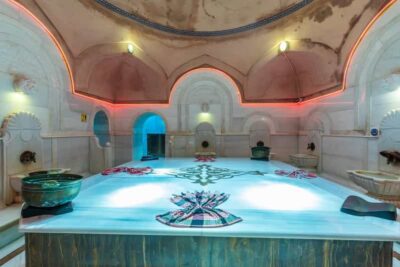
Acemoglu Historical Turkish Bath w/Private Options
Read our review →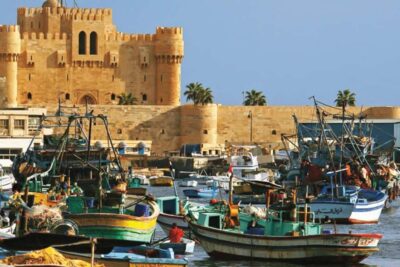
Private Full-Day Tour of Historical Alexandria
Read our review →
Private Tour of the Historic City in a Ford T Car
Read our review →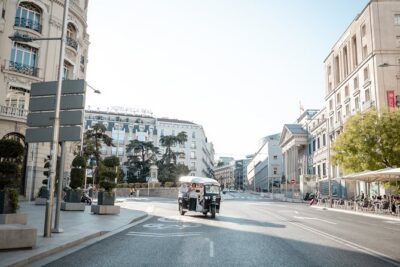
Madrid Historical Tour with Local Guide in Eco Tuk Tuk Private
Read our review →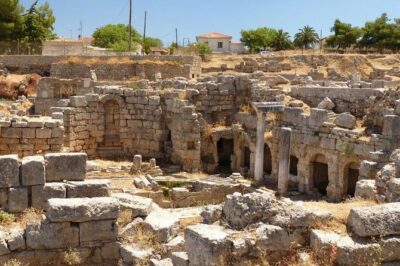
Private Biblical Tour Ancient Corinth & Isthmus Canal from Athens
Read our review →
Private Kathmandu Sightseeing Tour | UNESCO World Heritage sites
Read our review →Browse the lists this tour appears in