
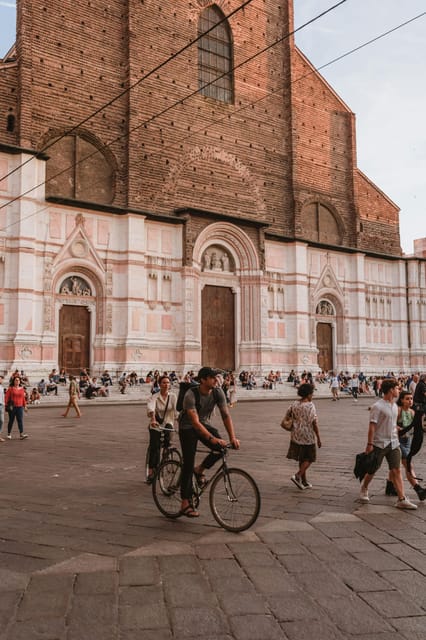
Review · EMILIA-ROMAGNA
Bologna: Private Top Historical Sites Guided Walking Tour
Bologna reveals itself one square at a time. This private two-hour walk brings together the city’s grand civic center, Gothic church, food market, arcades, and the unusual Santo Stefano complex, making it a smart introduction to Bologna’s old town. I especially like the private format, which gives you a guide focused on your group, and the well-chosen route, which links major sights with everyday streets and market life.
The strongest praise goes to the guides, with one German-language assessment calling the tour excellent, varied, and led by a highly qualified guide with very good German. The main consideration is pace: two hours is enough for an overview, but not for lengthy visits inside every landmark. You also need to pay €3.50 separately if you want to enter the Archiginnasio.
Key points to know before you book
- Piazza Maggiore begins the story: Bologna’s main square brings together medieval palaces, the Fountain of Neptune, and the enormous Basilica of San Petronio.
- San Petronio is a proper visit: You do not just pass the church. The route includes its Gothic interior, the Bolognini Chapel, and Cassini’s famous sun-dial.
- The market adds local flavor: Mercato di Mezzo shifts the tour from civic monuments to food shops and Bologna’s long culinary tradition.
- Santo Stefano gives the walk a quiet finish: The Seven Churches complex feels very different from the busy main square and offers some of the tour’s most atmospheric architecture.
- The guide quality matters: The available feedback praises the varied city walk and strong German-language guiding. English, French, Italian, and Spanish are also offered.
- Plan for a walking tour, not a museum day: Large bags are not allowed, and the experience is not suitable for people with mobility impairments.
Starting at Piazza del Nettuno beside Salaborsa
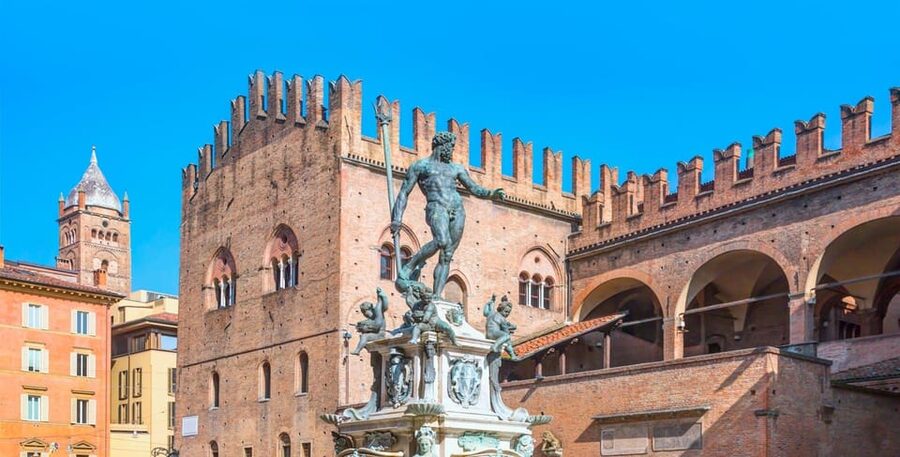
Your guide meets you at Piazza del Nettuno, number 3, in front of Biblioteca Salaborsa. Look for the TUI sign or flag. This is a useful meeting point because it places you right beside the historic center rather than sending you through a modern transport district first.
The tour ends back at the same meeting point. That makes the experience easy to fit into a morning or afternoon plan, especially if you are using it to get your bearings before exploring Bologna on your own.
Bring comfortable shoes and keep your belongings light. Large bags and luggage are not allowed. The route is a walking tour through historic streets and arcades, so a small day bag is the sensible choice.
Because the walk lasts only two hours, I would arrive ready to move. You will hear explanations at each stop, but this is not designed as a slow photographic stroll with long breaks. The private group format should make it easier to ask questions and request a little more explanation about the places that interest you most.
More History Walking Tours in Italy
- Venice: City Center Historical Guided Walking Tour
★ 4.2 · 1,873 reviews - Palermo: Street Food and History Walking Tour
★ 4.9 · 1,486 reviews - Verona: History and Hidden Gems Guided Walking Tour
★ 5.0 · 1,379 reviews
Piazza Maggiore and Bologna’s medieval civic center
The first major stop is Piazza Maggiore, the heart of Bologna’s old town. This broad square is surrounded by buildings that show how civic power, law, religion, and commerce once shared the same urban stage.
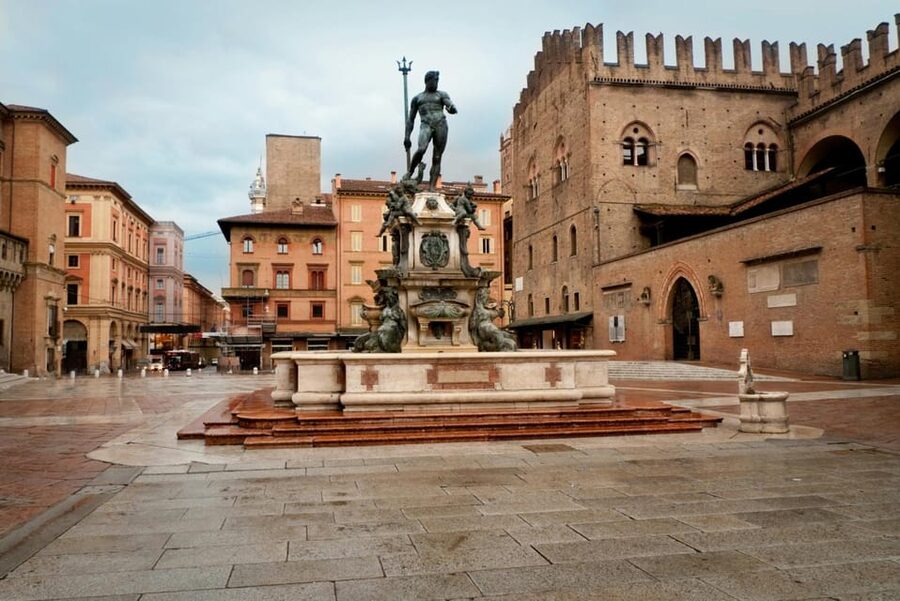
Your guide points out Palazzo Re Enzo, Palazzo dei Notai, and Palazzo dei Banchi. Each building contributes to the square’s medieval and later architectural character, and seeing them together helps you understand why Piazza Maggiore feels more like a civic room than an ordinary plaza.
Palazzo Re Enzo carries a particularly memorable name and appearance. Palazzo dei Notai reflects the importance of legal and administrative work in the city, while Palazzo dei Banchi gives the square a more polished Renaissance edge. On a self-guided visit, you might photograph the facades without grasping how the buildings relate to one another. A guide can turn that collection of stone walls into a readable piece of city history.
The Fountain of Neptune adds a lively sculptural focus. Its late Renaissance figures were created by Giambologna, and the fountain is one of the easiest meeting points in central Bologna. The tour includes a guided look rather than a separate attraction entry, so expect an explanation of the monument as part of the square walk.
San Petronio’s Gothic interior and Cassini’s sun-dial
From Piazza Maggiore, the route enters the Basilica of San Petronio. This is one of the most important moments of the walk because you get an interior visit, not simply an exterior explanation.
The church’s Gothic scale gives the tour a change of mood. Outside, Piazza Maggiore is open and civic. Inside, the basilica draws your attention upward and toward its chapels and works of art. The Bolognini Chapel is noted for its late Gothic frescoes, giving you a focused detail to look for rather than an endless list of church features.
Another unusual highlight is the sun-dial designed by astronomer Cassini. It is a fine example of Bologna’s connection between religious spaces, art, science, and university life. I like this stop because it makes the church more than an impressive shell. You see how a major building could also serve as a place for serious observation and study.
The two-hour limit matters here. San Petronio contains more than any short tour can cover, so the guide must choose the essential points. If you want a detailed study of every chapel or extended time for quiet viewing, you would need to return independently.
Passing the Two Towers and the historic palaces
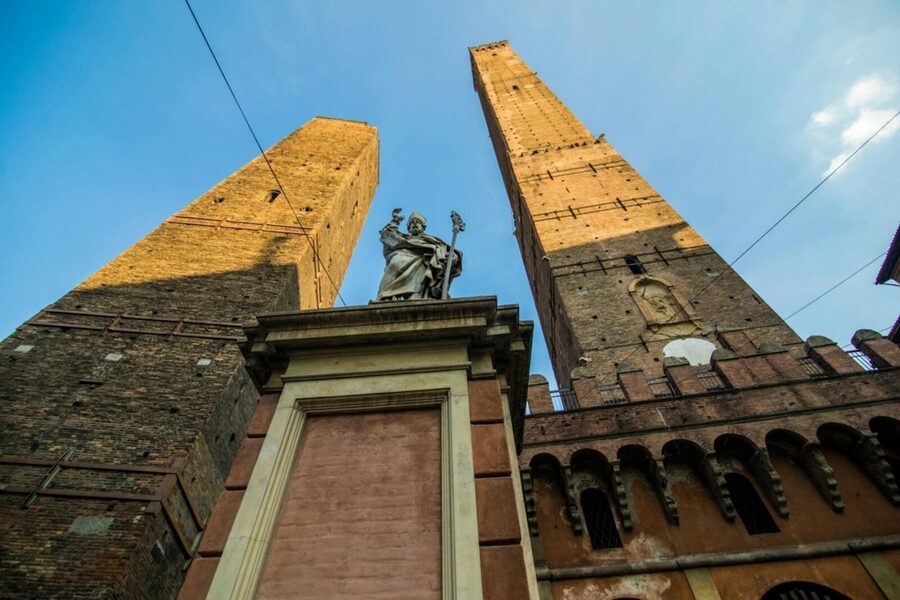
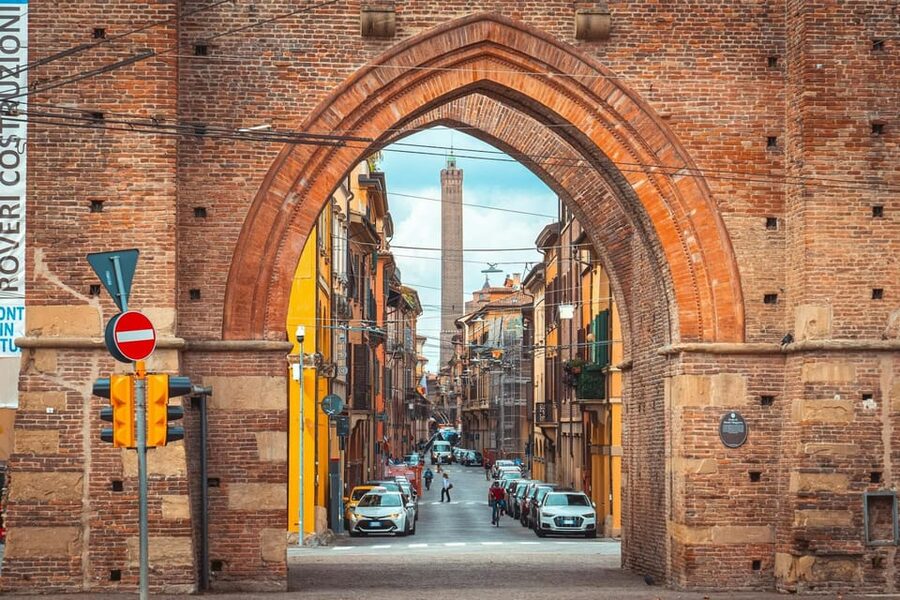
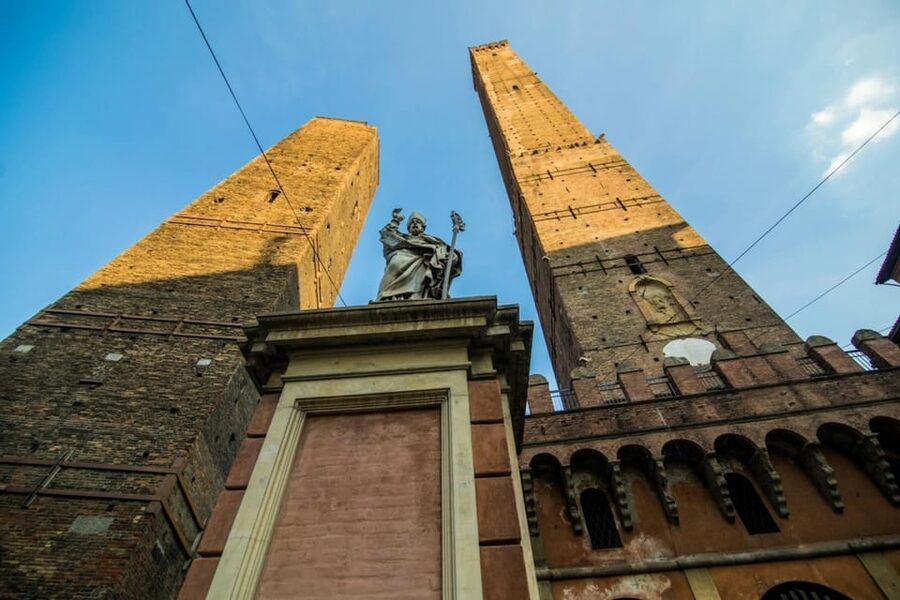
The itinerary also takes you past Bologna’s Two Towers. They are not listed as a full interior visit, so you should think of this as an orientation stop and a chance to see one of the city’s most recognizable sights in its urban setting.
Passing the towers is still useful because Bologna’s center is best understood as a network of landmarks rather than a set of isolated monuments. The route connects them with the palaces around Piazza Maggiore, the market lanes, and Santo Stefano. Your guide helps you see how the old center fits together on foot.
This part of the route also keeps the tour moving. With only two hours, the experience favors a broad introduction over long entries at every site. That is good news if you want a clear first look at Bologna, but less useful if your main aim is to spend half an hour inside each building.
More Private History Tours in Italy
- Ancient Ostia Antica Semi-Private Day Trip from Rome by Train with Guide
★ 4.5 · 579 reviews - Colosseum & Ancient Rome Semi-Private Tour
★ 5.0 · 208 reviews - Ancient Pompeii Private Tour: Skip the Line & Kid-Friendly Option
★ 5.0 · 167 reviews - Skip-the-Line Half-Day Private Tour Ancient Pompeii Highlights with Native Guide
★ 5.0 · 146 reviews
The Pavaglione Portico and the Archiginnasio
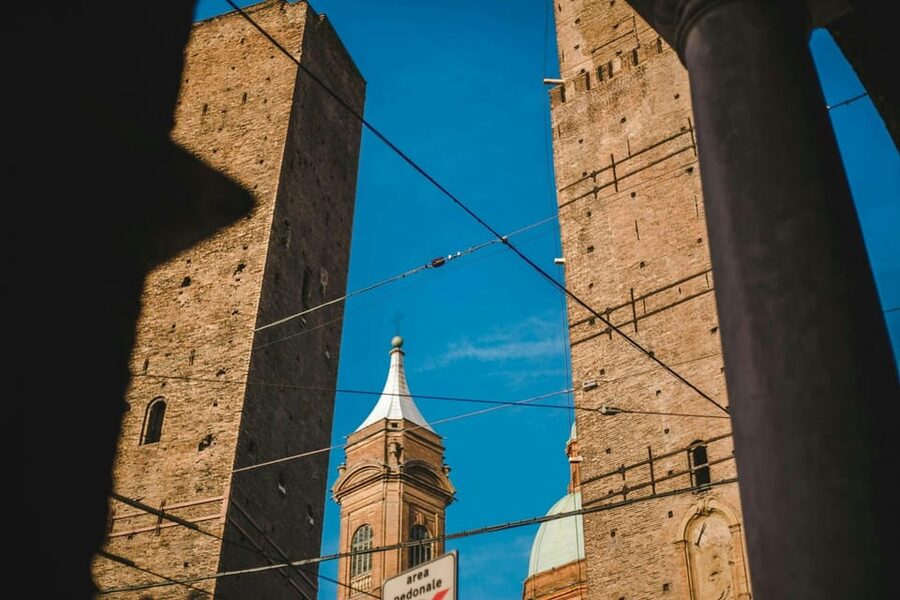
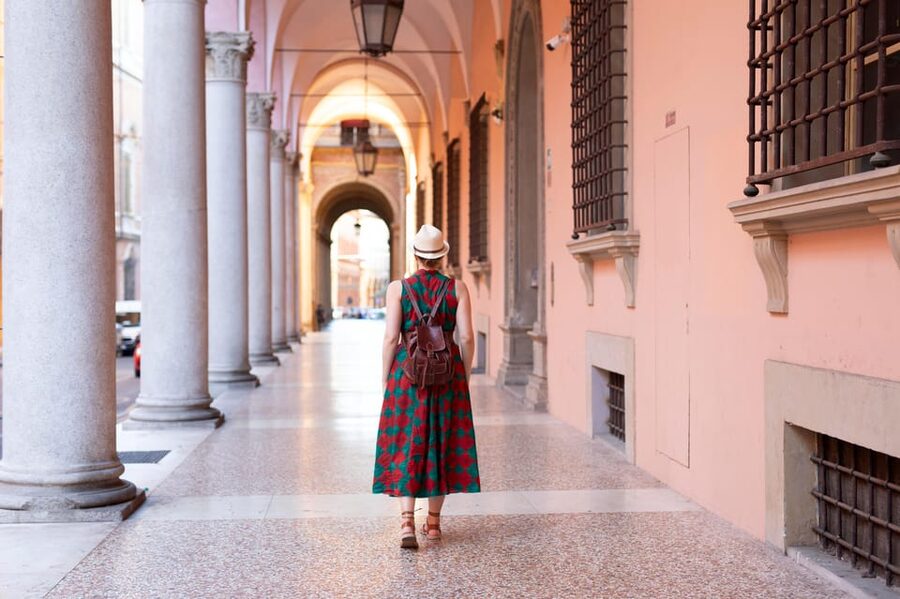
The Pavaglione Portico brings you along one of Bologna’s elegant covered walkways. Arcades are one of the defining features of the city, and walking beneath them gives you shelter while keeping you connected to the street.
The route continues toward the Archiginnasio Palace, Bologna’s former university building. Its walls are decorated with nearly 6,000 student coats of arms, a striking reminder of the city’s long academic tradition. This is one of the most distinctive details on the tour because it is easy to miss if you simply hurry between Piazza Maggiore and the market.
Pay attention to the wording around this stop. The guided route takes you to the Archiginnasio, but entry to the site is not included. The additional cost is €3.50 per person. If you want to see the interior and its decorations closely, budget for that fee. If you prefer to keep the tour moving, you can still appreciate the building from the route without adding the admission.
This is also where the tour’s focus broadens. You are no longer looking only at rulers and churches. The Archiginnasio brings students, teachers, medicine, law, and public learning into Bologna’s story.
Mercato di Mezzo and the city’s food culture
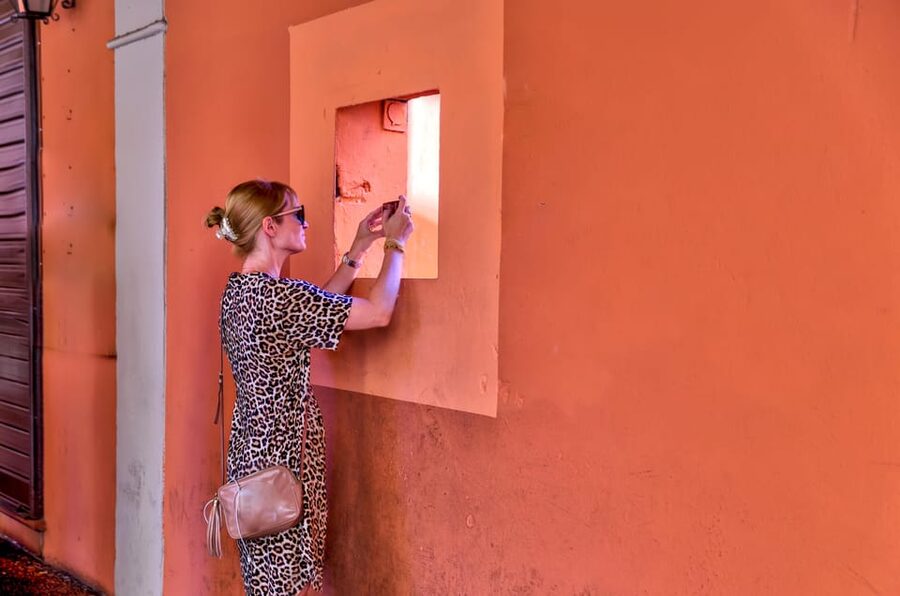
The walk then turns into the Mercato di Mezzo, Bologna’s historic market district. This is a welcome change from monumental squares. The narrow lanes and food shops bring you closer to the daily side of the city.
The experience description emphasizes aromas, colors, and traditional food stores. Your guide can help place the market in the context of Bologna’s culinary identity, while you take in the displays and the movement of the neighborhood. The market stop is guided, so it is not simply free time to shop.
For many people, this will be one of the most useful parts of the tour. Bologna is famous for food, but a list of dishes tells you very little about how the city feels. Walking through a working market area gives that food culture a physical setting. You can also use what you see here to plan a later meal or food stop, although the tour does not include tastings or a meal.
Keep your expectations clear: this is a historical walking tour with a market section, not a dedicated food tour. You should not assume that samples, purchases, or restaurant reservations are included.
Santo Stefano and the Seven Churches
The tour finishes at Piazza Santo Stefano, home to the Santo Stefano complex. This group of small Romanesque churches is often called the Seven Churches or the Jerusalem of Bologna.
The setting provides a strong final scene. After the large civic space of Piazza Maggiore, the grand interior of San Petronio, and the busy market lanes, Santo Stefano feels quieter and more enclosed. The complex has an unusual layered character, and its collection of churches creates a sense of movement through different spaces rather than one single grand room.
The tour includes a guided visit to Piazza Santo Stefano and the complex. It is a good place to ask your guide about the religious meaning and architectural development of the site, since the name and arrangement can be confusing when you first encounter them.
I also like this as the final stop because it leaves you with an image of Bologna that is less obvious than the Two Towers or Neptune fountain. The square feels like a place to pause and look closely. If you have time after the tour, it is worth noting how different the atmosphere is here from the city’s main civic center.
What the private format is worth at $147.27
The listed price is $147.27 per person. That is a serious cost for a two-hour walk, so the value depends heavily on your group size and what you want from a guide.
For a private group, the price buys a more focused experience than a large shared walk. You can ask questions in your preferred language, spend a little longer on a favorite subject, and avoid listening to a guide address a crowd. Languages offered are English, Italian, French, German, and Spanish.
The route also covers several different sides of Bologna in a short time: civic monuments, Gothic art, university history, food culture, and Romanesque churches. If you have only one short window in the city, that variety can justify the price.
The value is weaker if you want extensive interior time or a specialist architecture tour. Several stops are pass-by explanations, and the Archiginnasio admission costs extra. You are paying mainly for a private introduction and a carefully linked route, not for a long series of included entries.
One available German-language assessment praises the tour as excellent and varied, with a highly qualified guide and very good German. That is useful if you are choosing this experience for language support. It also suggests that the guide can make the difference between a hurried checklist and a meaningful walk.
Who will get the most from this walk
I would recommend this tour to first-time visitors who want a compact introduction to central Bologna. It suits you especially well if you enjoy architecture and want a guide to explain how the squares, churches, university buildings, and market streets connect.
It is also a good match for couples, families with older children, or a small private group that prefers conversation over a fixed large-group routine. The range of languages makes it practical for international visitors.
You may want another option if you have mobility limitations. The experience is specifically not suitable for people with mobility impairments, and the route involves walking through historic areas. It is also not a good fit if you are carrying luggage or large bags.
History specialists may find the two-hour format too brief. Likewise, food lovers looking for tastings should choose a dedicated food tour instead. This experience uses the market to explain Bologna’s food culture, but it does not promise samples.
The walk takes place in rainy weather. An exceptionally heavy downpour may lead to cancellation and a full refund. A light rain should not stop the tour, so carry suitable protection and keep your expectations practical.
Booking advice and final verdict
You can cancel up to 24 hours before the start for a full refund, and the reserve-now, pay-later option gives you some flexibility while arranging your schedule. Check the available starting times before you commit, since the tour lasts two hours and begins and ends at Piazza del Nettuno.
Should you book it? Yes, if you want a private overview of Bologna’s central sights and value a guide who can connect monuments with local life. The strongest parts are the Piazza Maggiore to San Petronio sequence, the market streets, and the atmospheric finish at Santo Stefano.
I would skip it if your priority is a long museum visit, a food tasting, or an accessible route. For everyone else, the tour offers a useful first chapter in Bologna, with enough variety to help you decide where to return on your own.
FAQ
How long does the Bologna private walking tour last?
The tour lasts two hours.
Where does the tour begin?
It begins at Piazza del Nettuno, number 3, in front of Biblioteca Salaborsa.
How will I recognize the guide?
The guide will be holding a TUI sign or flag.
Where does the tour end?
The activity ends back at the meeting point.
Which languages are available?
The live guide is available in English, Italian, French, German, and Spanish.
Is the Archiginnasio entrance included?
No. Entry to the Archiginnasio costs €3.50 per person and is not included.
Is the tour private?
Yes. It is offered for a private group.
Is the tour suitable for people with mobility impairments?
No. The experience is listed as not suitable for people with mobility impairments.
Can I cancel the tour for a refund?
Yes. You can cancel up to 24 hours in advance for a full refund.
Just added around Italy
- Day drinking in Rome – Scandalous Roman History★ 4.8 · 31 reviews
- Communal dinner in an ancient Tuscan farmhouse★ 4.2 · 29 reviews
- Cooking Class in a Historic Home in the Heart of Brindisi★ 4.7 · 28 reviews
- Rome: Colosseum Arena and Ancient Rome Guided Tour★ 4.8 · 23 reviews
- Rome: Colosseum and Ancient Rome Access with Optional Arena★ 4.5 · 198 reviews
- Civitavecchia: Historical and Culinary Walking Tour★ 4.9 · 61 reviews
- Ostuni: E-bike Tour, Ancient Olive Trees & Oil Tasting★ 4.9 · 42 reviews
- Cefalù: History and Legends Guided Walking Tour★ 4.8 · 132 reviews
History Walking Tours, compared.
History and Hauntings of Salem Guided Walking Tour
Read our review →
Freedom Trail History Small Group Walking Tour
Read our review →
Historic Charleston Guided Sightseeing Walking Tour
Read our review →
Tapas Walking Tour with Food, Wine, and History
Read our review →
Savannah History and Haunts Candlelit Ghost Walking Tour
Read our review →
A History of Terror – Belfast City Centre Walking Tour
Read our review →Browse the lists this tour appears in