
Review · DARWIN
Darwin Heritage Walk
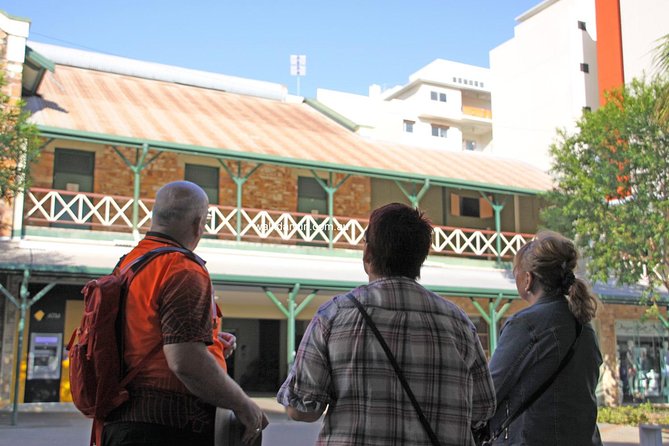
Darwin’s story is written on its streets. This small-group walk connects old buildings, war history, Cyclone Tracy, local characters, and modern Darwin through the voice of a local guide. I like the personal stories and local anecdotes, and I like that the group is limited to six people, which leaves room for questions. The main drawback is that the walk spends a fair amount of time listening, especially early on, rather than covering ground.
The tour runs for about two to two and a half hours and begins at 8:30 am in the city centre. Guides such as John, Robin, Yvonne, and John have been praised for their warmth, local insight, and ability to answer questions. Still, you should be ready for tropical heat, standing, and a discussion of difficult subjects, including the bombing of Darwin and Cyclone Tracy.
Key points to know before you book
- Small groups of up to six: This is a more personal format than a large city tour, with plenty of space for questions and conversation.
- A history walk with strong local voices: Guides including John and Robin bring personal knowledge and stories about Darwin’s people, politics, disasters, and daily life.
- Six central Darwin stops: The route includes Star Village, Brown’s Mart Theatre, the Old Town Hall, the Administrator’s buildings, Parliament House, and Bicentennial Park.
- Mostly easy walking and standing: The pace is generally gentle, but you need a moderate level of fitness and comfortable, non-slip shoes.
- The best material comes later: The latter part of the route, especially the harbour area and Bicentennial Park, may appeal most if you want monuments, open space, and broader historical context.
- Bring your own comfort kit: Wear a hat, use sunscreen, carry water, and expect the walk to operate in most weather conditions unless conditions become unsuitable.
A useful first morning in Darwin
I like this tour as an opening activity because it gives you a framework for the city. Darwin can look modern at first glance, with new buildings, broad streets, and a tropical setting. The walk helps you notice the older structures and the events that shaped the city.
The tour focuses on how Darwin changed over more than 150 years. You hear about early settlement, civic life, the bombing during the Second World War, Cyclone Tracy, self-government, and the people who kept the city going through repeated setbacks.
That mix is more useful than a simple march past landmarks. A building such as Brown’s Mart Theatre may look modest from the street, but the guide explains why it mattered to local social life. A ruined town hall becomes more than an old wall when you learn who passed through it.
The small group is a real advantage here. With no more than six people, you can ask about a building, a local custom, or a place you pass later in your stay. Guides have also offered suggestions for things to do after the walk, which can help you plan the rest of your time in Darwin.
More History Walking Tours in Australia
- Ultimate Melbourne Walking Tour: History, Laneways & Culture
★ 5.0 · 1,451 reviews - Sydney: The Rocks 90-Minute History Walking Tour
★ 4.7 · 1,092 reviews - Discover Perth Walking Tour: History, Art, Local Insights + More!
★ 5.0 · 458 reviews
Starting at the Mall and Knuckey Street
The walk begins at the John McDouall Stuart statue, at the corner of The Mall and Knuckey Street, in Darwin City. This central meeting point is near public transport and easy to reach from the main city area.
The 8:30 am start makes sense in Darwin. The day is cooler than it will be later, and an early departure gives you a better chance of enjoying the outdoor sections before the sun becomes intense. You should still bring water and sun protection.
The opening section uses the city centre to introduce Darwin’s older layers. One criticism of the route is that the Mall and Smith Street portion can feel slow if you prefer constant movement. I would treat this part as a conversation-led introduction rather than a sightseeing sprint.
That approach works best if you enjoy context. The guide may spend time explaining how the streets developed, how buildings were reused, and how Darwin’s identity changed after major destruction. If you mainly want photographs of famous sights, the first part may feel less rewarding.
Star Village and the few buildings that survived
Star Village is one of the more distinctive stops. It began as an open-air cinema and is one of the few original buildings remaining from before Cyclone Tracy. Today, it has been adapted into a stylish retail centre.
The value here is the contrast. You see a place used for shopping and compare it with the building’s earlier role in Darwin life. The guide points out historic details that are easy to pass without noticing.
You have about ten minutes at this stop, with no admission fee. That is enough time to look around, take photographs, and hear the story, but it is not a long independent visit.
For me, this is exactly the sort of stop that makes a city walk worthwhile. You do not need a grand monument to understand the past. Sometimes the best clue is a building that has changed purpose but still carries traces of an earlier Darwin.
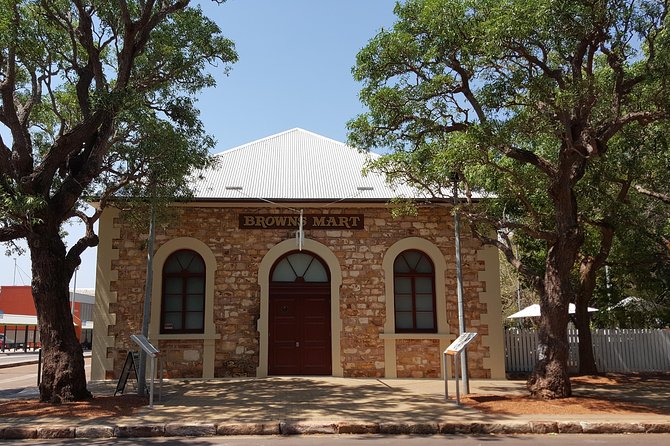
Brown’s Mart Theatre and civic life

Brown’s Mart Theatre has been part of Darwin’s social culture for more than a century. The tour focuses on the exterior, so you should not expect a theatre visit or an extended indoor stop.
The guide fills in the background and explains why this building has mattered to the city. That is where the quality of the narration matters most. Several guides, including John and Robin, have been praised for making local history easy to follow and for adding stories from their own experience.
This stop takes roughly ten minutes. It is close enough to the other city-centre sights that the route feels manageable, but the tour is not designed around long breaks or formal museum visits.
If you like architecture, local theatre, and stories about the people who shaped a town, Brown’s Mart should hold your attention. If you need constant visual change, this section may feel talk-heavy.
Same place, a different slice of the past:
- Puffing Billy Railway: Heritage Steam Train Journey
★ 4.6 · 1,195 reviews - Morning World Heritage Cruise on the Gordon River from Strahan
★ 5.0 · 1,193 reviews - Strahan: World Heritage Cruise on Gordon River with Lunch
★ 4.8 · 1,143 reviews - Experience History onboard The Mary Valley Rattler
★ 5.0 · 963 reviews
The Old Town Hall and Darwin’s visible ruins
The Old Palmerston Town Hall is now in ruins. Its remains offer a direct link to Darwin’s early civic life and to the pioneers who passed through the building.
The stop lasts around ten minutes and is free to visit. It is one of the clearest examples of the way the walk uses ordinary city sites to explain the past. Instead of only seeing restored buildings, you also see what was lost.
I appreciate this kind of stop because ruins make history physical. You can look at the remains while the guide explains their role in the growing town. The effect is quieter than a grand museum display, but it can be more memorable.
The drawback is that the stop is brief. You will hear the main story, take a few photographs, and move on. If you want time to study the site at length, you may need to return on your own.
The Administrator’s buildings and early Darwin
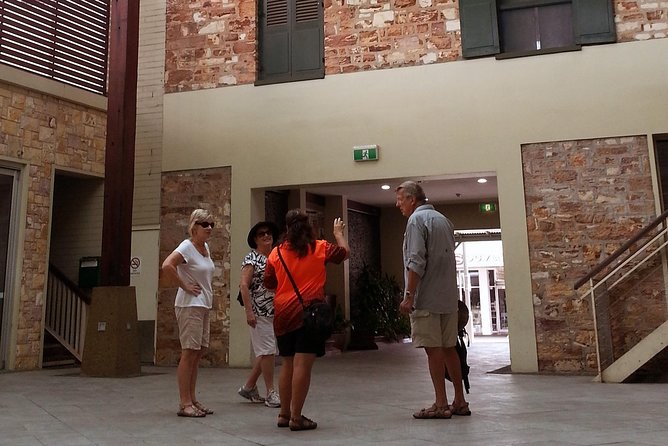
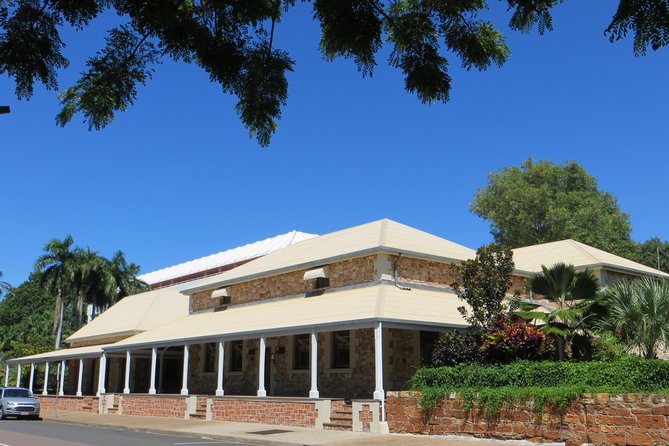
The beautifully restored buildings and gardens connected with the Administrator of the Northern Territory provide one of the more polished views of early Darwin. They are still used as offices today, so the tour focuses on the exterior and the surrounding setting.
This stop helps balance the ruins and disaster stories. Darwin’s past is not only about destruction. It also includes government, public life, and the buildings that have been cared for and brought back into good condition.
The guide explains how these places connect with the city’s early years. You get about ten minutes here, enough to see the main features and hear the background without turning the walk into a formal building tour.
The grounds may also offer a welcome change from paved streets. Even so, you should expect to remain outdoors and standing. A hat and water are not optional extras in Darwin’s climate.
Parliament House and the modern city
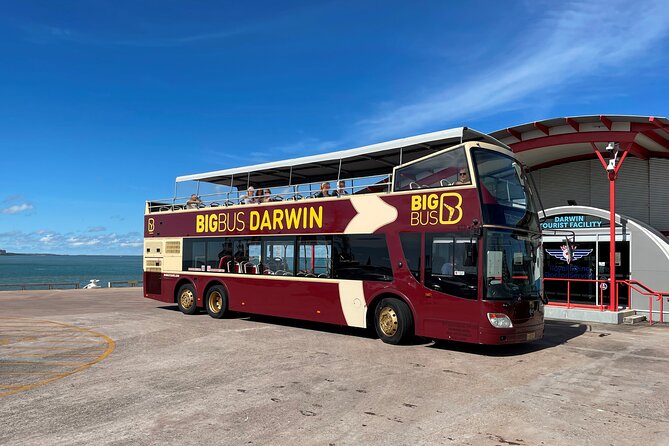
Parliament House presents a different side of Darwin. The building looks toward Darwin Harbour and represents the city’s modern role as the self-governing capital of the Northern Territory.
This is where the walk shifts from early civic life to contemporary politics and government. Some guides go beyond dates and buildings, discussing current affairs and how Darwin functions today. That broader view is one reason the tour feels more substantial than a basic architecture walk.
You will not be taking a parliamentary tour based on the information provided. The stop is about seeing the building, understanding its role, and listening to the guide’s explanation.
I would pay close attention here if you want to understand how the Northern Territory’s government fits into Darwin’s story. It also gives you a useful counterpoint to the old town hall and restored early buildings.
Bicentennial Park and the harbour edge
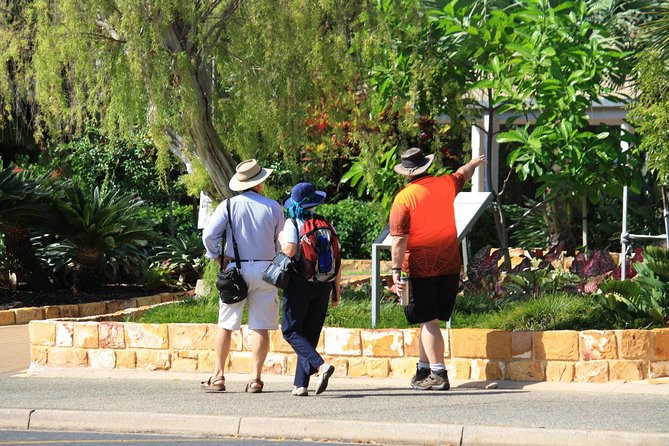
Bicentennial Park is the longest scheduled stop, at about fifteen minutes. Set above Darwin Harbour, it gives the route more open space and a chance to look across the water.
The park contains reminders of Darwin’s earlier years, including less obvious details that you might miss while walking alone. It is also a place where the guide can connect the city’s past with everyday recreation and public space.
This section may be the highlight for anyone who wants more than buildings. You get room to breathe, views across the harbour, and a sense of how central Darwin serves as both a workplace and a public gathering area.
Some feedback has suggested that more time would be welcome around the cenotaph and the State Square area. If those memorial and civic spaces matter to you, ask the guide questions during the walk and consider returning later for a closer look.
The stories that shape the walk
The strongest part of this experience is not the number of stops. It is the way the guide connects them.
Darwin’s history includes the bombing of the city and Cyclone Tracy, two events that dominate much of the local story. You will hear how these moments changed Darwin and how the city recovered. The subject matter is serious, but it gives the walk a clear sense of place.
The guides also bring in everyday people and local characters. One guide, John, has been praised for stopping for photographs, answering many questions, and choosing shaded places for conversations. Robin has also been noted for sharing personal experience and local stories.
That human element can make the difference between a dry history lesson and an engaging morning. You are not simply memorising dates. You are hearing how the city’s past affected its buildings, its residents, and its sense of identity.
There is one important gap to keep in mind. The tour may not give enough attention to Larrakia history, first contact, colonisation, and the experiences of Aboriginal people in the early town. If those subjects are important to you, ask directly about them rather than assuming they will receive equal time.
Pace, heat, and physical effort
The walk is suitable for people with a moderate fitness level. It is generally described as easy paced, but you will be walking between stops and standing while the guide speaks.
Several guides have made a point of stopping in shaded areas. That is helpful, especially in Darwin’s tropical climate, but shade and comfort can vary with the conditions. Wear enclosed, non-slip walking shoes, a hat, sunscreen, and clothing suited to the weather.
The tour operates in all weather conditions when possible. If poor weather prevents the walk from going ahead, you can be offered another date or a full refund.
The 8:30 am start is one of the tour’s practical strengths. It avoids the hottest part of the day and leaves your afternoon free for museums, markets, or further sightseeing.
What the $42.32 price gets you
At $42.32 per person, the value rests almost entirely on the guide. There are no included meals, hotel transfers, or entry tickets because the route uses public outdoor sites and free stops.
That can be good value if you want interpretation rather than transport. You are paying for roughly two hours of spoken commentary, a carefully chosen route, and the chance to ask questions in a group capped at six.
It is less attractive if you prefer to explore independently or want several indoor attractions included. The tour does not cover food or drinks, so bring water and plan your own refreshments before or afterward.
The free cancellation policy also gives you some flexibility. You can cancel up to 24 hours before the start for a full refund. A minimum of two people is required for the walk to operate, so the provider may offer another date or a full refund if that minimum is not reached.
Who should book this Darwin walk?
I would recommend it to first-time visitors who want to understand Darwin before exploring on their own. It also suits people who enjoy local stories, civic history, old buildings, and a relaxed pace.
The tour works well for couples, families with children accompanied by an adult, and small groups who prefer conversation over a large crowd. Service animals are allowed.
You may want to skip it if you dislike standing, hot outdoor conditions, or long spoken explanations. It may also disappoint you if you expect a detailed Aboriginal history section, indoor admissions, or a fast route packed with attractions.
The finish is at the intersection of The Esplanade and Knuckey Street, opposite Lyons Cottage. From there, you can continue exploring the central area or return to a site that deserves more time.
Should you book the Darwin Heritage Walk?
Book it if you want a friendly, local introduction to Darwin’s buildings, disasters, government, and people. The small group, early start, easy pace, and strong guides make it a practical first activity, especially when John, Robin, Yvonne, or another experienced local guide is leading.
Go in with the right expectations. This is a story-led walk, not a rapid checklist of sights. The best moments come from listening, asking questions, and noticing how old and new Darwin sit beside each other.
At $42.32, I consider it a fair buy for an informed guide and a small group. Just bring water, sun protection, good shoes, and an interest in the complicated story behind the city’s attractive facades.
FAQ
How long does the Darwin Heritage Walk last?
The walk lasts approximately two to two and a half hours.
What time does the tour begin?
The tour begins at 8:30 am.
Where does the walk start?
It starts at the John McDouall Stuart statue, at the corner of The Mall and Knuckey Street, Darwin City.
Where does the tour finish?
The tour ends at the intersection of The Esplanade and Knuckey Street, opposite Lyons Cottage.
What is included in the price?
The price includes a local guide and spoken commentary.
Are hotel transfers included?
No. Hotel pickup and drop-off are not included.
Are food and drinks included?
No. You need to provide your own food and drinks. Bringing drinking water is recommended.
How many people can join the tour?
The tour has a maximum of six people. At least two people are required for it to operate.
What should I bring?
Bring a camera, sunscreen, a hat, drinking water, and good enclosed non-slip walking shoes.
Is the tour suitable for children?
Children can join, but they must be accompanied by an adult.
What happens if the weather is poor?
If poor weather causes the tour to be cancelled, you can be offered a different date or a full refund.
Can I cancel for a full refund?
Yes. You can cancel at least 24 hours before the start time for a full refund. Changes or cancellations made less than 24 hours before the start are not accepted for a refund.
Just added around Australia
- Darwin History and Wartime Experience Tour★ 5.0 · 144 reviews
- Bombing of Darwin WWII Heritage Tours★ 5.0 · 261 reviews
- Private Half Day Tour: World Heritage Rainforest & Waterfall★ 5.0 · 19 reviews
- Historic Village Herberton Family Pass (2A+2C)★ 4.5 · 18 reviews
- Authentic Indigenous Cultural Tour Including Scenic River Cruise★ 5.0 · 88 reviews
- Entry Ticket at Historic Village Herberton★ 5.0 · 114 reviews
- Cairns History Walking Tour★ 5.0 · 52 reviews
- Self-Guided Ngilgi Cave Ancient Lands Experience★ 4.5 · 154 reviews
History Walking Tours, compared.
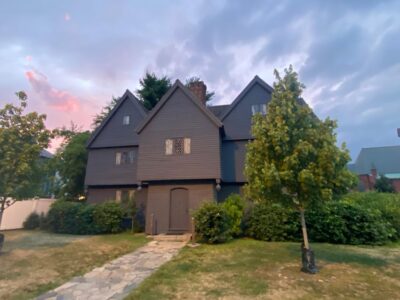
History and Hauntings of Salem Guided Walking Tour
Read our review →
Freedom Trail History Small Group Walking Tour
Read our review →
Historic Charleston Guided Sightseeing Walking Tour
Read our review →
Tapas Walking Tour with Food, Wine, and History
Read our review →
Savannah History and Haunts Candlelit Ghost Walking Tour
Read our review →
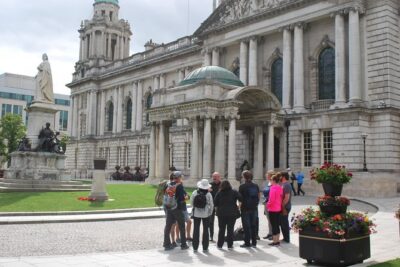
A History of Terror – Belfast City Centre Walking Tour
Read our review →Browse the lists this tour appears in