
Review · CHENNAI
Georgetown heritage walking tour in Chennai about the founding of Chennai
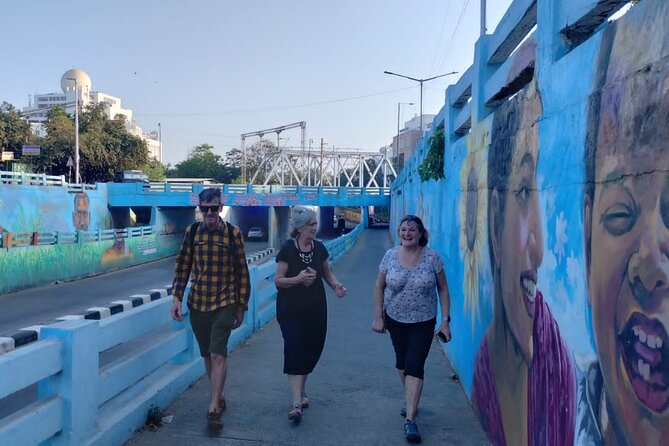
Chennai’s origin story begins on foot. This three-hour George Town walk connects the city’s English beginnings with its Armenian traders, old lighthouses, courts, churches, and port life. I like the focus on Fort St. George and the Armenian Church, two places that give the story real shape rather than leaving you with a string of dates. I also like the small-group limit of 15, which should make it easier to ask questions and hear the guide.
The main consideration is the pace and museum time. Fort St. George includes a 30-minute museum visit, and that may feel long if you have already spent the day indoors. The route also includes several short exterior stops, so you should book this for historical context and storytelling, not for a slow architectural stroll with long visits at every building.
Key points at a glance
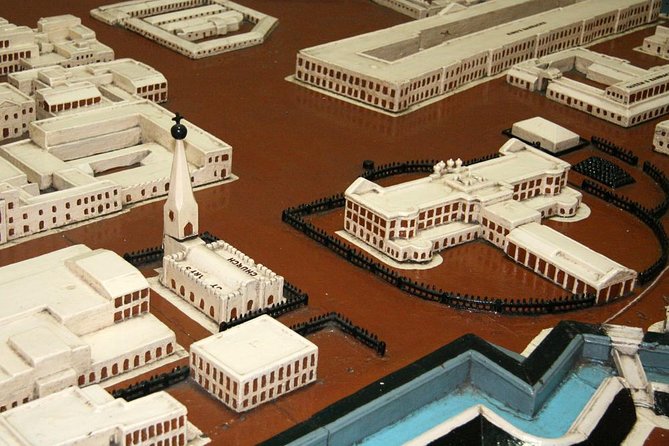
- Fort St. George sets the scene: Start at the first English fortress built in 1644 by the East India Company, with museum admission included.
- George Town tells a trading story: Armenian merchants, Welsh free merchants, British officials, and international traders all shaped this port district.
- The German attack adds surprise: Madras High Court was attacked by a German submarine in 1914 during World War I.
- Small groups should help: The maximum group size is 15, a useful limit in a crowded historic district.
- The route ends near the trading quarter: You finish in George Town, close to the streets that once handled silk, spices, gems, and other goods.
- Kannan is a name to note: One particularly well-regarded guide, Kannan, has been praised for clear English, a good pace, and adapting the walk to the group’s interests.
Why George Town is the right place to learn Chennai’s beginnings
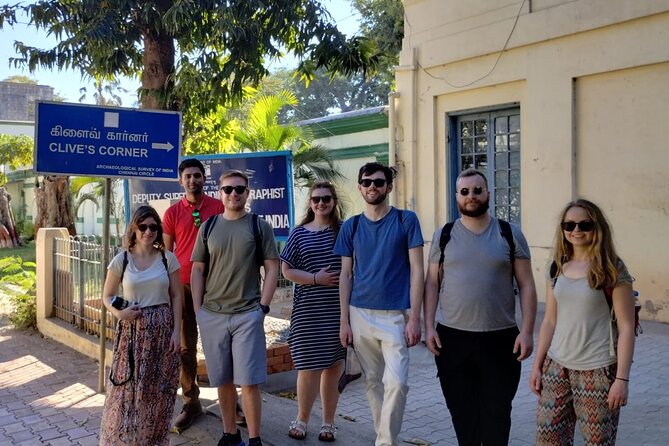
George Town is not simply an old quarter to pass through on the way to another sight. It is tied directly to the growth of Chennai as an English settlement and trading port. The East India Company established its first English fortress here in 1644, and the area later drew merchants from several countries.
That gives the walk a useful shape. Instead of treating Chennai’s past as one long British chapter, the route shows how trade brought together English officials, Armenian refugees, Indian merchants, and other commercial communities. You see the city as a working port, not just a collection of colonial façades.
I especially like this approach for a first visit to Chennai. The route explains why Fort St. George mattered, then moves into nearby streets where business, religion, law, and shipping left their mark. You get a short history lesson, but the buildings keep the subject grounded.
The tour begins at Chennai Port, at the listed meeting point in Chennai Port Trust. It ends in George Town. Pickup is offered, but the exact pickup arrangement is not detailed, so I would confirm it before booking if you are not making your own way to the port area.
More History Walking Tours in India
- Fontainhas Heritage Walk by Make It Happen
★ 5.0 · 2,834 reviews - The Great Indian Food Tour: Old Delhi Food and Heritage Walk
★ 5.0 · 1,698 reviews - Old Goa Heritage Walk by Make It Happen
★ 5.0 · 797 reviews
Fort St. George: where the English story starts
The opening stop is Fort St. George, the first English fortress built in Chennai in 1644 by the East India Company. You spend about 30 minutes here, and admission to the fort museum is included.
This is the most important stop for understanding the tour. The fort gives the guide a place to explain how a trading company gained political power in India. That shift is central to Chennai’s colonial story, and it is more useful to hear it at the site than to meet it only in a textbook.
The museum is intended to show how the British came to dominate India and how their rule developed. You should expect this part to carry a lot of the historical explanation. If you already plan to visit several museums in Chennai, keep that in mind. One account of the walk found the museum time a little heavy after another museum visit.
Still, I would not skip the fort. The tour’s later stops make more sense after you understand why this military and administrative base mattered. Ask questions here if you want the big picture, since the rest of the walk shifts toward individual buildings and communities.
St. Mary’s Church and the early colonial center

The next stop is St. Mary’s Church, described as the oldest Anglican church in India. You spend about 15 minutes here, with no additional admission charge.
The visit focuses on the Last Supper, which gives the stop a clear purpose rather than making it a quick look at another old church. The short time also keeps the walk moving. You will not get a long church tour, but you should get enough context to understand how Anglican institutions fitted into the early English settlement.
This is one place where your guide matters. A building can look quiet and plain if you do not know why it was established or who used it. A strong explanation helps connect the church to Fort St. George and the officials and merchants who lived and worked nearby.
Old lighthouses and George Town’s working past
The walk then reaches the site of two old lighthouses that operated during the East India Company period. This stop lasts about 15 minutes and is free.
The lighthouse sites are a good reminder that George Town was tied to the sea. Forts and churches tell only part of the story. A port also needs navigation, shipping routes, and signals for vessels approaching the coast. Even if little of the original structure remains, the location helps you picture the practical systems behind the trade.
This is a brief stop, so do not expect a full lighthouse visit. Its value comes from the explanation and the link to Chennai’s maritime past. I would treat it as a connecting point between the fort’s political story and George Town’s commercial life.
Same place, a different slice of the past:
- Old Delhi Food, Heritage&Cultural Walk with Rickshaw ride to Masterji Kee Haveli
★ 5.0 · 742 reviews - Blue City Heritage Private Walking Tour With Pickup and Drop-Off
★ 5.0 · 441 reviews - Kolkata Heritage Tram Tour
★ 4.0 · 395 reviews - Private Heritage Walking Tour in Jaisalmer Fort and Old Bazaar
★ 5.0 · 306 reviews
Dare House and the business of Parry’s

Dare House, at number 234, is an art deco building with a strong commercial history. It was the headquarters of Parry’s Company, named for Thomas Parry, a Welshman and one of Chennai’s early free merchants.
This is an interesting change of mood. The fort represents company rule and military power, while Dare House points to private business. It shows that Chennai’s development was not driven only by government offices and soldiers. Merchants, companies, shipping, and trade helped shape the city too.
You spend about 15 minutes here, and admission is free. That is enough time to take in the exterior and hear the story. The building’s art deco design also adds visual variety after the older church and fort sites.
For me, this stop is most useful if you care about how cities make money. The guide can help you see the building as part of a commercial network, not merely as an attractive façade. If you prefer famous monuments with interiors, this may feel brief, but the story is a worthwhile part of the route.
Madras High Court and the 1914 German attack
Madras High Court is one of the longer stops, at about 30 minutes, and admission is included. The court was established in 1862 by a decree from Queen Victoria and still serves Tamil Nadu.
The unusual detail here is the 1914 attack during World War I. German forces attacked the building, an event that brings the distant war into Chennai’s streets. This is exactly the kind of story that makes a walking tour memorable. You may know the broad outline of World War I, but the court helps show how the conflict reached India.
The stop also gives you a chance to consider the legal structure created under British rule. The court remains part of the state’s public life, so this is not just a historical shell. The guide’s job is to connect its colonial origins with its continuing role.
Because this stop lasts 30 minutes, it should receive more than a quick photograph. If the court is viewed mainly from outside, the explanation will carry much of the value. The included admission is useful, though the supplied details do not specify exactly which areas you enter.
The Armenian Church and an older trading community
The final main stop is the Armenian Church, with about 30 minutes included and admission covered. The walk also passes along the street where Armenian refugees established trade in silk, spices, and gems roughly 300 years ago.
This may be the most distinctive part of the route. Chennai’s colonial past is often reduced to British buildings, but the Armenian presence adds a wider commercial story. These merchants were part of the international network that made George Town a port neighborhood with links far beyond southern India.
The church gives that history a physical focus. You can connect the community’s trade with its religious life and see how commercial groups created institutions of their own. That makes the stop more meaningful than a simple architectural visit.
The route ends in George Town, so the Armenian Church works well as a closing chapter. You finish with the idea of Chennai as a meeting point for different communities, rather than with the British fortress alone.
What the three-hour format feels like
Three hours is long enough to build a story and short enough to fit into a busy Chennai itinerary. The listed stops add up to roughly two hours, leaving the rest for walking between locations, explanations, questions, and transitions.
The schedule is not a leisurely pause at every building. Several stops last 15 minutes, while Fort St. George, Madras High Court, and the Armenian Church receive about 30 minutes each. I would wear comfortable shoes and expect a steady walking pace.
A maximum of 15 people is a real benefit here. George Town has many layers, and a guide may need to point out details that are easy to miss. A smaller group also gives you a better chance to ask about the East India Company, Armenian trade, the court, or the 1914 attack without turning the walk into a lecture delivered to a crowd.
The experience is offered with a mobile ticket, and confirmation is provided at booking. Most people can participate, and the meeting point is near public transportation. Since the walk depends on good weather, poor conditions can lead to a new date or a full refund.
The guide can make the difference
The strongest part of this kind of experience is not simply the route. It is the guide’s ability to connect separate buildings into one clear story.
Kannan has been singled out for excellent English, a good pace, and descriptions that make the buildings easier to understand. A walk led by Kannan has also been described as tailored to the group’s interests. That flexibility matters because the route can appeal to different people: you might care about colonial administration, trade, architecture, religion, or wartime history.
A guide who listens can adjust the emphasis. If you have already spent time in museums, you can ask for more street history and less display-case detail. If the British period is new to you, you can use Fort St. George as the place to ask basic questions about the East India Company and its rule.
The experience provider is 5 Senses Walks Chennai. The overall rating is 4.9 from 144 ratings, with 98 percent recommending it. Those figures suggest a dependable experience, but I would still keep your expectations realistic: the route is compact, the museum time is fixed, and the short stops cannot provide a full tour of every building.
Is $50 a fair price?
At $50 per person, this is not the cheapest way to see George Town. The value depends on how much you want interpretation and structure.
You are paying for about three hours with a local guide, entry to Fort St. George’s museum, entry connected with Madras High Court, and access to the Armenian Church. The group limit of 15 also matters. A self-guided walk costs less, but you would need to research the history of the fortress, the Armenian community, Dare House, the lighthouses, and the German attack yourself.
I think the price is fair for a history-focused visitor who wants the pieces joined together. It is less compelling if you mainly want to photograph old buildings or if you are already comfortable researching Chennai’s past independently.
Group discounts may be available, which could improve the value for families or friends. Free cancellation is available when you cancel at least 24 hours before the start time. Changes or cancellations inside that window are not refunded, and weather-related cancellations offer a different date or a full refund.
Who should book this George Town walk?
I would recommend it to you if you enjoy city history, colonial architecture, port communities, and stories that connect local streets to world events. It is especially useful early in a Chennai visit because it gives you a framework for understanding the city’s English, Armenian, commercial, and legal traditions.
It also suits you if you prefer a small group rather than a large coach tour. The 15-person limit leaves room for questions and should make the guide’s explanations easier to follow.
You may want to skip it if you dislike museums, need a very slow pace, or want extensive time inside every building. The Fort St. George museum takes a set portion of the walk, and several other stops are short. The tour is about connected context, not exhaustive sightseeing.
Should you book it?
Book this walk if you want Chennai’s founding story explained through real places. Fort St. George gives you the political beginning, Dare House shows the commercial side, Madras High Court adds a wartime surprise, and the Armenian Church widens the story beyond British rule.
I would especially choose it for a first visit, a port call, or a day when you want history without committing to a full-day tour. Confirm the pickup details, allow for the weather, and be ready for a steady three-hour walk. If that sounds right, the $50 cost buys useful context, a manageable group, and a much clearer sense of why George Town matters.
FAQ
How long is the Georgetown heritage walking tour?
The tour lasts approximately three hours.
Where does the tour start?
It starts at Chennai Port, at Chennai Port Trust in Chennai, Tamil Nadu.
Where does the tour end?
The walk ends in George Town, Chennai.
How large is the tour group?
The maximum group size is 15 travelers.
Is admission included at the main sights?
Admission is included at Fort St. George, Madras High Court, and the Armenian Church. St. Mary’s Church and the old lighthouse sites are listed with free admission.
Is pickup available?
Pickup is offered, but the provided details do not specify the exact pickup locations or arrangements. Confirm this when booking.
Can I cancel for a full refund?
Yes. You can receive a full refund if you cancel at least 24 hours before the experience start time. Cancellations made less than 24 hours before the start are not refunded.
Just added around India
- Private Chennai Day Tour – Art History and Contemporary Chennai★ 5.0 · 21 reviews
- Exploring Mylapore: A Cultural & Historical Walking Tour★ 5.0 · 42 reviews
- Chennai Heritage & Cultural Walk (2 Hours Guided Walking Tour)★ 3.5 · 32 reviews
- See Bangalore through my eyes (Cultural / Historical / Walking Tour)★ 5.0 · 60 reviews
- Malleswaram heritage walk, an immersive walking tour in Bangalore★ 5.0 · 20 reviews
- Treasures of Mysuru – day tour★ 5.0 · 27 reviews
- Discover Bangalore with Me (A Private Historical Walk Tour)★ 5.0 · 24 reviews
- Bangalore Heritage and Cultural Walking Tour★ 3.5 · 21 reviews
History Walking Tours, compared.

History and Hauntings of Salem Guided Walking Tour
Read our review →
Freedom Trail History Small Group Walking Tour
Read our review →
Historic Charleston Guided Sightseeing Walking Tour
Read our review →
Tapas Walking Tour with Food, Wine, and History
Read our review →
Savannah History and Haunts Candlelit Ghost Walking Tour
Read our review →
A History of Terror – Belfast City Centre Walking Tour
Read our review →Browse the lists this tour appears in