
Review · CHARLESTON
Undiscovered Charleston: Half Day Food, Wine & History Tour with Cooking Class
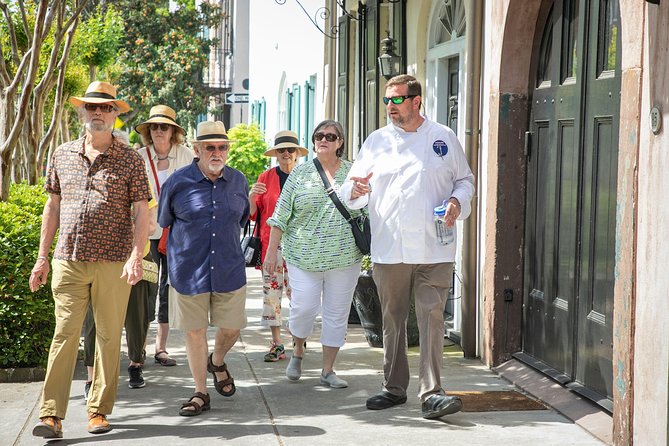
Charleston tells its story through food. Chef Forrest Parker pairs a 90-minute historic walk with a cooking demonstration and three-course lunch, giving you both the city’s landmarks and the Lowcountry traditions behind its menus. I like the way this tour connects architecture, agriculture, slavery, migration, and cooking rather than treating Charleston as a pretty backdrop. I also like the small group size, capped at 11 people, which keeps the experience personal. The main drawback is that the walking portion depends on the weather, and a rainy morning can shorten or rearrange the day.
Parker is the tour’s engine. He is a chef, guide, storyteller, and 2016 South Carolina Chef Ambassador, and he uses humor without skipping the harder parts of Charleston’s past. I especially like that you leave with his recipes, not just a full stomach. The one thing to consider is that this is not a quick tasting stroll. You need a moderate level of fitness and several hours free in the morning.
Key points to know before booking
- A chef leads the history walk: Forrest Parker explains Charleston through the food, crops, labor, and cultures that shaped the city.
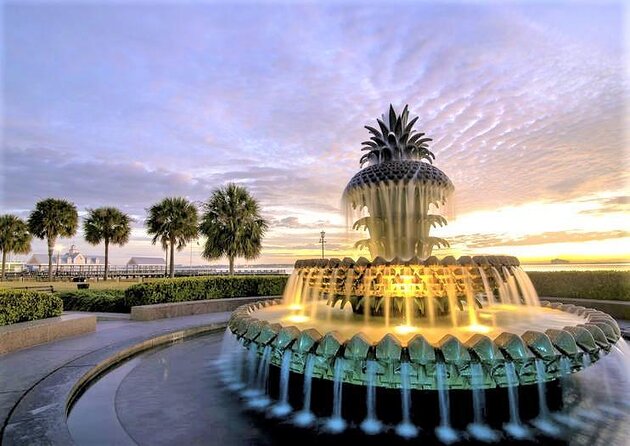
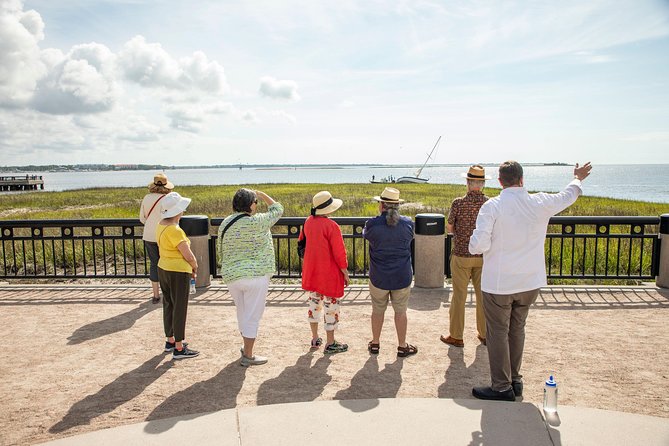
- The route begins at the Pineapple Fountain: You walk through the historic district toward landmarks such as Waterfront Park and Rainbow Row.
- The meal is part cooking class: Parker demonstrates three recipes before serving a three-course lunch.
- Wine is paired with the food: Bistro Au Vin provides tasting pours, with sweet tea, water, coffee, or tea for those who prefer not to drink.
- The group stays small: A maximum of 11 people makes it easier to ask questions and follow the cooking.
- Dietary needs require advance notice: Vegetarian, vegan, pescatarian, dairy-free, nut-free, and gluten-free requests can be accommodated when arranged ahead of time.
Why this food tour feels different from a standard Charleston walk
A normal historic walking tour may point out grand houses, church steeples, and waterfront views. This one asks a more useful question: What was happening in the kitchens, fields, markets, and dining rooms that made Charleston what it is?
That food-first approach gives the city a sharper focus. You hear about the influences behind Lowcountry cooking and the people who carried those traditions forward. The tour also deals with the uncomfortable parts of Charleston’s past, including the role of enslaved cooks and workers in creating foodways that still shape local menus.
That balance matters. Charleston is easy to admire from the sidewalk, but the city makes more sense when you connect its polished architecture to the labor, trade, crops, and cultures that supported it. Parker’s approach gives you both sides.
His style is informal and lively. He uses humor, but the humor does not erase the difficult material. Several accounts describe him as witty, warm, and direct, with a talent for telling hard truths without turning the walk into a lecture. If you enjoy history with personality, this should suit you. If you want a quiet, strictly academic tour, his energetic approach may feel like a lot.
More Wine Tours in Charleston:
- Douro Valley: Historical Sites, Wine Experience, Lunch & Cruise
★ 5.0 · 5,133 reviews - Barcelona: Tapas Walking Tour with Food, Wine, and History
★ 4.8 · 4,261 reviews - Lisbon: Live Fado Show with Port Wine in Historic Center
★ 4.7 · 4,166 reviews
Starting at the Pineapple Fountain and Waterfront Park
The meeting point is the Pineapple Fountain at 1 Vendue Range, beside Charleston Waterfront Park. Start time is 9:00 a.m., so you will want to arrive ready to walk rather than grabbing a leisurely breakfast at the last minute.
Waterfront Park is a sensible place to begin. The fountain and harbor setting quickly give you a feel for Charleston’s public face, while the route then moves into the historic district and the French Quarter. You get a mix of major sights and less obvious corners instead of spending the whole morning on one famous street.
Parker’s route is built around connections. A building may lead to a story about the people who lived or worked there. A street may open into a discussion of food, trade, or the ingredients that became part of Lowcountry cooking. This is more useful than a string of unrelated dates because you begin to see how place and cuisine developed together.
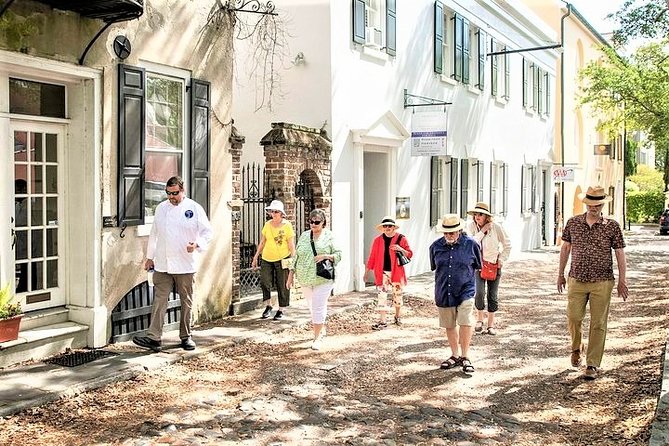
The walk lasts about 90 minutes. That is long enough to cover ground and build a real story, but short enough that the cooking and lunch do not become an afterthought. Wear comfortable shoes, bring water, and prepare for Charleston weather. One account describes a rainy start that required umbrellas and a change in order. The tour continued, but the walking portion was shortened. Weather flexibility helps, though it cannot guarantee a dry morning.
Rainbow Row and Charleston’s famous streets
Rainbow Row is one of the most recognizable stops on the route. Its pastel facades make for an easy photo, but the value here is the context Parker adds around the architecture and the historic district.
You should not expect to simply pose for a picture and move on. The route also reaches lesser-known locations where the city’s past is easier to misunderstand if you only look at the pretty facades. Parker uses those places to explain how Charleston evolved and how food traditions were shaped by many communities.
The walk may include architectural details, French Quarter streets, and locations that are easy to pass without noticing. The point is not to collect every famous landmark. It is to help you read the city with more care.
That makes this a good first-day activity. After the tour, you will likely recognize more than just Rainbow Row. You may notice how buildings, streets, and food fit into a larger story when you explore on your own.
From the sidewalk to the stove
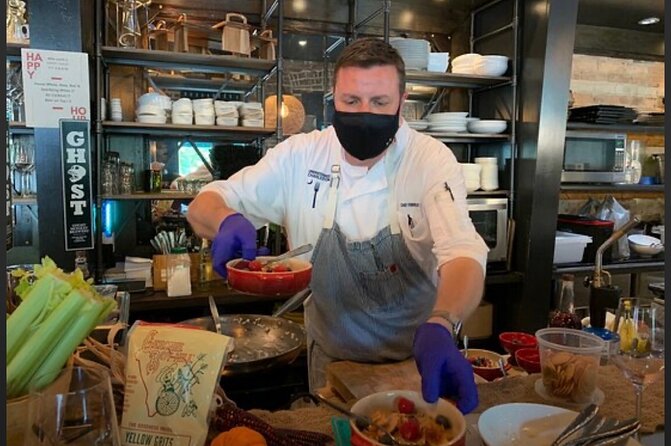
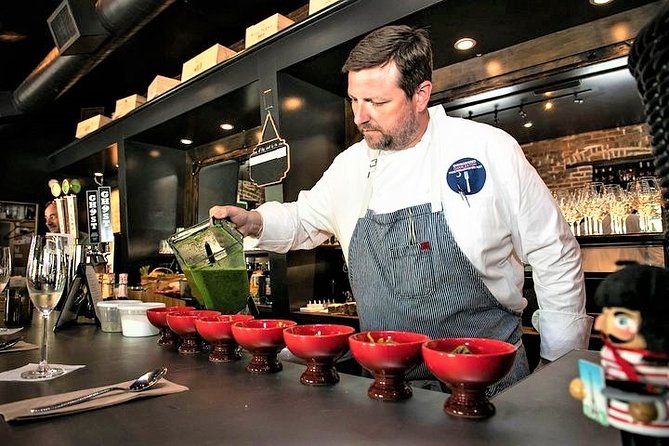
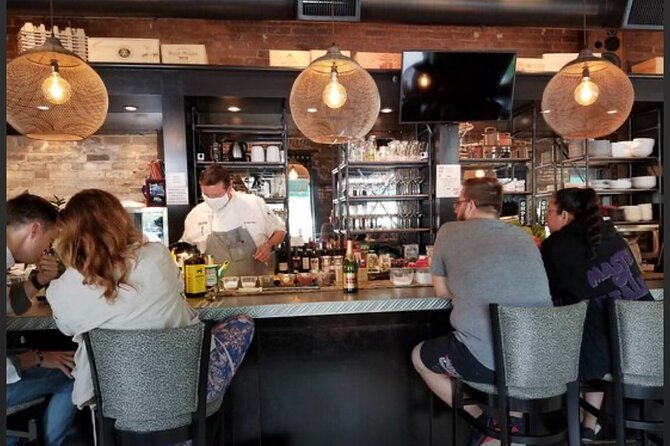
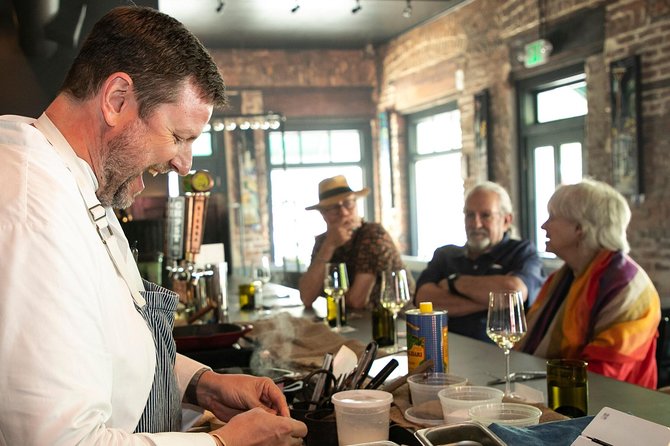
After the walk, the experience shifts to a cozy bistro setting associated with Bistro Au Vin. Here, Parker demonstrates three recipes built around heritage Lowcountry ingredients and techniques he has developed over more than two decades.
This is not a cooking class in which you spend the afternoon chopping every ingredient yourself. The emphasis is on watching the chef work, asking questions, learning the reasoning behind each dish, and then eating the finished meal. That format works well for a morning tour because you get practical instruction without turning lunch into a long labor session.
The demonstration is one of the strongest parts of the experience. Parker explains how to prepare his interpretations of classic Lowcountry dishes, and you can see how traditional ingredients are handled in a working kitchen. You also get recipes to take home, which gives the experience a life beyond Charleston.
That recipe handout is a small but useful benefit. Many food tours end with a pleasant memory and an empty stomach. Here, you can attempt the dishes again at home. Do not expect your first effort to taste exactly like Parker’s version, but you will have a clear starting point and a better sense of the ingredients involved.
A few more history tours around Charleston worth a look
- Florence Cooking Course with Historic Local Market Visit
★ 4.5 · 151 reviews - Mojo Workshop Cooking Class in Ancient Canarian Village
★ 4.9 · 127 reviews - Rome: Five Shapes of Pasta Cooking Class in Ancient Tavern
★ 5.0 · 102 reviews - Syracuse: Traditional Cooking Class & Ancient Market Visit
★ 4.9 · 72 reviews
A three-course lunch with wine pairings
The meal is a proper three-course lunch, not a handful of samples passed around during a walk. Parker prepares the food and serves it with wine pairings selected by Bistro Au Vin.
Shrimp and grits receives particular praise, and it is the sort of dish that makes sense in this setting. You are not only tasting a Charleston favorite. You are hearing about the ingredients and traditions behind it, then watching a chef explain how he approaches the dish.
Other food mentioned in the experience includes Lowcountry classics, gazpacho, and recipes shaped by local culinary traditions. The exact menu can change, so do not book expecting one fixed list of dishes. Book for the format: three courses, chef-led preparation, local ingredients, and wine matched to the food.
The wine service comes as tasting pours paired with each course. Additional wine is available for purchase. If you do not drink, the experience provides Charleston sweet tea, filtered water, coffee, or tea, so you are not left with a lesser version of the meal.
The value here comes from the combination. A restaurant meal alone might be excellent, but it would not give you the walking tour or the cooking lesson. A food tour alone might provide tastes, but it would not give you a seated three-course lunch. This experience joins the three parts in one half-day.
A closer look at the group size and pace
The maximum group size is 11. That is small enough for Parker to keep the conversation moving and answer questions without shouting across a crowd. It also helps during the cooking demonstration, when seeing the technique matters.
Small does not mean private. You may be sharing the experience with couples, friends, families, or a birthday group. The social side is part of the appeal, especially once everyone sits down for lunch. If you prefer moving through a city alone or with only your own party, this may not be the right format.
The pace is moderate. You walk for about 90 minutes, then spend time seated for the demonstration and meal. A moderate fitness level is required, but this is not an athletic outing. The route takes place in the historic district, and you return to the original meeting point by the end.
The start and finish at the Pineapple Fountain make the day easy to plan. You do not need to arrange a second pickup or work out how to get back across town. The meeting point is also near public transportation.
Food allergies and special diets
This is an important planning point. Parker regularly handles meat, shellfish, eggs, dairy, nuts, and gluten. Many common dietary needs can be accommodated, including vegetarian, vegan, pescatarian, dairy-free, nut-free, and celiac-friendly requests.
You must provide that information in advance. This is a chef-led experience, not a restaurant with a large kitchen team and a standard allergy menu. If you arrive without warning, the right ingredients and preparation may not be available.
For serious allergies, contact the provider directly before booking or as soon as possible afterward. Be specific about cross-contact concerns and ingredients you must avoid. Advance communication is the difference between a smooth meal and a stressful one.
The same advice applies to strong food aversions. Parker can often make reasonable adjustments, but he needs time to plan them.
Who will get the most from this experience
I would choose this tour for someone visiting Charleston for the first time who wants history and food in equal measure. It also works well for a repeat visitor who has already seen the basic sights and wants a more personal route through the city.
Food lovers will appreciate the cooking demonstration, recipe cards, local ingredients, and full lunch. History fans will value the stories about architecture, culture, labor, and the forces that shaped Lowcountry cuisine. Couples and small groups can turn it into a memorable birthday or anniversary outing, though the experience is not limited to special occasions.
It is also a good fit for people who want a human guide rather than an audio tour. Parker’s humor and personality are central to the experience. The tour depends on his storytelling, so your enjoyment will be tied partly to how much you like an outgoing guide.
I would think twice if you are looking only for a quick morning snack crawl. This is a four-hour commitment, with a substantial walk and a sit-down meal. I would also avoid scheduling it immediately before another fixed activity. The start time is 9:00 a.m., and weather or group pacing can affect the exact finish.
Value, timing, and practical planning
No price is provided here, so I cannot judge the exact cost against comparable Charleston tours. I can judge the ingredients of the value. You receive a 90-minute guided walk, a cooking demonstration, a three-course lunch, wine pairings, nonalcoholic options, and recipes to take home.
That is a strong package if you would otherwise pay separately for a historic tour and a quality lunch. The small group and chef-led format add more value than a large bus tour, though you are also paying for a more focused and personal experience rather than the lowest possible price.
Plan on about four hours. Begin at the Pineapple Fountain at 9:00 a.m. and finish back at the meeting point. Wear walking shoes, leave room for lunch, and do not schedule a demanding activity right afterward.
The activity is offered in English, and confirmation arrives at booking. Service animals are allowed. Participants must be at least 21, except for older teenagers accompanying parents. Cancellation is free up to 24 hours before the start time. Within 24 hours, changes and refunds are not accepted. If poor weather or an insufficient number of bookings cancels the activity, you can choose another date or receive a full refund.
Should you book Undiscovered Charleston?
Book it if you want Charleston to make sense as a place, not just a collection of handsome streets and restaurants. The strongest feature is the link between the walk and the meal. Parker shows you the city, explains the food traditions, cooks for you, and sends you home with recipes.
I would make this one of my first planned activities in Charleston, especially for a first visit. You will get bearings in the historic district, learn which stories deserve more attention, and eat a serious Lowcountry lunch.
Skip it if you dislike guided group experiences, cannot manage a 90-minute walk, or want a fixed menu and guaranteed weather. For everyone else, this is a smart half-day choice, especially if you value food with a story behind it.
FAQ
Where does the Charleston food and history tour begin?
It begins at the Pineapple Fountain at 1 Vendue Range in Charleston, beside Waterfront Park. The start time is 9:00 a.m.
How long does the experience last?
The full activity lasts approximately four hours. The walking portion takes about 90 minutes, followed by the cooking demonstration and lunch.
What food and drinks are included?
Chef Forrest Parker demonstrates three recipes and serves a three-course lunch using heritage Lowcountry ingredients. Bistro Au Vin provides wine tasting pours paired with the courses. Sweet tea, filtered water, coffee, and tea are available for those who do not want wine.
Can dietary restrictions be accommodated?
Common dietary needs can usually be accommodated, including vegetarian, vegan, pescatarian, dairy-free, nut-free, and gluten-free diets. You must provide advance notice so the chef can prepare appropriately.
How many people can join the tour?
The activity has a maximum of 11 travelers.
What happens if the weather is poor?
The experience requires good weather. If it is canceled because of weather, you will be offered another date or a full refund. The tour may also adjust its order or route when conditions change.
More Workshops and Classes in Charleston
- Sip History in The Sun Cabana Covered Cocktail Class
★ 5.0 · 332 reviews - Sip History In a Secret Speakeasy Cocktail Class
★ 5.0 · 40 reviews - Charleston: Sip History Cocktail Making Class w Drinks Incl.
★ 4.8 · 28 reviews - Dubai Evening Heritage Safari by Vintage G Class Al Marmoom Oasis
★ 5.0 · 1,500 reviews
More Food Tours in Charleston
- Charleston’s Historic Downtown Food Tour
★ 4.5 · 349 reviews - Charleston: Historic Downtown Food Tour
★ 4.7 · 67 reviews - Amsterdam Food and Cultural Tour with Tastings
★ 5.0 · 4,315 reviews - Sevilla Food Tour: Tapas, Wine, History & Traditions
★ 5.0 · 3,468 reviews
Just added around Charleston
- Charleston’s Historic Pubs, Taverns, and Taprooms Tour★ 4.5 · 33 reviews
- Charleston’s Strong Women of the South History Tour★ 4.5 · 27 reviews
- Small-Group Tour: Charleston Old Walled City Historical Walking Tour★ 4.5 · 283 reviews
- Private Walking Tour of Historic Charleston★ 5.0 · 38 reviews
- Sip History in The Sun Cabana Covered Cocktail Class★ 5.0 · 332 reviews
- Sip History In a Secret Speakeasy Cocktail Class★ 5.0 · 40 reviews
- Private Afternoon Sailing/Dolphin & History Tour on 43ft Mystique★ 5.0 · 32 reviews
- Private Sunset Sail BYOB Dolphin/History Tours on 43ft Mystique★ 5.0 · 42 reviews
Wine Tours, compared.

Douro Valley: Historical Sites, Wine Experience, Lunch & Cruise
Read our review →
Tapas Walking Tour with Food, Wine, and History
Read our review →
Live Fado Show with Port Wine in Historic Center
Read our review →
Sevilla Food Tour: Tapas, Wine, History & Traditions
Read our review →
Valencia Old Town Tour with Wine & Tapas in 11th Century Historic Monument
Read our review →
Barcelona Tapas Walking Tour: Food, Wine & History
Read our review →
Ultimate Seville Tapas, Wine & History Small Group Tour
Read our review →
Browse the lists this tour appears in