
Review · CHARLESTON
Charleston’s Historic Downtown Food Tour
Come hungry, and bring comfortable walking shoes. Charleston’s Historic Downtown Food Tour pairs four restaurant tastings with stops at Rainbow Row, the Pineapple Fountain, the Old Exchange, and City Market. I like the food-and-history balance, especially the way dishes such as she-crab soup and Carolina Gold rice connect to Charleston’s past. I also like the small group limit of 15, which makes it easier to hear the guide and ask questions. The main drawback is that the tour may move quickly, and the advertised 2.5 hours has sometimes run closer to two.
This is a useful first-day activity because it gives you both a meal and a map of central Charleston. Guides such as Paige and Jeff have earned particular praise for their storytelling, but you should know that the food lineup can change. Shrimp and grits may appear in promotional material, yet it has not always been served.
Key points to know before booking
- Four restaurant tastings make up a full lunch: Recent food examples include she-crab soup, chicken with rice, pulled pork, and dessert.
- Charleston’s food story is the main subject: French cooking, African ingredients, Gullah Geechee culture, privateering, and local hospitality all enter the conversation.
- The route covers central sights: You pass Rainbow Row, the Pineapple Fountain, the Old Exchange and Provost Dungeon, and Charleston City Market.
- The group is capped at 15 people: That is small enough for questions and a more personal guide experience.
- Plan for a brisk pace: You walk between stops, eat at several venues, and listen to history along the way.
- The $110 price includes lunch tastings: Alcohol costs extra, and children ages 0 to 6 do not receive included food.
What the Charleston food tour is really like
This is not a restaurant crawl built around leisurely drinks and long meals. It is a compact walking tour in which food gives you a reason to pay attention to Charleston’s past.
The advertised length is about two hours and 30 minutes, though the actual timing can be shorter. One recent account placed the experience at roughly two hours, so I would not schedule another activity immediately afterward. That small timing gap matters in Charleston, where a short walk can turn into a slow one when streets are crowded or the group pauses for questions.
You meet at 195 East Bay Street, then return to the same point at the end. The route stays in the historic downtown area, near public transportation, and the group can include no more than 15 people. That is a practical size for a walking tour. You are not trying to follow a guide through a crowd of 30 or more, and the guide can usually respond when you ask about a dish, building, or local custom.
The food is served at four different restaurant stops. You should expect tasting portions rather than four full restaurant meals, but the combined servings are intended to replace lunch. Several people have found themselves comfortably full by the end. Since alcohol is not included, you can buy a cocktail or other drink at the venues if you want one, but doing so may make the schedule feel even tighter.
More Old Town and Historic Centre Walks in the USA
- Charleston: Historic Downtown Food Tour
★ 4.7 · 67 reviews - Philadelphia Old City Historic Walking Tour with 10+ Top Sites
★ 5.0 · 2,020 reviews - Asheville Historic Downtown Guided Electric Bike Tour with Scenic Views
★ 5.0 · 1,234 reviews
Rainbow Row and the French flavor of Charleston
The first sightseeing stop is Rainbow Row, the famous run of colorful historic houses along East Bay Street. You pass by rather than enter the buildings, with about 15 minutes devoted to the stop and the French influence on Charleston cooking.
This is a good opening because it connects architecture, trade, and food without asking you to memorize a long list of dates. The guide explains the kinds of dishes and methods French culture introduced to local cooking. You begin to see Charleston food as a meeting place, not a single tradition.
The stop itself is brief. If you want detailed architectural history or time for careful photographs, you may need to return on your own. The tour’s aim is to use Rainbow Row as a starting point for the food story, not to provide a full house-by-house examination.
That distinction helps set your expectations. You are getting context between meals, not a full architectural tour with occasional snacks. I like this approach because the food never feels detached from the city around you.
Pineapple Fountain and the meaning of hospitality
The walk continues to the Pineapple Fountain, where the guide spends about 20 minutes discussing the symbol of southern hospitality and its connection to Charleston cooking.
This stop adds a lighter cultural note after the French food discussion. The pineapple is widely used as a sign of welcome in the American South, and here it becomes a way to talk about how hospitality appears at the table. You are not simply being told that Charleston has famous food. You are shown how local identity is expressed through shared meals, welcoming customs, and familiar ingredients.
The fountain is also a useful visual break. You can hear the explanation, look across the water, and take photographs before moving on. The tour does require you to keep an eye on the clock, though. If you enjoy lingering at every landmark, the pace may feel a little brisk.
Weather affects this part of the experience. The tour requires good weather, and much of the appeal comes from walking outdoors between stops. Rain or unpleasant conditions can make the same route less comfortable. If poor weather cancels the tour, you are offered another date or a full refund.
The Old Exchange and the pirate chapter
At the Old Exchange and Provost Dungeon, the tour turns to Charleston’s early-1700s connection with privateering and piracy. The stop lasts about 15 minutes and focuses on how those activities affected the local diet.
This is one of the more unusual parts of the experience. Many food tours stick to recipes and restaurant names. Here, you learn how maritime trade and piracy helped shape what people could obtain, serve, and eat in early Charleston.
The subject also gives the guide a chance to explain the difference between privateering and piracy, at least in broad terms, and how both affected the city. The stop is outside and passing rather than a dungeon visit. Admission to the landmark is not included because you are not buying an interior tour.
I find this section useful because it widens the food story. A local dish does not appear from nowhere. Ports, ships, trade routes, wealth, and conflict all affect the ingredients that reach a table. The explanation is short, so readers who want a full account of Charleston’s maritime past will need a separate historical tour.
More Old Town and Historic Centre Walks in Charleston:
- Madrid Essential: Historic Center, Plaza Mayor & Royal Palace
★ 5.0 · 6,416 reviews - Lisbon: Live Fado Show with Port Wine in Historic Center
★ 4.7 · 4,166 reviews - Valencia Old Town Tour with Wine & Tapas in 11th Century Historic Monument
★ 5.0 · 3,234 reviews - Prague Old Town, Medieval Underground and Dungeon Historical Tour
★ 4.5 · 3,227 reviews
City Market and the African influence on local food
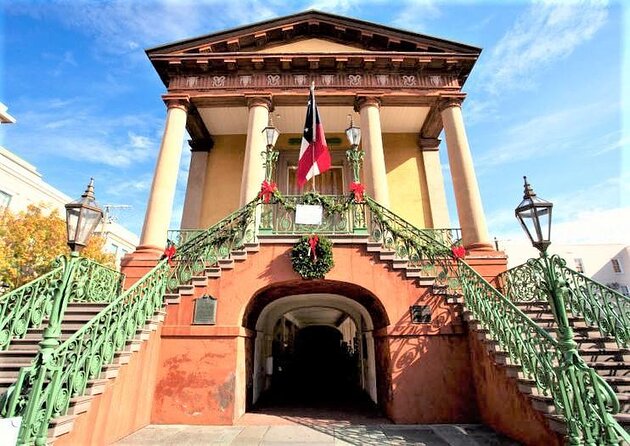
Charleston City Market is the longest of the listed sightseeing stops, with about 20 minutes devoted to African influences on the city’s cuisine and to ingredients introduced to local residents.
This is an important part of the tour, and the best guides handle it directly. Charleston’s food cannot be explained honestly without discussing slavery, the slave trade, and the knowledge carried by African and Gullah Geechee people. The tour makes that subject part of the meal rather than treating it as a footnote.
You may hear about the ingredients and cooking traditions that shaped Low Country food. The precise discussion depends on the guide, but the aim is clear: to connect food on your plate with the people whose labor, farming skills, and culinary traditions helped create it.
That conversation may be uncomfortable, but it should be. One of the strongest parts of the experience is its willingness to address this history instead of presenting Southern cooking as a simple collection of charming recipes. Paige has been praised for giving the subject the attention it deserves while keeping the discussion clear and respectful.
City Market itself can be busy, and the group may need to stay close together. This is another reason the small maximum of 15 helps. You can hear the guide without needing to push toward the front.
The food: she-crab soup, rice, barbecue, and dessert
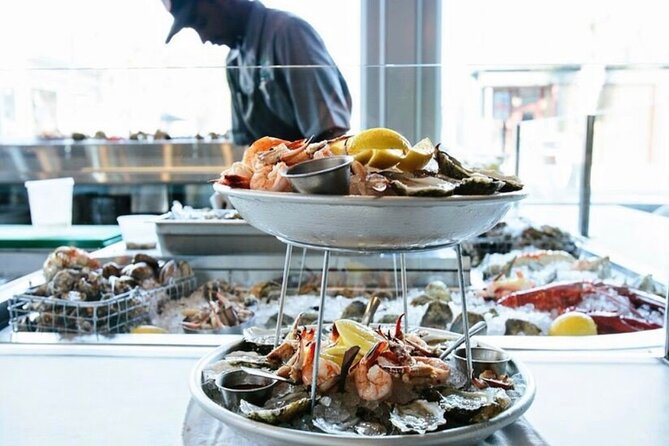
The food is the heart of the tour, and the selections give you a useful introduction to Low Country cooking.
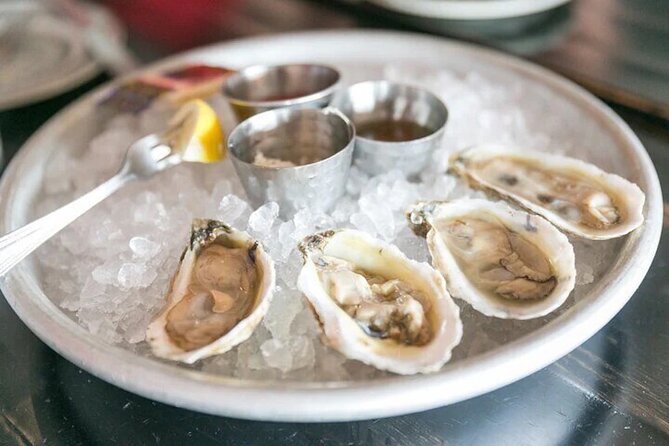
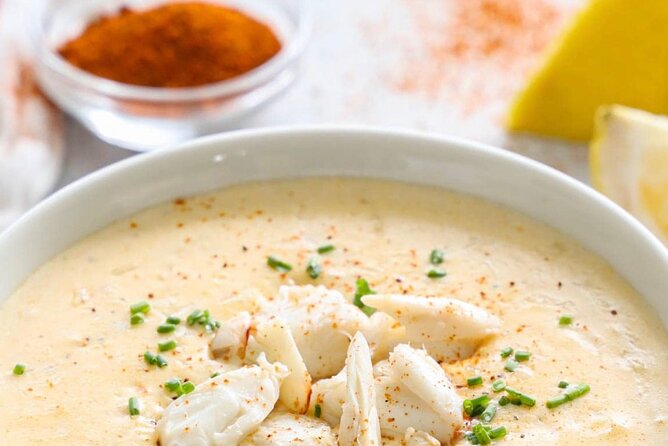
She-crab soup has been a favorite starting point. It is associated with Charleston and provides an easy way to discuss local seafood, regional taste, and the history of the dish. If you have never tried it, this tasting gives you a low-risk introduction. The portion is part of a larger meal, so you do not have to commit to a full bowl before deciding how you feel about it.
Recent food examples have also included Carolina Gold rice with chicken, rice jollof, and a pulled pork slider. These dishes show different parts of the area’s culinary story. Rice is especially useful in the conversation about African foodways, agriculture, and Low Country cooking. Pulled pork brings in a familiar Southern staple in a small portion that is easy to eat while keeping the tour moving.
Dessert is included and has received strong praise. The exact dessert can change, so I would not book expecting one particular sweet. Think of the meal as a sequence of representative tastes rather than a fixed restaurant menu.
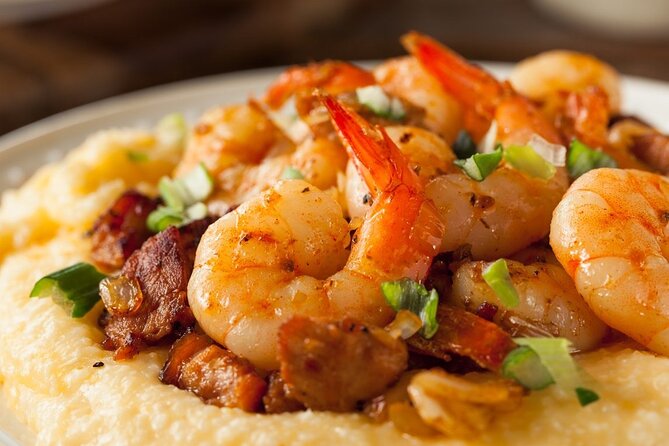
There is an important qualification about shrimp and grits. The dish has appeared in the tour’s promotional material, but it has not always been served. If shrimp and grits is the main reason you are considering the tour, ask about the current food lineup before booking.
Food quality has not been perfectly uniform. Most tasting portions have been described as delicious, especially the soup and dessert, but at least one guide-led outing was judged only average for food. That is normal for a multi-stop experience with changing restaurant partners. The tour’s strongest value comes from the combination of food and explanation, not from expecting four destination meals.
How the guides shape the experience
The guide can make or break a food tour, and this one has received particularly strong praise for its personal style.
Paige is frequently singled out for her warm manner, clear explanations, and connection to Charleston and Low Country cuisine. Her approach links each dish to a piece of history, so you are not eating first and receiving a disconnected lecture later. Jeff has also been praised for adding historical detail, while Emerson has been appreciated for his broad grasp of Charleston and American history.
The important point is not to expect the same personality every time. Each guide will tell the story in a slightly different way. What you can reasonably expect is a mix of food explanations, local history, and time for questions.
The tour moves quickly enough that it is not ideal for someone who wants long, quiet meals. One stop may end just as you begin settling into a conversation or drink. If you enjoy a lively pace and like meeting people from different places, that rhythm will probably suit you. If you want to linger over each course, book a conventional lunch instead.
Is $110 a fair price?
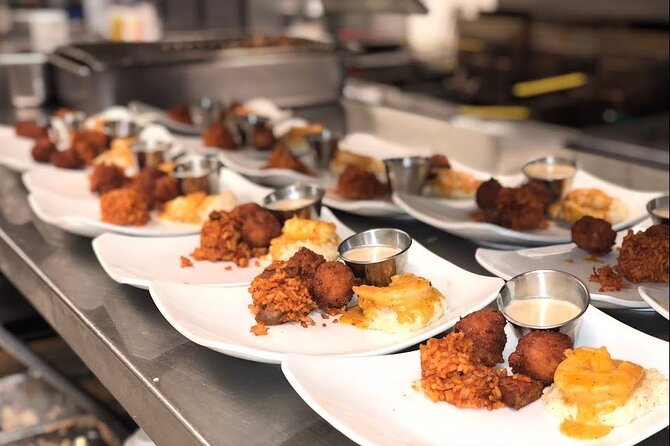
At $110, this is not a cheap way to grab lunch. The value depends on how you use the experience.
You are paying for four food tastings, a guided walk through several major downtown sights, local history, and the convenience of skipping lines at the participating restaurants through VIP access. You also get enough food to serve as lunch, which means you may not need to buy another meal during the afternoon.
The price makes the most sense early in your Charleston stay. You get an introduction to local dishes, learn the basic shape of the historic district, and collect ideas for places and foods to explore later. A guide can also explain why an ingredient matters instead of leaving you to guess from a menu.
The value is weaker if you mainly want a slow restaurant experience. Alcohol costs extra, the tour may finish closer to two hours than two and a half, and food quality can vary from stop to stop. You are buying access, context, and several tastes, not a luxury dining event.
Who should book this Charleston food walk?
I would recommend it to first-time visitors who want a practical introduction to downtown Charleston. It suits people who enjoy history but do not want to spend the whole day inside museums, and it works well for anyone who wants lunch built into a walking route.
It is also a good choice for curious eaters who want to try she-crab soup, regional rice dishes, barbecue, and dessert without ordering full portions. The discussion of African and Gullah Geechee influences makes it more worthwhile than a tour that simply points out pretty buildings and hands you snacks.
Families can participate, and most people can take part. Service animals are allowed, and the meeting point is near public transportation. Children ages 0 to 6 can join, but their ticket does not include food, so check the arrangements carefully if you are traveling with young children.
You may want another option if you dislike walking, need a fixed finish time, or prefer a quiet meal with plenty of time at the table. You should also think twice if your main goal is specifically shrimp and grits, since that dish has not always been part of the current menu.
Should you book it?
Book this tour if you want a substantial tasting lunch tied to Charleston’s complicated past. The strongest reasons are the guide-led storytelling, the range of local foods, and the direct discussion of French, African, and maritime influences.
I would schedule it near the beginning of your stay, leave extra time afterward, and wear comfortable shoes. Confirm the current food lineup if a particular dish matters to you, and treat the two-and-a-half-hour duration as an estimate rather than a promise. At $110, it offers good value for an active introduction to Charleston, as long as you prefer several focused tastings over one leisurely meal.
FAQ
How much does Charleston’s Historic Downtown Food Tour cost?
The tour costs $110.
How long does the tour last?
The stated duration is approximately two hours and 30 minutes. Actual timing can be closer to two hours, so avoid scheduling another activity too tightly afterward.
Where does the tour begin?
It begins at 195 East Bay Street, Charleston, South Carolina 29401.
Where does the tour end?
The tour ends back at the meeting point.
How many restaurant stops are included?
Lunch food tastings are included at four different restaurant stops.
Is alcohol included?
No. You may purchase alcoholic drinks at the venues, but those beverages cost extra.
Is food included for children ages 0 to 6?
Children ages 0 to 6 do not have food included with their ticket.
What is the maximum group size?
The tour accepts a maximum of 15 travelers.
Can I cancel for a full refund?
Yes. You must cancel at least 24 hours before the experience start time for a full refund. Cancellations or changes made less than 24 hours before the start time are not refunded. If poor weather causes the tour to be canceled, you are offered another date or a full refund.
More Food Tours in Charleston
- Undiscovered Charleston: Half Day Food, Wine & History Tour with Cooking Class
★ 5.0 · 948 reviews - Amsterdam Food and Cultural Tour with Tastings
★ 5.0 · 4,315 reviews - Barcelona: Tapas Walking Tour with Food, Wine, and History
★ 4.8 · 4,261 reviews - Madrid Tapas & Taverns Small Group Food & History Tour
★ 5.0 · 2,664 reviews
More Food and History Tours in Charleston
- Sevilla Food Tour: Tapas, Wine, History & Traditions
★ 5.0 · 3,468 reviews - Victoria Guided Food and History Tour
★ 5.0 · 2,015 reviews - Gastown Historic Walking Food Tour
★ 5.0 · 1,863 reviews - Dublin Historical Centre Food Tour with 8 Food Tastings & Drinks
★ 5.0 · 1,718 reviews
Just added around Charleston
- Charleston’s Historic Pubs, Taverns, and Taprooms Tour★ 4.5 · 33 reviews
- Charleston’s Strong Women of the South History Tour★ 4.5 · 27 reviews
- Small-Group Tour: Charleston Old Walled City Historical Walking Tour★ 4.5 · 283 reviews
- Private Walking Tour of Historic Charleston★ 5.0 · 38 reviews
- Sip History in The Sun Cabana Covered Cocktail Class★ 5.0 · 332 reviews
- Sip History In a Secret Speakeasy Cocktail Class★ 5.0 · 40 reviews
- Private Afternoon Sailing/Dolphin & History Tour on 43ft Mystique★ 5.0 · 32 reviews
- Private Sunset Sail BYOB Dolphin/History Tours on 43ft Mystique★ 5.0 · 42 reviews
Old Town & Historic Centre Walks, compared.

Live Fado Show with Port Wine in Historic Center
Read our review →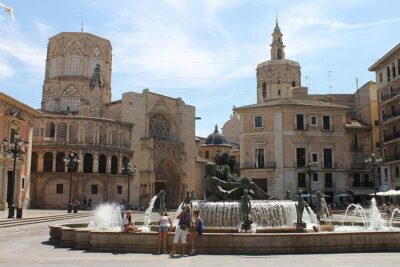
Valencia Old Town Tour with Wine & Tapas in 11th Century Historic Monument
Read our review →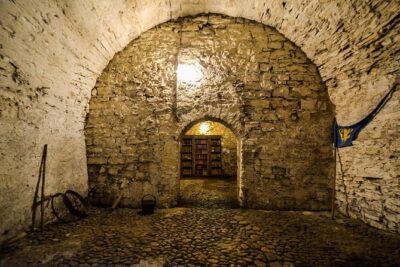
Prague Old Town, Medieval Underground and Dungeon Historical Tour
Read our review →
Historic Center and Getsemaní Shared Walking Tour
Read our review →
Old Town Walking Tour History and Tales in Edinburgh
Read our review →
Philadelphia Old City Historic Walking Tour with 10+ Top Sites
Read our review →
Saadian Tombs & Bahia Palace, Medina Guided Tour
Read our review →Browse the lists this tour appears in