

Review · BOSTON
Boston: Freedom Trail History Tour and Brewery Taste
Boston’s past is waiting around every corner. This 2.5-hour walking tour links 11 of the 16 official Freedom Trail landmarks with clear stories about the American Revolution, then ends with beer, a mocktail, or seltzer and lunch at Democracy Brewing. I like the efficient route and the way the tour connects famous events to the streets and buildings around you.
I also like the small-group feel, with a maximum of 25 people and some departures reported as small as 16 or fewer. Guides such as Gianna, Nick, and Jon have received especially warm praise for making room for questions and adding details beyond a basic schoolbook account. The main drawback is simple: you will be on your feet for much of the morning, and the tour does not include the North End or Charlestown sections of the Freedom Trail.
Key points before you book
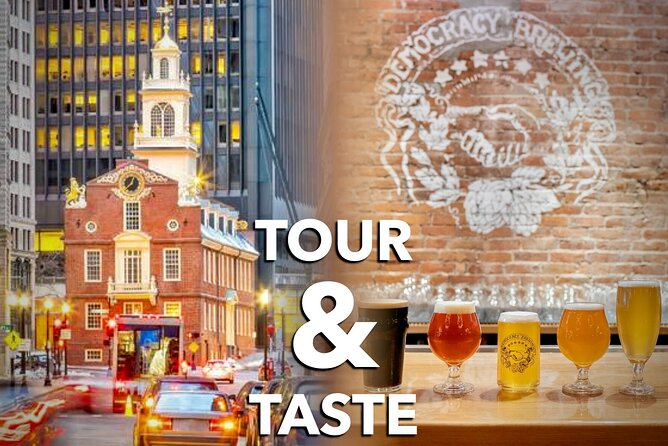
- 11 landmarks in one downtown route: You see major sites from Faneuil Hall to Boston Common without tackling the full Freedom Trail.
- A strong Revolutionary-era focus: The Boston Massacre, Boston Tea Party, colonial government, and early public life all get attention.
- Guides who make the walk personal: Gianna, Nick, and Jon are praised for warmth, local detail, and inviting questions.
- A real meal at the finish: Democracy Brewing provides an all-inclusive New England lunch, not just a token snack.
- A choice of drink: Your included tasting can be beer, seltzer, or a mocktail.
- Best for walkers: You need a moderate fitness level and comfort standing for extended periods.
Starting at Faneuil Hall Marketplace at 11 a.m.
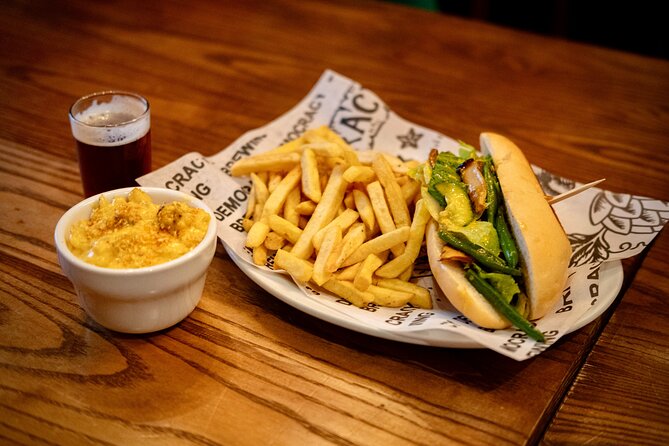
The meeting point is easy to locate in theory, but downtown Boston has plenty of signs and foot traffic to sort through. Look for the black-and-white Coach banners opposite Quincy Market at 121 South Market Street. The tour begins at 11 a.m., so arrive early enough to find the right side of the marketplace without rushing.
Faneuil Hall Marketplace brings together modern shopping and one of Boston’s most important public spaces. The market dates from 1826, while Faneuil Hall itself opened in 1742. It became a place for town meetings and political debate, earning its famous nickname as the Cradle of Liberty.
That contrast is useful at the start. You are not looking at a distant monument isolated from city life. You are standing in a working part of Boston where people still eat, shop, meet, and move through the day. Your guide can use this setting to explain how public debate helped shape the city before and during the American Revolution.
The first stop lasts about 10 minutes and is free. No admission ticket is included or needed for this outdoor portion. From here, the walk heads through the compact center of the Freedom Trail.
A few more history tours around Boston worth a look
- Bamberg: Historical Tour in German with Brewery Visit
★ 4.6 · 126 reviews
Boston’s colonial government and the Boston Massacre
The next part brings you to the Boston Massacre Site, where British soldiers killed five Bostonians in 1770. The stop lasts about 15 minutes, enough time for your guide to place the event in the growing conflict between local residents and British authority.
This is one of the tour’s most useful moments because the Boston Massacre was not an isolated street fight. It became a powerful political tool for those opposing British rule. You can expect the guide to explain the tension surrounding troops in Boston and why the deaths mattered so much to the revolutionary cause.
Nearby, the route includes the former colonial capitol of Massachusetts Bay Colony, the oldest public building in Boston, dating to 1713. This building helps connect the street-level violence of 1770 with the larger machinery of government. Boston’s story was shaped by arguments over taxes, representation, authority, and who had the right to make decisions.
The tour does not promise extended interior visits at these landmarks. The value here is the guide’s explanation and the sequence of sites. You move from a public meeting place to a government building and then to a tragic flashpoint, which gives the morning a clear narrative rather than a string of unrelated photo stops.
Old South Meeting House and the road to the Tea Party
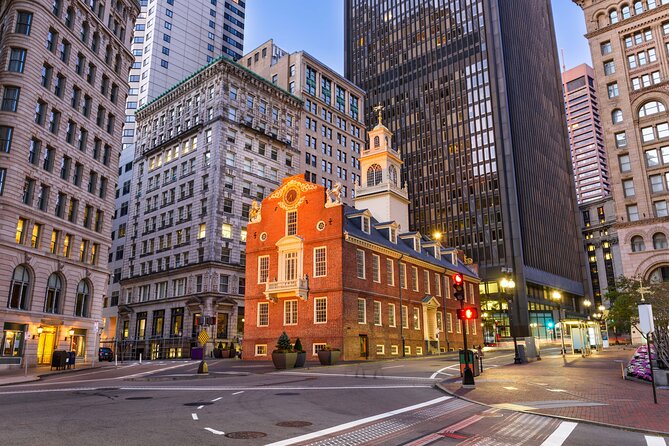
Old South Meeting House is one of the strongest stops on the route. Built in 1729 for a Congregationalist congregation, it became the gathering place connected with the Boston Tea Party in 1773.
The building matters because the Tea Party began with a large public meeting. Political protest was not simply a dramatic act at the harbor. It grew out of organized discussion, speeches, and shared opposition. A good guide can help you see how a religious meeting house also functioned as a political space.
The stop lasts about 15 minutes. That gives you enough time to understand the event without turning the tour into a long indoor museum visit. If you want to tour the interior or spend more time with exhibits, check separately because the tour information only confirms the guided stop, not a full admission visit.
The route also passes the former publishing house of Ticknor & Fields, dating to 1718, and Old City Hall, which was the center of Boston politics for more than a century beginning in 1865. These stops broaden the story beyond the Revolution. Boston was also a city of publishing, civic debate, and changing political power.
You might find these shorter stops less memorable than the Massacre site or Granary Burying Ground. Still, they make the walk feel like a tour of a living downtown rather than a narrow lesson about 1770s battles and protests.
Benjamin Franklin, Boston Latin School, and early Boston
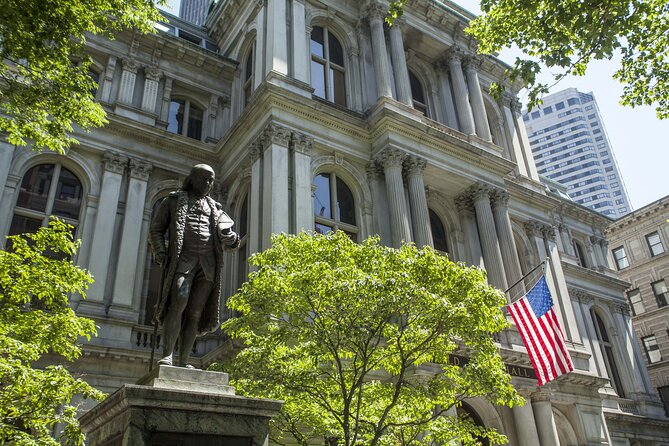
A five-minute stop at the statue of Benjamin Franklin brings you to the site of Boston Latin School, founded in 1635. It is identified as the oldest public school in the Americas.
Franklin’s presence here offers a convenient way to discuss education, public life, and the kind of civic culture that helped produce revolutionary leaders. The stop is brief, so do not expect a long biography. Instead, think of it as a compact connection between one famous Bostonian and the city’s early commitment to public schooling.
The route continues past the first Church of England in Puritan Boston, founded in 1686 and rebuilt in 1754. This site points to religious tensions within a city often associated with Puritan rule. It is a reminder that Boston’s population and institutions were never completely uniform.
You also pass Boston’s first burying space, dating to 1630, described as the oldest Freedom Trail landmark. That early burial ground provides a sense of just how old the city’s central streets are. In Boston, the oldest layers of the city are often directly beneath the modern ones.
Same place, a different slice of the past:
- Boston: Freedom Trail History Small Group Walking Tour
★ 5.0 · 6,450 reviews - Tour of Historic Fenway Park, America’s Most Beloved Ballpark
★ 4.5 · 3,013 reviews - Boston Food & History: Pizza, North End & Freedom Trail
★ 5.0 · 1,772 reviews - Boston: Freedom Trail History Small Group Walking Tour
★ 4.9 · 1,590 reviews
Granary Burying Ground, the tour’s most atmospheric stop
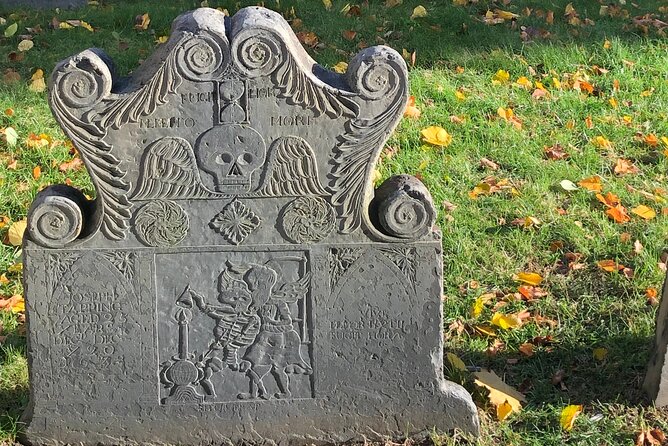
Granary Burying Ground receives about 15 minutes and is likely to be one of the most memorable portions of the walk. Founded in 1660, it is Boston’s third-oldest burying ground and the final resting place of important figures from Revolutionary Boston.
A cemetery changes the pace of the tour. Instead of looking at facades and street corners, you get time to consider the people behind the political story. This is where names, dates, and public events can feel more personal.
One direct account singled out the cemetery as the best part of the walk. I can understand why. It offers a quieter setting and a closer link to the people who shaped the city. Your guide may point out particular graves and explain their place in the period, but the supplied tour details do not promise a fixed list of individuals or a scripted cemetery talk.
The stop is free. Wear comfortable shoes, and keep in mind that old burial grounds may have uneven surfaces. The tour requires a moderate level of physical fitness and is not recommended if you have difficulty standing for long periods.
Park Street Church, the State House, and Boston Common
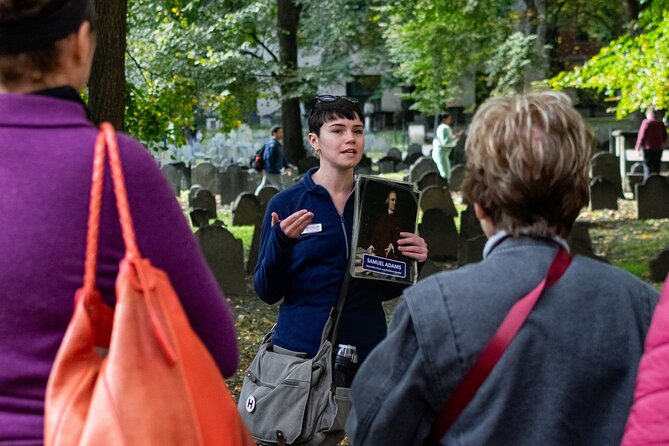
After Granary Burying Ground, the walk continues past Park Street Church, an active church and the tallest building in 19th-century Boston. This is another short historical link between the early republic and the city that followed.
The Massachusetts State House comes next. It dates to 1798 and is associated with the nickname Hub of the Solar System, a phrase linked to Boston’s historic importance and its place at the center of New England life. The State House also gives you a chance to connect revolutionary ideals with the new government that followed.
The route ends its walking portion in Boston Common, founded as public land in 1634. It served as Boston’s communal grazing pasture and is described as the oldest public land in the Americas.
Boston Common is a fitting finish to the trail portion. The tour has moved through places of trade, religion, protest, government, burial, and public use. The Common ties those themes together in a large open space where the city’s public life still continues.
This stop lasts about 15 minutes. You will not cover all 16 official Freedom Trail landmarks on this tour. North End and Charlestown are specifically excluded, so you will miss sites such as Paul Revere’s House, the Old North Church, and the Bunker Hill area. That is not a flaw if you want a manageable morning, but it matters if your goal is to complete the entire trail in one booking.
Why the brewery finish changes the feel of the tour
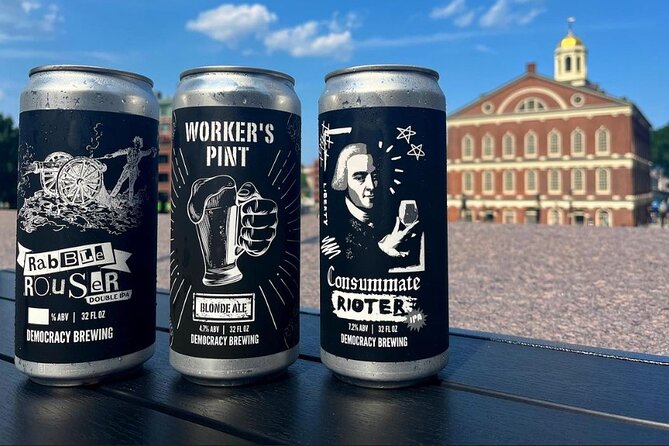
The walking portion concludes at Democracy Brewing, at 35 Temple Place, where the group moves into a private dining room. The brewery is worker-owned and presents itself as a Boston business focused on good beer and community support.
The final hour includes a beer, seltzer, or mocktail tasting and an all-inclusive New England lunch. This is more than a quick drink at the end of a walk. It gives you a place to sit, eat, and keep talking about what you have seen.
I particularly like this setup for people who want history without a formal museum atmosphere. The meal creates a natural pause after the tour’s standing and walking. It also makes the $79 price easier to assess. You are paying for a guided downtown walk, a drink tasting, and lunch, not just access to a route you could follow with a map.
The exact lunch menu and tasting lineup are not specified, so you should not book expecting a particular dish or beer. The available options do include beer, seltzer, or a mocktail, which makes the finish more flexible for non-drinkers.
Democracy Brewing is also the final destination, so you do not need to return to Faneuil Hall. That is handy if you plan to continue exploring downtown or head toward another part of Boston afterward.
How the guides shape the experience
The route itself is strong, but the guide will determine how much you get from it. Gianna is praised for being friendly and attentive, with a style that helped a small group feel comfortable. Nick is noted for adding details that go beyond a standard American history lesson. Jon is described as a local historian and archivist who made the walk especially easy to follow.
Those comments point to an important benefit of this tour: you can ask questions. A large lecture-style group may give you facts but leave little room for conversation. The maximum group size is 25, and some groups may be smaller, so you have a better chance of getting a direct answer about a building, person, or event that catches your attention.
The tour is offered in English. It is suitable for Boston locals who want a fresh look at familiar streets as well as first-time visitors who want orientation and context. The guide also provides local recommendations, which can be useful if you are still deciding where to eat or what to see after the walk.
Price, pace, and practical value
At $79 per person, this is not the cheapest way to walk the Freedom Trail. You can follow the red line independently for far less. The real question is how much you value a guide who can explain the connections between places and finish the morning with lunch and a tasting.
For me, the price makes the most sense if you want a compact introduction to Boston and prefer a planned experience. You see 11 landmarks, hear the political story behind them, and receive a meal at the end. The 2.5-hour duration also leaves most of the day open.
The pace is described as easy, but the tour still involves extended standing and walking. Wear shoes you can trust and plan for ordinary Boston weather. The experience requires good weather, and poor weather may lead to a different date or a full refund.
The group maximum of 25 keeps the tour from becoming a huge procession. Still, you should not assume every departure will be a private or nearly private walk. The small groups praised in the available comments are possible, not guaranteed.
Service animals are allowed, and the start is near public transportation. Free cancellation is available up to 24 hours before the start time. Cancellations made less than 24 hours ahead are not refunded, and changes inside that window are not accepted.
Who should book this Boston tour?
I would choose this experience if you want the main downtown Freedom Trail story without spending a full day on all 16 landmarks. It is a good fit for first-time visitors, history-minded locals, couples, and small groups who like to ask questions.
It also suits you if a sit-down lunch is part of the appeal. The brewery ending turns a walking tour into a half-day outing and gives non-drinkers a mocktail or seltzer option.
I would look elsewhere if you want extensive time inside historic buildings, a full North End and Charlestown route, or a completely private tour. This experience is primarily an outdoor guided walk, followed by lunch and a tasting.
FAQ
How long does the Boston Freedom Trail tour last?
The experience lasts approximately 2 hours and 30 minutes. The walking portion includes several stops, followed by about one hour at Democracy Brewing.
Where does the tour begin?
The tour begins at Faneuil Hall Marketplace, 121 South Market Street, Boston. Look for the black-and-white Coach banners opposite Quincy Market.
Where does the tour end?
The tour ends at Democracy Brewing, 35 Temple Place, Boston. The lunch and tasting take place there in a private dining room.
How many Freedom Trail landmarks are included?
The tour includes 11 of Boston’s 16 official Freedom Trail landmarks. North End and Charlestown are not included.
Is lunch included?
Yes. An all-inclusive New England lunch is included, along with a tasting choice of beer, seltzer, or mocktail.
Can I cancel for a full refund?
Yes, if you cancel at least 24 hours before the experience start time. Cancellations made less than 24 hours in advance are not refunded. Poor weather may result in a different date or a full refund.
Should you book it?
Book this tour if you want a clear, compact introduction to Boston’s revolutionary story, a guide-led walk, and a proper meal at the finish. The best reasons to choose it are the efficient 11-landmark route, the chance to ask questions in a small group, and the relaxed ending at a worker-owned brewery.
Skip it if you want to complete every part of the Freedom Trail or spend substantial time inside historic buildings. For everyone else, $79 buys a well-shaped morning that combines Boston’s political past with a useful modern pleasure: sitting down for lunch after a good walk.
Just added around Boston
- Haunted Boston’s Historic Streets Walking Guided Tour★ 4.5 · 184 reviews
- Boston: Votes for Women History Tour of Back Bay★ 5.0 · 49 reviews
- Boston: Food and History of The Freedom Trail Private Tour★ 5.0 · 159 reviews
- Walk the Historic Freedom Trail with Costumed Guide★ 4.5 · 329 reviews
- Self Guided “Historic Boston Downtown Freedom Trail” Audio/GPS Walking Tour★ 4.0 · 22 reviews
- Boston Seafood Lovers Food and History Walking Tour★ 5.0 · 208 reviews
- A Taste of the Freedom Trail: Boston’s Iconic Food & History Tour★ 5.0 · 32 reviews
- Downtown Freedom Trail Walking Tour – History & Architecture★ 4.5 · 194 reviews
Boston History Tours, compared.
Freedom Trail History Small Group Walking Tour
Read our review →
Tour of Historic Fenway Park, America’s Most Beloved Ballpark
Read our review →
Boston Food & History: Pizza, North End & Freedom Trail
Read our review →Freedom Trail History Small Group Walking Tour
Read our review →
City Cruises Boston Historic Sightseeing Harbor Cruise
Read our review →
Boston Pizza Lovers Food and History Walking Food Tour
Read our review →
Boston Freedom Trail History Pub Crawl Small-Group Tour
Read our review →
Boston City View Bicycle Tour: History and Landmarks
Read our review →Browse the lists this tour appears in