
Review · ATLANTA
Martin Luther King Jr. History Walking Tour
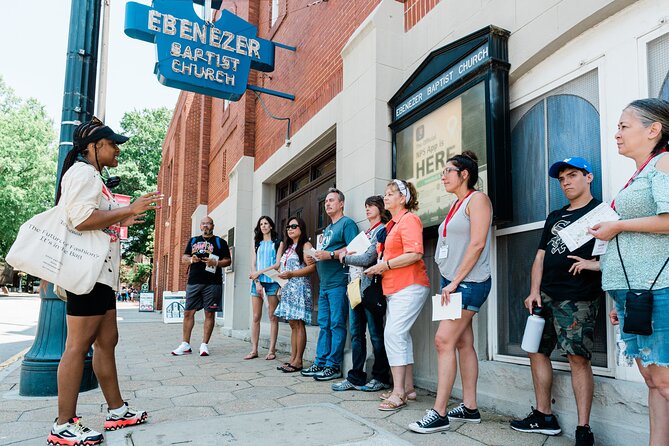
History feels close on these Atlanta streets. This 2.5-hour walk through Sweet Auburn connects Martin Luther King Jr.’s family, faith, work, and final resting place with the wider Civil Rights movement. I love the way the tour links famous locations to personal stories, and I especially like the small group limit of 14 people, which gives you a better chance to ask questions.
The guides are the real strength. Zoe, Joy, Jessica, Jay, Nic, Kristen, and Kirsty have all been praised for strong storytelling, warmth, humor, and clear explanations. One guide used short speech excerpts at key stops, while another found shade during a hot afternoon. The main drawback is simple: you walk about 1.5 miles, sometimes up small hills, and several important buildings are exterior stops only.
Key things to know before you book

- Sweet Auburn is the classroom: The entire tour takes place in the neighborhood where King lived, preached, worked, and is memorialized.
- Expect a personal approach: Guides connect Dr. King’s public work with Coretta Scott King, his family, mentors, and fellow Civil Rights leaders.
- Jackson Street Bridge brings the big view: You get one of Atlanta’s best city views and a useful pause during the walk.
- Several interiors are unavailable: The tour does not include the Birth Home, the inside of Ebenezer Baptist Church, or guaranteed access to every National Park building.
- The walking is manageable but real: Plan on roughly 1.5 miles, small hills, standing, and weather exposure.
- Small groups help: The maximum is 14 people, and the tour operates in English with a mobile ticket.
Why Sweet Auburn matters to this tour
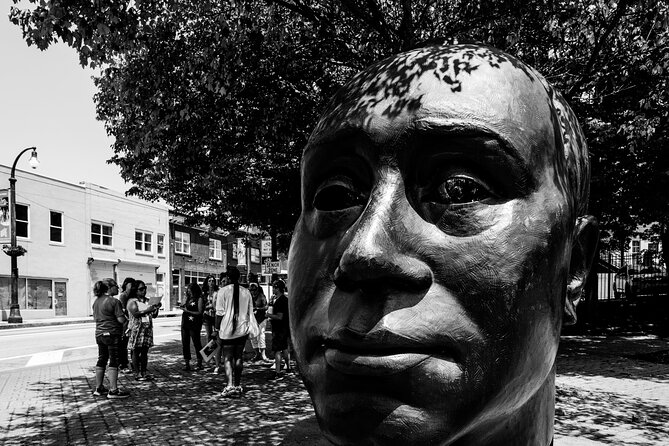
Sweet Auburn is not just a collection of memorials. It is the setting for the story. The tour places Dr. King’s life within the streets, churches, offices, and community institutions that shaped Atlanta’s role in the Civil Rights movement.
That setting gives the tour an advantage over a museum visit alone. You are not only hearing about King’s work. You are seeing the church where he and his father preached, the offices connected with King and Congressman John Lewis, and the places tied to King’s family and legacy.
I also like the way the route broadens beyond Dr. King. The tour makes room for Coretta Scott King, other Civil Rights leaders, mentors, and local institutions. That matters because the movement was never the work of one person. The best guides use King as the central thread, then show you the wider network around him.
The format also suits first-time visitors to Atlanta. You do not need a detailed background in American history before arriving. The guides explain the major events, people, and connections as you walk. If you already know the basic story, the personal details and Atlanta setting can still add something new.
More History Walking Tours in the USA
- Atlanta: Martin Luther King Historical Park Walking Tour
★ 5.0 · 86 reviews - Atlanta: Beltline Food, Street Art, and History Walking Tour
★ 5.0 · 47 reviews - History and Hauntings of Salem Guided Walking Tour
★ 5.0 · 14,564 reviews
Meeting at the Martin Luther King Jr. National Historical Park
The tour begins and ends at 450A Auburn Avenue NE, at the Martin Luther King Jr. National Historical Site. This is a sensible starting point because the site gathers several major parts of King’s story in one place.
You receive an overview of the National Historical Site and walk through various areas with your guide. The scheduled time here is about 25 minutes, though the full Sweet Auburn route continues well beyond this opening section.
A practical warning is important: National Park buildings can close at any time because of staffing shortages. The tour may still operate, but the exact indoor access can change. If entering a particular building is your main reason for booking, keep your expectations flexible.
The tour does not include the Birth Home Tour, which is listed as closed until 2025, and it does not include the inside of Ebenezer Baptist Church’s Heritage Sanctuary. You will still learn about these places and see the exterior of the church, but this is not an all-interiors museum visit.
Ebenezer Baptist Church and the power of place
Historic Ebenezer Baptist Church is one of the most important stops, even though the tour visits the exterior only. Dr. King and his father preached here, making the church central to both his family life and public work.
This stop works best when your guide explains the church’s role rather than treating it as a quick photo opportunity. The reviews consistently praise guides for supplying context and stories, and several descriptions point to the way they make the area feel connected to King’s life.
You should know in advance that you will not go inside the historic sanctuary as part of this experience. That limitation may disappoint anyone expecting a full church tour. Still, seeing the building in its neighborhood setting helps you understand that King’s leadership grew from a local religious community as well as from national events.
The strongest guides appear to add personal touches here, including stories about Coretta, the King family, and the people who influenced Dr. King. If you enjoy history told through people rather than dates alone, this is likely to be one of the more affecting stops.
Prince Hall Grand Lodge and Atlanta’s wider movement

The exterior of the Prince Hall Grand Lodge offers a less obvious but important part of the route. This building was connected with offices used by Dr. King and Congressman John Lewis. The stop also includes the historic Madam C. J. Walker Beauty Salon.
This is the kind of place you could easily miss if you walked Sweet Auburn on your own. It gives the guide a chance to show how Civil Rights work depended on offices, meeting points, businesses, and community organizations, not only famous speeches and marches.
I appreciate this stop because it widens the story beyond the most familiar images of King. The movement involved political work, local organizing, Black-owned businesses, religious institutions, and people whose names may not appear in every schoolbook.
Since this is an exterior stop, the quality of the explanation matters more than the building access. A good guide turns an ordinary-looking street corner into a useful piece of the story. The feedback about Jay, Nic, Jessica, and others suggests that the guides are comfortable answering questions and connecting lesser-known details to the larger movement.
More History Walking Tours in Atlanta:
- Lisbon: History, Stories and Lifestyle Walking Tour
★ 4.8 · 10,902 reviews - Boston: Freedom Trail History Small Group Walking Tour
★ 5.0 · 6,450 reviews - Historic Charleston Guided Sightseeing Walking Tour
★ 5.0 · 6,216 reviews - Barcelona: Tapas Walking Tour with Food, Wine, and History
★ 4.8 · 4,261 reviews
Jackson Street Bridge and Atlanta’s best pause
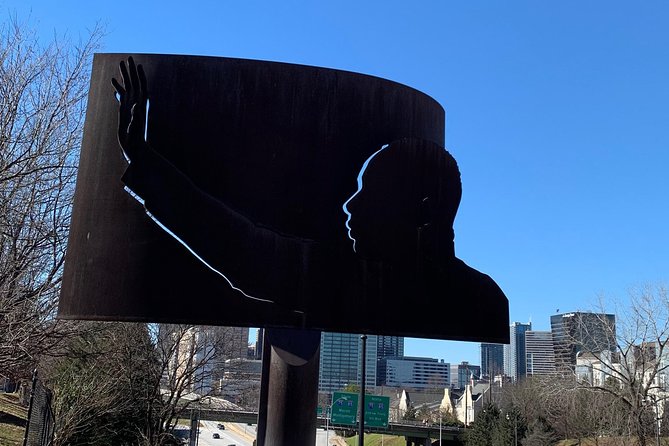
The 10-minute stop at Jackson Street Bridge gives you a change of pace. From here, you take in one of Atlanta’s most recognizable views.
This is more than a photo stop. After a long stretch of historical detail, the bridge gives you time to look outward and place Sweet Auburn within the wider city. It also breaks up the walking route.
The stop is brief, so do not expect an extended sightseeing session. The value comes from the view and the pause, not from a long visit. Bring a charged phone if you want photos, a tip repeated by one person who took the tour.
Weather matters here. The tour operates rain or shine, so you should dress for the forecast and be ready for heat, rain, or changing conditions. A guide may find shade when possible, but you should not count on comfortable weather throughout the afternoon.
Walking through Sweet Auburn for about two hours
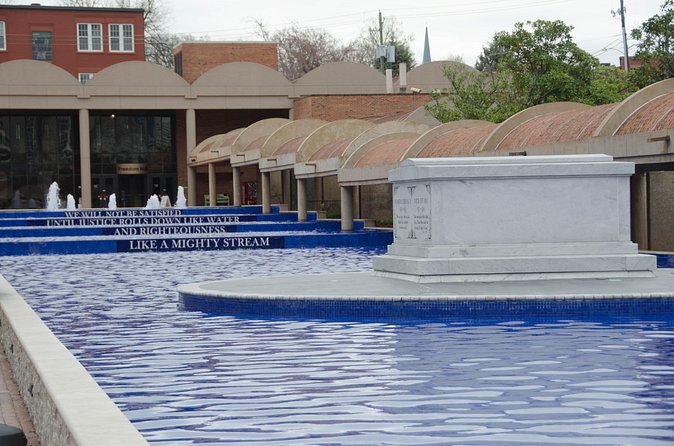
The largest part of the experience is the roughly two-hour walk through Sweet Auburn. This is where the different locations become a single story rather than isolated stops.
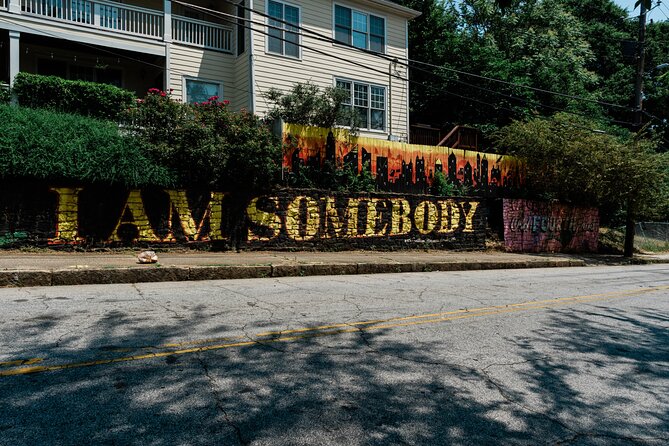
You can expect a steady mix of walking, standing, explanations, questions, and shorter pauses. The route covers about 1.5 miles and includes small hills. Several people found the distance manageable because the guide built in breaks, but this is still not a good choice if you have difficulty walking or standing for long periods.
Comfortable shoes are essential. So are water, sun protection, and weather-appropriate clothing. The tour is not a bus ride with occasional short walks. You are on foot for most of the experience.
The pace seems to be one of the better features. Zoe was praised for keeping a comfortable rhythm, while Joy received credit for planning useful breaks and offering cold water during a hot day. Those small choices make a real difference in Atlanta weather.
The emotional tone can shift from light to serious. Guides use humor and conversation to keep the group engaged, but the subject includes violence, sacrifice, grief, and injustice. One guide used recordings from King’s speeches at key points, allowing you to hear his voice while standing near important locations. That approach can make the history feel immediate without turning the tour into a formal lecture.
The King Center and King family legacy
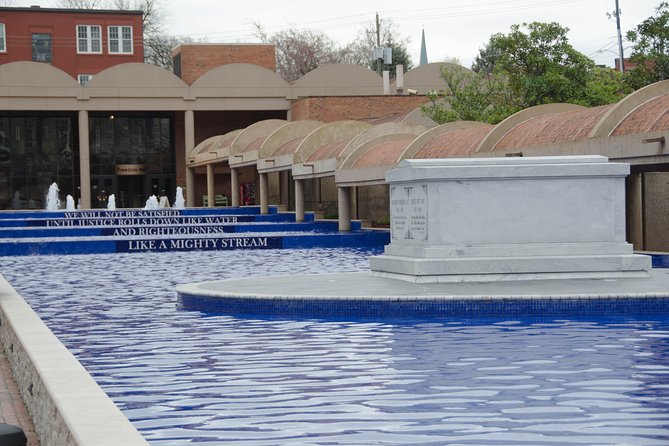
The King Center is part of the route, with an allotted stop of about 10 minutes. Its stated hours are 10 a.m. to 5 p.m., seven days a week.
The tour includes the exterior of the King Center. It does not promise a long independent visit inside, so you should check the timing and current access if you want to spend more time there on your own.
This stop helps move the story from King’s lifetime into his continuing public legacy. Guides also connect the site to Coretta Scott King and the broader King family story. That balance is welcome. Coretta was not a footnote to Dr. King’s work, and the strongest tour explanations give her influence and leadership proper attention.
The route also touches the places connected with King’s burial and final resting place with Coretta. For many people, this is the most moving part of the walk. The combination of personal stories, physical place, and the quiet final section gives the tour emotional weight.
International Civil Rights Walk of Fame
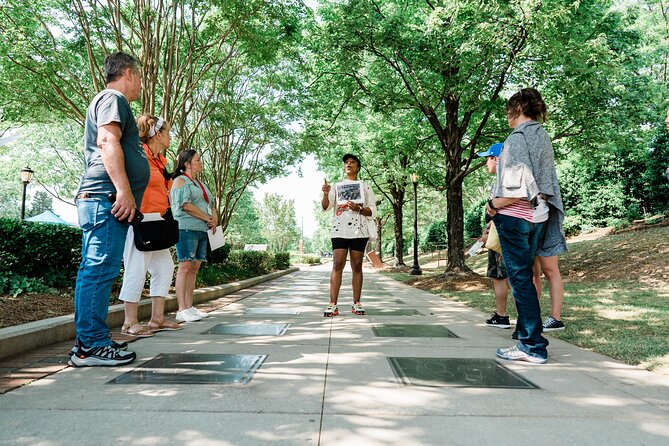
The International Civil Rights Walk of Fame is another short stop, listed at about 10 minutes. Here you see shoe prints associated with prominent Civil Rights leaders.
The stop works as a visual reminder of how many people shaped the movement. After hearing about leaders and organizers during the walk, you can connect names and contributions to a physical memorial.
It is not a large standalone attraction, so its impact depends on the guide’s explanation and on what you have already learned. I would treat it as a closing reflection rather than a major museum visit.
Because the tour ends back at the starting point, this final section also makes the route easy to manage. You are not left across town trying to find your way back to your hotel or car.
The guides make or break the experience
The strongest praise is aimed at the guides, and that makes sense. A walking tour lives or dies by the person leading it.
Zoe is repeatedly praised for energy, pacing, and an ability to make a 2.5-hour walk feel shorter. Joy is described as conversational, warm, and especially strong at explaining personal details about King, Coretta, and the King family. Jessica is praised for theatrical storytelling, careful answers, and the ability to keep a group engaged even when the subject becomes difficult.
Jay receives credit for humor, accessibility, and remembering people’s names. Nic is praised for enthusiasm and for helping the group move along when people approached them on the street. Kristen and Kirsty are described as thoughtful guides who bring feeling and depth to the story.
You cannot choose a specific guide from the information provided, so do not book solely to get one named person. Still, the range of positive comments suggests strong guide training and a clear passion for the subject.
The small group limit of 14 helps here. You are more likely to hear the explanation, ask a question, and stay connected to the guide than you would in a large crowd. The tour is offered in English only.
Is $40 a fair price?
At $40 per person, this is not the cheapest way to see Sweet Auburn. You can walk through parts of the neighborhood on your own, and several sites may be free to visit when open.
The value comes from the structure and interpretation. In about 2.5 hours, you receive a guided route through multiple Civil Rights locations, stories about King’s personal and public life, context about other leaders, and help connecting the sites to one another.
I think the price is fair if you want more than photographs and building exteriors. It is less compelling if you prefer to move at your own speed, spend a long time inside museums, or avoid walking in hot or wet weather.
The 5.0 rating from 687 reviews and a 100 percent recommendation rate suggest a strong record, especially for guide quality. No tour is perfect for every person, but the consistent praise for storytelling and engagement supports the price.
Who should book this walk?
I would recommend it to first-time Atlanta visitors, families with older children, couples, solo visitors, local residents, educators, and anyone who wants a clearer understanding of Atlanta’s role in the Civil Rights movement.
It suits people who learn best by hearing stories while standing in the actual places where events unfolded. It is also a good choice if you want an organized introduction before visiting more sites on your own.
You may want to skip it if you cannot walk or stand for long periods, need guaranteed indoor access, or want to visit the Birth Home and church sanctuary. It is also not the right pick if you dislike fixed pacing or weather exposure.
Book ahead if your schedule is tight. The tour is booked an average of 11 days in advance, and it has a maximum of 14 people. The booking is non-refundable and cannot be changed, except when the operator cancels because of poor weather or too few bookings. In those cases, you are offered another date or a full refund.
FAQ
Where does the Martin Luther King Jr. History Walking Tour begin?
It begins at 450A Auburn Avenue NE, Atlanta, Georgia 30312, at the Martin Luther King Jr. National Historical Site.
Where does the tour end?
The tour ends back at the starting point.
How long does the tour last?
The tour lasts about 2 hours and 30 minutes.
How far do you walk?
The route requires about 1.5 miles of walking and includes some small hills.
Is the tour offered in English?
Yes. The tour is offered in English and uses a mobile ticket.
Does the tour enter Dr. King’s Birth Home or Ebenezer Baptist Church?
No. The Birth Home Tour is currently unavailable until 2025, and the historic Ebenezer Baptist Church Heritage Sanctuary is an exterior-only stop on this experience.
What happens if the weather is poor?
The tour operates rain or shine, but it may be canceled because of poor weather. If that happens, you are offered a different date or a full refund.
Should you book it?
Book this tour if you want the story of Dr. King tied to real Atlanta streets, not just a list of dates and monuments. The best parts are the guides, the personal stories about King and Coretta, the less obvious Prince Hall Grand Lodge stop, and the way the route connects local places to the national Civil Rights movement.
Go prepared for a serious amount of walking, outdoor conditions, and some exterior-only visits. If you arrive in comfortable shoes, bring water, charge your phone, and keep an open mind about the emotional subject matter, this is a strong and worthwhile introduction to Sweet Auburn.
Just added around Atlanta
- 2-Hour Food, History and Street Art Tour of Ponce City Market★ 5.0 · 159 reviews
- Private Atlanta History Tour From Civil War to Civil Rights★ 5.0 · 47 reviews
- Atlanta Then and Now Private History Tour★ 5.0 · 23 reviews
- 2 Hour Historic Market Food Tour and Hands-On Biscuit Class★ 5.0 · 251 reviews
- Atlanta Historical Homes Tour★ 4.5 · 26 reviews
- Atlanta: Historic Market Food Tour and Biscuit Cooking Class★ 4.9 · 25 reviews
- Atlanta: Martin Luther King Historical Park Walking Tour★ 5.0 · 86 reviews
- Atlanta: Beltline Food, Street Art, and History Walking Tour★ 5.0 · 47 reviews
History Walking Tours, compared.

History and Hauntings of Salem Guided Walking Tour
Read our review →
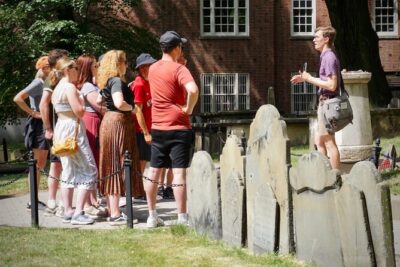
Freedom Trail History Small Group Walking Tour
Read our review →
Historic Charleston Guided Sightseeing Walking Tour
Read our review →
Tapas Walking Tour with Food, Wine, and History
Read our review →
Savannah History and Haunts Candlelit Ghost Walking Tour
Read our review →
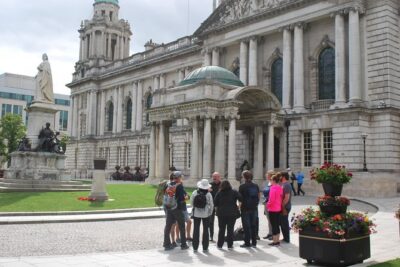
A History of Terror – Belfast City Centre Walking Tour
Read our review →Browse the lists this tour appears in