
Review · ATLANTA
Atlanta Then and Now Private History Tour
Atlanta tells its story in layers. This private three-hour tour links Oakland Cemetery and the Martin Luther King Jr. National Historic Site with old neighborhoods, Olympic landmarks, street art, and the changing BeltLine. I like the way it connects famous sights to the city’s everyday streets.
I also like the private format. Guide Chris can adjust the conversation to your interests, answer questions as they come up, and suggest restaurants afterward. The main drawback is time: with many stops packed into about three hours, some visits will be brief rather than unhurried.
Key points to know before booking

- Oakland Cemetery brings Atlanta’s past into one quiet setting, with free admission and a 30-minute visit.
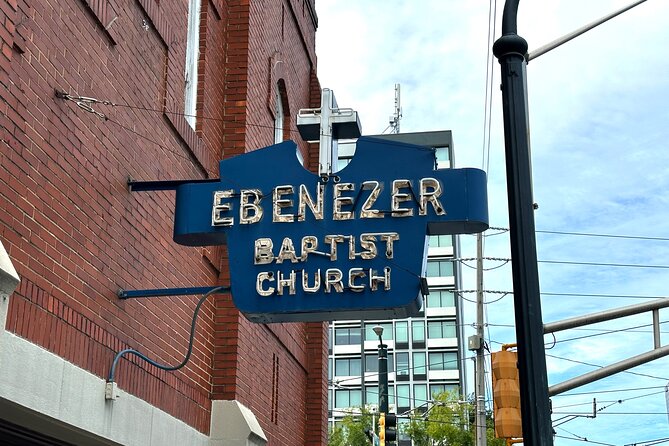
- The King historic site gives the tour its moral center, including Ebenezer Baptist Church, Dr. King’s birth home, gravesite, and museums.
- You see several sides of modern Atlanta, from the 1996 Olympic area to street art and the BeltLine.
- Private transportation and pickup make the route practical, especially if you want to cover spread-out neighborhoods.
- Chris is praised for adapting the tour, including changing the start time and shaping the discussion around your interests.
- The $140 price buys a private experience, not a large group ride, so value depends on how much you care about personal attention.
A compact introduction to Atlanta’s past and present

Atlanta can be hard to read from a car window. The city spread in many directions, and its important places are not gathered around one central old town. This tour helps connect the dots by moving from burial grounds and civil rights sites to Olympic redevelopment, older residential districts, public art, and a major trail project.
You receive bottled water and ride in an air-conditioned vehicle. That matters in Atlanta, where distances can be longer than they look on a map and the weather may make walking between far-flung areas tiring. The tour is private, so only your group participates. You do not have to match the pace or interests of strangers.
Chris is the guide named in the tour information, and the strongest praise centers on his city knowledge, warm manner, flexibility, and ability to fine-tune the conversation. One group had an earlier start arranged, while another received restaurant suggestions at the end. Those details point to the tour’s main strength: you are not simply being driven past landmarks with a memorized script.
Still, keep the format in mind. Three hours is enough for a strong city overview, but not enough to explore every museum, neighborhood, and historic building at length. If you want long museum visits or extended time inside each site, plan a separate visit.
More Private History Tours in the USA
- Private Atlanta History Tour From Civil War to Civil Rights
★ 5.0 · 47 reviews - Private Guided Historic Electric Cart Tour of St. Augustine
★ 5.0 · 1,194 reviews - Private Tour of Savannah’s Historic/Victorian Districts & Bonaventure Cemetery
★ 5.0 · 418 reviews
Oakland Cemetery: a calm opening in a busy city
Oakland Cemetery dates to 1850 and offers a useful first chapter. The grounds provide a quiet contrast to Atlanta’s traffic and newer construction. Your visit here lasts about 30 minutes, and admission is free.
I like this stop because cemeteries can explain a city without requiring a long lecture. Names, dates, monuments, and the layout of the grounds give a sense of Atlanta’s age and growth. You begin with a place tied to the city’s earlier years, before moving toward the political and cultural forces that shaped modern Atlanta.
The short time is both a benefit and a limitation. Thirty minutes gives you an introduction without using too much of the tour, but it may feel quick if you enjoy cemetery details or want to study individual graves. Since the tour includes several other areas, the brief visit keeps the overall route moving.
You should also expect the guide to do the heavy lifting here. The value comes from learning what to notice and how the cemetery fits Atlanta’s story, rather than simply walking among graves without context.
Olympic Atlanta and the city’s modern public face

One stop focuses on an area built for the 1996 Olympics and now home to several of Atlanta’s best-known attractions. The Olympics gave the city a major international moment, and the district remains part of Atlanta’s public identity.
This section helps you see how the city presents itself to the outside world. After Oakland Cemetery, you move from older Atlanta to a place shaped by a large modern event. That contrast is one of the tour’s smart choices. You are not getting only antebellum stories or only civil rights history. You are seeing how Atlanta keeps adding new chapters.
The supplied details do not promise admission to individual attractions in this area, so think of the stop as a guided look at the district rather than a ticketed attraction package. If you want to enter a specific museum or site, ask Chris how much time the route allows.
For a first visit, this stop can help you place several popular sights on the map. It is also useful if you plan to return later on your own, since you can decide which attractions deserve more of your time.
Old neighborhoods and Atlanta’s first suburb
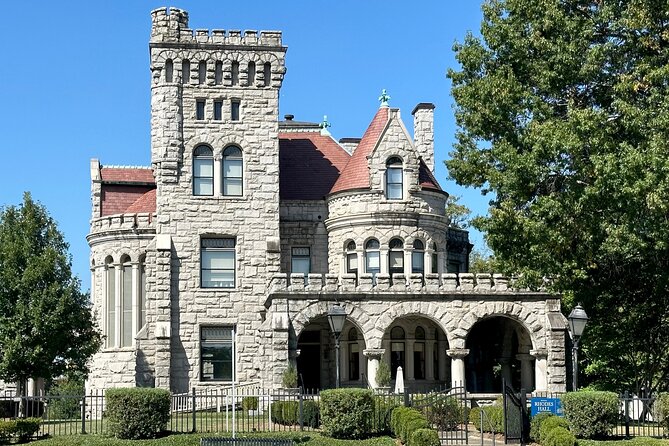
The tour includes a historic neighborhood dating to the late 1800s and another area identified as Atlanta’s first suburb, founded in 1890. These stops shift the focus from grand public landmarks to the city’s residential growth.
I appreciate this part because neighborhoods often reveal more about a city’s character than a short list of monuments. Streets, houses, and changing development patterns can show how Atlanta expanded beyond its original core. The guide can explain how these areas fit into the city’s larger story while you see them in place.
The information provided does not name each neighborhood, so I would not book this expecting a fixed list of specific houses or businesses. The value is the route and the explanation: you get a sense of how Atlanta moved outward and how older districts now sit beside new development.
The private setup helps here. If you are interested in architecture, urban growth, or local history, you can ask Chris to spend more time on those subjects. If your group prefers civil rights history or food recommendations, the discussion can shift.
More Private History Tours in Atlanta:
- Private Historical Walking Tour of York
★ 5.0 · 1,324 reviews - Istanbul: Acemoglu Historical Turkish Bath w/Private Options
★ 4.6 · 1,190 reviews - From Cairo: Private Full-Day Tour of Historical Alexandria
★ 4.1 · 1,155 reviews - Porto: Private Tour of the Historic City in a Ford T Car
★ 4.8 · 932 reviews
Krog Street Tunnel and Atlanta’s street-art side

The route includes an iconic tunnel filled with street art that connects historic neighborhoods. This is one of the more visual stops and gives the tour a different rhythm after cemeteries, churches, and museums.
The tunnel shows Atlanta as a living city, not just a place preserved behind plaques. Its walls change, and the art gives you a direct look at local expression in public space. You may find it especially appealing if you enjoy photography or want a more contemporary counterpoint to the city’s formal landmarks.
Do not expect the tunnel to function like a traditional museum. It is a public passage, and the experience depends on what is displayed when you visit. The tour presents it as part of the city’s changing neighborhoods, not as a guaranteed art exhibition with a fixed collection.
This is another place where a private guide can add useful context. You can ask how the tunnel connects nearby historic districts and how public art fits into Atlanta’s current development. The tour does not promise a long stop, so treat it as a focused look rather than an extended art walk.
Martin Luther King Jr. National Historic Site
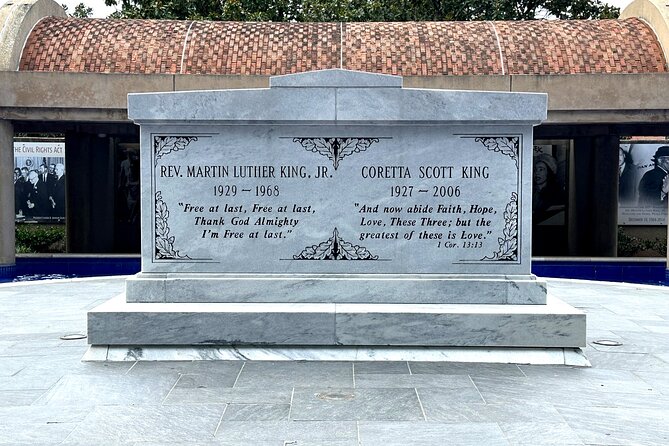
The Martin Luther King Jr. National Historic Site is the most important stop for many people. The national park is devoted to Dr. King’s life and includes Ebenezer Baptist Church, his birth home, his gravesite, and museums. Admission is free, and the planned visit lasts about 30 minutes.
This part gives the tour moral weight. You are not only hearing about Atlanta’s growth and public image. You are confronting the people, institutions, and ideas that made the city central to the civil rights movement.
Thirty minutes is enough for orientation, but it is not enough to take in every part of the national park at a relaxed pace. If the museums or birth home matter greatly to you, ask about the exact timing before you book. The supplied tour details identify the components of the site but do not promise extended entry or a separate ticketed schedule for each one.
I would give this stop your full attention. The church, birth home, gravesite, and museums each carry different meaning, and the guide’s explanation can help connect them. Even if you already know the broad outline of Dr. King’s life, seeing the places together can make Atlanta’s role more concrete.
The site also balances the rest of the tour well. Oakland Cemetery looks backward to the city’s earlier years, while the Olympic district points to its modern public image. The King site asks you to consider the struggle and leadership that shaped Atlanta’s national importance.
The BeltLine and a city in motion
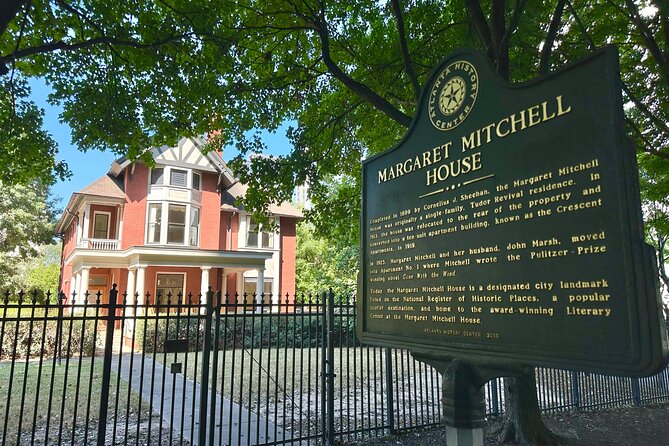
The tour also covers Atlanta’s ambitious 22-mile rails-to-trails project, the BeltLine. It is driving development and changing how people move around the city.
This is a valuable inclusion because it shows Atlanta in the middle of change. You are not viewing the city as a finished historical display. You are seeing a major public project affect transportation, neighborhoods, and development.
The tour does not say that you walk a long section of the BeltLine, so do not assume a full trail outing. Think of this as a guided explanation of the project and its place in Atlanta’s future. The air-conditioned vehicle lets you cover more ground, but it also means you may see some areas from the road rather than on foot.
For me, this stop adds useful balance. The civil rights sites and old neighborhoods explain where Atlanta has been. The BeltLine helps explain where the city may be going. If you are curious about city planning or neighborhood change, this may be one of the most useful parts of the tour.
What the private format is really worth
The price is $140 per person. That is not the cheapest way to see Atlanta, but it covers a private tour with transportation, an air-conditioned vehicle, bottled water, and a guide who can adapt the experience to your group.
The value depends on your priorities. If you are traveling alone or with one other person, the per-person cost may feel high compared with a public sightseeing bus. If you have several people in your group, the private format becomes easier to justify, especially because everyone receives the same tailored attention.
I like that the tour is not built around one narrow theme. You get cemetery history, civil rights, Olympic Atlanta, old suburbs, street art, and urban development in one outing. That range saves you from arranging separate rides between districts.
The tradeoff is depth. A public tour with fewer stops might spend longer at one area. Here, the appeal is the combination and the ability to ask questions as you go. You are paying for a flexible overview, not a half-day museum program.
The tour is booked, on average, 56 days ahead, so planning early is sensible if your Atlanta dates are fixed. Pickup is offered, and the guide contacts you 24 hours before the tour to confirm the pickup arrangements. Confirmation is provided at booking.
Timing, comfort, and who will enjoy it most
This tour suits you best if you want a broad introduction to Atlanta without handling the driving yourself. It is a good match for first-time visitors, families, older relatives, and repeat visitors who have seen the major attractions but never understood how the neighborhoods fit together.
It also works well for people with a particular interest in city history. Chris can adjust the discussion, and one group specifically appreciated having the tour shaped around its interests. If you are visiting with your mother or another relative, the private vehicle and short walking segments may make the day easier.
You should be comfortable with a moving overview. Several locations are covered in about three hours, and the two named major stops each receive about 30 minutes. This is not the right choice if you want to linger at every museum, read every marker, or spend a full afternoon on the BeltLine.
Service animals are allowed, the tour is near public transportation, and most people can participate. The tour is offered in English. Free cancellation is available if you cancel at least 24 hours before the local start time. Changes or cancellations inside that window are not accepted for a refund.
Should you book the Atlanta Then and Now tour?
Book it if you want a private, flexible city primer that links Atlanta’s past with its present. The strongest reasons are the range of stops, comfortable transportation, and Chris’s ability to adjust the discussion and schedule.
Skip it if your goal is a long visit inside one museum, a full walking tour, or a slow examination of every neighborhood. At $140 per person, you should value personal attention and efficient transportation.
For most first visits, I think the tour earns its place early in your stay. It can give you a working map of Atlanta, show you which districts deserve more time, and leave you with better questions for the rest of your trip.
FAQ
How long does the Atlanta Then and Now Private History Tour last?
The tour lasts approximately three hours.
What is the price?
The listed price is $140 per person.
Is the tour private?
Yes. Only your group participates in the tour.
Is pickup available?
Yes. Pickup is offered, and the guide will contact you 24 hours before the tour to confirm the pickup arrangements.
What language is the tour offered in?
The tour is offered in English.
Is transportation included?
Yes. Private transportation in an air-conditioned vehicle is included, along with bottled water.
Is admission to the main historic sites included?
Oakland Cemetery and the Martin Luther King Jr. National Historic Site are listed with free admission. The tour information does not state that admission to other attractions is included.
Are service animals allowed?
Yes. Service animals are allowed.
What is the cancellation policy?
You can cancel at least 24 hours before the experience start time for a full refund. Cancellations or changes made less than 24 hours before the start time are not accepted for a refund.
Just added around Atlanta
- 2-Hour Food, History and Street Art Tour of Ponce City Market★ 5.0 · 159 reviews
- Private Atlanta History Tour From Civil War to Civil Rights★ 5.0 · 47 reviews
- 2 Hour Historic Market Food Tour and Hands-On Biscuit Class★ 5.0 · 251 reviews
- Atlanta Historical Homes Tour★ 4.5 · 26 reviews
- Atlanta: Historic Market Food Tour and Biscuit Cooking Class★ 4.9 · 25 reviews
- Atlanta: Martin Luther King Historical Park Walking Tour★ 5.0 · 86 reviews
- Atlanta: Beltline Food, Street Art, and History Walking Tour★ 5.0 · 47 reviews
- Atlanta: Black History & Civil Rights City Bus Tour★ 4.9 · 151 reviews
Private History Tours, compared.


Private Guided Historic Electric Cart Tour of St. Augustine
Read our review →
Acemoglu Historical Turkish Bath w/Private Options
Read our review →
Private Full-Day Tour of Historical Alexandria
Read our review →
Private Tour of the Historic City in a Ford T Car
Read our review →
Madrid Historical Tour with Local Guide in Eco Tuk Tuk Private
Read our review →
Private Biblical Tour Ancient Corinth & Isthmus Canal from Athens
Read our review →
Private Kathmandu Sightseeing Tour | UNESCO World Heritage sites
Read our review →Browse the lists this tour appears in