
Review · ATHENS
The original Christian tour on Paul’s footsteps in Athens and ancient Corinth
Paul’s Athens story begins on a rocky hill. This full-day private tour connects the Acropolis, Areopagus, Ancient Agora, Corinth Canal, and Ancient Corinth in one long but meaningful day. I like the way it joins classical Greek history with Christian history, and I also like having a private car for the long ride from Athens to Corinth. The main drawback is clear: your driver explains the sites before dropping you off, but cannot guide you inside them unless you pay extra for a licensed guide.
You get hotel or cruise-port pickup, an air-conditioned vehicle, and a private experience for up to three people. That makes the $445.77 group price more attractive for a small party, especially if you are arriving at Piraeus and want transport handled from start to finish. Still, budget separately for entrance fees, lunch, and possibly a licensed guide.
Five things to know before booking
- Paul’s Areopagus connection: You visit the Hill of Ares, where Paul is said to have preached about the unknown God.
- A full Athens and Corinth day: The route covers the Acropolis and Ancient Agora, then heads across the Corinth Canal to Ancient Corinth.
- Private transport for up to three: Your group rides in a private, air-conditioned vehicle rather than sharing a bus.
- The driver is not an inside guide: Historical explanations come during the drive and before site visits. A licensed guide costs extra.
- A long, useful day for cruise passengers: Pickup and return are available at Piraeus, with timing details required when you book.
- Plan for extra costs: Archaeological admission, food, drinks, and optional guiding are not included.
Why this tour works for history and faith
The strength of this experience is its wide view. In Athens, you see the monuments that shaped classical Greek culture. At the Areopagus, you connect that world with Paul’s speech. In Corinth, you reach the city where Paul spent time teaching and working with the early Christian community.
I like that the route does not treat Corinth as an afterthought. Many Athens excursions stop at the Acropolis and perhaps the Corinth Canal. This one continues to Ancient Corinth, where the Christian connection becomes more direct. You also get the Ancient Agora, an important stop for understanding daily life, politics, trade, and public debate in ancient Athens.
The private format gives you flexibility within the planned route. Michael, one of the drivers praised for this tour, was described as patient with a toddler and careful to keep the car cool during a day above 100 degrees. Spyros was also praised for being attentive and keeping the group supplied with water. Those details matter on an eight-hour outing with several outdoor sites.
The catch is the guiding arrangement. Your English-speaking driver has a good working knowledge of Greek history and culture, but drivers are not permitted to accompany you inside archaeological sites and museums. You may receive a useful introduction, then walk through the site on your own. That is fine if you enjoy reading signs and setting your own pace. It is less satisfying if you want stories, biblical context, and explanations beside each monument.
More Ancient History Tours in Athens
- Athens: Ancient Greek Theater Performance
★ 4.7 · 2,481 reviews - Historical Delphi One Day Tour with Arachova Stop & Expert Guide
★ 4.5 · 1,247 reviews - From Athens: Ancient Corinth Day Trip with Canal & VR Guide
★ 4.6 · 1,073 reviews
From Piraeus along the Saronic Gulf
The day begins at your Athens hotel or at the Piraeus cruise port. At a hotel, you meet the driver at the main entrance. From a ship, you leave the terminal and look for a driver holding a sign with your name.
The first drive follows the coastal road beside the Saronic Gulf. This opening section takes about 20 minutes and gives you a look at Piraeus and the Athens Riviera before the ancient monuments begin. It is a pleasant way to move from the modern port into the historic center.
If you are visiting from a cruise ship, pay close attention to the timing. You must provide the ship name, docking time, disembarkation time, and re-boarding time when booking. Airport transfers can also be arranged for an extra charge, but they are not part of the stated price.
The Acropolis: expect a powerful view, not a private inside tour
The Acropolis is the day’s major highlight. The rocky citadel rises over modern Athens, and its monuments reflect the city’s golden age under Pericles in the fifth century BC. You visit the main buildings as part of a carefully arranged walk, but admission is not included.
The Propylaea forms the grand entrance to the sacred precinct. Its monumental design dates to the Periclean building program, although the original plan was never completed. The stop itself is brief, about five minutes, so you should think of it as part of the Acropolis visit rather than a separate guided presentation.
Next comes the small Temple of Athena Nike, set on a bastion at the southwestern edge of the Acropolis. Its Ionic design and carved friezes celebrated military victories, including the Greek victory at Marathon. Again, the listed time is short, so your experience depends heavily on whether you arrange a licensed guide.
The Parthenon receives about 45 minutes. Built in the mid-fifth century BC for Athena Parthenos, it was both a religious center and a treasury connected to the Delian League. The temple is famous for its Doric design, but the larger lesson is political: Athens used the Acropolis to express its power, wealth, and cultural confidence.
The Erechtheion offers a different mood. Its south porch is carried by six sculpted maidens, known as caryatids. Five originals were moved to the Acropolis Museum in 1978 and replaced by copies, while another was taken by Lord Elgin and is now in the British Museum. This is a good place to ask your guide, if you hire one, about the long dispute over removed sculptures.
The Acropolis requires a moderate level of physical fitness. You will be walking over uneven ancient ground, and much of the visit is outdoors. Wear practical shoes and bring water. The listed dress code is formal, so you should avoid treating this as a beach outing, even in hot weather.
Stand on the Areopagus where Paul preached
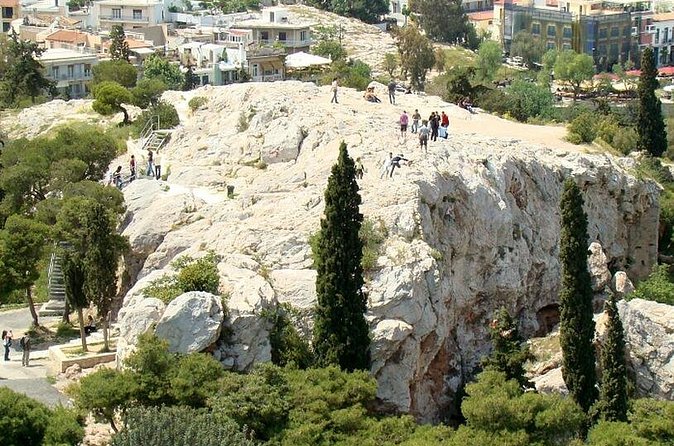
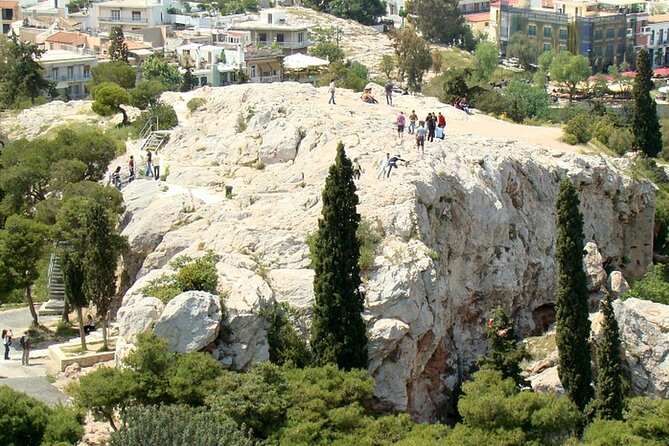
The Areopagus, also called the Hill of Ares, is one of the most important stops for anyone interested in Paul’s time in Athens. It sits beside the Acropolis exit and once served as a council and court connected with serious criminal cases.
Greek mythology links the hill with the trial of Ares, who was accused of killing a son of Poseidon. Later, it became a meeting place for respected civic leaders. In the Christian story, Paul addressed the Athenians here after noticing an altar dedicated to an unknown god. A bronze plaque at the foot of the rock commemorates the speech.
This is the point where the tour’s religious focus feels most personal. The setting is not a church or a museum. It is a bare rocky hill above the city, tied to public debate, law, mythology, and Paul’s effort to explain his faith in a Greek intellectual setting.
The stop lasts about 20 minutes and admission is free. The rock can be awkward underfoot, so take care when climbing and standing near the slope. If your driver only gives background from the vehicle or at the edge of the site, you may wish you had someone to explain the speech in place.
More Ancient History Tours in Greece
- Acropolis, Parthenon & Athens Old City Heritage Walking Tour
★ 4.5 · 876 reviews - Private Biblical Tour Ancient Corinth & Isthmus Canal from Athens
★ 5.0 · 762 reviews - Athens: Ancient Corinth & Nafplio Full Day Trip with Swim
★ 4.8 · 531 reviews - Athens Skip the Line: Open Air Ancient Greek Theatre Performance
★ 4.5 · 520 reviews
The Ancient Agora fills in the everyday Athenian story
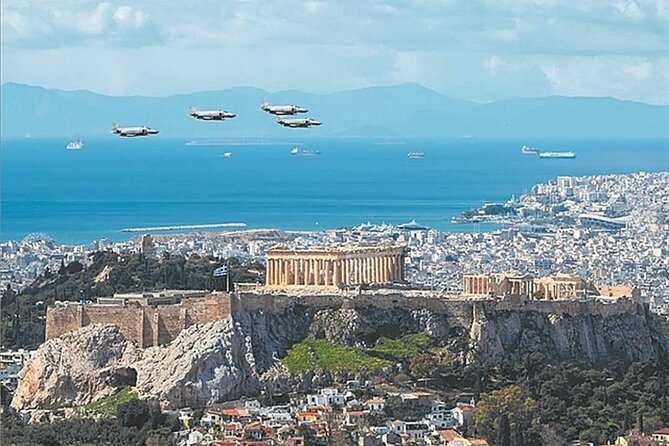
After the Acropolis, you travel about 20 minutes to the Ancient Agora. Plan for roughly 1 hour and 20 minutes here. This is valuable because the Acropolis shows you monumental power, while the Agora shows you how the city functioned at street level.
The Agora served as a gathering place, marketplace, civic center, and residential area for roughly 5,000 years. Excavations reveal layers from Archaic, Greco-Roman, and Byzantine periods. You can think of it as the working heart of ancient Athens, where public life was carried out rather than simply displayed.
For a Christian-focused visit, the Agora also helps explain the setting in which Paul spoke. Athens was not just a collection of temples. It was a city of arguments, commerce, public decisions, and competing religious ideas. That context makes the Areopagus episode easier to understand.
Entrance is not included, and the driver cannot serve as a licensed guide inside. This is the stop where an extra guide can add real value, especially if you want help distinguishing the different remains and understanding how the spaces were used.
Crossing the Corinth Canal into the Peloponnese
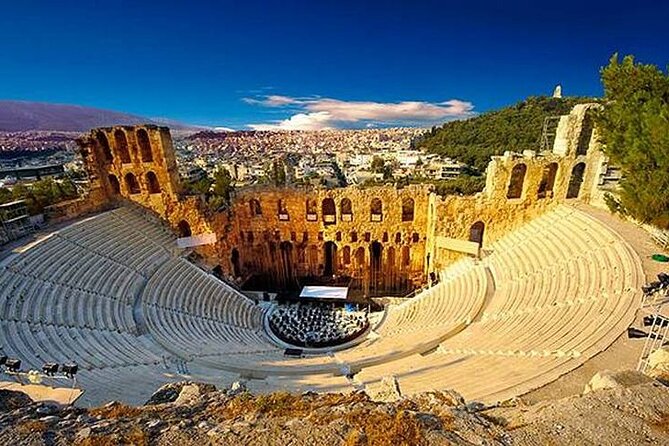
The journey to Corinth is part of the experience, not just a transfer. You travel along the Saronic Gulf and into the Peloponnese, the large peninsula south of mainland Greece. The route takes about an hour before reaching the canal area.
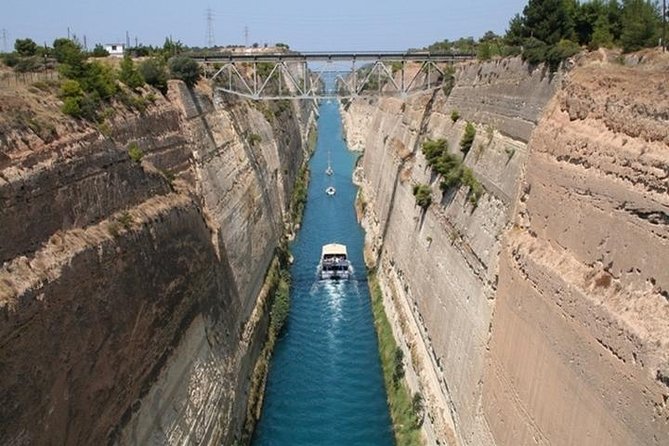
The Corinth Canal is a dramatic engineering cut through the narrow Isthmus of Corinth. It links the Gulf of Corinth with the Saronic Gulf and separates the Peloponnese from mainland Greece. The canal is about 6.4 kilometers long and only about 25 meters wide.
The modern canal was completed in the late 19th century, but the idea is far older. Periander, the tyrant of Corinth, is said to have considered cutting through the isthmus in the sixth century BC. Instead, the ancient Greeks used the diolkos, a stone route that allowed ships to move overland on wheeled platforms.
You spend about 15 minutes at the canal. It is a short stop, but the view gives you a sharp sense of Corinth’s strategic position. Ships once had to sail around the Peloponnese, adding about 185 nautical miles to their journey. The canal explains why Corinth mattered long before Paul arrived.
Lunch in Ancient Corinth is your own choice
The tour allows about an hour for lunch at a traditional restaurant in Ancient Corinth. Food and drinks are not included, so you pay directly for your meal.
This is a useful break after the Athens sites and the drive south. You get free time to eat local Greek food rather than being locked into a fixed meal arrangement. The tradeoff is that the exact restaurant and menu are not specified, so you should treat lunch as an independent expense and ask the driver for help choosing if needed.
Ancient Corinth brings Paul’s story into sharper focus
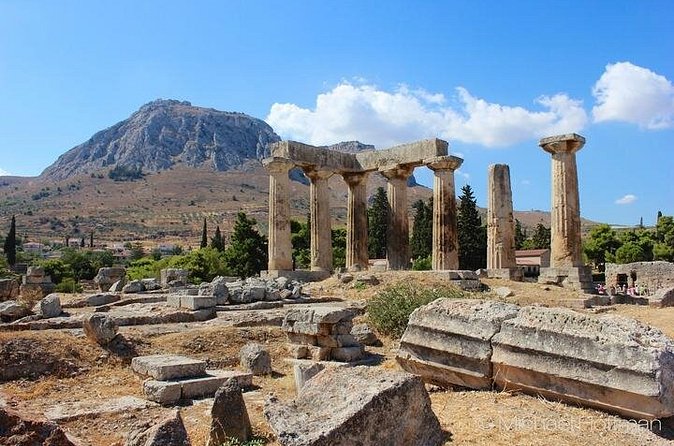
Ancient Corinth is the religious heart of the route. The city was first inhabited in the Neolithic period and later grew because of its position between mainland Greece, the Peloponnese, the Aegean, and the western Mediterranean.
That location made Corinth a powerful trading center. Its agricultural output supported commerce, while its position between major sea routes helped it connect different parts of the ancient world. Corinthian colonies such as Corfu and Syracuse show how far its influence reached.
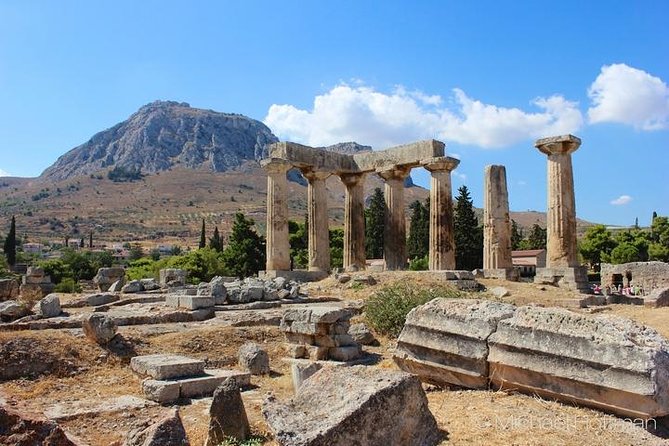
You spend about 1 hour and 20 minutes at the archaeological site. The remains help you picture the city Paul entered: prosperous, strategic, commercial, and shaped by movement between regions. This is also where the Christian theme moves beyond a single speech. You are visiting the city associated with Paul’s work in the early church, not merely a place connected to a famous quotation.
Entrance is extra. If you want the site explained in detail, arrange the licensed guide in advance. The driver can provide background before you enter, but the formal guide is the person who can accompany you through the archaeological area and connect individual ruins to the biblical account.
What the private format is really worth
The price is $445.77 per group of up to three people. For three people, that works out to about $149 per person before admission, lunch, and optional guiding. For two people, the per-person cost is higher, but you are paying for private transport, hotel or port pickup, and a full day that combines Athens with Corinth.
I consider the price reasonable for a small group that values door-to-door service. A private car saves you from arranging separate transport to Corinth, and the air conditioning matters during hot weather. You also avoid sharing the day with a large bus group.
The value is weaker if you expect a fully guided archaeological tour at the base price. The tour’s title may suggest that a guide will walk beside you through every site, but the included service is a professional English-speaking driver. A licensed English-speaking guide can be arranged for an extra fee, subject to availability.
The strongest arrangement is likely to be a small group of two or three people that adds the licensed guide. One review specifically praised Danai, an archaeologist, for her command of Greek and religious history. The same group also praised driver Spyros for his care and attention. Michael earned similar praise for comfort, flexibility, and clear explanations before each stop.
Who should book this Athens and Corinth day?
I would recommend this tour to you if:
- You want Athens and Corinth in one private day.
- You are interested in Paul’s connection to Athens and Corinth.
- You are arriving by cruise ship at Piraeus.
- You prefer a private car to public transport or a shared coach.
- You are comfortable exploring some archaeological sites independently.
- You can pay extra for a licensed guide if detailed commentary matters.
I would be cautious if your main goal is a guided walk through every monument. One customer enjoyed the route but felt disappointed after being dropped at the Acropolis, Mars Hill, and Corinth Canal with limited on-site explanation. That criticism is fair and points to the key booking question: do you want private transportation with historical introductions, or a guide physically accompanying you inside the sites?
The tour has a 4.7 rating, with 96 percent of customers recommending it, but the lower rating highlights the exact issue you should settle before paying. Ask for the licensed guide option, confirm the added cost, and request a guide with strong knowledge of both ancient Greece and the New Testament.
Practical details that can save your day
The tour lasts about eight hours, though the route includes long driving sections and several outdoor visits. Wear comfortable shoes, carry water, and expect heat on exposed archaeological ground.
Admission fees are not included. Pre-purchasing tickets is suggested because availability may be limited. The company can buy them in advance for a small service fee.
Your return is to the original hotel or Piraeus pickup point. Free cancellation is available if you cancel at least 24 hours before the start time. Changes or cancellations made within 24 hours are not accepted for a refund.
Should you book it?
Book this experience if you want a private, efficient connection between Athens, Paul’s Areopagus, the Corinth Canal, and Ancient Corinth. The car service, port pickup, and small-group format are its best features.
For the most satisfying day, add the licensed guide and budget for site admissions and lunch. Without that upgrade, you are buying a well-organized private driving tour with historical explanation, not a traditional inside-the-monuments guided tour. That distinction makes all the difference.
FAQ
How long does the tour last?
The experience lasts approximately eight hours.
Can I be picked up at my Athens hotel?
Yes. Pickup and drop-off are available at hotels in Athens. You should meet the driver at the main entrance.
Can cruise passengers join from Piraeus?
Yes. Pickup and return are available at the Piraeus cruise port. When booking, provide your ship name, docking time, disembarkation time, and re-boarding time.
Is the tour private?
Yes. Only your group participates, with a maximum of three people at the stated group price.
Are archaeological entrance fees included?
No. Entrance fees for the archaeological sites and museum are not included. Advance tickets are suggested, and the company can purchase them for you for a small service fee.
Does the included driver guide me inside the sites?
No. The English-speaking driver can explain the history and culture before you enter, but drivers are not licensed to accompany you inside archaeological sites and museums. A licensed guide can be arranged for an additional cost.
Is lunch included?
No. You have about one hour of free time for lunch at a traditional restaurant in Ancient Corinth, but food and drinks are paid separately.
Just added around Athens
- Small-Group Women History in Ancient Greece Walking Tour★ 5.0 · 38 reviews
- Athens: Combo Ticket for Acropolis & 6 ancient sites★ 3.0 · 21 reviews
- Ancient Sparta & Mystras Private Day Tour from Athens★ 5.0 · 52 reviews
- Ancient Olympia & Isthmus Canal Private Tour from Athens★ 5.0 · 20 reviews
- Ancient Agora & Temple of Hephaestus Entrance Ticket★ 3.5 · 22 reviews
- Half Day Historical Athens City Private Taxi Service Tour★ 5.0 · 79 reviews
- Ancient Corinth, Sanctuary of Hera, Blue Lake & Canal from Athens★ 5.0 · 26 reviews
- Private Luxury Tour: Marathon – Battle & Run That Changed History★ 5.0 · 30 reviews
Ancient History Tours, compared.
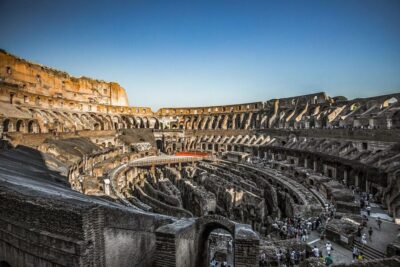
Colosseum: Underground and Ancient Rome Tour
Read our review →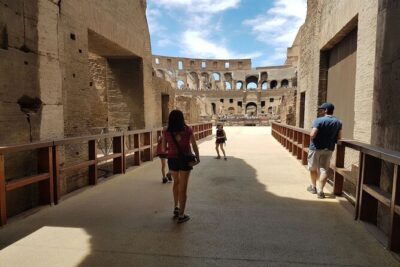
Colosseum & Ancient Rome with Arena Floor Option I Max 6 People
Read our review →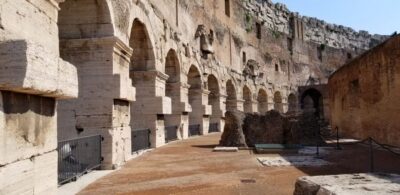
Colosseum, Ancient Rome Tour or AudioGuided Tour
Read our review →
Colosseum Underground & Ancient Rome Guided Tour
Read our review →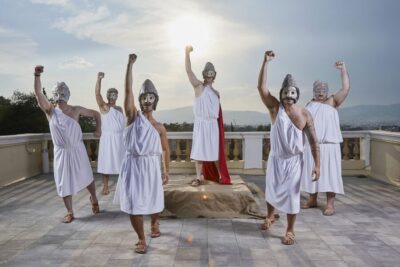
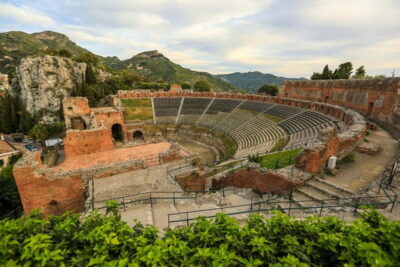
Taormina: Ancient Theater Skip-the-Line Ticket & Audio Guide
Read our review →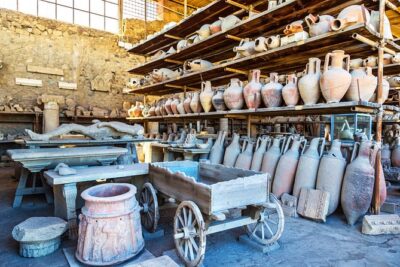
Discover the Ancient Ruins of Pompeii: Day Trip from Rome
Read our review →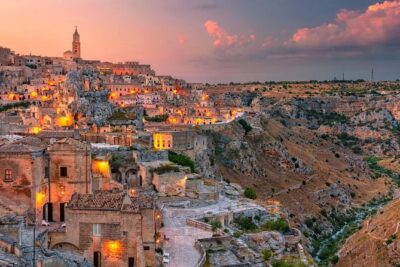
Discover Matera, the ancient city – English tour
Read our review →Browse the lists this tour appears in