
Review · TOKYO
Tokyo: Asakusa & Sensoji ー Oldest Temple Walking Tour (2hrs)
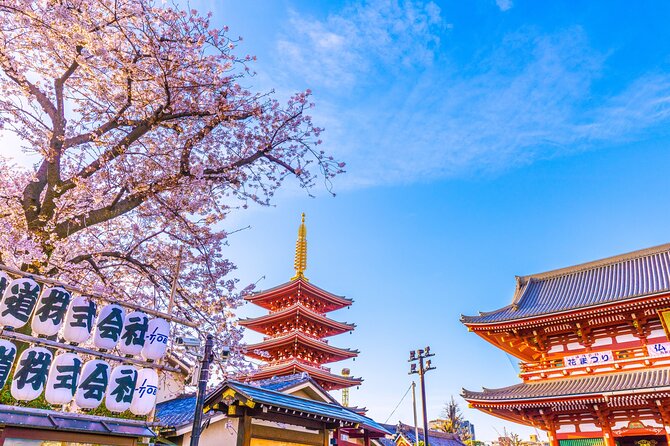
Asakusa keeps Tokyo’s old pulse. This two-hour walk pairs Senso-ji Temple with Nakamise shopping street, local snacks, matcha sweets, and small shops that are easy to miss on your own. I especially like the mix of temple customs and everyday neighborhood life, plus the chance to see sword, knife, kimono, and grocery shops rather than only the famous gate.
The tour also earns points for its approachable guides. Keiko, Yui, Josh, Nono, Nanami, Naoto, Naruto, and Aiko are all praised for making the history easy to follow and adjusting the pace when needed. The main caution is simple: food tasting may vary, so do not book this expecting a large included meal or a guaranteed sample at every stop.
Key points to know before you book
- Senso-ji in small, manageable pieces: Learn how to use the water basin, incense, fortune slips, and prayer area instead of simply taking a quick photograph.
- A useful introduction to Asakusa shopping: Browse Nakamise Street, old-style storefronts, Hoppy Street, a matcha sweets shop, and a local supermarket.
- A rare temple and shrine setting: The area shows how Buddhist and Shinto traditions exist side by side.
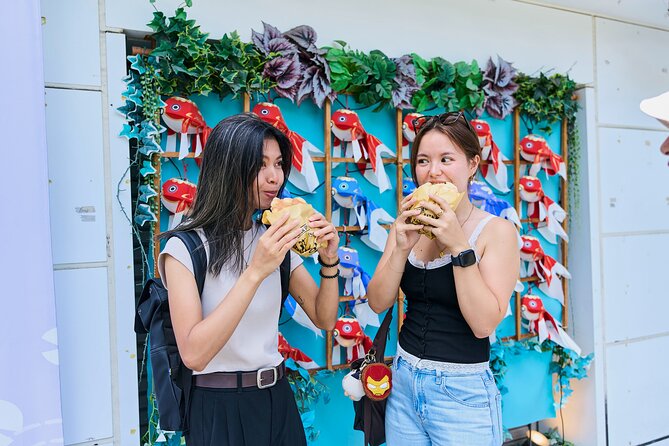
- Food is part of the walk, but keep expectations modest: Melon bread, menchi-katsu, skewers, and matcha desserts are discussed or available, but tasting is not always guaranteed.
- Small groups make questions easier: The maximum group size is 15, and some departures have been handled as private walks for just one booking.
- A gentle pace for a first day in Tokyo: The walking is spread across short stops, making it suitable when jet lag has taken some spring out of your step.
Starting beneath the Thunder Gate
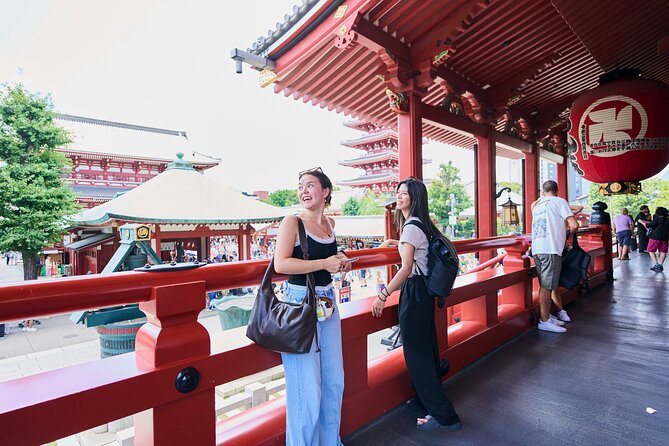
Meet at the Kaminarimon Police Box, at 1-chome-3-1 Asakusa, Taito City. This places you beside Kaminarimon, the great outer gate leading toward Senso-ji. It is a practical meeting point near public transportation, though the area can be busy, so give yourself enough time to locate the police box.
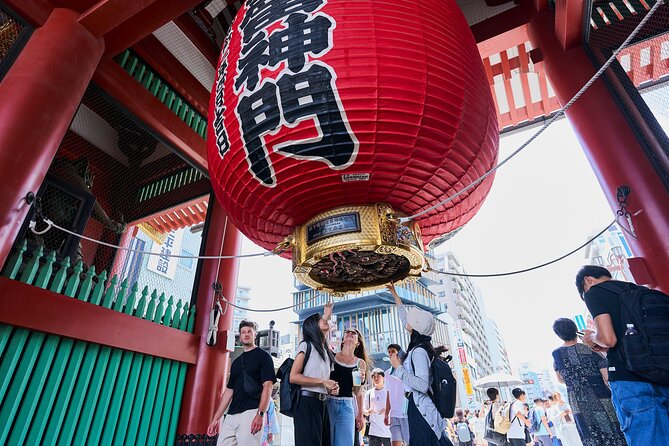
The guide begins by explaining the gate’s proper name, its history, and the meaning of its large features. That opening matters. Kaminarimon is one of Tokyo’s most photographed sights, but a photograph alone tells you little about what you are seeing.
The first stop lasts about 20 minutes and is free to enter. You will have time to look up at the gate, hear the story behind it, and get oriented before heading down Nakamise Street. Guides such as Josh have been praised for clear English and local insight, while Nono is noted for patience with tired visitors and families. That kind of flexibility can make the first hour much easier after a long flight.
More History Walking Tours in Japan
- Tokyo: Imperial Palace and Shogun Historical Walking Tour
★ 5.0 · 2,251 reviews - Kyoto Gion: 2-Hour Geisha Culture & History Walking Tour
★ 5.0 · 1,186 reviews - Tokyo Castle & Imperial PalaceーShogun Walking Tour
★ 4.7 · 1,068 reviews
Nakamise Street, where shopping becomes part of the history
From Kaminarimon, the walk continues along Nakamise Street for about 20 minutes. This is the main approach to Senso-ji, lined with souvenir shops and snack stands. You might find sweets, small gifts, traditional-style goods, and plenty of food designed to be eaten while walking.
The value here is not simply shopping. A guide can help you sort out what is a useful souvenir, what is a local snack, and what is mainly a colorful display for the crowd. You may also hear about foods that have been sold around Asakusa for generations.
Keep some room in your appetite. The route points toward famous melon bread and other street foods, and later sections include menchi-katsu and skewers. Yet the experience does not promise a fixed food menu. One booking included no tasting despite the description, so I would treat food as an opportunity rather than the main reason to reserve.
Senso-ji beyond the famous photograph
Senso-ji gets about 20 minutes on the route, enough for a focused introduction rather than a long study of every building. It is Tokyo’s oldest temple and one of the city’s most important Buddhist worship sites.
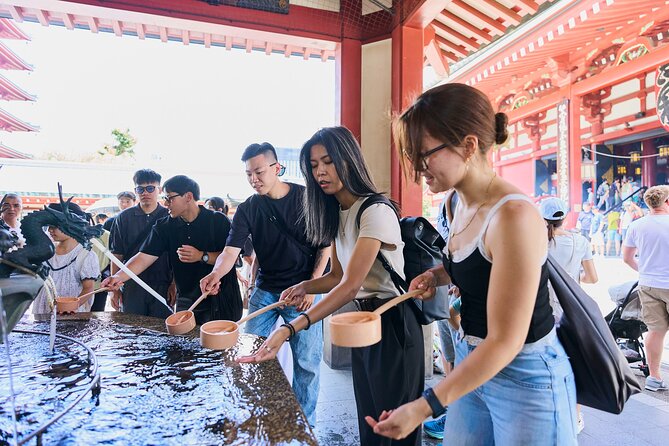
Your guide explains the actions taking place around you. At the water basin, you can purify your hands. At the incense burner, you can enjoy the smoke. You can draw a fortune and offer a traditional prayer. These customs are easy to copy without understanding, so a good explanation adds real value.
This is also where the tour’s cultural focus comes through most clearly. The route presents Asakusa as a place where a Buddhist temple and a Shinto shrine coexist. That pairing gives you a better sense of Japan’s overlapping religious traditions without turning the visit into a lecture.
The temple grounds can be crowded, and 20 minutes will pass quickly. If you want a long quiet look at every detail, this walk may feel brief. If you want a clear introduction before returning on your own, the timing works well.
Yogodo, koi, Jizo statues, and a quieter corner
The tour then moves to Senso-ji Yogodo for about five minutes. This section includes a goshuin desk, a pond with koi, and rows of Jizo statues. It is also described as a popular place for photographs.
The short stop gives the route a useful change of pace. After the main temple area, you get a smaller setting with details that are easy to pass by. The Jizo statues also provide a story to listen for, rather than another quick photo stop.
If collecting temple seals matters to you, ask the guide about the goshuin desk. The tour identifies it as a feature of this area, but it does not state that a seal is included in the price or that the group will spend a fixed amount of time there.
More Architecture and Landmark Tours in Japan:
- Tokyo: Nagano Snow Monkeys and Zenkoji Tour with Temples
★ 4.9 · 19 reviews - Venice: St. Mark’s Basilica Guided Tour & VR History Intro
★ 3.9 · 4,880 reviews - Venice’s Best: Basilica, Doge’s Palace, Gondola & History Gallery
★ 4.5 · 2,478 reviews - Córdoba: Skip-the-Line Great Mosque-Cathedral History Tour
★ 4.7 · 1,690 reviews
Matcha sweets at Kaminari Issa
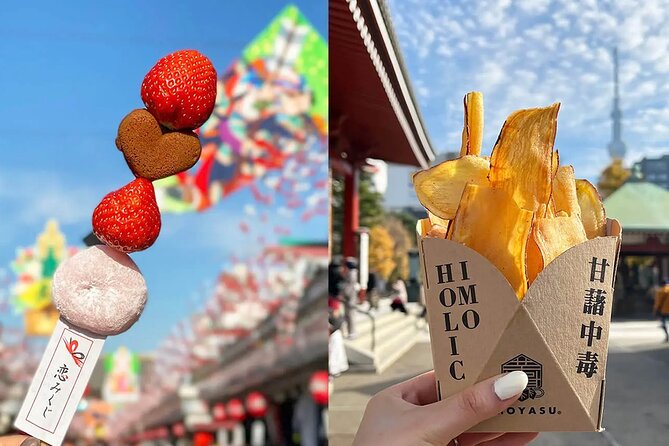
Kaminari Issa is a local sweets shop specializing in strong matcha flavors. The stop lasts about five minutes, with options such as matcha soft serve, matcha truffles, and seasonal treats.
This is a short, tempting pause. Matcha fans will likely enjoy having several forms of the flavor in one place, while anyone who prefers mild sweets may want to ask about the options before buying. The supplied details do not state that a dessert is included, so carry a little spending money if you want to sample something.
The stop also helps break up the temple history with a simple local food choice. That balance is one reason the tour feels more useful than a straight walk from gate to temple.
Old Edo atmosphere on the shopping streets
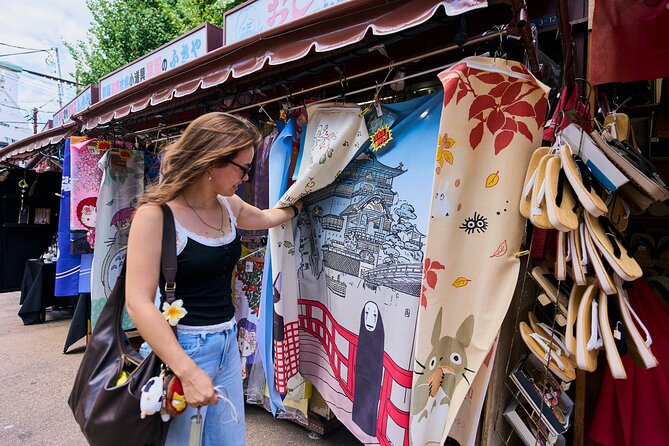
The next part moves through local shopping streets with snack stands, traditional storefronts, and souvenir shops. The exact timing is not clearly stated for every short section, so expect the route to adjust based on the group and the guide.
This is where Asakusa becomes more than a temple district. You might see melon bread, small food counters, and shops that serve daily neighborhood needs rather than only selling to sightseers. The guides are especially helpful here because the area is large and the choices can blur together.
The route also carries an old Edo theme, with playful storefronts, retro touches, and unusual vending machines. Menchi-katsu, a fried minced-meat cutlet, and skewers are among the foods you might encounter. These are the kinds of small discoveries that reward curiosity, although the tour does not promise a particular food purchase or tasting.
Hoppy Street and Asakusa’s old-style shops
Hoppy Street receives about 10 minutes. You will see local people enjoying daytime drinks and pass shops that recall the Edo period, including sword stores and kimono shops.
This is a good place to observe rather than rush. Hoppy Street has a different mood from the temple approach, and the daytime drinking culture gives you a glimpse of how the neighborhood works beyond its religious sights. The tour does not include a drink, so think of this as an introduction to the street, not a bar visit.
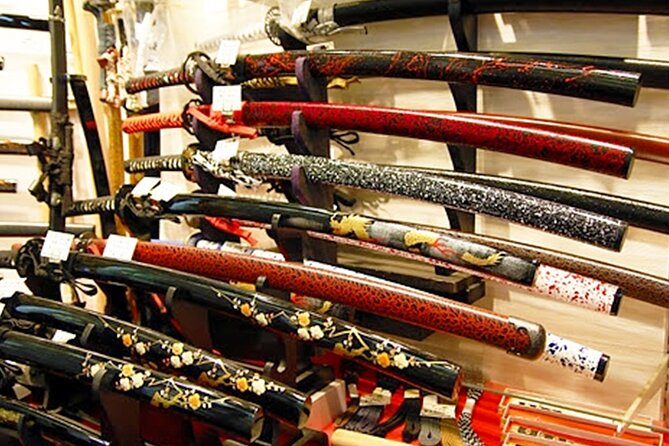
The sword stores are another unusual touch. You may be able to look at traditional-style blades and learn how these shops fit into Asakusa’s commercial life. A separate knife shop may also be introduced, where you can watch traditional sharpening. Japanese knives are known for precision and craftsmanship, but any purchase is your own expense.
Ending at a neighborhood supermarket
The walk finishes at Ozeki Asakusa Kaminarimon Grocery and Supermarket, with about 10 minutes to browse. This is one of the smartest stops for practical souvenirs. Instead of choosing only items made for tourists, you can look at everyday Japanese groceries and packaged foods.
A supermarket stop gives you a useful final assignment: find something you would actually eat or give away. It also lets you see ordinary shopping habits after the ornate temple grounds and old-style storefronts.
The tour returns to the original meeting point. The listed route takes about two hours, though short food and shopping pauses may vary. Since the end is back where you started, it is easy to continue exploring Asakusa afterward or make your way to another part of Tokyo.
What the guide adds to the experience
The strongest part of this walk is the human explanation. Asakusa is not difficult to reach, and you can enter Senso-ji without a guide. The challenge is knowing what deserves your attention and how to behave around the temple customs.
Yui is praised for detailed explanations of Senso-ji and useful food suggestions. Josh is described as a local who speaks English well and keeps the walking informative without making it exhausting. Nono adjusted the outing for a mother and daughter dealing with jet lag, while Naoto was praised for a friendly, professional approach.
Those details point to a useful pattern. The guides are not simply reciting facts. They appear willing to answer questions, recommend places, and alter the pace. That is especially helpful if you are traveling with children, are tired from a long flight, or want more cultural context than a self-guided walk provides.
There is one important qualification. A tour depends on the individual guide and the conditions of the day. The overall score is 5 out of 5 from 217 ratings, with a 100 percent recommendation rate, but one account found that the promised food tasting did not happen. Take the strong guide feedback seriously, but read the food wording with care.
Is $19.90 good value for two hours?
At $19.90 per person, this is a modestly priced introduction to one of Tokyo’s best-known districts. You are paying for a local guide, a planned route, explanations at the temple, and help finding food and shops. There is no admission charge for the listed stops, so the price is mainly for guidance rather than entry tickets.
I consider that fair value if you are new to Tokyo or want to understand what you are seeing at Senso-ji. It is less compelling if you only want a quick photograph at Kaminarimon and already know the temple customs.
Budget separately for sweets, snacks, a drink, a goshuin, or a knife. The tour price does not state that these purchases are included. Mobile tickets make access simple, and the group is capped at 15 people, which should keep the walk more personal than a large coach outing.
Free cancellation is available up to 24 hours before the start time for a full refund. Changes or cancellations inside that window are not refunded, and the cut-off follows Tokyo local time.
Who should book this Asakusa walk?
I would choose this tour for a first visit to Tokyo, especially if you want a calm introduction to Japanese temple customs and local food. It also suits families and anyone who prefers short stops over two hours of nonstop walking.
It is a good fit for curious people who want more than landmarks. The knife shop, sword store, kimono shops, supermarket, and old-style food streets add daily life to the temple visit.
You may want a different plan if you need a guaranteed meal, a long temple study, or a private shopping service. The advertised food experience is flexible, and several stops are brief. Think of this as a guided orientation with tasting possibilities, not a formal food tour.
Final call: book it for context, not a feast
Book this walk if you want clear temple guidance, local shop suggestions, and a gentle route through Asakusa. The price is reasonable, the group limit is sensible, and the guides appear to be the main strength.
Go in expecting small food discoveries rather than a guaranteed tasting menu. If that suits you, this tour offers a practical way to meet Senso-ji, Nakamise Street, Hoppy Street, and the less polished corners of Asakusa in one compact outing.
FAQ
How long does the Asakusa and Senso-ji tour last?
The tour lasts approximately two hours.
Where does the tour begin?
It begins at the Kaminarimon Police Box at 1-chome-3-1 Asakusa, Taito City, Tokyo 111-0032, Japan.
Where does the tour end?
The activity ends back at the original meeting point.
Is admission to the stops included?
The listed stops have no admission charge. The tour price covers the guided experience, while personal purchases such as food, sweets, drinks, temple seals, or souvenirs are not stated as included.
Is food tasting included?
The tour highlights local street food and includes stops where you may find melon bread, menchi-katsu, skewers, and matcha desserts. However, food tasting may not take place on every departure, so it should not be treated as guaranteed.
How large is the group?
The maximum group size is 15 people.
Is the tour suitable for most people?
The activity notes state that most people can participate and that it is near public transportation. The route is described through a series of short stops over two hours.
Can I use a mobile ticket?
Yes. The experience offers a mobile ticket.
What is the cancellation policy?
You can cancel at least 24 hours before the start time for a full refund. Cancellations or changes made less than 24 hours before the start time are not accepted for a refund.
Just added around Japan
- Private sake pairing@ancient underground★ 5.0 · 27 reviews
- [30 minutes] Rickshaw tour around Asakusa [History, sightseeing, Tokyo Skytree]★ 5.0 · 38 reviews
- Tokyo: Mount Fuji Private Full-Day Trip with Hotel Pickup★ 5.0 · 18 reviews
- Private Tour Through the Tokyo National Museum & Ukiyo-e★ 4.7 · 17 reviews
- Tokyo: Imperial Palace, the history of Japan (ENGLISH GUIDE)★ 5.0 · 77 reviews
- Tokyo: Customized Private Historical Guided Photoshoot Tour★ 5.0 · 25 reviews
- Tokyo: Edo Castle & East Garden of the Imperial Palace Tour★ 4.7 · 112 reviews
- (Ticket Included) Explore Osaka Castle & Museum of History★ 4.8 · 21 reviews
Architecture & Landmark Tours, compared.
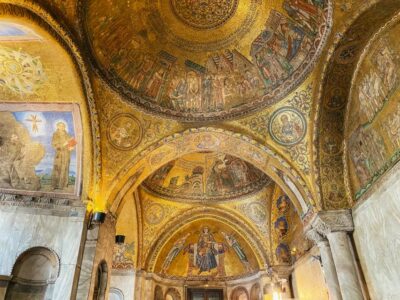
St. Mark’s Basilica Guided Tour & VR History Intro
Read our review →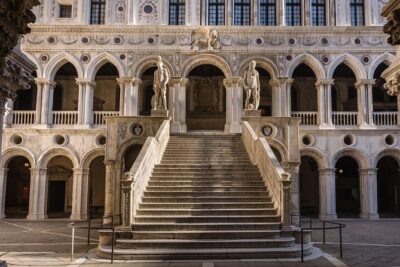
Venice’s Best: Basilica, Doge’s Palace, Gondola & History Gallery
Read our review →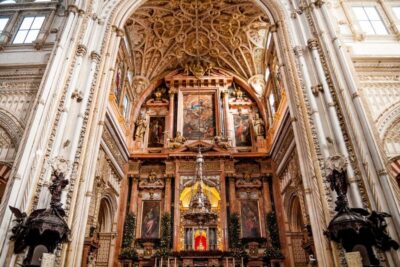
Córdoba: Skip-the-Line Great Mosque-Cathedral History Tour
Read our review →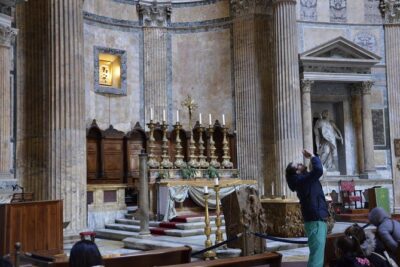
Pantheon Elite Guided Tour – Rome’s Iconic Ancient Temple
Read our review →
Abu Dhabi Grand Mosque, Palace, and Heritage Village
Read our review →
Chicago in a Day: Food, History & Architecture Walking Tour
Read our review →

Colosseum Special Access Tour, with Ancient Temples & Tombs
Read our review →Browse the lists this tour appears in