
Review · ONTARIO
Toronto: Distillery District Historic Walking Tour
Toronto once drank its way into greatness. The Distillery District walking tour turns handsome brick buildings and cobbled lanes into a lively story about whiskey, business, and a young city’s unruly early years. I like the access to architectural details that are easy to miss alone, and I like the guides’ mix of facts, humor, and local advice. The main limitation is its short one-hour format, which gives you an excellent introduction rather than a full tour of every corner.
I also like that the tour works for first-time visitors and Toronto residents who think they already know the area. Guides such as Erik, Nicole, Devin, Tom, and Sarah have been praised for making even small groups feel personal and for answering questions with energy. Just remember that this is a history walk, not the alcohol-tasting experience. For spirits, you need the separate Prohibition & Spirits Walking Tour.
Key points at a glance
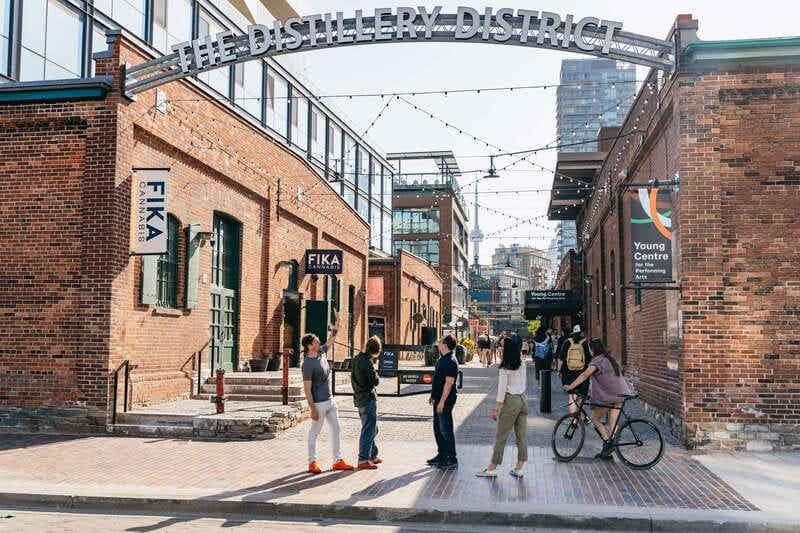
- Toronto’s whiskey story: Learn how Gooderham & Worts grew into one of the world’s largest distilleries before its long decline.
- Victorian industrial buildings: See the largest and best-preserved collection of Victorian industrial architecture in North America.
- Surprising access: The tour may take you inside areas that are not open to the general public.
- Easy one-hour walk: The route is designed for an easy walking level and works well before lunch, dinner, or further sightseeing.
- Strong guide-led storytelling: Erik, Nicole, Devin, Tom, and other guides are praised for humor, warmth, and clear explanations.
- Good add-on location: Afterward, you can stay for restaurants, bars, shops, galleries, sculptures, and theaters.
Why the Distillery District is more than pretty brick
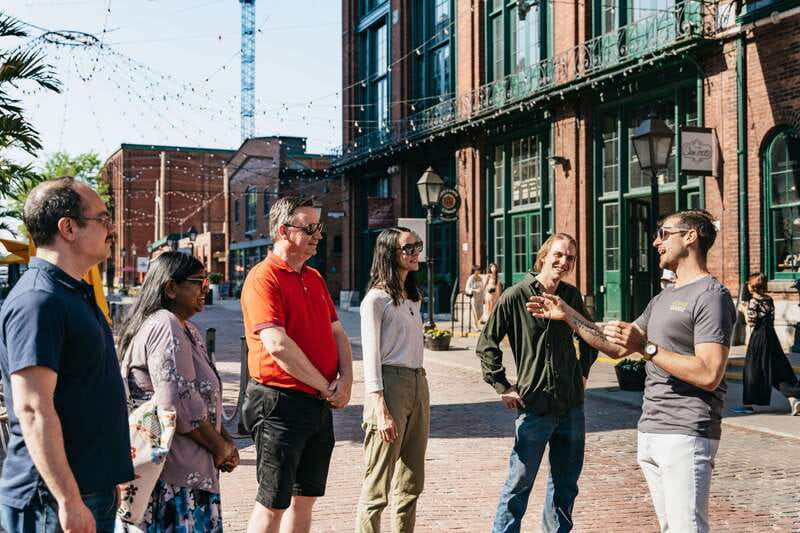
The Distillery District is one of Toronto’s easiest places to photograph. Its old brick walls, iron details, narrow lanes, and cobblestones make it feel distinct from the glass towers elsewhere downtown. But a stroll on your own can leave you with little more than attractive pictures and a shopping bill.
This tour gives the setting a reason to matter. You learn how the Gooderham & Worts Distillery shaped Toronto’s economy, employment, and growth. The story reaches beyond bottles and barrels, touching on family business, industrial work, social change, city expansion, and the rough character of early Toronto.
That context is the real value. You are not simply being told that a building is old. You learn what happened there, why the company mattered, and how the district changed from an active industrial site into one of the city’s best-known cultural areas.
The tour also presents a useful contrast. Today, the district is filled with independent restaurants, bars, boutiques, galleries, outdoor art, and theaters. During its working years, it was a place of production, labor, shipping, and commercial ambition. The guide helps you hold those two versions of the neighborhood in your mind at once.
More History Walking Tours in Canada
- Gastown Historic Walking Food Tour
★ 5.0 · 1,863 reviews - Vancouver: Gastown Historical Walking Food Tour
★ 4.8 · 539 reviews - Quebec City: Old Quebec Historical Walking Tour
★ 4.8 · 409 reviews
Meeting at 11 Gristmill Lane
The tour begins at Go Tours Canada inside the Distillery District, near the red heart at Parliament Street and Mill Street. Check in at 11 Gristmill Lane, Toronto, Ontario M5A 3C4.
This is a convenient setup because you begin in the district itself, rather than spending part of your hour walking in from another neighborhood. Arrive with comfortable shoes. The walking level is easy, but cobblestones are still cobblestones, and you will get more from the guide if you are not worrying about your feet.
Bring a camera and an identification document. The tour is in English and is generally recommended for people aged 10 and older. It is wheelchair accessible, which makes it a practical choice for a wide range of visitors, though the historic surfaces and outdoor route are still worth keeping in mind.
The district is a pleasant place to visit before or after the tour, so avoid treating this as a quick appointment squeezed between unrelated sights. Give yourself extra time to browse the shops, look at the sculptures, or settle into a café or restaurant afterward.
The opening story: a young city with a drinking problem

The guide sets the tone by placing the distillery within Toronto’s early development. This was a young city, and the tour does not present its beginnings as neat or polite. The stories include business intrigue, hard drinking, changing social habits, and the role of alcohol in the city’s growth.
That frank tone gives the tour personality. You are not receiving a dry list of construction dates. Instead, the guide connects the company’s success to the character of the place around it. Toronto’s early years become easier to picture when you understand that industry, trade, labor, and drinking culture were all tied together.
One of the more memorable details concerns the changing position of the waterfront. The lake was much closer to the original property than it is today, and the tour explains how the area changed over time. That single point helps you understand that Toronto is not a fixed city. Land has been filled, shorelines have shifted, and old industrial areas that once sat near transport routes are now surrounded by a much larger urban center.
The guide may also bring in less expected parts of the company’s story. One account highlights production connected with antifreeze, along with employment created for women and the wider social effects of that work. These details make the district feel like a place where ordinary lives were shaped by industry, not merely a preserved collection of old facades.
Gooderham & Worts, from success to decline
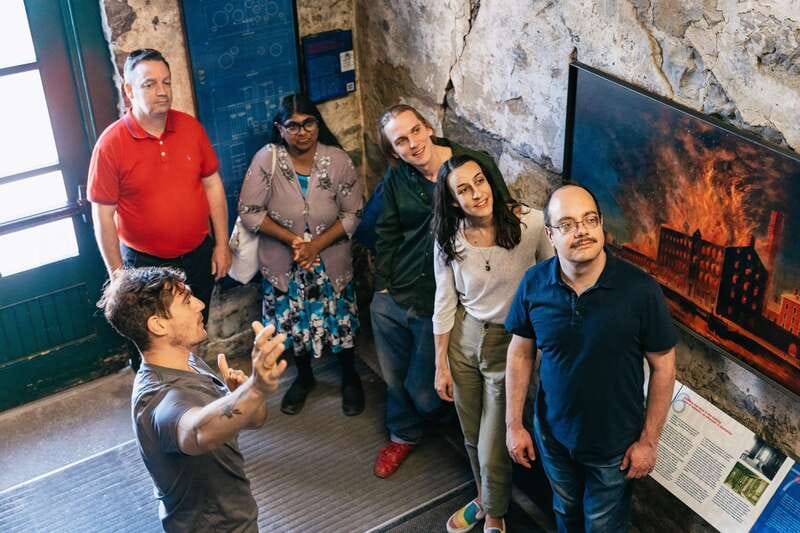
The central subject is Gooderham & Worts, the company that grew from a local operation into a global distilling force. The tour follows its rise to glory, the families behind it, and the business choices and wider changes that contributed to its fall from grace.
You learn that Toronto once had a distillery of enormous international importance. That can come as a surprise if you associate the city mainly with finance, technology, sports, and modern architecture. The district reveals another Toronto, one built around manufacturing and trade.
The company continued distilling until 1990. That date matters because it shows how recent the industrial past really is. These are not ruins from a distant medieval world. The working distillery ended within living memory, and the modern district grew from a site that had only recently stopped serving its original purpose.
The best guides use this material as a story rather than a lecture. Erik is repeatedly praised for enthusiasm and comic timing. Devin has been singled out for bringing the atmosphere of the old production area to life, while Nicole has been praised for answering questions and keeping the tour engaging even with only one participant. Tom and Sarah have also received warm comments for making the history interactive and approachable.
Guide quality matters here because the district itself is compact. The tour does not depend on a long route or a series of grand viewpoints. Its success rests on how well the guide explains what you are seeing and why it matters.
Same place, a different slice of the past:
- Victoria Guided Food and History Tour
★ 5.0 · 2,015 reviews - Evening Gourmet Tour 5 Course Dinner – History and Food in Old Quebec City
★ 5.0 · 496 reviews - Combo Historical and Food Tour of Old Quebec
★ 5.0 · 360 reviews - Pete’s Historic Walking Tour
★ 5.0 · 321 reviews
Architecture from the street and inside
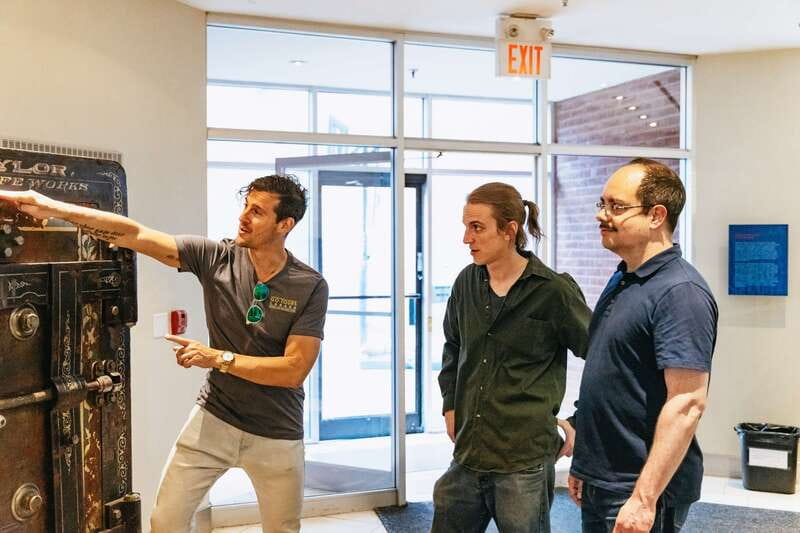
The buildings are the tour’s physical anchor. You explore a large collection of Victorian industrial architecture, with brick construction, heavy walls, practical forms, and details linked to production rather than decoration.
One building mentioned by a guest has walls about a meter thick. That sort of detail changes the way you look at the district. Instead of seeing only attractive old masonry, you start asking what the walls had to withstand, what the rooms were used for, and how the structures supported a major industrial operation.
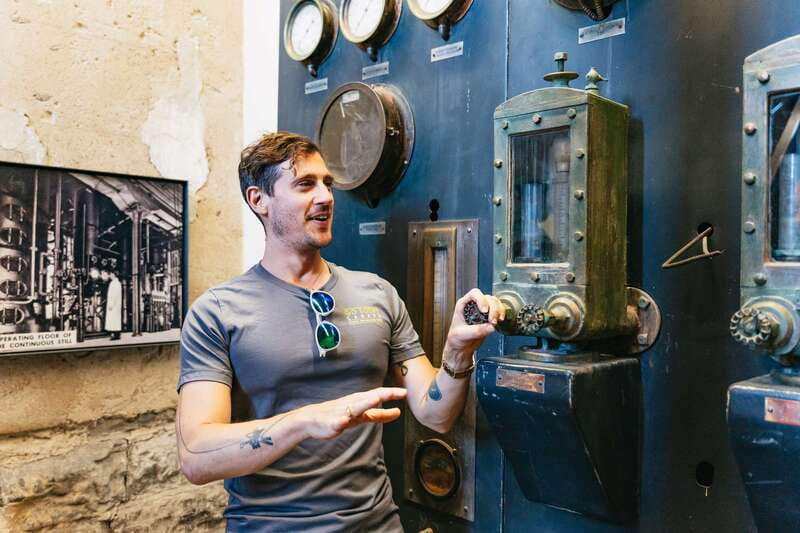
The tour includes architectural details both outside and inside. Access can vary, but you may see parts of buildings that are not open to the general public. That is one of the strongest reasons to book a guided walk rather than simply wander through the lanes.
Do not expect a full building-by-building inspection in sixty minutes. The district contains too much history for that. The guide will need to choose the most useful stops, and the experience is best understood as a carefully selected introduction. If you are an architecture enthusiast, you may want to return afterward and spend more time photographing and examining the buildings on your own.
The setting is also practical for people who do not usually seek out architectural tours. The guide ties the buildings to people, work, money, and city change. You do not need prior interest in Victorian design to find the details useful.
What the one-hour itinerary feels like

The route starts at Go Tours Canada, moves through the Distillery District, and returns to the same starting point. The walk lasts one hour, so the pace should feel manageable rather than demanding.
Early in the tour, you get your bearings and begin to understand the district as a working industrial site. The middle portion focuses more closely on Gooderham & Worts, its families, its business success, and the darker or stranger sides of the company’s past. Architecture and city development are woven through the story.
The final part brings the history back to the present-day district. You finish with a better idea of how production buildings became a destination for dining, shopping, art, and entertainment. The route does not leave you stranded in another part of Toronto, which makes it easy to continue exploring on foot.
A one-hour tour also fits well into a busy schedule. You can place it before a meal or use it as an introduction before spending a longer afternoon in the district. The tradeoff is that you will not get a long stop at every landmark, and there is no time for a leisurely drink or meal during the walking portion.
Past departures have sometimes been very small. Solo participants have described receiving a complete tour, plenty of answers, and extra attention from guides such as Nicole. That can make the experience feel more like a private conversation, though group size can change from one departure to another.
The important difference between history and tasting
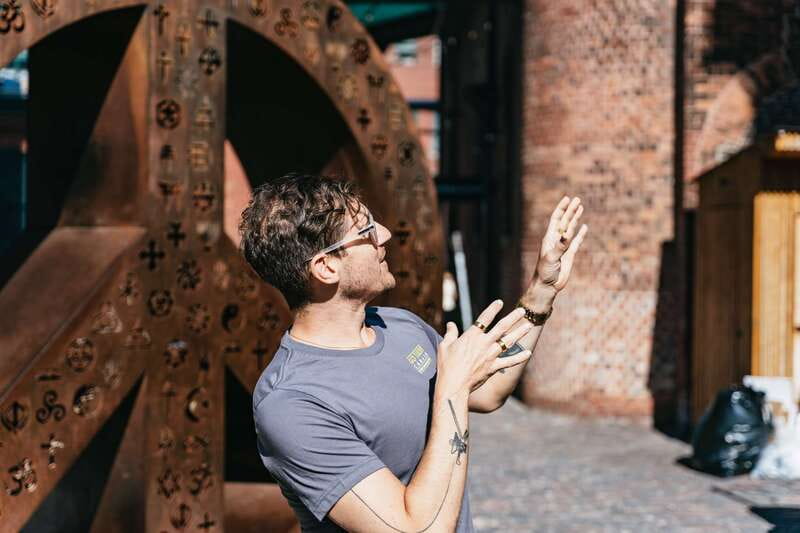
This experience does not promise a spirits flight. Its focus is the history of the district and the distillery, delivered by a live English-speaking guide.
Some past versions of the wider visitor experience have included chocolate, beer, or other small samples, but you should not book this tour expecting those extras. The separate Prohibition & Spirits Walking Tour is the correct choice if tasting matters to you. That option combines Prohibition and Distillery District history with a flight of spirits at the end.
This distinction is useful. If you want the clearest explanation of the buildings, company, and city, the standard historic walk is the better fit. If you mainly want to sample drinks, book the other experience instead. Paying for one and expecting the focus of the other would be an avoidable disappointment.
Is $20 a fair price?
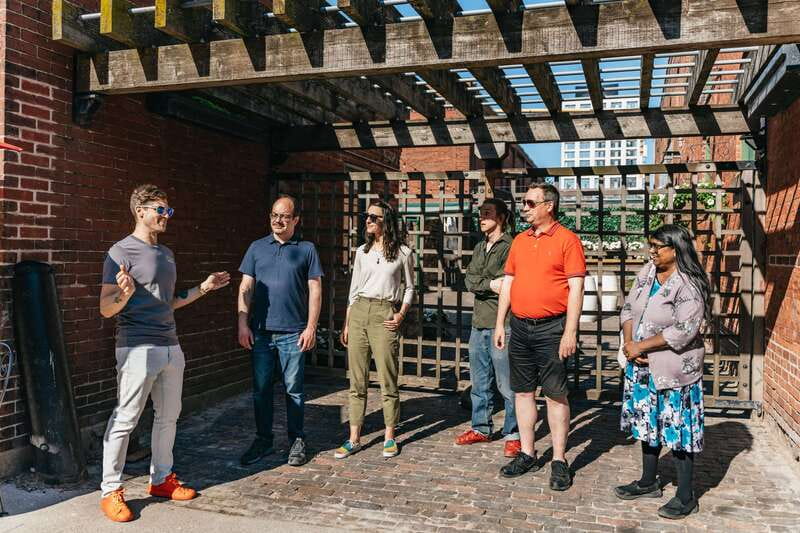
At $20 per person, this is a modestly priced introduction to one of Toronto’s most popular historic areas. The price includes the one-hour guided walk, a professional guide, and sales tax.
I think the value is strongest for first-time visitors who would otherwise walk through the district without understanding its past. A guide can show you details you might miss, explain why the waterfront changed, and connect separate buildings into one story. That is a fair return for an hour.
The value is also good for locals playing tourist in Toronto. Several guides have been praised for helping people who had visited the district many times realize how little they understood about its earlier life. You do not need to be a history specialist to gain something from the tour.
The price is less compelling if you want a long architectural inspection, a sit-down tasting, or a full afternoon activity. This is a compact orientation walk. Its success depends on the guide’s storytelling, and the limited duration means you should plan to explore independently afterward.
Who will enjoy this tour most
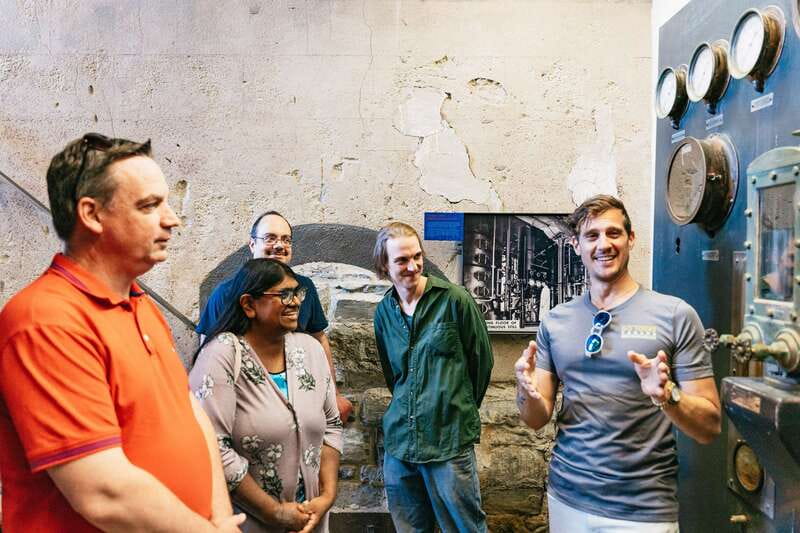
I would recommend it to first-time Toronto visitors, history fans, architecture lovers, and anyone curious about how an industrial site became a modern arts and dining district. It also suits families with older children, since the suggested minimum age is around 10.
It is a good choice for locals who want more context, especially if you have already visited the district for food or shopping. The tour can reset your view of a familiar place.
You may want another option if your main goal is alcohol tasting, if you dislike guided walks, or if you need a long, slow visit with extensive time inside each building. The tour is easy, but it is still a walking experience on historic surfaces.
Rain does not necessarily ruin the outing. One guide kept much of the tour indoors during wet weather, and another maintained a good mood despite heavy rain. Still, comfortable shoes and weather-ready clothing are sensible.
What to do after the guide says goodbye
Do not rush away when the hour ends. The Distillery District is designed for lingering, with restaurants, bars, boutiques, galleries, outdoor sculptures, and theaters close to the tour route.
Use the tour as your orientation. Afterward, revisit the buildings that caught your attention, look more closely at the brickwork and signs, and choose a place to eat or drink. This is also the time to browse for souvenirs or return to a detail you could not study while the group was moving.
The history walk gives the district meaning, but the surrounding shops and cultural venues give you reasons to stay. Together, they make the area more than a single scheduled activity.
Should you book the Distillery District Historic Walking Tour?
Book it if you want a short, affordable introduction with strong storytelling and a clear sense of Toronto’s industrial past. The best part is not simply seeing old buildings. It is learning how Gooderham & Worts helped shape the city, how close the lake once was, and how a working distillery became a destination for food, art, and shopping.
I would especially choose it if you can visit the district afterward. The one-hour walk gives you the background, then the rest of the neighborhood gives you time to explore at your own pace.
Skip this particular tour only if tasting is your priority. In that case, choose the Prohibition & Spirits Walking Tour instead. For history, architecture, and a lively account of Toronto’s early years, $20 is a sensible price for a compact and useful hour.
FAQ
How long is the Distillery District Historic Walking Tour?
The guided walking tour lasts one hour. It begins and ends at Go Tours Canada inside the Distillery District.
Where does the tour meet?
Check in at the Go Tours Canada office at 11 Gristmill Lane, Toronto, Ontario M5A 3C4. The office is near the red heart at Parliament Street and Mill Street.
Is the tour suitable for children?
The tour is generally recommended for people aged 10 and older. The walking level is easy.
Is the tour wheelchair accessible?
Yes, the activity is listed as wheelchair accessible.
Does this tour include alcohol tasting?
No tasting should be expected with this history walk. For a spirits flight along with Prohibition and Distillery District history, book the separate Prohibition & Spirits Walking Tour.
Can I cancel or pay later?
You can cancel up to 24 hours before the tour for a full refund. A reserve-now, pay-later option is also available, so you can hold a place without paying immediately.
Just added around Canada
- Horse Drawn Historical Guided Tour★ 5.0 · 24 reviews
- Historic Walking Tour of Charlottetown★ 5.0 · 211 reviews
- From Calgary to Waterton National Park Nature History and Wonders★ 5.0 · 22 reviews
- Heritage Park Admission★ 4.5 · 155 reviews
- Toronto: Niagara Falls & NOTL Heritage Town Guided Day Tour★ 4.8 · 28 reviews
- Toronto: Dark History Nighttime Walking Tour★ 4.7 · 273 reviews
- Vancouver: Guided Food and City History Tour★ 4.5 · 53 reviews
- Quebec City’s History in Virtual Reality★ 4.5 · 141 reviews
History Walking Tours, compared.
History and Hauntings of Salem Guided Walking Tour
Read our review →
Freedom Trail History Small Group Walking Tour
Read our review →
Historic Charleston Guided Sightseeing Walking Tour
Read our review →
Tapas Walking Tour with Food, Wine, and History
Read our review →
Savannah History and Haunts Candlelit Ghost Walking Tour
Read our review →
A History of Terror – Belfast City Centre Walking Tour
Read our review →Browse the lists this tour appears in